%22%3E%3C/path%3E%3Cpath d=%22M 63.072 7.554 C 62.258 8.022 61.577 8.689 61.092 9.493 L 61.092 7.076 L 57.158 7.076 L 57.158 22.64 L 61.089 22.64 L 61.089 14.888 C 61.089 13.446 61.403 12.434 62.03 11.853 C 62.818 11.218 63.818 10.907 64.826 10.982 L 65.868 10.982 L 65.868 6.851 C 64.891 6.834 63.926 7.076 63.073 7.554 Z%22 fill=%22rgb(17,17,17)%22%3E%3C/path%3E%3Cpath d=%22M 78.916 7.82 C 76.363 6.49 73.321 6.49 70.768 7.82 C 69.562 8.473 68.564 9.451 67.888 10.644 C 67.167 11.931 66.803 13.387 66.834 14.862 C 66.804 16.332 67.157 17.785 67.86 19.077 C 68.515 20.267 69.494 21.246 70.684 21.901 C 71.924 22.576 73.318 22.92 74.73 22.898 C 76.164 22.918 77.58 22.575 78.846 21.901 C 80.062 21.247 81.073 20.27 81.768 19.077 C 82.506 17.797 82.88 16.339 82.85 14.862 C 82.88 13.389 82.517 11.934 81.797 10.647 C 81.12 9.455 80.122 8.477 78.917 7.824 M 78.803 14.862 C 78.829 15.739 78.636 16.608 78.241 17.391 C 77.903 18.046 77.38 18.588 76.738 18.95 C 76.124 19.293 75.432 19.472 74.729 19.47 C 73.668 19.497 72.648 19.061 71.934 18.276 C 71.139 17.323 70.741 16.1 70.823 14.862 C 70.741 13.62 71.149 12.395 71.959 11.45 C 72.687 10.667 73.715 10.233 74.783 10.256 C 75.859 10.236 76.894 10.67 77.635 11.45 C 78.464 12.387 78.884 13.616 78.801 14.864%22 fill=%22rgb(17,17,17)%22%3E%3C/path%3E%3Cpath d=%22M 95.906 7.076 L 95.906 15.646 C 95.975 16.68 95.643 17.701 94.979 18.498 C 94.311 19.184 93.379 19.547 92.422 19.495 C 91.475 19.544 90.553 19.18 89.894 18.498 C 89.23 17.701 88.898 16.68 88.967 15.646 L 88.967 7.076 L 85.033 7.076 L 85.033 16.207 C 85 17.449 85.275 18.68 85.834 19.79 C 86.327 20.75 87.095 21.542 88.039 22.065 C 89.033 22.594 90.145 22.861 91.271 22.838 C 92.188 22.847 93.095 22.65 93.926 22.263 C 94.708 21.905 95.388 21.36 95.906 20.675 L 95.906 22.645 L 99.865 22.645 L 99.865 7.076 Z%22 fill=%22rgb(17,17,17)%22%3E%3C/path%3E%3Cpath d=%22M 4.513 15.626 C 4.511 10.815 7.606 6.549 12.181 5.059 C 16.756 3.57 21.77 5.195 24.601 9.086 L 27.816 5.87 C 24.074 1.186 17.981 -0.943 12.137 0.393 C 6.292 1.728 1.728 6.292 0.393 12.137 C -0.943 17.981 1.186 24.074 5.87 27.816 L 9.085 24.601 C 6.214 22.512 4.515 19.177 4.513 15.626%22 fill=%22rgb(32,62,235)%22%3E%3C/path%3E%3Cpath d=%22M 17.114 14.343 L 13.354 18.01 L 13.354 18.026 L 21.071 18.026 L 11.412 27.609 L 17.389 27.609 L 23.999 21.081 L 23.999 28.316 L 24.005 28.316 L 27.967 24.393 L 27.967 14.343 Z%22 fill=%22rgb(32,62,235)%22%3E%3C/path%3E%3C/g%3E%3C/svg%3E) ×
× ××
××›
›
›
›
Best social media scheduling tools for B2B 2026
Best social media scheduling tools for B2B 2026
Best social media scheduling tools for B2B 2026
Best social media scheduling tools for B2B 2026
Best social media scheduling tools for B2B 2026
Best social media scheduling tools for B2B 2026

Author
Aljaz Peklaj

Almost every social scheduling tool on the market was built for Instagram-first consumer marketing and then had LinkedIn added. You can see it in the pricing: one popular free plan supports every network except LinkedIn and Twitter, which are the only two most B2B companies care about.
This is what the main options actually cost, what unit each one counts, and the one question that decides the choice for B2B and that nobody asks until after they have paid.
TL;DR
The headline prices are not comparable, because the tools count different things. Metricool counts brands and starts at $20 a month for up to ten. SocialBee counts profiles and workspaces, starting at $29 for five profiles. Ocoya is the cheapest per profile at $15 for five, Vista Social the most expensive at $79 for fifteen, and Flick prices in pounds from GBP 11 and does not support X at all. Metricool's free plan excludes LinkedIn and Twitter, and X costs a $10 monthly add-on on every Metricool tier. The per-profile race is mostly irrelevant to B2B anyway, because a B2B company does not run fifty accounts, it runs a company page plus a handful of employees' personal profiles, and every entry tier covers that. So the deciding question is whether the tool can schedule to individual people's LinkedIn profiles rather than only the company page, which matters because personal profiles are where B2B reach actually lives. Verify that on a trial before you pay, since it is the one thing pricing pages do not tell you. If LinkedIn is the whole programme, a LinkedIn-only tool like Taplio or AuthoredUp will serve you better than a generalist.
The prices, and why they do not compare
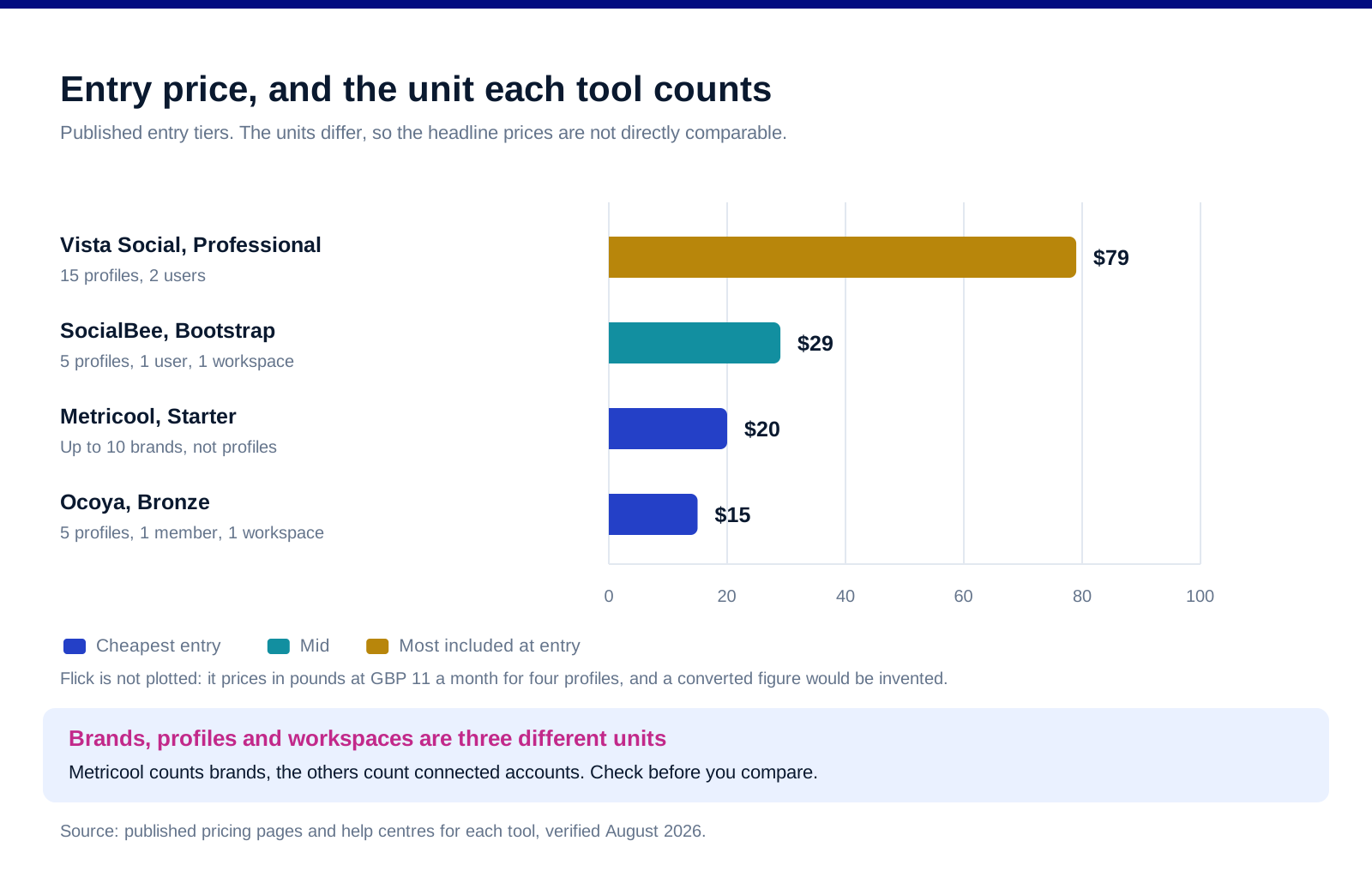
Every tool below was priced from its own published page or help centre this month.
Ocoya starts at $15 a month for five social profiles, one member and one workspace, with 100 AI credits. Silver at $39 gets twenty profiles, five members and five workspaces. Gold is $79 for fifty profiles, and Diamond $159 for 150 with unlimited AI credits and REST API access.
Metricool starts at $20 a month for up to ten brands, and this is where the units diverge. A brand is an entity with its networks attached rather than a single connected account, so ten brands is not directly comparable to ten profiles elsewhere. Advanced is $53 for up to fifty brands with unlimited team members, approval workflows and a Looker Studio connector.
SocialBee starts at $29 a month for five profiles, one user and one workspace, dropping to $24.22 on annual billing. Accelerate is $49 for ten profiles, Pro $99 for twenty-five profiles with three users and five workspaces, and the agency tiers run from $179 to $449 for fifty to 150 profiles.
Flick starts at GBP 11 a month billed yearly for four profiles and one user, with additional profiles at GBP 4 each. Pro is GBP 24 for eight profiles and Agency GBP 55 for twenty. It is priced in pounds rather than dollars, and it supports Instagram, Facebook, TikTok and LinkedIn but not X.
Vista Social starts at $79 a month for fifteen profiles and two users, which is the highest entry price here and buys the most at the top: Advanced at $149 adds multi-stage approvals and DM automation, and Scale at $349 adds white label, unlimited AI credits and 100,000 DM contacts.
So compare cost per thing you actually connect. At the entry tier that is roughly $3.00 per profile on Ocoya, $5.80 on SocialBee, $5.27 on Vista Social and about $2.00 per brand on Metricool. Useful for ranking, and still not the number that should decide it.
The LinkedIn problem
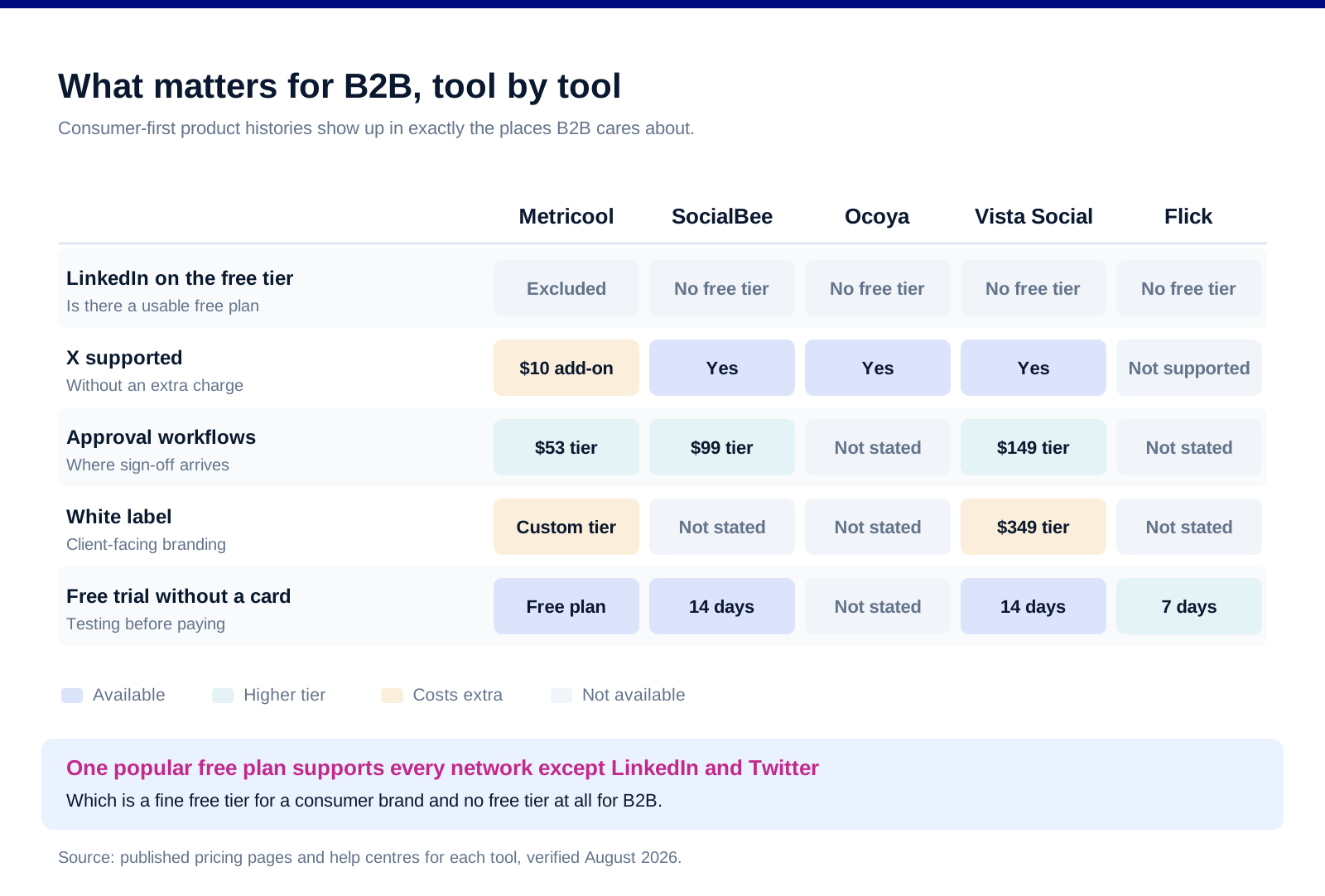
This is where a consumer-first product history shows.
Metricool's free plan supports every network except LinkedIn and Twitter. That is its own published description. For a B2C brand the free tier is genuinely usable. For a B2B company it is not a free tier at all, because the two networks excluded are the two you needed.
X costs extra on Metricool at every tier. A $10 monthly add-on across all plans. Not a large sum, and worth knowing it is not in the headline price.
Flick does not support X at all. Instagram, Facebook, TikTok and LinkedIn only, and its analytics are explicitly built around tracking Instagram posts. If X is part of your programme, this one is out regardless of price.
Approval workflows arrive at different heights. Metricool puts post approval on Advanced at $53, Vista Social on Advanced at $149, SocialBee ties team access to the Pro tier at $99. If a client or a compliance team signs off on posts, that requirement sets your tier rather than your profile count.
White label is a top-tier feature everywhere. Vista Social at Scale, Metricool on Custom, and it is worth naming because agencies frequently price the entry tier and then discover the branding they need sits three tiers up.
The question that actually decides it
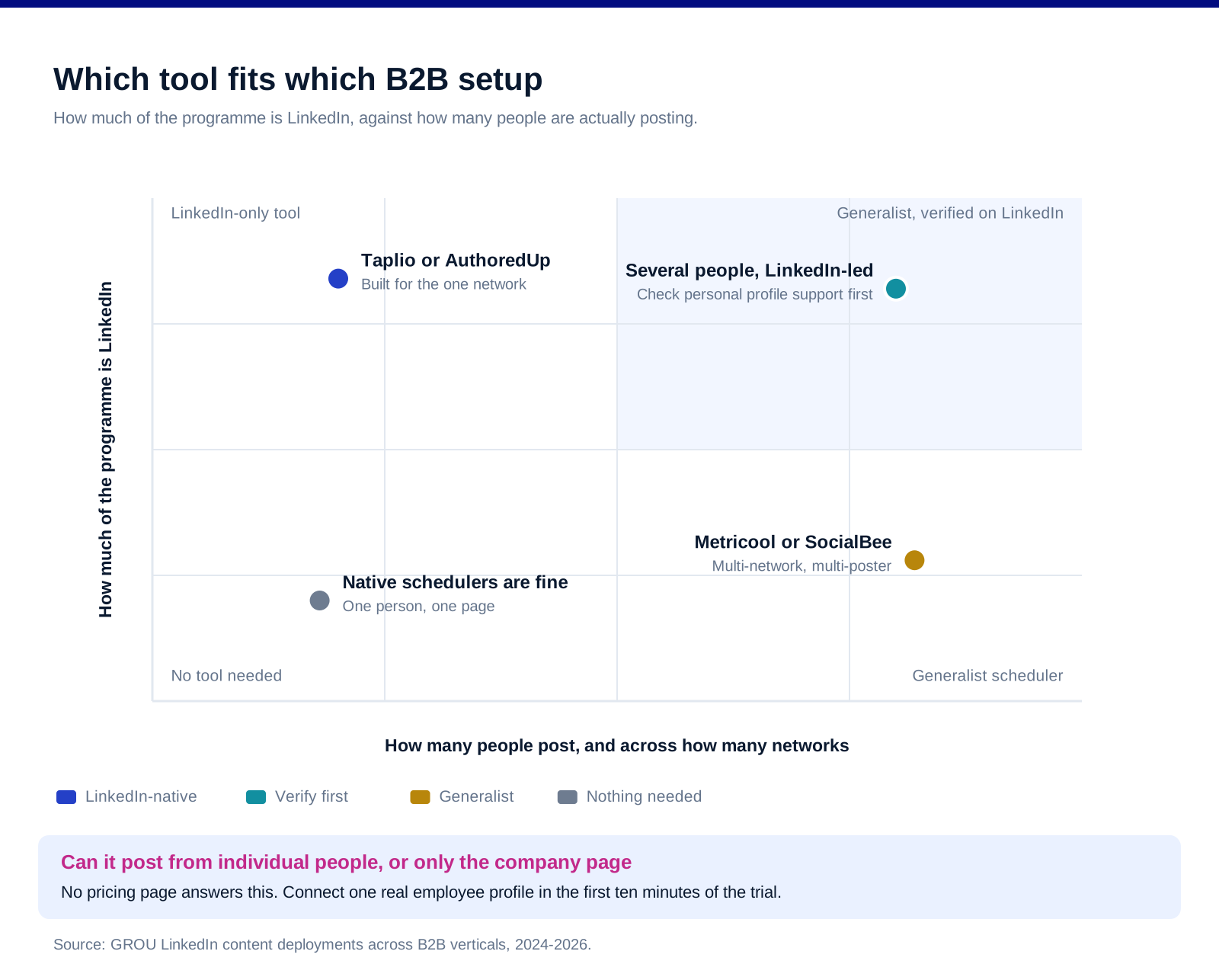
Can it schedule to individual people's LinkedIn profiles, not just the company page? This is the whole question for B2B, and no pricing page answers it clearly. B2B reach lives on personal profiles rather than brand pages, as our B2B content distribution playbook sets out, so a tool that can only post to the company page automates the half that works least well.
Test it on the trial rather than reading about it. Every tool here offers one: fourteen days on SocialBee and Vista Social with no card required, seven on Flick. Connect one real employee profile in the first ten minutes. If that does not work, nothing else about the tool matters for your case.
Count what you will actually connect. A company page, an X account, a YouTube channel and four employee profiles is seven connections. Every entry tier listed here covers that except Flick's Solo at four. The fifty and 150-profile tiers exist for agencies running many clients, not for a B2B company.
If it is all LinkedIn, buy a LinkedIn tool. Taplio at $32 a month on annual billing or AuthoredUp are built for the one network rather than adapted to it, and our Taplio pricing breakdown covers where its tiers sit. A generalist scheduler that treats LinkedIn as one of eight networks will always be shallower on it.
If you run client accounts, count workspaces rather than profiles. SocialBee's workspace counts (one, then five, then ten to thirty on agency tiers) and Ocoya's (one, five, twenty, unlimited) are the constraint that bites for agencies, and they move independently of the profile count.
What none of them fix
Nothing here writes a post worth scheduling. Every tool on this list has AI generation and it produces the same recognisable output. The scheduler solves consistency, not quality, and B2B audiences are unusually quick to spot the difference.
Analytics stop at the platform boundary. These tools tell you what happened on the network. Whether it produced pipeline is a question for your CRM, and no scheduling tool answers it however good the dashboard looks.
Approval workflows do not create an approver. If nobody at your company will actually review posts, buying the tier with the approval feature changes nothing.
The employee posting problem is cultural. A tool makes it easier for five colleagues to post consistently. It does not make them want to, and that is usually the real blocker rather than scheduling friction.
FAQ
What is the best social media scheduling tool for B2B?
It depends on how much of your programme is LinkedIn. If LinkedIn is most of it, a LinkedIn-native tool such as Taplio or AuthoredUp will be deeper than any generalist. If you run several networks, Metricool is the cheapest credible entry at $20 a month for up to ten brands, and Vista Social is the strongest at the top end with approval workflows and white label. The decisive test is whether the tool can post to individual employee profiles rather than only your company page.
How much do social media scheduling tools cost?
Entry tiers run from $15 a month on Ocoya for five profiles, $20 on Metricool for up to ten brands, $29 on SocialBee for five profiles, GBP 11 on Flick for four, and $79 on Vista Social for fifteen. Top tiers reach $159 on Ocoya, $449 on SocialBee and $349 on Vista Social. The figures are not directly comparable because each tool counts a different unit.
Is there a free social media scheduler that works for B2B?
Metricool has a free plan, but it supports every network except LinkedIn and Twitter, which makes it unsuitable for most B2B use. That is a fair reflection of the wider market: free tiers are built around Instagram and Facebook, and the networks B2B needs are the ones held behind the paywall. Trials are the better route, and SocialBee and Vista Social both offer fourteen days without a card.
Can these tools post to personal LinkedIn profiles or only company pages?
This varies by tool and is the single most important thing to verify for B2B, because personal profiles outperform company pages consistently. No pricing page states it clearly. Connect one real employee profile during the free trial in the first ten minutes, before evaluating anything else.
Which scheduling tool is best for an agency running client accounts?
Count workspaces rather than profiles, because that is the constraint that binds. SocialBee's agency tiers run from ten to thirty workspaces at $179 to $449 a month, Ocoya gives twenty workspaces at $79 and unlimited at $159, and Vista Social puts white label and client profile connections on its Scale tier at $349. Also check where approval workflows sit, since client sign-off usually sets the tier.
Do you need a scheduling tool at all for B2B?
If one person posts to one company page a few times a week, probably not. The tools earn their cost when several people post across several networks and somebody needs to see it in one calendar, or when a client or compliance function has to approve content before it goes out. Below that threshold the native schedulers are adequate.
Bottom line
Ignore the headline prices until you have checked what each one counts, because brands, profiles and workspaces are three different units and the tools mix them freely. Then ignore the per-profile ranking too, because B2B does not need fifty accounts. Spend the trial answering one question: can this schedule posts from the individual people on your team, not just the company page. If the answer is no, the tool automates the weaker half of your programme. And if LinkedIn is the whole thing, buy something built for LinkedIn rather than something that added it.
Want the LinkedIn programme run rather than the scheduler chosen? Book a call with GROU. We run LinkedIn content inside B2B revenue engines across verticals.
We are GROU, a B2B pipeline agency that runs lead generation, outbound, and LinkedIn content for clients across manufacturing, fintech, iGaming, software, and professional services. The fit guidance reflects our LinkedIn content deployments between 2024 and 2026, anonymized to protect client confidentiality.
Some links in this article are affiliate. We may earn a small commission at no extra cost to you. We only recommend tools we've deployed for clients.
Almost every social scheduling tool on the market was built for Instagram-first consumer marketing and then had LinkedIn added. You can see it in the pricing: one popular free plan supports every network except LinkedIn and Twitter, which are the only two most B2B companies care about.
This is what the main options actually cost, what unit each one counts, and the one question that decides the choice for B2B and that nobody asks until after they have paid.
TL;DR
The headline prices are not comparable, because the tools count different things. Metricool counts brands and starts at $20 a month for up to ten. SocialBee counts profiles and workspaces, starting at $29 for five profiles. Ocoya is the cheapest per profile at $15 for five, Vista Social the most expensive at $79 for fifteen, and Flick prices in pounds from GBP 11 and does not support X at all. Metricool's free plan excludes LinkedIn and Twitter, and X costs a $10 monthly add-on on every Metricool tier. The per-profile race is mostly irrelevant to B2B anyway, because a B2B company does not run fifty accounts, it runs a company page plus a handful of employees' personal profiles, and every entry tier covers that. So the deciding question is whether the tool can schedule to individual people's LinkedIn profiles rather than only the company page, which matters because personal profiles are where B2B reach actually lives. Verify that on a trial before you pay, since it is the one thing pricing pages do not tell you. If LinkedIn is the whole programme, a LinkedIn-only tool like Taplio or AuthoredUp will serve you better than a generalist.
The prices, and why they do not compare
Every tool below was priced from its own published page or help centre this month.
Ocoya starts at $15 a month for five social profiles, one member and one workspace, with 100 AI credits. Silver at $39 gets twenty profiles, five members and five workspaces. Gold is $79 for fifty profiles, and Diamond $159 for 150 with unlimited AI credits and REST API access.
Metricool starts at $20 a month for up to ten brands, and this is where the units diverge. A brand is an entity with its networks attached rather than a single connected account, so ten brands is not directly comparable to ten profiles elsewhere. Advanced is $53 for up to fifty brands with unlimited team members, approval workflows and a Looker Studio connector.
SocialBee starts at $29 a month for five profiles, one user and one workspace, dropping to $24.22 on annual billing. Accelerate is $49 for ten profiles, Pro $99 for twenty-five profiles with three users and five workspaces, and the agency tiers run from $179 to $449 for fifty to 150 profiles.
Flick starts at GBP 11 a month billed yearly for four profiles and one user, with additional profiles at GBP 4 each. Pro is GBP 24 for eight profiles and Agency GBP 55 for twenty. It is priced in pounds rather than dollars, and it supports Instagram, Facebook, TikTok and LinkedIn but not X.
Vista Social starts at $79 a month for fifteen profiles and two users, which is the highest entry price here and buys the most at the top: Advanced at $149 adds multi-stage approvals and DM automation, and Scale at $349 adds white label, unlimited AI credits and 100,000 DM contacts.
So compare cost per thing you actually connect. At the entry tier that is roughly $3.00 per profile on Ocoya, $5.80 on SocialBee, $5.27 on Vista Social and about $2.00 per brand on Metricool. Useful for ranking, and still not the number that should decide it.
The LinkedIn problem
This is where a consumer-first product history shows.
Metricool's free plan supports every network except LinkedIn and Twitter. That is its own published description. For a B2C brand the free tier is genuinely usable. For a B2B company it is not a free tier at all, because the two networks excluded are the two you needed.
X costs extra on Metricool at every tier. A $10 monthly add-on across all plans. Not a large sum, and worth knowing it is not in the headline price.
Flick does not support X at all. Instagram, Facebook, TikTok and LinkedIn only, and its analytics are explicitly built around tracking Instagram posts. If X is part of your programme, this one is out regardless of price.
Approval workflows arrive at different heights. Metricool puts post approval on Advanced at $53, Vista Social on Advanced at $149, SocialBee ties team access to the Pro tier at $99. If a client or a compliance team signs off on posts, that requirement sets your tier rather than your profile count.
White label is a top-tier feature everywhere. Vista Social at Scale, Metricool on Custom, and it is worth naming because agencies frequently price the entry tier and then discover the branding they need sits three tiers up.
The question that actually decides it
Can it schedule to individual people's LinkedIn profiles, not just the company page? This is the whole question for B2B, and no pricing page answers it clearly. B2B reach lives on personal profiles rather than brand pages, as our B2B content distribution playbook sets out, so a tool that can only post to the company page automates the half that works least well.
Test it on the trial rather than reading about it. Every tool here offers one: fourteen days on SocialBee and Vista Social with no card required, seven on Flick. Connect one real employee profile in the first ten minutes. If that does not work, nothing else about the tool matters for your case.
Count what you will actually connect. A company page, an X account, a YouTube channel and four employee profiles is seven connections. Every entry tier listed here covers that except Flick's Solo at four. The fifty and 150-profile tiers exist for agencies running many clients, not for a B2B company.
If it is all LinkedIn, buy a LinkedIn tool. Taplio at $32 a month on annual billing or AuthoredUp are built for the one network rather than adapted to it, and our Taplio pricing breakdown covers where its tiers sit. A generalist scheduler that treats LinkedIn as one of eight networks will always be shallower on it.
If you run client accounts, count workspaces rather than profiles. SocialBee's workspace counts (one, then five, then ten to thirty on agency tiers) and Ocoya's (one, five, twenty, unlimited) are the constraint that bites for agencies, and they move independently of the profile count.
What none of them fix
Nothing here writes a post worth scheduling. Every tool on this list has AI generation and it produces the same recognisable output. The scheduler solves consistency, not quality, and B2B audiences are unusually quick to spot the difference.
Analytics stop at the platform boundary. These tools tell you what happened on the network. Whether it produced pipeline is a question for your CRM, and no scheduling tool answers it however good the dashboard looks.
Approval workflows do not create an approver. If nobody at your company will actually review posts, buying the tier with the approval feature changes nothing.
The employee posting problem is cultural. A tool makes it easier for five colleagues to post consistently. It does not make them want to, and that is usually the real blocker rather than scheduling friction.
FAQ
What is the best social media scheduling tool for B2B?
It depends on how much of your programme is LinkedIn. If LinkedIn is most of it, a LinkedIn-native tool such as Taplio or AuthoredUp will be deeper than any generalist. If you run several networks, Metricool is the cheapest credible entry at $20 a month for up to ten brands, and Vista Social is the strongest at the top end with approval workflows and white label. The decisive test is whether the tool can post to individual employee profiles rather than only your company page.
How much do social media scheduling tools cost?
Entry tiers run from $15 a month on Ocoya for five profiles, $20 on Metricool for up to ten brands, $29 on SocialBee for five profiles, GBP 11 on Flick for four, and $79 on Vista Social for fifteen. Top tiers reach $159 on Ocoya, $449 on SocialBee and $349 on Vista Social. The figures are not directly comparable because each tool counts a different unit.
Is there a free social media scheduler that works for B2B?
Metricool has a free plan, but it supports every network except LinkedIn and Twitter, which makes it unsuitable for most B2B use. That is a fair reflection of the wider market: free tiers are built around Instagram and Facebook, and the networks B2B needs are the ones held behind the paywall. Trials are the better route, and SocialBee and Vista Social both offer fourteen days without a card.
Can these tools post to personal LinkedIn profiles or only company pages?
This varies by tool and is the single most important thing to verify for B2B, because personal profiles outperform company pages consistently. No pricing page states it clearly. Connect one real employee profile during the free trial in the first ten minutes, before evaluating anything else.
Which scheduling tool is best for an agency running client accounts?
Count workspaces rather than profiles, because that is the constraint that binds. SocialBee's agency tiers run from ten to thirty workspaces at $179 to $449 a month, Ocoya gives twenty workspaces at $79 and unlimited at $159, and Vista Social puts white label and client profile connections on its Scale tier at $349. Also check where approval workflows sit, since client sign-off usually sets the tier.
Do you need a scheduling tool at all for B2B?
If one person posts to one company page a few times a week, probably not. The tools earn their cost when several people post across several networks and somebody needs to see it in one calendar, or when a client or compliance function has to approve content before it goes out. Below that threshold the native schedulers are adequate.
Bottom line
Ignore the headline prices until you have checked what each one counts, because brands, profiles and workspaces are three different units and the tools mix them freely. Then ignore the per-profile ranking too, because B2B does not need fifty accounts. Spend the trial answering one question: can this schedule posts from the individual people on your team, not just the company page. If the answer is no, the tool automates the weaker half of your programme. And if LinkedIn is the whole thing, buy something built for LinkedIn rather than something that added it.
Want the LinkedIn programme run rather than the scheduler chosen? Book a call with GROU. We run LinkedIn content inside B2B revenue engines across verticals.
We are GROU, a B2B pipeline agency that runs lead generation, outbound, and LinkedIn content for clients across manufacturing, fintech, iGaming, software, and professional services. The fit guidance reflects our LinkedIn content deployments between 2024 and 2026, anonymized to protect client confidentiality.
Some links in this article are affiliate. We may earn a small commission at no extra cost to you. We only recommend tools we've deployed for clients.
Almost every social scheduling tool on the market was built for Instagram-first consumer marketing and then had LinkedIn added. You can see it in the pricing: one popular free plan supports every network except LinkedIn and Twitter, which are the only two most B2B companies care about.
This is what the main options actually cost, what unit each one counts, and the one question that decides the choice for B2B and that nobody asks until after they have paid.
TL;DR
The headline prices are not comparable, because the tools count different things. Metricool counts brands and starts at $20 a month for up to ten. SocialBee counts profiles and workspaces, starting at $29 for five profiles. Ocoya is the cheapest per profile at $15 for five, Vista Social the most expensive at $79 for fifteen, and Flick prices in pounds from GBP 11 and does not support X at all. Metricool's free plan excludes LinkedIn and Twitter, and X costs a $10 monthly add-on on every Metricool tier. The per-profile race is mostly irrelevant to B2B anyway, because a B2B company does not run fifty accounts, it runs a company page plus a handful of employees' personal profiles, and every entry tier covers that. So the deciding question is whether the tool can schedule to individual people's LinkedIn profiles rather than only the company page, which matters because personal profiles are where B2B reach actually lives. Verify that on a trial before you pay, since it is the one thing pricing pages do not tell you. If LinkedIn is the whole programme, a LinkedIn-only tool like Taplio or AuthoredUp will serve you better than a generalist.
The prices, and why they do not compare
Every tool below was priced from its own published page or help centre this month.
Ocoya starts at $15 a month for five social profiles, one member and one workspace, with 100 AI credits. Silver at $39 gets twenty profiles, five members and five workspaces. Gold is $79 for fifty profiles, and Diamond $159 for 150 with unlimited AI credits and REST API access.
Metricool starts at $20 a month for up to ten brands, and this is where the units diverge. A brand is an entity with its networks attached rather than a single connected account, so ten brands is not directly comparable to ten profiles elsewhere. Advanced is $53 for up to fifty brands with unlimited team members, approval workflows and a Looker Studio connector.
SocialBee starts at $29 a month for five profiles, one user and one workspace, dropping to $24.22 on annual billing. Accelerate is $49 for ten profiles, Pro $99 for twenty-five profiles with three users and five workspaces, and the agency tiers run from $179 to $449 for fifty to 150 profiles.
Flick starts at GBP 11 a month billed yearly for four profiles and one user, with additional profiles at GBP 4 each. Pro is GBP 24 for eight profiles and Agency GBP 55 for twenty. It is priced in pounds rather than dollars, and it supports Instagram, Facebook, TikTok and LinkedIn but not X.
Vista Social starts at $79 a month for fifteen profiles and two users, which is the highest entry price here and buys the most at the top: Advanced at $149 adds multi-stage approvals and DM automation, and Scale at $349 adds white label, unlimited AI credits and 100,000 DM contacts.
So compare cost per thing you actually connect. At the entry tier that is roughly $3.00 per profile on Ocoya, $5.80 on SocialBee, $5.27 on Vista Social and about $2.00 per brand on Metricool. Useful for ranking, and still not the number that should decide it.
The LinkedIn problem
This is where a consumer-first product history shows.
Metricool's free plan supports every network except LinkedIn and Twitter. That is its own published description. For a B2C brand the free tier is genuinely usable. For a B2B company it is not a free tier at all, because the two networks excluded are the two you needed.
X costs extra on Metricool at every tier. A $10 monthly add-on across all plans. Not a large sum, and worth knowing it is not in the headline price.
Flick does not support X at all. Instagram, Facebook, TikTok and LinkedIn only, and its analytics are explicitly built around tracking Instagram posts. If X is part of your programme, this one is out regardless of price.
Approval workflows arrive at different heights. Metricool puts post approval on Advanced at $53, Vista Social on Advanced at $149, SocialBee ties team access to the Pro tier at $99. If a client or a compliance team signs off on posts, that requirement sets your tier rather than your profile count.
White label is a top-tier feature everywhere. Vista Social at Scale, Metricool on Custom, and it is worth naming because agencies frequently price the entry tier and then discover the branding they need sits three tiers up.
The question that actually decides it
Can it schedule to individual people's LinkedIn profiles, not just the company page? This is the whole question for B2B, and no pricing page answers it clearly. B2B reach lives on personal profiles rather than brand pages, as our B2B content distribution playbook sets out, so a tool that can only post to the company page automates the half that works least well.
Test it on the trial rather than reading about it. Every tool here offers one: fourteen days on SocialBee and Vista Social with no card required, seven on Flick. Connect one real employee profile in the first ten minutes. If that does not work, nothing else about the tool matters for your case.
Count what you will actually connect. A company page, an X account, a YouTube channel and four employee profiles is seven connections. Every entry tier listed here covers that except Flick's Solo at four. The fifty and 150-profile tiers exist for agencies running many clients, not for a B2B company.
If it is all LinkedIn, buy a LinkedIn tool. Taplio at $32 a month on annual billing or AuthoredUp are built for the one network rather than adapted to it, and our Taplio pricing breakdown covers where its tiers sit. A generalist scheduler that treats LinkedIn as one of eight networks will always be shallower on it.
If you run client accounts, count workspaces rather than profiles. SocialBee's workspace counts (one, then five, then ten to thirty on agency tiers) and Ocoya's (one, five, twenty, unlimited) are the constraint that bites for agencies, and they move independently of the profile count.
What none of them fix
Nothing here writes a post worth scheduling. Every tool on this list has AI generation and it produces the same recognisable output. The scheduler solves consistency, not quality, and B2B audiences are unusually quick to spot the difference.
Analytics stop at the platform boundary. These tools tell you what happened on the network. Whether it produced pipeline is a question for your CRM, and no scheduling tool answers it however good the dashboard looks.
Approval workflows do not create an approver. If nobody at your company will actually review posts, buying the tier with the approval feature changes nothing.
The employee posting problem is cultural. A tool makes it easier for five colleagues to post consistently. It does not make them want to, and that is usually the real blocker rather than scheduling friction.
FAQ
What is the best social media scheduling tool for B2B?
It depends on how much of your programme is LinkedIn. If LinkedIn is most of it, a LinkedIn-native tool such as Taplio or AuthoredUp will be deeper than any generalist. If you run several networks, Metricool is the cheapest credible entry at $20 a month for up to ten brands, and Vista Social is the strongest at the top end with approval workflows and white label. The decisive test is whether the tool can post to individual employee profiles rather than only your company page.
How much do social media scheduling tools cost?
Entry tiers run from $15 a month on Ocoya for five profiles, $20 on Metricool for up to ten brands, $29 on SocialBee for five profiles, GBP 11 on Flick for four, and $79 on Vista Social for fifteen. Top tiers reach $159 on Ocoya, $449 on SocialBee and $349 on Vista Social. The figures are not directly comparable because each tool counts a different unit.
Is there a free social media scheduler that works for B2B?
Metricool has a free plan, but it supports every network except LinkedIn and Twitter, which makes it unsuitable for most B2B use. That is a fair reflection of the wider market: free tiers are built around Instagram and Facebook, and the networks B2B needs are the ones held behind the paywall. Trials are the better route, and SocialBee and Vista Social both offer fourteen days without a card.
Can these tools post to personal LinkedIn profiles or only company pages?
This varies by tool and is the single most important thing to verify for B2B, because personal profiles outperform company pages consistently. No pricing page states it clearly. Connect one real employee profile during the free trial in the first ten minutes, before evaluating anything else.
Which scheduling tool is best for an agency running client accounts?
Count workspaces rather than profiles, because that is the constraint that binds. SocialBee's agency tiers run from ten to thirty workspaces at $179 to $449 a month, Ocoya gives twenty workspaces at $79 and unlimited at $159, and Vista Social puts white label and client profile connections on its Scale tier at $349. Also check where approval workflows sit, since client sign-off usually sets the tier.
Do you need a scheduling tool at all for B2B?
If one person posts to one company page a few times a week, probably not. The tools earn their cost when several people post across several networks and somebody needs to see it in one calendar, or when a client or compliance function has to approve content before it goes out. Below that threshold the native schedulers are adequate.
Bottom line
Ignore the headline prices until you have checked what each one counts, because brands, profiles and workspaces are three different units and the tools mix them freely. Then ignore the per-profile ranking too, because B2B does not need fifty accounts. Spend the trial answering one question: can this schedule posts from the individual people on your team, not just the company page. If the answer is no, the tool automates the weaker half of your programme. And if LinkedIn is the whole thing, buy something built for LinkedIn rather than something that added it.
Want the LinkedIn programme run rather than the scheduler chosen? Book a call with GROU. We run LinkedIn content inside B2B revenue engines across verticals.
We are GROU, a B2B pipeline agency that runs lead generation, outbound, and LinkedIn content for clients across manufacturing, fintech, iGaming, software, and professional services. The fit guidance reflects our LinkedIn content deployments between 2024 and 2026, anonymized to protect client confidentiality.
Some links in this article are affiliate. We may earn a small commission at no extra cost to you. We only recommend tools we've deployed for clients.

Pipeline OS Newsletter
Build qualified pipeline
Get weekly tactics to generate demand, improve lead quality, and book more meetings.





Trusted by industry leaders
Trusted by industry leaders
Trusted by industry leaders
Ready to build qualified pipeline?
Ready to build qualified pipeline?
Ready to build qualified pipeline?
Book a call to see if we're the right fit, or take the 2-minute quiz to get a clear starting point.
Book a call to see if we're the right fit, or take the 2-minute quiz to get a clear starting point.
Book a call to see if we're the right fit, or take the 2-minute quiz to get a clear starting point.
" height="30.21639343089746px" id="hfGbXmQR2" width="30.216393430897455px"/></svg>)
Copyright © 2026 – All Right Reserved
Copyright © 2026 – All Right Reserved
Copyright © 2026 – All Right Reserved