%22%3E%3C/path%3E%3Cpath d=%22M 63.072 7.554 C 62.258 8.022 61.577 8.689 61.092 9.493 L 61.092 7.076 L 57.158 7.076 L 57.158 22.64 L 61.089 22.64 L 61.089 14.888 C 61.089 13.446 61.403 12.434 62.03 11.853 C 62.818 11.218 63.818 10.907 64.826 10.982 L 65.868 10.982 L 65.868 6.851 C 64.891 6.834 63.926 7.076 63.073 7.554 Z%22 fill=%22rgb(17,17,17)%22%3E%3C/path%3E%3Cpath d=%22M 78.916 7.82 C 76.363 6.49 73.321 6.49 70.768 7.82 C 69.562 8.473 68.564 9.451 67.888 10.644 C 67.167 11.931 66.803 13.387 66.834 14.862 C 66.804 16.332 67.157 17.785 67.86 19.077 C 68.515 20.267 69.494 21.246 70.684 21.901 C 71.924 22.576 73.318 22.92 74.73 22.898 C 76.164 22.918 77.58 22.575 78.846 21.901 C 80.062 21.247 81.073 20.27 81.768 19.077 C 82.506 17.797 82.88 16.339 82.85 14.862 C 82.88 13.389 82.517 11.934 81.797 10.647 C 81.12 9.455 80.122 8.477 78.917 7.824 M 78.803 14.862 C 78.829 15.739 78.636 16.608 78.241 17.391 C 77.903 18.046 77.38 18.588 76.738 18.95 C 76.124 19.293 75.432 19.472 74.729 19.47 C 73.668 19.497 72.648 19.061 71.934 18.276 C 71.139 17.323 70.741 16.1 70.823 14.862 C 70.741 13.62 71.149 12.395 71.959 11.45 C 72.687 10.667 73.715 10.233 74.783 10.256 C 75.859 10.236 76.894 10.67 77.635 11.45 C 78.464 12.387 78.884 13.616 78.801 14.864%22 fill=%22rgb(17,17,17)%22%3E%3C/path%3E%3Cpath d=%22M 95.906 7.076 L 95.906 15.646 C 95.975 16.68 95.643 17.701 94.979 18.498 C 94.311 19.184 93.379 19.547 92.422 19.495 C 91.475 19.544 90.553 19.18 89.894 18.498 C 89.23 17.701 88.898 16.68 88.967 15.646 L 88.967 7.076 L 85.033 7.076 L 85.033 16.207 C 85 17.449 85.275 18.68 85.834 19.79 C 86.327 20.75 87.095 21.542 88.039 22.065 C 89.033 22.594 90.145 22.861 91.271 22.838 C 92.188 22.847 93.095 22.65 93.926 22.263 C 94.708 21.905 95.388 21.36 95.906 20.675 L 95.906 22.645 L 99.865 22.645 L 99.865 7.076 Z%22 fill=%22rgb(17,17,17)%22%3E%3C/path%3E%3Cpath d=%22M 4.513 15.626 C 4.511 10.815 7.606 6.549 12.181 5.059 C 16.756 3.57 21.77 5.195 24.601 9.086 L 27.816 5.87 C 24.074 1.186 17.981 -0.943 12.137 0.393 C 6.292 1.728 1.728 6.292 0.393 12.137 C -0.943 17.981 1.186 24.074 5.87 27.816 L 9.085 24.601 C 6.214 22.512 4.515 19.177 4.513 15.626%22 fill=%22rgb(32,62,235)%22%3E%3C/path%3E%3Cpath d=%22M 17.114 14.343 L 13.354 18.01 L 13.354 18.026 L 21.071 18.026 L 11.412 27.609 L 17.389 27.609 L 23.999 21.081 L 23.999 28.316 L 24.005 28.316 L 27.967 24.393 L 27.967 14.343 Z%22 fill=%22rgb(32,62,235)%22%3E%3C/path%3E%3C/g%3E%3C/svg%3E) ×
× ××
××›
›
›
›
International SEO service: how to choose the right one in 2026
International SEO service: how to choose the right one in 2026
International SEO service: how to choose the right one in 2026
International SEO service: how to choose the right one in 2026
International SEO service: how to choose the right one in 2026
International SEO service: how to choose the right one in 2026

Author
Aljaz Peklaj

You're at the point where the home market has flattened, the board wants new pipeline, and every agency pitch sounds the same. They all promise international growth, none of them explain what they'll change, and too many blur translation, technical SEO, and market entry into one fuzzy offer.
Treat international SEO as a specialist buy, not a general marketing line item.
Verify the technical stack, especially hreflang, URL structure, and market-level reporting.
Start with one or two markets, or you'll dilute signal and waste budget.
Choose a pricing model that matches the motion, not the vendor's preferred contract.
Contract KPIs by market, or blended reporting will hide the result.
Table of Contents
The buying decision most teams get wrong
The mistake is simple. A founder sees stalled pipeline in one market and buys a global promise instead of a market-specific system.
That's when the bad decks show up. They're full of traffic forecasts, vague localization language, and guarantees that should make you stop reading. If a vendor is selling certainty in search, read Surnex's guide to SEO guarantees first, then ask why they need that wording in the first place.
Practical rule: if the vendor won't name the exact markets, URL structure, and reporting cadence in the first call, they're selling theater.
The right evaluation starts with scope. International SEO is not a translation project with a few landing pages attached. It's a multi-market search program with technical work, content adaptation, and authority building tied to each country or language set.
That framing matters because the market is real, not niche. One estimate puts the global SEO services market at USD 83.98 billion in 2026 and USD 148.86 billion by 2031 at a 12.12% CAGR in a projection cited by Mordor Intelligence, while another projects USD 108.28 billion in 2026 and USD 203.83 billion by 2030 in the same market report family. The spend exists because search demand exists, with Google processing more than 8.5 billion searches per day and holding nearly 90% worldwide search share in the cited source.
That means your job is vendor selection, not education. You need a partner who can tell you what they'll do in Germany, Brazil, or Japan, why that market comes first, and how they'll prove progress without blending everything into one global average.
What an international SEO service is
Agencies often bundle translation, link building, and technical fixes into one international SEO package, which makes it hard to see what you are buying. That is a buyer problem, not a language problem.
The operating reality is broader. International search demand is structurally multilingual, with 70% of all global search queries non-English in one industry compilation. Users also prefer to buy in their native language, and sites using SEO localization can see a 70% increase in organic traffic within 12 months when the work is done properly. Those figures point to the same conclusion, localization is a commercial system, not a cosmetic layer.
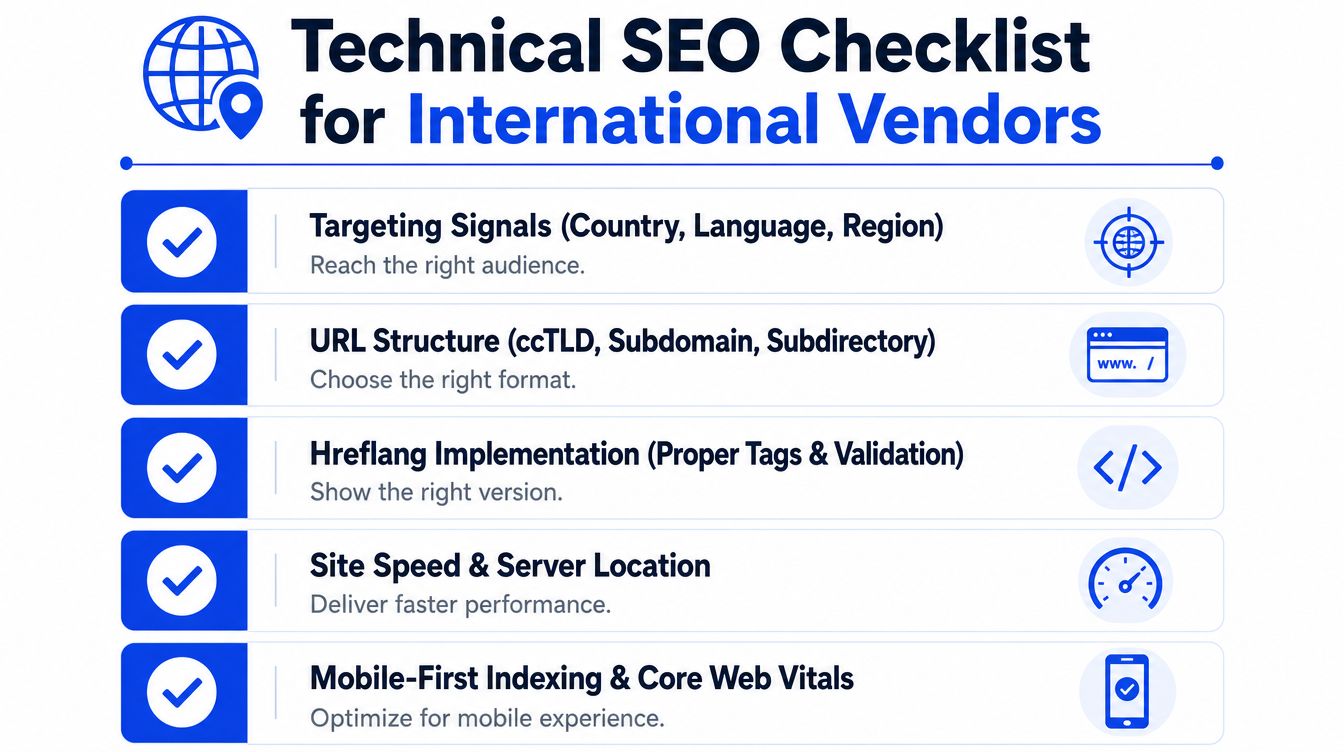
Market-by-market search is the real unit of work
A serious international SEO service treats each market as its own search environment. Keyword sets change, SERP intent changes, competition changes, and the content that wins in one region can miss badly in another.
Moz's three targeting signals matter here, country or region targeting through URL structure, language targeting through language tags, and content written in the target users' language. Those are the raw materials. Everything else sits on top of them.
The opportunity is large enough to justify the complexity. Google's scale, paired with global market spend, means you are not buying a boutique experiment. You are buying into a mature service category where the wrong setup costs real visibility across multiple markets at once.
The right vendor should sound like an operator, not someone handing over translated copy. They should talk about market intent, subdirectories, and indexation paths. If they cannot, they are selling content localization with a search label attached.
For a useful definition baseline, the GROU SEO glossary is a clean reference point before you sit down with vendors.
The technical components a vendor must own
A weak international SEO service falls apart at the technical layer first. If a vendor stays in content-only territory, they are leaving the hardest part of the job unowned.
Hreflang, URL structure, and sitemaps
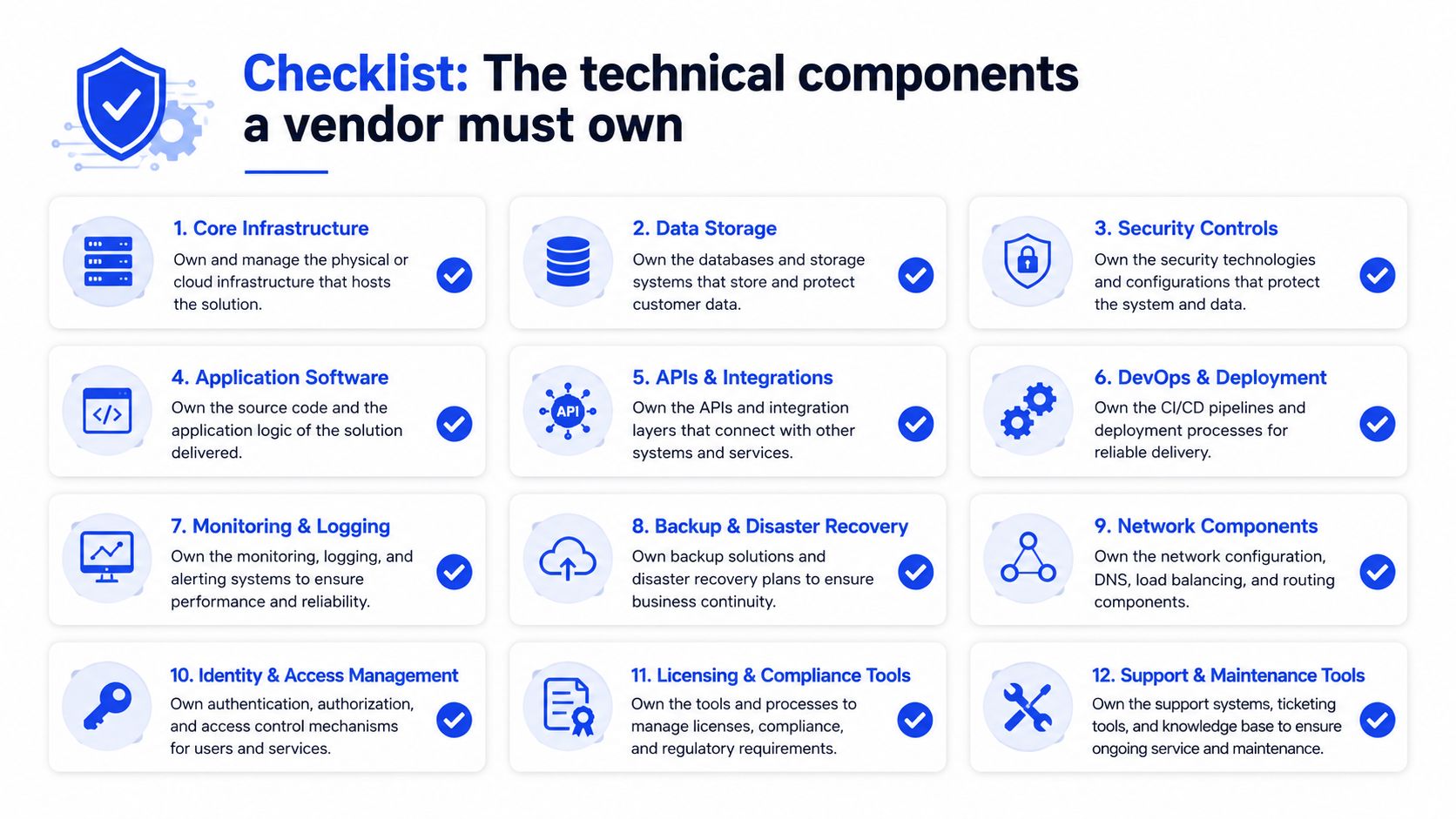
A competent team owns bidirectional hreflang with absolute URLs and an x-default fallback. Each localized page needs to point to every alternate version and back to itself. Without that setup, search engines route users to the wrong language or country page, and indexation gets messy fast.
The URL architecture has to be clean too. Separate language or country subdirectories, XML sitemaps for each market, and Search Console targeting by subdirectory give crawlers a clear path. That clarity matters because crawl discovery and geo-targeting should never be left ambiguous.
Vendor test: ask for a sample hreflang audit. If they can't show how they validate reciprocal tags, they haven't done enough of this work.
Content delivery and market-level discovery
Ahrefs includes CDN setup in its international SEO checklist, along with separate keyword research for each foreign market, proper hreflang implementation, and building a backlink profile in each target country. That combination matters because the work spans technical setup, editorial choices, and local authority signals at the same time.
Server proximity and CDN behavior change how fast a page feels in different regions. Local backlinks still matter on the authority side because search engines do not treat every market the same way. A vendor should explain both clearly and stay out of generic best-practice language.
For crawl-based audit work, Oncrawl is a sensible reference point if you want a structured view of multi-market site health. If a vendor claims they can run international SEO without crawl diagnostics, they are guessing.
The buyer's checklist is blunt. Ask how they validate hreflang, how they manage per-market sitemaps, how they segment Search Console, and how they measure market-level crawl and indexation. Anything less is a guess dressed up as a process.
Picking markets without overextending the budget
The fastest way to waste an international SEO budget is to open too many markets at once. Eight countries, one team, no signal, and a long wait for nothing useful.
Start with evidence, not enthusiasm
Pick one or two markets first. Use search demand evidence, sales readiness, and competitive density as your filters. If your team can't close in that region once traffic arrives, you're buying vanity visibility.
Localization quality matters more than translation quality. One source says 75% of users prefer to buy products in their native language, and websites using SEO localization can see a 70% increase in organic traffic within 12 months. Those gains don't come from literal translation. They come from cultural adaptation, market-specific intent matching, and local editorial judgment.
That's why the first market often isn't the biggest one. It's the one where your product, sales motion, and content team can support the search work after the clicks arrive.
Use timing as a planning constraint
Expect meaningful organic growth to take months, not weeks. The pattern in expansion work is consistent, traffic needs enough time to compound, and the wrong market choice can consume that runway before anything useful appears.
For market research, this market research company list is a practical starting point if you need outside validation before choosing your first two regions.
Buyer rule: if the vendor wants to launch five markets on day one, ask which one they'd cut if the budget were halved. The answer tells you whether they understand sequencing.
The best sequence is boring and effective. One market proves the stack. The second market proves repeatability. After that, expansion becomes a scaling decision, not a guess.
Engagement models, pricing, and what each one actually buys
Retainers win for serious multi-market work. That's not marketing language, it's how the service is delivered.
The market data backs that up. Retainer/subscription agreements represented 61.95% of 2025 revenue in the cited SEO market report. Ongoing technical hygiene, content production, and link work don't fit a one-off model for long.
The four models side by side
Model | Best for | Typical 2026 price band | Risk for the buyer |
|---|---|---|---|
Retainer | Ongoing multi-market programs | Usually the highest monthly commitment, because the work is continuous | Scope drift if deliverables aren't tied to markets |
Fixed-scope project | Single-market launch or migration | Mid-range, tied to a defined launch | Good for one event, weak for sustained growth |
Hourly consulting | In-house teams needing specialist input | Lower entry cost, variable total spend | Fragmented execution if the client team can't implement |
Performance or hybrid | Buyers wanting shared risk | Usually negotiated with strict caps and caveats | Hard to attribute, easy to under-resource |
What price should actually buy
In 2026, B2B retainers for international SEO are usually priced by market count, technical depth, and content volume. A low fee can still be expensive if it excludes native-language review, hreflang validation, or country-level backlink work. A high fee can still be bad if the vendor pads scope with vague “localization” and no measurable output.
Use this pricing model reference as a vocabulary check before you negotiate.
Hard line: performance deals sound safe, but they're often the worst fit for international SEO because they push the vendor toward cherry-picked metrics instead of durable market coverage.
The right contract depends on maturity. If you're launching one region and already have in-house SEO, hourly consulting can make sense. If you're entering multiple markets and need execution, a retainer is the cleaner buy. Project work is fine for a single launch, but it won't carry you through ongoing localization and authority building.
The vendor scorecard that separates specialists from generalists
Generalist SEO agencies can handle domestic programs. International SEO is where they often slip, because the work punishes shallow experience.
Score vendors on proof, not confidence
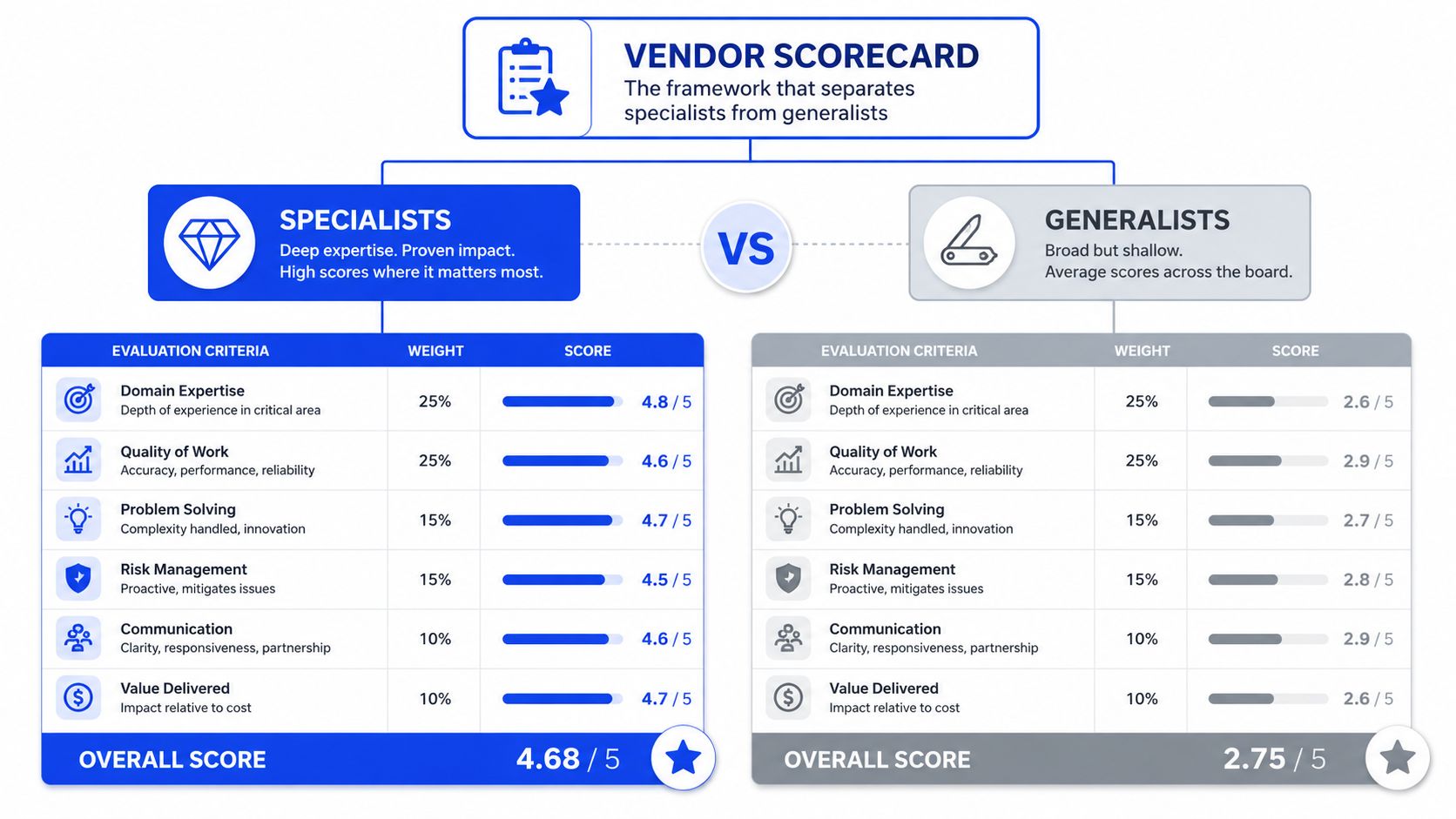
Use a weighted scorecard:
Hreflang implementation experience, 30%. Ask for named case studies and a sample audit.
Native-language editorial capability, 25%. Ask who reviews copy, not who claims translation support.
Multi-regional technical audit depth, 20%. Request examples from sites with multiple market versions.
Per-market reporting, 15%. Blended global dashboards are not enough.
Relevant industry references, 10%. iGaming, SaaS, manufacturing, legal tech, and pharma all have different search and compliance constraints.
What to ask in the first round
Request a sample hreflang audit on a sandbox site. Request a sample per-market report. Request one example of how they handled non-English editorial review. If they refuse to show process detail, you've learned enough.
The expensive mistake is not paying a higher hourly rate. The expensive mistake is paying less for a team that mis-tags markets and costs you rankings everywhere at once.
A specialist should show work, not just results. If they can't explain why they chose a subdirectory over another structure, how they validated reciprocal hreflang, or how they segment local reporting, they're not the right vendor. Pick the specialist even if the number is higher.
KPI、報告頻率與早期警示訊號
合約要把報告頻率寫得和交付內容一樣清楚。這一點沒寫明,供應商就會丟給你一堆混在一起的儀表板,把真正的狀況蓋掉。
要求市場層級的指標
你的報告架構應該包含各市場自然流量工作階段、各市場關鍵字可見度,針對雙方同意的目標詞組、各市場已索引頁面數、hreflang 錯誤數,以及在歸因可行時的自然流量帶來的 pipeline 或營收。同一個頁面,在不同市場可以有完全不同的排名和轉換表現,因為延遲、抓取路徑深度和當地 SERP 意圖都會因地區而變動,全球彙總只會扭曲現實。
如果你要建立一個夠用的衡量框架,可以先看 Wispra's guide to tracking SEO results with KPIs,再去設計你自己的儀表板。
設定節奏與警示線
每月報告是底線。供應商如果只每季更新一次,對國際 SEO 來說太慢了。你要看到各市場趨勢、錯誤數量,還有已發布內容的在地審核狀態,而且每份報告都要附上這些資訊。
如果你要把這些指標放進更大的 pipeline 儀表板, GROU's KPI guide for lead generation 可以直接拿來對照結構。
盯緊這些訊號。 各市場可見度到第 4 個月還是平的、hreflang 錯誤增加、或內容發布時沒有在地審核,這些都該在續約前就觸發和供應商的對話,而不是等到合約快結束才處理。
好供應商會把表現不佳提早攤開來看。差的供應商只會把問題平均掉,直到合約快結束才讓你看到。你要找的是能清楚指出哪個市場健康、哪個市場停滯,以及上一個報告週期到底改了什麼的 партners.
Your 30-day vendor evaluation plan
Use the next 30 days to force clarity. Pick the first one or two markets with search demand evidence and sales readiness checks. Then draft an RFP that includes the technical checklist, the reporting requirements, and native-language review expectations.
Require each shortlisted vendor to submit a sample hreflang audit on a sandbox site and a sample per-market report. Ask them who owns editorial review in each language, not just who speaks the language. “We have translators” is not enough.
GROU is a global B2B pipeline agency that connects outbound and LinkedIn content programs to the demand international SEO creates. GROU integrates with your international SEO specialist, it doesn't replace that work.
If you want a partner that turns international attention into qualified meetings, start with Grou. We build the outbound and LinkedIn system around your target markets, then plug into the SEO partner doing the technical work so your expansion motion stays aligned end to end.
You're at the point where the home market has flattened, the board wants new pipeline, and every agency pitch sounds the same. They all promise international growth, none of them explain what they'll change, and too many blur translation, technical SEO, and market entry into one fuzzy offer.
Treat international SEO as a specialist buy, not a general marketing line item.
Verify the technical stack, especially hreflang, URL structure, and market-level reporting.
Start with one or two markets, or you'll dilute signal and waste budget.
Choose a pricing model that matches the motion, not the vendor's preferred contract.
Contract KPIs by market, or blended reporting will hide the result.
Table of Contents
The buying decision most teams get wrong
The mistake is simple. A founder sees stalled pipeline in one market and buys a global promise instead of a market-specific system.
That's when the bad decks show up. They're full of traffic forecasts, vague localization language, and guarantees that should make you stop reading. If a vendor is selling certainty in search, read Surnex's guide to SEO guarantees first, then ask why they need that wording in the first place.
Practical rule: if the vendor won't name the exact markets, URL structure, and reporting cadence in the first call, they're selling theater.
The right evaluation starts with scope. International SEO is not a translation project with a few landing pages attached. It's a multi-market search program with technical work, content adaptation, and authority building tied to each country or language set.
That framing matters because the market is real, not niche. One estimate puts the global SEO services market at USD 83.98 billion in 2026 and USD 148.86 billion by 2031 at a 12.12% CAGR in a projection cited by Mordor Intelligence, while another projects USD 108.28 billion in 2026 and USD 203.83 billion by 2030 in the same market report family. The spend exists because search demand exists, with Google processing more than 8.5 billion searches per day and holding nearly 90% worldwide search share in the cited source.
That means your job is vendor selection, not education. You need a partner who can tell you what they'll do in Germany, Brazil, or Japan, why that market comes first, and how they'll prove progress without blending everything into one global average.
What an international SEO service is
Agencies often bundle translation, link building, and technical fixes into one international SEO package, which makes it hard to see what you are buying. That is a buyer problem, not a language problem.
The operating reality is broader. International search demand is structurally multilingual, with 70% of all global search queries non-English in one industry compilation. Users also prefer to buy in their native language, and sites using SEO localization can see a 70% increase in organic traffic within 12 months when the work is done properly. Those figures point to the same conclusion, localization is a commercial system, not a cosmetic layer.
Market-by-market search is the real unit of work
A serious international SEO service treats each market as its own search environment. Keyword sets change, SERP intent changes, competition changes, and the content that wins in one region can miss badly in another.
Moz's three targeting signals matter here, country or region targeting through URL structure, language targeting through language tags, and content written in the target users' language. Those are the raw materials. Everything else sits on top of them.
The opportunity is large enough to justify the complexity. Google's scale, paired with global market spend, means you are not buying a boutique experiment. You are buying into a mature service category where the wrong setup costs real visibility across multiple markets at once.
The right vendor should sound like an operator, not someone handing over translated copy. They should talk about market intent, subdirectories, and indexation paths. If they cannot, they are selling content localization with a search label attached.
For a useful definition baseline, the GROU SEO glossary is a clean reference point before you sit down with vendors.
The technical components a vendor must own
A weak international SEO service falls apart at the technical layer first. If a vendor stays in content-only territory, they are leaving the hardest part of the job unowned.
Hreflang, URL structure, and sitemaps
A competent team owns bidirectional hreflang with absolute URLs and an x-default fallback. Each localized page needs to point to every alternate version and back to itself. Without that setup, search engines route users to the wrong language or country page, and indexation gets messy fast.
The URL architecture has to be clean too. Separate language or country subdirectories, XML sitemaps for each market, and Search Console targeting by subdirectory give crawlers a clear path. That clarity matters because crawl discovery and geo-targeting should never be left ambiguous.
Vendor test: ask for a sample hreflang audit. If they can't show how they validate reciprocal tags, they haven't done enough of this work.
Content delivery and market-level discovery
Ahrefs includes CDN setup in its international SEO checklist, along with separate keyword research for each foreign market, proper hreflang implementation, and building a backlink profile in each target country. That combination matters because the work spans technical setup, editorial choices, and local authority signals at the same time.
Server proximity and CDN behavior change how fast a page feels in different regions. Local backlinks still matter on the authority side because search engines do not treat every market the same way. A vendor should explain both clearly and stay out of generic best-practice language.
For crawl-based audit work, Oncrawl is a sensible reference point if you want a structured view of multi-market site health. If a vendor claims they can run international SEO without crawl diagnostics, they are guessing.
The buyer's checklist is blunt. Ask how they validate hreflang, how they manage per-market sitemaps, how they segment Search Console, and how they measure market-level crawl and indexation. Anything less is a guess dressed up as a process.
Picking markets without overextending the budget
The fastest way to waste an international SEO budget is to open too many markets at once. Eight countries, one team, no signal, and a long wait for nothing useful.
Start with evidence, not enthusiasm
Pick one or two markets first. Use search demand evidence, sales readiness, and competitive density as your filters. If your team can't close in that region once traffic arrives, you're buying vanity visibility.
Localization quality matters more than translation quality. One source says 75% of users prefer to buy products in their native language, and websites using SEO localization can see a 70% increase in organic traffic within 12 months. Those gains don't come from literal translation. They come from cultural adaptation, market-specific intent matching, and local editorial judgment.
That's why the first market often isn't the biggest one. It's the one where your product, sales motion, and content team can support the search work after the clicks arrive.
Use timing as a planning constraint
Expect meaningful organic growth to take months, not weeks. The pattern in expansion work is consistent, traffic needs enough time to compound, and the wrong market choice can consume that runway before anything useful appears.
For market research, this market research company list is a practical starting point if you need outside validation before choosing your first two regions.
Buyer rule: if the vendor wants to launch five markets on day one, ask which one they'd cut if the budget were halved. The answer tells you whether they understand sequencing.
The best sequence is boring and effective. One market proves the stack. The second market proves repeatability. After that, expansion becomes a scaling decision, not a guess.
Engagement models, pricing, and what each one actually buys
Retainers win for serious multi-market work. That's not marketing language, it's how the service is delivered.
The market data backs that up. Retainer/subscription agreements represented 61.95% of 2025 revenue in the cited SEO market report. Ongoing technical hygiene, content production, and link work don't fit a one-off model for long.
The four models side by side
Model | Best for | Typical 2026 price band | Risk for the buyer |
|---|---|---|---|
Retainer | Ongoing multi-market programs | Usually the highest monthly commitment, because the work is continuous | Scope drift if deliverables aren't tied to markets |
Fixed-scope project | Single-market launch or migration | Mid-range, tied to a defined launch | Good for one event, weak for sustained growth |
Hourly consulting | In-house teams needing specialist input | Lower entry cost, variable total spend | Fragmented execution if the client team can't implement |
Performance or hybrid | Buyers wanting shared risk | Usually negotiated with strict caps and caveats | Hard to attribute, easy to under-resource |
What price should actually buy
In 2026, B2B retainers for international SEO are usually priced by market count, technical depth, and content volume. A low fee can still be expensive if it excludes native-language review, hreflang validation, or country-level backlink work. A high fee can still be bad if the vendor pads scope with vague “localization” and no measurable output.
Use this pricing model reference as a vocabulary check before you negotiate.
Hard line: performance deals sound safe, but they're often the worst fit for international SEO because they push the vendor toward cherry-picked metrics instead of durable market coverage.
The right contract depends on maturity. If you're launching one region and already have in-house SEO, hourly consulting can make sense. If you're entering multiple markets and need execution, a retainer is the cleaner buy. Project work is fine for a single launch, but it won't carry you through ongoing localization and authority building.
The vendor scorecard that separates specialists from generalists
Generalist SEO agencies can handle domestic programs. International SEO is where they often slip, because the work punishes shallow experience.
Score vendors on proof, not confidence
Use a weighted scorecard:
Hreflang implementation experience, 30%. Ask for named case studies and a sample audit.
Native-language editorial capability, 25%. Ask who reviews copy, not who claims translation support.
Multi-regional technical audit depth, 20%. Request examples from sites with multiple market versions.
Per-market reporting, 15%. Blended global dashboards are not enough.
Relevant industry references, 10%. iGaming, SaaS, manufacturing, legal tech, and pharma all have different search and compliance constraints.
What to ask in the first round
Request a sample hreflang audit on a sandbox site. Request a sample per-market report. Request one example of how they handled non-English editorial review. If they refuse to show process detail, you've learned enough.
The expensive mistake is not paying a higher hourly rate. The expensive mistake is paying less for a team that mis-tags markets and costs you rankings everywhere at once.
A specialist should show work, not just results. If they can't explain why they chose a subdirectory over another structure, how they validated reciprocal hreflang, or how they segment local reporting, they're not the right vendor. Pick the specialist even if the number is higher.
KPI、報告頻率與早期警示訊號
合約要把報告頻率寫得和交付內容一樣清楚。這一點沒寫明,供應商就會丟給你一堆混在一起的儀表板,把真正的狀況蓋掉。
要求市場層級的指標
你的報告架構應該包含各市場自然流量工作階段、各市場關鍵字可見度,針對雙方同意的目標詞組、各市場已索引頁面數、hreflang 錯誤數,以及在歸因可行時的自然流量帶來的 pipeline 或營收。同一個頁面,在不同市場可以有完全不同的排名和轉換表現,因為延遲、抓取路徑深度和當地 SERP 意圖都會因地區而變動,全球彙總只會扭曲現實。
如果你要建立一個夠用的衡量框架,可以先看 Wispra's guide to tracking SEO results with KPIs,再去設計你自己的儀表板。
設定節奏與警示線
每月報告是底線。供應商如果只每季更新一次,對國際 SEO 來說太慢了。你要看到各市場趨勢、錯誤數量,還有已發布內容的在地審核狀態,而且每份報告都要附上這些資訊。
如果你要把這些指標放進更大的 pipeline 儀表板, GROU's KPI guide for lead generation 可以直接拿來對照結構。
盯緊這些訊號。 各市場可見度到第 4 個月還是平的、hreflang 錯誤增加、或內容發布時沒有在地審核,這些都該在續約前就觸發和供應商的對話,而不是等到合約快結束才處理。
好供應商會把表現不佳提早攤開來看。差的供應商只會把問題平均掉,直到合約快結束才讓你看到。你要找的是能清楚指出哪個市場健康、哪個市場停滯,以及上一個報告週期到底改了什麼的 партners.
Your 30-day vendor evaluation plan
Use the next 30 days to force clarity. Pick the first one or two markets with search demand evidence and sales readiness checks. Then draft an RFP that includes the technical checklist, the reporting requirements, and native-language review expectations.
Require each shortlisted vendor to submit a sample hreflang audit on a sandbox site and a sample per-market report. Ask them who owns editorial review in each language, not just who speaks the language. “We have translators” is not enough.
GROU is a global B2B pipeline agency that connects outbound and LinkedIn content programs to the demand international SEO creates. GROU integrates with your international SEO specialist, it doesn't replace that work.
If you want a partner that turns international attention into qualified meetings, start with Grou. We build the outbound and LinkedIn system around your target markets, then plug into the SEO partner doing the technical work so your expansion motion stays aligned end to end.
You're at the point where the home market has flattened, the board wants new pipeline, and every agency pitch sounds the same. They all promise international growth, none of them explain what they'll change, and too many blur translation, technical SEO, and market entry into one fuzzy offer.
Treat international SEO as a specialist buy, not a general marketing line item.
Verify the technical stack, especially hreflang, URL structure, and market-level reporting.
Start with one or two markets, or you'll dilute signal and waste budget.
Choose a pricing model that matches the motion, not the vendor's preferred contract.
Contract KPIs by market, or blended reporting will hide the result.
Table of Contents
The buying decision most teams get wrong
The mistake is simple. A founder sees stalled pipeline in one market and buys a global promise instead of a market-specific system.
That's when the bad decks show up. They're full of traffic forecasts, vague localization language, and guarantees that should make you stop reading. If a vendor is selling certainty in search, read Surnex's guide to SEO guarantees first, then ask why they need that wording in the first place.
Practical rule: if the vendor won't name the exact markets, URL structure, and reporting cadence in the first call, they're selling theater.
The right evaluation starts with scope. International SEO is not a translation project with a few landing pages attached. It's a multi-market search program with technical work, content adaptation, and authority building tied to each country or language set.
That framing matters because the market is real, not niche. One estimate puts the global SEO services market at USD 83.98 billion in 2026 and USD 148.86 billion by 2031 at a 12.12% CAGR in a projection cited by Mordor Intelligence, while another projects USD 108.28 billion in 2026 and USD 203.83 billion by 2030 in the same market report family. The spend exists because search demand exists, with Google processing more than 8.5 billion searches per day and holding nearly 90% worldwide search share in the cited source.
That means your job is vendor selection, not education. You need a partner who can tell you what they'll do in Germany, Brazil, or Japan, why that market comes first, and how they'll prove progress without blending everything into one global average.
What an international SEO service is
Agencies often bundle translation, link building, and technical fixes into one international SEO package, which makes it hard to see what you are buying. That is a buyer problem, not a language problem.
The operating reality is broader. International search demand is structurally multilingual, with 70% of all global search queries non-English in one industry compilation. Users also prefer to buy in their native language, and sites using SEO localization can see a 70% increase in organic traffic within 12 months when the work is done properly. Those figures point to the same conclusion, localization is a commercial system, not a cosmetic layer.
Market-by-market search is the real unit of work
A serious international SEO service treats each market as its own search environment. Keyword sets change, SERP intent changes, competition changes, and the content that wins in one region can miss badly in another.
Moz's three targeting signals matter here, country or region targeting through URL structure, language targeting through language tags, and content written in the target users' language. Those are the raw materials. Everything else sits on top of them.
The opportunity is large enough to justify the complexity. Google's scale, paired with global market spend, means you are not buying a boutique experiment. You are buying into a mature service category where the wrong setup costs real visibility across multiple markets at once.
The right vendor should sound like an operator, not someone handing over translated copy. They should talk about market intent, subdirectories, and indexation paths. If they cannot, they are selling content localization with a search label attached.
For a useful definition baseline, the GROU SEO glossary is a clean reference point before you sit down with vendors.
The technical components a vendor must own
A weak international SEO service falls apart at the technical layer first. If a vendor stays in content-only territory, they are leaving the hardest part of the job unowned.
Hreflang, URL structure, and sitemaps
A competent team owns bidirectional hreflang with absolute URLs and an x-default fallback. Each localized page needs to point to every alternate version and back to itself. Without that setup, search engines route users to the wrong language or country page, and indexation gets messy fast.
The URL architecture has to be clean too. Separate language or country subdirectories, XML sitemaps for each market, and Search Console targeting by subdirectory give crawlers a clear path. That clarity matters because crawl discovery and geo-targeting should never be left ambiguous.
Vendor test: ask for a sample hreflang audit. If they can't show how they validate reciprocal tags, they haven't done enough of this work.
Content delivery and market-level discovery
Ahrefs includes CDN setup in its international SEO checklist, along with separate keyword research for each foreign market, proper hreflang implementation, and building a backlink profile in each target country. That combination matters because the work spans technical setup, editorial choices, and local authority signals at the same time.
Server proximity and CDN behavior change how fast a page feels in different regions. Local backlinks still matter on the authority side because search engines do not treat every market the same way. A vendor should explain both clearly and stay out of generic best-practice language.
For crawl-based audit work, Oncrawl is a sensible reference point if you want a structured view of multi-market site health. If a vendor claims they can run international SEO without crawl diagnostics, they are guessing.
The buyer's checklist is blunt. Ask how they validate hreflang, how they manage per-market sitemaps, how they segment Search Console, and how they measure market-level crawl and indexation. Anything less is a guess dressed up as a process.
Picking markets without overextending the budget
The fastest way to waste an international SEO budget is to open too many markets at once. Eight countries, one team, no signal, and a long wait for nothing useful.
Start with evidence, not enthusiasm
Pick one or two markets first. Use search demand evidence, sales readiness, and competitive density as your filters. If your team can't close in that region once traffic arrives, you're buying vanity visibility.
Localization quality matters more than translation quality. One source says 75% of users prefer to buy products in their native language, and websites using SEO localization can see a 70% increase in organic traffic within 12 months. Those gains don't come from literal translation. They come from cultural adaptation, market-specific intent matching, and local editorial judgment.
That's why the first market often isn't the biggest one. It's the one where your product, sales motion, and content team can support the search work after the clicks arrive.
Use timing as a planning constraint
Expect meaningful organic growth to take months, not weeks. The pattern in expansion work is consistent, traffic needs enough time to compound, and the wrong market choice can consume that runway before anything useful appears.
For market research, this market research company list is a practical starting point if you need outside validation before choosing your first two regions.
Buyer rule: if the vendor wants to launch five markets on day one, ask which one they'd cut if the budget were halved. The answer tells you whether they understand sequencing.
The best sequence is boring and effective. One market proves the stack. The second market proves repeatability. After that, expansion becomes a scaling decision, not a guess.
Engagement models, pricing, and what each one actually buys
Retainers win for serious multi-market work. That's not marketing language, it's how the service is delivered.
The market data backs that up. Retainer/subscription agreements represented 61.95% of 2025 revenue in the cited SEO market report. Ongoing technical hygiene, content production, and link work don't fit a one-off model for long.
The four models side by side
Model | Best for | Typical 2026 price band | Risk for the buyer |
|---|---|---|---|
Retainer | Ongoing multi-market programs | Usually the highest monthly commitment, because the work is continuous | Scope drift if deliverables aren't tied to markets |
Fixed-scope project | Single-market launch or migration | Mid-range, tied to a defined launch | Good for one event, weak for sustained growth |
Hourly consulting | In-house teams needing specialist input | Lower entry cost, variable total spend | Fragmented execution if the client team can't implement |
Performance or hybrid | Buyers wanting shared risk | Usually negotiated with strict caps and caveats | Hard to attribute, easy to under-resource |
What price should actually buy
In 2026, B2B retainers for international SEO are usually priced by market count, technical depth, and content volume. A low fee can still be expensive if it excludes native-language review, hreflang validation, or country-level backlink work. A high fee can still be bad if the vendor pads scope with vague “localization” and no measurable output.
Use this pricing model reference as a vocabulary check before you negotiate.
Hard line: performance deals sound safe, but they're often the worst fit for international SEO because they push the vendor toward cherry-picked metrics instead of durable market coverage.
The right contract depends on maturity. If you're launching one region and already have in-house SEO, hourly consulting can make sense. If you're entering multiple markets and need execution, a retainer is the cleaner buy. Project work is fine for a single launch, but it won't carry you through ongoing localization and authority building.
The vendor scorecard that separates specialists from generalists
Generalist SEO agencies can handle domestic programs. International SEO is where they often slip, because the work punishes shallow experience.
Score vendors on proof, not confidence
Use a weighted scorecard:
Hreflang implementation experience, 30%. Ask for named case studies and a sample audit.
Native-language editorial capability, 25%. Ask who reviews copy, not who claims translation support.
Multi-regional technical audit depth, 20%. Request examples from sites with multiple market versions.
Per-market reporting, 15%. Blended global dashboards are not enough.
Relevant industry references, 10%. iGaming, SaaS, manufacturing, legal tech, and pharma all have different search and compliance constraints.
What to ask in the first round
Request a sample hreflang audit on a sandbox site. Request a sample per-market report. Request one example of how they handled non-English editorial review. If they refuse to show process detail, you've learned enough.
The expensive mistake is not paying a higher hourly rate. The expensive mistake is paying less for a team that mis-tags markets and costs you rankings everywhere at once.
A specialist should show work, not just results. If they can't explain why they chose a subdirectory over another structure, how they validated reciprocal hreflang, or how they segment local reporting, they're not the right vendor. Pick the specialist even if the number is higher.
KPI、報告頻率與早期警示訊號
合約要把報告頻率寫得和交付內容一樣清楚。這一點沒寫明,供應商就會丟給你一堆混在一起的儀表板,把真正的狀況蓋掉。
要求市場層級的指標
你的報告架構應該包含各市場自然流量工作階段、各市場關鍵字可見度,針對雙方同意的目標詞組、各市場已索引頁面數、hreflang 錯誤數,以及在歸因可行時的自然流量帶來的 pipeline 或營收。同一個頁面,在不同市場可以有完全不同的排名和轉換表現,因為延遲、抓取路徑深度和當地 SERP 意圖都會因地區而變動,全球彙總只會扭曲現實。
如果你要建立一個夠用的衡量框架,可以先看 Wispra's guide to tracking SEO results with KPIs,再去設計你自己的儀表板。
設定節奏與警示線
每月報告是底線。供應商如果只每季更新一次,對國際 SEO 來說太慢了。你要看到各市場趨勢、錯誤數量,還有已發布內容的在地審核狀態,而且每份報告都要附上這些資訊。
如果你要把這些指標放進更大的 pipeline 儀表板, GROU's KPI guide for lead generation 可以直接拿來對照結構。
盯緊這些訊號。 各市場可見度到第 4 個月還是平的、hreflang 錯誤增加、或內容發布時沒有在地審核,這些都該在續約前就觸發和供應商的對話,而不是等到合約快結束才處理。
好供應商會把表現不佳提早攤開來看。差的供應商只會把問題平均掉,直到合約快結束才讓你看到。你要找的是能清楚指出哪個市場健康、哪個市場停滯,以及上一個報告週期到底改了什麼的 партners.
Your 30-day vendor evaluation plan
Use the next 30 days to force clarity. Pick the first one or two markets with search demand evidence and sales readiness checks. Then draft an RFP that includes the technical checklist, the reporting requirements, and native-language review expectations.
Require each shortlisted vendor to submit a sample hreflang audit on a sandbox site and a sample per-market report. Ask them who owns editorial review in each language, not just who speaks the language. “We have translators” is not enough.
GROU is a global B2B pipeline agency that connects outbound and LinkedIn content programs to the demand international SEO creates. GROU integrates with your international SEO specialist, it doesn't replace that work.
If you want a partner that turns international attention into qualified meetings, start with Grou. We build the outbound and LinkedIn system around your target markets, then plug into the SEO partner doing the technical work so your expansion motion stays aligned end to end.

Pipeline OS Newsletter
Build qualified pipeline
Get weekly tactics to generate demand, improve lead quality, and book more meetings.





Trusted by industry leaders
Trusted by industry leaders
Trusted by industry leaders
Ready to build qualified pipeline?
Ready to build qualified pipeline?
Ready to build qualified pipeline?
Book a call to see if we're the right fit, or take the 2-minute quiz to get a clear starting point.
Book a call to see if we're the right fit, or take the 2-minute quiz to get a clear starting point.
Book a call to see if we're the right fit, or take the 2-minute quiz to get a clear starting point.
" height="30.21639343089746px" id="hfGbXmQR2" width="30.216393430897455px"/></svg>)
Copyright © 2026 – All Right Reserved
Copyright © 2026 – All Right Reserved
Copyright © 2026 – All Right Reserved