%22%3E%3C/path%3E%3Cpath d=%22M 63.072 7.554 C 62.258 8.022 61.577 8.689 61.092 9.493 L 61.092 7.076 L 57.158 7.076 L 57.158 22.64 L 61.089 22.64 L 61.089 14.888 C 61.089 13.446 61.403 12.434 62.03 11.853 C 62.818 11.218 63.818 10.907 64.826 10.982 L 65.868 10.982 L 65.868 6.851 C 64.891 6.834 63.926 7.076 63.073 7.554 Z%22 fill=%22rgb(17,17,17)%22%3E%3C/path%3E%3Cpath d=%22M 78.916 7.82 C 76.363 6.49 73.321 6.49 70.768 7.82 C 69.562 8.473 68.564 9.451 67.888 10.644 C 67.167 11.931 66.803 13.387 66.834 14.862 C 66.804 16.332 67.157 17.785 67.86 19.077 C 68.515 20.267 69.494 21.246 70.684 21.901 C 71.924 22.576 73.318 22.92 74.73 22.898 C 76.164 22.918 77.58 22.575 78.846 21.901 C 80.062 21.247 81.073 20.27 81.768 19.077 C 82.506 17.797 82.88 16.339 82.85 14.862 C 82.88 13.389 82.517 11.934 81.797 10.647 C 81.12 9.455 80.122 8.477 78.917 7.824 M 78.803 14.862 C 78.829 15.739 78.636 16.608 78.241 17.391 C 77.903 18.046 77.38 18.588 76.738 18.95 C 76.124 19.293 75.432 19.472 74.729 19.47 C 73.668 19.497 72.648 19.061 71.934 18.276 C 71.139 17.323 70.741 16.1 70.823 14.862 C 70.741 13.62 71.149 12.395 71.959 11.45 C 72.687 10.667 73.715 10.233 74.783 10.256 C 75.859 10.236 76.894 10.67 77.635 11.45 C 78.464 12.387 78.884 13.616 78.801 14.864%22 fill=%22rgb(17,17,17)%22%3E%3C/path%3E%3Cpath d=%22M 95.906 7.076 L 95.906 15.646 C 95.975 16.68 95.643 17.701 94.979 18.498 C 94.311 19.184 93.379 19.547 92.422 19.495 C 91.475 19.544 90.553 19.18 89.894 18.498 C 89.23 17.701 88.898 16.68 88.967 15.646 L 88.967 7.076 L 85.033 7.076 L 85.033 16.207 C 85 17.449 85.275 18.68 85.834 19.79 C 86.327 20.75 87.095 21.542 88.039 22.065 C 89.033 22.594 90.145 22.861 91.271 22.838 C 92.188 22.847 93.095 22.65 93.926 22.263 C 94.708 21.905 95.388 21.36 95.906 20.675 L 95.906 22.645 L 99.865 22.645 L 99.865 7.076 Z%22 fill=%22rgb(17,17,17)%22%3E%3C/path%3E%3Cpath d=%22M 4.513 15.626 C 4.511 10.815 7.606 6.549 12.181 5.059 C 16.756 3.57 21.77 5.195 24.601 9.086 L 27.816 5.87 C 24.074 1.186 17.981 -0.943 12.137 0.393 C 6.292 1.728 1.728 6.292 0.393 12.137 C -0.943 17.981 1.186 24.074 5.87 27.816 L 9.085 24.601 C 6.214 22.512 4.515 19.177 4.513 15.626%22 fill=%22rgb(32,62,235)%22%3E%3C/path%3E%3Cpath d=%22M 17.114 14.343 L 13.354 18.01 L 13.354 18.026 L 21.071 18.026 L 11.412 27.609 L 17.389 27.609 L 23.999 21.081 L 23.999 28.316 L 24.005 28.316 L 27.967 24.393 L 27.967 14.343 Z%22 fill=%22rgb(32,62,235)%22%3E%3C/path%3E%3C/g%3E%3C/svg%3E) ×
× ××
××›
›
›
›
LinkedIn personal branding for B2B founders 2026
LinkedIn personal branding for B2B founders 2026
LinkedIn personal branding for B2B founders 2026
LinkedIn personal branding for B2B founders 2026
LinkedIn personal branding for B2B founders 2026
LinkedIn personal branding for B2B founders 2026

Author
Aljaz Peklaj

LinkedIn personal branding is the single highest-leverage marketing channel for B2B founders in 2026. After running personal brand programs across 200+ B2B SaaS founder accounts, the pattern is clear: founders who post 3-5x per week for 6-12 months build inbound pipelines that match $50K-$200K/mo paid ads spend at $0 marginal cost. Position + content cadence + engagement loop + distribution stack are the 4 components that decide whether the brand compounds.
This is the operator pillar: positioning framework, content cadence, engagement loop, distribution stack, measurement, and the 12-week ramp plan.
TL;DR
The LinkedIn personal branding playbook for B2B founders in 2026: 4 components. Positioning (3-word category + 1-line problem statement). Content cadence (3-5 posts/week + 2-4 reply waves/day). Engagement loop (own audience + adjacent audience). Distribution stack (Taplio + AuthoredUp + Shield Analytics).
90-day output for B2B founders running the playbook: 8-15K monthly impressions, 200-500 connection requests received, 8-25 inbound conversations/mo. 180-day output: 25-60K impressions, 500-1.5K connections, 20-60 inbound conversations/mo, first inbound demos.
For execution detail, see our LinkedIn ghostwriting playbook 2026 and LinkedIn personal branding checklist for B2B founders.
The 4 components of LinkedIn personal branding
How each component contributes:
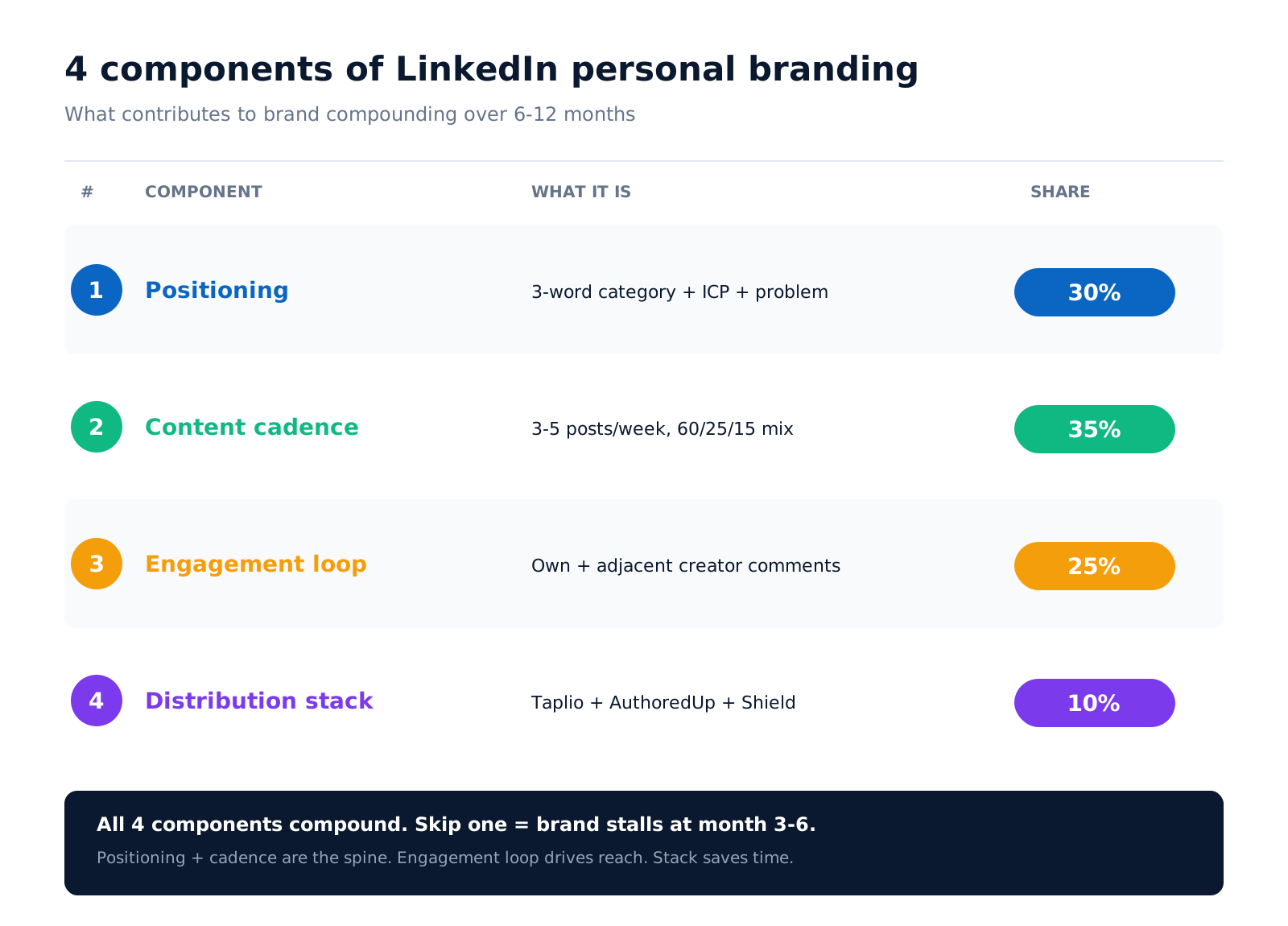
Component 1: Positioning (30% of compounding). 3-word category + 1-line problem statement + 1 named ICP. Example: "B2B outbound for SaaS founders shipping outbound programs that hit 24-46% reply rates." Without this, content has no spine.
Component 2: Content cadence (35% of compounding). 3-5 posts per week. Mix: 60% educational + 25% personal/story + 15% promotional. Consistency matters more than virality for 6-12 month compounding.
Component 3: Engagement loop (25% of compounding). 2-4 reply waves per day on owned posts + 30-60 min/day commenting on adjacent ICP creators' posts. Engagement on others' posts feeds your post reach.
Component 4: Distribution stack (10% of compounding). Taplio AI ($59/mo) for AI writing + viral content. AuthoredUp ($19/mo) for formatting. Shield Analytics ($29/mo) for tracking. Optional: Tweet Hunter ($49/mo) for repurposing.
Positioning framework that compounds
How to write a positioning that survives 12 months:
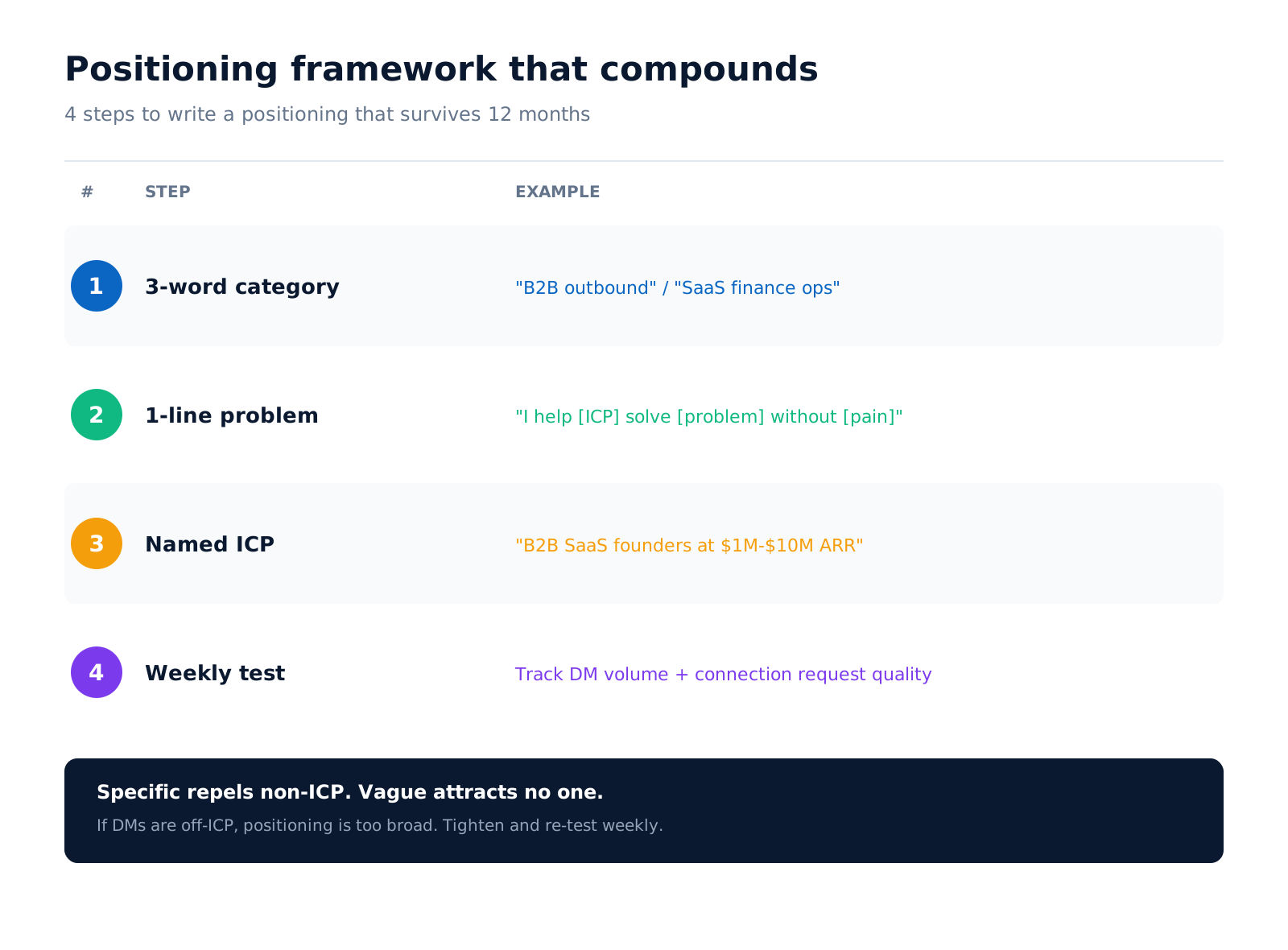
Step 1: Lock the 3-word category. "B2B outbound." "SaaS finance ops." "Cybersecurity GTM." Specific enough to repel non-ICP. Broad enough to attract the full ICP.
Step 2: Write the 1-line problem statement. "I help [ICP] solve [specific problem] without [common alternative pain]." Example: "I help B2B SaaS founders ship outbound programs without burning 6 months on bad CRM data."
Step 3: Name the ICP explicitly. "B2B SaaS founders at $1M-$10M ARR." "RevOps leaders at series A-C." Avoid "anyone interested in growth." Specificity attracts.
Step 4: Test the positioning weekly. Track DM volume + connection request quality. If DMs are off-ICP, the positioning is too broad. Tighten.
Content cadence that drives reach
The 3-5 posts/week structure:
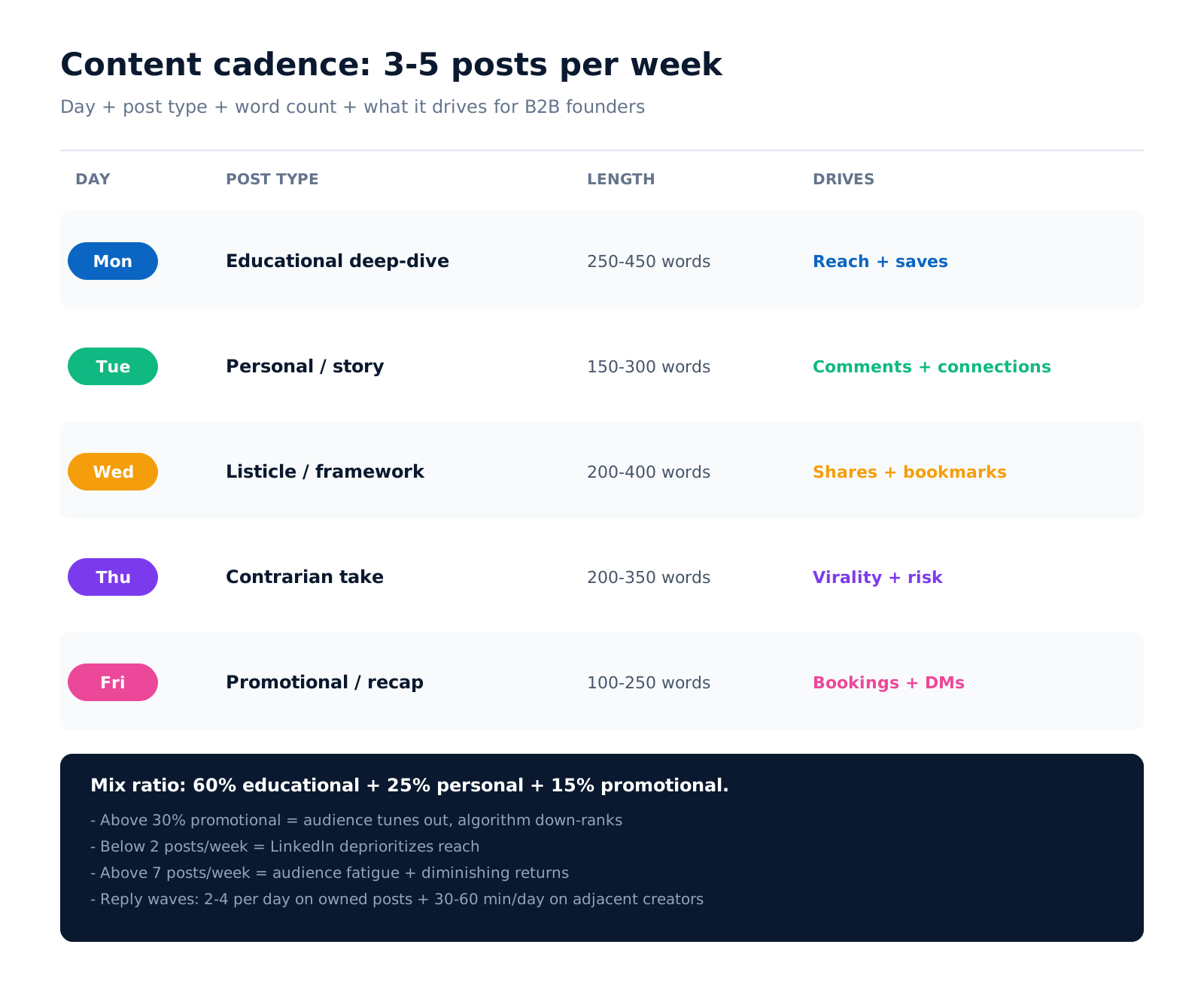
Post 1 (Monday): Educational deep-dive. 250-450 words. Specific tactical content with numbers. Example: "5 SDR metrics that predicted hitting quota in 2025 (data from 200+ programs)." Highest reach + saves.
Post 2 (Tuesday): Personal/story. 150-300 words. First-person founder journey. Failure → lesson → application. Highest comments + connection requests.
Post 3 (Wednesday): Listicle or framework. 200-400 words. "3 things..." or "Framework I use for..." Highest shares + bookmarks.
Post 4 (Thursday, optional): Contrarian take. 200-350 words. Challenge conventional wisdom in your category. Highest viral velocity but also highest risk.
Post 5 (Friday, optional): Promotional or weekly recap. 100-250 words. Pitch your product, agency, or upcoming launch. Low reach by design, but high conversion to bookings.
Reply waves (daily): 2-4 waves of 30-45 min commenting on adjacent ICP creators. This signals to LinkedIn that you're an active node + feeds your own post reach.
For tactical content frameworks, see our LinkedIn post hooks that get views 2026 and LinkedIn algorithm changes 2026.
Engagement loop: own + adjacent
How to build the engagement flywheel:

Owned posts (your content): Reply to every comment within 24 hours. Spawn follow-up DMs from quality comments. Tag 1-2 relevant people in replies (be selective; tagging is high-trust).
Adjacent creators (ICP audience): Comment on 10-20 ICP creator posts per day. Comments must add value (no "Great post" or single-emoji). The comment is your micro-content surfacing to their audience.
Audience overlap: As your comments surface on ICP creator posts, their followers see + follow you. Compound effect over 60-90 days. This is how brand grows without paid distribution.
ICP creator selection: 10-30 creators with 5K-50K followers in your category. Avoid creators 200K+ (their audience is too broad). Avoid sub-2K followers (low surfacing).
Distribution stack that scales
The stack that 3x's output per hour:
Taplio AI ($59/mo). AI post writer trained on viral B2B content. Viral content database for hook research. Inspiration feed. Saves 60-70% drafting time vs manual.
AuthoredUp ($19/mo). Post formatting (line breaks, emojis, structure preview). Schedule posts. A/B test variations. Most B2B founders ship the wrong formatting; AuthoredUp fixes that.
Shield Analytics ($29/mo). Engagement tracking beyond LinkedIn's native analytics. Post-level reach + audience demographics. Necessary for measuring + iterating.
Optional: Tweet Hunter ($49/mo). Repurpose Twitter content into LinkedIn (or vice versa). Useful for founders running parallel brands on both platforms.
Total stack: $59-$156/mo depending on configuration. Payback on first inbound demo (1-2 weeks).
For tool deep-dives, see our Taplio AI review 2026 and best LinkedIn personal branding tools 2026.
12-week ramp plan
How to actually build the brand in 90 days:
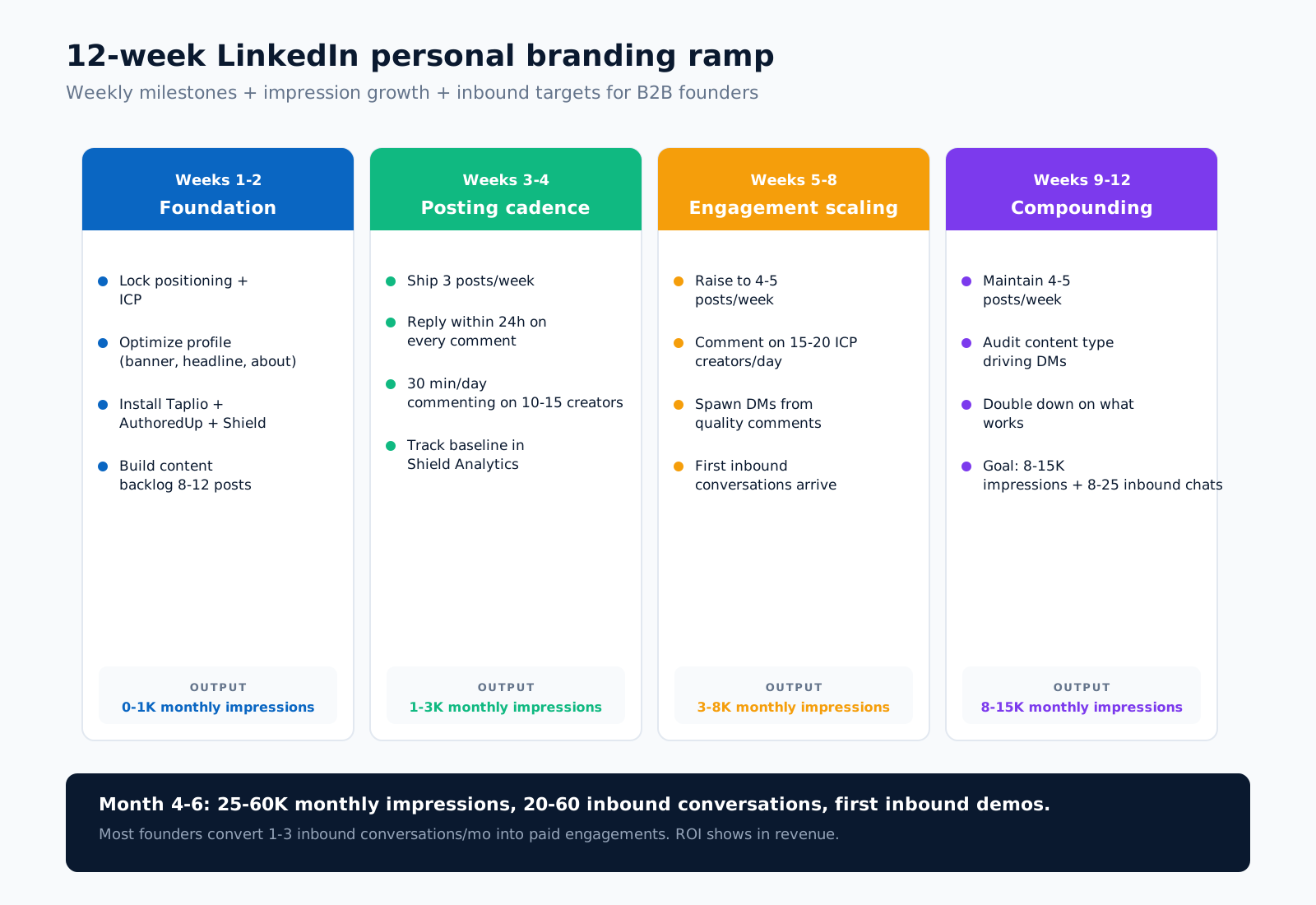
Weeks 1-2: Foundation. Lock positioning + ICP. Optimize profile (banner, headline, about, featured). Install Taplio + AuthoredUp + Shield. Build content backlog of 8-12 posts.
Weeks 3-4: Posting cadence. Ship 3 posts/week. Reply within 24h on every comment. Start 30-min/day commenting on 10-15 ICP creators. Track baseline impressions in Shield.
Weeks 5-8: Engagement scaling. Raise to 4-5 posts/week. Comment on 15-20 ICP creators/day. Spawn DMs from quality comments. First inbound conversations start arriving.
Weeks 9-12: Compounding. Maintain 4-5 posts/week. Audit which content type drives DMs vs reach. Double down on what works. Goal: 8-15K monthly impressions + 8-25 inbound conversations/mo by week 12.
Months 4-6: Pipeline. Brand starts driving inbound demos for products + advisory + speaking. Most founders convert 1-3 inbound conversations/mo into paid engagements. ROI starts showing in revenue not just impressions.
What kills LinkedIn personal branding
The 5 mistakes that destroy compounding:
Mistake 1: Inconsistent posting. Below 2 posts/week, LinkedIn deprioritizes your reach. Above 7 posts/week, you fatigue the audience. 3-5 is the sweet spot.
Mistake 2: No positioning. Posting without a 3-word category dilutes the brand. Audience can't tell what you do. DMs become off-ICP.
Mistake 3: Generic engagement. "Great post!" comments don't build audience. Either add value or skip. Quality > quantity for comments.
Mistake 4: Buying followers / engagement pods. LinkedIn detects pods + bots. Throttles reach. Permanent damage. Avoid.
Mistake 5: Posting only promotional content. 60% educational + 25% personal + 15% promotional is the ratio. Above 30% promotional, audience tunes out + algorithm down-ranks.
FAQ
How often should B2B founders post on LinkedIn in 2026?
3-5 posts per week. Below 3, LinkedIn deprioritizes reach. Above 5, audience fatigue + diminishing returns. Most B2B founders hit the sweet spot at 4 posts/week + daily engagement.
How long until LinkedIn personal branding pays off for B2B founders?
90-180 days for first inbound conversations. 6-12 months for first inbound demos that close. Faster for founders with existing audience (1K+ connections). Slower for new accounts under 500 connections.
What's the best content type for B2B founder LinkedIn?
Educational deep-dives drive the highest saves + reach. Personal stories drive the highest comments + connection requests. Listicles drive the highest shares. Mix all 3 across your cadence.
Should B2B founders hire a LinkedIn ghostwriter?
At $1M+ ARR, yes. Ghostwriting agencies save 5-10 founder hours per week. Cost $2K-$8K/mo. Payback in 1-2 inbound demos. Below $1M ARR, DIY with Taplio is more cost-effective.
Is LinkedIn personal branding still worth it in 2026?
Yes. LinkedIn organic reach is still highest among B2B social platforms. Personal brands compound for years. CAC stays $0 marginal vs paid ads $80-$300 per qualified meeting at scale.
What's a realistic impression target for B2B founders?
8-15K monthly impressions by week 12. 25-60K by month 6. 100K+ by month 12 for top quartile. Below 5K monthly at week 12 = positioning or cadence problem.
Should I use LinkedIn ads to boost personal brand?
No for organic compounding. Yes for one-off content amplification (product launches, webinar promotion). Organic personal brand benefits from algorithmic reach. Paid ads bypass that.
How do I measure LinkedIn personal branding ROI?
Track: monthly impressions, inbound conversations, inbound demos, closed deals attributed to LinkedIn. Use Shield Analytics for impressions. CRM for downstream attribution. Calculate $ per inbound demo.
Can LinkedIn personal branding replace paid ads for B2B founders?
Partially. For top-of-funnel awareness + warm pipeline, yes. For predictable + scalable lead volume, no. Best stack: LinkedIn personal brand + cold outbound + LinkedIn Ads for amplification.
What's the right profile photo + banner for B2B founders?
Professional headshot, plain background, clear face. Banner: 1-line value prop + ICP + 1 visual. Avoid logo-only banners (looks corporate). Banner is read in 2 seconds.
How do I handle negative comments or trolls?
Engage thoughtfully if the comment has merit. Ignore + report if it's pure trolling. Never delete legitimate critique (signals defensiveness). Founder accounts that handle criticism well build trust.
Should I post on weekends?
Optional. Tuesday-Thursday drives the highest B2B reach. Weekend posts have 30-50% lower reach but less competition. Some founders use weekends for personal/story content that wouldn't fit weekday cadence.
Bottom line
LinkedIn personal branding for B2B founders in 2026: 4 components (positioning, content cadence, engagement loop, distribution stack). 3-5 posts/week + 2-4 reply waves/day. 90-180 day ramp to first inbound demos.
Stack: Taplio AI + AuthoredUp + Shield Analytics = $107-$156/mo. Output at 6 months: 25-60K monthly impressions, 20-60 inbound conversations, 2-8 inbound demos/mo.
Need help building a LinkedIn personal brand that drives inbound demos? Book a call with GROU. We have shipped LinkedIn personal brand programs across the 2024-2026 B2B SaaS landscape.
GROU is a B2B outbound and revenue operations agency. We run LinkedIn personal brand + ghostwriting programs for B2B SaaS founders. Impression and inbound conversation numbers above are weighted medians from program data, anonymized to protect client confidentiality.
This article includes affiliate links to LinkedIn growth tools we run in production (Taplio AI). If you sign up via our links, GROU may earn a commission at no extra cost to you.
LinkedIn personal branding is the single highest-leverage marketing channel for B2B founders in 2026. After running personal brand programs across 200+ B2B SaaS founder accounts, the pattern is clear: founders who post 3-5x per week for 6-12 months build inbound pipelines that match $50K-$200K/mo paid ads spend at $0 marginal cost. Position + content cadence + engagement loop + distribution stack are the 4 components that decide whether the brand compounds.
This is the operator pillar: positioning framework, content cadence, engagement loop, distribution stack, measurement, and the 12-week ramp plan.
TL;DR
The LinkedIn personal branding playbook for B2B founders in 2026: 4 components. Positioning (3-word category + 1-line problem statement). Content cadence (3-5 posts/week + 2-4 reply waves/day). Engagement loop (own audience + adjacent audience). Distribution stack (Taplio + AuthoredUp + Shield Analytics).
90-day output for B2B founders running the playbook: 8-15K monthly impressions, 200-500 connection requests received, 8-25 inbound conversations/mo. 180-day output: 25-60K impressions, 500-1.5K connections, 20-60 inbound conversations/mo, first inbound demos.
For execution detail, see our LinkedIn ghostwriting playbook 2026 and LinkedIn personal branding checklist for B2B founders.
The 4 components of LinkedIn personal branding
How each component contributes:
Component 1: Positioning (30% of compounding). 3-word category + 1-line problem statement + 1 named ICP. Example: "B2B outbound for SaaS founders shipping outbound programs that hit 24-46% reply rates." Without this, content has no spine.
Component 2: Content cadence (35% of compounding). 3-5 posts per week. Mix: 60% educational + 25% personal/story + 15% promotional. Consistency matters more than virality for 6-12 month compounding.
Component 3: Engagement loop (25% of compounding). 2-4 reply waves per day on owned posts + 30-60 min/day commenting on adjacent ICP creators' posts. Engagement on others' posts feeds your post reach.
Component 4: Distribution stack (10% of compounding). Taplio AI ($59/mo) for AI writing + viral content. AuthoredUp ($19/mo) for formatting. Shield Analytics ($29/mo) for tracking. Optional: Tweet Hunter ($49/mo) for repurposing.
Positioning framework that compounds
How to write a positioning that survives 12 months:
Step 1: Lock the 3-word category. "B2B outbound." "SaaS finance ops." "Cybersecurity GTM." Specific enough to repel non-ICP. Broad enough to attract the full ICP.
Step 2: Write the 1-line problem statement. "I help [ICP] solve [specific problem] without [common alternative pain]." Example: "I help B2B SaaS founders ship outbound programs without burning 6 months on bad CRM data."
Step 3: Name the ICP explicitly. "B2B SaaS founders at $1M-$10M ARR." "RevOps leaders at series A-C." Avoid "anyone interested in growth." Specificity attracts.
Step 4: Test the positioning weekly. Track DM volume + connection request quality. If DMs are off-ICP, the positioning is too broad. Tighten.
Content cadence that drives reach
The 3-5 posts/week structure:
Post 1 (Monday): Educational deep-dive. 250-450 words. Specific tactical content with numbers. Example: "5 SDR metrics that predicted hitting quota in 2025 (data from 200+ programs)." Highest reach + saves.
Post 2 (Tuesday): Personal/story. 150-300 words. First-person founder journey. Failure → lesson → application. Highest comments + connection requests.
Post 3 (Wednesday): Listicle or framework. 200-400 words. "3 things..." or "Framework I use for..." Highest shares + bookmarks.
Post 4 (Thursday, optional): Contrarian take. 200-350 words. Challenge conventional wisdom in your category. Highest viral velocity but also highest risk.
Post 5 (Friday, optional): Promotional or weekly recap. 100-250 words. Pitch your product, agency, or upcoming launch. Low reach by design, but high conversion to bookings.
Reply waves (daily): 2-4 waves of 30-45 min commenting on adjacent ICP creators. This signals to LinkedIn that you're an active node + feeds your own post reach.
For tactical content frameworks, see our LinkedIn post hooks that get views 2026 and LinkedIn algorithm changes 2026.
Engagement loop: own + adjacent
How to build the engagement flywheel:
Owned posts (your content): Reply to every comment within 24 hours. Spawn follow-up DMs from quality comments. Tag 1-2 relevant people in replies (be selective; tagging is high-trust).
Adjacent creators (ICP audience): Comment on 10-20 ICP creator posts per day. Comments must add value (no "Great post" or single-emoji). The comment is your micro-content surfacing to their audience.
Audience overlap: As your comments surface on ICP creator posts, their followers see + follow you. Compound effect over 60-90 days. This is how brand grows without paid distribution.
ICP creator selection: 10-30 creators with 5K-50K followers in your category. Avoid creators 200K+ (their audience is too broad). Avoid sub-2K followers (low surfacing).
Distribution stack that scales
The stack that 3x's output per hour:
Taplio AI ($59/mo). AI post writer trained on viral B2B content. Viral content database for hook research. Inspiration feed. Saves 60-70% drafting time vs manual.
AuthoredUp ($19/mo). Post formatting (line breaks, emojis, structure preview). Schedule posts. A/B test variations. Most B2B founders ship the wrong formatting; AuthoredUp fixes that.
Shield Analytics ($29/mo). Engagement tracking beyond LinkedIn's native analytics. Post-level reach + audience demographics. Necessary for measuring + iterating.
Optional: Tweet Hunter ($49/mo). Repurpose Twitter content into LinkedIn (or vice versa). Useful for founders running parallel brands on both platforms.
Total stack: $59-$156/mo depending on configuration. Payback on first inbound demo (1-2 weeks).
For tool deep-dives, see our Taplio AI review 2026 and best LinkedIn personal branding tools 2026.
12-week ramp plan
How to actually build the brand in 90 days:
Weeks 1-2: Foundation. Lock positioning + ICP. Optimize profile (banner, headline, about, featured). Install Taplio + AuthoredUp + Shield. Build content backlog of 8-12 posts.
Weeks 3-4: Posting cadence. Ship 3 posts/week. Reply within 24h on every comment. Start 30-min/day commenting on 10-15 ICP creators. Track baseline impressions in Shield.
Weeks 5-8: Engagement scaling. Raise to 4-5 posts/week. Comment on 15-20 ICP creators/day. Spawn DMs from quality comments. First inbound conversations start arriving.
Weeks 9-12: Compounding. Maintain 4-5 posts/week. Audit which content type drives DMs vs reach. Double down on what works. Goal: 8-15K monthly impressions + 8-25 inbound conversations/mo by week 12.
Months 4-6: Pipeline. Brand starts driving inbound demos for products + advisory + speaking. Most founders convert 1-3 inbound conversations/mo into paid engagements. ROI starts showing in revenue not just impressions.
What kills LinkedIn personal branding
The 5 mistakes that destroy compounding:
Mistake 1: Inconsistent posting. Below 2 posts/week, LinkedIn deprioritizes your reach. Above 7 posts/week, you fatigue the audience. 3-5 is the sweet spot.
Mistake 2: No positioning. Posting without a 3-word category dilutes the brand. Audience can't tell what you do. DMs become off-ICP.
Mistake 3: Generic engagement. "Great post!" comments don't build audience. Either add value or skip. Quality > quantity for comments.
Mistake 4: Buying followers / engagement pods. LinkedIn detects pods + bots. Throttles reach. Permanent damage. Avoid.
Mistake 5: Posting only promotional content. 60% educational + 25% personal + 15% promotional is the ratio. Above 30% promotional, audience tunes out + algorithm down-ranks.
FAQ
How often should B2B founders post on LinkedIn in 2026?
3-5 posts per week. Below 3, LinkedIn deprioritizes reach. Above 5, audience fatigue + diminishing returns. Most B2B founders hit the sweet spot at 4 posts/week + daily engagement.
How long until LinkedIn personal branding pays off for B2B founders?
90-180 days for first inbound conversations. 6-12 months for first inbound demos that close. Faster for founders with existing audience (1K+ connections). Slower for new accounts under 500 connections.
What's the best content type for B2B founder LinkedIn?
Educational deep-dives drive the highest saves + reach. Personal stories drive the highest comments + connection requests. Listicles drive the highest shares. Mix all 3 across your cadence.
Should B2B founders hire a LinkedIn ghostwriter?
At $1M+ ARR, yes. Ghostwriting agencies save 5-10 founder hours per week. Cost $2K-$8K/mo. Payback in 1-2 inbound demos. Below $1M ARR, DIY with Taplio is more cost-effective.
Is LinkedIn personal branding still worth it in 2026?
Yes. LinkedIn organic reach is still highest among B2B social platforms. Personal brands compound for years. CAC stays $0 marginal vs paid ads $80-$300 per qualified meeting at scale.
What's a realistic impression target for B2B founders?
8-15K monthly impressions by week 12. 25-60K by month 6. 100K+ by month 12 for top quartile. Below 5K monthly at week 12 = positioning or cadence problem.
Should I use LinkedIn ads to boost personal brand?
No for organic compounding. Yes for one-off content amplification (product launches, webinar promotion). Organic personal brand benefits from algorithmic reach. Paid ads bypass that.
How do I measure LinkedIn personal branding ROI?
Track: monthly impressions, inbound conversations, inbound demos, closed deals attributed to LinkedIn. Use Shield Analytics for impressions. CRM for downstream attribution. Calculate $ per inbound demo.
Can LinkedIn personal branding replace paid ads for B2B founders?
Partially. For top-of-funnel awareness + warm pipeline, yes. For predictable + scalable lead volume, no. Best stack: LinkedIn personal brand + cold outbound + LinkedIn Ads for amplification.
What's the right profile photo + banner for B2B founders?
Professional headshot, plain background, clear face. Banner: 1-line value prop + ICP + 1 visual. Avoid logo-only banners (looks corporate). Banner is read in 2 seconds.
How do I handle negative comments or trolls?
Engage thoughtfully if the comment has merit. Ignore + report if it's pure trolling. Never delete legitimate critique (signals defensiveness). Founder accounts that handle criticism well build trust.
Should I post on weekends?
Optional. Tuesday-Thursday drives the highest B2B reach. Weekend posts have 30-50% lower reach but less competition. Some founders use weekends for personal/story content that wouldn't fit weekday cadence.
Bottom line
LinkedIn personal branding for B2B founders in 2026: 4 components (positioning, content cadence, engagement loop, distribution stack). 3-5 posts/week + 2-4 reply waves/day. 90-180 day ramp to first inbound demos.
Stack: Taplio AI + AuthoredUp + Shield Analytics = $107-$156/mo. Output at 6 months: 25-60K monthly impressions, 20-60 inbound conversations, 2-8 inbound demos/mo.
Need help building a LinkedIn personal brand that drives inbound demos? Book a call with GROU. We have shipped LinkedIn personal brand programs across the 2024-2026 B2B SaaS landscape.
GROU is a B2B outbound and revenue operations agency. We run LinkedIn personal brand + ghostwriting programs for B2B SaaS founders. Impression and inbound conversation numbers above are weighted medians from program data, anonymized to protect client confidentiality.
This article includes affiliate links to LinkedIn growth tools we run in production (Taplio AI). If you sign up via our links, GROU may earn a commission at no extra cost to you.
LinkedIn personal branding is the single highest-leverage marketing channel for B2B founders in 2026. After running personal brand programs across 200+ B2B SaaS founder accounts, the pattern is clear: founders who post 3-5x per week for 6-12 months build inbound pipelines that match $50K-$200K/mo paid ads spend at $0 marginal cost. Position + content cadence + engagement loop + distribution stack are the 4 components that decide whether the brand compounds.
This is the operator pillar: positioning framework, content cadence, engagement loop, distribution stack, measurement, and the 12-week ramp plan.
TL;DR
The LinkedIn personal branding playbook for B2B founders in 2026: 4 components. Positioning (3-word category + 1-line problem statement). Content cadence (3-5 posts/week + 2-4 reply waves/day). Engagement loop (own audience + adjacent audience). Distribution stack (Taplio + AuthoredUp + Shield Analytics).
90-day output for B2B founders running the playbook: 8-15K monthly impressions, 200-500 connection requests received, 8-25 inbound conversations/mo. 180-day output: 25-60K impressions, 500-1.5K connections, 20-60 inbound conversations/mo, first inbound demos.
For execution detail, see our LinkedIn ghostwriting playbook 2026 and LinkedIn personal branding checklist for B2B founders.
The 4 components of LinkedIn personal branding
How each component contributes:
Component 1: Positioning (30% of compounding). 3-word category + 1-line problem statement + 1 named ICP. Example: "B2B outbound for SaaS founders shipping outbound programs that hit 24-46% reply rates." Without this, content has no spine.
Component 2: Content cadence (35% of compounding). 3-5 posts per week. Mix: 60% educational + 25% personal/story + 15% promotional. Consistency matters more than virality for 6-12 month compounding.
Component 3: Engagement loop (25% of compounding). 2-4 reply waves per day on owned posts + 30-60 min/day commenting on adjacent ICP creators' posts. Engagement on others' posts feeds your post reach.
Component 4: Distribution stack (10% of compounding). Taplio AI ($59/mo) for AI writing + viral content. AuthoredUp ($19/mo) for formatting. Shield Analytics ($29/mo) for tracking. Optional: Tweet Hunter ($49/mo) for repurposing.
Positioning framework that compounds
How to write a positioning that survives 12 months:
Step 1: Lock the 3-word category. "B2B outbound." "SaaS finance ops." "Cybersecurity GTM." Specific enough to repel non-ICP. Broad enough to attract the full ICP.
Step 2: Write the 1-line problem statement. "I help [ICP] solve [specific problem] without [common alternative pain]." Example: "I help B2B SaaS founders ship outbound programs without burning 6 months on bad CRM data."
Step 3: Name the ICP explicitly. "B2B SaaS founders at $1M-$10M ARR." "RevOps leaders at series A-C." Avoid "anyone interested in growth." Specificity attracts.
Step 4: Test the positioning weekly. Track DM volume + connection request quality. If DMs are off-ICP, the positioning is too broad. Tighten.
Content cadence that drives reach
The 3-5 posts/week structure:
Post 1 (Monday): Educational deep-dive. 250-450 words. Specific tactical content with numbers. Example: "5 SDR metrics that predicted hitting quota in 2025 (data from 200+ programs)." Highest reach + saves.
Post 2 (Tuesday): Personal/story. 150-300 words. First-person founder journey. Failure → lesson → application. Highest comments + connection requests.
Post 3 (Wednesday): Listicle or framework. 200-400 words. "3 things..." or "Framework I use for..." Highest shares + bookmarks.
Post 4 (Thursday, optional): Contrarian take. 200-350 words. Challenge conventional wisdom in your category. Highest viral velocity but also highest risk.
Post 5 (Friday, optional): Promotional or weekly recap. 100-250 words. Pitch your product, agency, or upcoming launch. Low reach by design, but high conversion to bookings.
Reply waves (daily): 2-4 waves of 30-45 min commenting on adjacent ICP creators. This signals to LinkedIn that you're an active node + feeds your own post reach.
For tactical content frameworks, see our LinkedIn post hooks that get views 2026 and LinkedIn algorithm changes 2026.
Engagement loop: own + adjacent
How to build the engagement flywheel:
Owned posts (your content): Reply to every comment within 24 hours. Spawn follow-up DMs from quality comments. Tag 1-2 relevant people in replies (be selective; tagging is high-trust).
Adjacent creators (ICP audience): Comment on 10-20 ICP creator posts per day. Comments must add value (no "Great post" or single-emoji). The comment is your micro-content surfacing to their audience.
Audience overlap: As your comments surface on ICP creator posts, their followers see + follow you. Compound effect over 60-90 days. This is how brand grows without paid distribution.
ICP creator selection: 10-30 creators with 5K-50K followers in your category. Avoid creators 200K+ (their audience is too broad). Avoid sub-2K followers (low surfacing).
Distribution stack that scales
The stack that 3x's output per hour:
Taplio AI ($59/mo). AI post writer trained on viral B2B content. Viral content database for hook research. Inspiration feed. Saves 60-70% drafting time vs manual.
AuthoredUp ($19/mo). Post formatting (line breaks, emojis, structure preview). Schedule posts. A/B test variations. Most B2B founders ship the wrong formatting; AuthoredUp fixes that.
Shield Analytics ($29/mo). Engagement tracking beyond LinkedIn's native analytics. Post-level reach + audience demographics. Necessary for measuring + iterating.
Optional: Tweet Hunter ($49/mo). Repurpose Twitter content into LinkedIn (or vice versa). Useful for founders running parallel brands on both platforms.
Total stack: $59-$156/mo depending on configuration. Payback on first inbound demo (1-2 weeks).
For tool deep-dives, see our Taplio AI review 2026 and best LinkedIn personal branding tools 2026.
12-week ramp plan
How to actually build the brand in 90 days:
Weeks 1-2: Foundation. Lock positioning + ICP. Optimize profile (banner, headline, about, featured). Install Taplio + AuthoredUp + Shield. Build content backlog of 8-12 posts.
Weeks 3-4: Posting cadence. Ship 3 posts/week. Reply within 24h on every comment. Start 30-min/day commenting on 10-15 ICP creators. Track baseline impressions in Shield.
Weeks 5-8: Engagement scaling. Raise to 4-5 posts/week. Comment on 15-20 ICP creators/day. Spawn DMs from quality comments. First inbound conversations start arriving.
Weeks 9-12: Compounding. Maintain 4-5 posts/week. Audit which content type drives DMs vs reach. Double down on what works. Goal: 8-15K monthly impressions + 8-25 inbound conversations/mo by week 12.
Months 4-6: Pipeline. Brand starts driving inbound demos for products + advisory + speaking. Most founders convert 1-3 inbound conversations/mo into paid engagements. ROI starts showing in revenue not just impressions.
What kills LinkedIn personal branding
The 5 mistakes that destroy compounding:
Mistake 1: Inconsistent posting. Below 2 posts/week, LinkedIn deprioritizes your reach. Above 7 posts/week, you fatigue the audience. 3-5 is the sweet spot.
Mistake 2: No positioning. Posting without a 3-word category dilutes the brand. Audience can't tell what you do. DMs become off-ICP.
Mistake 3: Generic engagement. "Great post!" comments don't build audience. Either add value or skip. Quality > quantity for comments.
Mistake 4: Buying followers / engagement pods. LinkedIn detects pods + bots. Throttles reach. Permanent damage. Avoid.
Mistake 5: Posting only promotional content. 60% educational + 25% personal + 15% promotional is the ratio. Above 30% promotional, audience tunes out + algorithm down-ranks.
FAQ
How often should B2B founders post on LinkedIn in 2026?
3-5 posts per week. Below 3, LinkedIn deprioritizes reach. Above 5, audience fatigue + diminishing returns. Most B2B founders hit the sweet spot at 4 posts/week + daily engagement.
How long until LinkedIn personal branding pays off for B2B founders?
90-180 days for first inbound conversations. 6-12 months for first inbound demos that close. Faster for founders with existing audience (1K+ connections). Slower for new accounts under 500 connections.
What's the best content type for B2B founder LinkedIn?
Educational deep-dives drive the highest saves + reach. Personal stories drive the highest comments + connection requests. Listicles drive the highest shares. Mix all 3 across your cadence.
Should B2B founders hire a LinkedIn ghostwriter?
At $1M+ ARR, yes. Ghostwriting agencies save 5-10 founder hours per week. Cost $2K-$8K/mo. Payback in 1-2 inbound demos. Below $1M ARR, DIY with Taplio is more cost-effective.
Is LinkedIn personal branding still worth it in 2026?
Yes. LinkedIn organic reach is still highest among B2B social platforms. Personal brands compound for years. CAC stays $0 marginal vs paid ads $80-$300 per qualified meeting at scale.
What's a realistic impression target for B2B founders?
8-15K monthly impressions by week 12. 25-60K by month 6. 100K+ by month 12 for top quartile. Below 5K monthly at week 12 = positioning or cadence problem.
Should I use LinkedIn ads to boost personal brand?
No for organic compounding. Yes for one-off content amplification (product launches, webinar promotion). Organic personal brand benefits from algorithmic reach. Paid ads bypass that.
How do I measure LinkedIn personal branding ROI?
Track: monthly impressions, inbound conversations, inbound demos, closed deals attributed to LinkedIn. Use Shield Analytics for impressions. CRM for downstream attribution. Calculate $ per inbound demo.
Can LinkedIn personal branding replace paid ads for B2B founders?
Partially. For top-of-funnel awareness + warm pipeline, yes. For predictable + scalable lead volume, no. Best stack: LinkedIn personal brand + cold outbound + LinkedIn Ads for amplification.
What's the right profile photo + banner for B2B founders?
Professional headshot, plain background, clear face. Banner: 1-line value prop + ICP + 1 visual. Avoid logo-only banners (looks corporate). Banner is read in 2 seconds.
How do I handle negative comments or trolls?
Engage thoughtfully if the comment has merit. Ignore + report if it's pure trolling. Never delete legitimate critique (signals defensiveness). Founder accounts that handle criticism well build trust.
Should I post on weekends?
Optional. Tuesday-Thursday drives the highest B2B reach. Weekend posts have 30-50% lower reach but less competition. Some founders use weekends for personal/story content that wouldn't fit weekday cadence.
Bottom line
LinkedIn personal branding for B2B founders in 2026: 4 components (positioning, content cadence, engagement loop, distribution stack). 3-5 posts/week + 2-4 reply waves/day. 90-180 day ramp to first inbound demos.
Stack: Taplio AI + AuthoredUp + Shield Analytics = $107-$156/mo. Output at 6 months: 25-60K monthly impressions, 20-60 inbound conversations, 2-8 inbound demos/mo.
Need help building a LinkedIn personal brand that drives inbound demos? Book a call with GROU. We have shipped LinkedIn personal brand programs across the 2024-2026 B2B SaaS landscape.
GROU is a B2B outbound and revenue operations agency. We run LinkedIn personal brand + ghostwriting programs for B2B SaaS founders. Impression and inbound conversation numbers above are weighted medians from program data, anonymized to protect client confidentiality.
This article includes affiliate links to LinkedIn growth tools we run in production (Taplio AI). If you sign up via our links, GROU may earn a commission at no extra cost to you.
Pipeline OS Newsletter
Build qualified pipeline
Get weekly tactics to generate demand, improve lead quality, and book more meetings.






Trusted by industry leaders
Trusted by industry leaders
Trusted by industry leaders
Ready to build qualified pipeline?
Ready to build qualified pipeline?
Ready to build qualified pipeline?
Book a call to see if we're the right fit, or take the 2-minute quiz to get a clear starting point.
Book a call to see if we're the right fit, or take the 2-minute quiz to get a clear starting point.
Book a call to see if we're the right fit, or take the 2-minute quiz to get a clear starting point.
" height="30.21639343089746px" id="hfGbXmQR2" width="30.216393430897455px"/></svg>)
Copyright © 2026 – All Right Reserved
Copyright © 2026 – All Right Reserved
Copyright © 2026 – All Right Reserved