%22%3E%3C/path%3E%3Cpath d=%22M 63.072 7.554 C 62.258 8.022 61.577 8.689 61.092 9.493 L 61.092 7.076 L 57.158 7.076 L 57.158 22.64 L 61.089 22.64 L 61.089 14.888 C 61.089 13.446 61.403 12.434 62.03 11.853 C 62.818 11.218 63.818 10.907 64.826 10.982 L 65.868 10.982 L 65.868 6.851 C 64.891 6.834 63.926 7.076 63.073 7.554 Z%22 fill=%22rgb(17,17,17)%22%3E%3C/path%3E%3Cpath d=%22M 78.916 7.82 C 76.363 6.49 73.321 6.49 70.768 7.82 C 69.562 8.473 68.564 9.451 67.888 10.644 C 67.167 11.931 66.803 13.387 66.834 14.862 C 66.804 16.332 67.157 17.785 67.86 19.077 C 68.515 20.267 69.494 21.246 70.684 21.901 C 71.924 22.576 73.318 22.92 74.73 22.898 C 76.164 22.918 77.58 22.575 78.846 21.901 C 80.062 21.247 81.073 20.27 81.768 19.077 C 82.506 17.797 82.88 16.339 82.85 14.862 C 82.88 13.389 82.517 11.934 81.797 10.647 C 81.12 9.455 80.122 8.477 78.917 7.824 M 78.803 14.862 C 78.829 15.739 78.636 16.608 78.241 17.391 C 77.903 18.046 77.38 18.588 76.738 18.95 C 76.124 19.293 75.432 19.472 74.729 19.47 C 73.668 19.497 72.648 19.061 71.934 18.276 C 71.139 17.323 70.741 16.1 70.823 14.862 C 70.741 13.62 71.149 12.395 71.959 11.45 C 72.687 10.667 73.715 10.233 74.783 10.256 C 75.859 10.236 76.894 10.67 77.635 11.45 C 78.464 12.387 78.884 13.616 78.801 14.864%22 fill=%22rgb(17,17,17)%22%3E%3C/path%3E%3Cpath d=%22M 95.906 7.076 L 95.906 15.646 C 95.975 16.68 95.643 17.701 94.979 18.498 C 94.311 19.184 93.379 19.547 92.422 19.495 C 91.475 19.544 90.553 19.18 89.894 18.498 C 89.23 17.701 88.898 16.68 88.967 15.646 L 88.967 7.076 L 85.033 7.076 L 85.033 16.207 C 85 17.449 85.275 18.68 85.834 19.79 C 86.327 20.75 87.095 21.542 88.039 22.065 C 89.033 22.594 90.145 22.861 91.271 22.838 C 92.188 22.847 93.095 22.65 93.926 22.263 C 94.708 21.905 95.388 21.36 95.906 20.675 L 95.906 22.645 L 99.865 22.645 L 99.865 7.076 Z%22 fill=%22rgb(17,17,17)%22%3E%3C/path%3E%3Cpath d=%22M 4.513 15.626 C 4.511 10.815 7.606 6.549 12.181 5.059 C 16.756 3.57 21.77 5.195 24.601 9.086 L 27.816 5.87 C 24.074 1.186 17.981 -0.943 12.137 0.393 C 6.292 1.728 1.728 6.292 0.393 12.137 C -0.943 17.981 1.186 24.074 5.87 27.816 L 9.085 24.601 C 6.214 22.512 4.515 19.177 4.513 15.626%22 fill=%22rgb(32,62,235)%22%3E%3C/path%3E%3Cpath d=%22M 17.114 14.343 L 13.354 18.01 L 13.354 18.026 L 21.071 18.026 L 11.412 27.609 L 17.389 27.609 L 23.999 21.081 L 23.999 28.316 L 24.005 28.316 L 27.967 24.393 L 27.967 14.343 Z%22 fill=%22rgb(32,62,235)%22%3E%3C/path%3E%3C/g%3E%3C/svg%3E) ×
× ××
××›
›
›
›
ABM vs demand generation: which motion when
ABM vs demand generation: which motion when
ABM vs demand generation: which motion when
ABM vs demand generation: which motion when
ABM vs demand generation: which motion when
ABM vs demand generation: which motion when

Author
Aljaz Peklaj

The argument is usually framed as a choice, and it is not one. Account-based marketing and demand generation answer different questions. Demand generation asks who out there might want this. ABM asks how we get into these specific companies. A team that runs ABM without knowing which accounts are worth it is doing expensive guessing, and a team that runs demand generation into a market of forty possible buyers is spending money to reach people who are already reachable by name.
What actually decides it is arithmetic: how many companies could ever buy from you, and what one of them is worth.
TL;DR
Divide your total addressable market by your average contract value and the answer usually appears. If there are fewer than about 500 companies that could realistically buy, and each is worth five figures or more, ABM is the efficient motion, because you can afford to research and personalise per account. If there are thousands of possible buyers and deals are small, demand generation is the only motion that reaches enough of them, and ABM economics collapse under the research cost per account. Most B2B companies sit between those poles and need both, sequenced rather than blended: demand generation builds the pool and produces the signals, ABM works the accounts those signals surface. The failure mode in one direction is a personalised campaign into accounts nobody qualified. In the other, it is a full funnel that never converts because the buyers were never in it. Measure them differently too, because ABM measures account penetration and meeting quality while demand generation measures volume and cost per qualified lead, and holding either to the other's metric kills a programme that was working.
The arithmetic that decides it
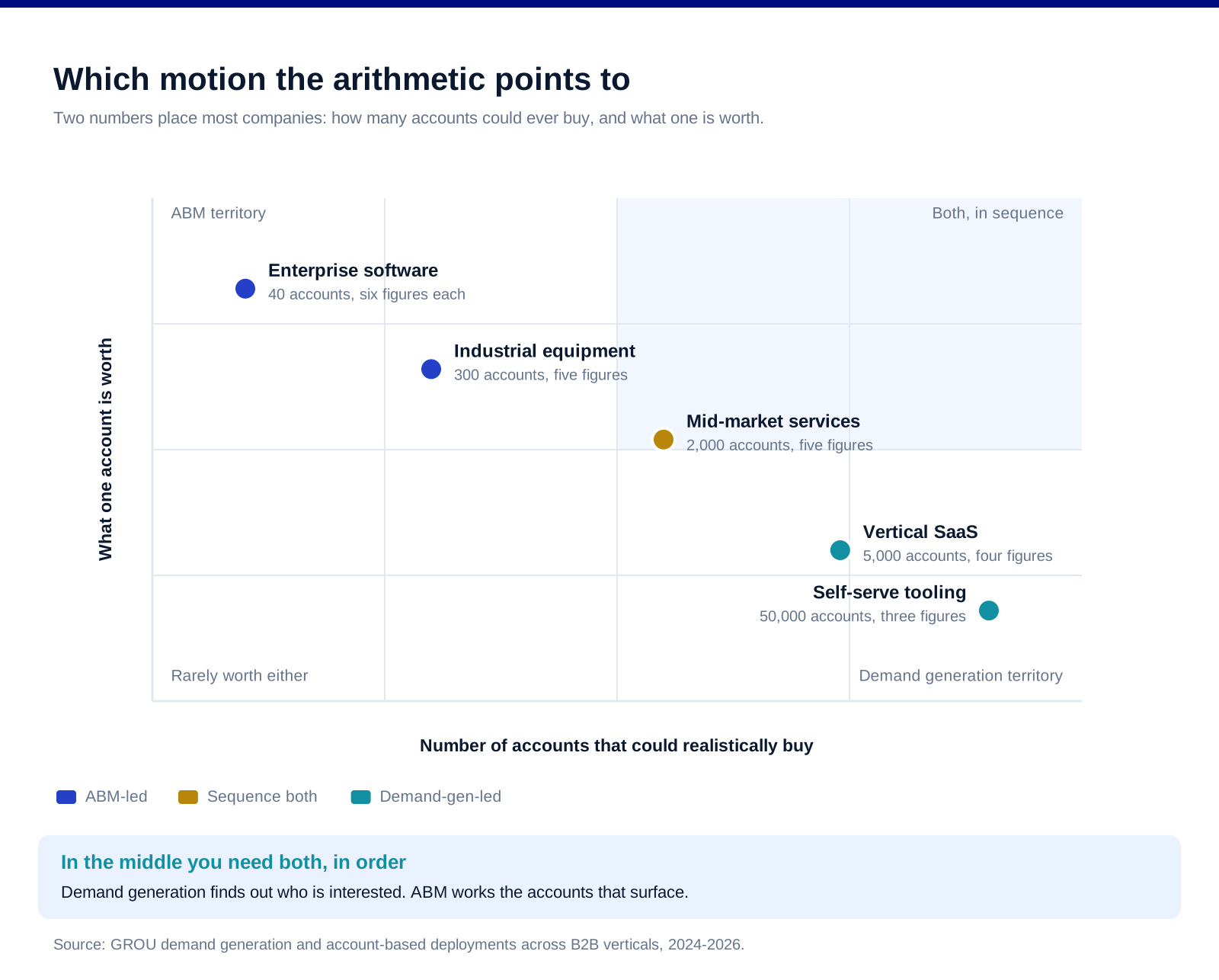
Two numbers place you on that map, and both are usually known to within an order of magnitude even in companies that think they have no data.
Count the accounts, not the people. The universe is companies that could plausibly buy, filtered by the constraints that actually disqualify: size, sector, geography, tech stack, regulatory fit. Most teams overstate this by an order of magnitude because they count the sector rather than the qualifying subset within it.
Divide the budget by the accounts. If you can spend a meaningful amount per account, ABM is affordable. If the number comes out at a few euros per account, you cannot personalise at that scale and demand generation is the honest choice.
Deal size sets the research ceiling. Research and personalisation cost real hours. A deal worth low four figures cannot carry an hour of account research. A deal worth six figures can carry a week of it.
Sales cycle length is the tiebreaker in the middle. Long, multi-stakeholder cycles reward ABM because the effort compounds across many touches with many people. Short transactional cycles reward volume, because the win comes from reaching more people rather than reaching the same people better.
What each motion is actually optimising
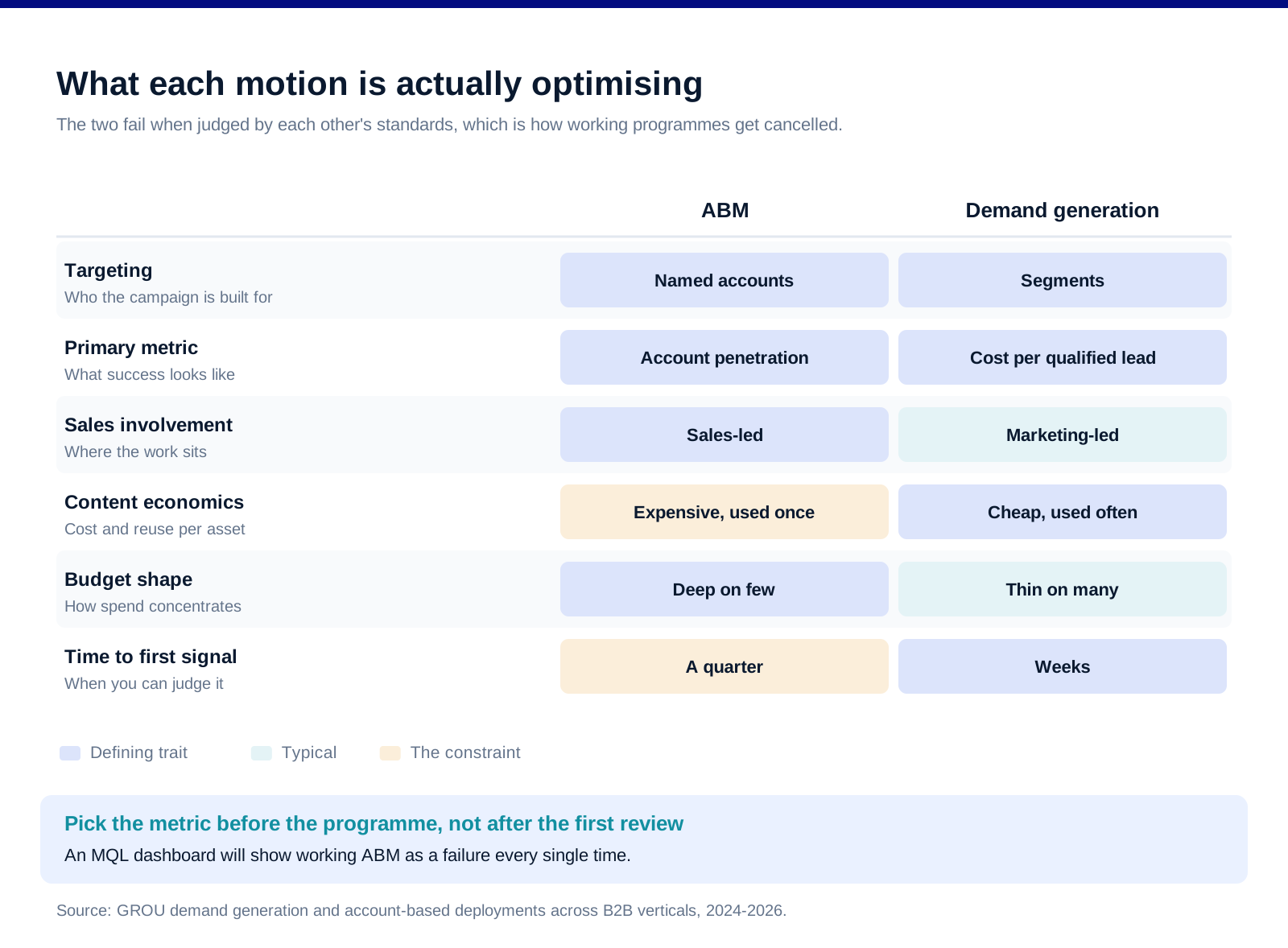
The comparison above matters because the two motions fail when judged by each other's standards, which is the most common way a working programme gets cancelled.
Targeting is the visible difference and the least important one. Named list versus segment. Everyone knows this. It is downstream of everything else on the list.
Measurement is where programmes die. ABM produces few, high-value conversations, so a dashboard counting MQLs will show ABM failing while it is working. Demand generation produces volume with variable quality, so a dashboard counting account penetration will show it failing too. Pick the metric before the programme, not after the first review.
Sales involvement is structural, not cultural. ABM does not work as a marketing programme with sales cooperation. The account research, the outreach and the follow-up sit with sales, and marketing supplies air cover. Demand generation genuinely can run as a marketing programme with a routing agreement at the end.
Content economics run opposite ways. ABM content is expensive per unit and used a handful of times. Demand generation content is cheaper per unit and used thousands of times. Teams that build ABM assets with a demand generation content process produce personalised-looking material that fools nobody.
Time to signal differs by months. Demand generation shows whether it is working in weeks. ABM often shows nothing for a quarter and then produces a meeting that turns into the year's largest deal. Fund them on different review cycles.
The sequence that works for most teams
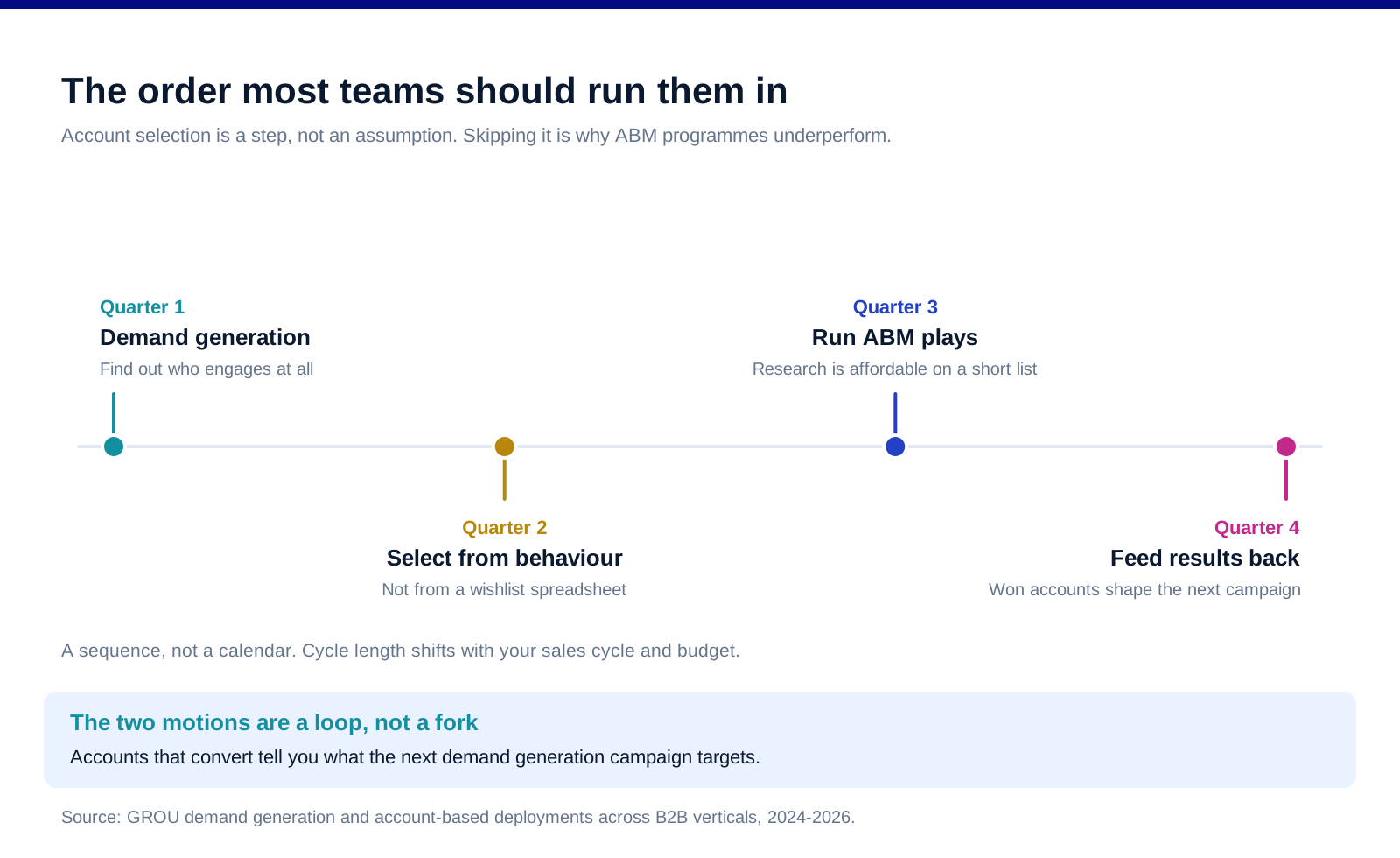
Most companies are not at either pole, and the useful question stops being which motion and becomes which order.
Quarter 1, run demand generation to learn. You need the market to tell you which companies engage, which topics land and which segments convert. Running ABM first means choosing target accounts from a list someone made in a spreadsheet, which is a guess dressed as strategy.
Quarter 2, select accounts from behaviour, not from a wishlist. The account list that works comes out of what happened in quarter one: who engaged, who matched the profile of your best customers, who showed up more than once. This is the step teams skip, and skipping it is why most ABM programmes underperform.
Quarter 3, run ABM plays against that list. Now the research is affordable because the list is short and qualified, and the personalisation lands because it is based on observed behaviour rather than firmographics alone.
Quarter 4, feed the results back. The accounts that converted tell you what the next demand generation campaign should target. The two motions are a loop rather than a fork.
Where both motions go wrong
ABM with an unqualified list. The most expensive mistake in B2B marketing: full personalisation into accounts that were never going to buy. The tell is a target list assembled from a conference attendee export or a competitor's customer page.
Demand generation with no routing. Volume arrives, nobody works it, and the programme gets blamed for the sales team's capacity problem. If leads are not followed up within a day, more leads make it worse rather than better.
Calling a good email sequence ABM. Sending the same message to 200 accounts with the company name merged in is demand generation with extra steps. ABM means the message changes because the account is different, and if nothing changes but the merge field, you have bought the label rather than the motion.
Splitting a small budget across both. A budget that could fund one motion properly funds neither when split. Under a certain size, pick one, run it for two quarters and let the results decide the second.
Measuring on the wrong horizon. Judging ABM at week six or demand generation at month nine will produce the wrong decision in both directions.
Making them work together
One account list, two treatments. Tier the accounts. The top tier gets researched plays. The rest gets programmatic reach. Same list, different intensity, one definition of who matters.
Route demand generation signals into ABM selection. Content downloads, webinar attendance and repeat site visits from target-profile companies are the qualification input that makes ABM affordable. Our webinar lead generation playbook covers the engagement data that does this job well.
Use paid to hold attention on selected accounts. Once the list exists, paid social keeps the brand present on the accounts sales is working, which is a support role rather than a lead source. The Meta Ads for B2B playbook and LinkedIn ads CPC benchmarks cover the channel economics on each side.
Keep one shared definition of a qualified account. Two motions with two definitions produce two dashboards that disagree, and the argument that follows consumes more time than either programme.
FAQ
What is the difference between ABM and demand generation?
Demand generation creates awareness and interest across a segment to find buyers you have not identified. ABM targets a named list of companies you have already decided are worth winning. One is discovery at scale, the other is penetration of a known set, and they use different content, different budgets and different success metrics.
Should a startup do ABM or demand generation first?
Demand generation first, in almost every case. ABM requires knowing which accounts are worth pursuing, and early-stage companies do not have that knowledge yet. Run broad enough to learn who engages and who converts, then build the target list from what actually happened rather than from assumptions.
How many accounts should an ABM programme target?
Enough that each gets real attention and no more. One-to-one ABM with deep research usually caps at 20 to 50 accounts per rep. One-to-few with light personalisation by segment can run into the low hundreds. If the list is over 500, you are running demand generation with a target list attached, which is fine but should be named honestly.
Can you run ABM and demand generation at the same time?
Yes, and most mature teams do, with the demand generation programme feeding the ABM account selection. The requirement is separate budgets, separate metrics and one shared definition of a qualified account. What does not work is splitting a small budget across both and running neither properly.
How do you measure ABM versus demand generation?
ABM measures account penetration, number of stakeholders engaged per account, meeting quality and pipeline created within the target list. Demand generation measures reach, cost per qualified lead, conversion rate through the funnel and pipeline volume. Holding either to the other's metrics is the fastest way to cancel a programme that was working.
Is ABM worth it for small deal sizes?
Rarely. The research and personalisation cost per account has to be justified by the deal, and below roughly five figures of contract value the arithmetic stops working. Small deal sizes are a demand generation problem, solved with volume, conversion rate and speed of follow-up rather than depth per account.
Bottom line
Divide the addressable accounts by what one is worth, and the motion picks itself at the extremes. In the middle, where most B2B companies live, the answer is both in sequence: demand generation to find out who is interested, account selection from what actually happened, then ABM against the accounts that earned the attention. Fund them separately, measure them differently, review them on different horizons, and never let a personalised campaign go out to a list nobody qualified.
Want the motion chosen and built rather than debated? Book a call with GROU. We run demand generation and account-based programmes inside B2B revenue engines across verticals.
We are GROU, a B2B pipeline agency that runs lead generation, outbound, and LinkedIn content for clients across manufacturing, fintech, iGaming, software, and professional services. The sequencing model and account-selection criteria reflect our demand generation and account-based deployments between 2024 and 2026, anonymized to protect client confidentiality.
The argument is usually framed as a choice, and it is not one. Account-based marketing and demand generation answer different questions. Demand generation asks who out there might want this. ABM asks how we get into these specific companies. A team that runs ABM without knowing which accounts are worth it is doing expensive guessing, and a team that runs demand generation into a market of forty possible buyers is spending money to reach people who are already reachable by name.
What actually decides it is arithmetic: how many companies could ever buy from you, and what one of them is worth.
TL;DR
Divide your total addressable market by your average contract value and the answer usually appears. If there are fewer than about 500 companies that could realistically buy, and each is worth five figures or more, ABM is the efficient motion, because you can afford to research and personalise per account. If there are thousands of possible buyers and deals are small, demand generation is the only motion that reaches enough of them, and ABM economics collapse under the research cost per account. Most B2B companies sit between those poles and need both, sequenced rather than blended: demand generation builds the pool and produces the signals, ABM works the accounts those signals surface. The failure mode in one direction is a personalised campaign into accounts nobody qualified. In the other, it is a full funnel that never converts because the buyers were never in it. Measure them differently too, because ABM measures account penetration and meeting quality while demand generation measures volume and cost per qualified lead, and holding either to the other's metric kills a programme that was working.
The arithmetic that decides it
Two numbers place you on that map, and both are usually known to within an order of magnitude even in companies that think they have no data.
Count the accounts, not the people. The universe is companies that could plausibly buy, filtered by the constraints that actually disqualify: size, sector, geography, tech stack, regulatory fit. Most teams overstate this by an order of magnitude because they count the sector rather than the qualifying subset within it.
Divide the budget by the accounts. If you can spend a meaningful amount per account, ABM is affordable. If the number comes out at a few euros per account, you cannot personalise at that scale and demand generation is the honest choice.
Deal size sets the research ceiling. Research and personalisation cost real hours. A deal worth low four figures cannot carry an hour of account research. A deal worth six figures can carry a week of it.
Sales cycle length is the tiebreaker in the middle. Long, multi-stakeholder cycles reward ABM because the effort compounds across many touches with many people. Short transactional cycles reward volume, because the win comes from reaching more people rather than reaching the same people better.
What each motion is actually optimising
The comparison above matters because the two motions fail when judged by each other's standards, which is the most common way a working programme gets cancelled.
Targeting is the visible difference and the least important one. Named list versus segment. Everyone knows this. It is downstream of everything else on the list.
Measurement is where programmes die. ABM produces few, high-value conversations, so a dashboard counting MQLs will show ABM failing while it is working. Demand generation produces volume with variable quality, so a dashboard counting account penetration will show it failing too. Pick the metric before the programme, not after the first review.
Sales involvement is structural, not cultural. ABM does not work as a marketing programme with sales cooperation. The account research, the outreach and the follow-up sit with sales, and marketing supplies air cover. Demand generation genuinely can run as a marketing programme with a routing agreement at the end.
Content economics run opposite ways. ABM content is expensive per unit and used a handful of times. Demand generation content is cheaper per unit and used thousands of times. Teams that build ABM assets with a demand generation content process produce personalised-looking material that fools nobody.
Time to signal differs by months. Demand generation shows whether it is working in weeks. ABM often shows nothing for a quarter and then produces a meeting that turns into the year's largest deal. Fund them on different review cycles.
The sequence that works for most teams
Most companies are not at either pole, and the useful question stops being which motion and becomes which order.
Quarter 1, run demand generation to learn. You need the market to tell you which companies engage, which topics land and which segments convert. Running ABM first means choosing target accounts from a list someone made in a spreadsheet, which is a guess dressed as strategy.
Quarter 2, select accounts from behaviour, not from a wishlist. The account list that works comes out of what happened in quarter one: who engaged, who matched the profile of your best customers, who showed up more than once. This is the step teams skip, and skipping it is why most ABM programmes underperform.
Quarter 3, run ABM plays against that list. Now the research is affordable because the list is short and qualified, and the personalisation lands because it is based on observed behaviour rather than firmographics alone.
Quarter 4, feed the results back. The accounts that converted tell you what the next demand generation campaign should target. The two motions are a loop rather than a fork.
Where both motions go wrong
ABM with an unqualified list. The most expensive mistake in B2B marketing: full personalisation into accounts that were never going to buy. The tell is a target list assembled from a conference attendee export or a competitor's customer page.
Demand generation with no routing. Volume arrives, nobody works it, and the programme gets blamed for the sales team's capacity problem. If leads are not followed up within a day, more leads make it worse rather than better.
Calling a good email sequence ABM. Sending the same message to 200 accounts with the company name merged in is demand generation with extra steps. ABM means the message changes because the account is different, and if nothing changes but the merge field, you have bought the label rather than the motion.
Splitting a small budget across both. A budget that could fund one motion properly funds neither when split. Under a certain size, pick one, run it for two quarters and let the results decide the second.
Measuring on the wrong horizon. Judging ABM at week six or demand generation at month nine will produce the wrong decision in both directions.
Making them work together
One account list, two treatments. Tier the accounts. The top tier gets researched plays. The rest gets programmatic reach. Same list, different intensity, one definition of who matters.
Route demand generation signals into ABM selection. Content downloads, webinar attendance and repeat site visits from target-profile companies are the qualification input that makes ABM affordable. Our webinar lead generation playbook covers the engagement data that does this job well.
Use paid to hold attention on selected accounts. Once the list exists, paid social keeps the brand present on the accounts sales is working, which is a support role rather than a lead source. The Meta Ads for B2B playbook and LinkedIn ads CPC benchmarks cover the channel economics on each side.
Keep one shared definition of a qualified account. Two motions with two definitions produce two dashboards that disagree, and the argument that follows consumes more time than either programme.
FAQ
What is the difference between ABM and demand generation?
Demand generation creates awareness and interest across a segment to find buyers you have not identified. ABM targets a named list of companies you have already decided are worth winning. One is discovery at scale, the other is penetration of a known set, and they use different content, different budgets and different success metrics.
Should a startup do ABM or demand generation first?
Demand generation first, in almost every case. ABM requires knowing which accounts are worth pursuing, and early-stage companies do not have that knowledge yet. Run broad enough to learn who engages and who converts, then build the target list from what actually happened rather than from assumptions.
How many accounts should an ABM programme target?
Enough that each gets real attention and no more. One-to-one ABM with deep research usually caps at 20 to 50 accounts per rep. One-to-few with light personalisation by segment can run into the low hundreds. If the list is over 500, you are running demand generation with a target list attached, which is fine but should be named honestly.
Can you run ABM and demand generation at the same time?
Yes, and most mature teams do, with the demand generation programme feeding the ABM account selection. The requirement is separate budgets, separate metrics and one shared definition of a qualified account. What does not work is splitting a small budget across both and running neither properly.
How do you measure ABM versus demand generation?
ABM measures account penetration, number of stakeholders engaged per account, meeting quality and pipeline created within the target list. Demand generation measures reach, cost per qualified lead, conversion rate through the funnel and pipeline volume. Holding either to the other's metrics is the fastest way to cancel a programme that was working.
Is ABM worth it for small deal sizes?
Rarely. The research and personalisation cost per account has to be justified by the deal, and below roughly five figures of contract value the arithmetic stops working. Small deal sizes are a demand generation problem, solved with volume, conversion rate and speed of follow-up rather than depth per account.
Bottom line
Divide the addressable accounts by what one is worth, and the motion picks itself at the extremes. In the middle, where most B2B companies live, the answer is both in sequence: demand generation to find out who is interested, account selection from what actually happened, then ABM against the accounts that earned the attention. Fund them separately, measure them differently, review them on different horizons, and never let a personalised campaign go out to a list nobody qualified.
Want the motion chosen and built rather than debated? Book a call with GROU. We run demand generation and account-based programmes inside B2B revenue engines across verticals.
We are GROU, a B2B pipeline agency that runs lead generation, outbound, and LinkedIn content for clients across manufacturing, fintech, iGaming, software, and professional services. The sequencing model and account-selection criteria reflect our demand generation and account-based deployments between 2024 and 2026, anonymized to protect client confidentiality.
The argument is usually framed as a choice, and it is not one. Account-based marketing and demand generation answer different questions. Demand generation asks who out there might want this. ABM asks how we get into these specific companies. A team that runs ABM without knowing which accounts are worth it is doing expensive guessing, and a team that runs demand generation into a market of forty possible buyers is spending money to reach people who are already reachable by name.
What actually decides it is arithmetic: how many companies could ever buy from you, and what one of them is worth.
TL;DR
Divide your total addressable market by your average contract value and the answer usually appears. If there are fewer than about 500 companies that could realistically buy, and each is worth five figures or more, ABM is the efficient motion, because you can afford to research and personalise per account. If there are thousands of possible buyers and deals are small, demand generation is the only motion that reaches enough of them, and ABM economics collapse under the research cost per account. Most B2B companies sit between those poles and need both, sequenced rather than blended: demand generation builds the pool and produces the signals, ABM works the accounts those signals surface. The failure mode in one direction is a personalised campaign into accounts nobody qualified. In the other, it is a full funnel that never converts because the buyers were never in it. Measure them differently too, because ABM measures account penetration and meeting quality while demand generation measures volume and cost per qualified lead, and holding either to the other's metric kills a programme that was working.
The arithmetic that decides it
Two numbers place you on that map, and both are usually known to within an order of magnitude even in companies that think they have no data.
Count the accounts, not the people. The universe is companies that could plausibly buy, filtered by the constraints that actually disqualify: size, sector, geography, tech stack, regulatory fit. Most teams overstate this by an order of magnitude because they count the sector rather than the qualifying subset within it.
Divide the budget by the accounts. If you can spend a meaningful amount per account, ABM is affordable. If the number comes out at a few euros per account, you cannot personalise at that scale and demand generation is the honest choice.
Deal size sets the research ceiling. Research and personalisation cost real hours. A deal worth low four figures cannot carry an hour of account research. A deal worth six figures can carry a week of it.
Sales cycle length is the tiebreaker in the middle. Long, multi-stakeholder cycles reward ABM because the effort compounds across many touches with many people. Short transactional cycles reward volume, because the win comes from reaching more people rather than reaching the same people better.
What each motion is actually optimising
The comparison above matters because the two motions fail when judged by each other's standards, which is the most common way a working programme gets cancelled.
Targeting is the visible difference and the least important one. Named list versus segment. Everyone knows this. It is downstream of everything else on the list.
Measurement is where programmes die. ABM produces few, high-value conversations, so a dashboard counting MQLs will show ABM failing while it is working. Demand generation produces volume with variable quality, so a dashboard counting account penetration will show it failing too. Pick the metric before the programme, not after the first review.
Sales involvement is structural, not cultural. ABM does not work as a marketing programme with sales cooperation. The account research, the outreach and the follow-up sit with sales, and marketing supplies air cover. Demand generation genuinely can run as a marketing programme with a routing agreement at the end.
Content economics run opposite ways. ABM content is expensive per unit and used a handful of times. Demand generation content is cheaper per unit and used thousands of times. Teams that build ABM assets with a demand generation content process produce personalised-looking material that fools nobody.
Time to signal differs by months. Demand generation shows whether it is working in weeks. ABM often shows nothing for a quarter and then produces a meeting that turns into the year's largest deal. Fund them on different review cycles.
The sequence that works for most teams
Most companies are not at either pole, and the useful question stops being which motion and becomes which order.
Quarter 1, run demand generation to learn. You need the market to tell you which companies engage, which topics land and which segments convert. Running ABM first means choosing target accounts from a list someone made in a spreadsheet, which is a guess dressed as strategy.
Quarter 2, select accounts from behaviour, not from a wishlist. The account list that works comes out of what happened in quarter one: who engaged, who matched the profile of your best customers, who showed up more than once. This is the step teams skip, and skipping it is why most ABM programmes underperform.
Quarter 3, run ABM plays against that list. Now the research is affordable because the list is short and qualified, and the personalisation lands because it is based on observed behaviour rather than firmographics alone.
Quarter 4, feed the results back. The accounts that converted tell you what the next demand generation campaign should target. The two motions are a loop rather than a fork.
Where both motions go wrong
ABM with an unqualified list. The most expensive mistake in B2B marketing: full personalisation into accounts that were never going to buy. The tell is a target list assembled from a conference attendee export or a competitor's customer page.
Demand generation with no routing. Volume arrives, nobody works it, and the programme gets blamed for the sales team's capacity problem. If leads are not followed up within a day, more leads make it worse rather than better.
Calling a good email sequence ABM. Sending the same message to 200 accounts with the company name merged in is demand generation with extra steps. ABM means the message changes because the account is different, and if nothing changes but the merge field, you have bought the label rather than the motion.
Splitting a small budget across both. A budget that could fund one motion properly funds neither when split. Under a certain size, pick one, run it for two quarters and let the results decide the second.
Measuring on the wrong horizon. Judging ABM at week six or demand generation at month nine will produce the wrong decision in both directions.
Making them work together
One account list, two treatments. Tier the accounts. The top tier gets researched plays. The rest gets programmatic reach. Same list, different intensity, one definition of who matters.
Route demand generation signals into ABM selection. Content downloads, webinar attendance and repeat site visits from target-profile companies are the qualification input that makes ABM affordable. Our webinar lead generation playbook covers the engagement data that does this job well.
Use paid to hold attention on selected accounts. Once the list exists, paid social keeps the brand present on the accounts sales is working, which is a support role rather than a lead source. The Meta Ads for B2B playbook and LinkedIn ads CPC benchmarks cover the channel economics on each side.
Keep one shared definition of a qualified account. Two motions with two definitions produce two dashboards that disagree, and the argument that follows consumes more time than either programme.
FAQ
What is the difference between ABM and demand generation?
Demand generation creates awareness and interest across a segment to find buyers you have not identified. ABM targets a named list of companies you have already decided are worth winning. One is discovery at scale, the other is penetration of a known set, and they use different content, different budgets and different success metrics.
Should a startup do ABM or demand generation first?
Demand generation first, in almost every case. ABM requires knowing which accounts are worth pursuing, and early-stage companies do not have that knowledge yet. Run broad enough to learn who engages and who converts, then build the target list from what actually happened rather than from assumptions.
How many accounts should an ABM programme target?
Enough that each gets real attention and no more. One-to-one ABM with deep research usually caps at 20 to 50 accounts per rep. One-to-few with light personalisation by segment can run into the low hundreds. If the list is over 500, you are running demand generation with a target list attached, which is fine but should be named honestly.
Can you run ABM and demand generation at the same time?
Yes, and most mature teams do, with the demand generation programme feeding the ABM account selection. The requirement is separate budgets, separate metrics and one shared definition of a qualified account. What does not work is splitting a small budget across both and running neither properly.
How do you measure ABM versus demand generation?
ABM measures account penetration, number of stakeholders engaged per account, meeting quality and pipeline created within the target list. Demand generation measures reach, cost per qualified lead, conversion rate through the funnel and pipeline volume. Holding either to the other's metrics is the fastest way to cancel a programme that was working.
Is ABM worth it for small deal sizes?
Rarely. The research and personalisation cost per account has to be justified by the deal, and below roughly five figures of contract value the arithmetic stops working. Small deal sizes are a demand generation problem, solved with volume, conversion rate and speed of follow-up rather than depth per account.
Bottom line
Divide the addressable accounts by what one is worth, and the motion picks itself at the extremes. In the middle, where most B2B companies live, the answer is both in sequence: demand generation to find out who is interested, account selection from what actually happened, then ABM against the accounts that earned the attention. Fund them separately, measure them differently, review them on different horizons, and never let a personalised campaign go out to a list nobody qualified.
Want the motion chosen and built rather than debated? Book a call with GROU. We run demand generation and account-based programmes inside B2B revenue engines across verticals.
We are GROU, a B2B pipeline agency that runs lead generation, outbound, and LinkedIn content for clients across manufacturing, fintech, iGaming, software, and professional services. The sequencing model and account-selection criteria reflect our demand generation and account-based deployments between 2024 and 2026, anonymized to protect client confidentiality.

Pipeline OS Newsletter
Build qualified pipeline
Get weekly tactics to generate demand, improve lead quality, and book more meetings.







Trusted by industry leaders
Trusted by industry leaders
Trusted by industry leaders
Ready to build qualified pipeline?
Ready to build qualified pipeline?
Ready to build qualified pipeline?
Book a call to see if we're the right fit, or take the 2-minute quiz to get a clear starting point.
Book a call to see if we're the right fit, or take the 2-minute quiz to get a clear starting point.
Book a call to see if we're the right fit, or take the 2-minute quiz to get a clear starting point.
" height="30.21639343089746px" id="hfGbXmQR2" width="30.216393430897455px"/></svg>)
Copyright © 2026 – All Right Reserved
Copyright © 2026 – All Right Reserved
Copyright © 2026 – All Right Reserved