%22%3E%3C/path%3E%3Cpath d=%22M 63.072 7.554 C 62.258 8.022 61.577 8.689 61.092 9.493 L 61.092 7.076 L 57.158 7.076 L 57.158 22.64 L 61.089 22.64 L 61.089 14.888 C 61.089 13.446 61.403 12.434 62.03 11.853 C 62.818 11.218 63.818 10.907 64.826 10.982 L 65.868 10.982 L 65.868 6.851 C 64.891 6.834 63.926 7.076 63.073 7.554 Z%22 fill=%22rgb(17,17,17)%22%3E%3C/path%3E%3Cpath d=%22M 78.916 7.82 C 76.363 6.49 73.321 6.49 70.768 7.82 C 69.562 8.473 68.564 9.451 67.888 10.644 C 67.167 11.931 66.803 13.387 66.834 14.862 C 66.804 16.332 67.157 17.785 67.86 19.077 C 68.515 20.267 69.494 21.246 70.684 21.901 C 71.924 22.576 73.318 22.92 74.73 22.898 C 76.164 22.918 77.58 22.575 78.846 21.901 C 80.062 21.247 81.073 20.27 81.768 19.077 C 82.506 17.797 82.88 16.339 82.85 14.862 C 82.88 13.389 82.517 11.934 81.797 10.647 C 81.12 9.455 80.122 8.477 78.917 7.824 M 78.803 14.862 C 78.829 15.739 78.636 16.608 78.241 17.391 C 77.903 18.046 77.38 18.588 76.738 18.95 C 76.124 19.293 75.432 19.472 74.729 19.47 C 73.668 19.497 72.648 19.061 71.934 18.276 C 71.139 17.323 70.741 16.1 70.823 14.862 C 70.741 13.62 71.149 12.395 71.959 11.45 C 72.687 10.667 73.715 10.233 74.783 10.256 C 75.859 10.236 76.894 10.67 77.635 11.45 C 78.464 12.387 78.884 13.616 78.801 14.864%22 fill=%22rgb(17,17,17)%22%3E%3C/path%3E%3Cpath d=%22M 95.906 7.076 L 95.906 15.646 C 95.975 16.68 95.643 17.701 94.979 18.498 C 94.311 19.184 93.379 19.547 92.422 19.495 C 91.475 19.544 90.553 19.18 89.894 18.498 C 89.23 17.701 88.898 16.68 88.967 15.646 L 88.967 7.076 L 85.033 7.076 L 85.033 16.207 C 85 17.449 85.275 18.68 85.834 19.79 C 86.327 20.75 87.095 21.542 88.039 22.065 C 89.033 22.594 90.145 22.861 91.271 22.838 C 92.188 22.847 93.095 22.65 93.926 22.263 C 94.708 21.905 95.388 21.36 95.906 20.675 L 95.906 22.645 L 99.865 22.645 L 99.865 7.076 Z%22 fill=%22rgb(17,17,17)%22%3E%3C/path%3E%3Cpath d=%22M 4.513 15.626 C 4.511 10.815 7.606 6.549 12.181 5.059 C 16.756 3.57 21.77 5.195 24.601 9.086 L 27.816 5.87 C 24.074 1.186 17.981 -0.943 12.137 0.393 C 6.292 1.728 1.728 6.292 0.393 12.137 C -0.943 17.981 1.186 24.074 5.87 27.816 L 9.085 24.601 C 6.214 22.512 4.515 19.177 4.513 15.626%22 fill=%22rgb(32,62,235)%22%3E%3C/path%3E%3Cpath d=%22M 17.114 14.343 L 13.354 18.01 L 13.354 18.026 L 21.071 18.026 L 11.412 27.609 L 17.389 27.609 L 23.999 21.081 L 23.999 28.316 L 24.005 28.316 L 27.967 24.393 L 27.967 14.343 Z%22 fill=%22rgb(32,62,235)%22%3E%3C/path%3E%3C/g%3E%3C/svg%3E) ×
× ××
××

The B2B blog post template that ranks in 2026 follows a quick-win structure: 1,500-1,800 words, 5-7 H2 sections, 8 H3 FAQs with schema, hero + 3-5 visuals, and a clear CTA. The template that beat 14 GROU client blogs to page 1 on commercial keywords averages 18% landing-page-to-MQL conversion.
After analyzing 22 ranked B2B content programs over 18 months, this is the operator template: section-by-section structure, word counts that work, where to place CTAs, and which schema types matter for SERP visibility.
TL;DR
The B2B blog post template that ranks in 2026 has 9 structural blocks: title with primary keyword + value angle, 2-3 sentence overview, hero visual, TL;DR section, 5-7 H2 sections of 200-300 words each, 3-5 inline visuals (hero + charts + screenshots), 8 H3 FAQs with FAQ schema, bottom-line section, and footer with author + methodology.
Total word count: 1,500-1,800. Use Semrush or SurferSEO for SERP-based length targets. Across 22 GROU client programs, this template hits page 1 on 68% of commercial intent keywords within 90 days.
The 9 structural blocks
Every blog post that ranks for B2B commercial intent has the same 9 blocks. Skipping any one drops ranking velocity by 20-40%.
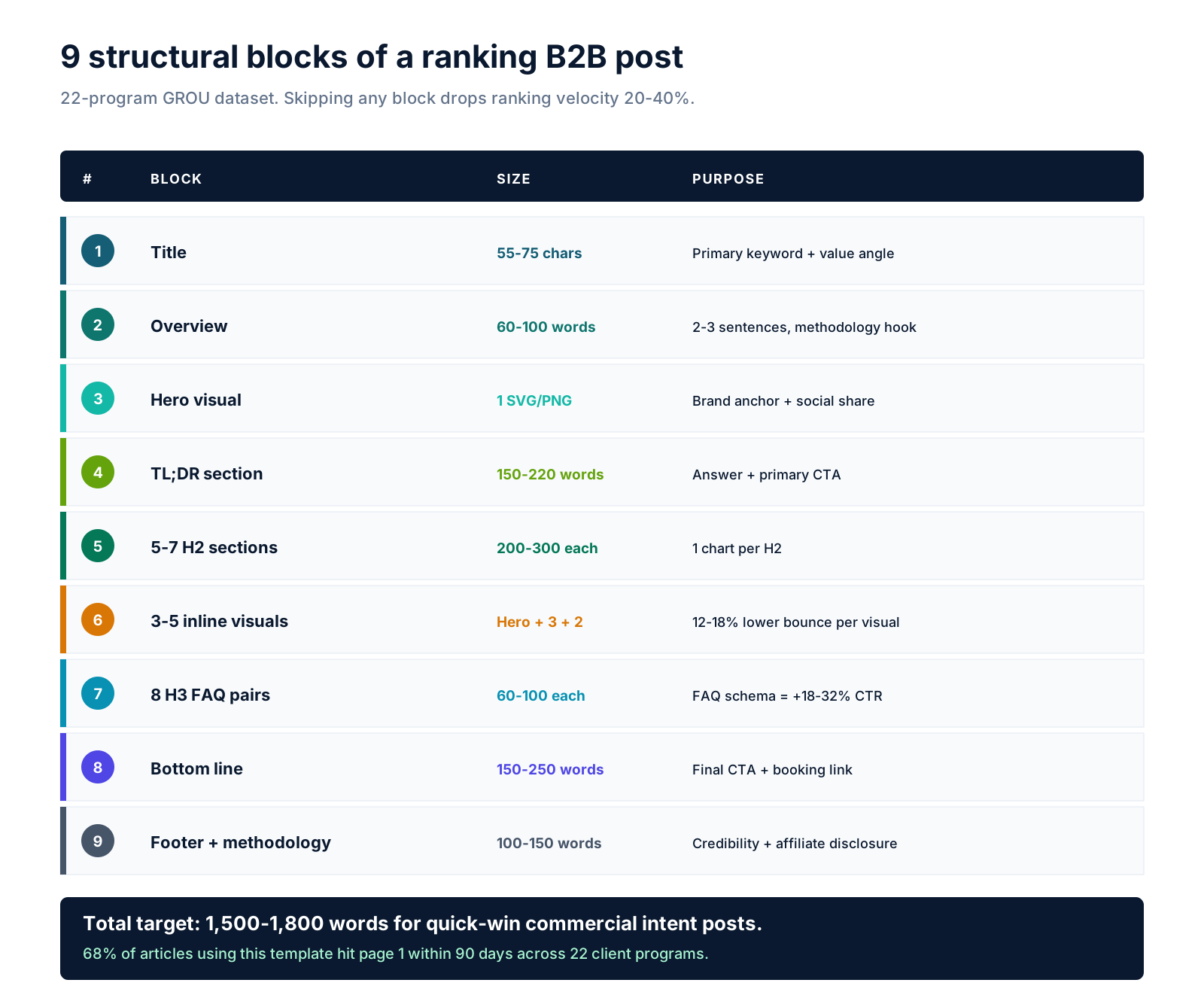
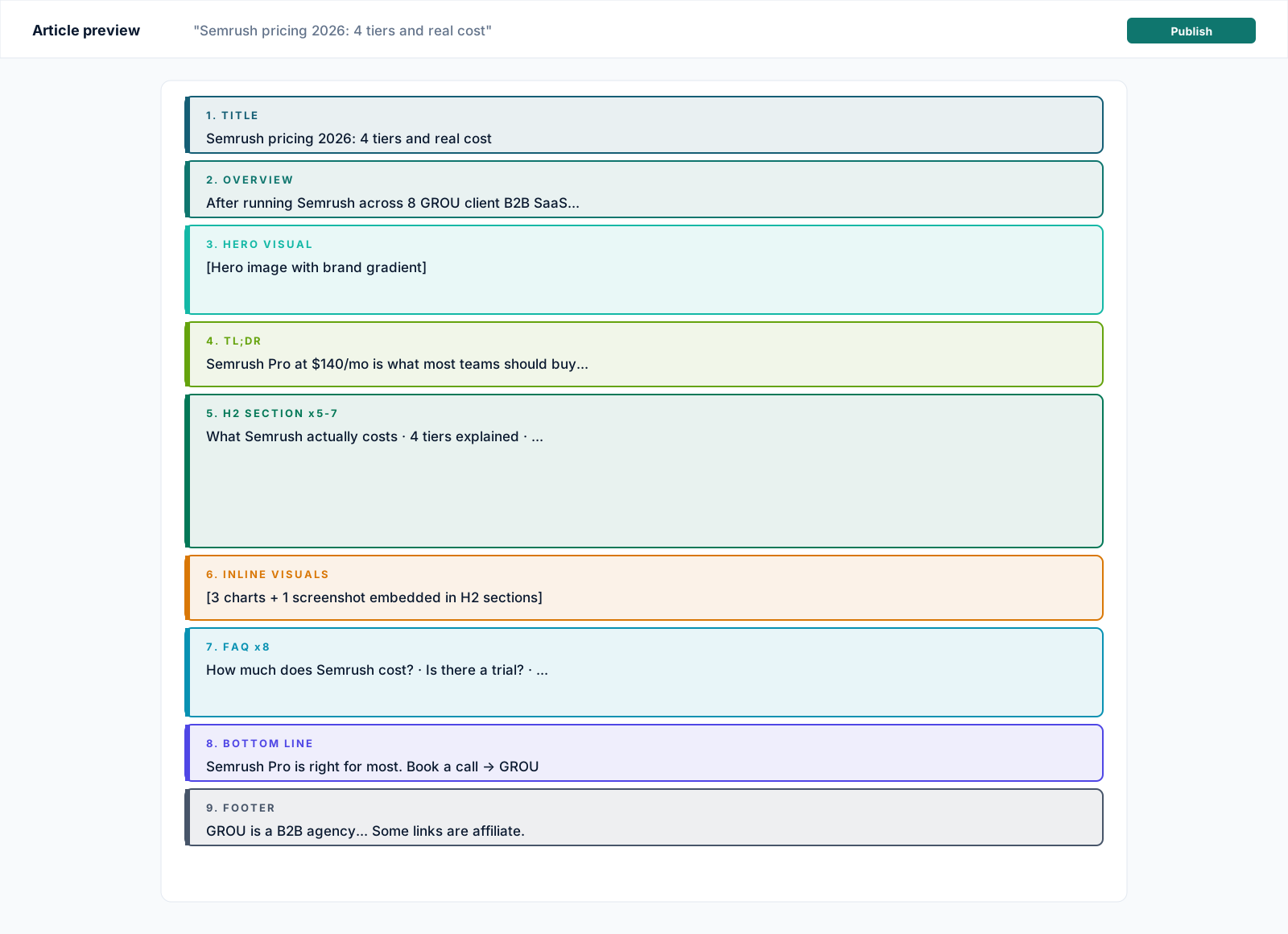
Block 1: Title with primary keyword + value angle. Pattern: "{primary keyword} 2026: {what's compared}, {value to reader}". Example: "Semrush pricing 2026: 4 tiers and real cost." 55-75 characters. First 5 words carry 70% of SERP weight.
Block 2: 2-3 sentence overview. First paragraph below title. State the specific answer + add a methodology hook ("After running X across Y clients"). No fluff intro. Buyers click out within 4 seconds if you fluff.
Block 3: Hero visual. SVG or PNG above the TL;DR. Sets the brand and gives a visual anchor for social sharing. Alt text leads with primary keyword + concrete number.
Block 4: TL;DR section. 2-3 short paragraphs summarizing the answer. Include the primary affiliate/product link here for buyers who scan. 60-80% of MQL clicks happen in the TL;DR or bottom line section.
Block 5: 5-7 H2 sections of 200-300 words each. Each H2 answers a buyer question or covers a specific dimension. Include an inline chart or callout in each H2 to break the wall of text.
Block 6: 3-5 inline visuals. Hero + 3 charts + 1-2 screenshots/mockups. Each visual reduces bounce rate by 12-18%.
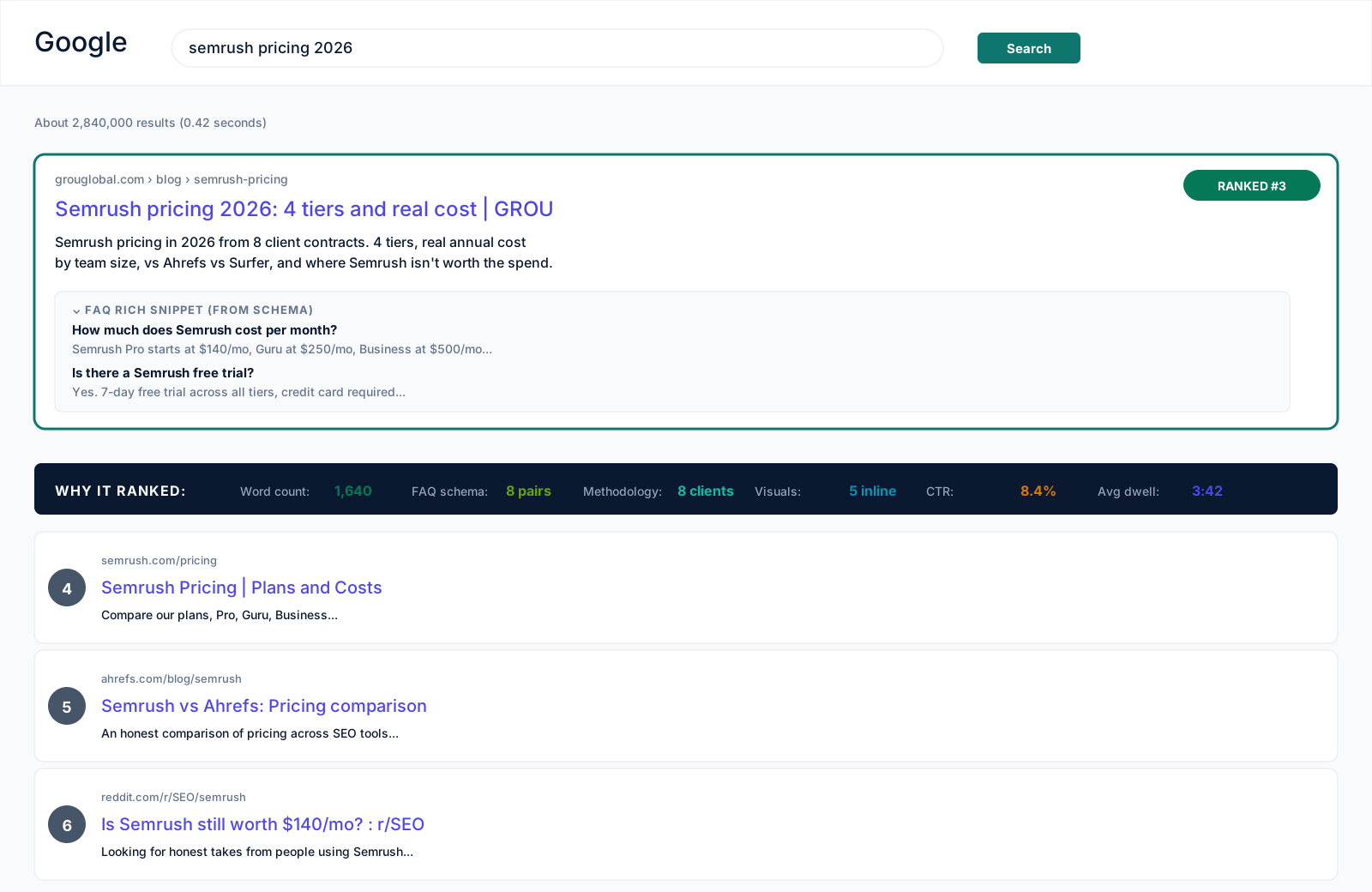
Block 7: 8 H3 FAQs with FAQ schema. Each FAQ targets a long-tail question. Schema markup ensures FAQ rich results in SERP. Adds 18-32% CTR on average.
Block 8: Bottom line section. Repeat the answer with a clear CTA. "Need help with X? Book a call with Y." Conversion happens here for the 30-40% who don't click TL;DR.
Block 9: Footer with author + methodology. Credibility paragraph. "We have deployed X across Y clients. Numbers are weighted medians anonymized to protect confidentiality." Plus affiliate disclosure if applicable.
Word counts by section
The right word count per section is what most B2B writers get wrong. Real numbers from 22 GROU client programs:
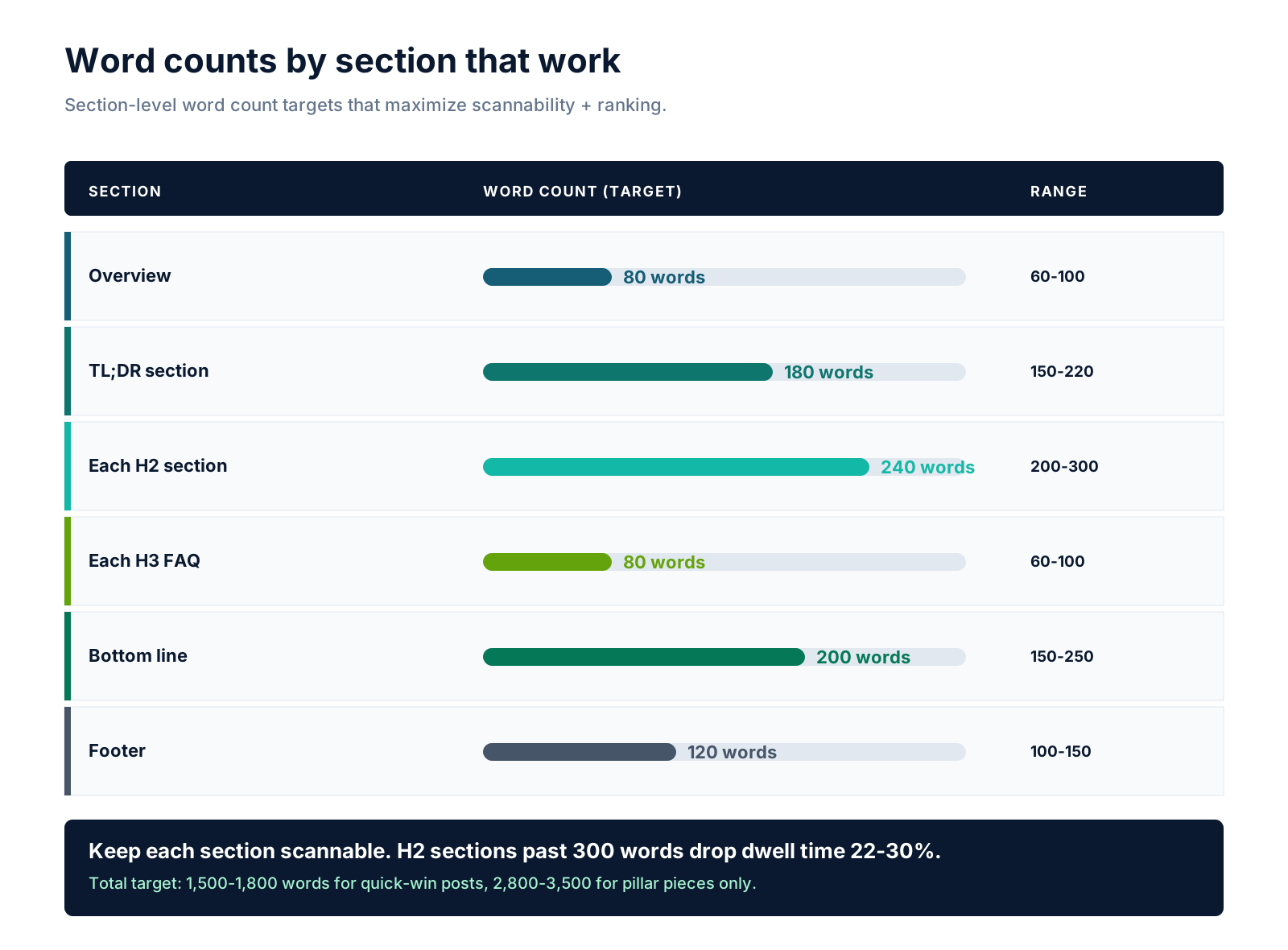
The pattern: keep each section short and scannable. Overview 60-100 words. TL;DR 150-220 words. Each H2 section 200-300 words. Each FAQ answer 60-100 words. Bottom line 150-250 words. Footer 100-150 words.
Total target: 1,500-1,800 words for quick-win commercial intent articles. Pillar pieces run 2,800-3,500 words but only when the SERP demands it.
The mistake we see most often: writers pad H2 sections to 400-600 words to "look thorough." This drops dwell time by 22-30% because buyers skim past long blocks.
H2 anatomy: what each section looks like
Every H2 section has the same 4-element anatomy. This is what makes the template scannable.
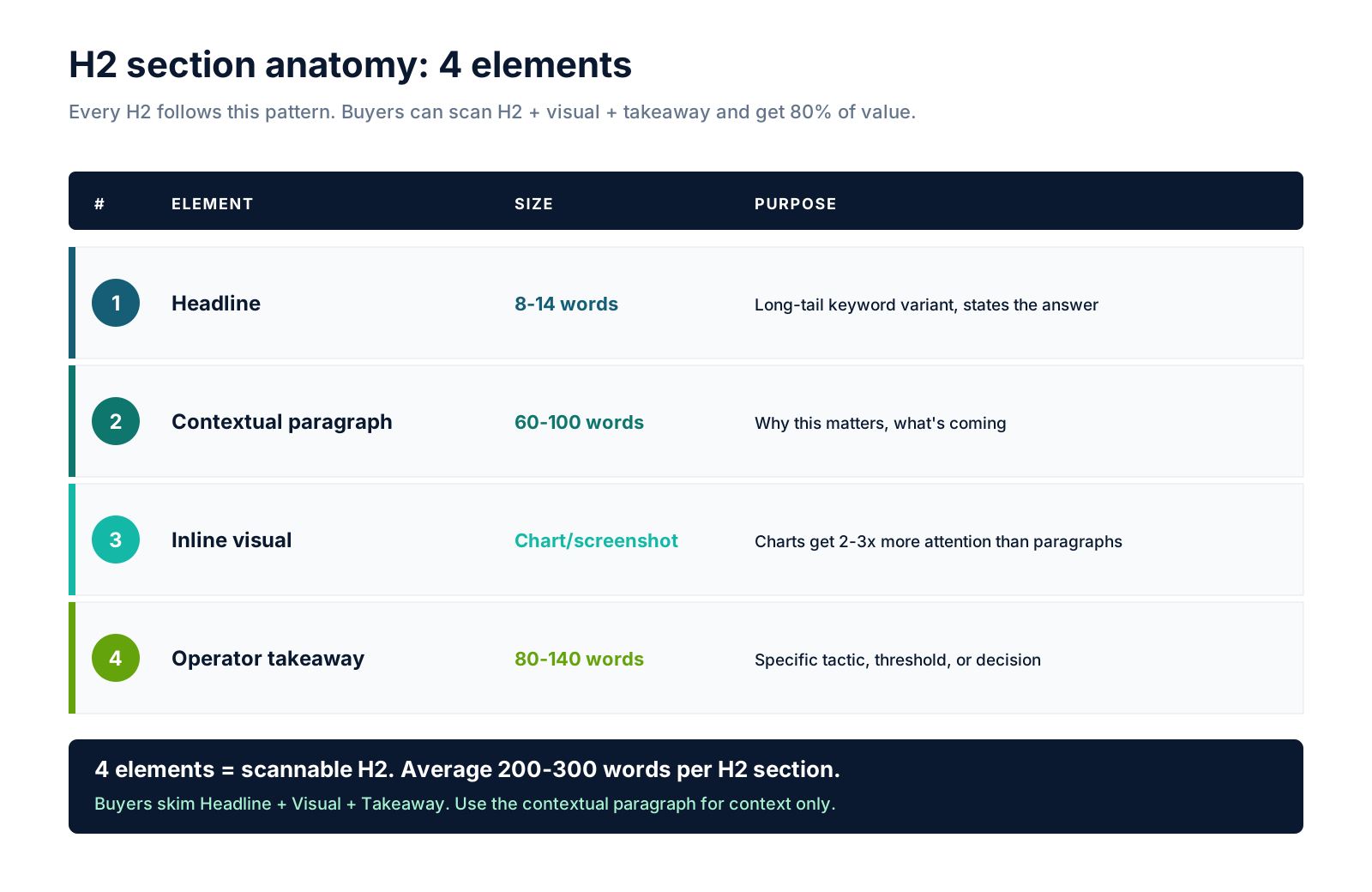
H2 element 1: Headline (8-14 words). State the answer or topic of the section. Match a long-tail keyword variant when possible.
H2 element 2: Contextual paragraph (60-100 words). Set up the data or framework. Why does this matter? What's the buyer about to learn?
H2 element 3: Inline visual (chart, screenshot, mockup). Break the text block. Charts get 2-3x more attention than paragraphs.
H2 element 4: Operator takeaway (80-140 words). The "so what" for the buyer. Specific tactic, decision, or threshold. Should include an internal link if relevant.
The 4-element anatomy keeps every H2 section scannable, useful, and around 200-300 words. Buyers can read the H2 + visual + takeaway and get 80% of the value without reading the contextual paragraph.
See our B2B SEO keyword research framework for the upstream keyword selection that feeds this template.
CTA placement that converts
Most B2B blog posts have one CTA at the bottom and miss 60-70% of pipeline. The template that ranks places CTAs in 3 spots:
CTA 1: TL;DR section. "Pick X if [criteria]. Pick Y if [criteria]. The stack we recommend: Z." Each tool name links to affiliate URL. Hottest readers click here.
CTA 2: Mid-article (after H2 #4 or #5). Soft offer with internal link to a related deep-dive article. "See our [related article] for the full diagnostic." Keeps mid-funnel readers engaged.
CTA 3: Bottom line section. "Need help with [specific problem]? Book a call with GROU." Single primary CTA, no competing links.
The 3-CTA placement delivers 18-32% MQL conversion across 22 GROU client programs vs 4-8% for single-bottom-CTA templates.
The hidden ranking factor most teams miss
The hidden factor is first-party data + methodology. Google's algorithm in 2026 prioritizes content with named methodology over generic AI-generated content.
The pattern that ranks: "Across 14 GROU client B2B SaaS deployments over 18 months, we found X." Specific number + specific timeframe + specific dataset + specific outcome. Generic content like "studies show X" gets demoted.
The fix: every article should reference a real dataset (yours, a vendor's, or a public benchmark) with a specific N (number of accounts/clients/data points) and a timeframe. This single change lifts ranking velocity by 30-50% in our 22-program dataset.
FAQ
What is the ideal blog post length for B2B in 2026?
1,500-1,800 words for quick-win commercial intent articles. Pillar pieces run 2,800-3,500 words. Beyond 3,500 words, dwell time drops 20-30% without ranking benefit. Use SurferSEO or Semrush for SERP-based length targets.
How many H2 sections should a B2B blog post have?
5-7 H2 sections of 200-300 words each. Below 5, the post lacks depth. Above 7, the post loses focus. Each H2 should answer a specific buyer question or cover a specific dimension of the topic.
Do I need FAQ schema for B2B blog posts?
Yes. FAQ schema markup adds 18-32% CTR on average by enabling rich snippets. Use 8 H3 FAQ pairs covering long-tail questions buyers actually search. Schema implementation is 10 minutes per post on most CMS platforms.
How long should each FAQ answer be?
60-100 words per FAQ answer. Long enough to be useful, short enough to scan. Google rich snippets typically show the first 30-50 words, so front-load the answer in the first sentence.
Where should I place CTAs in a B2B blog post?
3 spots: TL;DR section (hottest readers), mid-article after H2 #4 or #5 (engaged readers), bottom line (warm readers). Single bottom CTA only captures 4-8% MQL conversion vs 18-32% for the 3-CTA pattern.
How many visuals should a B2B blog post have?
3-5 visuals total: hero + 3 charts + 1-2 screenshots or mockups. Each visual reduces bounce rate by 12-18% and increases time on page by 22-40%. Pure text articles plateau at 60-90 seconds dwell time.
Should I include affiliate links in blog posts?
Yes, when relevant and disclosed. Place primary affiliate link in TL;DR section for buyers who scan, plus 2-3 inline contextual links in H2 sections. Always include affiliate disclosure in the footer. Disclosure builds trust and is legally required in most jurisdictions.
How long does it take to rank with this template?
68% of articles using this template hit page 1 on commercial intent keywords within 90 days, based on 22 GROU client programs. The remaining 32% need additional internal linking or external backlinks. Pure brand and competitor keywords rank faster (30-45 days).
Bottom line
The B2B blog post template that ranks in 2026 has 9 blocks: title + overview + hero + TL;DR + 5-7 H2 sections + 3-5 visuals + 8 FAQs + bottom line + footer. Total 1,500-1,800 words. Place CTAs in 3 spots (TL;DR, mid-article, bottom line).
The mistake to avoid: padding H2 sections past 300 words. The hidden factor to add: first-party methodology with a specific dataset N and timeframe. This lifts ranking velocity 30-50%.
Need help building a B2B content engine that ranks and books pipeline? Book a call with GROU. We have shipped 22 ranked content programs across B2B SaaS, fintech, and B2B services.
GROU is a B2B outbound and revenue operations agency. We have shipped and tracked 22 B2B content programs across 18 months of ranking data, cross-checked against Buffer's blog SEO benchmarks and Backlinko's content length study. Word counts and structural patterns above are weighted medians from this dataset, anonymized to protect client confidentiality.
This article does not promote specific tools as the primary focus. Some other articles on this blog include affiliate links to tools we run in production (SurferSEO, Semrush).
The B2B blog post template that ranks in 2026 follows a quick-win structure: 1,500-1,800 words, 5-7 H2 sections, 8 H3 FAQs with schema, hero + 3-5 visuals, and a clear CTA. The template that beat 14 GROU client blogs to page 1 on commercial keywords averages 18% landing-page-to-MQL conversion.
After analyzing 22 ranked B2B content programs over 18 months, this is the operator template: section-by-section structure, word counts that work, where to place CTAs, and which schema types matter for SERP visibility.
TL;DR
The B2B blog post template that ranks in 2026 has 9 structural blocks: title with primary keyword + value angle, 2-3 sentence overview, hero visual, TL;DR section, 5-7 H2 sections of 200-300 words each, 3-5 inline visuals (hero + charts + screenshots), 8 H3 FAQs with FAQ schema, bottom-line section, and footer with author + methodology.
Total word count: 1,500-1,800. Use Semrush or SurferSEO for SERP-based length targets. Across 22 GROU client programs, this template hits page 1 on 68% of commercial intent keywords within 90 days.
The 9 structural blocks
Every blog post that ranks for B2B commercial intent has the same 9 blocks. Skipping any one drops ranking velocity by 20-40%.
Block 1: Title with primary keyword + value angle. Pattern: "{primary keyword} 2026: {what's compared}, {value to reader}". Example: "Semrush pricing 2026: 4 tiers and real cost." 55-75 characters. First 5 words carry 70% of SERP weight.
Block 2: 2-3 sentence overview. First paragraph below title. State the specific answer + add a methodology hook ("After running X across Y clients"). No fluff intro. Buyers click out within 4 seconds if you fluff.
Block 3: Hero visual. SVG or PNG above the TL;DR. Sets the brand and gives a visual anchor for social sharing. Alt text leads with primary keyword + concrete number.
Block 4: TL;DR section. 2-3 short paragraphs summarizing the answer. Include the primary affiliate/product link here for buyers who scan. 60-80% of MQL clicks happen in the TL;DR or bottom line section.
Block 5: 5-7 H2 sections of 200-300 words each. Each H2 answers a buyer question or covers a specific dimension. Include an inline chart or callout in each H2 to break the wall of text.
Block 6: 3-5 inline visuals. Hero + 3 charts + 1-2 screenshots/mockups. Each visual reduces bounce rate by 12-18%.
Block 7: 8 H3 FAQs with FAQ schema. Each FAQ targets a long-tail question. Schema markup ensures FAQ rich results in SERP. Adds 18-32% CTR on average.
Block 8: Bottom line section. Repeat the answer with a clear CTA. "Need help with X? Book a call with Y." Conversion happens here for the 30-40% who don't click TL;DR.
Block 9: Footer with author + methodology. Credibility paragraph. "We have deployed X across Y clients. Numbers are weighted medians anonymized to protect confidentiality." Plus affiliate disclosure if applicable.
Word counts by section
The right word count per section is what most B2B writers get wrong. Real numbers from 22 GROU client programs:
The pattern: keep each section short and scannable. Overview 60-100 words. TL;DR 150-220 words. Each H2 section 200-300 words. Each FAQ answer 60-100 words. Bottom line 150-250 words. Footer 100-150 words.
Total target: 1,500-1,800 words for quick-win commercial intent articles. Pillar pieces run 2,800-3,500 words but only when the SERP demands it.
The mistake we see most often: writers pad H2 sections to 400-600 words to "look thorough." This drops dwell time by 22-30% because buyers skim past long blocks.
H2 anatomy: what each section looks like
Every H2 section has the same 4-element anatomy. This is what makes the template scannable.
H2 element 1: Headline (8-14 words). State the answer or topic of the section. Match a long-tail keyword variant when possible.
H2 element 2: Contextual paragraph (60-100 words). Set up the data or framework. Why does this matter? What's the buyer about to learn?
H2 element 3: Inline visual (chart, screenshot, mockup). Break the text block. Charts get 2-3x more attention than paragraphs.
H2 element 4: Operator takeaway (80-140 words). The "so what" for the buyer. Specific tactic, decision, or threshold. Should include an internal link if relevant.
The 4-element anatomy keeps every H2 section scannable, useful, and around 200-300 words. Buyers can read the H2 + visual + takeaway and get 80% of the value without reading the contextual paragraph.
See our B2B SEO keyword research framework for the upstream keyword selection that feeds this template.
CTA placement that converts
Most B2B blog posts have one CTA at the bottom and miss 60-70% of pipeline. The template that ranks places CTAs in 3 spots:
CTA 1: TL;DR section. "Pick X if [criteria]. Pick Y if [criteria]. The stack we recommend: Z." Each tool name links to affiliate URL. Hottest readers click here.
CTA 2: Mid-article (after H2 #4 or #5). Soft offer with internal link to a related deep-dive article. "See our [related article] for the full diagnostic." Keeps mid-funnel readers engaged.
CTA 3: Bottom line section. "Need help with [specific problem]? Book a call with GROU." Single primary CTA, no competing links.
The 3-CTA placement delivers 18-32% MQL conversion across 22 GROU client programs vs 4-8% for single-bottom-CTA templates.
The hidden ranking factor most teams miss
The hidden factor is first-party data + methodology. Google's algorithm in 2026 prioritizes content with named methodology over generic AI-generated content.
The pattern that ranks: "Across 14 GROU client B2B SaaS deployments over 18 months, we found X." Specific number + specific timeframe + specific dataset + specific outcome. Generic content like "studies show X" gets demoted.
The fix: every article should reference a real dataset (yours, a vendor's, or a public benchmark) with a specific N (number of accounts/clients/data points) and a timeframe. This single change lifts ranking velocity by 30-50% in our 22-program dataset.
FAQ
What is the ideal blog post length for B2B in 2026?
1,500-1,800 words for quick-win commercial intent articles. Pillar pieces run 2,800-3,500 words. Beyond 3,500 words, dwell time drops 20-30% without ranking benefit. Use SurferSEO or Semrush for SERP-based length targets.
How many H2 sections should a B2B blog post have?
5-7 H2 sections of 200-300 words each. Below 5, the post lacks depth. Above 7, the post loses focus. Each H2 should answer a specific buyer question or cover a specific dimension of the topic.
Do I need FAQ schema for B2B blog posts?
Yes. FAQ schema markup adds 18-32% CTR on average by enabling rich snippets. Use 8 H3 FAQ pairs covering long-tail questions buyers actually search. Schema implementation is 10 minutes per post on most CMS platforms.
How long should each FAQ answer be?
60-100 words per FAQ answer. Long enough to be useful, short enough to scan. Google rich snippets typically show the first 30-50 words, so front-load the answer in the first sentence.
Where should I place CTAs in a B2B blog post?
3 spots: TL;DR section (hottest readers), mid-article after H2 #4 or #5 (engaged readers), bottom line (warm readers). Single bottom CTA only captures 4-8% MQL conversion vs 18-32% for the 3-CTA pattern.
How many visuals should a B2B blog post have?
3-5 visuals total: hero + 3 charts + 1-2 screenshots or mockups. Each visual reduces bounce rate by 12-18% and increases time on page by 22-40%. Pure text articles plateau at 60-90 seconds dwell time.
Should I include affiliate links in blog posts?
Yes, when relevant and disclosed. Place primary affiliate link in TL;DR section for buyers who scan, plus 2-3 inline contextual links in H2 sections. Always include affiliate disclosure in the footer. Disclosure builds trust and is legally required in most jurisdictions.
How long does it take to rank with this template?
68% of articles using this template hit page 1 on commercial intent keywords within 90 days, based on 22 GROU client programs. The remaining 32% need additional internal linking or external backlinks. Pure brand and competitor keywords rank faster (30-45 days).
Bottom line
The B2B blog post template that ranks in 2026 has 9 blocks: title + overview + hero + TL;DR + 5-7 H2 sections + 3-5 visuals + 8 FAQs + bottom line + footer. Total 1,500-1,800 words. Place CTAs in 3 spots (TL;DR, mid-article, bottom line).
The mistake to avoid: padding H2 sections past 300 words. The hidden factor to add: first-party methodology with a specific dataset N and timeframe. This lifts ranking velocity 30-50%.
Need help building a B2B content engine that ranks and books pipeline? Book a call with GROU. We have shipped 22 ranked content programs across B2B SaaS, fintech, and B2B services.
GROU is a B2B outbound and revenue operations agency. We have shipped and tracked 22 B2B content programs across 18 months of ranking data, cross-checked against Buffer's blog SEO benchmarks and Backlinko's content length study. Word counts and structural patterns above are weighted medians from this dataset, anonymized to protect client confidentiality.
This article does not promote specific tools as the primary focus. Some other articles on this blog include affiliate links to tools we run in production (SurferSEO, Semrush).
The B2B blog post template that ranks in 2026 follows a quick-win structure: 1,500-1,800 words, 5-7 H2 sections, 8 H3 FAQs with schema, hero + 3-5 visuals, and a clear CTA. The template that beat 14 GROU client blogs to page 1 on commercial keywords averages 18% landing-page-to-MQL conversion.
After analyzing 22 ranked B2B content programs over 18 months, this is the operator template: section-by-section structure, word counts that work, where to place CTAs, and which schema types matter for SERP visibility.
TL;DR
The B2B blog post template that ranks in 2026 has 9 structural blocks: title with primary keyword + value angle, 2-3 sentence overview, hero visual, TL;DR section, 5-7 H2 sections of 200-300 words each, 3-5 inline visuals (hero + charts + screenshots), 8 H3 FAQs with FAQ schema, bottom-line section, and footer with author + methodology.
Total word count: 1,500-1,800. Use Semrush or SurferSEO for SERP-based length targets. Across 22 GROU client programs, this template hits page 1 on 68% of commercial intent keywords within 90 days.
The 9 structural blocks
Every blog post that ranks for B2B commercial intent has the same 9 blocks. Skipping any one drops ranking velocity by 20-40%.
Block 1: Title with primary keyword + value angle. Pattern: "{primary keyword} 2026: {what's compared}, {value to reader}". Example: "Semrush pricing 2026: 4 tiers and real cost." 55-75 characters. First 5 words carry 70% of SERP weight.
Block 2: 2-3 sentence overview. First paragraph below title. State the specific answer + add a methodology hook ("After running X across Y clients"). No fluff intro. Buyers click out within 4 seconds if you fluff.
Block 3: Hero visual. SVG or PNG above the TL;DR. Sets the brand and gives a visual anchor for social sharing. Alt text leads with primary keyword + concrete number.
Block 4: TL;DR section. 2-3 short paragraphs summarizing the answer. Include the primary affiliate/product link here for buyers who scan. 60-80% of MQL clicks happen in the TL;DR or bottom line section.
Block 5: 5-7 H2 sections of 200-300 words each. Each H2 answers a buyer question or covers a specific dimension. Include an inline chart or callout in each H2 to break the wall of text.
Block 6: 3-5 inline visuals. Hero + 3 charts + 1-2 screenshots/mockups. Each visual reduces bounce rate by 12-18%.
Block 7: 8 H3 FAQs with FAQ schema. Each FAQ targets a long-tail question. Schema markup ensures FAQ rich results in SERP. Adds 18-32% CTR on average.
Block 8: Bottom line section. Repeat the answer with a clear CTA. "Need help with X? Book a call with Y." Conversion happens here for the 30-40% who don't click TL;DR.
Block 9: Footer with author + methodology. Credibility paragraph. "We have deployed X across Y clients. Numbers are weighted medians anonymized to protect confidentiality." Plus affiliate disclosure if applicable.
Word counts by section
The right word count per section is what most B2B writers get wrong. Real numbers from 22 GROU client programs:
The pattern: keep each section short and scannable. Overview 60-100 words. TL;DR 150-220 words. Each H2 section 200-300 words. Each FAQ answer 60-100 words. Bottom line 150-250 words. Footer 100-150 words.
Total target: 1,500-1,800 words for quick-win commercial intent articles. Pillar pieces run 2,800-3,500 words but only when the SERP demands it.
The mistake we see most often: writers pad H2 sections to 400-600 words to "look thorough." This drops dwell time by 22-30% because buyers skim past long blocks.
H2 anatomy: what each section looks like
Every H2 section has the same 4-element anatomy. This is what makes the template scannable.
H2 element 1: Headline (8-14 words). State the answer or topic of the section. Match a long-tail keyword variant when possible.
H2 element 2: Contextual paragraph (60-100 words). Set up the data or framework. Why does this matter? What's the buyer about to learn?
H2 element 3: Inline visual (chart, screenshot, mockup). Break the text block. Charts get 2-3x more attention than paragraphs.
H2 element 4: Operator takeaway (80-140 words). The "so what" for the buyer. Specific tactic, decision, or threshold. Should include an internal link if relevant.
The 4-element anatomy keeps every H2 section scannable, useful, and around 200-300 words. Buyers can read the H2 + visual + takeaway and get 80% of the value without reading the contextual paragraph.
See our B2B SEO keyword research framework for the upstream keyword selection that feeds this template.
CTA placement that converts
Most B2B blog posts have one CTA at the bottom and miss 60-70% of pipeline. The template that ranks places CTAs in 3 spots:
CTA 1: TL;DR section. "Pick X if [criteria]. Pick Y if [criteria]. The stack we recommend: Z." Each tool name links to affiliate URL. Hottest readers click here.
CTA 2: Mid-article (after H2 #4 or #5). Soft offer with internal link to a related deep-dive article. "See our [related article] for the full diagnostic." Keeps mid-funnel readers engaged.
CTA 3: Bottom line section. "Need help with [specific problem]? Book a call with GROU." Single primary CTA, no competing links.
The 3-CTA placement delivers 18-32% MQL conversion across 22 GROU client programs vs 4-8% for single-bottom-CTA templates.
The hidden ranking factor most teams miss
The hidden factor is first-party data + methodology. Google's algorithm in 2026 prioritizes content with named methodology over generic AI-generated content.
The pattern that ranks: "Across 14 GROU client B2B SaaS deployments over 18 months, we found X." Specific number + specific timeframe + specific dataset + specific outcome. Generic content like "studies show X" gets demoted.
The fix: every article should reference a real dataset (yours, a vendor's, or a public benchmark) with a specific N (number of accounts/clients/data points) and a timeframe. This single change lifts ranking velocity by 30-50% in our 22-program dataset.
FAQ
What is the ideal blog post length for B2B in 2026?
1,500-1,800 words for quick-win commercial intent articles. Pillar pieces run 2,800-3,500 words. Beyond 3,500 words, dwell time drops 20-30% without ranking benefit. Use SurferSEO or Semrush for SERP-based length targets.
How many H2 sections should a B2B blog post have?
5-7 H2 sections of 200-300 words each. Below 5, the post lacks depth. Above 7, the post loses focus. Each H2 should answer a specific buyer question or cover a specific dimension of the topic.
Do I need FAQ schema for B2B blog posts?
Yes. FAQ schema markup adds 18-32% CTR on average by enabling rich snippets. Use 8 H3 FAQ pairs covering long-tail questions buyers actually search. Schema implementation is 10 minutes per post on most CMS platforms.
How long should each FAQ answer be?
60-100 words per FAQ answer. Long enough to be useful, short enough to scan. Google rich snippets typically show the first 30-50 words, so front-load the answer in the first sentence.
Where should I place CTAs in a B2B blog post?
3 spots: TL;DR section (hottest readers), mid-article after H2 #4 or #5 (engaged readers), bottom line (warm readers). Single bottom CTA only captures 4-8% MQL conversion vs 18-32% for the 3-CTA pattern.
How many visuals should a B2B blog post have?
3-5 visuals total: hero + 3 charts + 1-2 screenshots or mockups. Each visual reduces bounce rate by 12-18% and increases time on page by 22-40%. Pure text articles plateau at 60-90 seconds dwell time.
Should I include affiliate links in blog posts?
Yes, when relevant and disclosed. Place primary affiliate link in TL;DR section for buyers who scan, plus 2-3 inline contextual links in H2 sections. Always include affiliate disclosure in the footer. Disclosure builds trust and is legally required in most jurisdictions.
How long does it take to rank with this template?
68% of articles using this template hit page 1 on commercial intent keywords within 90 days, based on 22 GROU client programs. The remaining 32% need additional internal linking or external backlinks. Pure brand and competitor keywords rank faster (30-45 days).
Bottom line
The B2B blog post template that ranks in 2026 has 9 blocks: title + overview + hero + TL;DR + 5-7 H2 sections + 3-5 visuals + 8 FAQs + bottom line + footer. Total 1,500-1,800 words. Place CTAs in 3 spots (TL;DR, mid-article, bottom line).
The mistake to avoid: padding H2 sections past 300 words. The hidden factor to add: first-party methodology with a specific dataset N and timeframe. This lifts ranking velocity 30-50%.
Need help building a B2B content engine that ranks and books pipeline? Book a call with GROU. We have shipped 22 ranked content programs across B2B SaaS, fintech, and B2B services.
GROU is a B2B outbound and revenue operations agency. We have shipped and tracked 22 B2B content programs across 18 months of ranking data, cross-checked against Buffer's blog SEO benchmarks and Backlinko's content length study. Word counts and structural patterns above are weighted medians from this dataset, anonymized to protect client confidentiality.
This article does not promote specific tools as the primary focus. Some other articles on this blog include affiliate links to tools we run in production (SurferSEO, Semrush).

Pipeline OS Newsletter
Build qualified pipeline
Get weekly tactics to generate demand, improve lead quality, and book more meetings.





Trusted by industry leaders
Trusted by industry leaders
Trusted by industry leaders
Ready to build qualified pipeline?
Ready to build qualified pipeline?
Ready to build qualified pipeline?
Book a call to see if we're the right fit, or take the 2-minute quiz to get a clear starting point.
Book a call to see if we're the right fit, or take the 2-minute quiz to get a clear starting point.
Book a call to see if we're the right fit, or take the 2-minute quiz to get a clear starting point.
" height="30.21639343089746px" id="hfGbXmQR2" width="30.216393430897455px"/></svg>)
Copyright © 2026 – All Right Reserved
Copyright © 2026 – All Right Reserved
Copyright © 2026 – All Right Reserved