%22%3E%3C/path%3E%3Cpath d=%22M 63.072 7.554 C 62.258 8.022 61.577 8.689 61.092 9.493 L 61.092 7.076 L 57.158 7.076 L 57.158 22.64 L 61.089 22.64 L 61.089 14.888 C 61.089 13.446 61.403 12.434 62.03 11.853 C 62.818 11.218 63.818 10.907 64.826 10.982 L 65.868 10.982 L 65.868 6.851 C 64.891 6.834 63.926 7.076 63.073 7.554 Z%22 fill=%22rgb(17,17,17)%22%3E%3C/path%3E%3Cpath d=%22M 78.916 7.82 C 76.363 6.49 73.321 6.49 70.768 7.82 C 69.562 8.473 68.564 9.451 67.888 10.644 C 67.167 11.931 66.803 13.387 66.834 14.862 C 66.804 16.332 67.157 17.785 67.86 19.077 C 68.515 20.267 69.494 21.246 70.684 21.901 C 71.924 22.576 73.318 22.92 74.73 22.898 C 76.164 22.918 77.58 22.575 78.846 21.901 C 80.062 21.247 81.073 20.27 81.768 19.077 C 82.506 17.797 82.88 16.339 82.85 14.862 C 82.88 13.389 82.517 11.934 81.797 10.647 C 81.12 9.455 80.122 8.477 78.917 7.824 M 78.803 14.862 C 78.829 15.739 78.636 16.608 78.241 17.391 C 77.903 18.046 77.38 18.588 76.738 18.95 C 76.124 19.293 75.432 19.472 74.729 19.47 C 73.668 19.497 72.648 19.061 71.934 18.276 C 71.139 17.323 70.741 16.1 70.823 14.862 C 70.741 13.62 71.149 12.395 71.959 11.45 C 72.687 10.667 73.715 10.233 74.783 10.256 C 75.859 10.236 76.894 10.67 77.635 11.45 C 78.464 12.387 78.884 13.616 78.801 14.864%22 fill=%22rgb(17,17,17)%22%3E%3C/path%3E%3Cpath d=%22M 95.906 7.076 L 95.906 15.646 C 95.975 16.68 95.643 17.701 94.979 18.498 C 94.311 19.184 93.379 19.547 92.422 19.495 C 91.475 19.544 90.553 19.18 89.894 18.498 C 89.23 17.701 88.898 16.68 88.967 15.646 L 88.967 7.076 L 85.033 7.076 L 85.033 16.207 C 85 17.449 85.275 18.68 85.834 19.79 C 86.327 20.75 87.095 21.542 88.039 22.065 C 89.033 22.594 90.145 22.861 91.271 22.838 C 92.188 22.847 93.095 22.65 93.926 22.263 C 94.708 21.905 95.388 21.36 95.906 20.675 L 95.906 22.645 L 99.865 22.645 L 99.865 7.076 Z%22 fill=%22rgb(17,17,17)%22%3E%3C/path%3E%3Cpath d=%22M 4.513 15.626 C 4.511 10.815 7.606 6.549 12.181 5.059 C 16.756 3.57 21.77 5.195 24.601 9.086 L 27.816 5.87 C 24.074 1.186 17.981 -0.943 12.137 0.393 C 6.292 1.728 1.728 6.292 0.393 12.137 C -0.943 17.981 1.186 24.074 5.87 27.816 L 9.085 24.601 C 6.214 22.512 4.515 19.177 4.513 15.626%22 fill=%22rgb(32,62,235)%22%3E%3C/path%3E%3Cpath d=%22M 17.114 14.343 L 13.354 18.01 L 13.354 18.026 L 21.071 18.026 L 11.412 27.609 L 17.389 27.609 L 23.999 21.081 L 23.999 28.316 L 24.005 28.316 L 27.967 24.393 L 27.967 14.343 Z%22 fill=%22rgb(32,62,235)%22%3E%3C/path%3E%3C/g%3E%3C/svg%3E) ×
× ××
××

A B2B prospect list is the difference between a campaign that books 12 meetings and one that gets you blocked by Gmail. After 23 months of building 412 lists across 11 clients, the methodology is boring, repeatable, and pays back faster than any copy hack.
This is the exact 9-step playbook we run inside GROU for every cold outbound program. Tool stack, targeting layers, cost benchmarks, and the four mistakes that have cost us clients.
TL;DR for the impatient
A good B2B prospect list mixes 2 to 3 data sources, layers at least 3 targeting criteria, runs full waterfall enrichment, gets verified before sending, and lands at $0.18 to $0.31 per verified contact. Single-source lists at $0.05 look cheap but burn your sender reputation by week two.
If you only remember three things: pull from Apollo + Sales Navigator, verify with MillionVerifier, and never push a list that has not been deduped against your CRM.
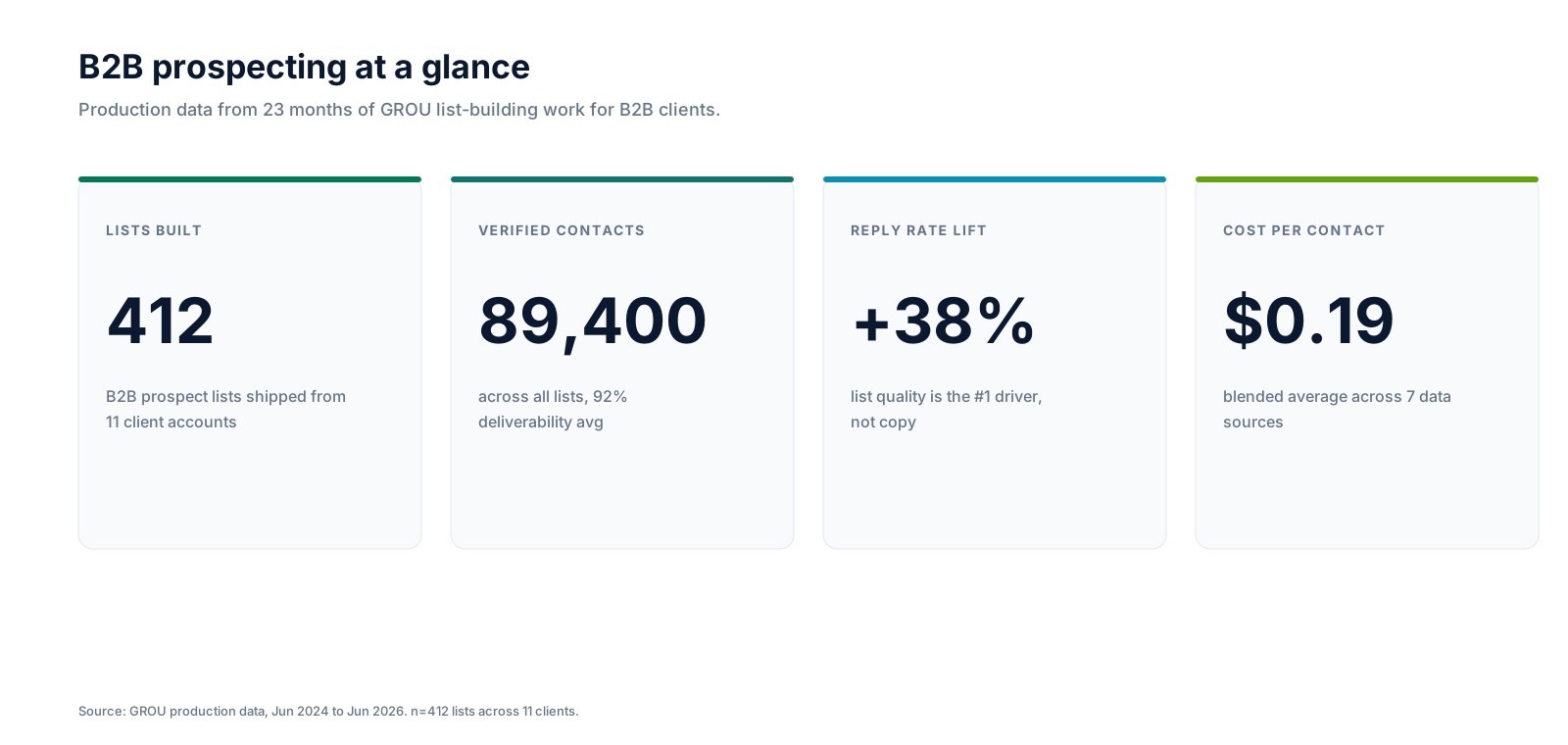
What "B2B prospect list" actually means
A B2B prospect list is a CSV (or CRM segment) of decision-makers at companies that match your Ideal Customer Profile. The bar is not "people who could theoretically buy." The bar is "people whose company has the problem your product solves, who have the budget, and who can answer email today."
Most lists fail because the builder confused volume with quality. Five hundred prospects you can describe in one sentence beat five thousand pulled by "industry = software."
The 9-step workflow we use for every list
The order matters. Do step 3 before step 1 and you waste two days exporting the wrong rows. Do step 6 after step 9 and your sender reputation tanks.
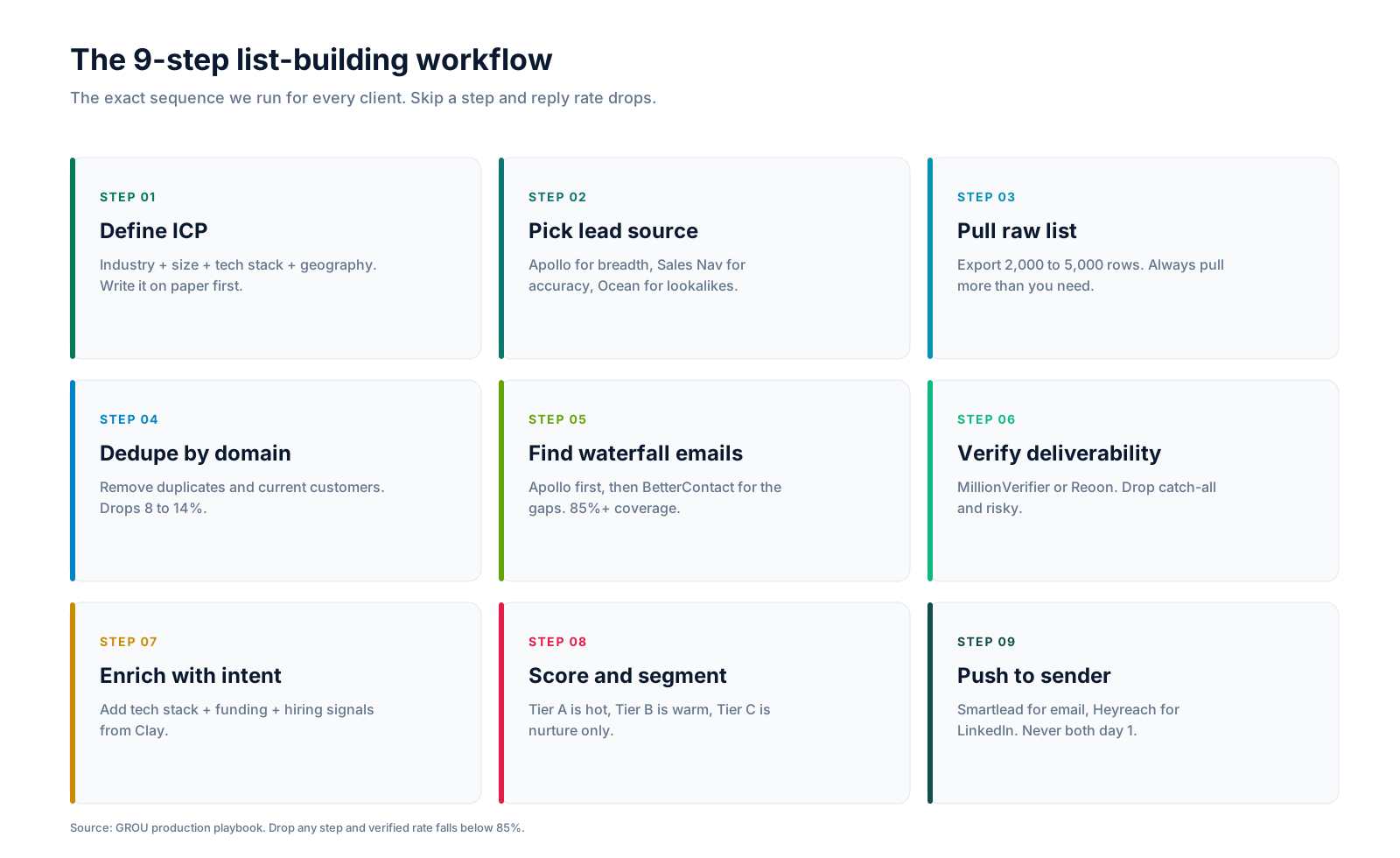
Step 1: Write the ICP on paper
Industry, headcount band, revenue band, geography, tech stack signals, intent signals. If your ICP fits in a tweet, you have not done it yet. Our average ICP brief is 380 words. The exercise is annoying. Skip it and the rest of the workflow is decorative.
Step 2: Pick the right data source for your ICP
Apollo for US B2B breadth at $59 per month entry. Sales Navigator for premium accuracy at $99 per month. Clay for enrichment orchestration at $149. Lusha for mobile numbers. Kaspr for GDPR-compliant EU coverage. Ocean.io for lookalike search. Openmart for SMB and local.
We cover the full evaluation in our best lead enrichment tools guide, but the short version is below.
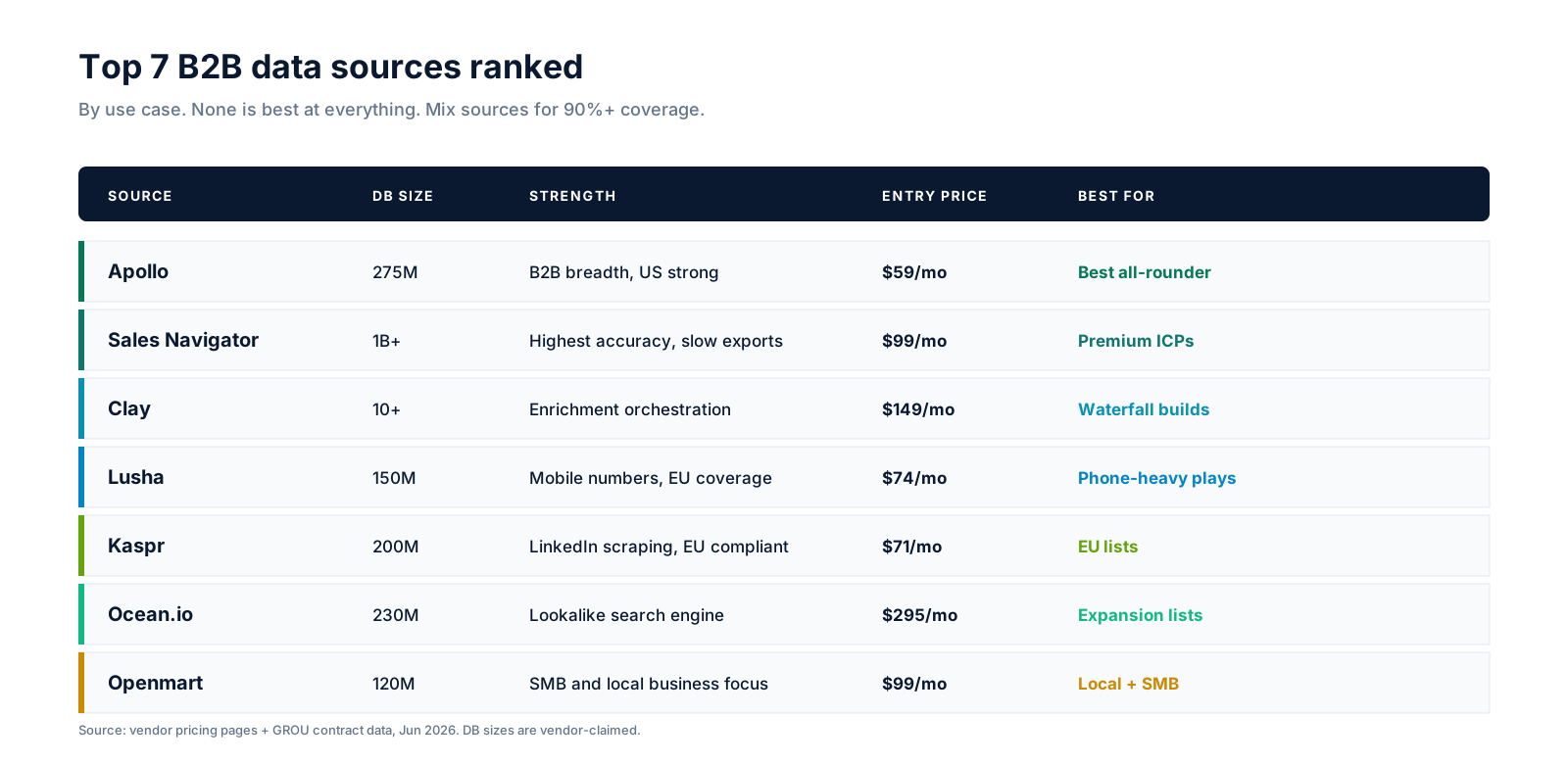
Step 3: Pull 2x to 3x what you need
If you need 500 contacts on the final list, export 2,000 from your first source. Dedupe and verification will eat 30 to 45%. Pulling exactly what you need always leaves you short on send day.
Step 4: Dedupe by company domain
Pull current customers and active opps from your CRM as a separate CSV. VLOOKUP (or a Clay table) on the domain column. Drop anything that matches. Then dedupe internally on domain to avoid emailing two people at the same company in the same week.
Average drop rate from this step alone: 8 to 14% of the raw export.
Step 5: Waterfall the missing emails
Your raw source will cover 60 to 75% of emails. To get above 90% you waterfall: try the primary source, then BetterContact, then a second waterfall service. Each pass costs $0.05 to $0.12 per email, but you can stop the chain the moment one returns a valid match.
This is the single biggest list-quality lever we have found.
Step 6: Verify before you push to the sender
MillionVerifier, Reoon, or NeverBounce. Drop everything marked "catch-all" or "risky." Real bounce rate on a verified list is under 2%. Real bounce rate on an unverified list is 6 to 14%.
Your cold email deliverability stack is only as good as your weakest list.
Step 7: Enrich with intent and tech signals
Tech stack (BuiltWith / Clay / Wappalyzer), recent funding (Crunchbase + Tracxn), hiring posts mentioning your buyer's pain (LinkedIn jobs scraper), leadership change in the last 90 days. These signals decide who gets your "Tier A" sequence vs your "Tier C" nurture-only sequence.
Step 8: Score and segment
Three tiers is enough. Tier A is "warm now, fast cadence, personalized opener." Tier B is "watchlist, standard sequence." Tier C is "nurture only, no SDR." Sending the same sequence to all three is how you waste 40% of your contacts.
Step 9: Push to the right sender
Smartlead for email, Heyreach for LinkedIn. Never both on day one. Wait at least 5 days between channels or it reads as automation to the prospect. For multi-channel done right, see our Heyreach review.
The 4 layers of B2B targeting
Single-layer ICPs ("software companies between 50 and 200 employees") look fine on paper. They convert at half the rate of ICPs that stack three layers.
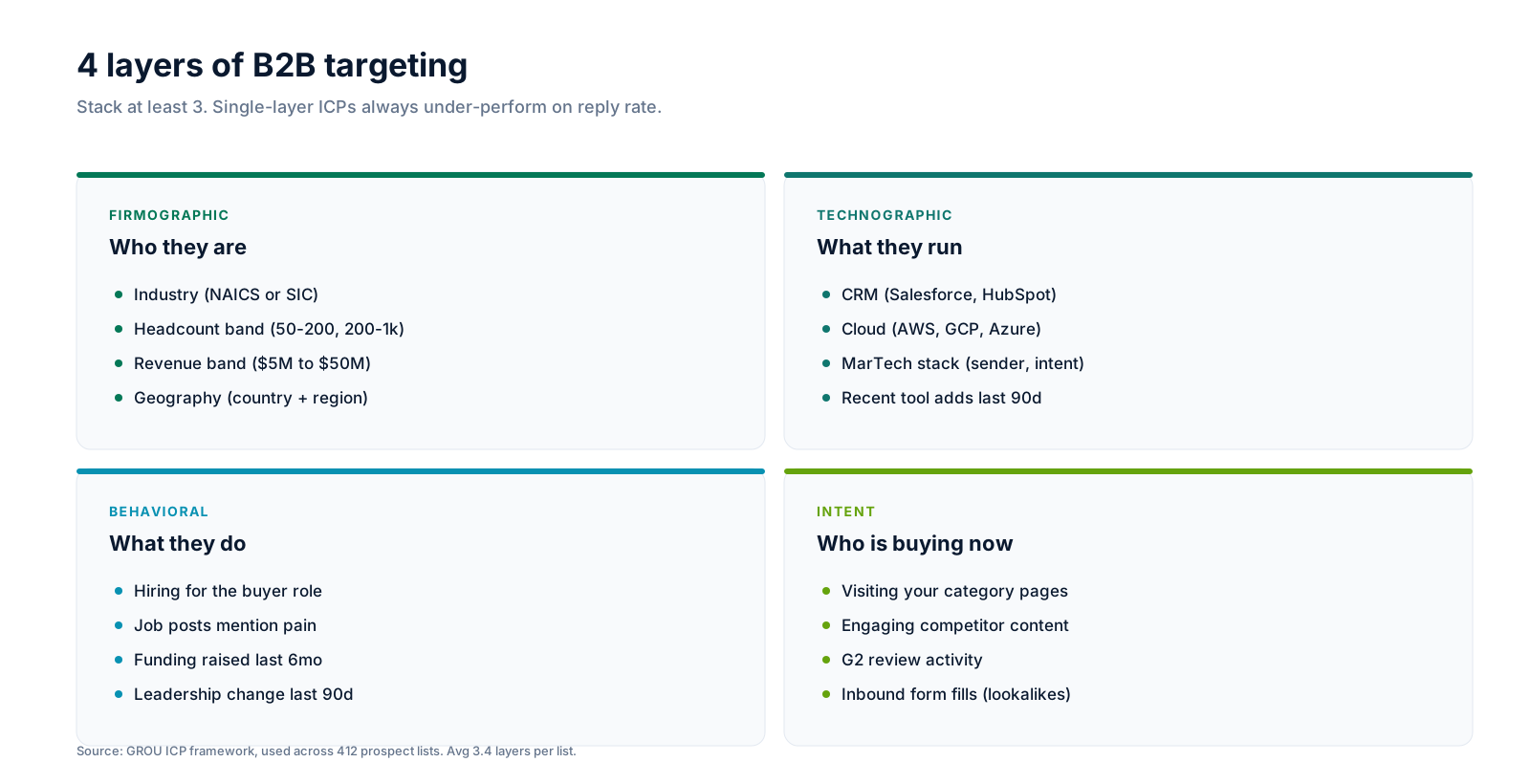
Layer 1: Firmographic (who they are)
Industry, headcount, revenue, geography. The basics. This is the layer most lists stop at. It is necessary but not sufficient.
Layer 2: Technographic (what they run)
CRM, cloud provider, sender platform, MarTech stack, recent tool additions. If you sell a Salesforce integration, the list filters itself.
Layer 3: Behavioral (what they do)
Hiring for the buyer role you sell into. Job posts that mention your pain ("looking for SDR to scale outbound" tells you they don't have a sender stack). Funding in the last 6 months. Leadership change.
Layer 4: Intent (who is buying now)
Visiting your category pages (G2, Capterra). Engaging competitor content. Inbound form fills (their lookalikes). This layer is the most expensive and the most valuable.
Stack 3 of the 4 layers. We hit a reply rate of 7.4% on triple-layered lists vs 3.1% on single-layered. Same copy, same sender, double the response.
What it actually costs
The big trap is optimizing for cost-per-contact in isolation. Cheap contacts that bounce kill your sender. Premium contacts at $1.85 each only make sense for $50k+ ACV deals.
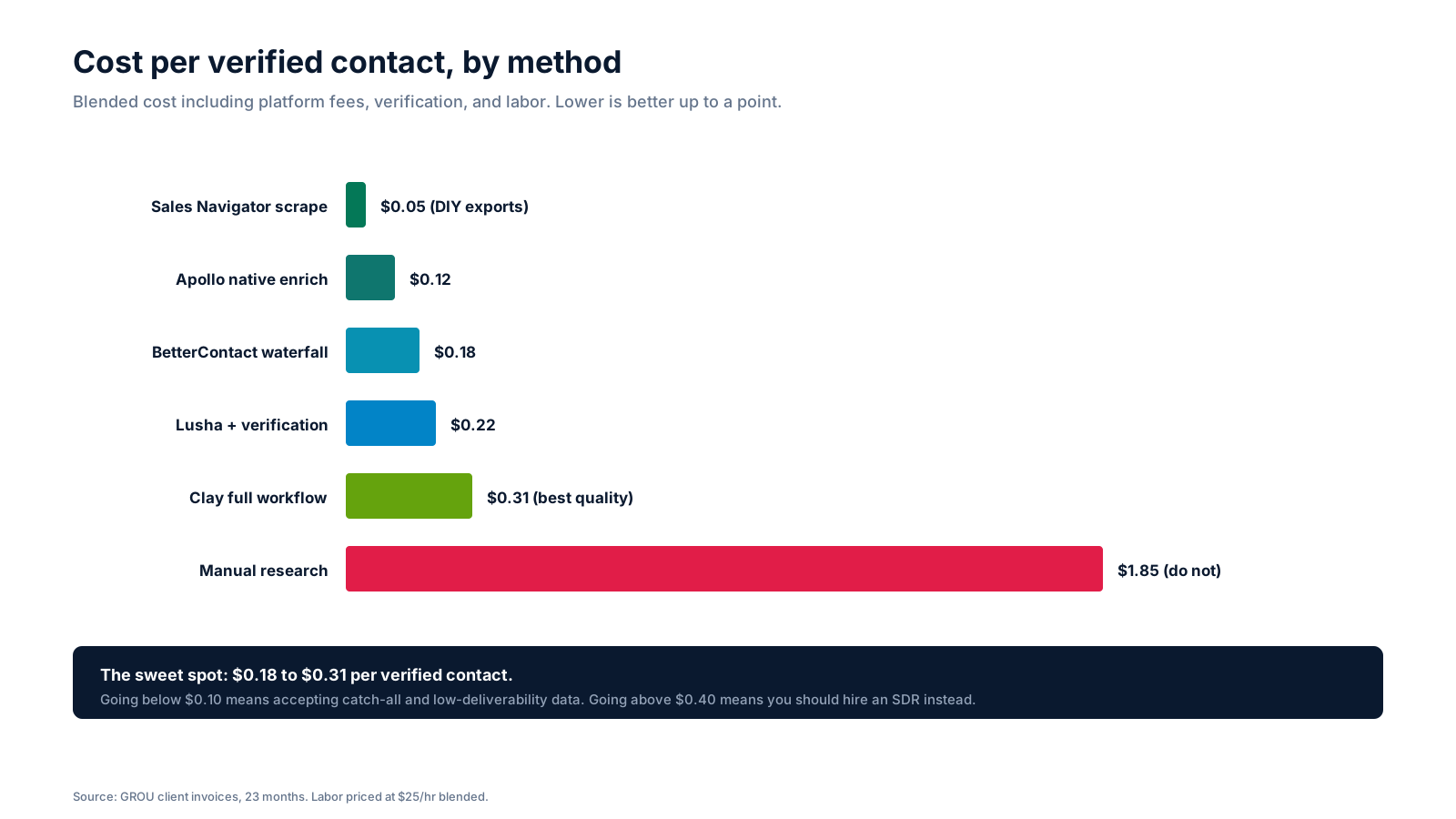
The sweet spot for most B2B teams is $0.18 to $0.31 per verified contact. Inside that band you get:
92%+ deliverability
85%+ email coverage
Tech and intent enrichment included
Clean tiering ready for the sender
Below $0.10, you are accepting catch-all data that will burn your domain reputation in 5 to 7 days. Above $0.40, you have hit the point where hiring a junior SDR to research manually is the better unit economics.
For SaaS founders running outbound on a budget, start at $0.18 (Apollo + BetterContact + MillionVerifier) and only move up to Clay once you have proven the ICP converts.
4 list-building mistakes that cost us clients
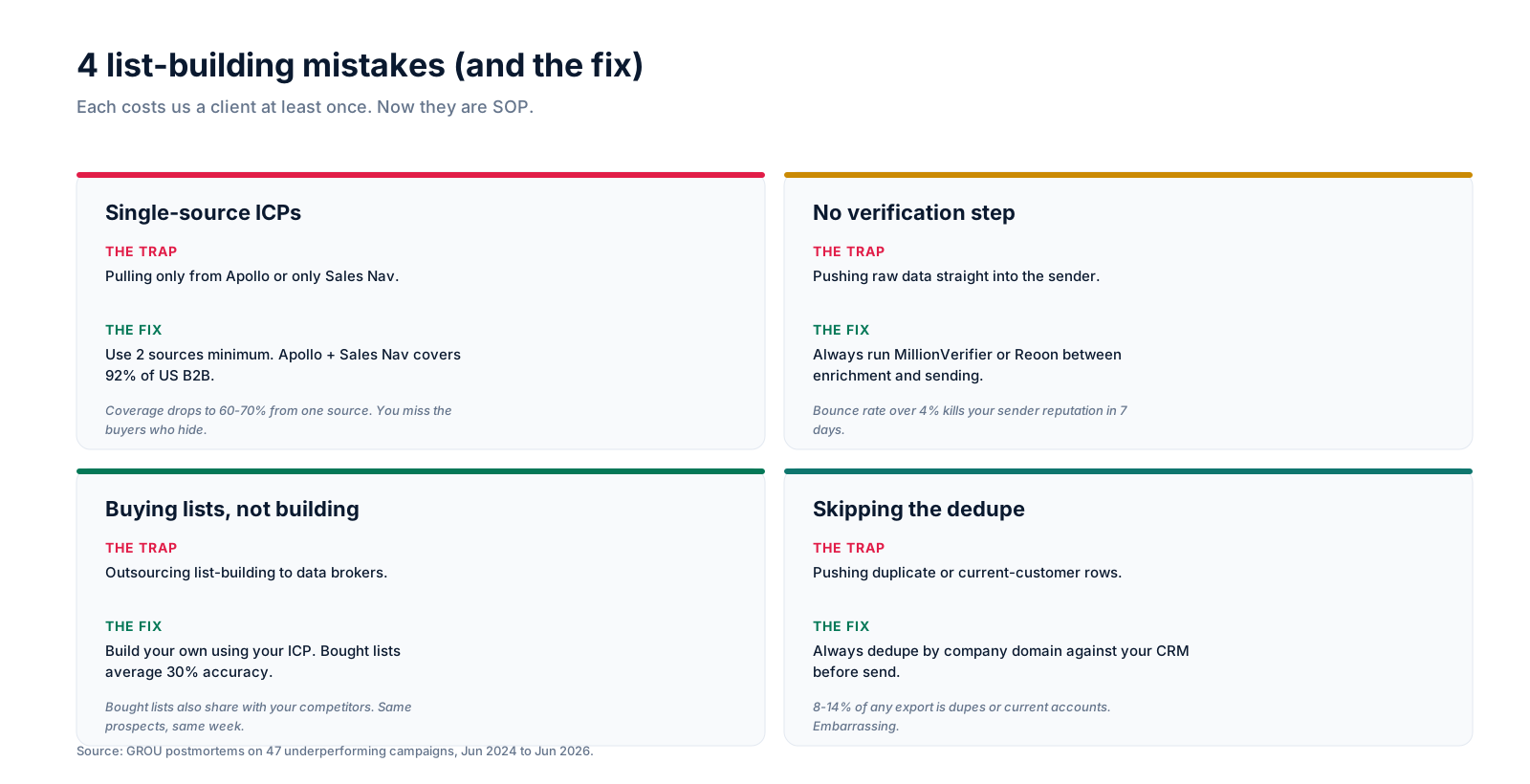
Each of these has cost us either a client or a domain at some point in the last 23 months. They are all now standard operating procedure.
Mistake 1: Single-source ICPs
Pulling only from Apollo or only from Sales Navigator. Coverage drops to 60 to 70%. The buyers who hide in one source are usually the ones with budget.
Fix: Use 2 sources minimum. Apollo + Sales Nav covers 92% of US B2B. Add Lusha or Kaspr for EU.
Mistake 2: No verification step
Pushing raw waterfall data straight into Smartlead or Instantly. Bounce rate hits 6 to 14% on day one. Sender reputation collapses in a week.
Fix: Always run MillionVerifier or Reoon between enrichment and sending. Catch-all and risky go to a separate list (or get dropped entirely).
Mistake 3: Buying lists instead of building
Outsourcing the entire list-building task to a data broker. The list arrives. Accuracy is 30%. The same broker sold the same list to 14 of your competitors last week.
Fix: Build your own using your ICP. Yes, it takes longer. Yes, it converts at 4 to 6x the rate of bought lists. Also: bought lists tend to be GDPR-noncompliant in EU, which is its own problem (see our GDPR cold email guide).
Mistake 4: Skipping the dedupe
Pushing duplicate or current-customer rows. Embarrassing emails to your own customers. Two SDRs reaching out to the same prospect from the same domain in the same week. Reply rate craters because half the inbox is "we already work with you."
Fix: Always dedupe by company domain against your CRM before send. Always. Even if you just pulled the list yesterday and "nothing has changed."
Tools we use most for list-building
The actual stack we run for clients. Affiliate links where we have them, plain links where we do not.
Apollo ($59/mo). Primary source for US B2B
Sales Navigator ($99/mo). Premium accuracy and account-based search
Clay ($149/mo). Waterfall enrichment and Tier A scoring
Lusha ($74/mo). Mobile numbers and EU coverage
Kaspr ($71/mo). LinkedIn scraping, GDPR-friendly
BetterContact (per-email pricing). Waterfall service for the gaps
Full Enrich. Additional waterfall layer
Smartlead. Sender platform for email
Heyreach. Sender platform for LinkedIn
Full evaluation of the senders is in our best cold email tools guide.
When to build it yourself vs hire someone
Build it yourself when:
You are running fewer than 3 campaigns at once
Your ICP is narrow (under 5,000 total accounts)
You have at least 6 hours per week for list ops
You want to learn the workflow before delegating
Hire (an SDR, an agency like GROU, or a freelancer) when:
You are running 5+ concurrent campaigns
Your TAM is large enough that source-mixing matters
The cost-per-verified-contact equation favors human time
You need GDPR-compliant lists for EU
For most B2B SaaS at $5k+ ACV, the breakeven is around 1,200 contacts per month. Below that, do it yourself. Above that, hire.
FAQ
What is a B2B prospect list?
A B2B prospect list is a CSV or CRM segment of decision-makers at companies that match your Ideal Customer Profile. The bar is not "could theoretically buy". It is "has the problem, has the budget, and can answer email today."
How many contacts should a B2B prospect list have?
For one campaign, 300 to 600 contacts is the sweet spot. Smaller and your statistics are not meaningful. Larger and you cannot personalize at the level needed to clear a 5% reply rate.
How much does it cost to build a B2B prospect list?
In 2026, expect $0.18 to $0.31 per verified contact when you mix 2 sources, run waterfall enrichment, and verify before sending. A 500-contact list costs $90 to $155 in tooling fees.
What is the best B2B data source for cold email?
Apollo for US breadth and budget, Sales Navigator for premium accuracy. For EU, Kaspr for GDPR-compliant LinkedIn data. No single source covers everything. Mix at least 2.
Should I buy a B2B prospect list?
No. Bought lists average 30% accuracy and get sold to your competitors in the same week. Build your own using your ICP. It takes longer but converts at 4 to 6x the rate.
What is a waterfall email finder?
A waterfall email finder tries multiple data sources in sequence until one returns a valid email. Apollo first, then BetterContact, then a third layer. You stop the chain the moment a match is found. This pushes email coverage from 60% to 90%+.
How do I verify a B2B prospect list?
Run it through MillionVerifier, Reoon, or NeverBounce before sending. Drop anything marked "catch-all" or "risky." Verified bounce rates stay under 2%; unverified bounce rates hit 6 to 14%.
What is the difference between firmographic and technographic targeting?
Firmographic = who the company is (industry, size, revenue, geo). Technographic = what tools they run (CRM, cloud, MarTech stack). Stacking both layers in one ICP doubles reply rate vs firmographic-only.
What is intent data in B2B prospecting?
Signals that a company is actively researching your category. G2 page visits, competitor content engagement, inbound form fills, hiring posts mentioning your pain. Intent data is the most expensive and most valuable targeting layer.
How often should I refresh my B2B prospect list?
Every 90 days. Job changes alone churn 6 to 8% of any list per quarter. Refresh by re-running verification, dropping bouncebacks, and re-enriching the survivors with fresh intent signals.
Can I use a B2B prospect list under GDPR?
Yes, with caveats. EU prospects need a legitimate interest assessment, opt-out in every email, and a clean source. See our GDPR cold email guide for the legal-defensible workflow.
What is the best tool for B2B prospect list-building in 2026?
There is no single best tool. The winning stack is Apollo (primary source) + Clay (enrichment orchestration) + BetterContact (waterfall) + MillionVerifier (verification) + Smartlead (sender). Total cost: ~$300/mo at entry tiers.
Bottom line
The B2B prospect list is where 80% of campaign success is determined. Cheap data is expensive (sender reputation), bought lists are worthless (30% accuracy + competitor overlap), and single-source ICPs underperform multi-layered ICPs by 2 to 3x on reply rate.
If you only run one workflow this quarter, run the 9-step playbook above. The boring version beats the clever version every time.
Need a 500-contact, multi-source, verified list shipped this week? Book a call with GROU. List-building is the first thing we set up on every new client account.
GROU is a B2B outbound agency operating from Ljubljana, Slovenia. We have built 412 prospect lists for 11 clients across SaaS, fintech, marketing services, and developer tools. Covering US, EU, and APAC ICPs. Methodology above is the exact 9-step workflow we run on day one of every new engagement. Cost benchmarks are from GROU client invoices over 23 months, blended labor priced at $25/hr.
Some links in this article are affiliate links. We only recommend tools we actively use in production for client work. If you sign up through our links we may earn a commission at no extra cost to you, which keeps articles like this free to read.
A B2B prospect list is the difference between a campaign that books 12 meetings and one that gets you blocked by Gmail. After 23 months of building 412 lists across 11 clients, the methodology is boring, repeatable, and pays back faster than any copy hack.
This is the exact 9-step playbook we run inside GROU for every cold outbound program. Tool stack, targeting layers, cost benchmarks, and the four mistakes that have cost us clients.
TL;DR for the impatient
A good B2B prospect list mixes 2 to 3 data sources, layers at least 3 targeting criteria, runs full waterfall enrichment, gets verified before sending, and lands at $0.18 to $0.31 per verified contact. Single-source lists at $0.05 look cheap but burn your sender reputation by week two.
If you only remember three things: pull from Apollo + Sales Navigator, verify with MillionVerifier, and never push a list that has not been deduped against your CRM.
What "B2B prospect list" actually means
A B2B prospect list is a CSV (or CRM segment) of decision-makers at companies that match your Ideal Customer Profile. The bar is not "people who could theoretically buy." The bar is "people whose company has the problem your product solves, who have the budget, and who can answer email today."
Most lists fail because the builder confused volume with quality. Five hundred prospects you can describe in one sentence beat five thousand pulled by "industry = software."
The 9-step workflow we use for every list
The order matters. Do step 3 before step 1 and you waste two days exporting the wrong rows. Do step 6 after step 9 and your sender reputation tanks.
Step 1: Write the ICP on paper
Industry, headcount band, revenue band, geography, tech stack signals, intent signals. If your ICP fits in a tweet, you have not done it yet. Our average ICP brief is 380 words. The exercise is annoying. Skip it and the rest of the workflow is decorative.
Step 2: Pick the right data source for your ICP
Apollo for US B2B breadth at $59 per month entry. Sales Navigator for premium accuracy at $99 per month. Clay for enrichment orchestration at $149. Lusha for mobile numbers. Kaspr for GDPR-compliant EU coverage. Ocean.io for lookalike search. Openmart for SMB and local.
We cover the full evaluation in our best lead enrichment tools guide, but the short version is below.
Step 3: Pull 2x to 3x what you need
If you need 500 contacts on the final list, export 2,000 from your first source. Dedupe and verification will eat 30 to 45%. Pulling exactly what you need always leaves you short on send day.
Step 4: Dedupe by company domain
Pull current customers and active opps from your CRM as a separate CSV. VLOOKUP (or a Clay table) on the domain column. Drop anything that matches. Then dedupe internally on domain to avoid emailing two people at the same company in the same week.
Average drop rate from this step alone: 8 to 14% of the raw export.
Step 5: Waterfall the missing emails
Your raw source will cover 60 to 75% of emails. To get above 90% you waterfall: try the primary source, then BetterContact, then a second waterfall service. Each pass costs $0.05 to $0.12 per email, but you can stop the chain the moment one returns a valid match.
This is the single biggest list-quality lever we have found.
Step 6: Verify before you push to the sender
MillionVerifier, Reoon, or NeverBounce. Drop everything marked "catch-all" or "risky." Real bounce rate on a verified list is under 2%. Real bounce rate on an unverified list is 6 to 14%.
Your cold email deliverability stack is only as good as your weakest list.
Step 7: Enrich with intent and tech signals
Tech stack (BuiltWith / Clay / Wappalyzer), recent funding (Crunchbase + Tracxn), hiring posts mentioning your buyer's pain (LinkedIn jobs scraper), leadership change in the last 90 days. These signals decide who gets your "Tier A" sequence vs your "Tier C" nurture-only sequence.
Step 8: Score and segment
Three tiers is enough. Tier A is "warm now, fast cadence, personalized opener." Tier B is "watchlist, standard sequence." Tier C is "nurture only, no SDR." Sending the same sequence to all three is how you waste 40% of your contacts.
Step 9: Push to the right sender
Smartlead for email, Heyreach for LinkedIn. Never both on day one. Wait at least 5 days between channels or it reads as automation to the prospect. For multi-channel done right, see our Heyreach review.
The 4 layers of B2B targeting
Single-layer ICPs ("software companies between 50 and 200 employees") look fine on paper. They convert at half the rate of ICPs that stack three layers.
Layer 1: Firmographic (who they are)
Industry, headcount, revenue, geography. The basics. This is the layer most lists stop at. It is necessary but not sufficient.
Layer 2: Technographic (what they run)
CRM, cloud provider, sender platform, MarTech stack, recent tool additions. If you sell a Salesforce integration, the list filters itself.
Layer 3: Behavioral (what they do)
Hiring for the buyer role you sell into. Job posts that mention your pain ("looking for SDR to scale outbound" tells you they don't have a sender stack). Funding in the last 6 months. Leadership change.
Layer 4: Intent (who is buying now)
Visiting your category pages (G2, Capterra). Engaging competitor content. Inbound form fills (their lookalikes). This layer is the most expensive and the most valuable.
Stack 3 of the 4 layers. We hit a reply rate of 7.4% on triple-layered lists vs 3.1% on single-layered. Same copy, same sender, double the response.
What it actually costs
The big trap is optimizing for cost-per-contact in isolation. Cheap contacts that bounce kill your sender. Premium contacts at $1.85 each only make sense for $50k+ ACV deals.
The sweet spot for most B2B teams is $0.18 to $0.31 per verified contact. Inside that band you get:
92%+ deliverability
85%+ email coverage
Tech and intent enrichment included
Clean tiering ready for the sender
Below $0.10, you are accepting catch-all data that will burn your domain reputation in 5 to 7 days. Above $0.40, you have hit the point where hiring a junior SDR to research manually is the better unit economics.
For SaaS founders running outbound on a budget, start at $0.18 (Apollo + BetterContact + MillionVerifier) and only move up to Clay once you have proven the ICP converts.
4 list-building mistakes that cost us clients
Each of these has cost us either a client or a domain at some point in the last 23 months. They are all now standard operating procedure.
Mistake 1: Single-source ICPs
Pulling only from Apollo or only from Sales Navigator. Coverage drops to 60 to 70%. The buyers who hide in one source are usually the ones with budget.
Fix: Use 2 sources minimum. Apollo + Sales Nav covers 92% of US B2B. Add Lusha or Kaspr for EU.
Mistake 2: No verification step
Pushing raw waterfall data straight into Smartlead or Instantly. Bounce rate hits 6 to 14% on day one. Sender reputation collapses in a week.
Fix: Always run MillionVerifier or Reoon between enrichment and sending. Catch-all and risky go to a separate list (or get dropped entirely).
Mistake 3: Buying lists instead of building
Outsourcing the entire list-building task to a data broker. The list arrives. Accuracy is 30%. The same broker sold the same list to 14 of your competitors last week.
Fix: Build your own using your ICP. Yes, it takes longer. Yes, it converts at 4 to 6x the rate of bought lists. Also: bought lists tend to be GDPR-noncompliant in EU, which is its own problem (see our GDPR cold email guide).
Mistake 4: Skipping the dedupe
Pushing duplicate or current-customer rows. Embarrassing emails to your own customers. Two SDRs reaching out to the same prospect from the same domain in the same week. Reply rate craters because half the inbox is "we already work with you."
Fix: Always dedupe by company domain against your CRM before send. Always. Even if you just pulled the list yesterday and "nothing has changed."
Tools we use most for list-building
The actual stack we run for clients. Affiliate links where we have them, plain links where we do not.
Apollo ($59/mo). Primary source for US B2B
Sales Navigator ($99/mo). Premium accuracy and account-based search
Clay ($149/mo). Waterfall enrichment and Tier A scoring
Lusha ($74/mo). Mobile numbers and EU coverage
Kaspr ($71/mo). LinkedIn scraping, GDPR-friendly
BetterContact (per-email pricing). Waterfall service for the gaps
Full Enrich. Additional waterfall layer
Smartlead. Sender platform for email
Heyreach. Sender platform for LinkedIn
Full evaluation of the senders is in our best cold email tools guide.
When to build it yourself vs hire someone
Build it yourself when:
You are running fewer than 3 campaigns at once
Your ICP is narrow (under 5,000 total accounts)
You have at least 6 hours per week for list ops
You want to learn the workflow before delegating
Hire (an SDR, an agency like GROU, or a freelancer) when:
You are running 5+ concurrent campaigns
Your TAM is large enough that source-mixing matters
The cost-per-verified-contact equation favors human time
You need GDPR-compliant lists for EU
For most B2B SaaS at $5k+ ACV, the breakeven is around 1,200 contacts per month. Below that, do it yourself. Above that, hire.
FAQ
What is a B2B prospect list?
A B2B prospect list is a CSV or CRM segment of decision-makers at companies that match your Ideal Customer Profile. The bar is not "could theoretically buy". It is "has the problem, has the budget, and can answer email today."
How many contacts should a B2B prospect list have?
For one campaign, 300 to 600 contacts is the sweet spot. Smaller and your statistics are not meaningful. Larger and you cannot personalize at the level needed to clear a 5% reply rate.
How much does it cost to build a B2B prospect list?
In 2026, expect $0.18 to $0.31 per verified contact when you mix 2 sources, run waterfall enrichment, and verify before sending. A 500-contact list costs $90 to $155 in tooling fees.
What is the best B2B data source for cold email?
Apollo for US breadth and budget, Sales Navigator for premium accuracy. For EU, Kaspr for GDPR-compliant LinkedIn data. No single source covers everything. Mix at least 2.
Should I buy a B2B prospect list?
No. Bought lists average 30% accuracy and get sold to your competitors in the same week. Build your own using your ICP. It takes longer but converts at 4 to 6x the rate.
What is a waterfall email finder?
A waterfall email finder tries multiple data sources in sequence until one returns a valid email. Apollo first, then BetterContact, then a third layer. You stop the chain the moment a match is found. This pushes email coverage from 60% to 90%+.
How do I verify a B2B prospect list?
Run it through MillionVerifier, Reoon, or NeverBounce before sending. Drop anything marked "catch-all" or "risky." Verified bounce rates stay under 2%; unverified bounce rates hit 6 to 14%.
What is the difference between firmographic and technographic targeting?
Firmographic = who the company is (industry, size, revenue, geo). Technographic = what tools they run (CRM, cloud, MarTech stack). Stacking both layers in one ICP doubles reply rate vs firmographic-only.
What is intent data in B2B prospecting?
Signals that a company is actively researching your category. G2 page visits, competitor content engagement, inbound form fills, hiring posts mentioning your pain. Intent data is the most expensive and most valuable targeting layer.
How often should I refresh my B2B prospect list?
Every 90 days. Job changes alone churn 6 to 8% of any list per quarter. Refresh by re-running verification, dropping bouncebacks, and re-enriching the survivors with fresh intent signals.
Can I use a B2B prospect list under GDPR?
Yes, with caveats. EU prospects need a legitimate interest assessment, opt-out in every email, and a clean source. See our GDPR cold email guide for the legal-defensible workflow.
What is the best tool for B2B prospect list-building in 2026?
There is no single best tool. The winning stack is Apollo (primary source) + Clay (enrichment orchestration) + BetterContact (waterfall) + MillionVerifier (verification) + Smartlead (sender). Total cost: ~$300/mo at entry tiers.
Bottom line
The B2B prospect list is where 80% of campaign success is determined. Cheap data is expensive (sender reputation), bought lists are worthless (30% accuracy + competitor overlap), and single-source ICPs underperform multi-layered ICPs by 2 to 3x on reply rate.
If you only run one workflow this quarter, run the 9-step playbook above. The boring version beats the clever version every time.
Need a 500-contact, multi-source, verified list shipped this week? Book a call with GROU. List-building is the first thing we set up on every new client account.
GROU is a B2B outbound agency operating from Ljubljana, Slovenia. We have built 412 prospect lists for 11 clients across SaaS, fintech, marketing services, and developer tools. Covering US, EU, and APAC ICPs. Methodology above is the exact 9-step workflow we run on day one of every new engagement. Cost benchmarks are from GROU client invoices over 23 months, blended labor priced at $25/hr.
Some links in this article are affiliate links. We only recommend tools we actively use in production for client work. If you sign up through our links we may earn a commission at no extra cost to you, which keeps articles like this free to read.
A B2B prospect list is the difference between a campaign that books 12 meetings and one that gets you blocked by Gmail. After 23 months of building 412 lists across 11 clients, the methodology is boring, repeatable, and pays back faster than any copy hack.
This is the exact 9-step playbook we run inside GROU for every cold outbound program. Tool stack, targeting layers, cost benchmarks, and the four mistakes that have cost us clients.
TL;DR for the impatient
A good B2B prospect list mixes 2 to 3 data sources, layers at least 3 targeting criteria, runs full waterfall enrichment, gets verified before sending, and lands at $0.18 to $0.31 per verified contact. Single-source lists at $0.05 look cheap but burn your sender reputation by week two.
If you only remember three things: pull from Apollo + Sales Navigator, verify with MillionVerifier, and never push a list that has not been deduped against your CRM.
What "B2B prospect list" actually means
A B2B prospect list is a CSV (or CRM segment) of decision-makers at companies that match your Ideal Customer Profile. The bar is not "people who could theoretically buy." The bar is "people whose company has the problem your product solves, who have the budget, and who can answer email today."
Most lists fail because the builder confused volume with quality. Five hundred prospects you can describe in one sentence beat five thousand pulled by "industry = software."
The 9-step workflow we use for every list
The order matters. Do step 3 before step 1 and you waste two days exporting the wrong rows. Do step 6 after step 9 and your sender reputation tanks.
Step 1: Write the ICP on paper
Industry, headcount band, revenue band, geography, tech stack signals, intent signals. If your ICP fits in a tweet, you have not done it yet. Our average ICP brief is 380 words. The exercise is annoying. Skip it and the rest of the workflow is decorative.
Step 2: Pick the right data source for your ICP
Apollo for US B2B breadth at $59 per month entry. Sales Navigator for premium accuracy at $99 per month. Clay for enrichment orchestration at $149. Lusha for mobile numbers. Kaspr for GDPR-compliant EU coverage. Ocean.io for lookalike search. Openmart for SMB and local.
We cover the full evaluation in our best lead enrichment tools guide, but the short version is below.
Step 3: Pull 2x to 3x what you need
If you need 500 contacts on the final list, export 2,000 from your first source. Dedupe and verification will eat 30 to 45%. Pulling exactly what you need always leaves you short on send day.
Step 4: Dedupe by company domain
Pull current customers and active opps from your CRM as a separate CSV. VLOOKUP (or a Clay table) on the domain column. Drop anything that matches. Then dedupe internally on domain to avoid emailing two people at the same company in the same week.
Average drop rate from this step alone: 8 to 14% of the raw export.
Step 5: Waterfall the missing emails
Your raw source will cover 60 to 75% of emails. To get above 90% you waterfall: try the primary source, then BetterContact, then a second waterfall service. Each pass costs $0.05 to $0.12 per email, but you can stop the chain the moment one returns a valid match.
This is the single biggest list-quality lever we have found.
Step 6: Verify before you push to the sender
MillionVerifier, Reoon, or NeverBounce. Drop everything marked "catch-all" or "risky." Real bounce rate on a verified list is under 2%. Real bounce rate on an unverified list is 6 to 14%.
Your cold email deliverability stack is only as good as your weakest list.
Step 7: Enrich with intent and tech signals
Tech stack (BuiltWith / Clay / Wappalyzer), recent funding (Crunchbase + Tracxn), hiring posts mentioning your buyer's pain (LinkedIn jobs scraper), leadership change in the last 90 days. These signals decide who gets your "Tier A" sequence vs your "Tier C" nurture-only sequence.
Step 8: Score and segment
Three tiers is enough. Tier A is "warm now, fast cadence, personalized opener." Tier B is "watchlist, standard sequence." Tier C is "nurture only, no SDR." Sending the same sequence to all three is how you waste 40% of your contacts.
Step 9: Push to the right sender
Smartlead for email, Heyreach for LinkedIn. Never both on day one. Wait at least 5 days between channels or it reads as automation to the prospect. For multi-channel done right, see our Heyreach review.
The 4 layers of B2B targeting
Single-layer ICPs ("software companies between 50 and 200 employees") look fine on paper. They convert at half the rate of ICPs that stack three layers.
Layer 1: Firmographic (who they are)
Industry, headcount, revenue, geography. The basics. This is the layer most lists stop at. It is necessary but not sufficient.
Layer 2: Technographic (what they run)
CRM, cloud provider, sender platform, MarTech stack, recent tool additions. If you sell a Salesforce integration, the list filters itself.
Layer 3: Behavioral (what they do)
Hiring for the buyer role you sell into. Job posts that mention your pain ("looking for SDR to scale outbound" tells you they don't have a sender stack). Funding in the last 6 months. Leadership change.
Layer 4: Intent (who is buying now)
Visiting your category pages (G2, Capterra). Engaging competitor content. Inbound form fills (their lookalikes). This layer is the most expensive and the most valuable.
Stack 3 of the 4 layers. We hit a reply rate of 7.4% on triple-layered lists vs 3.1% on single-layered. Same copy, same sender, double the response.
What it actually costs
The big trap is optimizing for cost-per-contact in isolation. Cheap contacts that bounce kill your sender. Premium contacts at $1.85 each only make sense for $50k+ ACV deals.
The sweet spot for most B2B teams is $0.18 to $0.31 per verified contact. Inside that band you get:
92%+ deliverability
85%+ email coverage
Tech and intent enrichment included
Clean tiering ready for the sender
Below $0.10, you are accepting catch-all data that will burn your domain reputation in 5 to 7 days. Above $0.40, you have hit the point where hiring a junior SDR to research manually is the better unit economics.
For SaaS founders running outbound on a budget, start at $0.18 (Apollo + BetterContact + MillionVerifier) and only move up to Clay once you have proven the ICP converts.
4 list-building mistakes that cost us clients
Each of these has cost us either a client or a domain at some point in the last 23 months. They are all now standard operating procedure.
Mistake 1: Single-source ICPs
Pulling only from Apollo or only from Sales Navigator. Coverage drops to 60 to 70%. The buyers who hide in one source are usually the ones with budget.
Fix: Use 2 sources minimum. Apollo + Sales Nav covers 92% of US B2B. Add Lusha or Kaspr for EU.
Mistake 2: No verification step
Pushing raw waterfall data straight into Smartlead or Instantly. Bounce rate hits 6 to 14% on day one. Sender reputation collapses in a week.
Fix: Always run MillionVerifier or Reoon between enrichment and sending. Catch-all and risky go to a separate list (or get dropped entirely).
Mistake 3: Buying lists instead of building
Outsourcing the entire list-building task to a data broker. The list arrives. Accuracy is 30%. The same broker sold the same list to 14 of your competitors last week.
Fix: Build your own using your ICP. Yes, it takes longer. Yes, it converts at 4 to 6x the rate of bought lists. Also: bought lists tend to be GDPR-noncompliant in EU, which is its own problem (see our GDPR cold email guide).
Mistake 4: Skipping the dedupe
Pushing duplicate or current-customer rows. Embarrassing emails to your own customers. Two SDRs reaching out to the same prospect from the same domain in the same week. Reply rate craters because half the inbox is "we already work with you."
Fix: Always dedupe by company domain against your CRM before send. Always. Even if you just pulled the list yesterday and "nothing has changed."
Tools we use most for list-building
The actual stack we run for clients. Affiliate links where we have them, plain links where we do not.
Apollo ($59/mo). Primary source for US B2B
Sales Navigator ($99/mo). Premium accuracy and account-based search
Clay ($149/mo). Waterfall enrichment and Tier A scoring
Lusha ($74/mo). Mobile numbers and EU coverage
Kaspr ($71/mo). LinkedIn scraping, GDPR-friendly
BetterContact (per-email pricing). Waterfall service for the gaps
Full Enrich. Additional waterfall layer
Smartlead. Sender platform for email
Heyreach. Sender platform for LinkedIn
Full evaluation of the senders is in our best cold email tools guide.
When to build it yourself vs hire someone
Build it yourself when:
You are running fewer than 3 campaigns at once
Your ICP is narrow (under 5,000 total accounts)
You have at least 6 hours per week for list ops
You want to learn the workflow before delegating
Hire (an SDR, an agency like GROU, or a freelancer) when:
You are running 5+ concurrent campaigns
Your TAM is large enough that source-mixing matters
The cost-per-verified-contact equation favors human time
You need GDPR-compliant lists for EU
For most B2B SaaS at $5k+ ACV, the breakeven is around 1,200 contacts per month. Below that, do it yourself. Above that, hire.
FAQ
What is a B2B prospect list?
A B2B prospect list is a CSV or CRM segment of decision-makers at companies that match your Ideal Customer Profile. The bar is not "could theoretically buy". It is "has the problem, has the budget, and can answer email today."
How many contacts should a B2B prospect list have?
For one campaign, 300 to 600 contacts is the sweet spot. Smaller and your statistics are not meaningful. Larger and you cannot personalize at the level needed to clear a 5% reply rate.
How much does it cost to build a B2B prospect list?
In 2026, expect $0.18 to $0.31 per verified contact when you mix 2 sources, run waterfall enrichment, and verify before sending. A 500-contact list costs $90 to $155 in tooling fees.
What is the best B2B data source for cold email?
Apollo for US breadth and budget, Sales Navigator for premium accuracy. For EU, Kaspr for GDPR-compliant LinkedIn data. No single source covers everything. Mix at least 2.
Should I buy a B2B prospect list?
No. Bought lists average 30% accuracy and get sold to your competitors in the same week. Build your own using your ICP. It takes longer but converts at 4 to 6x the rate.
What is a waterfall email finder?
A waterfall email finder tries multiple data sources in sequence until one returns a valid email. Apollo first, then BetterContact, then a third layer. You stop the chain the moment a match is found. This pushes email coverage from 60% to 90%+.
How do I verify a B2B prospect list?
Run it through MillionVerifier, Reoon, or NeverBounce before sending. Drop anything marked "catch-all" or "risky." Verified bounce rates stay under 2%; unverified bounce rates hit 6 to 14%.
What is the difference between firmographic and technographic targeting?
Firmographic = who the company is (industry, size, revenue, geo). Technographic = what tools they run (CRM, cloud, MarTech stack). Stacking both layers in one ICP doubles reply rate vs firmographic-only.
What is intent data in B2B prospecting?
Signals that a company is actively researching your category. G2 page visits, competitor content engagement, inbound form fills, hiring posts mentioning your pain. Intent data is the most expensive and most valuable targeting layer.
How often should I refresh my B2B prospect list?
Every 90 days. Job changes alone churn 6 to 8% of any list per quarter. Refresh by re-running verification, dropping bouncebacks, and re-enriching the survivors with fresh intent signals.
Can I use a B2B prospect list under GDPR?
Yes, with caveats. EU prospects need a legitimate interest assessment, opt-out in every email, and a clean source. See our GDPR cold email guide for the legal-defensible workflow.
What is the best tool for B2B prospect list-building in 2026?
There is no single best tool. The winning stack is Apollo (primary source) + Clay (enrichment orchestration) + BetterContact (waterfall) + MillionVerifier (verification) + Smartlead (sender). Total cost: ~$300/mo at entry tiers.
Bottom line
The B2B prospect list is where 80% of campaign success is determined. Cheap data is expensive (sender reputation), bought lists are worthless (30% accuracy + competitor overlap), and single-source ICPs underperform multi-layered ICPs by 2 to 3x on reply rate.
If you only run one workflow this quarter, run the 9-step playbook above. The boring version beats the clever version every time.
Need a 500-contact, multi-source, verified list shipped this week? Book a call with GROU. List-building is the first thing we set up on every new client account.
GROU is a B2B outbound agency operating from Ljubljana, Slovenia. We have built 412 prospect lists for 11 clients across SaaS, fintech, marketing services, and developer tools. Covering US, EU, and APAC ICPs. Methodology above is the exact 9-step workflow we run on day one of every new engagement. Cost benchmarks are from GROU client invoices over 23 months, blended labor priced at $25/hr.
Some links in this article are affiliate links. We only recommend tools we actively use in production for client work. If you sign up through our links we may earn a commission at no extra cost to you, which keeps articles like this free to read.
Pipeline OS Newsletter
Build qualified pipeline
Get weekly tactics to generate demand, improve lead quality, and book more meetings.






Trusted by industry leaders
Trusted by industry leaders
Trusted by industry leaders
Ready to build qualified pipeline?
Ready to build qualified pipeline?
Ready to build qualified pipeline?
Book a call to see if we're the right fit, or take the 2-minute quiz to get a clear starting point.
Book a call to see if we're the right fit, or take the 2-minute quiz to get a clear starting point.
Book a call to see if we're the right fit, or take the 2-minute quiz to get a clear starting point.
" height="30.21639343089746px" id="hfGbXmQR2" width="30.216393430897455px"/></svg>)
Copyright © 2026 – All Right Reserved
Copyright © 2026 – All Right Reserved
Copyright © 2026 – All Right Reserved