%22%3E%3C/path%3E%3Cpath d=%22M 63.072 7.554 C 62.258 8.022 61.577 8.689 61.092 9.493 L 61.092 7.076 L 57.158 7.076 L 57.158 22.64 L 61.089 22.64 L 61.089 14.888 C 61.089 13.446 61.403 12.434 62.03 11.853 C 62.818 11.218 63.818 10.907 64.826 10.982 L 65.868 10.982 L 65.868 6.851 C 64.891 6.834 63.926 7.076 63.073 7.554 Z%22 fill=%22rgb(17,17,17)%22%3E%3C/path%3E%3Cpath d=%22M 78.916 7.82 C 76.363 6.49 73.321 6.49 70.768 7.82 C 69.562 8.473 68.564 9.451 67.888 10.644 C 67.167 11.931 66.803 13.387 66.834 14.862 C 66.804 16.332 67.157 17.785 67.86 19.077 C 68.515 20.267 69.494 21.246 70.684 21.901 C 71.924 22.576 73.318 22.92 74.73 22.898 C 76.164 22.918 77.58 22.575 78.846 21.901 C 80.062 21.247 81.073 20.27 81.768 19.077 C 82.506 17.797 82.88 16.339 82.85 14.862 C 82.88 13.389 82.517 11.934 81.797 10.647 C 81.12 9.455 80.122 8.477 78.917 7.824 M 78.803 14.862 C 78.829 15.739 78.636 16.608 78.241 17.391 C 77.903 18.046 77.38 18.588 76.738 18.95 C 76.124 19.293 75.432 19.472 74.729 19.47 C 73.668 19.497 72.648 19.061 71.934 18.276 C 71.139 17.323 70.741 16.1 70.823 14.862 C 70.741 13.62 71.149 12.395 71.959 11.45 C 72.687 10.667 73.715 10.233 74.783 10.256 C 75.859 10.236 76.894 10.67 77.635 11.45 C 78.464 12.387 78.884 13.616 78.801 14.864%22 fill=%22rgb(17,17,17)%22%3E%3C/path%3E%3Cpath d=%22M 95.906 7.076 L 95.906 15.646 C 95.975 16.68 95.643 17.701 94.979 18.498 C 94.311 19.184 93.379 19.547 92.422 19.495 C 91.475 19.544 90.553 19.18 89.894 18.498 C 89.23 17.701 88.898 16.68 88.967 15.646 L 88.967 7.076 L 85.033 7.076 L 85.033 16.207 C 85 17.449 85.275 18.68 85.834 19.79 C 86.327 20.75 87.095 21.542 88.039 22.065 C 89.033 22.594 90.145 22.861 91.271 22.838 C 92.188 22.847 93.095 22.65 93.926 22.263 C 94.708 21.905 95.388 21.36 95.906 20.675 L 95.906 22.645 L 99.865 22.645 L 99.865 7.076 Z%22 fill=%22rgb(17,17,17)%22%3E%3C/path%3E%3Cpath d=%22M 4.513 15.626 C 4.511 10.815 7.606 6.549 12.181 5.059 C 16.756 3.57 21.77 5.195 24.601 9.086 L 27.816 5.87 C 24.074 1.186 17.981 -0.943 12.137 0.393 C 6.292 1.728 1.728 6.292 0.393 12.137 C -0.943 17.981 1.186 24.074 5.87 27.816 L 9.085 24.601 C 6.214 22.512 4.515 19.177 4.513 15.626%22 fill=%22rgb(32,62,235)%22%3E%3C/path%3E%3Cpath d=%22M 17.114 14.343 L 13.354 18.01 L 13.354 18.026 L 21.071 18.026 L 11.412 27.609 L 17.389 27.609 L 23.999 21.081 L 23.999 28.316 L 24.005 28.316 L 27.967 24.393 L 27.967 14.343 Z%22 fill=%22rgb(32,62,235)%22%3E%3C/path%3E%3C/g%3E%3C/svg%3E) ×
× ××
××›
›
›
›
Clay pricing 2026 explained: new plans, credits, real costs
Clay pricing 2026 explained: new plans, credits, real costs
Clay pricing 2026 explained: new plans, credits, real costs
Clay pricing 2026 explained: new plans, credits, real costs
Clay pricing 2026 explained: new plans, credits, real costs
Clay pricing 2026 explained: new plans, credits, real costs

Author
Aljaz Peklaj

Clay rebuilt its pricing in 2026: the old Starter, Explorer, and Pro tiers are closed to new buyers, replaced by Launch at $185/mo and Growth at $495/mo, with a dual-credit system that separates data purchases from platform work. It is a better structure than the one it replaced, and it still rewards teams who do the credit math before committing. Here is the whole picture.
The new plans, the dual-credit system in plain language, what legacy customers keep, and what teams actually pay.
TL;DR
Clay's 2026 lineup: Free ($0, 100 data credits + 500 actions, testing only), Launch at $185/mo (about $167 on annual; 2,500 data credits + 15,000 actions), Growth at $495/mo (about $446 annual, with a larger allocation that sources report between 6,000 data credits with 40,000 actions and effectively unlimited; confirm on the live page), and Enterprise from roughly $12k to $150k+ a year with a ~$30k median. Data credits buy marketplace lookups at 2-8 credits each depending on provider; actions meter platform steps and rarely run out. Legacy Starter ($149), Explorer ($349), and Pro ($800) accounts are grandfathered, and the window to switch between legacy tiers closed April 10, 2026. Start on Launch, watch data-credit burn for two cycles, and upgrade on evidence, not enthusiasm.
Context: our Clay review and the Clay vs Apollo head-to-head, July's most-read comparison on this blog.
The 2026 plans
Clay is enrichment infrastructure, not a database seat, so the plans meter workflow volume rather than users. Prices below are cross-checked against current 2026 analyses; the restructure is recent, so confirm details on Clay's live pricing page at signup.
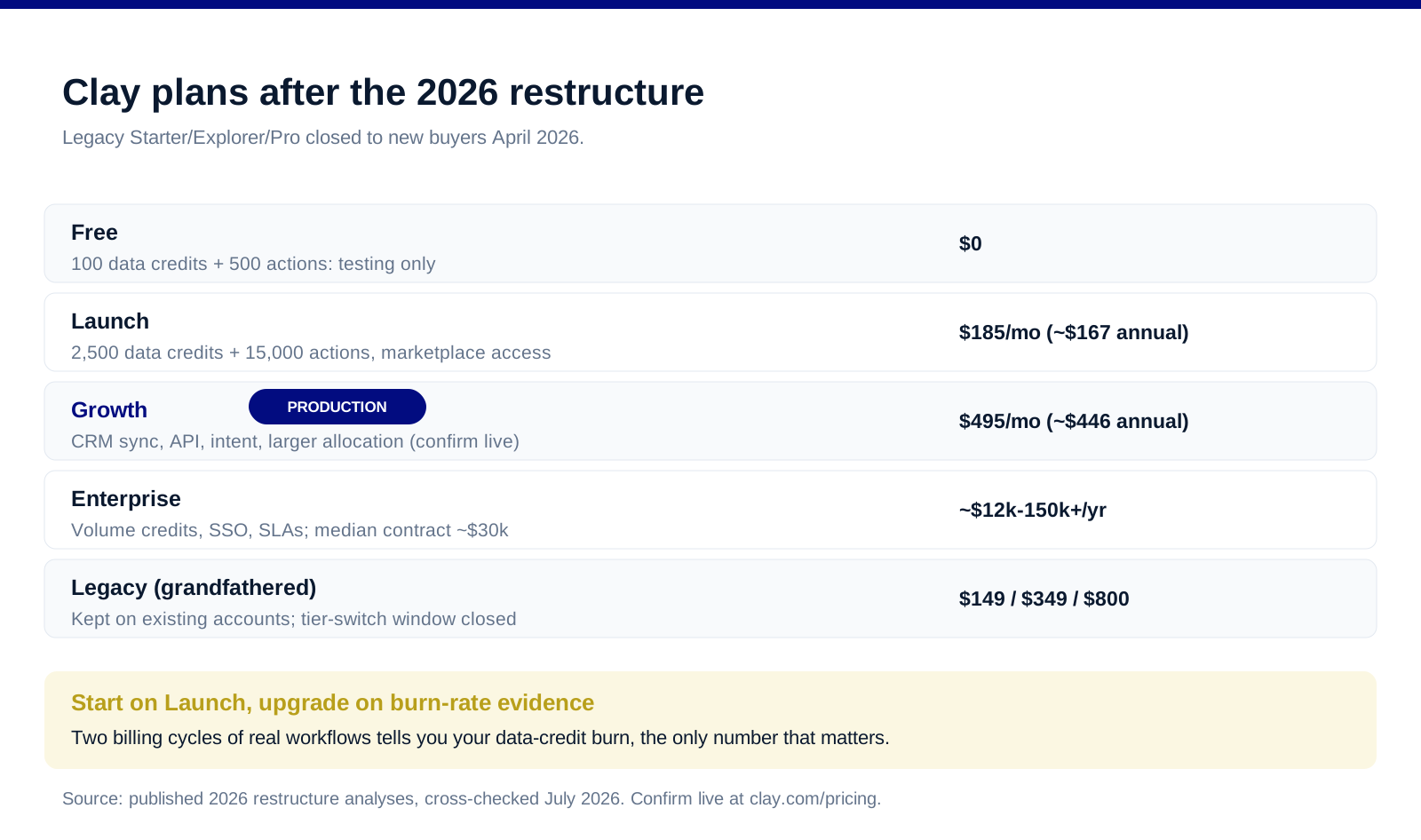
Free ($0). 100 data credits and 500 actions a month: enough to test a table and a Claygent prompt, not to run a workflow.
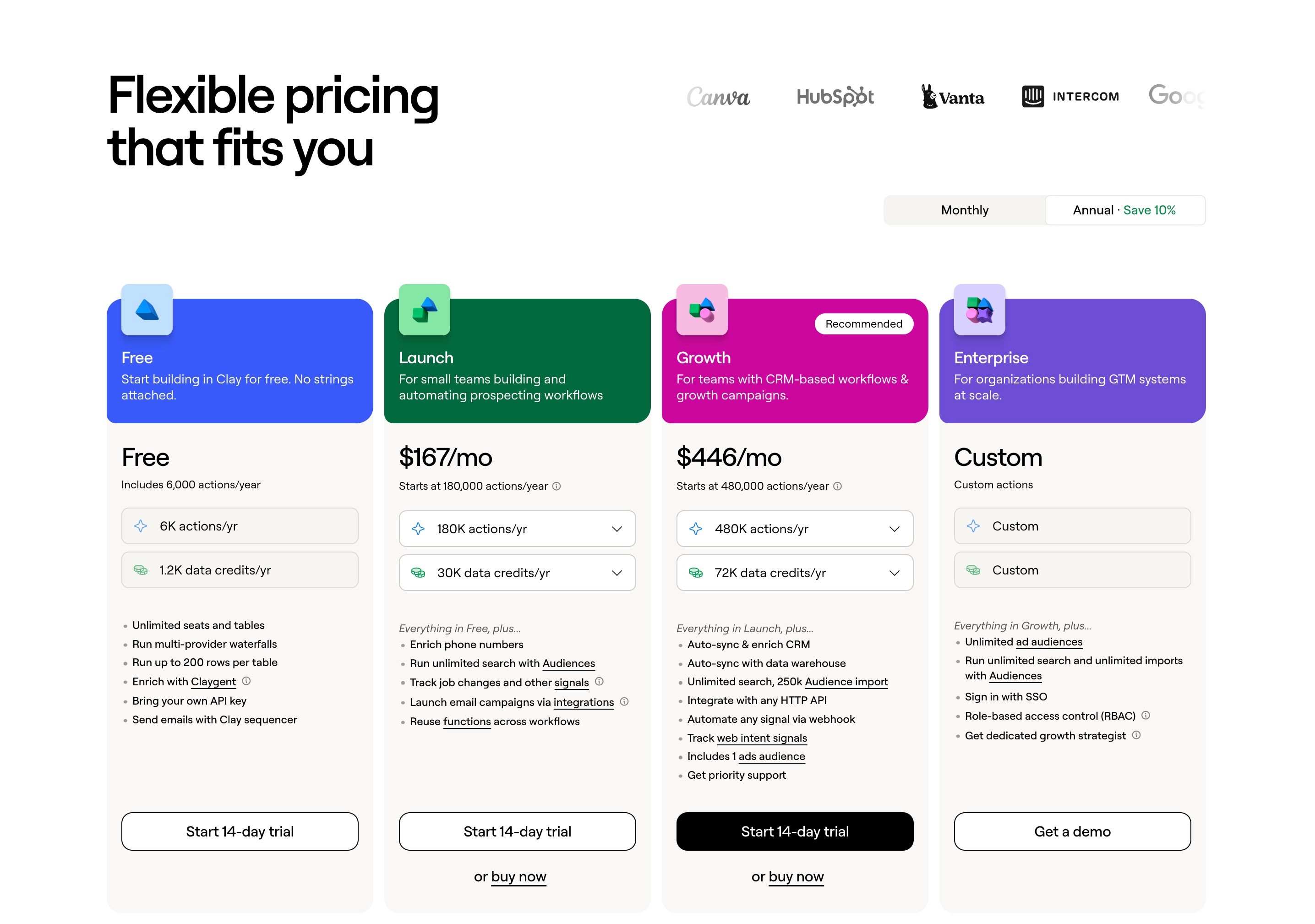
Launch ($185/mo, ~$167 annual). 2,500 data credits and 15,000 actions monthly, phone enrichment, signal tracking, and marketplace access. The entry point for a real motion.
Growth ($495/mo, ~$446 annual). The production tier: CRM sync, HTTP API, web intent, every enrichment provider, and the larger allocation noted above. This is where agencies and RevOps teams live.
Enterprise (custom, from ~$12k to $150k+/yr). Volume credits (200k-500k+ monthly at the top end), SSO, SLAs, dedicated support. Procurement data puts the median contract around $30k a year.
Legacy tiers (grandfathered). Starter $149, Explorer $349, Pro $800. Existing accounts keep them, but the switch window between legacy tiers closed April 10, 2026: leaving means landing on the new lineup.
The dual-credit system, decoded
The 2026 restructure split one confusing meter into two clearer ones, and knowing which one you burn is the whole cost model.
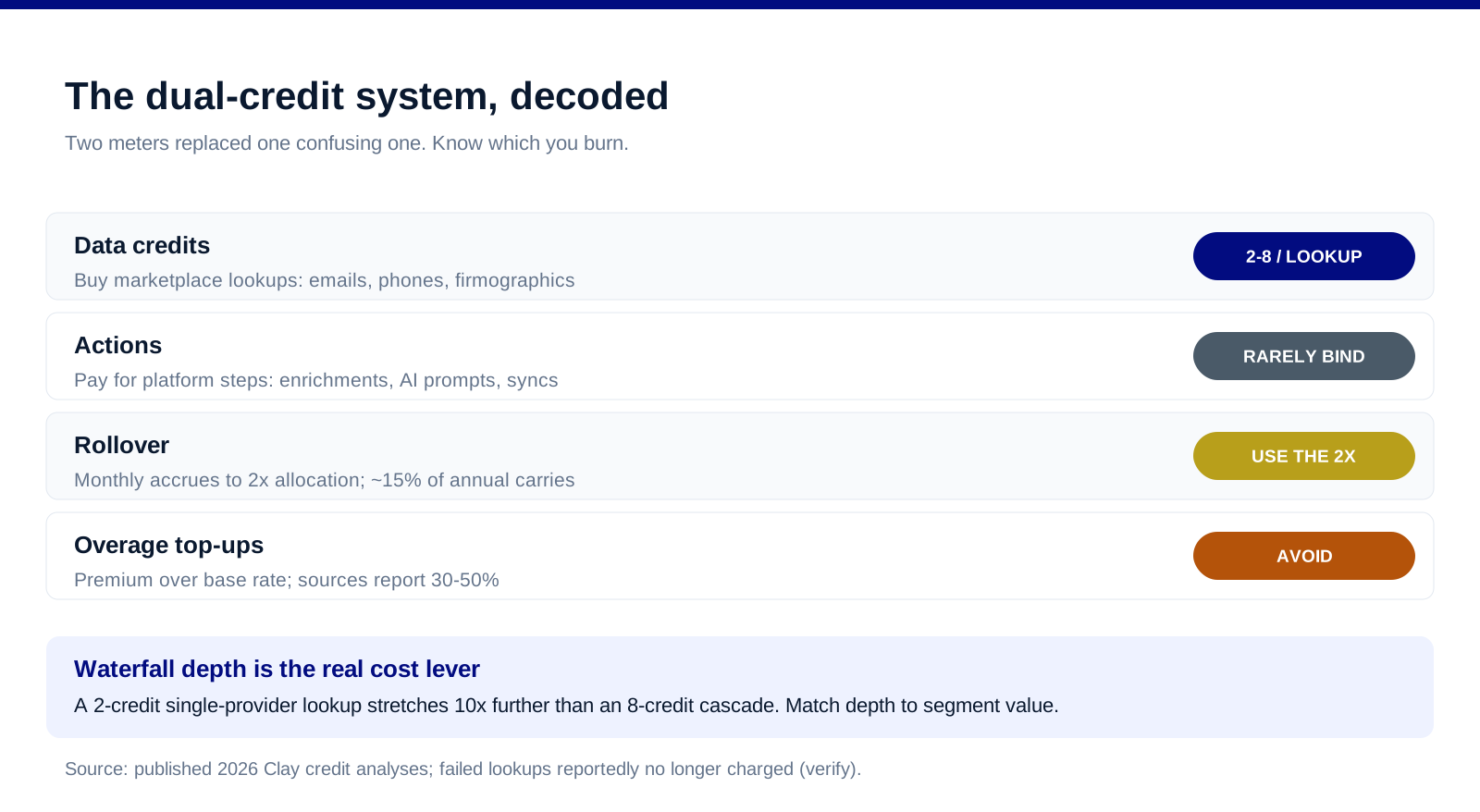
Data credits buy third-party data. Emails, phones, firmographics from the marketplace, at 2-8 credits per lookup depending on provider. A waterfall that tries three providers spends on the path it takes, so provider order is a cost lever, and the 9-step enrichment waterfall you configure decides your effective cost per contact more than the plan does.
Actions pay for platform work. Enrichment steps, AI prompts, webhooks, CRM syncs, at fractions of a cent each. Clay reports 90% of customers never exhaust actions; treat them as headroom, not a constraint.
Overages and rollover. Top-ups carry a premium over the base rate (sources report 30-50% depending on timing), monthly rollover accumulates to 2x your allocation, and up to 15% of an annual allocation carries forward. One welcome 2026 change reported by multiple sources: failed lookups are no longer charged, though policies move; verify current terms before modeling costs on it.
What teams actually pay
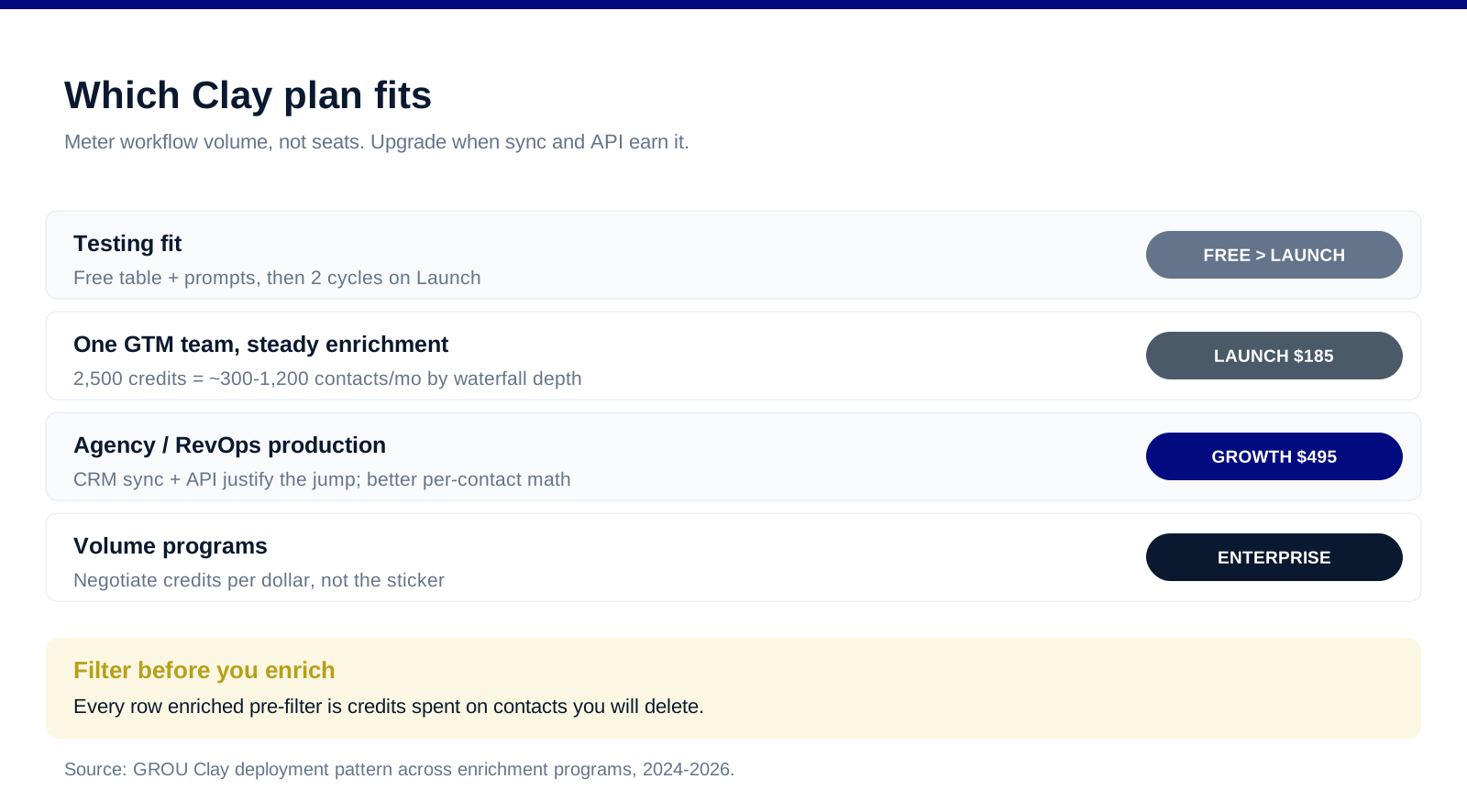
Testing whether Clay fits: Free, then Launch. Two billing cycles on Launch with real workflows tells you your data-credit burn rate, which is the only number that matters.
One GTM team, steady enrichment: Launch at $185. 2,500 data credits covers roughly 300-1,200 enriched contacts a month depending on waterfall depth. Watch the burn; upgrade on evidence.
Agency or RevOps production: Growth at $495. CRM sync and API alone justify the jump once Clay feeds live systems rather than CSVs, and per-contact economics improve with the bigger allocation.
Volume programs: Enterprise. Negotiate on credits per dollar, not the sticker: the $12k-$150k contract spread is mostly volume tiers and support terms.
The strategic comparison stays the same as ever: Clay is the flexible enrichment layer, per-seat databases are the simple one, and the trade-offs are mapped in Clay vs Apollo and our Apollo pricing breakdown.
The mistakes that inflate a Clay bill
Mistake 1: deep waterfalls on cheap segments. An 8-provider waterfall on a low-value list burns 5x the credits for marginal coverage. Match waterfall depth to segment value.
Mistake 2: enriching whole tables by reflex. Enrich after filtering, not before. Every row enriched pre-filter is credits spent on contacts you will delete.
Mistake 3: buying Growth for the logo. If you export CSVs instead of syncing a CRM, Launch plus occasional top-ups usually beats Growth's base rate. Upgrade when the API and sync earn it.
Mistake 4: ignoring the rollover mechanics. The 2x monthly rollover means a quiet month is not wasted; the ~15% annual cap means hoarding is. Plan bursts inside the rollover window.
FAQ
How much does Clay cost in 2026?
Free at $0, Launch at $185/mo (about $167 annual), Growth at $495/mo (about $446 annual), and Enterprise from roughly $12k to $150k+ per year with a median around $30k. Legacy Starter/Explorer/Pro pricing survives only on grandfathered accounts.
What is the difference between Clay data credits and actions?
Data credits buy third-party lookups from the marketplace (2-8 credits each, varying by provider); actions meter platform steps like enrichment runs, AI prompts, and syncs at fractions of a cent. Data credits are the budget constraint; actions rarely are.
How many contacts can you enrich on Clay Launch?
Roughly 300-1,200 contacts a month on the 2,500 data-credit allocation, depending entirely on waterfall depth: a 2-credit single-provider email lookup stretches 10x further than an 8-credit multi-provider cascade with phones.
What happened to Clay's Starter, Explorer and Pro plans?
They closed to new customers in the 2026 restructure and survive only on grandfathered accounts, with the window to switch between legacy tiers closed since April 10, 2026. Leaving a legacy plan means moving to Launch, Growth, or Enterprise.
Do unused Clay credits roll over?
Yes, within limits: monthly plans accumulate up to 2x the monthly allocation, and annual plans carry up to about 15% of the yearly allocation forward. Top-ups above plan rate carry a reported 30-50% premium, so sizing the plan right beats buying overage.
Is Clay worth it versus a database like Apollo?
Different jobs: Clay wins when enrichment logic, waterfalls, and automation drive your motion; a per-seat database wins on simplicity and cost for straightforward list-pull prospecting. Many of our client stacks run both, with Clay as the orchestration layer. See Clay vs Apollo for the full decision.
Bottom line
Clay's 2026 repricing traded three opaque tiers for two legible ones and a credit system that finally maps to what you use. The discipline it rewards is unchanged: filter before you enrich, match waterfall depth to segment value, and let two cycles of real burn data pick your tier. Start on Launch at $185, instrument the credit spend, and upgrade the month the API and CRM sync start earning their keep.
Want the workflows, waterfalls, and credit discipline built for you? Book a call with GROU. We run Clay-based enrichment inside B2B outbound programs across verticals.
We are GROU, a B2B pipeline agency that runs lead generation, outbound, and LinkedIn content for clients across manufacturing, fintech, iGaming, software, and professional services. Pricing reflects published 2026 analyses of Clay's restructured plans cross-checked at publish time; allocation details that vary between sources are flagged as ranges in the text.
Some links in this article are affiliate. We may earn a small commission at no extra cost to you. We only recommend tools we've deployed for clients.
Clay rebuilt its pricing in 2026: the old Starter, Explorer, and Pro tiers are closed to new buyers, replaced by Launch at $185/mo and Growth at $495/mo, with a dual-credit system that separates data purchases from platform work. It is a better structure than the one it replaced, and it still rewards teams who do the credit math before committing. Here is the whole picture.
The new plans, the dual-credit system in plain language, what legacy customers keep, and what teams actually pay.
TL;DR
Clay's 2026 lineup: Free ($0, 100 data credits + 500 actions, testing only), Launch at $185/mo (about $167 on annual; 2,500 data credits + 15,000 actions), Growth at $495/mo (about $446 annual, with a larger allocation that sources report between 6,000 data credits with 40,000 actions and effectively unlimited; confirm on the live page), and Enterprise from roughly $12k to $150k+ a year with a ~$30k median. Data credits buy marketplace lookups at 2-8 credits each depending on provider; actions meter platform steps and rarely run out. Legacy Starter ($149), Explorer ($349), and Pro ($800) accounts are grandfathered, and the window to switch between legacy tiers closed April 10, 2026. Start on Launch, watch data-credit burn for two cycles, and upgrade on evidence, not enthusiasm.
Context: our Clay review and the Clay vs Apollo head-to-head, July's most-read comparison on this blog.
The 2026 plans
Clay is enrichment infrastructure, not a database seat, so the plans meter workflow volume rather than users. Prices below are cross-checked against current 2026 analyses; the restructure is recent, so confirm details on Clay's live pricing page at signup.
Free ($0). 100 data credits and 500 actions a month: enough to test a table and a Claygent prompt, not to run a workflow.
Launch ($185/mo, ~$167 annual). 2,500 data credits and 15,000 actions monthly, phone enrichment, signal tracking, and marketplace access. The entry point for a real motion.
Growth ($495/mo, ~$446 annual). The production tier: CRM sync, HTTP API, web intent, every enrichment provider, and the larger allocation noted above. This is where agencies and RevOps teams live.
Enterprise (custom, from ~$12k to $150k+/yr). Volume credits (200k-500k+ monthly at the top end), SSO, SLAs, dedicated support. Procurement data puts the median contract around $30k a year.
Legacy tiers (grandfathered). Starter $149, Explorer $349, Pro $800. Existing accounts keep them, but the switch window between legacy tiers closed April 10, 2026: leaving means landing on the new lineup.
The dual-credit system, decoded
The 2026 restructure split one confusing meter into two clearer ones, and knowing which one you burn is the whole cost model.
Data credits buy third-party data. Emails, phones, firmographics from the marketplace, at 2-8 credits per lookup depending on provider. A waterfall that tries three providers spends on the path it takes, so provider order is a cost lever, and the 9-step enrichment waterfall you configure decides your effective cost per contact more than the plan does.
Actions pay for platform work. Enrichment steps, AI prompts, webhooks, CRM syncs, at fractions of a cent each. Clay reports 90% of customers never exhaust actions; treat them as headroom, not a constraint.
Overages and rollover. Top-ups carry a premium over the base rate (sources report 30-50% depending on timing), monthly rollover accumulates to 2x your allocation, and up to 15% of an annual allocation carries forward. One welcome 2026 change reported by multiple sources: failed lookups are no longer charged, though policies move; verify current terms before modeling costs on it.
What teams actually pay
Testing whether Clay fits: Free, then Launch. Two billing cycles on Launch with real workflows tells you your data-credit burn rate, which is the only number that matters.
One GTM team, steady enrichment: Launch at $185. 2,500 data credits covers roughly 300-1,200 enriched contacts a month depending on waterfall depth. Watch the burn; upgrade on evidence.
Agency or RevOps production: Growth at $495. CRM sync and API alone justify the jump once Clay feeds live systems rather than CSVs, and per-contact economics improve with the bigger allocation.
Volume programs: Enterprise. Negotiate on credits per dollar, not the sticker: the $12k-$150k contract spread is mostly volume tiers and support terms.
The strategic comparison stays the same as ever: Clay is the flexible enrichment layer, per-seat databases are the simple one, and the trade-offs are mapped in Clay vs Apollo and our Apollo pricing breakdown.
The mistakes that inflate a Clay bill
Mistake 1: deep waterfalls on cheap segments. An 8-provider waterfall on a low-value list burns 5x the credits for marginal coverage. Match waterfall depth to segment value.
Mistake 2: enriching whole tables by reflex. Enrich after filtering, not before. Every row enriched pre-filter is credits spent on contacts you will delete.
Mistake 3: buying Growth for the logo. If you export CSVs instead of syncing a CRM, Launch plus occasional top-ups usually beats Growth's base rate. Upgrade when the API and sync earn it.
Mistake 4: ignoring the rollover mechanics. The 2x monthly rollover means a quiet month is not wasted; the ~15% annual cap means hoarding is. Plan bursts inside the rollover window.
FAQ
How much does Clay cost in 2026?
Free at $0, Launch at $185/mo (about $167 annual), Growth at $495/mo (about $446 annual), and Enterprise from roughly $12k to $150k+ per year with a median around $30k. Legacy Starter/Explorer/Pro pricing survives only on grandfathered accounts.
What is the difference between Clay data credits and actions?
Data credits buy third-party lookups from the marketplace (2-8 credits each, varying by provider); actions meter platform steps like enrichment runs, AI prompts, and syncs at fractions of a cent. Data credits are the budget constraint; actions rarely are.
How many contacts can you enrich on Clay Launch?
Roughly 300-1,200 contacts a month on the 2,500 data-credit allocation, depending entirely on waterfall depth: a 2-credit single-provider email lookup stretches 10x further than an 8-credit multi-provider cascade with phones.
What happened to Clay's Starter, Explorer and Pro plans?
They closed to new customers in the 2026 restructure and survive only on grandfathered accounts, with the window to switch between legacy tiers closed since April 10, 2026. Leaving a legacy plan means moving to Launch, Growth, or Enterprise.
Do unused Clay credits roll over?
Yes, within limits: monthly plans accumulate up to 2x the monthly allocation, and annual plans carry up to about 15% of the yearly allocation forward. Top-ups above plan rate carry a reported 30-50% premium, so sizing the plan right beats buying overage.
Is Clay worth it versus a database like Apollo?
Different jobs: Clay wins when enrichment logic, waterfalls, and automation drive your motion; a per-seat database wins on simplicity and cost for straightforward list-pull prospecting. Many of our client stacks run both, with Clay as the orchestration layer. See Clay vs Apollo for the full decision.
Bottom line
Clay's 2026 repricing traded three opaque tiers for two legible ones and a credit system that finally maps to what you use. The discipline it rewards is unchanged: filter before you enrich, match waterfall depth to segment value, and let two cycles of real burn data pick your tier. Start on Launch at $185, instrument the credit spend, and upgrade the month the API and CRM sync start earning their keep.
Want the workflows, waterfalls, and credit discipline built for you? Book a call with GROU. We run Clay-based enrichment inside B2B outbound programs across verticals.
We are GROU, a B2B pipeline agency that runs lead generation, outbound, and LinkedIn content for clients across manufacturing, fintech, iGaming, software, and professional services. Pricing reflects published 2026 analyses of Clay's restructured plans cross-checked at publish time; allocation details that vary between sources are flagged as ranges in the text.
Some links in this article are affiliate. We may earn a small commission at no extra cost to you. We only recommend tools we've deployed for clients.
Clay rebuilt its pricing in 2026: the old Starter, Explorer, and Pro tiers are closed to new buyers, replaced by Launch at $185/mo and Growth at $495/mo, with a dual-credit system that separates data purchases from platform work. It is a better structure than the one it replaced, and it still rewards teams who do the credit math before committing. Here is the whole picture.
The new plans, the dual-credit system in plain language, what legacy customers keep, and what teams actually pay.
TL;DR
Clay's 2026 lineup: Free ($0, 100 data credits + 500 actions, testing only), Launch at $185/mo (about $167 on annual; 2,500 data credits + 15,000 actions), Growth at $495/mo (about $446 annual, with a larger allocation that sources report between 6,000 data credits with 40,000 actions and effectively unlimited; confirm on the live page), and Enterprise from roughly $12k to $150k+ a year with a ~$30k median. Data credits buy marketplace lookups at 2-8 credits each depending on provider; actions meter platform steps and rarely run out. Legacy Starter ($149), Explorer ($349), and Pro ($800) accounts are grandfathered, and the window to switch between legacy tiers closed April 10, 2026. Start on Launch, watch data-credit burn for two cycles, and upgrade on evidence, not enthusiasm.
Context: our Clay review and the Clay vs Apollo head-to-head, July's most-read comparison on this blog.
The 2026 plans
Clay is enrichment infrastructure, not a database seat, so the plans meter workflow volume rather than users. Prices below are cross-checked against current 2026 analyses; the restructure is recent, so confirm details on Clay's live pricing page at signup.
Free ($0). 100 data credits and 500 actions a month: enough to test a table and a Claygent prompt, not to run a workflow.
Launch ($185/mo, ~$167 annual). 2,500 data credits and 15,000 actions monthly, phone enrichment, signal tracking, and marketplace access. The entry point for a real motion.
Growth ($495/mo, ~$446 annual). The production tier: CRM sync, HTTP API, web intent, every enrichment provider, and the larger allocation noted above. This is where agencies and RevOps teams live.
Enterprise (custom, from ~$12k to $150k+/yr). Volume credits (200k-500k+ monthly at the top end), SSO, SLAs, dedicated support. Procurement data puts the median contract around $30k a year.
Legacy tiers (grandfathered). Starter $149, Explorer $349, Pro $800. Existing accounts keep them, but the switch window between legacy tiers closed April 10, 2026: leaving means landing on the new lineup.
The dual-credit system, decoded
The 2026 restructure split one confusing meter into two clearer ones, and knowing which one you burn is the whole cost model.
Data credits buy third-party data. Emails, phones, firmographics from the marketplace, at 2-8 credits per lookup depending on provider. A waterfall that tries three providers spends on the path it takes, so provider order is a cost lever, and the 9-step enrichment waterfall you configure decides your effective cost per contact more than the plan does.
Actions pay for platform work. Enrichment steps, AI prompts, webhooks, CRM syncs, at fractions of a cent each. Clay reports 90% of customers never exhaust actions; treat them as headroom, not a constraint.
Overages and rollover. Top-ups carry a premium over the base rate (sources report 30-50% depending on timing), monthly rollover accumulates to 2x your allocation, and up to 15% of an annual allocation carries forward. One welcome 2026 change reported by multiple sources: failed lookups are no longer charged, though policies move; verify current terms before modeling costs on it.
What teams actually pay
Testing whether Clay fits: Free, then Launch. Two billing cycles on Launch with real workflows tells you your data-credit burn rate, which is the only number that matters.
One GTM team, steady enrichment: Launch at $185. 2,500 data credits covers roughly 300-1,200 enriched contacts a month depending on waterfall depth. Watch the burn; upgrade on evidence.
Agency or RevOps production: Growth at $495. CRM sync and API alone justify the jump once Clay feeds live systems rather than CSVs, and per-contact economics improve with the bigger allocation.
Volume programs: Enterprise. Negotiate on credits per dollar, not the sticker: the $12k-$150k contract spread is mostly volume tiers and support terms.
The strategic comparison stays the same as ever: Clay is the flexible enrichment layer, per-seat databases are the simple one, and the trade-offs are mapped in Clay vs Apollo and our Apollo pricing breakdown.
The mistakes that inflate a Clay bill
Mistake 1: deep waterfalls on cheap segments. An 8-provider waterfall on a low-value list burns 5x the credits for marginal coverage. Match waterfall depth to segment value.
Mistake 2: enriching whole tables by reflex. Enrich after filtering, not before. Every row enriched pre-filter is credits spent on contacts you will delete.
Mistake 3: buying Growth for the logo. If you export CSVs instead of syncing a CRM, Launch plus occasional top-ups usually beats Growth's base rate. Upgrade when the API and sync earn it.
Mistake 4: ignoring the rollover mechanics. The 2x monthly rollover means a quiet month is not wasted; the ~15% annual cap means hoarding is. Plan bursts inside the rollover window.
FAQ
How much does Clay cost in 2026?
Free at $0, Launch at $185/mo (about $167 annual), Growth at $495/mo (about $446 annual), and Enterprise from roughly $12k to $150k+ per year with a median around $30k. Legacy Starter/Explorer/Pro pricing survives only on grandfathered accounts.
What is the difference between Clay data credits and actions?
Data credits buy third-party lookups from the marketplace (2-8 credits each, varying by provider); actions meter platform steps like enrichment runs, AI prompts, and syncs at fractions of a cent. Data credits are the budget constraint; actions rarely are.
How many contacts can you enrich on Clay Launch?
Roughly 300-1,200 contacts a month on the 2,500 data-credit allocation, depending entirely on waterfall depth: a 2-credit single-provider email lookup stretches 10x further than an 8-credit multi-provider cascade with phones.
What happened to Clay's Starter, Explorer and Pro plans?
They closed to new customers in the 2026 restructure and survive only on grandfathered accounts, with the window to switch between legacy tiers closed since April 10, 2026. Leaving a legacy plan means moving to Launch, Growth, or Enterprise.
Do unused Clay credits roll over?
Yes, within limits: monthly plans accumulate up to 2x the monthly allocation, and annual plans carry up to about 15% of the yearly allocation forward. Top-ups above plan rate carry a reported 30-50% premium, so sizing the plan right beats buying overage.
Is Clay worth it versus a database like Apollo?
Different jobs: Clay wins when enrichment logic, waterfalls, and automation drive your motion; a per-seat database wins on simplicity and cost for straightforward list-pull prospecting. Many of our client stacks run both, with Clay as the orchestration layer. See Clay vs Apollo for the full decision.
Bottom line
Clay's 2026 repricing traded three opaque tiers for two legible ones and a credit system that finally maps to what you use. The discipline it rewards is unchanged: filter before you enrich, match waterfall depth to segment value, and let two cycles of real burn data pick your tier. Start on Launch at $185, instrument the credit spend, and upgrade the month the API and CRM sync start earning their keep.
Want the workflows, waterfalls, and credit discipline built for you? Book a call with GROU. We run Clay-based enrichment inside B2B outbound programs across verticals.
We are GROU, a B2B pipeline agency that runs lead generation, outbound, and LinkedIn content for clients across manufacturing, fintech, iGaming, software, and professional services. Pricing reflects published 2026 analyses of Clay's restructured plans cross-checked at publish time; allocation details that vary between sources are flagged as ranges in the text.
Some links in this article are affiliate. We may earn a small commission at no extra cost to you. We only recommend tools we've deployed for clients.

Pipeline OS Newsletter
Build qualified pipeline
Get weekly tactics to generate demand, improve lead quality, and book more meetings.





Trusted by industry leaders
Trusted by industry leaders
Trusted by industry leaders
Ready to build qualified pipeline?
Ready to build qualified pipeline?
Ready to build qualified pipeline?
Book a call to see if we're the right fit, or take the 2-minute quiz to get a clear starting point.
Book a call to see if we're the right fit, or take the 2-minute quiz to get a clear starting point.
Book a call to see if we're the right fit, or take the 2-minute quiz to get a clear starting point.
" height="30.21639343089746px" id="hfGbXmQR2" width="30.216393430897455px"/></svg>)
Copyright © 2026 – All Right Reserved
Copyright © 2026 – All Right Reserved
Copyright © 2026 – All Right Reserved