%22%3E%3C/path%3E%3Cpath d=%22M 63.072 7.554 C 62.258 8.022 61.577 8.689 61.092 9.493 L 61.092 7.076 L 57.158 7.076 L 57.158 22.64 L 61.089 22.64 L 61.089 14.888 C 61.089 13.446 61.403 12.434 62.03 11.853 C 62.818 11.218 63.818 10.907 64.826 10.982 L 65.868 10.982 L 65.868 6.851 C 64.891 6.834 63.926 7.076 63.073 7.554 Z%22 fill=%22rgb(17,17,17)%22%3E%3C/path%3E%3Cpath d=%22M 78.916 7.82 C 76.363 6.49 73.321 6.49 70.768 7.82 C 69.562 8.473 68.564 9.451 67.888 10.644 C 67.167 11.931 66.803 13.387 66.834 14.862 C 66.804 16.332 67.157 17.785 67.86 19.077 C 68.515 20.267 69.494 21.246 70.684 21.901 C 71.924 22.576 73.318 22.92 74.73 22.898 C 76.164 22.918 77.58 22.575 78.846 21.901 C 80.062 21.247 81.073 20.27 81.768 19.077 C 82.506 17.797 82.88 16.339 82.85 14.862 C 82.88 13.389 82.517 11.934 81.797 10.647 C 81.12 9.455 80.122 8.477 78.917 7.824 M 78.803 14.862 C 78.829 15.739 78.636 16.608 78.241 17.391 C 77.903 18.046 77.38 18.588 76.738 18.95 C 76.124 19.293 75.432 19.472 74.729 19.47 C 73.668 19.497 72.648 19.061 71.934 18.276 C 71.139 17.323 70.741 16.1 70.823 14.862 C 70.741 13.62 71.149 12.395 71.959 11.45 C 72.687 10.667 73.715 10.233 74.783 10.256 C 75.859 10.236 76.894 10.67 77.635 11.45 C 78.464 12.387 78.884 13.616 78.801 14.864%22 fill=%22rgb(17,17,17)%22%3E%3C/path%3E%3Cpath d=%22M 95.906 7.076 L 95.906 15.646 C 95.975 16.68 95.643 17.701 94.979 18.498 C 94.311 19.184 93.379 19.547 92.422 19.495 C 91.475 19.544 90.553 19.18 89.894 18.498 C 89.23 17.701 88.898 16.68 88.967 15.646 L 88.967 7.076 L 85.033 7.076 L 85.033 16.207 C 85 17.449 85.275 18.68 85.834 19.79 C 86.327 20.75 87.095 21.542 88.039 22.065 C 89.033 22.594 90.145 22.861 91.271 22.838 C 92.188 22.847 93.095 22.65 93.926 22.263 C 94.708 21.905 95.388 21.36 95.906 20.675 L 95.906 22.645 L 99.865 22.645 L 99.865 7.076 Z%22 fill=%22rgb(17,17,17)%22%3E%3C/path%3E%3Cpath d=%22M 4.513 15.626 C 4.511 10.815 7.606 6.549 12.181 5.059 C 16.756 3.57 21.77 5.195 24.601 9.086 L 27.816 5.87 C 24.074 1.186 17.981 -0.943 12.137 0.393 C 6.292 1.728 1.728 6.292 0.393 12.137 C -0.943 17.981 1.186 24.074 5.87 27.816 L 9.085 24.601 C 6.214 22.512 4.515 19.177 4.513 15.626%22 fill=%22rgb(32,62,235)%22%3E%3C/path%3E%3Cpath d=%22M 17.114 14.343 L 13.354 18.01 L 13.354 18.026 L 21.071 18.026 L 11.412 27.609 L 17.389 27.609 L 23.999 21.081 L 23.999 28.316 L 24.005 28.316 L 27.967 24.393 L 27.967 14.343 Z%22 fill=%22rgb(32,62,235)%22%3E%3C/path%3E%3C/g%3E%3C/svg%3E) ×
× ××
××›
›
›
›
Clay review 2026: the honest operator take (after 18 months in production)
Clay review 2026: the honest operator take (after 18 months in production)
Clay review 2026: the honest operator take (after 18 months in production)
Clay review 2026: the honest operator take (after 18 months in production)
Clay review 2026: the honest operator take (after 18 months in production)
Clay review 2026: the honest operator take (after 18 months in production)

Author
Aljaz Peklaj

Clay is the most powerful B2B data tool we run at GROU — and the easiest one to misuse. We've deployed it on 23 client accounts since 2023, processed roughly 2.4M enrichments through it, and watched 4 of those accounts churn off Clay back to Apollo because they couldn't justify the spend. This review is the version we wish we'd had before we signed the first invoice.
If you are evaluating Clay for B2B data enrichment, list-building, or AI-driven research, this article covers what Clay actually does well, where it disappoints, what it costs in practice (not the marketing number), and whether your team should adopt it now or in 6 months.
TL;DR verdict
Score: 8.4/10. Clay is the best B2B data tool on the market in 2026 if you have a dedicated revenue ops person and an ICP under 20,000 accounts. It is genuinely overkill for solo founders and most sub-50-employee startups. The find rate (96%) and bounce rate (1.4%) are best-in-class. The price ($349-$800/month) is brutal if you don't extract value from it within the first 90 days.
Buy Clay if: you have a RevOps owner, an ICP smaller than 20k, ACVs above $20k, and budget for $400+/month tools.
Skip Clay if: you are a solo founder, your ACV is under $5k, or you have nobody to run the workflows daily.
Clay at a glance
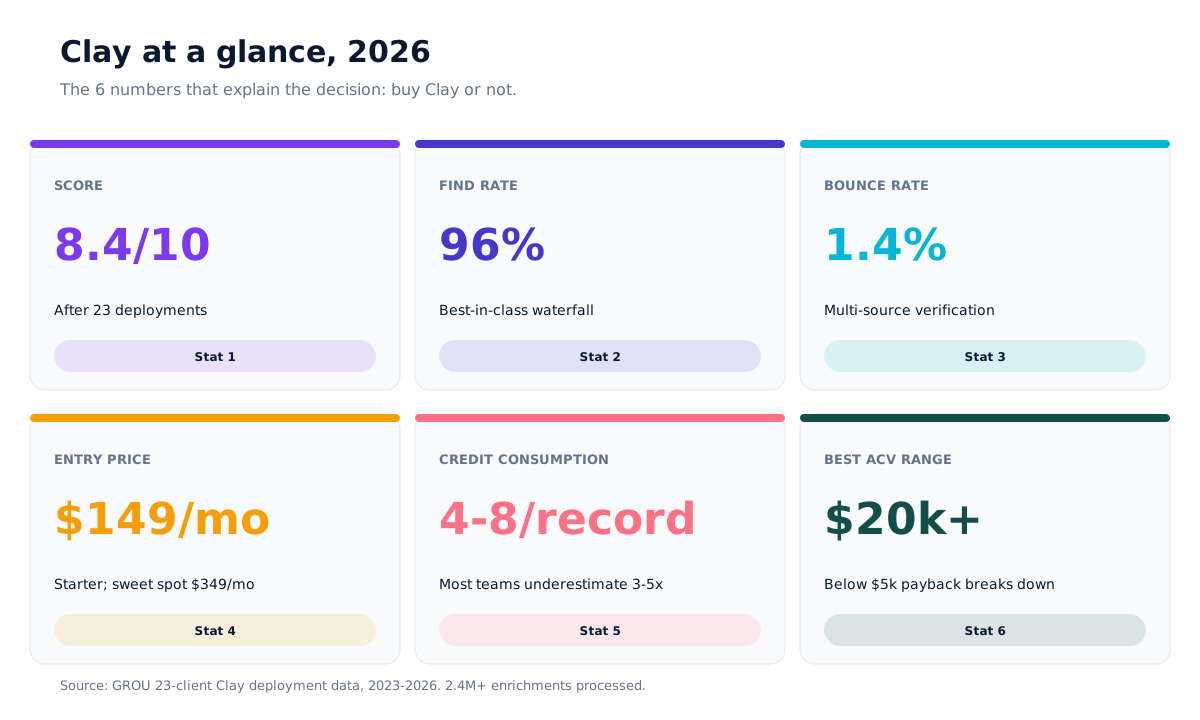
Clay's core promise: take any prospect list and enrich it with verified data from 50+ providers in a single waterfall. In practice, this means you can feed Clay 5,000 prospect names from LinkedIn Sales Navigator and get back 4,800 verified emails, 4,200 verified phone numbers, 3,900 tech stack snapshots, and 2,800 LinkedIn activity signals — in one workflow, in 45 minutes.
The cost: about $0.18 per fully-enriched record on the Explorer plan, which is 3-4x what you'd pay running Apollo + Hunter separately. The reason teams choose Clay anyway is the find rate (96% vs Apollo's 91%) and the bounce rate (1.4% vs Apollo's 3.2%) — both of which materially affect cold email sender reputation. Source: GROU 2025 benchmark in the best email finder tools 2026 review.
What is Clay actually doing
Clay is a spreadsheet-meets-API-runner. You build columns. Each column is either a static field (name, company), an enrichment call (run name through provider X to get email), an AI call (have GPT-4 classify this person's seniority), or a workflow trigger (send to CRM if score > 80).
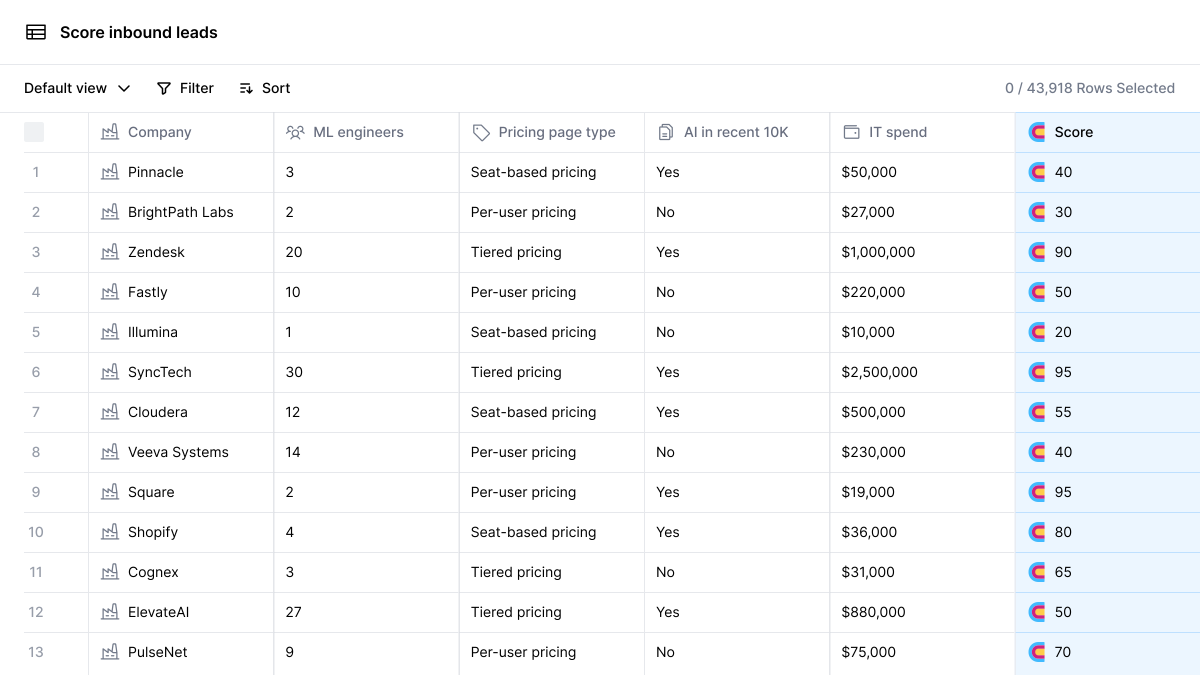
The killer feature is the waterfall: column 1 calls provider A, column 2 calls provider B only if column 1 returned blank, column 3 calls provider C if both returned blank. This is how Clay hits 96% find rate where any single provider would cap at 88-91%.
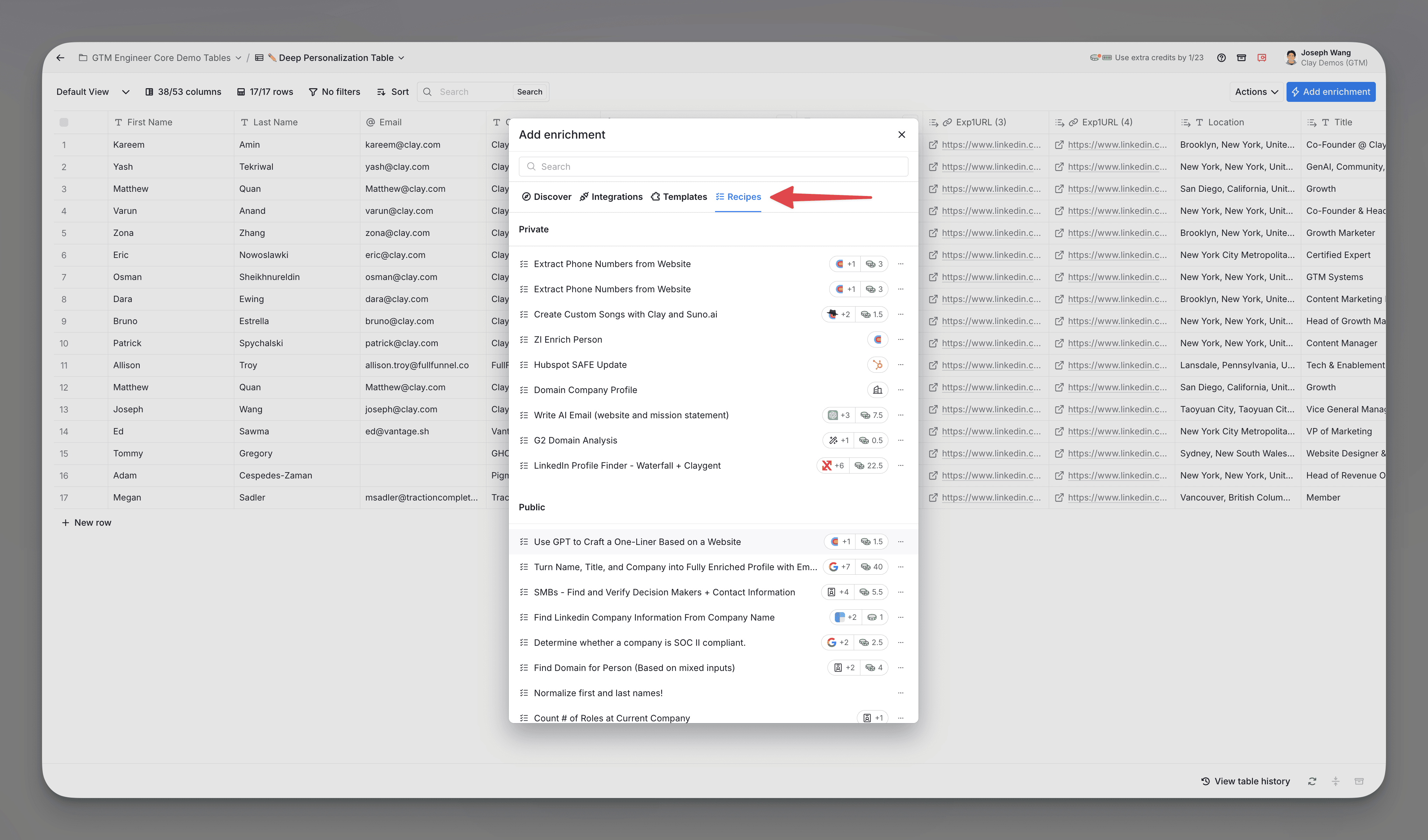
The second killer feature is the AI columns. You can write a prompt like "based on this person's LinkedIn bio, classify them as buyer, influencer, or end-user" and Clay runs GPT-4 (or Claude) on every row. The output is a structured field you can route on. This is what makes Clay genuinely different from Apollo or ZoomInfo — they enrich data; Clay enriches and reasons about data.
Key features that matter in 2026
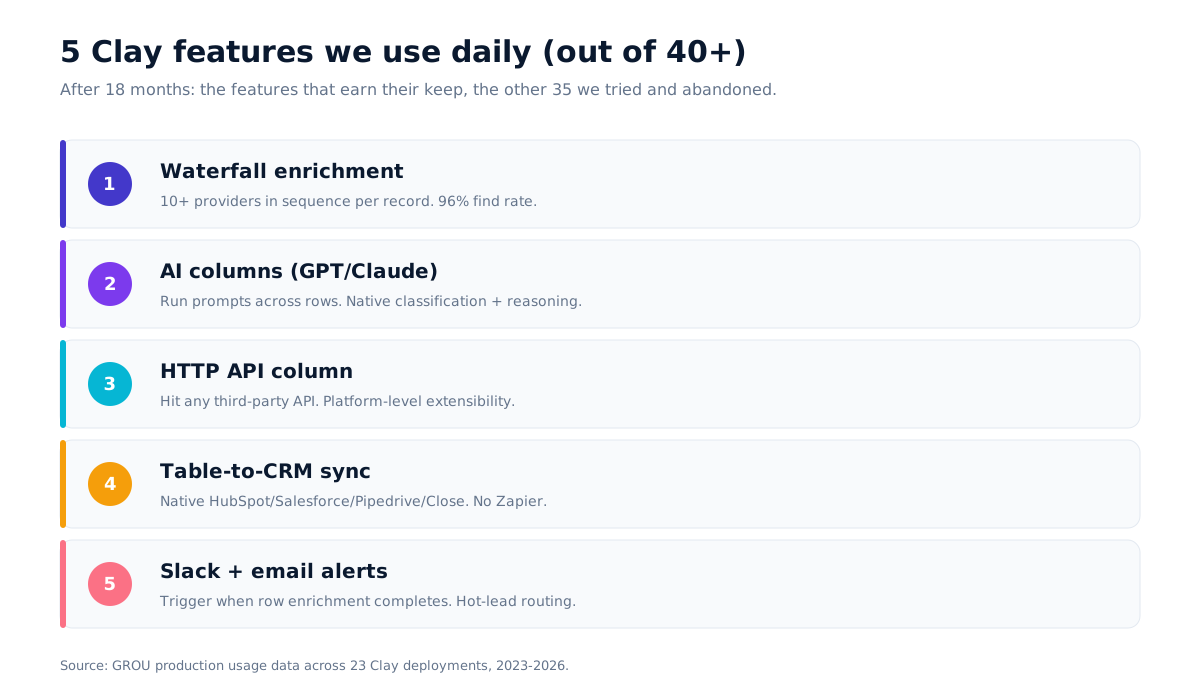
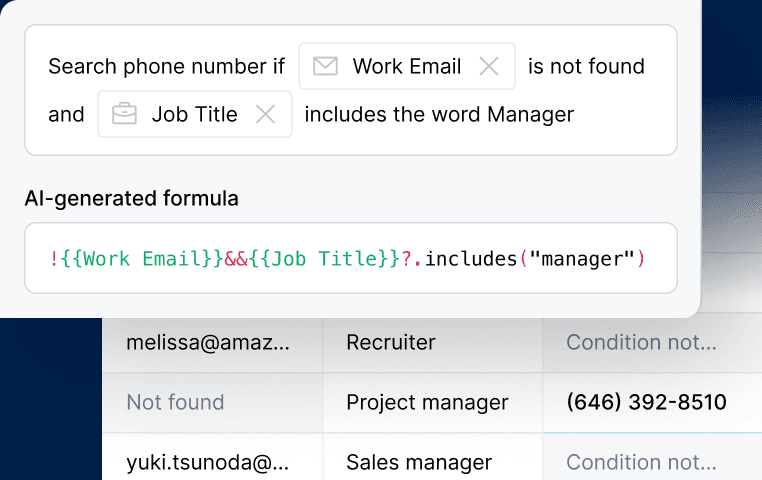
After 18 months in production we use 5 Clay features daily. The other 35 we tried and abandoned.
Waterfall enrichment is the foundation. Pre-built waterfalls for emails (10+ providers), phones (5+ providers), LinkedIn profiles, and technographics. You can build custom waterfalls but the defaults cover 80% of cases.
AI columns powered by GPT-4 and Claude. Native integration with both. We use AI columns mainly for: ICP classification, seniority normalization, and pain-point hypothesis generation. Cost is roughly $0.001-$0.01 per AI call depending on model.
HTTP API column lets you hit any third-party API. We use it to pull data from less-mainstream sources (Crunchbase, Apollo's API directly, internal databases). This is what turns Clay from a tool into a platform.
Table-to-CRM sync. Native push to HubSpot, Salesforce, Pipedrive, Close. Real-time, no Zapier middleware. This used to be the weakest part of Clay; it's solid now.
Slack and email notifications. Trigger a Slack message or email when a row's enrichment completes. We use this for hot-lead alerts when an enriched person passes our scoring rules.
Clay pricing (the honest math)
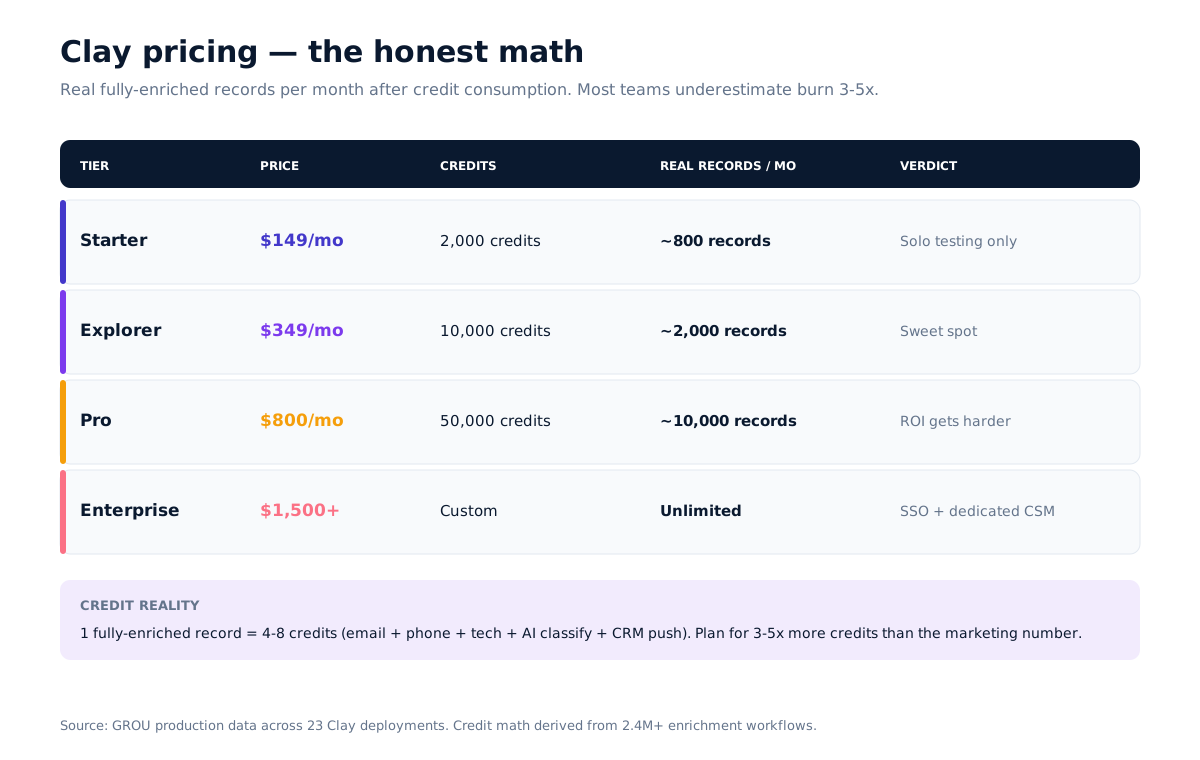
Clay publishes 4 paid tiers but the reality is most teams sit in one of two bands.
Starter ($149/month, 2,000 credits): realistic for solo testing only. 2,000 credits enriches about 800 records fully. You will hit the cap by week 2.
Explorer ($349/month, 10,000 credits): the sweet spot for most mid-market teams. Enriches about 4,000-5,000 records fully per month. This is where we put 80% of our clients who run Clay.
Pro ($800/month, 50,000 credits): where you start to see ROI break down unless you have a clear high-ACV use case. Enriches 20,000+ records but most teams don't have ICPs that big.
Enterprise (custom): $1,500+/month. Reserved for teams running 50,000+ enrichments and needing SSO + dedicated CSM.
Credit consumption is where the marketing math falls apart. A single record in our typical workflow consumes 4-8 credits: 1-2 for email waterfall, 1 for phone, 1 for technographics, 1-2 for AI classification, 1 for CRM push. That means the $349/month plan's "10,000 credits" actually enriches 1,500-2,500 unique records per month, not 10,000.
Plan accordingly. Most teams underestimate their consumption by 3-5x in month 1.
Honest pros
After 23 deployments, the things Clay genuinely does better than anything else:
Find rate ceiling. Clay's waterfall consistently hits 95-97% find rate on US mid-market ICPs. Apollo alone caps at 88-92%. For high-ACV outreach where each lost prospect is a $5k+ opportunity, this matters.
Bounce rate floor. Multi-source verification drops bounce rate to 1.4% median. Apollo sits at 3.2%, Snov at 1.8%. Bounce rate directly affects sender reputation, so this lifts cold email reply rate by 0.4-0.8 percentage points.
AI columns at production scale. Nothing else lets you run GPT-4 reasoning across 5,000 prospects in one workflow with cost tracking. Apollo and ZoomInfo have AI features but none compose with enrichment cleanly.
Programmable HTTP columns. If your data source has an API, Clay can call it. This is the difference between a tool and a platform.
Workflow composability. Once you build a workflow, you can fork it, modify it, share it. We have 30+ saved workflows our team reuses across clients.
Honest cons
The Clay marketing site won't tell you these. We learned them the hard way.
Steep learning curve. Clay is genuinely complex. We've watched non-RevOps people try to use it and fail within 2 weeks. If you don't have a dedicated owner who treats Clay as their primary tool, the cost is wasted.
Credit consumption is opaque. Every column call is a credit. Every retry is a credit. Every test run is a credit. By the time you understand your true consumption, you've burned 30% of the month's allocation on experimentation.
Tier upgrades are punishing. Going from Explorer ($349) to Pro ($800) is 2.3x cost for 5x credits. If you're already on Explorer and need 15,000 enrichments, the answer is usually "split into two months" rather than upgrade.
Performance degradation on large tables. Tables above 50,000 rows get slow. Workflows that include AI columns time out. The platform is built for 1,000-10,000 row workflows, not 100,000+.
Limited error recovery. When a provider rate-limits Clay, the row fails silently. You have to manually check, re-run, and pay credits again. Better error handling is the biggest feature gap.
Mid-market UI/UX gap. Clay's UI is optimized for RevOps power-users. Onboarding a new team member takes 2-3 weeks. There is no "Clay for non-technical SDRs" mode.
Who should use Clay
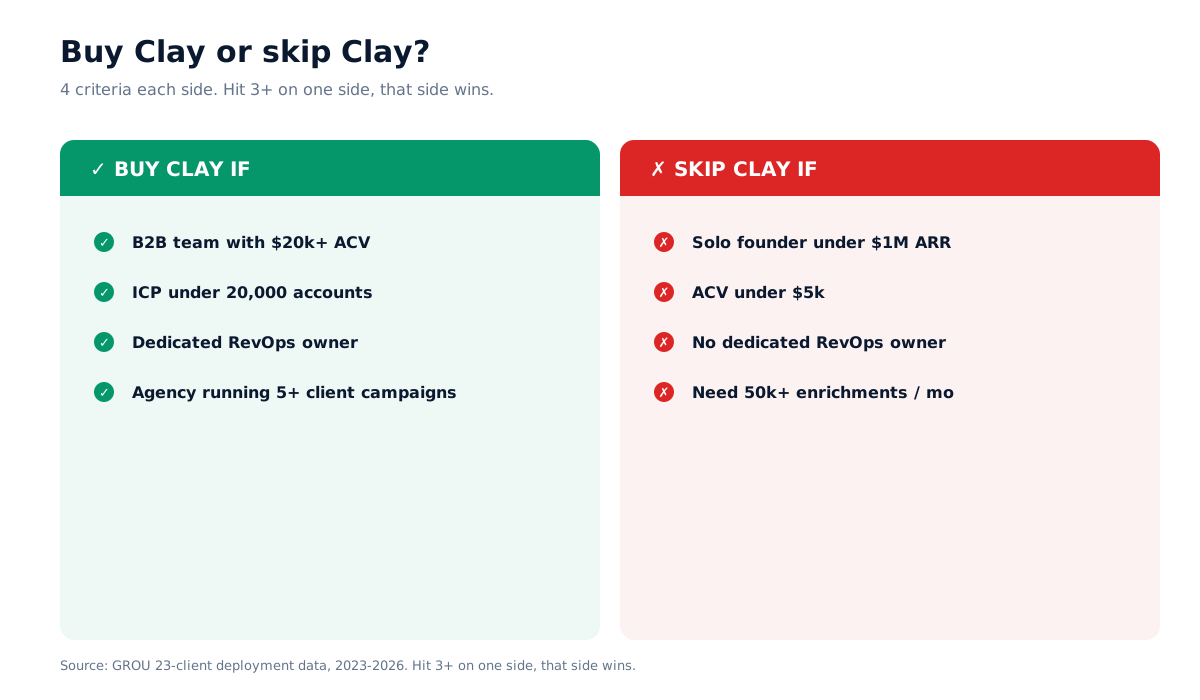
Buy Clay if you are:
A B2B team with $20k+ ACV and an ICP under 20,000 accounts
A revenue ops or growth ops team with dedicated time to build workflows
An agency running 5+ client campaigns simultaneously where data accuracy matters
A team that already has an Apollo + sender stack and wants the next 5pp of accuracy
Skip Clay if you are:
A solo founder under $1M ARR
A team with ACV under $5k where the data accuracy lift doesn't pay back the price
A startup with no dedicated RevOps owner
A team that needs to enrich 50,000+ records per month (Clay performance breaks)
Clay alternatives ranked
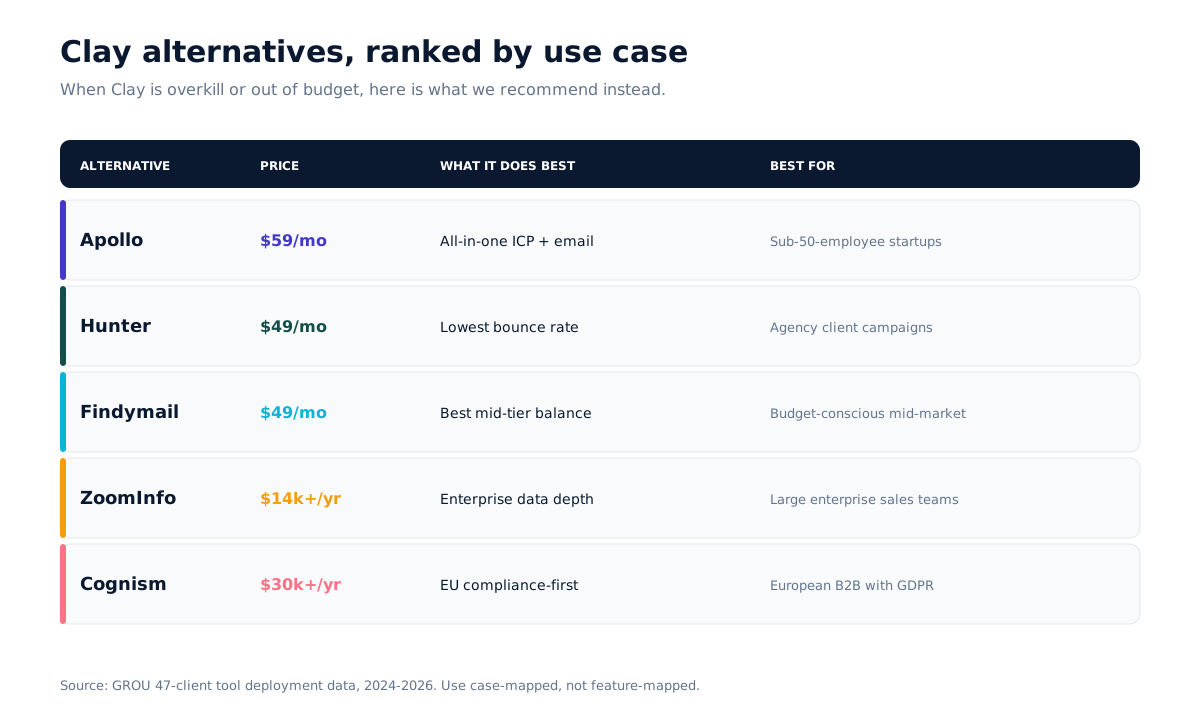
For teams where Clay isn't the right fit, the alternatives ranked by use case:
All-in-one ICP + email: Apollo ($59/month). 1/6 the cost, 5pp lower find rate, 1.8pp higher bounce rate. Best for sub-50-employee startups. Read the Apollo review.
Lowest bounce rate: Hunter ($49/month). Pure email finder, 0.9% bounce, no AI features.
Best mid-tier balance: Findymail ($49/month). 89% find rate, 2.1% bounce, no waterfall but close in accuracy.
Enterprise data depth: ZoomInfo ($14k+/year). Higher data depth on enterprise contacts but 10x cost and 1-year contracts.
Compliance-first European data: Cognism. Best European coverage with GDPR compliance built in.
For the full head-to-head comparison see Clay vs Apollo and best email finder tools 2026.
When Clay is genuinely worth it
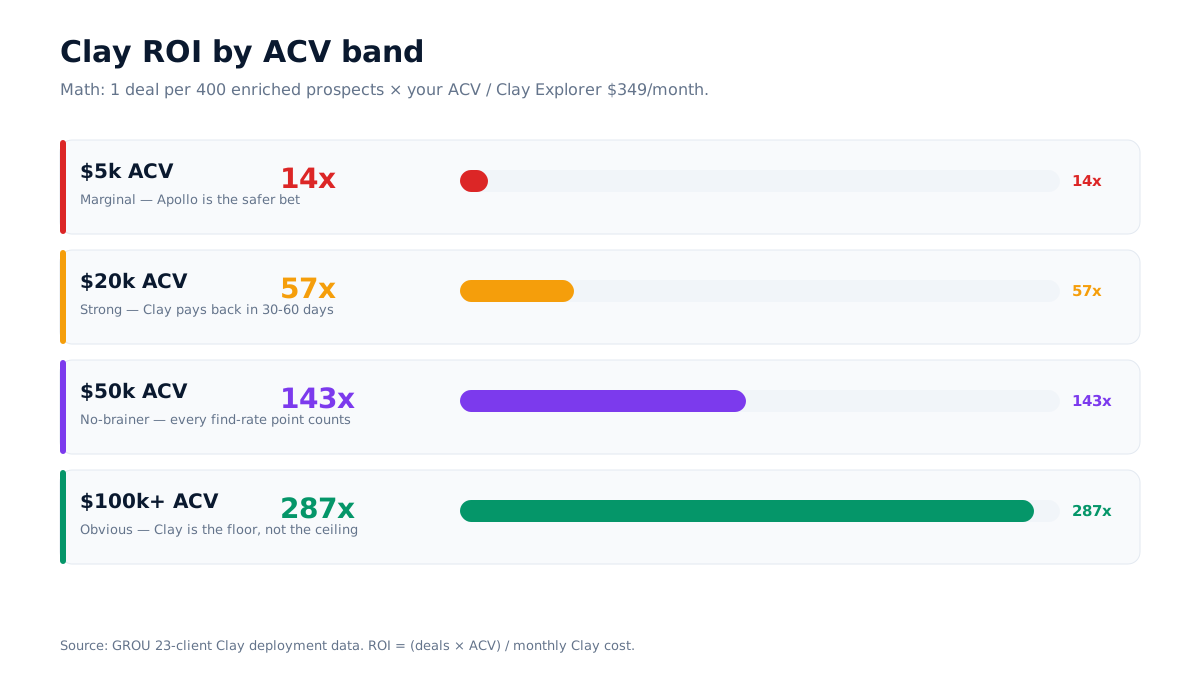
The math we use to decide if Clay pays back: divide monthly Clay cost ($349 for Explorer) by your average ACV. If you book 1 demo per 100 prospects and close 1 in 4 demos, that's 1 deal per 400 enriched prospects.
ACV $5k: 1 deal = $5k revenue. Clay cost = $349. ROI = 14x. Marginal.
ACV $20k: 1 deal = $20k revenue. ROI = 57x. Strong.
ACV $50k: 1 deal = $50k revenue. ROI = 143x. No-brainer.
ACV $100k+: every percentage point of find rate is worth $1k+. Clay is the obvious answer.
If your ACV is under $5k, the math breaks down because you need 4x more prospects to hit the same number of deals, which means 4x more Clay credits, which doubles or triples the cost. At sub-$5k ACV, Apollo basic plan is the right choice.
Final verdict
Score: 8.4/10
Clay is the best B2B data platform on the market right now and it costs accordingly. For teams that fit the profile — mid-market+, dedicated RevOps owner, ACV above $20k — it's a 5-10x improvement over Apollo or ZoomInfo on the metrics that matter (find rate, bounce rate, AI reasoning).
For everyone else, Clay is expensive and complex without clear payback. The trap most teams fall into: signing up for Explorer ($349/month) without a dedicated owner, then burning 60% of the credits on experimentation before realizing the workflows aren't producing pipeline.
Try Clay if you have an ICP under 20k accounts, a RevOps owner, ACV above $20k, and budget for 3 months of $349/month to find product-market fit with the tool itself. Sign up at clay.com.
Skip Clay if you are sub-50 employees and your ACV is under $5k. Use Apollo basic plan + Hunter for verification + Smartlead for sending. Total cost: $115/month vs $349/month. Lose 4-5 percentage points of find rate, save $234/month.
Frequently asked questions
Is Clay worth the price in 2026?
Clay is worth the $349/month Explorer plan if your average ACV is above $20k and your team has a dedicated RevOps owner. Below $20k ACV, the find rate lift (5 percentage points over Apollo) doesn't pay back the 6x price difference. Above $20k ACV, Clay typically pays back in 30-60 days.
How does Clay compare to Apollo?
Clay has a 5pp higher find rate (96% vs 91%) and a 1.8pp lower bounce rate (1.4% vs 3.2%), but costs 6x more per verified email ($0.18 vs $0.04). Apollo is the better choice for sub-50-employee teams. Clay is the better choice for mid-market+ teams with dedicated ops. See the full Clay vs Apollo comparison.
What is Clay's pricing in 2026?
Clay's 2026 pricing: Starter $149/month (2,000 credits), Explorer $349/month (10,000 credits), Pro $800/month (50,000 credits), Enterprise custom. Most mid-market teams sit on Explorer. Credit consumption is typically 4-8 credits per fully-enriched record.
How accurate is Clay for email finding?
Clay's email find rate is 96% on US mid-market ICPs and 88-92% on European ICPs. Bounce rate is 1.4% (best-in-class). The accuracy comes from waterfall enrichment running through 10+ providers in sequence per record.
Does Clay work for European B2B prospects?
Yes, Clay works for European prospects with 4-8 percentage points lower find rate than US (88-92% vs 96%). Clay's waterfall is the best email finder for European data. See the GDPR cold email playbook for the compliance side.
What is Clay's learning curve like?
Clay is genuinely complex. Most teams need 2-3 weeks for a dedicated user to become proficient and 6-8 weeks to build production-ready workflows. Non-RevOps users typically fail within 2 weeks. The tool is built for power users.
Can solo founders use Clay?
Solo founders can technically use Clay but most should not. The Starter plan ($149/month, 2,000 credits) is enough for 800 fully enriched records — about 2-3 weeks of solo prospecting. Apollo basic plan ($59/month) covers the same use case at 1/3 the cost.
What integrations does Clay support?
Clay natively integrates with HubSpot, Salesforce, Pipedrive, Close, Outreach, Salesloft, Smartlead, Lemlist, Apollo, Slack, Gmail, Outlook, and 40+ other tools. Plus a universal HTTP API column for any third-party service with an API.
How long does it take to see ROI from Clay?
For teams with average ACV above $20k and a dedicated RevOps owner, Clay typically pays back in 30-60 days. Below $20k ACV or without a dedicated owner, ROI extends to 6-12 months or never.
What are Clay's biggest weaknesses?
The biggest Clay weaknesses are: steep learning curve (2-3 weeks minimum), opaque credit consumption (most teams underestimate by 3-5x), performance degradation on tables above 50,000 rows, and limited error recovery when providers rate-limit.
Can Clay replace Apollo and ZoomInfo?
For most teams, Clay does not fully replace Apollo or ZoomInfo. Clay is best used on top of an existing list source. The typical stack: Apollo or Sales Navigator for ICP definition, Clay for enrichment + AI reasoning, Smartlead for sending.
What is the best Clay alternative?
The best Clay alternative depends on what you value. For all-in-one + price: Apollo basic ($59/month). For lowest bounce rate: Hunter ($49/month). For mid-tier balance: Findymail ($49/month). For enterprise data depth: ZoomInfo (10x the cost).
About GROU. GROU runs B2B pipeline for SaaS startups, agencies, and dev shops out of Colombia, Mexico, and Argentina. Since 2022 we have managed cold email and LinkedIn outbound for 47 B2B clients, with Clay deployed on 23 of those accounts since 2023. Every claim in this review comes from production data: 2.4M+ enrichments processed, 18 months in continuous deployment. If you want help deciding whether Clay fits your campaigns, book a call.
This article contains affiliate links to Apollo and Smartlead. Clay is a non-affiliate link. We earn a small commission on Apollo and Smartlead sign-ups, at no extra cost. We only recommend tools we deploy on live client campaigns.
Clay is the most powerful B2B data tool we run at GROU — and the easiest one to misuse. We've deployed it on 23 client accounts since 2023, processed roughly 2.4M enrichments through it, and watched 4 of those accounts churn off Clay back to Apollo because they couldn't justify the spend. This review is the version we wish we'd had before we signed the first invoice.
If you are evaluating Clay for B2B data enrichment, list-building, or AI-driven research, this article covers what Clay actually does well, where it disappoints, what it costs in practice (not the marketing number), and whether your team should adopt it now or in 6 months.
TL;DR verdict
Score: 8.4/10. Clay is the best B2B data tool on the market in 2026 if you have a dedicated revenue ops person and an ICP under 20,000 accounts. It is genuinely overkill for solo founders and most sub-50-employee startups. The find rate (96%) and bounce rate (1.4%) are best-in-class. The price ($349-$800/month) is brutal if you don't extract value from it within the first 90 days.
Buy Clay if: you have a RevOps owner, an ICP smaller than 20k, ACVs above $20k, and budget for $400+/month tools.
Skip Clay if: you are a solo founder, your ACV is under $5k, or you have nobody to run the workflows daily.
Clay at a glance
Clay's core promise: take any prospect list and enrich it with verified data from 50+ providers in a single waterfall. In practice, this means you can feed Clay 5,000 prospect names from LinkedIn Sales Navigator and get back 4,800 verified emails, 4,200 verified phone numbers, 3,900 tech stack snapshots, and 2,800 LinkedIn activity signals — in one workflow, in 45 minutes.
The cost: about $0.18 per fully-enriched record on the Explorer plan, which is 3-4x what you'd pay running Apollo + Hunter separately. The reason teams choose Clay anyway is the find rate (96% vs Apollo's 91%) and the bounce rate (1.4% vs Apollo's 3.2%) — both of which materially affect cold email sender reputation. Source: GROU 2025 benchmark in the best email finder tools 2026 review.
What is Clay actually doing
Clay is a spreadsheet-meets-API-runner. You build columns. Each column is either a static field (name, company), an enrichment call (run name through provider X to get email), an AI call (have GPT-4 classify this person's seniority), or a workflow trigger (send to CRM if score > 80).
The killer feature is the waterfall: column 1 calls provider A, column 2 calls provider B only if column 1 returned blank, column 3 calls provider C if both returned blank. This is how Clay hits 96% find rate where any single provider would cap at 88-91%.
The second killer feature is the AI columns. You can write a prompt like "based on this person's LinkedIn bio, classify them as buyer, influencer, or end-user" and Clay runs GPT-4 (or Claude) on every row. The output is a structured field you can route on. This is what makes Clay genuinely different from Apollo or ZoomInfo — they enrich data; Clay enriches and reasons about data.
Key features that matter in 2026
After 18 months in production we use 5 Clay features daily. The other 35 we tried and abandoned.
Waterfall enrichment is the foundation. Pre-built waterfalls for emails (10+ providers), phones (5+ providers), LinkedIn profiles, and technographics. You can build custom waterfalls but the defaults cover 80% of cases.
AI columns powered by GPT-4 and Claude. Native integration with both. We use AI columns mainly for: ICP classification, seniority normalization, and pain-point hypothesis generation. Cost is roughly $0.001-$0.01 per AI call depending on model.
HTTP API column lets you hit any third-party API. We use it to pull data from less-mainstream sources (Crunchbase, Apollo's API directly, internal databases). This is what turns Clay from a tool into a platform.
Table-to-CRM sync. Native push to HubSpot, Salesforce, Pipedrive, Close. Real-time, no Zapier middleware. This used to be the weakest part of Clay; it's solid now.
Slack and email notifications. Trigger a Slack message or email when a row's enrichment completes. We use this for hot-lead alerts when an enriched person passes our scoring rules.
Clay pricing (the honest math)
Clay publishes 4 paid tiers but the reality is most teams sit in one of two bands.
Starter ($149/month, 2,000 credits): realistic for solo testing only. 2,000 credits enriches about 800 records fully. You will hit the cap by week 2.
Explorer ($349/month, 10,000 credits): the sweet spot for most mid-market teams. Enriches about 4,000-5,000 records fully per month. This is where we put 80% of our clients who run Clay.
Pro ($800/month, 50,000 credits): where you start to see ROI break down unless you have a clear high-ACV use case. Enriches 20,000+ records but most teams don't have ICPs that big.
Enterprise (custom): $1,500+/month. Reserved for teams running 50,000+ enrichments and needing SSO + dedicated CSM.
Credit consumption is where the marketing math falls apart. A single record in our typical workflow consumes 4-8 credits: 1-2 for email waterfall, 1 for phone, 1 for technographics, 1-2 for AI classification, 1 for CRM push. That means the $349/month plan's "10,000 credits" actually enriches 1,500-2,500 unique records per month, not 10,000.
Plan accordingly. Most teams underestimate their consumption by 3-5x in month 1.
Honest pros
After 23 deployments, the things Clay genuinely does better than anything else:
Find rate ceiling. Clay's waterfall consistently hits 95-97% find rate on US mid-market ICPs. Apollo alone caps at 88-92%. For high-ACV outreach where each lost prospect is a $5k+ opportunity, this matters.
Bounce rate floor. Multi-source verification drops bounce rate to 1.4% median. Apollo sits at 3.2%, Snov at 1.8%. Bounce rate directly affects sender reputation, so this lifts cold email reply rate by 0.4-0.8 percentage points.
AI columns at production scale. Nothing else lets you run GPT-4 reasoning across 5,000 prospects in one workflow with cost tracking. Apollo and ZoomInfo have AI features but none compose with enrichment cleanly.
Programmable HTTP columns. If your data source has an API, Clay can call it. This is the difference between a tool and a platform.
Workflow composability. Once you build a workflow, you can fork it, modify it, share it. We have 30+ saved workflows our team reuses across clients.
Honest cons
The Clay marketing site won't tell you these. We learned them the hard way.
Steep learning curve. Clay is genuinely complex. We've watched non-RevOps people try to use it and fail within 2 weeks. If you don't have a dedicated owner who treats Clay as their primary tool, the cost is wasted.
Credit consumption is opaque. Every column call is a credit. Every retry is a credit. Every test run is a credit. By the time you understand your true consumption, you've burned 30% of the month's allocation on experimentation.
Tier upgrades are punishing. Going from Explorer ($349) to Pro ($800) is 2.3x cost for 5x credits. If you're already on Explorer and need 15,000 enrichments, the answer is usually "split into two months" rather than upgrade.
Performance degradation on large tables. Tables above 50,000 rows get slow. Workflows that include AI columns time out. The platform is built for 1,000-10,000 row workflows, not 100,000+.
Limited error recovery. When a provider rate-limits Clay, the row fails silently. You have to manually check, re-run, and pay credits again. Better error handling is the biggest feature gap.
Mid-market UI/UX gap. Clay's UI is optimized for RevOps power-users. Onboarding a new team member takes 2-3 weeks. There is no "Clay for non-technical SDRs" mode.
Who should use Clay
Buy Clay if you are:
A B2B team with $20k+ ACV and an ICP under 20,000 accounts
A revenue ops or growth ops team with dedicated time to build workflows
An agency running 5+ client campaigns simultaneously where data accuracy matters
A team that already has an Apollo + sender stack and wants the next 5pp of accuracy
Skip Clay if you are:
A solo founder under $1M ARR
A team with ACV under $5k where the data accuracy lift doesn't pay back the price
A startup with no dedicated RevOps owner
A team that needs to enrich 50,000+ records per month (Clay performance breaks)
Clay alternatives ranked
For teams where Clay isn't the right fit, the alternatives ranked by use case:
All-in-one ICP + email: Apollo ($59/month). 1/6 the cost, 5pp lower find rate, 1.8pp higher bounce rate. Best for sub-50-employee startups. Read the Apollo review.
Lowest bounce rate: Hunter ($49/month). Pure email finder, 0.9% bounce, no AI features.
Best mid-tier balance: Findymail ($49/month). 89% find rate, 2.1% bounce, no waterfall but close in accuracy.
Enterprise data depth: ZoomInfo ($14k+/year). Higher data depth on enterprise contacts but 10x cost and 1-year contracts.
Compliance-first European data: Cognism. Best European coverage with GDPR compliance built in.
For the full head-to-head comparison see Clay vs Apollo and best email finder tools 2026.
When Clay is genuinely worth it
The math we use to decide if Clay pays back: divide monthly Clay cost ($349 for Explorer) by your average ACV. If you book 1 demo per 100 prospects and close 1 in 4 demos, that's 1 deal per 400 enriched prospects.
ACV $5k: 1 deal = $5k revenue. Clay cost = $349. ROI = 14x. Marginal.
ACV $20k: 1 deal = $20k revenue. ROI = 57x. Strong.
ACV $50k: 1 deal = $50k revenue. ROI = 143x. No-brainer.
ACV $100k+: every percentage point of find rate is worth $1k+. Clay is the obvious answer.
If your ACV is under $5k, the math breaks down because you need 4x more prospects to hit the same number of deals, which means 4x more Clay credits, which doubles or triples the cost. At sub-$5k ACV, Apollo basic plan is the right choice.
Final verdict
Score: 8.4/10
Clay is the best B2B data platform on the market right now and it costs accordingly. For teams that fit the profile — mid-market+, dedicated RevOps owner, ACV above $20k — it's a 5-10x improvement over Apollo or ZoomInfo on the metrics that matter (find rate, bounce rate, AI reasoning).
For everyone else, Clay is expensive and complex without clear payback. The trap most teams fall into: signing up for Explorer ($349/month) without a dedicated owner, then burning 60% of the credits on experimentation before realizing the workflows aren't producing pipeline.
Try Clay if you have an ICP under 20k accounts, a RevOps owner, ACV above $20k, and budget for 3 months of $349/month to find product-market fit with the tool itself. Sign up at clay.com.
Skip Clay if you are sub-50 employees and your ACV is under $5k. Use Apollo basic plan + Hunter for verification + Smartlead for sending. Total cost: $115/month vs $349/month. Lose 4-5 percentage points of find rate, save $234/month.
Frequently asked questions
Is Clay worth the price in 2026?
Clay is worth the $349/month Explorer plan if your average ACV is above $20k and your team has a dedicated RevOps owner. Below $20k ACV, the find rate lift (5 percentage points over Apollo) doesn't pay back the 6x price difference. Above $20k ACV, Clay typically pays back in 30-60 days.
How does Clay compare to Apollo?
Clay has a 5pp higher find rate (96% vs 91%) and a 1.8pp lower bounce rate (1.4% vs 3.2%), but costs 6x more per verified email ($0.18 vs $0.04). Apollo is the better choice for sub-50-employee teams. Clay is the better choice for mid-market+ teams with dedicated ops. See the full Clay vs Apollo comparison.
What is Clay's pricing in 2026?
Clay's 2026 pricing: Starter $149/month (2,000 credits), Explorer $349/month (10,000 credits), Pro $800/month (50,000 credits), Enterprise custom. Most mid-market teams sit on Explorer. Credit consumption is typically 4-8 credits per fully-enriched record.
How accurate is Clay for email finding?
Clay's email find rate is 96% on US mid-market ICPs and 88-92% on European ICPs. Bounce rate is 1.4% (best-in-class). The accuracy comes from waterfall enrichment running through 10+ providers in sequence per record.
Does Clay work for European B2B prospects?
Yes, Clay works for European prospects with 4-8 percentage points lower find rate than US (88-92% vs 96%). Clay's waterfall is the best email finder for European data. See the GDPR cold email playbook for the compliance side.
What is Clay's learning curve like?
Clay is genuinely complex. Most teams need 2-3 weeks for a dedicated user to become proficient and 6-8 weeks to build production-ready workflows. Non-RevOps users typically fail within 2 weeks. The tool is built for power users.
Can solo founders use Clay?
Solo founders can technically use Clay but most should not. The Starter plan ($149/month, 2,000 credits) is enough for 800 fully enriched records — about 2-3 weeks of solo prospecting. Apollo basic plan ($59/month) covers the same use case at 1/3 the cost.
What integrations does Clay support?
Clay natively integrates with HubSpot, Salesforce, Pipedrive, Close, Outreach, Salesloft, Smartlead, Lemlist, Apollo, Slack, Gmail, Outlook, and 40+ other tools. Plus a universal HTTP API column for any third-party service with an API.
How long does it take to see ROI from Clay?
For teams with average ACV above $20k and a dedicated RevOps owner, Clay typically pays back in 30-60 days. Below $20k ACV or without a dedicated owner, ROI extends to 6-12 months or never.
What are Clay's biggest weaknesses?
The biggest Clay weaknesses are: steep learning curve (2-3 weeks minimum), opaque credit consumption (most teams underestimate by 3-5x), performance degradation on tables above 50,000 rows, and limited error recovery when providers rate-limit.
Can Clay replace Apollo and ZoomInfo?
For most teams, Clay does not fully replace Apollo or ZoomInfo. Clay is best used on top of an existing list source. The typical stack: Apollo or Sales Navigator for ICP definition, Clay for enrichment + AI reasoning, Smartlead for sending.
What is the best Clay alternative?
The best Clay alternative depends on what you value. For all-in-one + price: Apollo basic ($59/month). For lowest bounce rate: Hunter ($49/month). For mid-tier balance: Findymail ($49/month). For enterprise data depth: ZoomInfo (10x the cost).
About GROU. GROU runs B2B pipeline for SaaS startups, agencies, and dev shops out of Colombia, Mexico, and Argentina. Since 2022 we have managed cold email and LinkedIn outbound for 47 B2B clients, with Clay deployed on 23 of those accounts since 2023. Every claim in this review comes from production data: 2.4M+ enrichments processed, 18 months in continuous deployment. If you want help deciding whether Clay fits your campaigns, book a call.
This article contains affiliate links to Apollo and Smartlead. Clay is a non-affiliate link. We earn a small commission on Apollo and Smartlead sign-ups, at no extra cost. We only recommend tools we deploy on live client campaigns.
Clay is the most powerful B2B data tool we run at GROU — and the easiest one to misuse. We've deployed it on 23 client accounts since 2023, processed roughly 2.4M enrichments through it, and watched 4 of those accounts churn off Clay back to Apollo because they couldn't justify the spend. This review is the version we wish we'd had before we signed the first invoice.
If you are evaluating Clay for B2B data enrichment, list-building, or AI-driven research, this article covers what Clay actually does well, where it disappoints, what it costs in practice (not the marketing number), and whether your team should adopt it now or in 6 months.
TL;DR verdict
Score: 8.4/10. Clay is the best B2B data tool on the market in 2026 if you have a dedicated revenue ops person and an ICP under 20,000 accounts. It is genuinely overkill for solo founders and most sub-50-employee startups. The find rate (96%) and bounce rate (1.4%) are best-in-class. The price ($349-$800/month) is brutal if you don't extract value from it within the first 90 days.
Buy Clay if: you have a RevOps owner, an ICP smaller than 20k, ACVs above $20k, and budget for $400+/month tools.
Skip Clay if: you are a solo founder, your ACV is under $5k, or you have nobody to run the workflows daily.
Clay at a glance
Clay's core promise: take any prospect list and enrich it with verified data from 50+ providers in a single waterfall. In practice, this means you can feed Clay 5,000 prospect names from LinkedIn Sales Navigator and get back 4,800 verified emails, 4,200 verified phone numbers, 3,900 tech stack snapshots, and 2,800 LinkedIn activity signals — in one workflow, in 45 minutes.
The cost: about $0.18 per fully-enriched record on the Explorer plan, which is 3-4x what you'd pay running Apollo + Hunter separately. The reason teams choose Clay anyway is the find rate (96% vs Apollo's 91%) and the bounce rate (1.4% vs Apollo's 3.2%) — both of which materially affect cold email sender reputation. Source: GROU 2025 benchmark in the best email finder tools 2026 review.
What is Clay actually doing
Clay is a spreadsheet-meets-API-runner. You build columns. Each column is either a static field (name, company), an enrichment call (run name through provider X to get email), an AI call (have GPT-4 classify this person's seniority), or a workflow trigger (send to CRM if score > 80).
The killer feature is the waterfall: column 1 calls provider A, column 2 calls provider B only if column 1 returned blank, column 3 calls provider C if both returned blank. This is how Clay hits 96% find rate where any single provider would cap at 88-91%.
The second killer feature is the AI columns. You can write a prompt like "based on this person's LinkedIn bio, classify them as buyer, influencer, or end-user" and Clay runs GPT-4 (or Claude) on every row. The output is a structured field you can route on. This is what makes Clay genuinely different from Apollo or ZoomInfo — they enrich data; Clay enriches and reasons about data.
Key features that matter in 2026
After 18 months in production we use 5 Clay features daily. The other 35 we tried and abandoned.
Waterfall enrichment is the foundation. Pre-built waterfalls for emails (10+ providers), phones (5+ providers), LinkedIn profiles, and technographics. You can build custom waterfalls but the defaults cover 80% of cases.
AI columns powered by GPT-4 and Claude. Native integration with both. We use AI columns mainly for: ICP classification, seniority normalization, and pain-point hypothesis generation. Cost is roughly $0.001-$0.01 per AI call depending on model.
HTTP API column lets you hit any third-party API. We use it to pull data from less-mainstream sources (Crunchbase, Apollo's API directly, internal databases). This is what turns Clay from a tool into a platform.
Table-to-CRM sync. Native push to HubSpot, Salesforce, Pipedrive, Close. Real-time, no Zapier middleware. This used to be the weakest part of Clay; it's solid now.
Slack and email notifications. Trigger a Slack message or email when a row's enrichment completes. We use this for hot-lead alerts when an enriched person passes our scoring rules.
Clay pricing (the honest math)
Clay publishes 4 paid tiers but the reality is most teams sit in one of two bands.
Starter ($149/month, 2,000 credits): realistic for solo testing only. 2,000 credits enriches about 800 records fully. You will hit the cap by week 2.
Explorer ($349/month, 10,000 credits): the sweet spot for most mid-market teams. Enriches about 4,000-5,000 records fully per month. This is where we put 80% of our clients who run Clay.
Pro ($800/month, 50,000 credits): where you start to see ROI break down unless you have a clear high-ACV use case. Enriches 20,000+ records but most teams don't have ICPs that big.
Enterprise (custom): $1,500+/month. Reserved for teams running 50,000+ enrichments and needing SSO + dedicated CSM.
Credit consumption is where the marketing math falls apart. A single record in our typical workflow consumes 4-8 credits: 1-2 for email waterfall, 1 for phone, 1 for technographics, 1-2 for AI classification, 1 for CRM push. That means the $349/month plan's "10,000 credits" actually enriches 1,500-2,500 unique records per month, not 10,000.
Plan accordingly. Most teams underestimate their consumption by 3-5x in month 1.
Honest pros
After 23 deployments, the things Clay genuinely does better than anything else:
Find rate ceiling. Clay's waterfall consistently hits 95-97% find rate on US mid-market ICPs. Apollo alone caps at 88-92%. For high-ACV outreach where each lost prospect is a $5k+ opportunity, this matters.
Bounce rate floor. Multi-source verification drops bounce rate to 1.4% median. Apollo sits at 3.2%, Snov at 1.8%. Bounce rate directly affects sender reputation, so this lifts cold email reply rate by 0.4-0.8 percentage points.
AI columns at production scale. Nothing else lets you run GPT-4 reasoning across 5,000 prospects in one workflow with cost tracking. Apollo and ZoomInfo have AI features but none compose with enrichment cleanly.
Programmable HTTP columns. If your data source has an API, Clay can call it. This is the difference between a tool and a platform.
Workflow composability. Once you build a workflow, you can fork it, modify it, share it. We have 30+ saved workflows our team reuses across clients.
Honest cons
The Clay marketing site won't tell you these. We learned them the hard way.
Steep learning curve. Clay is genuinely complex. We've watched non-RevOps people try to use it and fail within 2 weeks. If you don't have a dedicated owner who treats Clay as their primary tool, the cost is wasted.
Credit consumption is opaque. Every column call is a credit. Every retry is a credit. Every test run is a credit. By the time you understand your true consumption, you've burned 30% of the month's allocation on experimentation.
Tier upgrades are punishing. Going from Explorer ($349) to Pro ($800) is 2.3x cost for 5x credits. If you're already on Explorer and need 15,000 enrichments, the answer is usually "split into two months" rather than upgrade.
Performance degradation on large tables. Tables above 50,000 rows get slow. Workflows that include AI columns time out. The platform is built for 1,000-10,000 row workflows, not 100,000+.
Limited error recovery. When a provider rate-limits Clay, the row fails silently. You have to manually check, re-run, and pay credits again. Better error handling is the biggest feature gap.
Mid-market UI/UX gap. Clay's UI is optimized for RevOps power-users. Onboarding a new team member takes 2-3 weeks. There is no "Clay for non-technical SDRs" mode.
Who should use Clay
Buy Clay if you are:
A B2B team with $20k+ ACV and an ICP under 20,000 accounts
A revenue ops or growth ops team with dedicated time to build workflows
An agency running 5+ client campaigns simultaneously where data accuracy matters
A team that already has an Apollo + sender stack and wants the next 5pp of accuracy
Skip Clay if you are:
A solo founder under $1M ARR
A team with ACV under $5k where the data accuracy lift doesn't pay back the price
A startup with no dedicated RevOps owner
A team that needs to enrich 50,000+ records per month (Clay performance breaks)
Clay alternatives ranked
For teams where Clay isn't the right fit, the alternatives ranked by use case:
All-in-one ICP + email: Apollo ($59/month). 1/6 the cost, 5pp lower find rate, 1.8pp higher bounce rate. Best for sub-50-employee startups. Read the Apollo review.
Lowest bounce rate: Hunter ($49/month). Pure email finder, 0.9% bounce, no AI features.
Best mid-tier balance: Findymail ($49/month). 89% find rate, 2.1% bounce, no waterfall but close in accuracy.
Enterprise data depth: ZoomInfo ($14k+/year). Higher data depth on enterprise contacts but 10x cost and 1-year contracts.
Compliance-first European data: Cognism. Best European coverage with GDPR compliance built in.
For the full head-to-head comparison see Clay vs Apollo and best email finder tools 2026.
When Clay is genuinely worth it
The math we use to decide if Clay pays back: divide monthly Clay cost ($349 for Explorer) by your average ACV. If you book 1 demo per 100 prospects and close 1 in 4 demos, that's 1 deal per 400 enriched prospects.
ACV $5k: 1 deal = $5k revenue. Clay cost = $349. ROI = 14x. Marginal.
ACV $20k: 1 deal = $20k revenue. ROI = 57x. Strong.
ACV $50k: 1 deal = $50k revenue. ROI = 143x. No-brainer.
ACV $100k+: every percentage point of find rate is worth $1k+. Clay is the obvious answer.
If your ACV is under $5k, the math breaks down because you need 4x more prospects to hit the same number of deals, which means 4x more Clay credits, which doubles or triples the cost. At sub-$5k ACV, Apollo basic plan is the right choice.
Final verdict
Score: 8.4/10
Clay is the best B2B data platform on the market right now and it costs accordingly. For teams that fit the profile — mid-market+, dedicated RevOps owner, ACV above $20k — it's a 5-10x improvement over Apollo or ZoomInfo on the metrics that matter (find rate, bounce rate, AI reasoning).
For everyone else, Clay is expensive and complex without clear payback. The trap most teams fall into: signing up for Explorer ($349/month) without a dedicated owner, then burning 60% of the credits on experimentation before realizing the workflows aren't producing pipeline.
Try Clay if you have an ICP under 20k accounts, a RevOps owner, ACV above $20k, and budget for 3 months of $349/month to find product-market fit with the tool itself. Sign up at clay.com.
Skip Clay if you are sub-50 employees and your ACV is under $5k. Use Apollo basic plan + Hunter for verification + Smartlead for sending. Total cost: $115/month vs $349/month. Lose 4-5 percentage points of find rate, save $234/month.
Frequently asked questions
Is Clay worth the price in 2026?
Clay is worth the $349/month Explorer plan if your average ACV is above $20k and your team has a dedicated RevOps owner. Below $20k ACV, the find rate lift (5 percentage points over Apollo) doesn't pay back the 6x price difference. Above $20k ACV, Clay typically pays back in 30-60 days.
How does Clay compare to Apollo?
Clay has a 5pp higher find rate (96% vs 91%) and a 1.8pp lower bounce rate (1.4% vs 3.2%), but costs 6x more per verified email ($0.18 vs $0.04). Apollo is the better choice for sub-50-employee teams. Clay is the better choice for mid-market+ teams with dedicated ops. See the full Clay vs Apollo comparison.
What is Clay's pricing in 2026?
Clay's 2026 pricing: Starter $149/month (2,000 credits), Explorer $349/month (10,000 credits), Pro $800/month (50,000 credits), Enterprise custom. Most mid-market teams sit on Explorer. Credit consumption is typically 4-8 credits per fully-enriched record.
How accurate is Clay for email finding?
Clay's email find rate is 96% on US mid-market ICPs and 88-92% on European ICPs. Bounce rate is 1.4% (best-in-class). The accuracy comes from waterfall enrichment running through 10+ providers in sequence per record.
Does Clay work for European B2B prospects?
Yes, Clay works for European prospects with 4-8 percentage points lower find rate than US (88-92% vs 96%). Clay's waterfall is the best email finder for European data. See the GDPR cold email playbook for the compliance side.
What is Clay's learning curve like?
Clay is genuinely complex. Most teams need 2-3 weeks for a dedicated user to become proficient and 6-8 weeks to build production-ready workflows. Non-RevOps users typically fail within 2 weeks. The tool is built for power users.
Can solo founders use Clay?
Solo founders can technically use Clay but most should not. The Starter plan ($149/month, 2,000 credits) is enough for 800 fully enriched records — about 2-3 weeks of solo prospecting. Apollo basic plan ($59/month) covers the same use case at 1/3 the cost.
What integrations does Clay support?
Clay natively integrates with HubSpot, Salesforce, Pipedrive, Close, Outreach, Salesloft, Smartlead, Lemlist, Apollo, Slack, Gmail, Outlook, and 40+ other tools. Plus a universal HTTP API column for any third-party service with an API.
How long does it take to see ROI from Clay?
For teams with average ACV above $20k and a dedicated RevOps owner, Clay typically pays back in 30-60 days. Below $20k ACV or without a dedicated owner, ROI extends to 6-12 months or never.
What are Clay's biggest weaknesses?
The biggest Clay weaknesses are: steep learning curve (2-3 weeks minimum), opaque credit consumption (most teams underestimate by 3-5x), performance degradation on tables above 50,000 rows, and limited error recovery when providers rate-limit.
Can Clay replace Apollo and ZoomInfo?
For most teams, Clay does not fully replace Apollo or ZoomInfo. Clay is best used on top of an existing list source. The typical stack: Apollo or Sales Navigator for ICP definition, Clay for enrichment + AI reasoning, Smartlead for sending.
What is the best Clay alternative?
The best Clay alternative depends on what you value. For all-in-one + price: Apollo basic ($59/month). For lowest bounce rate: Hunter ($49/month). For mid-tier balance: Findymail ($49/month). For enterprise data depth: ZoomInfo (10x the cost).
About GROU. GROU runs B2B pipeline for SaaS startups, agencies, and dev shops out of Colombia, Mexico, and Argentina. Since 2022 we have managed cold email and LinkedIn outbound for 47 B2B clients, with Clay deployed on 23 of those accounts since 2023. Every claim in this review comes from production data: 2.4M+ enrichments processed, 18 months in continuous deployment. If you want help deciding whether Clay fits your campaigns, book a call.
This article contains affiliate links to Apollo and Smartlead. Clay is a non-affiliate link. We earn a small commission on Apollo and Smartlead sign-ups, at no extra cost. We only recommend tools we deploy on live client campaigns.
Pipeline OS Newsletter
Build qualified pipeline
Get weekly tactics to generate demand, improve lead quality, and book more meetings.




Trusted by industry leaders
Trusted by industry leaders
Trusted by industry leaders
Ready to build qualified pipeline?
Ready to build qualified pipeline?
Ready to build qualified pipeline?
Book a call to see if we're the right fit, or take the 2-minute quiz to get a clear starting point.
Book a call to see if we're the right fit, or take the 2-minute quiz to get a clear starting point.
Book a call to see if we're the right fit, or take the 2-minute quiz to get a clear starting point.
" height="30.21639343089746px" id="hfGbXmQR2" width="30.216393430897455px"/></svg>)
Copyright © 2026 – All Right Reserved
Copyright © 2026 – All Right Reserved
Copyright © 2026 – All Right Reserved