%22%3E%3C/path%3E%3Cpath d=%22M 63.072 7.554 C 62.258 8.022 61.577 8.689 61.092 9.493 L 61.092 7.076 L 57.158 7.076 L 57.158 22.64 L 61.089 22.64 L 61.089 14.888 C 61.089 13.446 61.403 12.434 62.03 11.853 C 62.818 11.218 63.818 10.907 64.826 10.982 L 65.868 10.982 L 65.868 6.851 C 64.891 6.834 63.926 7.076 63.073 7.554 Z%22 fill=%22rgb(17,17,17)%22%3E%3C/path%3E%3Cpath d=%22M 78.916 7.82 C 76.363 6.49 73.321 6.49 70.768 7.82 C 69.562 8.473 68.564 9.451 67.888 10.644 C 67.167 11.931 66.803 13.387 66.834 14.862 C 66.804 16.332 67.157 17.785 67.86 19.077 C 68.515 20.267 69.494 21.246 70.684 21.901 C 71.924 22.576 73.318 22.92 74.73 22.898 C 76.164 22.918 77.58 22.575 78.846 21.901 C 80.062 21.247 81.073 20.27 81.768 19.077 C 82.506 17.797 82.88 16.339 82.85 14.862 C 82.88 13.389 82.517 11.934 81.797 10.647 C 81.12 9.455 80.122 8.477 78.917 7.824 M 78.803 14.862 C 78.829 15.739 78.636 16.608 78.241 17.391 C 77.903 18.046 77.38 18.588 76.738 18.95 C 76.124 19.293 75.432 19.472 74.729 19.47 C 73.668 19.497 72.648 19.061 71.934 18.276 C 71.139 17.323 70.741 16.1 70.823 14.862 C 70.741 13.62 71.149 12.395 71.959 11.45 C 72.687 10.667 73.715 10.233 74.783 10.256 C 75.859 10.236 76.894 10.67 77.635 11.45 C 78.464 12.387 78.884 13.616 78.801 14.864%22 fill=%22rgb(17,17,17)%22%3E%3C/path%3E%3Cpath d=%22M 95.906 7.076 L 95.906 15.646 C 95.975 16.68 95.643 17.701 94.979 18.498 C 94.311 19.184 93.379 19.547 92.422 19.495 C 91.475 19.544 90.553 19.18 89.894 18.498 C 89.23 17.701 88.898 16.68 88.967 15.646 L 88.967 7.076 L 85.033 7.076 L 85.033 16.207 C 85 17.449 85.275 18.68 85.834 19.79 C 86.327 20.75 87.095 21.542 88.039 22.065 C 89.033 22.594 90.145 22.861 91.271 22.838 C 92.188 22.847 93.095 22.65 93.926 22.263 C 94.708 21.905 95.388 21.36 95.906 20.675 L 95.906 22.645 L 99.865 22.645 L 99.865 7.076 Z%22 fill=%22rgb(17,17,17)%22%3E%3C/path%3E%3Cpath d=%22M 4.513 15.626 C 4.511 10.815 7.606 6.549 12.181 5.059 C 16.756 3.57 21.77 5.195 24.601 9.086 L 27.816 5.87 C 24.074 1.186 17.981 -0.943 12.137 0.393 C 6.292 1.728 1.728 6.292 0.393 12.137 C -0.943 17.981 1.186 24.074 5.87 27.816 L 9.085 24.601 C 6.214 22.512 4.515 19.177 4.513 15.626%22 fill=%22rgb(32,62,235)%22%3E%3C/path%3E%3Cpath d=%22M 17.114 14.343 L 13.354 18.01 L 13.354 18.026 L 21.071 18.026 L 11.412 27.609 L 17.389 27.609 L 23.999 21.081 L 23.999 28.316 L 24.005 28.316 L 27.967 24.393 L 27.967 14.343 Z%22 fill=%22rgb(32,62,235)%22%3E%3C/path%3E%3C/g%3E%3C/svg%3E) ×
× ××
××›
›
›
›
GetResponse review 2026
GetResponse review 2026
GetResponse review 2026
GetResponse review 2026
GetResponse review 2026
GetResponse review 2026

Author
Aljaz Peklaj

GetResponse is a good tool that most B2B pipeline teams should not buy, and the reason is in the billing model rather than the feature list.
You pay by list size, not by sending volume. Sends are unlimited. That is exactly the right shape for broadcasting to a list that asked to hear from you, and exactly the wrong shape for the one-to-one sending that fills a B2B pipeline. The question this review answers is which of those two things you are actually doing.
TL;DR
Published prices start at $19 a month for Starter, $59 for Marketer and $69 for Creator, or $15.58, $48.38 and $56.58 respectively when billed annually, with Enterprise on request. Those figures are for the entry list size, and every plan is sold in list brackets of 1k, 2.5k, 5k, 10k, 25k, 50k and 100k. Two billing mechanics matter more than any feature. First, "The same email address added to several lists counts as multiple contacts", so segmenting one audience across several lists multiplies what you pay for the same people. Second, going over your limit does not stop your sending and does not auto-upgrade you: GetResponse charges a list extension fee at the end of the billing cycle and keeps charging it monthly "until you remove excess contacts". Sends are unlimited on every plan, and the upgrade path leads toward webinars, courses and paid newsletters. If you are broadcasting to an opted-in list, this is a sensible tool at a sensible price. If you are sending one-to-one to people who have not heard of you, you are in the wrong category and the plan you need does not exist here.
What you are actually paying for

The ladder is short and legible. GetResponse's pricing page lists Starter at "$19/mo", Marketer at "$59/mo" and Creator at "$69/mo" on monthly billing, with annual billing at "$15.58/mo", "$48.38/mo" and "$56.58/mo". Enterprise is custom, delivered through GetResponse MAX.
Every price is a list-size price. GetResponse's pricing plans documentation states that "All plans include options for the list sizes: 1k, 2.5k, 5k, 10k, 25k, 50k, and 100k." The headline figures above are the bottom bracket, and the number you actually pay depends on which bracket your list falls into.
Sends are unlimited on all of them. Starter includes "Unlimited monthly email sends", and so do the tiers above it. This is the single most important structural fact about the product: your bill scales with how many people you hold, not with how often you contact them.
The tiers gate different things than you might expect. Starter is capped at 3 users, one automation workflow and three uses of the AI tools. Marketer opens unlimited workflows, advanced segmentation, sales funnels and ecommerce features across up to 5 users. Creator adds webinars for up to 100 attendees, a course creator for up to 500 students, a website builder and paid newsletter subscriptions.
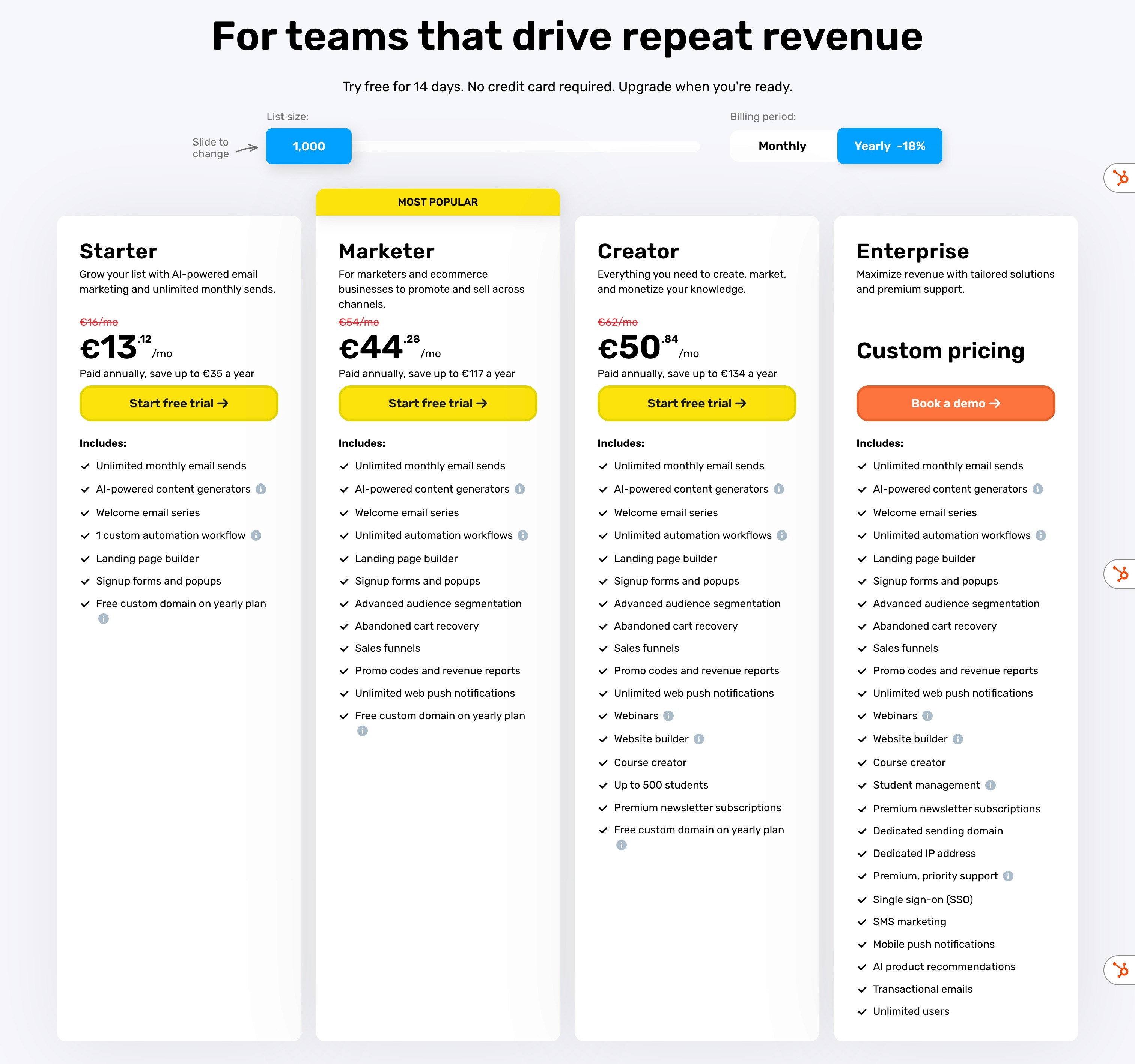
Which tells you who the product is built for. The upgrade path runs toward creators and ecommerce, not toward sales teams. A B2B company that outgrows Starter is being asked to pay for courses and webinars on the way to getting more automation workflows.
Two billing mechanics worth knowing before you buy
The same person can cost you several times. GetResponse's list size documentation states plainly that "The same email address added to several lists counts as multiple contacts."
That is a direct tax on the way B2B teams segment. Splitting one audience into separate lists by persona, region or product line is normal practice, and here it multiplies the contact count for people you only have once. If you segment, do it with tags and conditions inside a single list rather than by building parallel lists.
Going over your limit does not stop your sending. There is no suspension and no automatic upgrade described. Instead GetResponse says "we'll charge a List extension fee to your account", applied "at the end of the billing cycle during which you've gone over the limit".
And the fee repeats. It continues monthly "until you remove excess contacts/students". No grace period is described. That is a surprise bill that keeps arriving, and it is the kind of mechanic that is fine when you know about it and unpleasant when you do not.
![GetResponse, the contacts view showing list membership and total contact count against the plan limit]](https://framerusercontent.com/images/Uv9xfrmb4Cc52UG7JbrpWC06zg0.webp)
There is no free plan on the current pricing page. The route in is a free trial rather than a permanent free tier.
The discounts stack in a specific way. GetResponse describes 18% off 12 month plans and a further 10% off for completing the Get Started Checklist, applied for 12 months, with up to 50% for registered non-profits. The documentation notes that the "discount will be assigned only once" and cannot be combined with seasonal promotions, though you may take the higher offer if more than one applies.
The category question
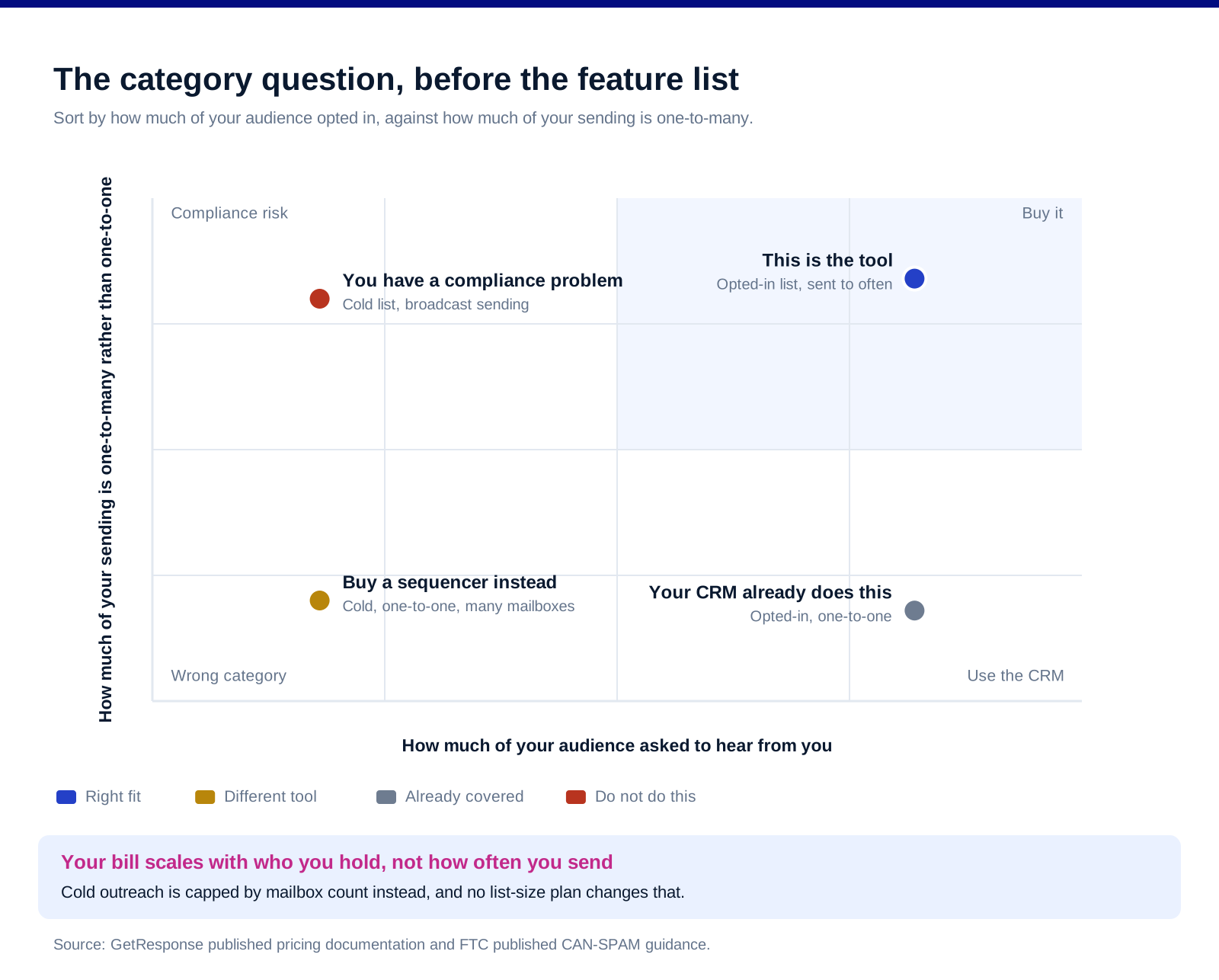
Broadcast email and outbound email are different products with different constraints. A broadcast tool is constrained by how many people you hold. A sending programme aimed at people who have not heard of you is constrained by how many mailboxes you have, because the per-mailbox limits belong to your email provider. GetResponse solves the first problem well and does not address the second.
Which is not a criticism of the product. It is a category boundary that a lot of B2B buyers cross by accident because both things are called email marketing.
If you are cold sending, the compliance picture changes too. The FTC's CAN-SPAM guidance requires that commercial messages disclose "clearly and conspicuously that your message is an advertisement", carry a "valid physical postal address", and provide "a clear and conspicuous explanation of how the recipient can opt out", with opt-outs honoured "within 10 business days" and the mechanism working "for at least 30 days after you send your message". Each violating email carries penalties of up to $53,088.
That is a US framework, and it is not the only one that applies to you. But it is a useful floor, and a broadcast platform will happily send messages that do not meet it.
Our deliverability guide covers what actually caps a sending programme. It is mailbox count and provider limits, and no list-size plan changes either.
Where it holds up well
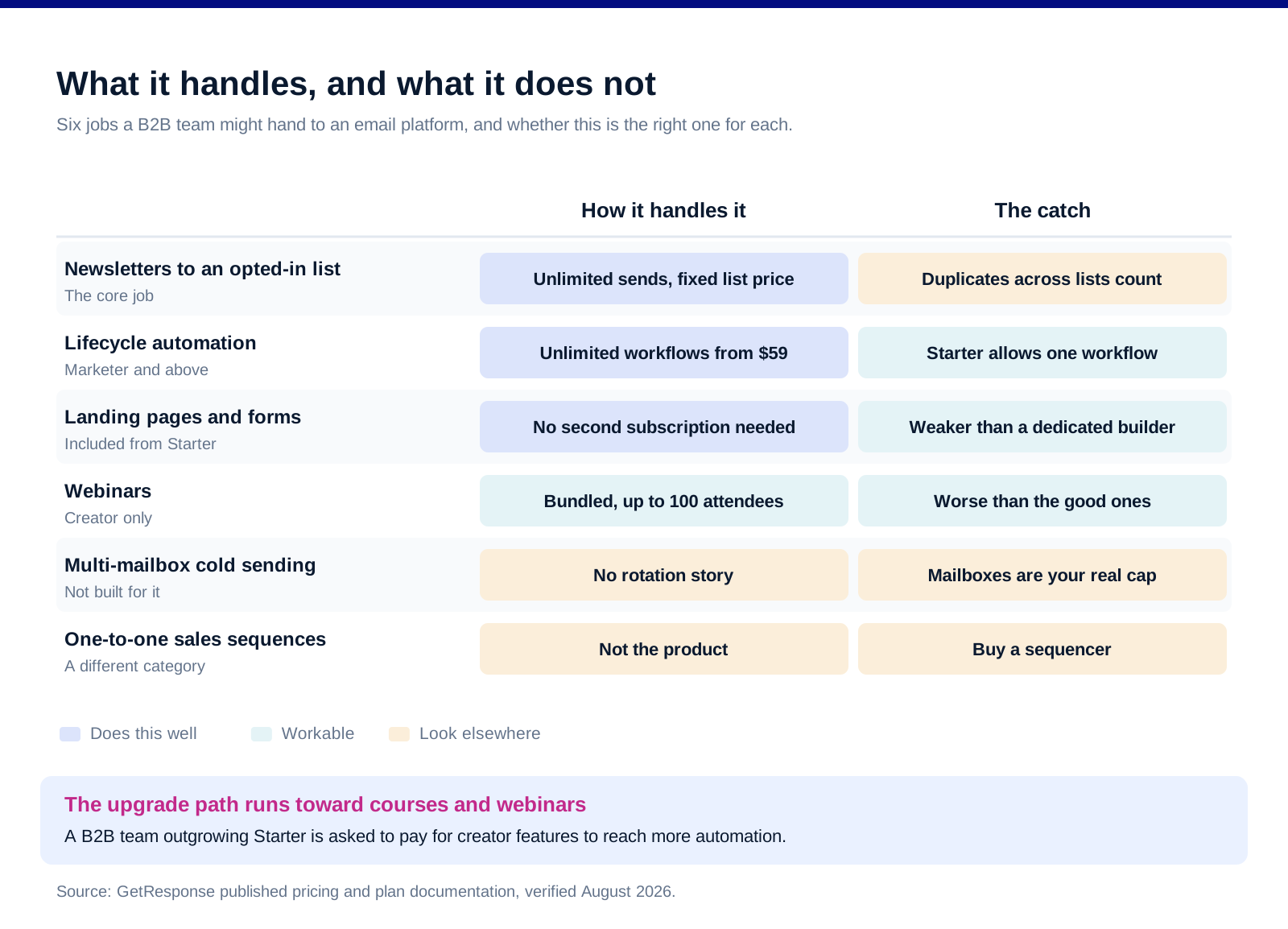
Newsletters to an opted-in list. Unlimited sends against a fixed list price is the right economics for a company that emails the same audience often.
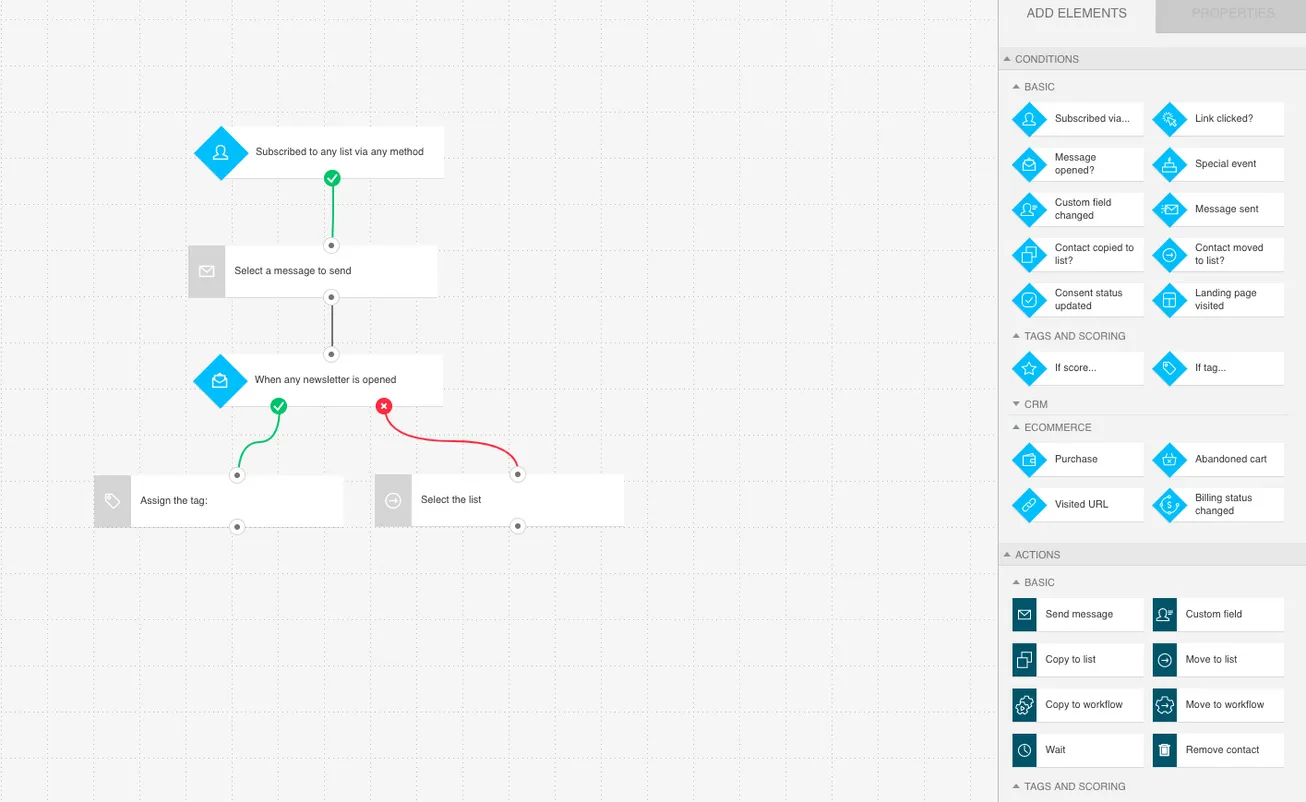
Lifecycle automation on Marketer. Unlimited workflows and advanced segmentation from $59 a month, or $48.38 annually, is not expensive for what it does.
Landing pages and forms without a second subscription. The builder is included from Starter, which removes a line item some teams pay separately for. Our landing page builder comparison covers when a dedicated tool earns its place instead.
Webinars, if you were going to buy them anyway. Creator bundles them at 100 attendees, which is cheaper than most standalone webinar tools and worse than the good ones.
Not multi-mailbox cold sending. There is no mailbox rotation story here because the product is not built around it.
Not a replacement for a sales engagement platform. If your motion is one-to-one at low volume with reply handling and task queues, that is a different tool. Our Reply.io review covers that category.
What GetResponse does not publish
No per-bracket price list in the documentation we read. The brackets are named, the prices for each combination are not stated in the help pages, so model your own bracket on the pricing page before committing.
No amount for the list extension fee. The mechanic is described. The number is not.
No statement on whether unsubscribed contacts count. The documentation refers to active contacts without settling the question, so ask before you assume.
No deliverability or open rate figure that we would repeat. Nothing published here is measurable from the outside.
FAQ
How much does GetResponse cost?
Published monthly prices are $19 for Starter, $59 for Marketer and $69 for Creator, falling to $15.58, $48.38 and $56.58 on annual billing, with Enterprise available on request. Those are entry list size figures, and each plan is sold in brackets of 1k, 2.5k, 5k, 10k, 25k, 50k and 100k contacts, so your actual price depends on list size rather than on sending volume.
Does GetResponse limit how many emails you can send?
No. Every published plan includes unlimited monthly email sends. The limit is on how many contacts you hold, which is the opposite of how cold outreach tools are priced. Your practical sending ceiling still comes from your email provider rather than from GetResponse.
What happens if you go over your GetResponse contact limit?
Sending is not described as stopping, and there is no automatic upgrade. GetResponse charges a list extension fee at the end of the billing cycle in which you exceeded the limit, and continues charging it monthly until the excess contacts are removed. No grace period is described, and the fee amount is not published in the documentation we read.
Does the same contact on two lists count twice?
Yes. GetResponse states that the same email address added to several lists counts as multiple contacts. For B2B teams that segment by persona, region or product line, that can multiply the bill for an audience you only have once. Segment inside a single list using tags and conditions rather than by building parallel lists.
Is GetResponse good for B2B cold email?
No, and not because it is a weak product. It is priced and built for broadcasting to a list that opted in, where the constraint is how many contacts you hold. Cold outreach is constrained by how many mailboxes you can send from, which this product does not address. Sending cold from a broadcast platform also raises compliance questions that a sales engagement tool is designed around.
Is there a GetResponse free plan?
The current pricing page routes new users to a free trial rather than to a permanent free tier. If a no-cost plan is a requirement, verify it directly before committing, because this has changed across versions of the product.
Bottom line
Judge this one on the billing model rather than the feature grid. You are buying a fixed price for a list bracket with unlimited sending on top, which is a good deal if you email an opted-in audience often and a poor fit if you send one-to-one to people who do not know you. Before you sign, do two things: consolidate your segmentation into a single list with tags, because duplicates across lists are counted and charged separately, and check where your contact count sits relative to your bracket, because crossing it produces a recurring fee rather than a warning. If your motion is cold and multi-mailbox, this is the wrong category and no plan here fixes that.
Want the pipeline built rather than the platform configured? Book a call with GROU. We run outbound and lead generation inside B2B revenue engines across verticals.
We are GROU, a B2B pipeline agency that runs lead generation, outbound, and LinkedIn content for clients across manufacturing, fintech, iGaming, software, and professional services. Some links in this article are affiliate links, including GetResponse. We only recommend tools we have deployed, and this review tells a large share of our readers not to buy this one.
GetResponse is a good tool that most B2B pipeline teams should not buy, and the reason is in the billing model rather than the feature list.
You pay by list size, not by sending volume. Sends are unlimited. That is exactly the right shape for broadcasting to a list that asked to hear from you, and exactly the wrong shape for the one-to-one sending that fills a B2B pipeline. The question this review answers is which of those two things you are actually doing.
TL;DR
Published prices start at $19 a month for Starter, $59 for Marketer and $69 for Creator, or $15.58, $48.38 and $56.58 respectively when billed annually, with Enterprise on request. Those figures are for the entry list size, and every plan is sold in list brackets of 1k, 2.5k, 5k, 10k, 25k, 50k and 100k. Two billing mechanics matter more than any feature. First, "The same email address added to several lists counts as multiple contacts", so segmenting one audience across several lists multiplies what you pay for the same people. Second, going over your limit does not stop your sending and does not auto-upgrade you: GetResponse charges a list extension fee at the end of the billing cycle and keeps charging it monthly "until you remove excess contacts". Sends are unlimited on every plan, and the upgrade path leads toward webinars, courses and paid newsletters. If you are broadcasting to an opted-in list, this is a sensible tool at a sensible price. If you are sending one-to-one to people who have not heard of you, you are in the wrong category and the plan you need does not exist here.
What you are actually paying for
The ladder is short and legible. GetResponse's pricing page lists Starter at "$19/mo", Marketer at "$59/mo" and Creator at "$69/mo" on monthly billing, with annual billing at "$15.58/mo", "$48.38/mo" and "$56.58/mo". Enterprise is custom, delivered through GetResponse MAX.
Every price is a list-size price. GetResponse's pricing plans documentation states that "All plans include options for the list sizes: 1k, 2.5k, 5k, 10k, 25k, 50k, and 100k." The headline figures above are the bottom bracket, and the number you actually pay depends on which bracket your list falls into.
Sends are unlimited on all of them. Starter includes "Unlimited monthly email sends", and so do the tiers above it. This is the single most important structural fact about the product: your bill scales with how many people you hold, not with how often you contact them.
The tiers gate different things than you might expect. Starter is capped at 3 users, one automation workflow and three uses of the AI tools. Marketer opens unlimited workflows, advanced segmentation, sales funnels and ecommerce features across up to 5 users. Creator adds webinars for up to 100 attendees, a course creator for up to 500 students, a website builder and paid newsletter subscriptions.
Which tells you who the product is built for. The upgrade path runs toward creators and ecommerce, not toward sales teams. A B2B company that outgrows Starter is being asked to pay for courses and webinars on the way to getting more automation workflows.
Two billing mechanics worth knowing before you buy
The same person can cost you several times. GetResponse's list size documentation states plainly that "The same email address added to several lists counts as multiple contacts."
That is a direct tax on the way B2B teams segment. Splitting one audience into separate lists by persona, region or product line is normal practice, and here it multiplies the contact count for people you only have once. If you segment, do it with tags and conditions inside a single list rather than by building parallel lists.
Going over your limit does not stop your sending. There is no suspension and no automatic upgrade described. Instead GetResponse says "we'll charge a List extension fee to your account", applied "at the end of the billing cycle during which you've gone over the limit".
And the fee repeats. It continues monthly "until you remove excess contacts/students". No grace period is described. That is a surprise bill that keeps arriving, and it is the kind of mechanic that is fine when you know about it and unpleasant when you do not.
There is no free plan on the current pricing page. The route in is a free trial rather than a permanent free tier.
The discounts stack in a specific way. GetResponse describes 18% off 12 month plans and a further 10% off for completing the Get Started Checklist, applied for 12 months, with up to 50% for registered non-profits. The documentation notes that the "discount will be assigned only once" and cannot be combined with seasonal promotions, though you may take the higher offer if more than one applies.
The category question
Broadcast email and outbound email are different products with different constraints. A broadcast tool is constrained by how many people you hold. A sending programme aimed at people who have not heard of you is constrained by how many mailboxes you have, because the per-mailbox limits belong to your email provider. GetResponse solves the first problem well and does not address the second.
Which is not a criticism of the product. It is a category boundary that a lot of B2B buyers cross by accident because both things are called email marketing.
If you are cold sending, the compliance picture changes too. The FTC's CAN-SPAM guidance requires that commercial messages disclose "clearly and conspicuously that your message is an advertisement", carry a "valid physical postal address", and provide "a clear and conspicuous explanation of how the recipient can opt out", with opt-outs honoured "within 10 business days" and the mechanism working "for at least 30 days after you send your message". Each violating email carries penalties of up to $53,088.
That is a US framework, and it is not the only one that applies to you. But it is a useful floor, and a broadcast platform will happily send messages that do not meet it.
Our deliverability guide covers what actually caps a sending programme. It is mailbox count and provider limits, and no list-size plan changes either.
Where it holds up well
Newsletters to an opted-in list. Unlimited sends against a fixed list price is the right economics for a company that emails the same audience often.
Lifecycle automation on Marketer. Unlimited workflows and advanced segmentation from $59 a month, or $48.38 annually, is not expensive for what it does.
Landing pages and forms without a second subscription. The builder is included from Starter, which removes a line item some teams pay separately for. Our landing page builder comparison covers when a dedicated tool earns its place instead.
Webinars, if you were going to buy them anyway. Creator bundles them at 100 attendees, which is cheaper than most standalone webinar tools and worse than the good ones.
Not multi-mailbox cold sending. There is no mailbox rotation story here because the product is not built around it.
Not a replacement for a sales engagement platform. If your motion is one-to-one at low volume with reply handling and task queues, that is a different tool. Our Reply.io review covers that category.
What GetResponse does not publish
No per-bracket price list in the documentation we read. The brackets are named, the prices for each combination are not stated in the help pages, so model your own bracket on the pricing page before committing.
No amount for the list extension fee. The mechanic is described. The number is not.
No statement on whether unsubscribed contacts count. The documentation refers to active contacts without settling the question, so ask before you assume.
No deliverability or open rate figure that we would repeat. Nothing published here is measurable from the outside.
FAQ
How much does GetResponse cost?
Published monthly prices are $19 for Starter, $59 for Marketer and $69 for Creator, falling to $15.58, $48.38 and $56.58 on annual billing, with Enterprise available on request. Those are entry list size figures, and each plan is sold in brackets of 1k, 2.5k, 5k, 10k, 25k, 50k and 100k contacts, so your actual price depends on list size rather than on sending volume.
Does GetResponse limit how many emails you can send?
No. Every published plan includes unlimited monthly email sends. The limit is on how many contacts you hold, which is the opposite of how cold outreach tools are priced. Your practical sending ceiling still comes from your email provider rather than from GetResponse.
What happens if you go over your GetResponse contact limit?
Sending is not described as stopping, and there is no automatic upgrade. GetResponse charges a list extension fee at the end of the billing cycle in which you exceeded the limit, and continues charging it monthly until the excess contacts are removed. No grace period is described, and the fee amount is not published in the documentation we read.
Does the same contact on two lists count twice?
Yes. GetResponse states that the same email address added to several lists counts as multiple contacts. For B2B teams that segment by persona, region or product line, that can multiply the bill for an audience you only have once. Segment inside a single list using tags and conditions rather than by building parallel lists.
Is GetResponse good for B2B cold email?
No, and not because it is a weak product. It is priced and built for broadcasting to a list that opted in, where the constraint is how many contacts you hold. Cold outreach is constrained by how many mailboxes you can send from, which this product does not address. Sending cold from a broadcast platform also raises compliance questions that a sales engagement tool is designed around.
Is there a GetResponse free plan?
The current pricing page routes new users to a free trial rather than to a permanent free tier. If a no-cost plan is a requirement, verify it directly before committing, because this has changed across versions of the product.
Bottom line
Judge this one on the billing model rather than the feature grid. You are buying a fixed price for a list bracket with unlimited sending on top, which is a good deal if you email an opted-in audience often and a poor fit if you send one-to-one to people who do not know you. Before you sign, do two things: consolidate your segmentation into a single list with tags, because duplicates across lists are counted and charged separately, and check where your contact count sits relative to your bracket, because crossing it produces a recurring fee rather than a warning. If your motion is cold and multi-mailbox, this is the wrong category and no plan here fixes that.
Want the pipeline built rather than the platform configured? Book a call with GROU. We run outbound and lead generation inside B2B revenue engines across verticals.
We are GROU, a B2B pipeline agency that runs lead generation, outbound, and LinkedIn content for clients across manufacturing, fintech, iGaming, software, and professional services. Some links in this article are affiliate links, including GetResponse. We only recommend tools we have deployed, and this review tells a large share of our readers not to buy this one.
GetResponse is a good tool that most B2B pipeline teams should not buy, and the reason is in the billing model rather than the feature list.
You pay by list size, not by sending volume. Sends are unlimited. That is exactly the right shape for broadcasting to a list that asked to hear from you, and exactly the wrong shape for the one-to-one sending that fills a B2B pipeline. The question this review answers is which of those two things you are actually doing.
TL;DR
Published prices start at $19 a month for Starter, $59 for Marketer and $69 for Creator, or $15.58, $48.38 and $56.58 respectively when billed annually, with Enterprise on request. Those figures are for the entry list size, and every plan is sold in list brackets of 1k, 2.5k, 5k, 10k, 25k, 50k and 100k. Two billing mechanics matter more than any feature. First, "The same email address added to several lists counts as multiple contacts", so segmenting one audience across several lists multiplies what you pay for the same people. Second, going over your limit does not stop your sending and does not auto-upgrade you: GetResponse charges a list extension fee at the end of the billing cycle and keeps charging it monthly "until you remove excess contacts". Sends are unlimited on every plan, and the upgrade path leads toward webinars, courses and paid newsletters. If you are broadcasting to an opted-in list, this is a sensible tool at a sensible price. If you are sending one-to-one to people who have not heard of you, you are in the wrong category and the plan you need does not exist here.
What you are actually paying for
The ladder is short and legible. GetResponse's pricing page lists Starter at "$19/mo", Marketer at "$59/mo" and Creator at "$69/mo" on monthly billing, with annual billing at "$15.58/mo", "$48.38/mo" and "$56.58/mo". Enterprise is custom, delivered through GetResponse MAX.
Every price is a list-size price. GetResponse's pricing plans documentation states that "All plans include options for the list sizes: 1k, 2.5k, 5k, 10k, 25k, 50k, and 100k." The headline figures above are the bottom bracket, and the number you actually pay depends on which bracket your list falls into.
Sends are unlimited on all of them. Starter includes "Unlimited monthly email sends", and so do the tiers above it. This is the single most important structural fact about the product: your bill scales with how many people you hold, not with how often you contact them.
The tiers gate different things than you might expect. Starter is capped at 3 users, one automation workflow and three uses of the AI tools. Marketer opens unlimited workflows, advanced segmentation, sales funnels and ecommerce features across up to 5 users. Creator adds webinars for up to 100 attendees, a course creator for up to 500 students, a website builder and paid newsletter subscriptions.
Which tells you who the product is built for. The upgrade path runs toward creators and ecommerce, not toward sales teams. A B2B company that outgrows Starter is being asked to pay for courses and webinars on the way to getting more automation workflows.
Two billing mechanics worth knowing before you buy
The same person can cost you several times. GetResponse's list size documentation states plainly that "The same email address added to several lists counts as multiple contacts."
That is a direct tax on the way B2B teams segment. Splitting one audience into separate lists by persona, region or product line is normal practice, and here it multiplies the contact count for people you only have once. If you segment, do it with tags and conditions inside a single list rather than by building parallel lists.
Going over your limit does not stop your sending. There is no suspension and no automatic upgrade described. Instead GetResponse says "we'll charge a List extension fee to your account", applied "at the end of the billing cycle during which you've gone over the limit".
And the fee repeats. It continues monthly "until you remove excess contacts/students". No grace period is described. That is a surprise bill that keeps arriving, and it is the kind of mechanic that is fine when you know about it and unpleasant when you do not.
There is no free plan on the current pricing page. The route in is a free trial rather than a permanent free tier.
The discounts stack in a specific way. GetResponse describes 18% off 12 month plans and a further 10% off for completing the Get Started Checklist, applied for 12 months, with up to 50% for registered non-profits. The documentation notes that the "discount will be assigned only once" and cannot be combined with seasonal promotions, though you may take the higher offer if more than one applies.
The category question
Broadcast email and outbound email are different products with different constraints. A broadcast tool is constrained by how many people you hold. A sending programme aimed at people who have not heard of you is constrained by how many mailboxes you have, because the per-mailbox limits belong to your email provider. GetResponse solves the first problem well and does not address the second.
Which is not a criticism of the product. It is a category boundary that a lot of B2B buyers cross by accident because both things are called email marketing.
If you are cold sending, the compliance picture changes too. The FTC's CAN-SPAM guidance requires that commercial messages disclose "clearly and conspicuously that your message is an advertisement", carry a "valid physical postal address", and provide "a clear and conspicuous explanation of how the recipient can opt out", with opt-outs honoured "within 10 business days" and the mechanism working "for at least 30 days after you send your message". Each violating email carries penalties of up to $53,088.
That is a US framework, and it is not the only one that applies to you. But it is a useful floor, and a broadcast platform will happily send messages that do not meet it.
Our deliverability guide covers what actually caps a sending programme. It is mailbox count and provider limits, and no list-size plan changes either.
Where it holds up well
Newsletters to an opted-in list. Unlimited sends against a fixed list price is the right economics for a company that emails the same audience often.
Lifecycle automation on Marketer. Unlimited workflows and advanced segmentation from $59 a month, or $48.38 annually, is not expensive for what it does.
Landing pages and forms without a second subscription. The builder is included from Starter, which removes a line item some teams pay separately for. Our landing page builder comparison covers when a dedicated tool earns its place instead.
Webinars, if you were going to buy them anyway. Creator bundles them at 100 attendees, which is cheaper than most standalone webinar tools and worse than the good ones.
Not multi-mailbox cold sending. There is no mailbox rotation story here because the product is not built around it.
Not a replacement for a sales engagement platform. If your motion is one-to-one at low volume with reply handling and task queues, that is a different tool. Our Reply.io review covers that category.
What GetResponse does not publish
No per-bracket price list in the documentation we read. The brackets are named, the prices for each combination are not stated in the help pages, so model your own bracket on the pricing page before committing.
No amount for the list extension fee. The mechanic is described. The number is not.
No statement on whether unsubscribed contacts count. The documentation refers to active contacts without settling the question, so ask before you assume.
No deliverability or open rate figure that we would repeat. Nothing published here is measurable from the outside.
FAQ
How much does GetResponse cost?
Published monthly prices are $19 for Starter, $59 for Marketer and $69 for Creator, falling to $15.58, $48.38 and $56.58 on annual billing, with Enterprise available on request. Those are entry list size figures, and each plan is sold in brackets of 1k, 2.5k, 5k, 10k, 25k, 50k and 100k contacts, so your actual price depends on list size rather than on sending volume.
Does GetResponse limit how many emails you can send?
No. Every published plan includes unlimited monthly email sends. The limit is on how many contacts you hold, which is the opposite of how cold outreach tools are priced. Your practical sending ceiling still comes from your email provider rather than from GetResponse.
What happens if you go over your GetResponse contact limit?
Sending is not described as stopping, and there is no automatic upgrade. GetResponse charges a list extension fee at the end of the billing cycle in which you exceeded the limit, and continues charging it monthly until the excess contacts are removed. No grace period is described, and the fee amount is not published in the documentation we read.
Does the same contact on two lists count twice?
Yes. GetResponse states that the same email address added to several lists counts as multiple contacts. For B2B teams that segment by persona, region or product line, that can multiply the bill for an audience you only have once. Segment inside a single list using tags and conditions rather than by building parallel lists.
Is GetResponse good for B2B cold email?
No, and not because it is a weak product. It is priced and built for broadcasting to a list that opted in, where the constraint is how many contacts you hold. Cold outreach is constrained by how many mailboxes you can send from, which this product does not address. Sending cold from a broadcast platform also raises compliance questions that a sales engagement tool is designed around.
Is there a GetResponse free plan?
The current pricing page routes new users to a free trial rather than to a permanent free tier. If a no-cost plan is a requirement, verify it directly before committing, because this has changed across versions of the product.
Bottom line
Judge this one on the billing model rather than the feature grid. You are buying a fixed price for a list bracket with unlimited sending on top, which is a good deal if you email an opted-in audience often and a poor fit if you send one-to-one to people who do not know you. Before you sign, do two things: consolidate your segmentation into a single list with tags, because duplicates across lists are counted and charged separately, and check where your contact count sits relative to your bracket, because crossing it produces a recurring fee rather than a warning. If your motion is cold and multi-mailbox, this is the wrong category and no plan here fixes that.
Want the pipeline built rather than the platform configured? Book a call with GROU. We run outbound and lead generation inside B2B revenue engines across verticals.
We are GROU, a B2B pipeline agency that runs lead generation, outbound, and LinkedIn content for clients across manufacturing, fintech, iGaming, software, and professional services. Some links in this article are affiliate links, including GetResponse. We only recommend tools we have deployed, and this review tells a large share of our readers not to buy this one.

Pipeline OS Newsletter
Build qualified pipeline
Get weekly tactics to generate demand, improve lead quality, and book more meetings.





Trusted by industry leaders
Trusted by industry leaders
Trusted by industry leaders
Ready to build qualified pipeline?
Ready to build qualified pipeline?
Ready to build qualified pipeline?
Book a call to see if we're the right fit, or take the 2-minute quiz to get a clear starting point.
Book a call to see if we're the right fit, or take the 2-minute quiz to get a clear starting point.
Book a call to see if we're the right fit, or take the 2-minute quiz to get a clear starting point.
" height="30.21639343089746px" id="hfGbXmQR2" width="30.216393430897455px"/></svg>)
Copyright © 2026 – All Right Reserved
Copyright © 2026 – All Right Reserved
Copyright © 2026 – All Right Reserved