%22%3E%3C/path%3E%3Cpath d=%22M 63.072 7.554 C 62.258 8.022 61.577 8.689 61.092 9.493 L 61.092 7.076 L 57.158 7.076 L 57.158 22.64 L 61.089 22.64 L 61.089 14.888 C 61.089 13.446 61.403 12.434 62.03 11.853 C 62.818 11.218 63.818 10.907 64.826 10.982 L 65.868 10.982 L 65.868 6.851 C 64.891 6.834 63.926 7.076 63.073 7.554 Z%22 fill=%22rgb(17,17,17)%22%3E%3C/path%3E%3Cpath d=%22M 78.916 7.82 C 76.363 6.49 73.321 6.49 70.768 7.82 C 69.562 8.473 68.564 9.451 67.888 10.644 C 67.167 11.931 66.803 13.387 66.834 14.862 C 66.804 16.332 67.157 17.785 67.86 19.077 C 68.515 20.267 69.494 21.246 70.684 21.901 C 71.924 22.576 73.318 22.92 74.73 22.898 C 76.164 22.918 77.58 22.575 78.846 21.901 C 80.062 21.247 81.073 20.27 81.768 19.077 C 82.506 17.797 82.88 16.339 82.85 14.862 C 82.88 13.389 82.517 11.934 81.797 10.647 C 81.12 9.455 80.122 8.477 78.917 7.824 M 78.803 14.862 C 78.829 15.739 78.636 16.608 78.241 17.391 C 77.903 18.046 77.38 18.588 76.738 18.95 C 76.124 19.293 75.432 19.472 74.729 19.47 C 73.668 19.497 72.648 19.061 71.934 18.276 C 71.139 17.323 70.741 16.1 70.823 14.862 C 70.741 13.62 71.149 12.395 71.959 11.45 C 72.687 10.667 73.715 10.233 74.783 10.256 C 75.859 10.236 76.894 10.67 77.635 11.45 C 78.464 12.387 78.884 13.616 78.801 14.864%22 fill=%22rgb(17,17,17)%22%3E%3C/path%3E%3Cpath d=%22M 95.906 7.076 L 95.906 15.646 C 95.975 16.68 95.643 17.701 94.979 18.498 C 94.311 19.184 93.379 19.547 92.422 19.495 C 91.475 19.544 90.553 19.18 89.894 18.498 C 89.23 17.701 88.898 16.68 88.967 15.646 L 88.967 7.076 L 85.033 7.076 L 85.033 16.207 C 85 17.449 85.275 18.68 85.834 19.79 C 86.327 20.75 87.095 21.542 88.039 22.065 C 89.033 22.594 90.145 22.861 91.271 22.838 C 92.188 22.847 93.095 22.65 93.926 22.263 C 94.708 21.905 95.388 21.36 95.906 20.675 L 95.906 22.645 L 99.865 22.645 L 99.865 7.076 Z%22 fill=%22rgb(17,17,17)%22%3E%3C/path%3E%3Cpath d=%22M 4.513 15.626 C 4.511 10.815 7.606 6.549 12.181 5.059 C 16.756 3.57 21.77 5.195 24.601 9.086 L 27.816 5.87 C 24.074 1.186 17.981 -0.943 12.137 0.393 C 6.292 1.728 1.728 6.292 0.393 12.137 C -0.943 17.981 1.186 24.074 5.87 27.816 L 9.085 24.601 C 6.214 22.512 4.515 19.177 4.513 15.626%22 fill=%22rgb(32,62,235)%22%3E%3C/path%3E%3Cpath d=%22M 17.114 14.343 L 13.354 18.01 L 13.354 18.026 L 21.071 18.026 L 11.412 27.609 L 17.389 27.609 L 23.999 21.081 L 23.999 28.316 L 24.005 28.316 L 27.967 24.393 L 27.967 14.343 Z%22 fill=%22rgb(32,62,235)%22%3E%3C/path%3E%3C/g%3E%3C/svg%3E) ×
× ××
××›
›
›
›
HubSpot CRM tutorial for B2B SaaS 2026: the 8-step setup that ships in 7 days
HubSpot CRM tutorial for B2B SaaS 2026: the 8-step setup that ships in 7 days
HubSpot CRM tutorial for B2B SaaS 2026: the 8-step setup that ships in 7 days
HubSpot CRM tutorial for B2B SaaS 2026: the 8-step setup that ships in 7 days
HubSpot CRM tutorial for B2B SaaS 2026: the 8-step setup that ships in 7 days
HubSpot CRM tutorial for B2B SaaS 2026: the 8-step setup that ships in 7 days

Author
Aljaz Peklaj

The HubSpot CRM tutorial for B2B SaaS in 2026 comes down to 8 setup steps that ship a working CRM in 7 days: data import, pipeline configuration, deal stages, custom properties, automation workflows, email integration, reporting dashboards, and sales rep training. After running HubSpot CRM implementations across B2B SaaS at $1M-$50M ARR, this is the operator-tested 7-day rollout that beats 60-90 day enterprise implementations.
This is the operator tutorial: 8 setup steps, time per step, automation patterns, reporting templates, and the mistakes that drag implementation to 90+ days.
TL;DR
The HubSpot CRM tutorial that ships in 7 days for B2B SaaS: data import (Day 1), pipeline + deal stages (Day 2), custom properties (Day 2), automation workflows (Days 3-4), email integration (Day 5), reporting dashboards (Day 6), rep training (Day 7).
Works for HubSpot Free CRM + Sales Hub Starter ($20/user/mo), Sales Hub Pro ($90/user/mo), or Sales Hub Enterprise ($150/user/mo). Below 20 reps, Free + Starter is sufficient. 20+ reps need Pro or Enterprise.
For pricing context, see our HubSpot pricing 2026 and HubSpot vs Pipedrive 2026. For lead scoring, see our lead scoring HubSpot template.
The 8 setup steps + 7-day timeline
The rollout that beats 60-90 day enterprise implementations:
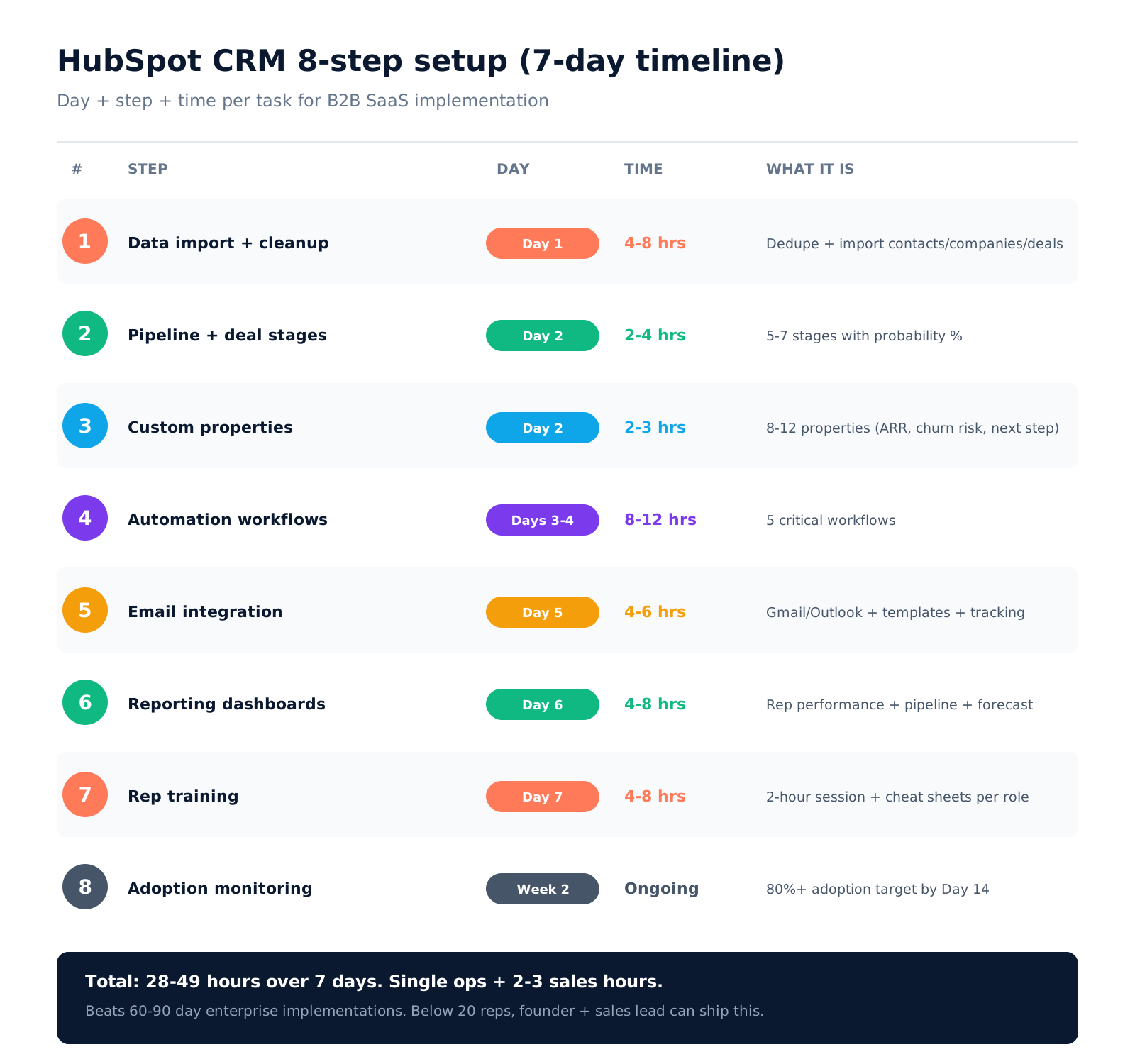
Day 1: Data import + cleanup. Import contacts + companies + deals from existing CRM via CSV or migration tool. Deduplicate by email + domain. Time: 4-8 hours.
Day 2: Pipeline + deal stages. Set up 5-7 deal stages (Lead-in → Qualified → Demo → Proposal → Closed-won/lost). Configure probability % per stage. Time: 2-4 hours.
Day 2: Custom properties. Add ARR, contract length, churn risk, next step, lost reason. Map to required fields for forecasting. Time: 2-3 hours.
Days 3-4: Automation workflows. Set up 5 critical workflows: new lead routing, deal stage notifications, follow-up reminders, lost deal nurture, win/celebrate alerts. Time: 8-12 hours.
Day 5: Email integration. Connect Gmail or Outlook. Configure email templates + sequences. Set up tracking. Time: 4-6 hours.
Day 6: Reporting dashboards. Build 3 core dashboards: rep performance, pipeline health, forecast accuracy. Time: 4-8 hours.
Day 7: Rep training. 2-hour session per team + role-specific cheat sheets. Critical for adoption above 80% in week 2. Time: 4-8 hours total.
Total implementation: 28-49 hours over 7 days. Single ops + 2-3 sales hours. Below 20 reps, founder + 1 sales lead can ship this.
Pipeline + deal stages structure
The structure that beats enterprise complexity:
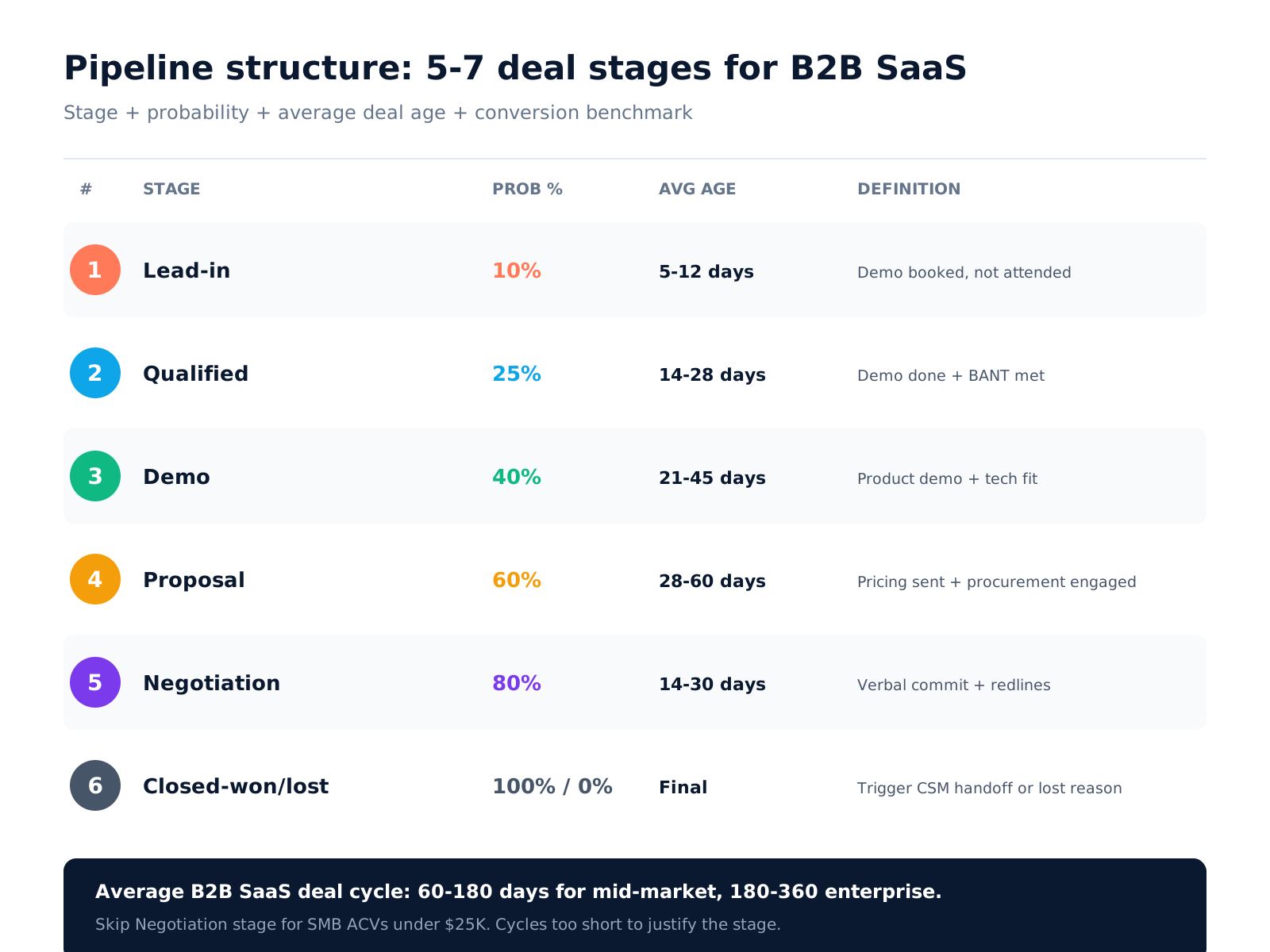
Stage 1: Lead-in (10% probability). Initial demo booked but not yet attended. Auto-created from form submissions or AE booking. Average deal age: 5-12 days.
Stage 2: Qualified (25% probability). Demo attended + BANT criteria met. AE confirms fit + next step. Average deal age: 14-28 days.
Stage 3: Demo (40% probability). Product demo completed + technical fit confirmed. Champion identified. Average deal age: 21-45 days.
Stage 4: Proposal (60% probability). Pricing sent + procurement engaged. Champion advocating internally. Average deal age: 28-60 days.
Stage 5: Negotiation (80% probability). Verbal commitment + redlines on contract. Final approvals in motion. Average deal age: 14-30 days.
Stage 6: Closed-won / Closed-lost (100% / 0%). Final state. Trigger automation: customer success handoff (won) or lost reason capture (lost).
5 automation workflows that ship in 24 hours
The workflows worth setting up first:
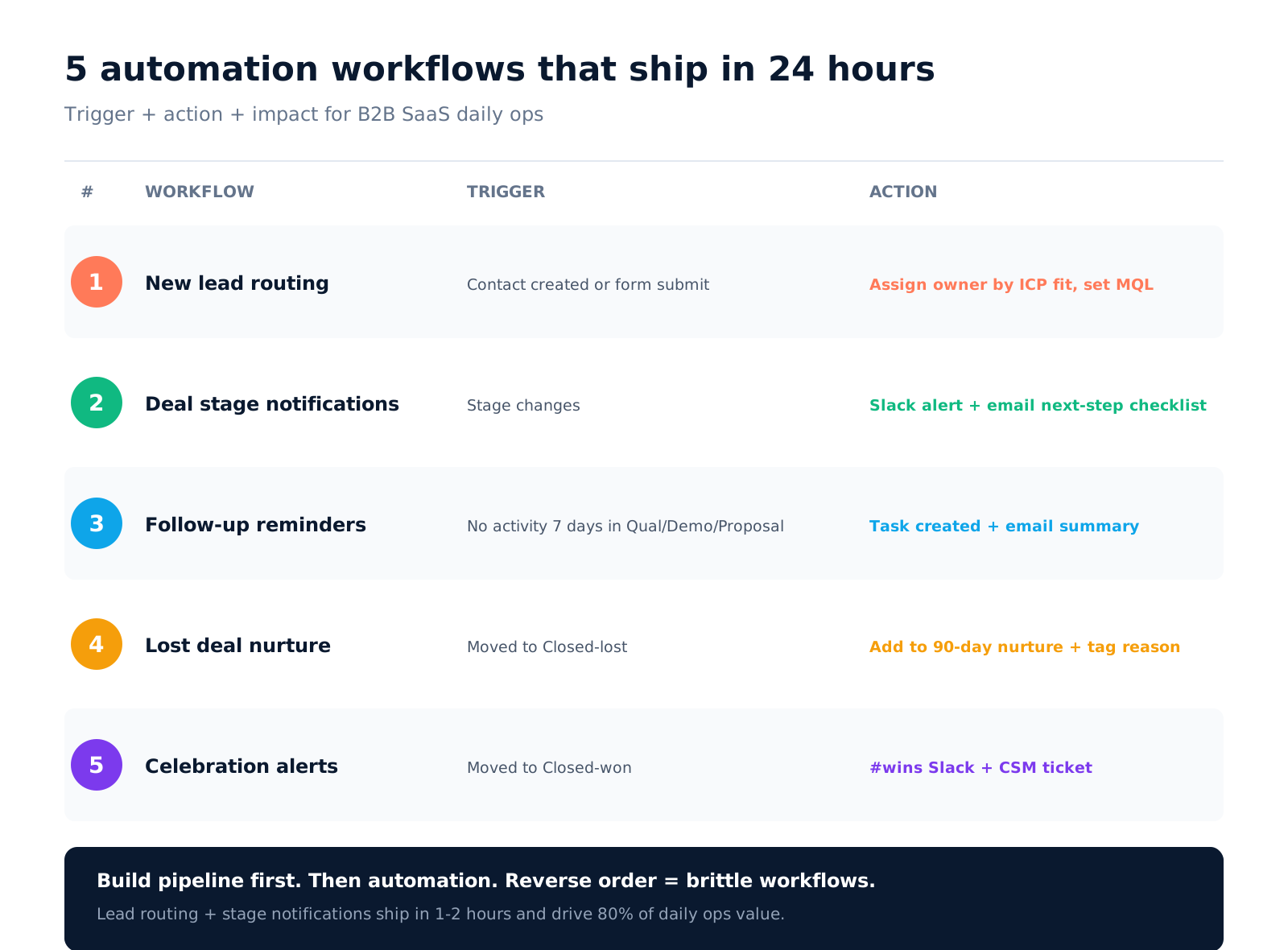
Workflow 1: New lead routing. Trigger: contact created or form submission. Action: assign owner based on ICP fit (industry, company size, geography). Set lifecycle stage to MQL.
Workflow 2: Deal stage notifications. Trigger: deal stage changes. Action: Slack alert to AE + sales manager. Email to deal owner with next-step checklist for that stage.
Workflow 3: Follow-up reminders. Trigger: no activity on deal for 7 days in Qualified/Demo/Proposal stages. Action: task created for owner + email summary of deal context.
Workflow 4: Lost deal nurture. Trigger: deal moved to Closed-lost. Action: add contact to 90-day nurture sequence. Tag with lost reason. Re-engage after 6 months.
Workflow 5: Celebration alerts. Trigger: deal moved to Closed-won. Action: Slack alert to #wins channel. Auto-create CSM ticket. Email customer success kickoff.
For tooling stack context, see our ActiveCampaign review 2026 and Pipedrive vs HubSpot 2026.
Reporting dashboards: 3 core templates
The dashboards that drive operator decisions:
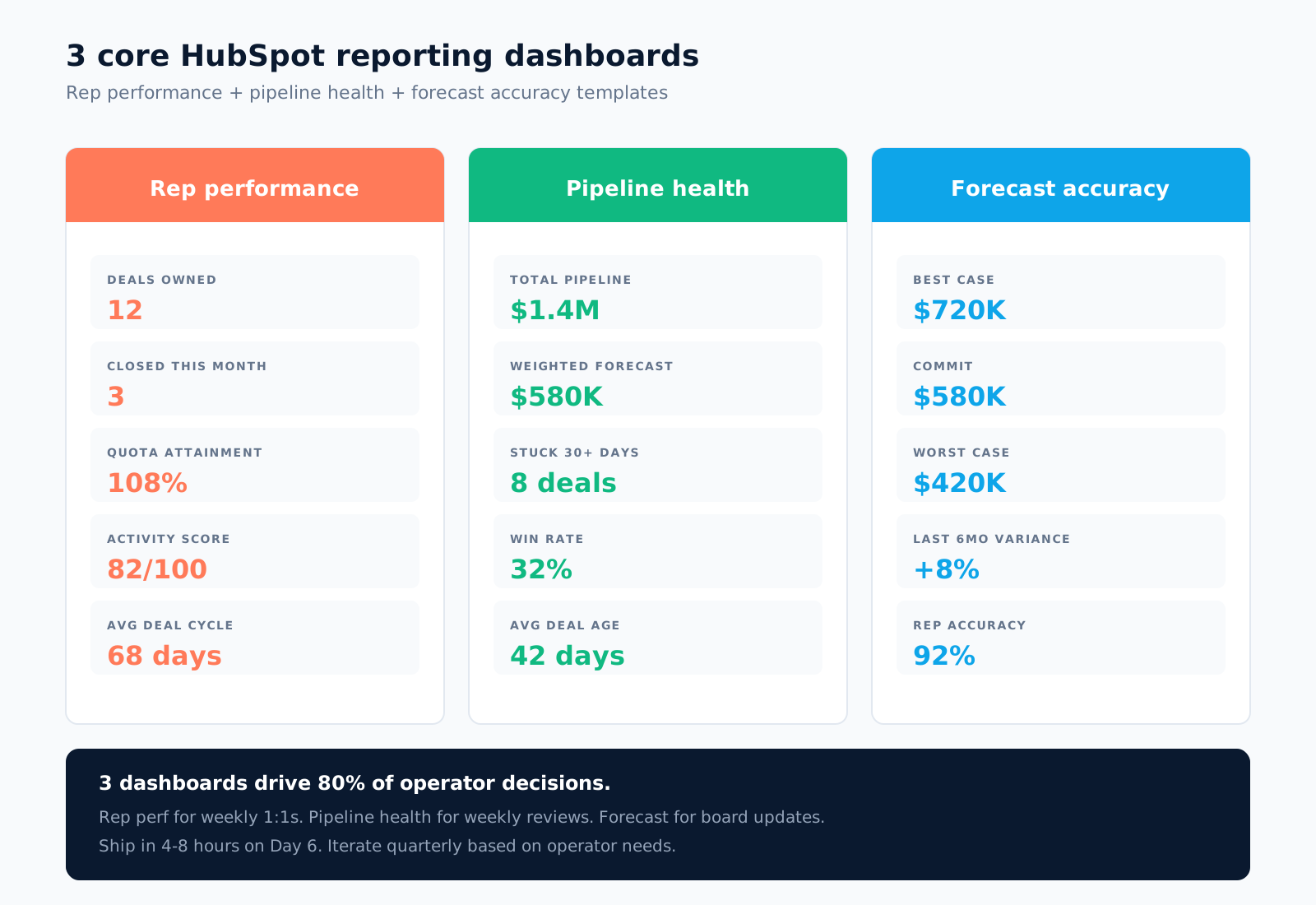
Dashboard 1: Rep performance. Cards per rep: deals owned, deals closed this month, quota attainment, activity counts, average deal cycle. Use for weekly 1:1s.
Dashboard 2: Pipeline health. Cards: total pipeline value, weighted forecast, deals stuck in stage 30+ days, win rate by stage, average deal age. Use for weekly pipeline reviews.
Dashboard 3: Forecast accuracy. Cards: best-case + commit + worst-case forecast, attainment vs forecast (last 6 months), variance per rep. Use for board reporting + investor updates.
What kills HubSpot implementations
The 4 mistakes that drag rollout to 90+ days:
Mistake 1: Over-customizing day 1. 30+ custom properties on launch kills adoption. Start with 8-12 properties. Add as needs emerge in months 2-3.
Mistake 2: Skipping rep training. 60% of HubSpot implementations stall on adoption because reps don't know the workflow. 2-hour training + cheat sheet = 80%+ adoption week 2.
Mistake 3: Building automation before pipeline. Set up pipeline + deal stages first. Build automation against the working pipeline, not theoretical workflows.
Mistake 4: Migrating dirty data. Dirty CRM data persists forever. Spend Day 1 deduplicating + cleaning before import. Bad data = bad reports = bad decisions.
FAQ
How long does HubSpot CRM implementation take?
7 days for a properly scoped B2B SaaS at under 50 reps. 30-60 days for full Enterprise rollout with custom workflows + multi-hub integrations. Most teams over-engineer day 1 and stretch to 60-90 days unnecessarily.
Is HubSpot Free CRM enough for B2B SaaS?
Yes up to 5 reps + basic pipeline. Above 5 reps, you need Sales Hub Starter ($20/user) for sequences + reporting. Above 20 reps, Sales Hub Pro ($90/user) for automation + forecasting.
What's the right HubSpot pipeline structure for B2B SaaS?
5-7 deal stages: Lead-in → Qualified → Demo → Proposal → Negotiation → Closed-won/lost. Probability per stage: 10%/25%/40%/60%/80%/100%. Average deal cycle 60-180 days for mid-market.
How many custom properties should I start with?
8-12 on Day 1. Add as patterns emerge. Most teams add 30+ properties day 1 and kill rep adoption. Start with: ARR, contract length, churn risk, lost reason, next step, champion name, blocker.
Should I use HubSpot or Salesforce for B2B SaaS at 30+ reps?
HubSpot for marketing-led GTM + bundled hubs (CRM + Marketing + Service). Salesforce for sales-led + complex sales engineering + 100+ reps. For most B2B SaaS at 30-100 reps, HubSpot wins on TCO + ramp speed.
What's the best HubSpot automation to ship first?
New lead routing + deal stage notifications. Both ship in 1-2 hours and drive 80% of the daily ops value. Build other workflows in week 2-3 based on emerging needs.
Does HubSpot integrate with Apollo or Outreach?
Yes both via native integrations + Zapier. HubSpot + Apollo handles prospecting + CRM at $99-$190/user/mo combined. HubSpot + Outreach handles enterprise sales engagement at $190-$290/user/mo.
How do I train sales reps on HubSpot?
2-hour live session covering: daily workflow, deal stage definitions, properties to update, sequence enrollment, dashboard usage. Plus 1-page cheat sheet per role (SDR vs AE). Weekly 30-min Q&A for first month.
Bottom line
The HubSpot CRM tutorial that ships in 7 days for B2B SaaS: 8 steps (data import, pipeline, custom properties, automation, email, reporting, training), 28-49 hours total, single ops + 2-3 sales hours.
Stack: HubSpot Free + Sales Hub Starter ($20) for under 5 reps, Sales Hub Pro ($90) for 20+ reps, Enterprise ($150) for 50+ reps. Average B2B SaaS implementation TCO: $10K-$30K consulting + license.
Need help shipping HubSpot CRM for your B2B SaaS in 7 days? Book a call with GROU. We have shipped HubSpot implementations across the 2024-2026 B2B SaaS landscape.
GROU is a B2B outbound and revenue operations agency. We run HubSpot CRM implementation programs for B2B SaaS founders. Implementation timeline and TCO numbers above are weighted medians from program data, anonymized to protect client confidentiality.
This article does not include affiliate links to HubSpot (no active affiliate program). Recommendations based on operator data.
The HubSpot CRM tutorial for B2B SaaS in 2026 comes down to 8 setup steps that ship a working CRM in 7 days: data import, pipeline configuration, deal stages, custom properties, automation workflows, email integration, reporting dashboards, and sales rep training. After running HubSpot CRM implementations across B2B SaaS at $1M-$50M ARR, this is the operator-tested 7-day rollout that beats 60-90 day enterprise implementations.
This is the operator tutorial: 8 setup steps, time per step, automation patterns, reporting templates, and the mistakes that drag implementation to 90+ days.
TL;DR
The HubSpot CRM tutorial that ships in 7 days for B2B SaaS: data import (Day 1), pipeline + deal stages (Day 2), custom properties (Day 2), automation workflows (Days 3-4), email integration (Day 5), reporting dashboards (Day 6), rep training (Day 7).
Works for HubSpot Free CRM + Sales Hub Starter ($20/user/mo), Sales Hub Pro ($90/user/mo), or Sales Hub Enterprise ($150/user/mo). Below 20 reps, Free + Starter is sufficient. 20+ reps need Pro or Enterprise.
For pricing context, see our HubSpot pricing 2026 and HubSpot vs Pipedrive 2026. For lead scoring, see our lead scoring HubSpot template.
The 8 setup steps + 7-day timeline
The rollout that beats 60-90 day enterprise implementations:
Day 1: Data import + cleanup. Import contacts + companies + deals from existing CRM via CSV or migration tool. Deduplicate by email + domain. Time: 4-8 hours.
Day 2: Pipeline + deal stages. Set up 5-7 deal stages (Lead-in → Qualified → Demo → Proposal → Closed-won/lost). Configure probability % per stage. Time: 2-4 hours.
Day 2: Custom properties. Add ARR, contract length, churn risk, next step, lost reason. Map to required fields for forecasting. Time: 2-3 hours.
Days 3-4: Automation workflows. Set up 5 critical workflows: new lead routing, deal stage notifications, follow-up reminders, lost deal nurture, win/celebrate alerts. Time: 8-12 hours.
Day 5: Email integration. Connect Gmail or Outlook. Configure email templates + sequences. Set up tracking. Time: 4-6 hours.
Day 6: Reporting dashboards. Build 3 core dashboards: rep performance, pipeline health, forecast accuracy. Time: 4-8 hours.
Day 7: Rep training. 2-hour session per team + role-specific cheat sheets. Critical for adoption above 80% in week 2. Time: 4-8 hours total.
Total implementation: 28-49 hours over 7 days. Single ops + 2-3 sales hours. Below 20 reps, founder + 1 sales lead can ship this.
Pipeline + deal stages structure
The structure that beats enterprise complexity:
Stage 1: Lead-in (10% probability). Initial demo booked but not yet attended. Auto-created from form submissions or AE booking. Average deal age: 5-12 days.
Stage 2: Qualified (25% probability). Demo attended + BANT criteria met. AE confirms fit + next step. Average deal age: 14-28 days.
Stage 3: Demo (40% probability). Product demo completed + technical fit confirmed. Champion identified. Average deal age: 21-45 days.
Stage 4: Proposal (60% probability). Pricing sent + procurement engaged. Champion advocating internally. Average deal age: 28-60 days.
Stage 5: Negotiation (80% probability). Verbal commitment + redlines on contract. Final approvals in motion. Average deal age: 14-30 days.
Stage 6: Closed-won / Closed-lost (100% / 0%). Final state. Trigger automation: customer success handoff (won) or lost reason capture (lost).
5 automation workflows that ship in 24 hours
The workflows worth setting up first:
Workflow 1: New lead routing. Trigger: contact created or form submission. Action: assign owner based on ICP fit (industry, company size, geography). Set lifecycle stage to MQL.
Workflow 2: Deal stage notifications. Trigger: deal stage changes. Action: Slack alert to AE + sales manager. Email to deal owner with next-step checklist for that stage.
Workflow 3: Follow-up reminders. Trigger: no activity on deal for 7 days in Qualified/Demo/Proposal stages. Action: task created for owner + email summary of deal context.
Workflow 4: Lost deal nurture. Trigger: deal moved to Closed-lost. Action: add contact to 90-day nurture sequence. Tag with lost reason. Re-engage after 6 months.
Workflow 5: Celebration alerts. Trigger: deal moved to Closed-won. Action: Slack alert to #wins channel. Auto-create CSM ticket. Email customer success kickoff.
For tooling stack context, see our ActiveCampaign review 2026 and Pipedrive vs HubSpot 2026.
Reporting dashboards: 3 core templates
The dashboards that drive operator decisions:
Dashboard 1: Rep performance. Cards per rep: deals owned, deals closed this month, quota attainment, activity counts, average deal cycle. Use for weekly 1:1s.
Dashboard 2: Pipeline health. Cards: total pipeline value, weighted forecast, deals stuck in stage 30+ days, win rate by stage, average deal age. Use for weekly pipeline reviews.
Dashboard 3: Forecast accuracy. Cards: best-case + commit + worst-case forecast, attainment vs forecast (last 6 months), variance per rep. Use for board reporting + investor updates.
What kills HubSpot implementations
The 4 mistakes that drag rollout to 90+ days:
Mistake 1: Over-customizing day 1. 30+ custom properties on launch kills adoption. Start with 8-12 properties. Add as needs emerge in months 2-3.
Mistake 2: Skipping rep training. 60% of HubSpot implementations stall on adoption because reps don't know the workflow. 2-hour training + cheat sheet = 80%+ adoption week 2.
Mistake 3: Building automation before pipeline. Set up pipeline + deal stages first. Build automation against the working pipeline, not theoretical workflows.
Mistake 4: Migrating dirty data. Dirty CRM data persists forever. Spend Day 1 deduplicating + cleaning before import. Bad data = bad reports = bad decisions.
FAQ
How long does HubSpot CRM implementation take?
7 days for a properly scoped B2B SaaS at under 50 reps. 30-60 days for full Enterprise rollout with custom workflows + multi-hub integrations. Most teams over-engineer day 1 and stretch to 60-90 days unnecessarily.
Is HubSpot Free CRM enough for B2B SaaS?
Yes up to 5 reps + basic pipeline. Above 5 reps, you need Sales Hub Starter ($20/user) for sequences + reporting. Above 20 reps, Sales Hub Pro ($90/user) for automation + forecasting.
What's the right HubSpot pipeline structure for B2B SaaS?
5-7 deal stages: Lead-in → Qualified → Demo → Proposal → Negotiation → Closed-won/lost. Probability per stage: 10%/25%/40%/60%/80%/100%. Average deal cycle 60-180 days for mid-market.
How many custom properties should I start with?
8-12 on Day 1. Add as patterns emerge. Most teams add 30+ properties day 1 and kill rep adoption. Start with: ARR, contract length, churn risk, lost reason, next step, champion name, blocker.
Should I use HubSpot or Salesforce for B2B SaaS at 30+ reps?
HubSpot for marketing-led GTM + bundled hubs (CRM + Marketing + Service). Salesforce for sales-led + complex sales engineering + 100+ reps. For most B2B SaaS at 30-100 reps, HubSpot wins on TCO + ramp speed.
What's the best HubSpot automation to ship first?
New lead routing + deal stage notifications. Both ship in 1-2 hours and drive 80% of the daily ops value. Build other workflows in week 2-3 based on emerging needs.
Does HubSpot integrate with Apollo or Outreach?
Yes both via native integrations + Zapier. HubSpot + Apollo handles prospecting + CRM at $99-$190/user/mo combined. HubSpot + Outreach handles enterprise sales engagement at $190-$290/user/mo.
How do I train sales reps on HubSpot?
2-hour live session covering: daily workflow, deal stage definitions, properties to update, sequence enrollment, dashboard usage. Plus 1-page cheat sheet per role (SDR vs AE). Weekly 30-min Q&A for first month.
Bottom line
The HubSpot CRM tutorial that ships in 7 days for B2B SaaS: 8 steps (data import, pipeline, custom properties, automation, email, reporting, training), 28-49 hours total, single ops + 2-3 sales hours.
Stack: HubSpot Free + Sales Hub Starter ($20) for under 5 reps, Sales Hub Pro ($90) for 20+ reps, Enterprise ($150) for 50+ reps. Average B2B SaaS implementation TCO: $10K-$30K consulting + license.
Need help shipping HubSpot CRM for your B2B SaaS in 7 days? Book a call with GROU. We have shipped HubSpot implementations across the 2024-2026 B2B SaaS landscape.
GROU is a B2B outbound and revenue operations agency. We run HubSpot CRM implementation programs for B2B SaaS founders. Implementation timeline and TCO numbers above are weighted medians from program data, anonymized to protect client confidentiality.
This article does not include affiliate links to HubSpot (no active affiliate program). Recommendations based on operator data.
The HubSpot CRM tutorial for B2B SaaS in 2026 comes down to 8 setup steps that ship a working CRM in 7 days: data import, pipeline configuration, deal stages, custom properties, automation workflows, email integration, reporting dashboards, and sales rep training. After running HubSpot CRM implementations across B2B SaaS at $1M-$50M ARR, this is the operator-tested 7-day rollout that beats 60-90 day enterprise implementations.
This is the operator tutorial: 8 setup steps, time per step, automation patterns, reporting templates, and the mistakes that drag implementation to 90+ days.
TL;DR
The HubSpot CRM tutorial that ships in 7 days for B2B SaaS: data import (Day 1), pipeline + deal stages (Day 2), custom properties (Day 2), automation workflows (Days 3-4), email integration (Day 5), reporting dashboards (Day 6), rep training (Day 7).
Works for HubSpot Free CRM + Sales Hub Starter ($20/user/mo), Sales Hub Pro ($90/user/mo), or Sales Hub Enterprise ($150/user/mo). Below 20 reps, Free + Starter is sufficient. 20+ reps need Pro or Enterprise.
For pricing context, see our HubSpot pricing 2026 and HubSpot vs Pipedrive 2026. For lead scoring, see our lead scoring HubSpot template.
The 8 setup steps + 7-day timeline
The rollout that beats 60-90 day enterprise implementations:
Day 1: Data import + cleanup. Import contacts + companies + deals from existing CRM via CSV or migration tool. Deduplicate by email + domain. Time: 4-8 hours.
Day 2: Pipeline + deal stages. Set up 5-7 deal stages (Lead-in → Qualified → Demo → Proposal → Closed-won/lost). Configure probability % per stage. Time: 2-4 hours.
Day 2: Custom properties. Add ARR, contract length, churn risk, next step, lost reason. Map to required fields for forecasting. Time: 2-3 hours.
Days 3-4: Automation workflows. Set up 5 critical workflows: new lead routing, deal stage notifications, follow-up reminders, lost deal nurture, win/celebrate alerts. Time: 8-12 hours.
Day 5: Email integration. Connect Gmail or Outlook. Configure email templates + sequences. Set up tracking. Time: 4-6 hours.
Day 6: Reporting dashboards. Build 3 core dashboards: rep performance, pipeline health, forecast accuracy. Time: 4-8 hours.
Day 7: Rep training. 2-hour session per team + role-specific cheat sheets. Critical for adoption above 80% in week 2. Time: 4-8 hours total.
Total implementation: 28-49 hours over 7 days. Single ops + 2-3 sales hours. Below 20 reps, founder + 1 sales lead can ship this.
Pipeline + deal stages structure
The structure that beats enterprise complexity:
Stage 1: Lead-in (10% probability). Initial demo booked but not yet attended. Auto-created from form submissions or AE booking. Average deal age: 5-12 days.
Stage 2: Qualified (25% probability). Demo attended + BANT criteria met. AE confirms fit + next step. Average deal age: 14-28 days.
Stage 3: Demo (40% probability). Product demo completed + technical fit confirmed. Champion identified. Average deal age: 21-45 days.
Stage 4: Proposal (60% probability). Pricing sent + procurement engaged. Champion advocating internally. Average deal age: 28-60 days.
Stage 5: Negotiation (80% probability). Verbal commitment + redlines on contract. Final approvals in motion. Average deal age: 14-30 days.
Stage 6: Closed-won / Closed-lost (100% / 0%). Final state. Trigger automation: customer success handoff (won) or lost reason capture (lost).
5 automation workflows that ship in 24 hours
The workflows worth setting up first:
Workflow 1: New lead routing. Trigger: contact created or form submission. Action: assign owner based on ICP fit (industry, company size, geography). Set lifecycle stage to MQL.
Workflow 2: Deal stage notifications. Trigger: deal stage changes. Action: Slack alert to AE + sales manager. Email to deal owner with next-step checklist for that stage.
Workflow 3: Follow-up reminders. Trigger: no activity on deal for 7 days in Qualified/Demo/Proposal stages. Action: task created for owner + email summary of deal context.
Workflow 4: Lost deal nurture. Trigger: deal moved to Closed-lost. Action: add contact to 90-day nurture sequence. Tag with lost reason. Re-engage after 6 months.
Workflow 5: Celebration alerts. Trigger: deal moved to Closed-won. Action: Slack alert to #wins channel. Auto-create CSM ticket. Email customer success kickoff.
For tooling stack context, see our ActiveCampaign review 2026 and Pipedrive vs HubSpot 2026.
Reporting dashboards: 3 core templates
The dashboards that drive operator decisions:
Dashboard 1: Rep performance. Cards per rep: deals owned, deals closed this month, quota attainment, activity counts, average deal cycle. Use for weekly 1:1s.
Dashboard 2: Pipeline health. Cards: total pipeline value, weighted forecast, deals stuck in stage 30+ days, win rate by stage, average deal age. Use for weekly pipeline reviews.
Dashboard 3: Forecast accuracy. Cards: best-case + commit + worst-case forecast, attainment vs forecast (last 6 months), variance per rep. Use for board reporting + investor updates.
What kills HubSpot implementations
The 4 mistakes that drag rollout to 90+ days:
Mistake 1: Over-customizing day 1. 30+ custom properties on launch kills adoption. Start with 8-12 properties. Add as needs emerge in months 2-3.
Mistake 2: Skipping rep training. 60% of HubSpot implementations stall on adoption because reps don't know the workflow. 2-hour training + cheat sheet = 80%+ adoption week 2.
Mistake 3: Building automation before pipeline. Set up pipeline + deal stages first. Build automation against the working pipeline, not theoretical workflows.
Mistake 4: Migrating dirty data. Dirty CRM data persists forever. Spend Day 1 deduplicating + cleaning before import. Bad data = bad reports = bad decisions.
FAQ
How long does HubSpot CRM implementation take?
7 days for a properly scoped B2B SaaS at under 50 reps. 30-60 days for full Enterprise rollout with custom workflows + multi-hub integrations. Most teams over-engineer day 1 and stretch to 60-90 days unnecessarily.
Is HubSpot Free CRM enough for B2B SaaS?
Yes up to 5 reps + basic pipeline. Above 5 reps, you need Sales Hub Starter ($20/user) for sequences + reporting. Above 20 reps, Sales Hub Pro ($90/user) for automation + forecasting.
What's the right HubSpot pipeline structure for B2B SaaS?
5-7 deal stages: Lead-in → Qualified → Demo → Proposal → Negotiation → Closed-won/lost. Probability per stage: 10%/25%/40%/60%/80%/100%. Average deal cycle 60-180 days for mid-market.
How many custom properties should I start with?
8-12 on Day 1. Add as patterns emerge. Most teams add 30+ properties day 1 and kill rep adoption. Start with: ARR, contract length, churn risk, lost reason, next step, champion name, blocker.
Should I use HubSpot or Salesforce for B2B SaaS at 30+ reps?
HubSpot for marketing-led GTM + bundled hubs (CRM + Marketing + Service). Salesforce for sales-led + complex sales engineering + 100+ reps. For most B2B SaaS at 30-100 reps, HubSpot wins on TCO + ramp speed.
What's the best HubSpot automation to ship first?
New lead routing + deal stage notifications. Both ship in 1-2 hours and drive 80% of the daily ops value. Build other workflows in week 2-3 based on emerging needs.
Does HubSpot integrate with Apollo or Outreach?
Yes both via native integrations + Zapier. HubSpot + Apollo handles prospecting + CRM at $99-$190/user/mo combined. HubSpot + Outreach handles enterprise sales engagement at $190-$290/user/mo.
How do I train sales reps on HubSpot?
2-hour live session covering: daily workflow, deal stage definitions, properties to update, sequence enrollment, dashboard usage. Plus 1-page cheat sheet per role (SDR vs AE). Weekly 30-min Q&A for first month.
Bottom line
The HubSpot CRM tutorial that ships in 7 days for B2B SaaS: 8 steps (data import, pipeline, custom properties, automation, email, reporting, training), 28-49 hours total, single ops + 2-3 sales hours.
Stack: HubSpot Free + Sales Hub Starter ($20) for under 5 reps, Sales Hub Pro ($90) for 20+ reps, Enterprise ($150) for 50+ reps. Average B2B SaaS implementation TCO: $10K-$30K consulting + license.
Need help shipping HubSpot CRM for your B2B SaaS in 7 days? Book a call with GROU. We have shipped HubSpot implementations across the 2024-2026 B2B SaaS landscape.
GROU is a B2B outbound and revenue operations agency. We run HubSpot CRM implementation programs for B2B SaaS founders. Implementation timeline and TCO numbers above are weighted medians from program data, anonymized to protect client confidentiality.
This article does not include affiliate links to HubSpot (no active affiliate program). Recommendations based on operator data.

Pipeline OS Newsletter
Build qualified pipeline
Get weekly tactics to generate demand, improve lead quality, and book more meetings.






Trusted by industry leaders
Trusted by industry leaders
Trusted by industry leaders
Ready to build qualified pipeline?
Ready to build qualified pipeline?
Ready to build qualified pipeline?
Book a call to see if we're the right fit, or take the 2-minute quiz to get a clear starting point.
Book a call to see if we're the right fit, or take the 2-minute quiz to get a clear starting point.
Book a call to see if we're the right fit, or take the 2-minute quiz to get a clear starting point.
" height="30.21639343089746px" id="hfGbXmQR2" width="30.216393430897455px"/></svg>)
Copyright © 2026 – All Right Reserved
Copyright © 2026 – All Right Reserved
Copyright © 2026 – All Right Reserved