%22%3E%3C/path%3E%3Cpath d=%22M 63.072 7.554 C 62.258 8.022 61.577 8.689 61.092 9.493 L 61.092 7.076 L 57.158 7.076 L 57.158 22.64 L 61.089 22.64 L 61.089 14.888 C 61.089 13.446 61.403 12.434 62.03 11.853 C 62.818 11.218 63.818 10.907 64.826 10.982 L 65.868 10.982 L 65.868 6.851 C 64.891 6.834 63.926 7.076 63.073 7.554 Z%22 fill=%22rgb(17,17,17)%22%3E%3C/path%3E%3Cpath d=%22M 78.916 7.82 C 76.363 6.49 73.321 6.49 70.768 7.82 C 69.562 8.473 68.564 9.451 67.888 10.644 C 67.167 11.931 66.803 13.387 66.834 14.862 C 66.804 16.332 67.157 17.785 67.86 19.077 C 68.515 20.267 69.494 21.246 70.684 21.901 C 71.924 22.576 73.318 22.92 74.73 22.898 C 76.164 22.918 77.58 22.575 78.846 21.901 C 80.062 21.247 81.073 20.27 81.768 19.077 C 82.506 17.797 82.88 16.339 82.85 14.862 C 82.88 13.389 82.517 11.934 81.797 10.647 C 81.12 9.455 80.122 8.477 78.917 7.824 M 78.803 14.862 C 78.829 15.739 78.636 16.608 78.241 17.391 C 77.903 18.046 77.38 18.588 76.738 18.95 C 76.124 19.293 75.432 19.472 74.729 19.47 C 73.668 19.497 72.648 19.061 71.934 18.276 C 71.139 17.323 70.741 16.1 70.823 14.862 C 70.741 13.62 71.149 12.395 71.959 11.45 C 72.687 10.667 73.715 10.233 74.783 10.256 C 75.859 10.236 76.894 10.67 77.635 11.45 C 78.464 12.387 78.884 13.616 78.801 14.864%22 fill=%22rgb(17,17,17)%22%3E%3C/path%3E%3Cpath d=%22M 95.906 7.076 L 95.906 15.646 C 95.975 16.68 95.643 17.701 94.979 18.498 C 94.311 19.184 93.379 19.547 92.422 19.495 C 91.475 19.544 90.553 19.18 89.894 18.498 C 89.23 17.701 88.898 16.68 88.967 15.646 L 88.967 7.076 L 85.033 7.076 L 85.033 16.207 C 85 17.449 85.275 18.68 85.834 19.79 C 86.327 20.75 87.095 21.542 88.039 22.065 C 89.033 22.594 90.145 22.861 91.271 22.838 C 92.188 22.847 93.095 22.65 93.926 22.263 C 94.708 21.905 95.388 21.36 95.906 20.675 L 95.906 22.645 L 99.865 22.645 L 99.865 7.076 Z%22 fill=%22rgb(17,17,17)%22%3E%3C/path%3E%3Cpath d=%22M 4.513 15.626 C 4.511 10.815 7.606 6.549 12.181 5.059 C 16.756 3.57 21.77 5.195 24.601 9.086 L 27.816 5.87 C 24.074 1.186 17.981 -0.943 12.137 0.393 C 6.292 1.728 1.728 6.292 0.393 12.137 C -0.943 17.981 1.186 24.074 5.87 27.816 L 9.085 24.601 C 6.214 22.512 4.515 19.177 4.513 15.626%22 fill=%22rgb(32,62,235)%22%3E%3C/path%3E%3Cpath d=%22M 17.114 14.343 L 13.354 18.01 L 13.354 18.026 L 21.071 18.026 L 11.412 27.609 L 17.389 27.609 L 23.999 21.081 L 23.999 28.316 L 24.005 28.316 L 27.967 24.393 L 27.967 14.343 Z%22 fill=%22rgb(32,62,235)%22%3E%3C/path%3E%3C/g%3E%3C/svg%3E) ×
× ××
××

We should say this up front: GROU is an outbound agency, so this article is about the category we sell in. Read it with that in mind. We have written it the way we would want to read it if we were buying.
The useful starting point is not which model is fairest. It is what the work actually costs before anyone adds a margin, because that number reframes every negotiation that follows.
TL;DR
The software floor for running outbound is smaller than most buyers assume. On published vendor prices, a sequencing seat runs from $49 per user a month, a multichannel seat from $89, a sales engagement platform from $70 per user a month, an entry dialer from $40 per user a month, and a broadcast email tool from $19 a month. Mailbox hosting, data and domains sit on top, and we publish no figure for mailbox hosting because the major provider does not render a price without interaction. The point is not the exact total. It is that the tooling is a low three-figure monthly number per rep, so an agency retainer is buying labour, judgement and accountability rather than access to software. Once that is clear, the four common models sort themselves out on incentives rather than on price. Retainers pay for effort and put the risk on you. Pay per lead pays for volume and creates an incentive to loosen the definition. Pay per meeting pays for the thing you actually want and creates an incentive to book people who will not turn up. Performance pricing aligns beautifully and only works when the agency controls enough of the funnel to be held responsible for the result. Pick the model that matches how precisely you can define a qualified lead and how much of the outcome the agency genuinely controls.
What the work costs before anyone adds a margin

Sequencing seats are the core line, and they are cheap. Reply's pricing starts Email Volume at "$49 per user/month" for 1,000 active contacts, and Multichannel at "$89 per user/month" on annual billing.
Sales engagement platforms sit in the same range. Klenty lists Growth at "$70 per user/month billed annually" and Plus at "$99 per user/month billed annually".
Calling is a separate line, and it is also small. Klenty's dialer pricing starts at "$40 per user/month billed annually" with 500 minutes included, and US numbers at "$1.15 per number per month".
Broadcast email, if you need it at all, is the cheapest line on the page. GetResponse starts at "$19/mo" at the entry list bracket.
We are not publishing a mailbox hosting figure. The major provider's pricing page does not render prices without interaction, and we do not publish numbers we have not read. Mailboxes, domains and data enrichment are real costs and they sit on top of the figures above.
The conclusion holds despite the gap. Per rep, per month, the published software is a low three-figure number. Nobody is paying an agency four or five figures a month for access to a $49 seat.
So what is the retainer actually buying
Judgement about who to contact. List construction is where outbound is won and lost, and it is the part that does not automate. The difference between a good list and a plausible one does not show up until six weeks later.
Someone whose full-time job is the boring part. Domain warm-up, mailbox rotation, reply triage, list hygiene, sequence maintenance. All of it is unglamorous, all of it decays without attention, and it is the first thing an in-house team stops doing when a quarter gets busy.
Pattern recognition across accounts. An agency running the same motion across many companies sees which openers stop working before you do. That is genuinely worth paying for and genuinely hard to evidence in a pitch.
Accountability that survives a bad month. An internal hire who has a bad quarter is a management problem. An agency that has a bad quarter is a contract you can change.
Not access to software, and not headcount arbitrage. If a pitch leans on the tool stack or on how many people will touch your account, ask what each of them decides.
And not a substitute for knowing what you want. Our lead generation agency guide covers what to ask before the pricing conversation starts.
The four models, and what each one rewards
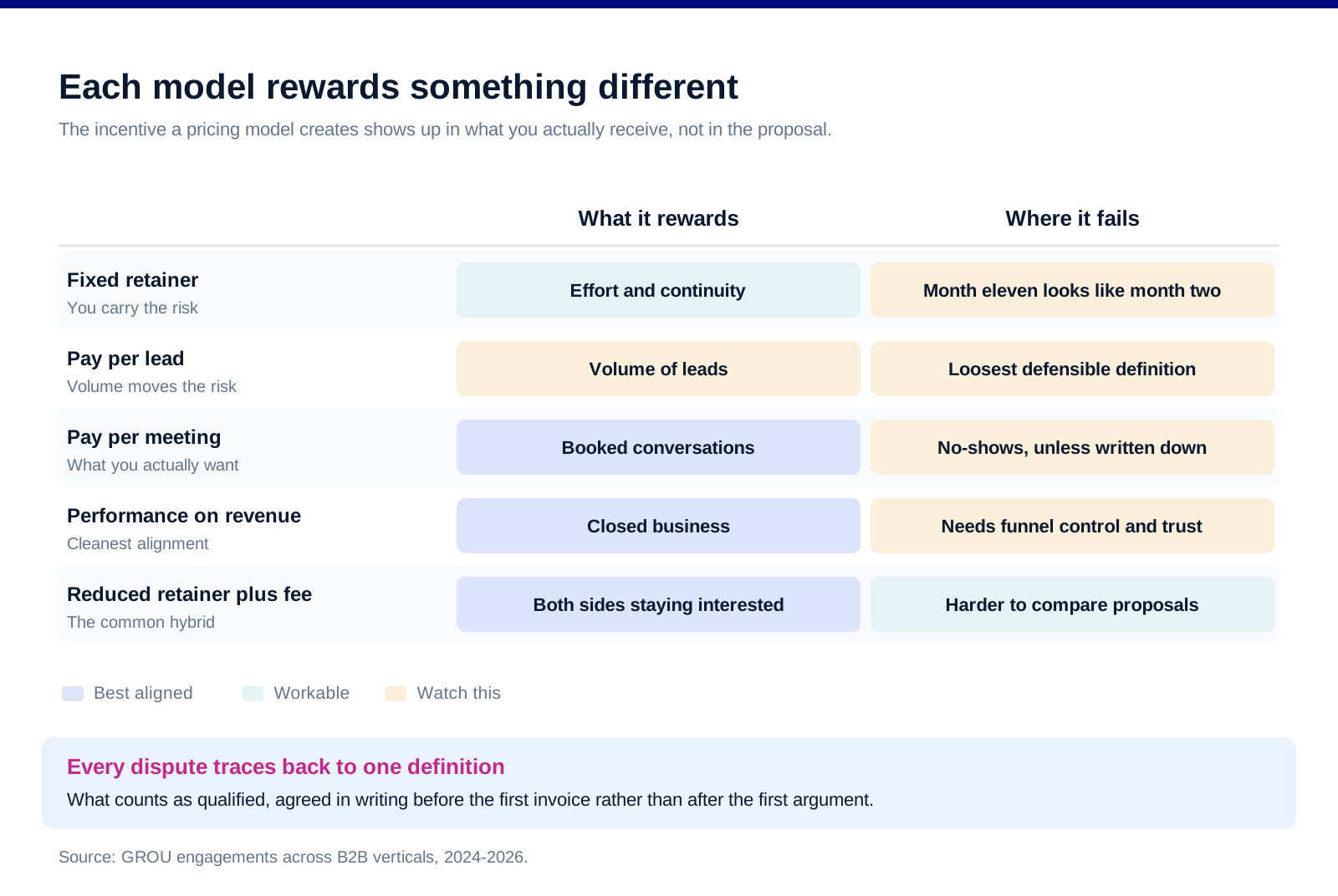
Retainer pays for effort. You buy a defined scope for a fixed monthly fee, and you carry the outcome risk. It is the honest model when the market is new, the message is unproven, or the definition of a good lead is still moving. Its failure mode is comfort: month eleven looks like month two and nobody has renegotiated anything.
Pay per lead pays for volume. It moves risk onto the agency and feels safer. Its failure mode is definitional, because the agency now has a direct financial interest in the loosest defensible reading of the word lead. Cap the monthly volume and write the qualification criteria down before the first invoice, not after the first argument.
Pay per meeting pays for the thing you actually want. It is the model most buyers ask for, and it is a genuine improvement on pay per lead because a meeting is harder to fake than a form fill. Its failure mode is attendance. Agree in writing what happens to a no-show, a reschedule and a meeting with someone who turns out to have no budget, because all three will happen in the first month.
Performance pricing pays for revenue. A share of closed business is the cleanest alignment available and the hardest to operate. It requires the agency to influence enough of the funnel to be responsible for the result, and it requires attribution both sides trust. If your sales team converts poorly, an agency on performance pricing is subsidising a problem it cannot fix.
Hybrids are common and usually sensible. A reduced retainer plus a per-meeting fee splits the risk and keeps both sides interested after the honeymoon. It is also harder to compare across proposals, which is part of why it exists.
How to choose, and what to write down
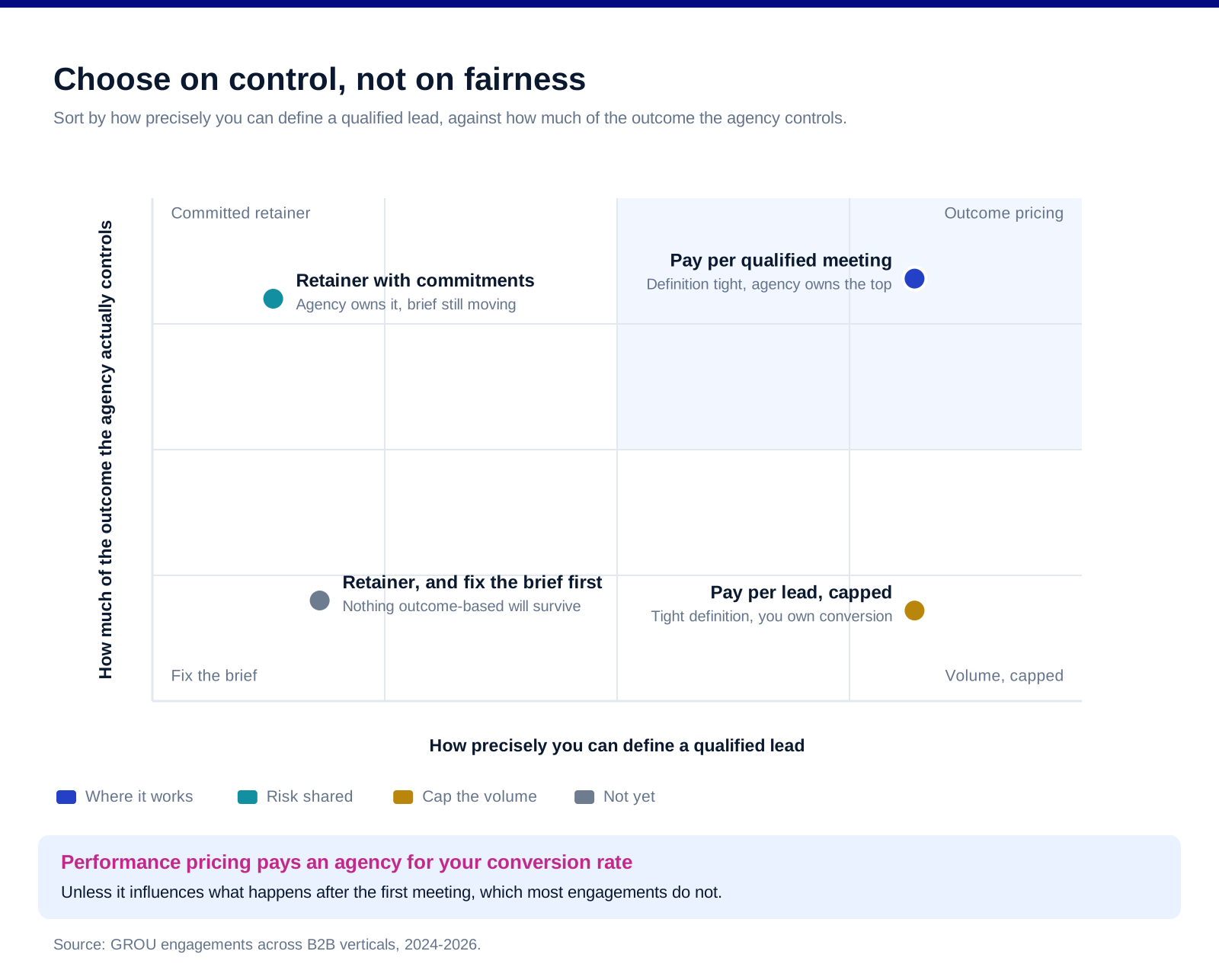
Start with the definition, not the price. If you cannot write down what makes a lead qualified in a way a stranger could apply, no outcome-based model will survive contact with reality. Fix that first, on a retainer, and move to outcome pricing when you can.
Ask who controls the funnel between the meeting and the close. If the answer is entirely your team, performance pricing is a way of paying an agency for your own conversion rate.
Get the exclusions in writing. No-shows, reschedules, existing pipeline, inbound that arrives during the engagement, and accounts already in your CRM. Every dispute we have seen in this category is about one of those five.
Ask what happens in month one. Domain warm-up alone means the first month is a build month in most programmes. A model that pays only on meetings will be paying nothing in month one, and an agency that promises otherwise is either warming domains dangerously fast or working a list they already had.
Set a review date, not a notice period. A ninety day review with agreed criteria is more useful to both sides than a thirty day rolling contract nobody wants to invoke.
And judge the pilot on inputs as well as outputs. Our paid pilot piece covers structuring the first engagement so it tells you something either way.
What no one can tell you
No industry average retainer appears in this article. Every figure in circulation comes from an agency, a directory or a consultancy with an interest in the number, on an undisclosed sample.
No cost per meeting benchmark. It varies by market, seniority, geography and offer by more than any average could survive.
No conversion rate you should expect. The same message performs differently against different lists, which is the entire reason list construction is the expensive part.
No claim about which model wins. They are tools for different situations, and an agency that only offers one is telling you something about itself rather than about the models.
FAQ
How do outbound agencies charge?
Most use one of four models or a hybrid. A fixed monthly retainer for a defined scope, pay per qualified lead, pay per booked meeting, or performance pricing tied to closed revenue. Retainers put outcome risk on the buyer, the other three shift it toward the agency, and each one creates a different incentive that shows up in what you receive.
Is pay per meeting better than a retainer?
Better aligned, not automatically better. A meeting is harder to manufacture than a lead, so the incentive is cleaner. But it only works if you can define what makes a meeting count and if you agree in advance how no-shows, reschedules and unqualified attendees are handled. Without that, you have moved the argument rather than removed it.
What should an outbound agency retainer include?
At minimum: list construction and the criteria behind it, domain and mailbox setup and warm-up, sequence writing and testing, ongoing deliverability maintenance, reply triage, and reporting you can act on. Ask which of those the agency does and which it expects from you, because the gap between those two answers is where most engagements go wrong.
Why do agencies charge more than the software costs?
Because the software is not the expensive part. On published vendor prices a sequencing seat starts at $49 a month and a dialer at $40, so the tooling is a low three-figure monthly number per rep. What a retainer buys is list judgement, the maintenance work that decays without attention, pattern recognition across accounts, and accountability that can be renegotiated.
Should you pay an outbound agency on commission?
Only when the agency influences enough of the funnel to be responsible for the outcome and both sides trust the attribution. If your own team owns everything after the first meeting, commission pricing means paying an agency a share of revenue determined by your conversion rate, which is neither fair nor stable. It works best where the agency runs a larger part of the process.
How long before an outbound programme produces meetings?
Longer than a monthly invoice cycle suggests, because domains have to be warmed before volume is safe and the first list is rarely the right one. Treat month one as a build month in any model, and be suspicious of a proposal that promises meetings inside it, since that implies either aggressive warm-up or a list that was not built for you.
Bottom line
Work out the definition before you work out the price. Every failure mode in this category traces back to a qualified lead that meant one thing in the pitch and another on the invoice, and no pricing model repairs a vague brief. Once the definition is solid, choose on control: pay for outcomes where the agency genuinely influences them, and pay for effort where it does not. Write down the exclusions, especially no-shows and accounts already in your CRM. Expect month one to be a build month whatever the model says. And remember that the software floor is a low three-figure number per rep, so when you are negotiating a retainer you are negotiating over judgement and accountability, which is a more useful conversation than arguing about tool costs.
Want to talk about what this would look like for your market? Book a call with GROU. We run lead generation and outbound inside B2B revenue engines across verticals, and we will tell you if a retainer is the wrong shape for what you need.
We are GROU, a B2B pipeline agency that runs lead generation, outbound, and LinkedIn content for clients across manufacturing, fintech, iGaming, software, and professional services. We sell the services this article describes, which is stated in the opening line rather than buried here. The vendor prices cited are published figures read first-hand in August 2026 and are used as cost references rather than as recommendations.
We should say this up front: GROU is an outbound agency, so this article is about the category we sell in. Read it with that in mind. We have written it the way we would want to read it if we were buying.
The useful starting point is not which model is fairest. It is what the work actually costs before anyone adds a margin, because that number reframes every negotiation that follows.
TL;DR
The software floor for running outbound is smaller than most buyers assume. On published vendor prices, a sequencing seat runs from $49 per user a month, a multichannel seat from $89, a sales engagement platform from $70 per user a month, an entry dialer from $40 per user a month, and a broadcast email tool from $19 a month. Mailbox hosting, data and domains sit on top, and we publish no figure for mailbox hosting because the major provider does not render a price without interaction. The point is not the exact total. It is that the tooling is a low three-figure monthly number per rep, so an agency retainer is buying labour, judgement and accountability rather than access to software. Once that is clear, the four common models sort themselves out on incentives rather than on price. Retainers pay for effort and put the risk on you. Pay per lead pays for volume and creates an incentive to loosen the definition. Pay per meeting pays for the thing you actually want and creates an incentive to book people who will not turn up. Performance pricing aligns beautifully and only works when the agency controls enough of the funnel to be held responsible for the result. Pick the model that matches how precisely you can define a qualified lead and how much of the outcome the agency genuinely controls.
What the work costs before anyone adds a margin
Sequencing seats are the core line, and they are cheap. Reply's pricing starts Email Volume at "$49 per user/month" for 1,000 active contacts, and Multichannel at "$89 per user/month" on annual billing.
Sales engagement platforms sit in the same range. Klenty lists Growth at "$70 per user/month billed annually" and Plus at "$99 per user/month billed annually".
Calling is a separate line, and it is also small. Klenty's dialer pricing starts at "$40 per user/month billed annually" with 500 minutes included, and US numbers at "$1.15 per number per month".
Broadcast email, if you need it at all, is the cheapest line on the page. GetResponse starts at "$19/mo" at the entry list bracket.
We are not publishing a mailbox hosting figure. The major provider's pricing page does not render prices without interaction, and we do not publish numbers we have not read. Mailboxes, domains and data enrichment are real costs and they sit on top of the figures above.
The conclusion holds despite the gap. Per rep, per month, the published software is a low three-figure number. Nobody is paying an agency four or five figures a month for access to a $49 seat.
So what is the retainer actually buying
Judgement about who to contact. List construction is where outbound is won and lost, and it is the part that does not automate. The difference between a good list and a plausible one does not show up until six weeks later.
Someone whose full-time job is the boring part. Domain warm-up, mailbox rotation, reply triage, list hygiene, sequence maintenance. All of it is unglamorous, all of it decays without attention, and it is the first thing an in-house team stops doing when a quarter gets busy.
Pattern recognition across accounts. An agency running the same motion across many companies sees which openers stop working before you do. That is genuinely worth paying for and genuinely hard to evidence in a pitch.
Accountability that survives a bad month. An internal hire who has a bad quarter is a management problem. An agency that has a bad quarter is a contract you can change.
Not access to software, and not headcount arbitrage. If a pitch leans on the tool stack or on how many people will touch your account, ask what each of them decides.
And not a substitute for knowing what you want. Our lead generation agency guide covers what to ask before the pricing conversation starts.
The four models, and what each one rewards
Retainer pays for effort. You buy a defined scope for a fixed monthly fee, and you carry the outcome risk. It is the honest model when the market is new, the message is unproven, or the definition of a good lead is still moving. Its failure mode is comfort: month eleven looks like month two and nobody has renegotiated anything.
Pay per lead pays for volume. It moves risk onto the agency and feels safer. Its failure mode is definitional, because the agency now has a direct financial interest in the loosest defensible reading of the word lead. Cap the monthly volume and write the qualification criteria down before the first invoice, not after the first argument.
Pay per meeting pays for the thing you actually want. It is the model most buyers ask for, and it is a genuine improvement on pay per lead because a meeting is harder to fake than a form fill. Its failure mode is attendance. Agree in writing what happens to a no-show, a reschedule and a meeting with someone who turns out to have no budget, because all three will happen in the first month.
Performance pricing pays for revenue. A share of closed business is the cleanest alignment available and the hardest to operate. It requires the agency to influence enough of the funnel to be responsible for the result, and it requires attribution both sides trust. If your sales team converts poorly, an agency on performance pricing is subsidising a problem it cannot fix.
Hybrids are common and usually sensible. A reduced retainer plus a per-meeting fee splits the risk and keeps both sides interested after the honeymoon. It is also harder to compare across proposals, which is part of why it exists.
How to choose, and what to write down
Start with the definition, not the price. If you cannot write down what makes a lead qualified in a way a stranger could apply, no outcome-based model will survive contact with reality. Fix that first, on a retainer, and move to outcome pricing when you can.
Ask who controls the funnel between the meeting and the close. If the answer is entirely your team, performance pricing is a way of paying an agency for your own conversion rate.
Get the exclusions in writing. No-shows, reschedules, existing pipeline, inbound that arrives during the engagement, and accounts already in your CRM. Every dispute we have seen in this category is about one of those five.
Ask what happens in month one. Domain warm-up alone means the first month is a build month in most programmes. A model that pays only on meetings will be paying nothing in month one, and an agency that promises otherwise is either warming domains dangerously fast or working a list they already had.
Set a review date, not a notice period. A ninety day review with agreed criteria is more useful to both sides than a thirty day rolling contract nobody wants to invoke.
And judge the pilot on inputs as well as outputs. Our paid pilot piece covers structuring the first engagement so it tells you something either way.
What no one can tell you
No industry average retainer appears in this article. Every figure in circulation comes from an agency, a directory or a consultancy with an interest in the number, on an undisclosed sample.
No cost per meeting benchmark. It varies by market, seniority, geography and offer by more than any average could survive.
No conversion rate you should expect. The same message performs differently against different lists, which is the entire reason list construction is the expensive part.
No claim about which model wins. They are tools for different situations, and an agency that only offers one is telling you something about itself rather than about the models.
FAQ
How do outbound agencies charge?
Most use one of four models or a hybrid. A fixed monthly retainer for a defined scope, pay per qualified lead, pay per booked meeting, or performance pricing tied to closed revenue. Retainers put outcome risk on the buyer, the other three shift it toward the agency, and each one creates a different incentive that shows up in what you receive.
Is pay per meeting better than a retainer?
Better aligned, not automatically better. A meeting is harder to manufacture than a lead, so the incentive is cleaner. But it only works if you can define what makes a meeting count and if you agree in advance how no-shows, reschedules and unqualified attendees are handled. Without that, you have moved the argument rather than removed it.
What should an outbound agency retainer include?
At minimum: list construction and the criteria behind it, domain and mailbox setup and warm-up, sequence writing and testing, ongoing deliverability maintenance, reply triage, and reporting you can act on. Ask which of those the agency does and which it expects from you, because the gap between those two answers is where most engagements go wrong.
Why do agencies charge more than the software costs?
Because the software is not the expensive part. On published vendor prices a sequencing seat starts at $49 a month and a dialer at $40, so the tooling is a low three-figure monthly number per rep. What a retainer buys is list judgement, the maintenance work that decays without attention, pattern recognition across accounts, and accountability that can be renegotiated.
Should you pay an outbound agency on commission?
Only when the agency influences enough of the funnel to be responsible for the outcome and both sides trust the attribution. If your own team owns everything after the first meeting, commission pricing means paying an agency a share of revenue determined by your conversion rate, which is neither fair nor stable. It works best where the agency runs a larger part of the process.
How long before an outbound programme produces meetings?
Longer than a monthly invoice cycle suggests, because domains have to be warmed before volume is safe and the first list is rarely the right one. Treat month one as a build month in any model, and be suspicious of a proposal that promises meetings inside it, since that implies either aggressive warm-up or a list that was not built for you.
Bottom line
Work out the definition before you work out the price. Every failure mode in this category traces back to a qualified lead that meant one thing in the pitch and another on the invoice, and no pricing model repairs a vague brief. Once the definition is solid, choose on control: pay for outcomes where the agency genuinely influences them, and pay for effort where it does not. Write down the exclusions, especially no-shows and accounts already in your CRM. Expect month one to be a build month whatever the model says. And remember that the software floor is a low three-figure number per rep, so when you are negotiating a retainer you are negotiating over judgement and accountability, which is a more useful conversation than arguing about tool costs.
Want to talk about what this would look like for your market? Book a call with GROU. We run lead generation and outbound inside B2B revenue engines across verticals, and we will tell you if a retainer is the wrong shape for what you need.
We are GROU, a B2B pipeline agency that runs lead generation, outbound, and LinkedIn content for clients across manufacturing, fintech, iGaming, software, and professional services. We sell the services this article describes, which is stated in the opening line rather than buried here. The vendor prices cited are published figures read first-hand in August 2026 and are used as cost references rather than as recommendations.
We should say this up front: GROU is an outbound agency, so this article is about the category we sell in. Read it with that in mind. We have written it the way we would want to read it if we were buying.
The useful starting point is not which model is fairest. It is what the work actually costs before anyone adds a margin, because that number reframes every negotiation that follows.
TL;DR
The software floor for running outbound is smaller than most buyers assume. On published vendor prices, a sequencing seat runs from $49 per user a month, a multichannel seat from $89, a sales engagement platform from $70 per user a month, an entry dialer from $40 per user a month, and a broadcast email tool from $19 a month. Mailbox hosting, data and domains sit on top, and we publish no figure for mailbox hosting because the major provider does not render a price without interaction. The point is not the exact total. It is that the tooling is a low three-figure monthly number per rep, so an agency retainer is buying labour, judgement and accountability rather than access to software. Once that is clear, the four common models sort themselves out on incentives rather than on price. Retainers pay for effort and put the risk on you. Pay per lead pays for volume and creates an incentive to loosen the definition. Pay per meeting pays for the thing you actually want and creates an incentive to book people who will not turn up. Performance pricing aligns beautifully and only works when the agency controls enough of the funnel to be held responsible for the result. Pick the model that matches how precisely you can define a qualified lead and how much of the outcome the agency genuinely controls.
What the work costs before anyone adds a margin
Sequencing seats are the core line, and they are cheap. Reply's pricing starts Email Volume at "$49 per user/month" for 1,000 active contacts, and Multichannel at "$89 per user/month" on annual billing.
Sales engagement platforms sit in the same range. Klenty lists Growth at "$70 per user/month billed annually" and Plus at "$99 per user/month billed annually".
Calling is a separate line, and it is also small. Klenty's dialer pricing starts at "$40 per user/month billed annually" with 500 minutes included, and US numbers at "$1.15 per number per month".
Broadcast email, if you need it at all, is the cheapest line on the page. GetResponse starts at "$19/mo" at the entry list bracket.
We are not publishing a mailbox hosting figure. The major provider's pricing page does not render prices without interaction, and we do not publish numbers we have not read. Mailboxes, domains and data enrichment are real costs and they sit on top of the figures above.
The conclusion holds despite the gap. Per rep, per month, the published software is a low three-figure number. Nobody is paying an agency four or five figures a month for access to a $49 seat.
So what is the retainer actually buying
Judgement about who to contact. List construction is where outbound is won and lost, and it is the part that does not automate. The difference between a good list and a plausible one does not show up until six weeks later.
Someone whose full-time job is the boring part. Domain warm-up, mailbox rotation, reply triage, list hygiene, sequence maintenance. All of it is unglamorous, all of it decays without attention, and it is the first thing an in-house team stops doing when a quarter gets busy.
Pattern recognition across accounts. An agency running the same motion across many companies sees which openers stop working before you do. That is genuinely worth paying for and genuinely hard to evidence in a pitch.
Accountability that survives a bad month. An internal hire who has a bad quarter is a management problem. An agency that has a bad quarter is a contract you can change.
Not access to software, and not headcount arbitrage. If a pitch leans on the tool stack or on how many people will touch your account, ask what each of them decides.
And not a substitute for knowing what you want. Our lead generation agency guide covers what to ask before the pricing conversation starts.
The four models, and what each one rewards
Retainer pays for effort. You buy a defined scope for a fixed monthly fee, and you carry the outcome risk. It is the honest model when the market is new, the message is unproven, or the definition of a good lead is still moving. Its failure mode is comfort: month eleven looks like month two and nobody has renegotiated anything.
Pay per lead pays for volume. It moves risk onto the agency and feels safer. Its failure mode is definitional, because the agency now has a direct financial interest in the loosest defensible reading of the word lead. Cap the monthly volume and write the qualification criteria down before the first invoice, not after the first argument.
Pay per meeting pays for the thing you actually want. It is the model most buyers ask for, and it is a genuine improvement on pay per lead because a meeting is harder to fake than a form fill. Its failure mode is attendance. Agree in writing what happens to a no-show, a reschedule and a meeting with someone who turns out to have no budget, because all three will happen in the first month.
Performance pricing pays for revenue. A share of closed business is the cleanest alignment available and the hardest to operate. It requires the agency to influence enough of the funnel to be responsible for the result, and it requires attribution both sides trust. If your sales team converts poorly, an agency on performance pricing is subsidising a problem it cannot fix.
Hybrids are common and usually sensible. A reduced retainer plus a per-meeting fee splits the risk and keeps both sides interested after the honeymoon. It is also harder to compare across proposals, which is part of why it exists.
How to choose, and what to write down
Start with the definition, not the price. If you cannot write down what makes a lead qualified in a way a stranger could apply, no outcome-based model will survive contact with reality. Fix that first, on a retainer, and move to outcome pricing when you can.
Ask who controls the funnel between the meeting and the close. If the answer is entirely your team, performance pricing is a way of paying an agency for your own conversion rate.
Get the exclusions in writing. No-shows, reschedules, existing pipeline, inbound that arrives during the engagement, and accounts already in your CRM. Every dispute we have seen in this category is about one of those five.
Ask what happens in month one. Domain warm-up alone means the first month is a build month in most programmes. A model that pays only on meetings will be paying nothing in month one, and an agency that promises otherwise is either warming domains dangerously fast or working a list they already had.
Set a review date, not a notice period. A ninety day review with agreed criteria is more useful to both sides than a thirty day rolling contract nobody wants to invoke.
And judge the pilot on inputs as well as outputs. Our paid pilot piece covers structuring the first engagement so it tells you something either way.
What no one can tell you
No industry average retainer appears in this article. Every figure in circulation comes from an agency, a directory or a consultancy with an interest in the number, on an undisclosed sample.
No cost per meeting benchmark. It varies by market, seniority, geography and offer by more than any average could survive.
No conversion rate you should expect. The same message performs differently against different lists, which is the entire reason list construction is the expensive part.
No claim about which model wins. They are tools for different situations, and an agency that only offers one is telling you something about itself rather than about the models.
FAQ
How do outbound agencies charge?
Most use one of four models or a hybrid. A fixed monthly retainer for a defined scope, pay per qualified lead, pay per booked meeting, or performance pricing tied to closed revenue. Retainers put outcome risk on the buyer, the other three shift it toward the agency, and each one creates a different incentive that shows up in what you receive.
Is pay per meeting better than a retainer?
Better aligned, not automatically better. A meeting is harder to manufacture than a lead, so the incentive is cleaner. But it only works if you can define what makes a meeting count and if you agree in advance how no-shows, reschedules and unqualified attendees are handled. Without that, you have moved the argument rather than removed it.
What should an outbound agency retainer include?
At minimum: list construction and the criteria behind it, domain and mailbox setup and warm-up, sequence writing and testing, ongoing deliverability maintenance, reply triage, and reporting you can act on. Ask which of those the agency does and which it expects from you, because the gap between those two answers is where most engagements go wrong.
Why do agencies charge more than the software costs?
Because the software is not the expensive part. On published vendor prices a sequencing seat starts at $49 a month and a dialer at $40, so the tooling is a low three-figure monthly number per rep. What a retainer buys is list judgement, the maintenance work that decays without attention, pattern recognition across accounts, and accountability that can be renegotiated.
Should you pay an outbound agency on commission?
Only when the agency influences enough of the funnel to be responsible for the outcome and both sides trust the attribution. If your own team owns everything after the first meeting, commission pricing means paying an agency a share of revenue determined by your conversion rate, which is neither fair nor stable. It works best where the agency runs a larger part of the process.
How long before an outbound programme produces meetings?
Longer than a monthly invoice cycle suggests, because domains have to be warmed before volume is safe and the first list is rarely the right one. Treat month one as a build month in any model, and be suspicious of a proposal that promises meetings inside it, since that implies either aggressive warm-up or a list that was not built for you.
Bottom line
Work out the definition before you work out the price. Every failure mode in this category traces back to a qualified lead that meant one thing in the pitch and another on the invoice, and no pricing model repairs a vague brief. Once the definition is solid, choose on control: pay for outcomes where the agency genuinely influences them, and pay for effort where it does not. Write down the exclusions, especially no-shows and accounts already in your CRM. Expect month one to be a build month whatever the model says. And remember that the software floor is a low three-figure number per rep, so when you are negotiating a retainer you are negotiating over judgement and accountability, which is a more useful conversation than arguing about tool costs.
Want to talk about what this would look like for your market? Book a call with GROU. We run lead generation and outbound inside B2B revenue engines across verticals, and we will tell you if a retainer is the wrong shape for what you need.
We are GROU, a B2B pipeline agency that runs lead generation, outbound, and LinkedIn content for clients across manufacturing, fintech, iGaming, software, and professional services. We sell the services this article describes, which is stated in the opening line rather than buried here. The vendor prices cited are published figures read first-hand in August 2026 and are used as cost references rather than as recommendations.
Pipeline OS Newsletter
Build qualified pipeline
Get weekly tactics to generate demand, improve lead quality, and book more meetings.





Trusted by industry leaders
Trusted by industry leaders
Trusted by industry leaders
Ready to build qualified pipeline?
Ready to build qualified pipeline?
Ready to build qualified pipeline?
Book a call to see if we're the right fit, or take the 2-minute quiz to get a clear starting point.
Book a call to see if we're the right fit, or take the 2-minute quiz to get a clear starting point.
Book a call to see if we're the right fit, or take the 2-minute quiz to get a clear starting point.
" height="30.21639343089746px" id="hfGbXmQR2" width="30.216393430897455px"/></svg>)
Copyright © 2026 – All Right Reserved
Copyright © 2026 – All Right Reserved
Copyright © 2026 – All Right Reserved