%22%3E%3C/path%3E%3Cpath d=%22M 63.072 7.554 C 62.258 8.022 61.577 8.689 61.092 9.493 L 61.092 7.076 L 57.158 7.076 L 57.158 22.64 L 61.089 22.64 L 61.089 14.888 C 61.089 13.446 61.403 12.434 62.03 11.853 C 62.818 11.218 63.818 10.907 64.826 10.982 L 65.868 10.982 L 65.868 6.851 C 64.891 6.834 63.926 7.076 63.073 7.554 Z%22 fill=%22rgb(17,17,17)%22%3E%3C/path%3E%3Cpath d=%22M 78.916 7.82 C 76.363 6.49 73.321 6.49 70.768 7.82 C 69.562 8.473 68.564 9.451 67.888 10.644 C 67.167 11.931 66.803 13.387 66.834 14.862 C 66.804 16.332 67.157 17.785 67.86 19.077 C 68.515 20.267 69.494 21.246 70.684 21.901 C 71.924 22.576 73.318 22.92 74.73 22.898 C 76.164 22.918 77.58 22.575 78.846 21.901 C 80.062 21.247 81.073 20.27 81.768 19.077 C 82.506 17.797 82.88 16.339 82.85 14.862 C 82.88 13.389 82.517 11.934 81.797 10.647 C 81.12 9.455 80.122 8.477 78.917 7.824 M 78.803 14.862 C 78.829 15.739 78.636 16.608 78.241 17.391 C 77.903 18.046 77.38 18.588 76.738 18.95 C 76.124 19.293 75.432 19.472 74.729 19.47 C 73.668 19.497 72.648 19.061 71.934 18.276 C 71.139 17.323 70.741 16.1 70.823 14.862 C 70.741 13.62 71.149 12.395 71.959 11.45 C 72.687 10.667 73.715 10.233 74.783 10.256 C 75.859 10.236 76.894 10.67 77.635 11.45 C 78.464 12.387 78.884 13.616 78.801 14.864%22 fill=%22rgb(17,17,17)%22%3E%3C/path%3E%3Cpath d=%22M 95.906 7.076 L 95.906 15.646 C 95.975 16.68 95.643 17.701 94.979 18.498 C 94.311 19.184 93.379 19.547 92.422 19.495 C 91.475 19.544 90.553 19.18 89.894 18.498 C 89.23 17.701 88.898 16.68 88.967 15.646 L 88.967 7.076 L 85.033 7.076 L 85.033 16.207 C 85 17.449 85.275 18.68 85.834 19.79 C 86.327 20.75 87.095 21.542 88.039 22.065 C 89.033 22.594 90.145 22.861 91.271 22.838 C 92.188 22.847 93.095 22.65 93.926 22.263 C 94.708 21.905 95.388 21.36 95.906 20.675 L 95.906 22.645 L 99.865 22.645 L 99.865 7.076 Z%22 fill=%22rgb(17,17,17)%22%3E%3C/path%3E%3Cpath d=%22M 4.513 15.626 C 4.511 10.815 7.606 6.549 12.181 5.059 C 16.756 3.57 21.77 5.195 24.601 9.086 L 27.816 5.87 C 24.074 1.186 17.981 -0.943 12.137 0.393 C 6.292 1.728 1.728 6.292 0.393 12.137 C -0.943 17.981 1.186 24.074 5.87 27.816 L 9.085 24.601 C 6.214 22.512 4.515 19.177 4.513 15.626%22 fill=%22rgb(32,62,235)%22%3E%3C/path%3E%3Cpath d=%22M 17.114 14.343 L 13.354 18.01 L 13.354 18.026 L 21.071 18.026 L 11.412 27.609 L 17.389 27.609 L 23.999 21.081 L 23.999 28.316 L 24.005 28.316 L 27.967 24.393 L 27.967 14.343 Z%22 fill=%22rgb(32,62,235)%22%3E%3C/path%3E%3C/g%3E%3C/svg%3E) ×
× ××
××

To find out whether a cold email works, you need to send roughly 1,160 of them. Most teams decide it does not work after about two hundred.
That gap is where most outbound programmes die, and it has nothing to do with the copy. It is arithmetic, and it is knowable in advance, which means the question "should we start outbound yet" has an answer you can calculate rather than argue about.
TL;DR
There are three gates, and outbound only works once you are through all of them. The first is market size: using the NIST sample size formula for proportions, detecting a doubling of a 2 percent reply rate at 5 percent significance and 90 percent power takes about 580 sends per variant, so 1,160 for a two-way test, and detecting a rise from 2 to 3 percent takes about 2,016 per variant. If your addressable market cannot supply that, outbound cannot answer your question and you should use a different instrument. The second is authentication: Gmail requires SPF or DKIM, valid forward and reverse DNS, TLS and a Postmaster Tools spam rate below 0.3 percent from every sender, with stricter rules above 5,000 messages a day, and Microsoft rejects high-volume mail outright where SPF and DKIM do not pass and align. The third is visibility, and it is the one nobody plans for: Google states that Postmaster Tools data "might be missing if the total number of messages for a given day is too low", so below a certain volume you cannot see the spam rate that decides whether you get blocked.
Gate one: can your market supply the sample?
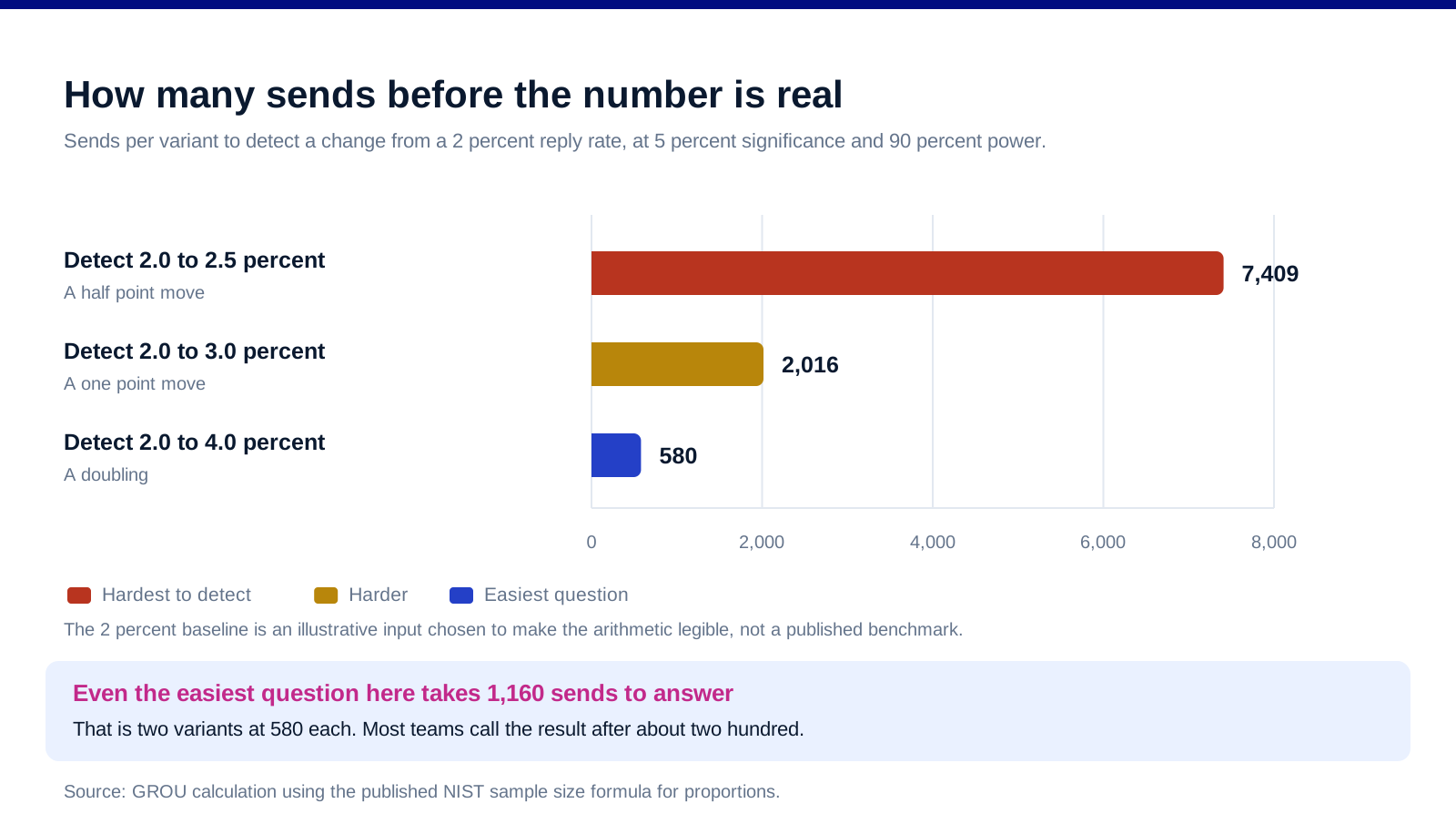
Outbound is a measurement instrument before it is a channel. The first thing it produces is not meetings, it is information about whether a message and a list belong together. If you cannot afford enough sends to produce that information, you are not running outbound, you are guessing loudly.
So calculate the sample you need before you send anything. The NIST Engineering Statistics Handbook gives the standard sample size formula for a proportion, defining the effect you want to detect as the difference between two proportions. Applied to reply rates it answers a very practical question: how many sends before a difference is real rather than noise.
Run it against a 2 percent baseline. To detect a doubling to 4 percent, at 5 percent significance and 90 percent power, you need about 580 sends per variant, so about 1,160 for a simple two-way test. To detect a rise to 3 percent you need about 2,016 per variant. To detect a rise to 2.5 percent you need about 7,409 per variant, which is roughly 14,800 sends to settle a half-point question.
The honest caveat, because it matters. No one running outbound needs formal statistical significance to make a decision, and demanding it would paralyse a sales team. The point of the calculation is not to insist on a p-value, it is to show the order of magnitude of the noise. A team calling a result after 200 sends is not being decisive, it is reading a number with a confidence interval wider than the number.
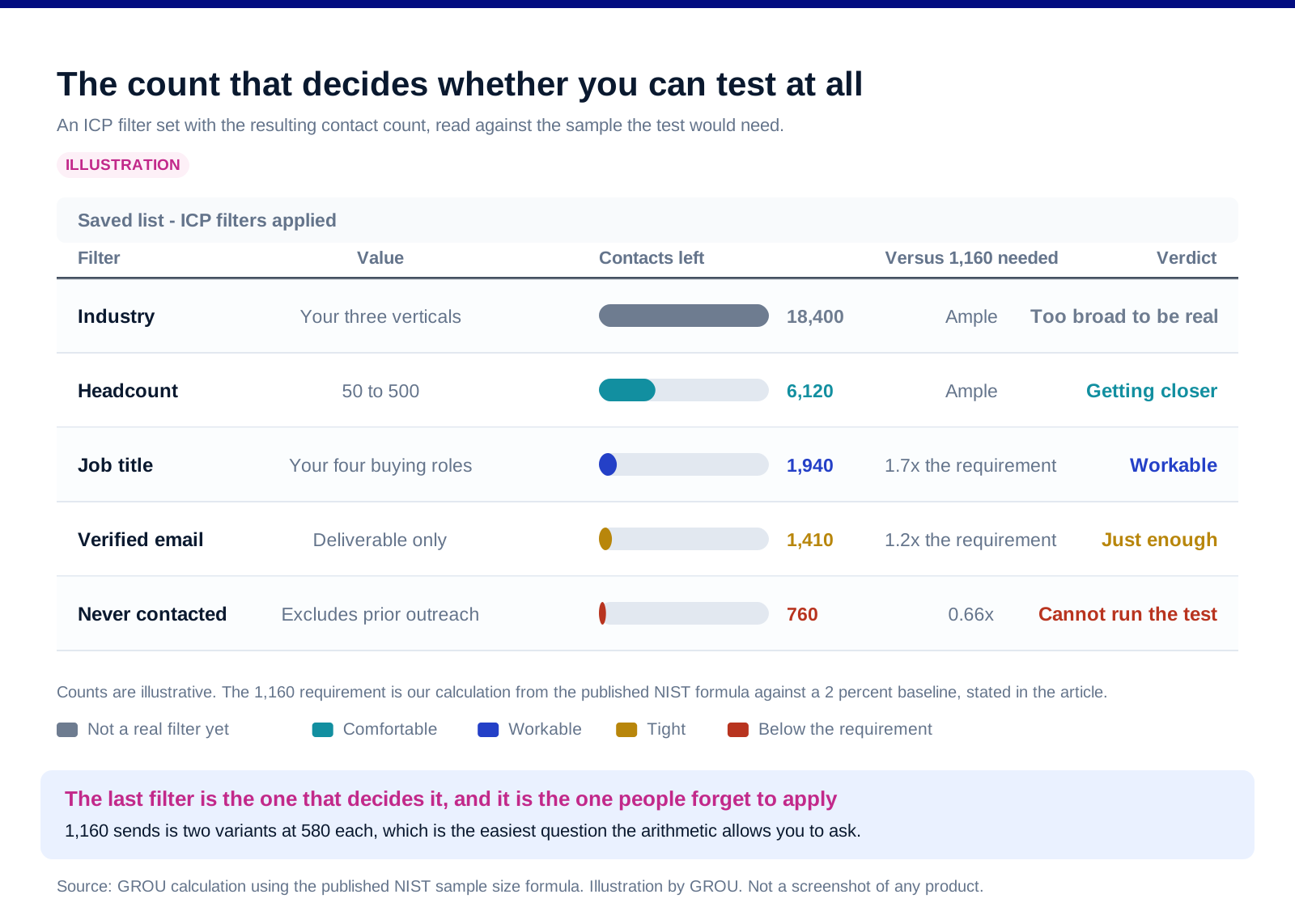
Which turns into a hard entry condition. If your total addressable market is 300 accounts, you cannot run this test at all, at any budget, ever. That is not a reason to give up on growth, it is a reason to use named-account outreach, events and relationships instead. Our note on sports technology lead generation works through exactly that case, and our piece on calculating TAM, SAM and SOM covers how to establish the number honestly before you plan around it.
Gate two: will the mail arrive?
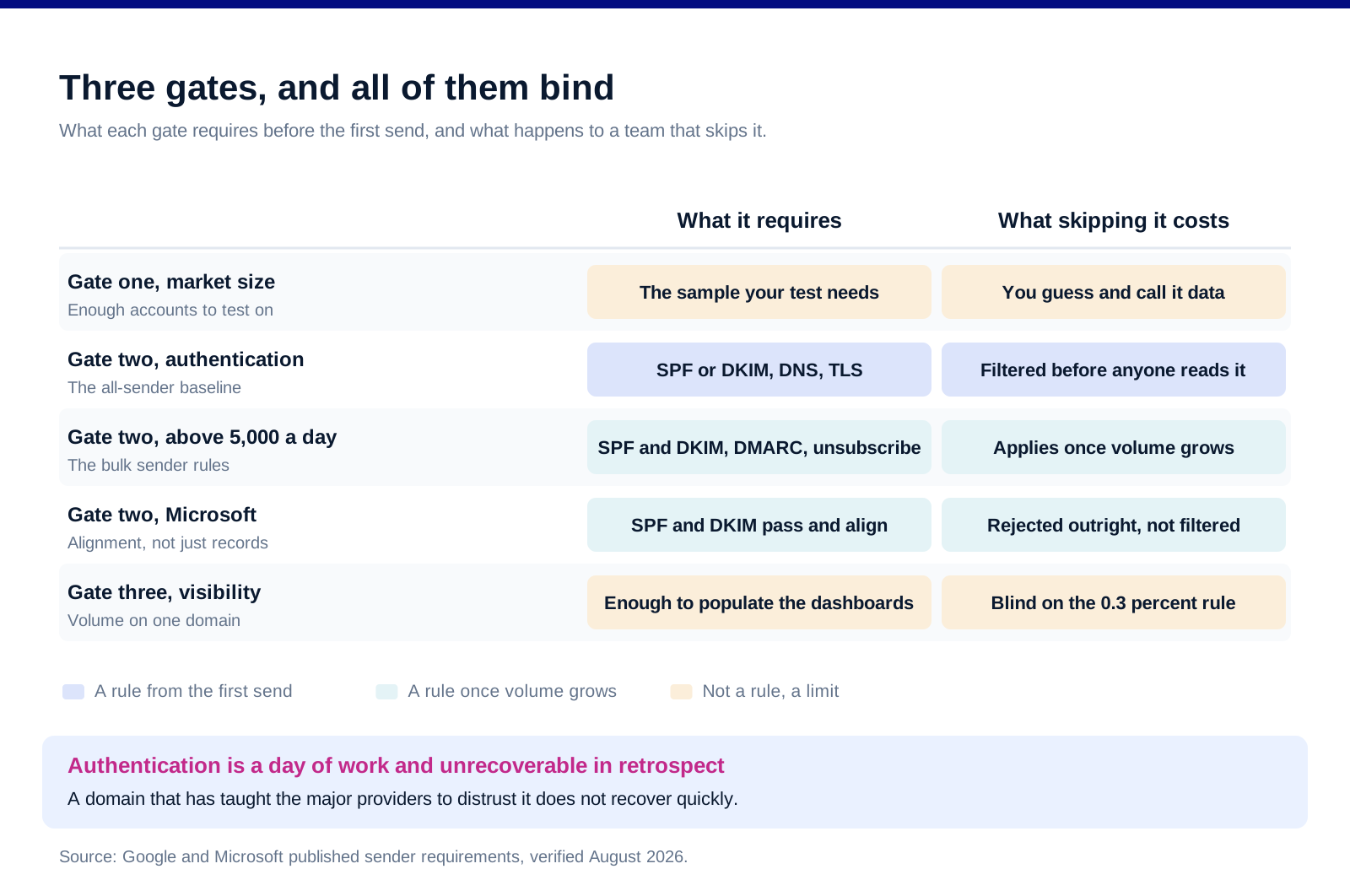
Every sender has to clear a baseline now, not just the big ones. Gmail's sender guidelines require all senders to set up SPF or DKIM for sending domains, to have valid forward and reverse DNS records, to use a TLS connection, to keep spam rates reported in Postmaster Tools below 0.3 percent, and to format messages to RFC 5322.
Above 5,000 messages a day the bar rises. Senders over that threshold to personal Gmail accounts must set up both SPF and DKIM, publish a DMARC record, which may be set to a policy of none, and support one-click unsubscribe on marketing and subscribed messages with a clearly visible unsubscribe link.
Microsoft is stricter about the consequence. Its guidance for senders of 5,000 or more messages to Microsoft consumer email services requires that both SPF and DKIM checks pass, that the domains in the envelope sender and the visible From address are aligned, and that a DMARC record is published. Mail that does not comply is rejected outright, with the sending domain told it "does not meet the required authentication level".
Note what this does and does not mean for a team starting out. A new outbound programme sending a few hundred messages a day is under both 5,000 message thresholds, so the bulk sender rules do not formally bind it. The all-sender requirements do, and the alignment discipline in the bulk rules is what you want in place anyway, because the alternative is discovering you need it at the exact moment volume becomes worth having.
Do this before the first send, not after the first bounce. Authentication is a day of work and it is unrecoverable in retrospect: a domain that has taught the major providers to distrust it does not get that reputation back quickly. Our email deliverability guide covers the setup in order.
Gate three: can you see what you are doing?
Here is the quiet one. Google states plainly that in Postmaster Tools, data "might be missing if the total number of messages for a given day is too low", and that this is to protect users' privacy, advising senders to check the dashboards again when volume increases enough to populate them.
Read that against the 0.3 percent requirement. The spam rate threshold that decides whether your mail is delivered is measured in a tool that will not show you the number until you are sending enough. Below that point you are being judged on a metric you cannot observe.
Which produces a genuinely awkward middle. Too little volume and you are blind. Too much volume too early, on an unproven message to a poorly built list, and you generate the complaints that create the problem. The way through is not clever, it is just deliberate: build the list properly first, warm the sending domains, and increase volume in steps rather than in one move.
And it is another argument for concentrating rather than spreading. Sending 500 messages a day from one well-configured domain gives you a signal. Sending 50 a day each from ten domains gives you ten blind spots. Our note on outbound lead generation covers the infrastructure side of that choice.
What to do when you fail a gate
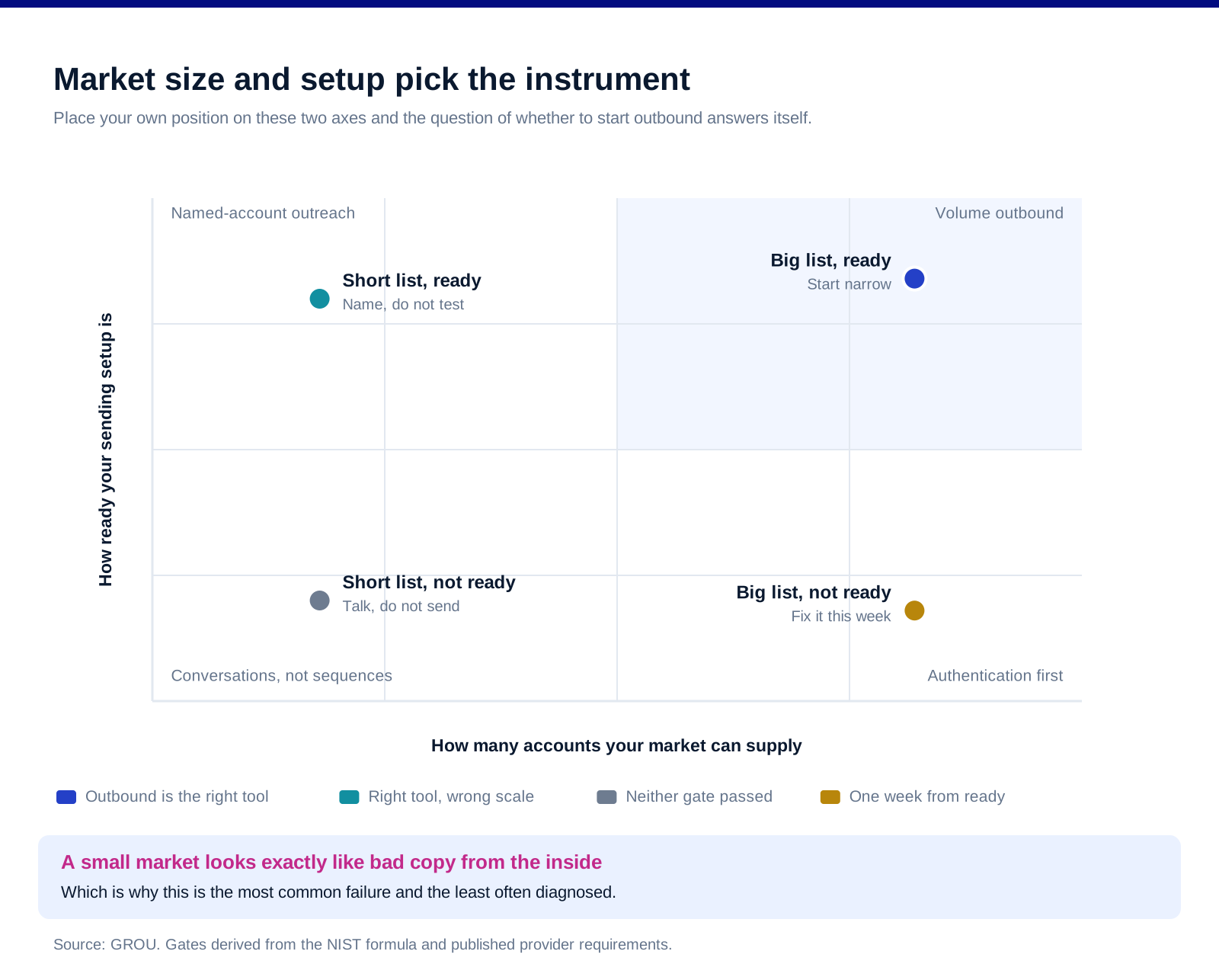
Failing gate one means your market is too small, so change instrument rather than effort. Named-account outreach, events, partnerships and founder-led selling all work at a few hundred accounts, and none of them depends on statistical volume. This is the most common failure and the least often diagnosed, because a small market looks exactly like bad copy from the inside.
Failing gate two means stop and fix it, which takes days rather than months. Authentication, DNS, TLS and a monitored spam rate are prerequisites rather than optimisations, and there is no version of outbound that works around them.
Failing gate three means sequence your ramp rather than your emails. Start on one domain at a volume that populates the dashboards, hold there until the numbers are visible and stable, then add capacity.
Passing all three means start, and start narrow. One segment, one offer, enough volume to reach the sample you calculated in gate one, and no second segment until the first has produced an answer. Our note on running a lead generation pilot covers how to structure that first block of work so it produces a decision rather than an anecdote.
And be clear about what a first result is worth. The first campaign's job is to tell you whether the list and the message belong together. Treating it as a revenue forecast is how teams end up abandoning a channel that was working, on evidence that could not have shown it either way.
What we do not publish here
A reply rate benchmark. The 2 percent baseline above is an illustrative input for the sample size arithmetic, labelled as such everywhere it appears, and chosen because it makes the calculation legible rather than because we are claiming it is typical.
A minimum TAM figure for starting outbound. It depends on how large an effect you need to detect, which depends on your economics. The formula is given so you can compute your own.
The exact volume at which Postmaster Tools begins showing data. Google does not publish it and we are not going to estimate a threshold that would determine someone's ramp plan.
Deliverability tooling recommendations. They belong in a tools piece rather than a readiness piece, and the requirements above are provider rules that hold whatever you buy.
Any claim that outbound is right or wrong for your business. The three gates are testable and the answer falls out of them, which is more useful than an opinion.
FAQ
How many cold emails do you need to send before you know if it works?
More than most teams send. Using the NIST sample size formula for proportions against a 2 percent baseline, detecting a doubling to 4 percent at 5 percent significance and 90 percent power takes about 580 sends per variant, so about 1,160 for a two-way test. Detecting a rise from 2 to 3 percent takes about 2,016 per variant.
How small is too small a market for outbound?
If your addressable market cannot supply the sample size your test requires, it is too small, and no budget fixes that. A few hundred accounts is generally too small for volume outbound, though it is a perfectly good market for named-account outreach, events and partnerships.
What do you have to set up before sending cold email in 2026?
Gmail requires all senders to have SPF or DKIM, valid forward and reverse DNS, TLS, messages formatted to RFC 5322, and a Postmaster Tools spam rate below 0.3 percent. Above 5,000 messages a day it requires both SPF and DKIM plus a DMARC record and one-click unsubscribe. Microsoft rejects high-volume mail where SPF and DKIM do not pass and align.
Do the 5,000 message rules apply to a small outbound team?
Not formally, if you are under the threshold. The all-sender requirements still apply, and the alignment discipline in the bulk rules is worth putting in place from the start, because retrofitting it after volume grows means changing your setup at the point where mistakes cost the most.
Why can you not see your spam rate at low volume?
Google states that Postmaster Tools data might be missing if the total number of messages for a given day is too low, for user privacy reasons, and advises checking again as volume increases. That leaves low-volume senders judged on a 0.3 percent threshold they cannot observe, which is an argument for concentrating volume on fewer domains rather than spreading it.
Should you start outbound before you have product-market fit?
Outbound will not manufacture a claim that does not exist, but it is one of the faster ways to find out whether one does, provided you can afford the sample. If your market can supply the volume and your infrastructure is ready, a narrow first campaign is a reasonable test. If it cannot, use conversations rather than sequences.
Bottom line
Answer three questions before you spend anything. Can your addressable market supply the sample size the test needs, which for a doubling of a 2 percent reply rate is roughly 580 sends per variant and for a one-point move is roughly 2,016. Is your authentication in place, meaning SPF or DKIM, forward and reverse DNS, TLS and a monitored spam rate as a minimum, with SPF, DKIM, DMARC and alignment before volume grows. And will your volume be high enough for Postmaster Tools to show you the spam rate you are being judged on. Pass all three and start narrow, with one segment and one offer, and hold there until you have the sample you calculated. Fail the first and change instrument rather than effort, because a market of a few hundred accounts is a good market for named-account work and a hopeless one for volume testing. Fail the second and fix it this week. Fail the third and ramp deliberately rather than spreading thin, because ten quiet domains give you ten blind spots and no answers.
Want the readiness assessed and the programme built rather than debated? Book a call with GROU. We run lead generation and outbound inside B2B revenue engines across verticals.
We are GROU, a B2B pipeline agency that runs lead generation, outbound, and LinkedIn content for clients across manufacturing, fintech, iGaming, software, and professional services. The sample size figures are our own calculation using the published NIST formula, and are reproducible from the inputs stated in the article. The sender requirements are quoted from published Google and Microsoft documentation, verified in August 2026. Provider requirements change, so check them before building around them.
To find out whether a cold email works, you need to send roughly 1,160 of them. Most teams decide it does not work after about two hundred.
That gap is where most outbound programmes die, and it has nothing to do with the copy. It is arithmetic, and it is knowable in advance, which means the question "should we start outbound yet" has an answer you can calculate rather than argue about.
TL;DR
There are three gates, and outbound only works once you are through all of them. The first is market size: using the NIST sample size formula for proportions, detecting a doubling of a 2 percent reply rate at 5 percent significance and 90 percent power takes about 580 sends per variant, so 1,160 for a two-way test, and detecting a rise from 2 to 3 percent takes about 2,016 per variant. If your addressable market cannot supply that, outbound cannot answer your question and you should use a different instrument. The second is authentication: Gmail requires SPF or DKIM, valid forward and reverse DNS, TLS and a Postmaster Tools spam rate below 0.3 percent from every sender, with stricter rules above 5,000 messages a day, and Microsoft rejects high-volume mail outright where SPF and DKIM do not pass and align. The third is visibility, and it is the one nobody plans for: Google states that Postmaster Tools data "might be missing if the total number of messages for a given day is too low", so below a certain volume you cannot see the spam rate that decides whether you get blocked.
Gate one: can your market supply the sample?
Outbound is a measurement instrument before it is a channel. The first thing it produces is not meetings, it is information about whether a message and a list belong together. If you cannot afford enough sends to produce that information, you are not running outbound, you are guessing loudly.
So calculate the sample you need before you send anything. The NIST Engineering Statistics Handbook gives the standard sample size formula for a proportion, defining the effect you want to detect as the difference between two proportions. Applied to reply rates it answers a very practical question: how many sends before a difference is real rather than noise.
Run it against a 2 percent baseline. To detect a doubling to 4 percent, at 5 percent significance and 90 percent power, you need about 580 sends per variant, so about 1,160 for a simple two-way test. To detect a rise to 3 percent you need about 2,016 per variant. To detect a rise to 2.5 percent you need about 7,409 per variant, which is roughly 14,800 sends to settle a half-point question.
The honest caveat, because it matters. No one running outbound needs formal statistical significance to make a decision, and demanding it would paralyse a sales team. The point of the calculation is not to insist on a p-value, it is to show the order of magnitude of the noise. A team calling a result after 200 sends is not being decisive, it is reading a number with a confidence interval wider than the number.
Which turns into a hard entry condition. If your total addressable market is 300 accounts, you cannot run this test at all, at any budget, ever. That is not a reason to give up on growth, it is a reason to use named-account outreach, events and relationships instead. Our note on sports technology lead generation works through exactly that case, and our piece on calculating TAM, SAM and SOM covers how to establish the number honestly before you plan around it.
Gate two: will the mail arrive?
Every sender has to clear a baseline now, not just the big ones. Gmail's sender guidelines require all senders to set up SPF or DKIM for sending domains, to have valid forward and reverse DNS records, to use a TLS connection, to keep spam rates reported in Postmaster Tools below 0.3 percent, and to format messages to RFC 5322.
Above 5,000 messages a day the bar rises. Senders over that threshold to personal Gmail accounts must set up both SPF and DKIM, publish a DMARC record, which may be set to a policy of none, and support one-click unsubscribe on marketing and subscribed messages with a clearly visible unsubscribe link.
Microsoft is stricter about the consequence. Its guidance for senders of 5,000 or more messages to Microsoft consumer email services requires that both SPF and DKIM checks pass, that the domains in the envelope sender and the visible From address are aligned, and that a DMARC record is published. Mail that does not comply is rejected outright, with the sending domain told it "does not meet the required authentication level".
Note what this does and does not mean for a team starting out. A new outbound programme sending a few hundred messages a day is under both 5,000 message thresholds, so the bulk sender rules do not formally bind it. The all-sender requirements do, and the alignment discipline in the bulk rules is what you want in place anyway, because the alternative is discovering you need it at the exact moment volume becomes worth having.
Do this before the first send, not after the first bounce. Authentication is a day of work and it is unrecoverable in retrospect: a domain that has taught the major providers to distrust it does not get that reputation back quickly. Our email deliverability guide covers the setup in order.
Gate three: can you see what you are doing?
Here is the quiet one. Google states plainly that in Postmaster Tools, data "might be missing if the total number of messages for a given day is too low", and that this is to protect users' privacy, advising senders to check the dashboards again when volume increases enough to populate them.
Read that against the 0.3 percent requirement. The spam rate threshold that decides whether your mail is delivered is measured in a tool that will not show you the number until you are sending enough. Below that point you are being judged on a metric you cannot observe.
Which produces a genuinely awkward middle. Too little volume and you are blind. Too much volume too early, on an unproven message to a poorly built list, and you generate the complaints that create the problem. The way through is not clever, it is just deliberate: build the list properly first, warm the sending domains, and increase volume in steps rather than in one move.
And it is another argument for concentrating rather than spreading. Sending 500 messages a day from one well-configured domain gives you a signal. Sending 50 a day each from ten domains gives you ten blind spots. Our note on outbound lead generation covers the infrastructure side of that choice.
What to do when you fail a gate
Failing gate one means your market is too small, so change instrument rather than effort. Named-account outreach, events, partnerships and founder-led selling all work at a few hundred accounts, and none of them depends on statistical volume. This is the most common failure and the least often diagnosed, because a small market looks exactly like bad copy from the inside.
Failing gate two means stop and fix it, which takes days rather than months. Authentication, DNS, TLS and a monitored spam rate are prerequisites rather than optimisations, and there is no version of outbound that works around them.
Failing gate three means sequence your ramp rather than your emails. Start on one domain at a volume that populates the dashboards, hold there until the numbers are visible and stable, then add capacity.
Passing all three means start, and start narrow. One segment, one offer, enough volume to reach the sample you calculated in gate one, and no second segment until the first has produced an answer. Our note on running a lead generation pilot covers how to structure that first block of work so it produces a decision rather than an anecdote.
And be clear about what a first result is worth. The first campaign's job is to tell you whether the list and the message belong together. Treating it as a revenue forecast is how teams end up abandoning a channel that was working, on evidence that could not have shown it either way.
What we do not publish here
A reply rate benchmark. The 2 percent baseline above is an illustrative input for the sample size arithmetic, labelled as such everywhere it appears, and chosen because it makes the calculation legible rather than because we are claiming it is typical.
A minimum TAM figure for starting outbound. It depends on how large an effect you need to detect, which depends on your economics. The formula is given so you can compute your own.
The exact volume at which Postmaster Tools begins showing data. Google does not publish it and we are not going to estimate a threshold that would determine someone's ramp plan.
Deliverability tooling recommendations. They belong in a tools piece rather than a readiness piece, and the requirements above are provider rules that hold whatever you buy.
Any claim that outbound is right or wrong for your business. The three gates are testable and the answer falls out of them, which is more useful than an opinion.
FAQ
How many cold emails do you need to send before you know if it works?
More than most teams send. Using the NIST sample size formula for proportions against a 2 percent baseline, detecting a doubling to 4 percent at 5 percent significance and 90 percent power takes about 580 sends per variant, so about 1,160 for a two-way test. Detecting a rise from 2 to 3 percent takes about 2,016 per variant.
How small is too small a market for outbound?
If your addressable market cannot supply the sample size your test requires, it is too small, and no budget fixes that. A few hundred accounts is generally too small for volume outbound, though it is a perfectly good market for named-account outreach, events and partnerships.
What do you have to set up before sending cold email in 2026?
Gmail requires all senders to have SPF or DKIM, valid forward and reverse DNS, TLS, messages formatted to RFC 5322, and a Postmaster Tools spam rate below 0.3 percent. Above 5,000 messages a day it requires both SPF and DKIM plus a DMARC record and one-click unsubscribe. Microsoft rejects high-volume mail where SPF and DKIM do not pass and align.
Do the 5,000 message rules apply to a small outbound team?
Not formally, if you are under the threshold. The all-sender requirements still apply, and the alignment discipline in the bulk rules is worth putting in place from the start, because retrofitting it after volume grows means changing your setup at the point where mistakes cost the most.
Why can you not see your spam rate at low volume?
Google states that Postmaster Tools data might be missing if the total number of messages for a given day is too low, for user privacy reasons, and advises checking again as volume increases. That leaves low-volume senders judged on a 0.3 percent threshold they cannot observe, which is an argument for concentrating volume on fewer domains rather than spreading it.
Should you start outbound before you have product-market fit?
Outbound will not manufacture a claim that does not exist, but it is one of the faster ways to find out whether one does, provided you can afford the sample. If your market can supply the volume and your infrastructure is ready, a narrow first campaign is a reasonable test. If it cannot, use conversations rather than sequences.
Bottom line
Answer three questions before you spend anything. Can your addressable market supply the sample size the test needs, which for a doubling of a 2 percent reply rate is roughly 580 sends per variant and for a one-point move is roughly 2,016. Is your authentication in place, meaning SPF or DKIM, forward and reverse DNS, TLS and a monitored spam rate as a minimum, with SPF, DKIM, DMARC and alignment before volume grows. And will your volume be high enough for Postmaster Tools to show you the spam rate you are being judged on. Pass all three and start narrow, with one segment and one offer, and hold there until you have the sample you calculated. Fail the first and change instrument rather than effort, because a market of a few hundred accounts is a good market for named-account work and a hopeless one for volume testing. Fail the second and fix it this week. Fail the third and ramp deliberately rather than spreading thin, because ten quiet domains give you ten blind spots and no answers.
Want the readiness assessed and the programme built rather than debated? Book a call with GROU. We run lead generation and outbound inside B2B revenue engines across verticals.
We are GROU, a B2B pipeline agency that runs lead generation, outbound, and LinkedIn content for clients across manufacturing, fintech, iGaming, software, and professional services. The sample size figures are our own calculation using the published NIST formula, and are reproducible from the inputs stated in the article. The sender requirements are quoted from published Google and Microsoft documentation, verified in August 2026. Provider requirements change, so check them before building around them.
To find out whether a cold email works, you need to send roughly 1,160 of them. Most teams decide it does not work after about two hundred.
That gap is where most outbound programmes die, and it has nothing to do with the copy. It is arithmetic, and it is knowable in advance, which means the question "should we start outbound yet" has an answer you can calculate rather than argue about.
TL;DR
There are three gates, and outbound only works once you are through all of them. The first is market size: using the NIST sample size formula for proportions, detecting a doubling of a 2 percent reply rate at 5 percent significance and 90 percent power takes about 580 sends per variant, so 1,160 for a two-way test, and detecting a rise from 2 to 3 percent takes about 2,016 per variant. If your addressable market cannot supply that, outbound cannot answer your question and you should use a different instrument. The second is authentication: Gmail requires SPF or DKIM, valid forward and reverse DNS, TLS and a Postmaster Tools spam rate below 0.3 percent from every sender, with stricter rules above 5,000 messages a day, and Microsoft rejects high-volume mail outright where SPF and DKIM do not pass and align. The third is visibility, and it is the one nobody plans for: Google states that Postmaster Tools data "might be missing if the total number of messages for a given day is too low", so below a certain volume you cannot see the spam rate that decides whether you get blocked.
Gate one: can your market supply the sample?
Outbound is a measurement instrument before it is a channel. The first thing it produces is not meetings, it is information about whether a message and a list belong together. If you cannot afford enough sends to produce that information, you are not running outbound, you are guessing loudly.
So calculate the sample you need before you send anything. The NIST Engineering Statistics Handbook gives the standard sample size formula for a proportion, defining the effect you want to detect as the difference between two proportions. Applied to reply rates it answers a very practical question: how many sends before a difference is real rather than noise.
Run it against a 2 percent baseline. To detect a doubling to 4 percent, at 5 percent significance and 90 percent power, you need about 580 sends per variant, so about 1,160 for a simple two-way test. To detect a rise to 3 percent you need about 2,016 per variant. To detect a rise to 2.5 percent you need about 7,409 per variant, which is roughly 14,800 sends to settle a half-point question.
The honest caveat, because it matters. No one running outbound needs formal statistical significance to make a decision, and demanding it would paralyse a sales team. The point of the calculation is not to insist on a p-value, it is to show the order of magnitude of the noise. A team calling a result after 200 sends is not being decisive, it is reading a number with a confidence interval wider than the number.
Which turns into a hard entry condition. If your total addressable market is 300 accounts, you cannot run this test at all, at any budget, ever. That is not a reason to give up on growth, it is a reason to use named-account outreach, events and relationships instead. Our note on sports technology lead generation works through exactly that case, and our piece on calculating TAM, SAM and SOM covers how to establish the number honestly before you plan around it.
Gate two: will the mail arrive?
Every sender has to clear a baseline now, not just the big ones. Gmail's sender guidelines require all senders to set up SPF or DKIM for sending domains, to have valid forward and reverse DNS records, to use a TLS connection, to keep spam rates reported in Postmaster Tools below 0.3 percent, and to format messages to RFC 5322.
Above 5,000 messages a day the bar rises. Senders over that threshold to personal Gmail accounts must set up both SPF and DKIM, publish a DMARC record, which may be set to a policy of none, and support one-click unsubscribe on marketing and subscribed messages with a clearly visible unsubscribe link.
Microsoft is stricter about the consequence. Its guidance for senders of 5,000 or more messages to Microsoft consumer email services requires that both SPF and DKIM checks pass, that the domains in the envelope sender and the visible From address are aligned, and that a DMARC record is published. Mail that does not comply is rejected outright, with the sending domain told it "does not meet the required authentication level".
Note what this does and does not mean for a team starting out. A new outbound programme sending a few hundred messages a day is under both 5,000 message thresholds, so the bulk sender rules do not formally bind it. The all-sender requirements do, and the alignment discipline in the bulk rules is what you want in place anyway, because the alternative is discovering you need it at the exact moment volume becomes worth having.
Do this before the first send, not after the first bounce. Authentication is a day of work and it is unrecoverable in retrospect: a domain that has taught the major providers to distrust it does not get that reputation back quickly. Our email deliverability guide covers the setup in order.
Gate three: can you see what you are doing?
Here is the quiet one. Google states plainly that in Postmaster Tools, data "might be missing if the total number of messages for a given day is too low", and that this is to protect users' privacy, advising senders to check the dashboards again when volume increases enough to populate them.
Read that against the 0.3 percent requirement. The spam rate threshold that decides whether your mail is delivered is measured in a tool that will not show you the number until you are sending enough. Below that point you are being judged on a metric you cannot observe.
Which produces a genuinely awkward middle. Too little volume and you are blind. Too much volume too early, on an unproven message to a poorly built list, and you generate the complaints that create the problem. The way through is not clever, it is just deliberate: build the list properly first, warm the sending domains, and increase volume in steps rather than in one move.
And it is another argument for concentrating rather than spreading. Sending 500 messages a day from one well-configured domain gives you a signal. Sending 50 a day each from ten domains gives you ten blind spots. Our note on outbound lead generation covers the infrastructure side of that choice.
What to do when you fail a gate
Failing gate one means your market is too small, so change instrument rather than effort. Named-account outreach, events, partnerships and founder-led selling all work at a few hundred accounts, and none of them depends on statistical volume. This is the most common failure and the least often diagnosed, because a small market looks exactly like bad copy from the inside.
Failing gate two means stop and fix it, which takes days rather than months. Authentication, DNS, TLS and a monitored spam rate are prerequisites rather than optimisations, and there is no version of outbound that works around them.
Failing gate three means sequence your ramp rather than your emails. Start on one domain at a volume that populates the dashboards, hold there until the numbers are visible and stable, then add capacity.
Passing all three means start, and start narrow. One segment, one offer, enough volume to reach the sample you calculated in gate one, and no second segment until the first has produced an answer. Our note on running a lead generation pilot covers how to structure that first block of work so it produces a decision rather than an anecdote.
And be clear about what a first result is worth. The first campaign's job is to tell you whether the list and the message belong together. Treating it as a revenue forecast is how teams end up abandoning a channel that was working, on evidence that could not have shown it either way.
What we do not publish here
A reply rate benchmark. The 2 percent baseline above is an illustrative input for the sample size arithmetic, labelled as such everywhere it appears, and chosen because it makes the calculation legible rather than because we are claiming it is typical.
A minimum TAM figure for starting outbound. It depends on how large an effect you need to detect, which depends on your economics. The formula is given so you can compute your own.
The exact volume at which Postmaster Tools begins showing data. Google does not publish it and we are not going to estimate a threshold that would determine someone's ramp plan.
Deliverability tooling recommendations. They belong in a tools piece rather than a readiness piece, and the requirements above are provider rules that hold whatever you buy.
Any claim that outbound is right or wrong for your business. The three gates are testable and the answer falls out of them, which is more useful than an opinion.
FAQ
How many cold emails do you need to send before you know if it works?
More than most teams send. Using the NIST sample size formula for proportions against a 2 percent baseline, detecting a doubling to 4 percent at 5 percent significance and 90 percent power takes about 580 sends per variant, so about 1,160 for a two-way test. Detecting a rise from 2 to 3 percent takes about 2,016 per variant.
How small is too small a market for outbound?
If your addressable market cannot supply the sample size your test requires, it is too small, and no budget fixes that. A few hundred accounts is generally too small for volume outbound, though it is a perfectly good market for named-account outreach, events and partnerships.
What do you have to set up before sending cold email in 2026?
Gmail requires all senders to have SPF or DKIM, valid forward and reverse DNS, TLS, messages formatted to RFC 5322, and a Postmaster Tools spam rate below 0.3 percent. Above 5,000 messages a day it requires both SPF and DKIM plus a DMARC record and one-click unsubscribe. Microsoft rejects high-volume mail where SPF and DKIM do not pass and align.
Do the 5,000 message rules apply to a small outbound team?
Not formally, if you are under the threshold. The all-sender requirements still apply, and the alignment discipline in the bulk rules is worth putting in place from the start, because retrofitting it after volume grows means changing your setup at the point where mistakes cost the most.
Why can you not see your spam rate at low volume?
Google states that Postmaster Tools data might be missing if the total number of messages for a given day is too low, for user privacy reasons, and advises checking again as volume increases. That leaves low-volume senders judged on a 0.3 percent threshold they cannot observe, which is an argument for concentrating volume on fewer domains rather than spreading it.
Should you start outbound before you have product-market fit?
Outbound will not manufacture a claim that does not exist, but it is one of the faster ways to find out whether one does, provided you can afford the sample. If your market can supply the volume and your infrastructure is ready, a narrow first campaign is a reasonable test. If it cannot, use conversations rather than sequences.
Bottom line
Answer three questions before you spend anything. Can your addressable market supply the sample size the test needs, which for a doubling of a 2 percent reply rate is roughly 580 sends per variant and for a one-point move is roughly 2,016. Is your authentication in place, meaning SPF or DKIM, forward and reverse DNS, TLS and a monitored spam rate as a minimum, with SPF, DKIM, DMARC and alignment before volume grows. And will your volume be high enough for Postmaster Tools to show you the spam rate you are being judged on. Pass all three and start narrow, with one segment and one offer, and hold there until you have the sample you calculated. Fail the first and change instrument rather than effort, because a market of a few hundred accounts is a good market for named-account work and a hopeless one for volume testing. Fail the second and fix it this week. Fail the third and ramp deliberately rather than spreading thin, because ten quiet domains give you ten blind spots and no answers.
Want the readiness assessed and the programme built rather than debated? Book a call with GROU. We run lead generation and outbound inside B2B revenue engines across verticals.
We are GROU, a B2B pipeline agency that runs lead generation, outbound, and LinkedIn content for clients across manufacturing, fintech, iGaming, software, and professional services. The sample size figures are our own calculation using the published NIST formula, and are reproducible from the inputs stated in the article. The sender requirements are quoted from published Google and Microsoft documentation, verified in August 2026. Provider requirements change, so check them before building around them.

Pipeline OS Newsletter
Build qualified pipeline
Get weekly tactics to generate demand, improve lead quality, and book more meetings.







Trusted by industry leaders
Trusted by industry leaders
Trusted by industry leaders
Ready to build qualified pipeline?
Ready to build qualified pipeline?
Ready to build qualified pipeline?
Book a call to see if we're the right fit, or take the 2-minute quiz to get a clear starting point.
Book a call to see if we're the right fit, or take the 2-minute quiz to get a clear starting point.
Book a call to see if we're the right fit, or take the 2-minute quiz to get a clear starting point.
" height="30.21639343089746px" id="hfGbXmQR2" width="30.216393430897455px"/></svg>)
Copyright © 2026 – All Right Reserved
Copyright © 2026 – All Right Reserved
Copyright © 2026 – All Right Reserved