%22%3E%3C/path%3E%3Cpath d=%22M 63.072 7.554 C 62.258 8.022 61.577 8.689 61.092 9.493 L 61.092 7.076 L 57.158 7.076 L 57.158 22.64 L 61.089 22.64 L 61.089 14.888 C 61.089 13.446 61.403 12.434 62.03 11.853 C 62.818 11.218 63.818 10.907 64.826 10.982 L 65.868 10.982 L 65.868 6.851 C 64.891 6.834 63.926 7.076 63.073 7.554 Z%22 fill=%22rgb(17,17,17)%22%3E%3C/path%3E%3Cpath d=%22M 78.916 7.82 C 76.363 6.49 73.321 6.49 70.768 7.82 C 69.562 8.473 68.564 9.451 67.888 10.644 C 67.167 11.931 66.803 13.387 66.834 14.862 C 66.804 16.332 67.157 17.785 67.86 19.077 C 68.515 20.267 69.494 21.246 70.684 21.901 C 71.924 22.576 73.318 22.92 74.73 22.898 C 76.164 22.918 77.58 22.575 78.846 21.901 C 80.062 21.247 81.073 20.27 81.768 19.077 C 82.506 17.797 82.88 16.339 82.85 14.862 C 82.88 13.389 82.517 11.934 81.797 10.647 C 81.12 9.455 80.122 8.477 78.917 7.824 M 78.803 14.862 C 78.829 15.739 78.636 16.608 78.241 17.391 C 77.903 18.046 77.38 18.588 76.738 18.95 C 76.124 19.293 75.432 19.472 74.729 19.47 C 73.668 19.497 72.648 19.061 71.934 18.276 C 71.139 17.323 70.741 16.1 70.823 14.862 C 70.741 13.62 71.149 12.395 71.959 11.45 C 72.687 10.667 73.715 10.233 74.783 10.256 C 75.859 10.236 76.894 10.67 77.635 11.45 C 78.464 12.387 78.884 13.616 78.801 14.864%22 fill=%22rgb(17,17,17)%22%3E%3C/path%3E%3Cpath d=%22M 95.906 7.076 L 95.906 15.646 C 95.975 16.68 95.643 17.701 94.979 18.498 C 94.311 19.184 93.379 19.547 92.422 19.495 C 91.475 19.544 90.553 19.18 89.894 18.498 C 89.23 17.701 88.898 16.68 88.967 15.646 L 88.967 7.076 L 85.033 7.076 L 85.033 16.207 C 85 17.449 85.275 18.68 85.834 19.79 C 86.327 20.75 87.095 21.542 88.039 22.065 C 89.033 22.594 90.145 22.861 91.271 22.838 C 92.188 22.847 93.095 22.65 93.926 22.263 C 94.708 21.905 95.388 21.36 95.906 20.675 L 95.906 22.645 L 99.865 22.645 L 99.865 7.076 Z%22 fill=%22rgb(17,17,17)%22%3E%3C/path%3E%3Cpath d=%22M 4.513 15.626 C 4.511 10.815 7.606 6.549 12.181 5.059 C 16.756 3.57 21.77 5.195 24.601 9.086 L 27.816 5.87 C 24.074 1.186 17.981 -0.943 12.137 0.393 C 6.292 1.728 1.728 6.292 0.393 12.137 C -0.943 17.981 1.186 24.074 5.87 27.816 L 9.085 24.601 C 6.214 22.512 4.515 19.177 4.513 15.626%22 fill=%22rgb(32,62,235)%22%3E%3C/path%3E%3Cpath d=%22M 17.114 14.343 L 13.354 18.01 L 13.354 18.026 L 21.071 18.026 L 11.412 27.609 L 17.389 27.609 L 23.999 21.081 L 23.999 28.316 L 24.005 28.316 L 27.967 24.393 L 27.967 14.343 Z%22 fill=%22rgb(32,62,235)%22%3E%3C/path%3E%3C/g%3E%3C/svg%3E) ×
× ××
××›
›
›
›
ZoomInfo pricing 2026 explained
ZoomInfo pricing 2026 explained
ZoomInfo pricing 2026 explained
ZoomInfo pricing 2026 explained
ZoomInfo pricing 2026 explained
ZoomInfo pricing 2026 explained

Author
Aljaz Peklaj

ZoomInfo does not publish prices, and that is the first thing to know about buying it: every number is quoted, every quote is negotiable, and the invoice is built from a platform fee, per-seat fees, a credit system, and add-ons that each carry their own price tag. This breakdown covers what the tiers actually cost, what lands on the invoice beyond the sticker, and who should pay for it versus buying a cheaper stack.
The product itself is scored in our ZoomInfo review; the head-to-head with its main challenger is in Apollo vs ZoomInfo.
TL;DR
Real ZoomInfo contracts run roughly $15k to $75k+ per year: Copilot entry deals around $15k/yr for 5 seats, the common SalesOS starting point near $25k/yr for 10 seats, SalesOS Plus with intent and ABM around $45k/yr for 25 seats, and full-stack deployments at $75k+/yr. On top of the platform fee sit per-seat costs of roughly $1,500-2,500, a credit system that meters exports (bulk credits from about $0.60 down to $0.20 each at volume), and add-ons like intent data at $9k-20k/yr, per UpLead's pricing teardown. Contracts are annual minimum, usually quoted as 2-3 year terms, with auto-renewal requiring 60 days' written notice and renewal uplifts of around 10% unless renegotiated. For comparison, an equivalent Apollo deployment runs about $5,400/yr; ZoomInfo's premium buys data depth and the enterprise ecosystem, and it only pays off if your team actually uses both.
What the tiers actually cost
ZoomInfo sells through sales conversations, not a pricing page (the official pricing page collects a demo request, which tells you the model). The figures below are the contract ranges from our review's 2025-2026 deal data.

Copilot entry: ~$15k/yr, 5 seats. The cheapest realistic way in. Core database access, CRM sync, the AI Copilot layer. Roughly 3x the cost of equivalent Apollo seats, which is the comparison every buyer should run first.
SalesOS standard: ~$25k/yr, 10 seats. The most common starting point in real deals. Full prospecting workflows, exports, and integrations for a mid-sized sales team.
SalesOS Plus: ~$45k/yr, 25 seats. Adds intent signals and ABM functionality. This is the tier where the platform starts feeding marketing as well as sales, and where the add-on conversation starts in earnest.
SalesOS Pro, full stack: $75k+/yr, 50 seats. Complete platform access. At this level you are buying a data infrastructure layer, and procurement should treat it like one.
What lands on the invoice beyond the sticker
The tier price is the anchor, not the total. Four mechanisms move the real number.
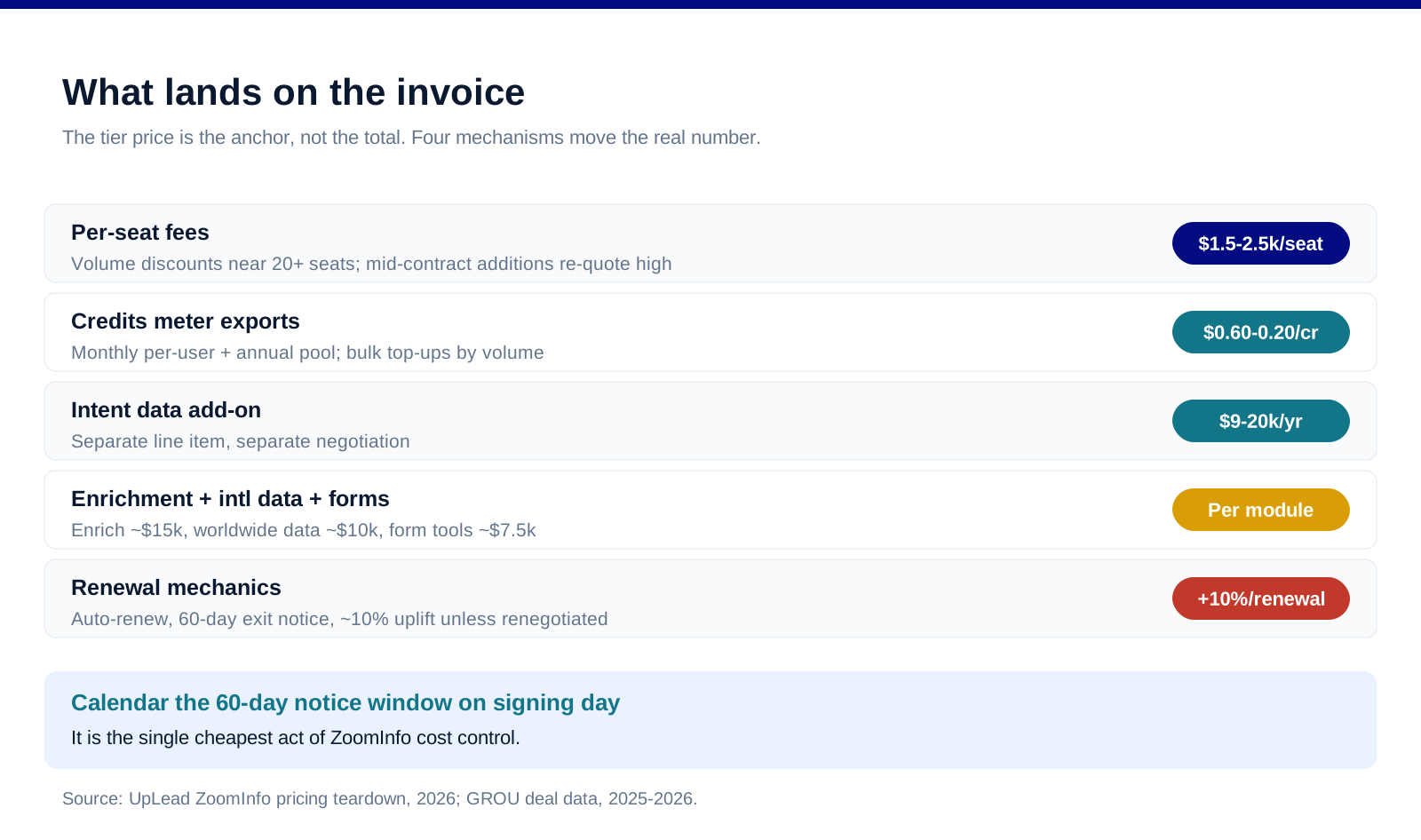
Seats: roughly $1,500-2,500 per user. Volume discounts appear around 20+ seats. Mid-contract seat additions can trigger re-quotes at premium rates, so size the team honestly up front.
Credits meter your exports. Plans carry monthly per-user credits plus an annual shared pool, and exporting records to CRM or CSV consumes them. Bulk top-ups scale from about $0.60 per credit down to $0.20 at very high volume. Normal list-building burns allowances faster than teams expect, and overage top-ups are where quiet budget damage happens.
Add-ons are separate line items. Intent data at $9k-20k/yr, enrichment bundles around $15k, international data coverage near $10k, and form-enrichment tooling around $7,500 each arrive as their own negotiation.
The contract mechanics. Annual minimum, multi-year quotes presented as the real price, auto-renewal with 60 days' written notice to exit, and roughly 10% renewal uplifts unless you renegotiate. Calendar the notice window on signing day; it is the single cheapest act of ZoomInfo cost control.
Who should pay for it

ZoomInfo is best treated as an enterprise GTM platform rather than a simple contact database: it combines B2B data with intent signals, account intelligence, CRM enrichment, and sales automation. Real contracts typically run from roughly $15,000 to $75,000-plus per year, before seats, credits, and add-ons, so it makes the most sense for teams with enough sellers and operational capacity to use those capabilities consistently.
Pay for it: enterprise and upper-mid-market sales orgs. Ten or more sellers living in Salesforce, US-heavy TAM, ops capacity to govern credits, and workflows that will actually use intent and enrichment. At that profile the data depth compounds and the premium defends itself.
Negotiate hard: mid-market teams at the $25k-45k tiers. Everything is negotiable: seat price, credit pools, add-on bundling, term length, and the renewal uplift. Multi-year only in exchange for real discounts, never as the default.
Skip it: lean teams and EU-centric motions. A $5,400/yr Apollo deployment covers prospecting for most teams under ten sellers, and EU-focused pipelines are often better served by Cognism for coverage and compliance posture, or Lusha and Kaspr for contact-level lookups (our Lusha review and Kaspr review cover both).
FAQ
How much does ZoomInfo cost per year?
Real contracts run from about $15k/yr for a 5-seat entry deployment to $75k+/yr for full-stack, 50-seat setups, with $25k/yr for 10 seats as the most common starting point. Credits, add-ons, and seat expansion push invoices above the quoted tier.
Does ZoomInfo have a free version or monthly plan?
No meaningful free tier and no true monthly billing: contracts are annual minimum and commonly quoted as 2-3 year terms. Free trials exist through sales conversations, but the product is an annual-commitment purchase.
How do ZoomInfo credits work?
Credits are consumed when you export records to CRM or CSV, with monthly per-user allotments plus an annual shared pool, and bulk top-ups priced from roughly $0.60 down to $0.20 per credit at volume. Re-exporting the same record within a year does not double-charge.
Is ZoomInfo worth the price?
For enterprise teams that will use the data depth, intent, and Salesforce-native workflows daily, the premium defends itself. For teams under ten sellers, the roughly 3x cost over an Apollo-class stack rarely converts into 3x pipeline, which is why the fit question comes before the negotiation.
Can you negotiate ZoomInfo pricing?
Yes, on every axis: platform fee, per-seat cost, credit pool size, add-on bundling, term length, and the renewal uplift. Leverage peaks at quarter-end and at renewal, provided you filed the 60-day cancellation notice window in your calendar.
What are the best ZoomInfo alternatives?
Apollo for all-in-one prospecting at a fraction of the cost, Cognism for EU-heavy coverage, and Lusha or Kaspr for lightweight contact lookups. The full comparison logic is in our Apollo vs ZoomInfo breakdown.
Bottom line
ZoomInfo pricing is an enterprise negotiation wearing a SaaS costume: $15k-75k+ real contract ranges, seats and credits and add-ons layered on the platform fee, and contract mechanics that reward buyers who calendar the notice window and renegotiate the uplift. Run the Apollo comparison first, size seats honestly, govern the credits, and make every add-on earn its own line item.
Want the data stack picked and negotiated against your actual motion instead of the vendor's deck? Book a call with GROU. We build and run outbound data stacks inside B2B revenue engines across verticals.
We are GROU, a B2B pipeline agency that runs lead generation, outbound, and LinkedIn content for clients across manufacturing, fintech, iGaming, software, and professional services. The contract ranges reflect deal data from our deployments between 2024 and 2026, anonymized to protect client confidentiality.
Some links in this article are affiliate. We may earn a small commission at no extra cost to you. We only recommend tools we've deployed for clients.
ZoomInfo does not publish prices, and that is the first thing to know about buying it: every number is quoted, every quote is negotiable, and the invoice is built from a platform fee, per-seat fees, a credit system, and add-ons that each carry their own price tag. This breakdown covers what the tiers actually cost, what lands on the invoice beyond the sticker, and who should pay for it versus buying a cheaper stack.
The product itself is scored in our ZoomInfo review; the head-to-head with its main challenger is in Apollo vs ZoomInfo.
TL;DR
Real ZoomInfo contracts run roughly $15k to $75k+ per year: Copilot entry deals around $15k/yr for 5 seats, the common SalesOS starting point near $25k/yr for 10 seats, SalesOS Plus with intent and ABM around $45k/yr for 25 seats, and full-stack deployments at $75k+/yr. On top of the platform fee sit per-seat costs of roughly $1,500-2,500, a credit system that meters exports (bulk credits from about $0.60 down to $0.20 each at volume), and add-ons like intent data at $9k-20k/yr, per UpLead's pricing teardown. Contracts are annual minimum, usually quoted as 2-3 year terms, with auto-renewal requiring 60 days' written notice and renewal uplifts of around 10% unless renegotiated. For comparison, an equivalent Apollo deployment runs about $5,400/yr; ZoomInfo's premium buys data depth and the enterprise ecosystem, and it only pays off if your team actually uses both.
What the tiers actually cost
ZoomInfo sells through sales conversations, not a pricing page (the official pricing page collects a demo request, which tells you the model). The figures below are the contract ranges from our review's 2025-2026 deal data.
Copilot entry: ~$15k/yr, 5 seats. The cheapest realistic way in. Core database access, CRM sync, the AI Copilot layer. Roughly 3x the cost of equivalent Apollo seats, which is the comparison every buyer should run first.
SalesOS standard: ~$25k/yr, 10 seats. The most common starting point in real deals. Full prospecting workflows, exports, and integrations for a mid-sized sales team.
SalesOS Plus: ~$45k/yr, 25 seats. Adds intent signals and ABM functionality. This is the tier where the platform starts feeding marketing as well as sales, and where the add-on conversation starts in earnest.
SalesOS Pro, full stack: $75k+/yr, 50 seats. Complete platform access. At this level you are buying a data infrastructure layer, and procurement should treat it like one.
What lands on the invoice beyond the sticker
The tier price is the anchor, not the total. Four mechanisms move the real number.
Seats: roughly $1,500-2,500 per user. Volume discounts appear around 20+ seats. Mid-contract seat additions can trigger re-quotes at premium rates, so size the team honestly up front.
Credits meter your exports. Plans carry monthly per-user credits plus an annual shared pool, and exporting records to CRM or CSV consumes them. Bulk top-ups scale from about $0.60 per credit down to $0.20 at very high volume. Normal list-building burns allowances faster than teams expect, and overage top-ups are where quiet budget damage happens.
Add-ons are separate line items. Intent data at $9k-20k/yr, enrichment bundles around $15k, international data coverage near $10k, and form-enrichment tooling around $7,500 each arrive as their own negotiation.
The contract mechanics. Annual minimum, multi-year quotes presented as the real price, auto-renewal with 60 days' written notice to exit, and roughly 10% renewal uplifts unless you renegotiate. Calendar the notice window on signing day; it is the single cheapest act of ZoomInfo cost control.
Who should pay for it
ZoomInfo is best treated as an enterprise GTM platform rather than a simple contact database: it combines B2B data with intent signals, account intelligence, CRM enrichment, and sales automation. Real contracts typically run from roughly $15,000 to $75,000-plus per year, before seats, credits, and add-ons, so it makes the most sense for teams with enough sellers and operational capacity to use those capabilities consistently.
Pay for it: enterprise and upper-mid-market sales orgs. Ten or more sellers living in Salesforce, US-heavy TAM, ops capacity to govern credits, and workflows that will actually use intent and enrichment. At that profile the data depth compounds and the premium defends itself.
Negotiate hard: mid-market teams at the $25k-45k tiers. Everything is negotiable: seat price, credit pools, add-on bundling, term length, and the renewal uplift. Multi-year only in exchange for real discounts, never as the default.
Skip it: lean teams and EU-centric motions. A $5,400/yr Apollo deployment covers prospecting for most teams under ten sellers, and EU-focused pipelines are often better served by Cognism for coverage and compliance posture, or Lusha and Kaspr for contact-level lookups (our Lusha review and Kaspr review cover both).
FAQ
How much does ZoomInfo cost per year?
Real contracts run from about $15k/yr for a 5-seat entry deployment to $75k+/yr for full-stack, 50-seat setups, with $25k/yr for 10 seats as the most common starting point. Credits, add-ons, and seat expansion push invoices above the quoted tier.
Does ZoomInfo have a free version or monthly plan?
No meaningful free tier and no true monthly billing: contracts are annual minimum and commonly quoted as 2-3 year terms. Free trials exist through sales conversations, but the product is an annual-commitment purchase.
How do ZoomInfo credits work?
Credits are consumed when you export records to CRM or CSV, with monthly per-user allotments plus an annual shared pool, and bulk top-ups priced from roughly $0.60 down to $0.20 per credit at volume. Re-exporting the same record within a year does not double-charge.
Is ZoomInfo worth the price?
For enterprise teams that will use the data depth, intent, and Salesforce-native workflows daily, the premium defends itself. For teams under ten sellers, the roughly 3x cost over an Apollo-class stack rarely converts into 3x pipeline, which is why the fit question comes before the negotiation.
Can you negotiate ZoomInfo pricing?
Yes, on every axis: platform fee, per-seat cost, credit pool size, add-on bundling, term length, and the renewal uplift. Leverage peaks at quarter-end and at renewal, provided you filed the 60-day cancellation notice window in your calendar.
What are the best ZoomInfo alternatives?
Apollo for all-in-one prospecting at a fraction of the cost, Cognism for EU-heavy coverage, and Lusha or Kaspr for lightweight contact lookups. The full comparison logic is in our Apollo vs ZoomInfo breakdown.
Bottom line
ZoomInfo pricing is an enterprise negotiation wearing a SaaS costume: $15k-75k+ real contract ranges, seats and credits and add-ons layered on the platform fee, and contract mechanics that reward buyers who calendar the notice window and renegotiate the uplift. Run the Apollo comparison first, size seats honestly, govern the credits, and make every add-on earn its own line item.
Want the data stack picked and negotiated against your actual motion instead of the vendor's deck? Book a call with GROU. We build and run outbound data stacks inside B2B revenue engines across verticals.
We are GROU, a B2B pipeline agency that runs lead generation, outbound, and LinkedIn content for clients across manufacturing, fintech, iGaming, software, and professional services. The contract ranges reflect deal data from our deployments between 2024 and 2026, anonymized to protect client confidentiality.
Some links in this article are affiliate. We may earn a small commission at no extra cost to you. We only recommend tools we've deployed for clients.
ZoomInfo does not publish prices, and that is the first thing to know about buying it: every number is quoted, every quote is negotiable, and the invoice is built from a platform fee, per-seat fees, a credit system, and add-ons that each carry their own price tag. This breakdown covers what the tiers actually cost, what lands on the invoice beyond the sticker, and who should pay for it versus buying a cheaper stack.
The product itself is scored in our ZoomInfo review; the head-to-head with its main challenger is in Apollo vs ZoomInfo.
TL;DR
Real ZoomInfo contracts run roughly $15k to $75k+ per year: Copilot entry deals around $15k/yr for 5 seats, the common SalesOS starting point near $25k/yr for 10 seats, SalesOS Plus with intent and ABM around $45k/yr for 25 seats, and full-stack deployments at $75k+/yr. On top of the platform fee sit per-seat costs of roughly $1,500-2,500, a credit system that meters exports (bulk credits from about $0.60 down to $0.20 each at volume), and add-ons like intent data at $9k-20k/yr, per UpLead's pricing teardown. Contracts are annual minimum, usually quoted as 2-3 year terms, with auto-renewal requiring 60 days' written notice and renewal uplifts of around 10% unless renegotiated. For comparison, an equivalent Apollo deployment runs about $5,400/yr; ZoomInfo's premium buys data depth and the enterprise ecosystem, and it only pays off if your team actually uses both.
What the tiers actually cost
ZoomInfo sells through sales conversations, not a pricing page (the official pricing page collects a demo request, which tells you the model). The figures below are the contract ranges from our review's 2025-2026 deal data.
Copilot entry: ~$15k/yr, 5 seats. The cheapest realistic way in. Core database access, CRM sync, the AI Copilot layer. Roughly 3x the cost of equivalent Apollo seats, which is the comparison every buyer should run first.
SalesOS standard: ~$25k/yr, 10 seats. The most common starting point in real deals. Full prospecting workflows, exports, and integrations for a mid-sized sales team.
SalesOS Plus: ~$45k/yr, 25 seats. Adds intent signals and ABM functionality. This is the tier where the platform starts feeding marketing as well as sales, and where the add-on conversation starts in earnest.
SalesOS Pro, full stack: $75k+/yr, 50 seats. Complete platform access. At this level you are buying a data infrastructure layer, and procurement should treat it like one.
What lands on the invoice beyond the sticker
The tier price is the anchor, not the total. Four mechanisms move the real number.
Seats: roughly $1,500-2,500 per user. Volume discounts appear around 20+ seats. Mid-contract seat additions can trigger re-quotes at premium rates, so size the team honestly up front.
Credits meter your exports. Plans carry monthly per-user credits plus an annual shared pool, and exporting records to CRM or CSV consumes them. Bulk top-ups scale from about $0.60 per credit down to $0.20 at very high volume. Normal list-building burns allowances faster than teams expect, and overage top-ups are where quiet budget damage happens.
Add-ons are separate line items. Intent data at $9k-20k/yr, enrichment bundles around $15k, international data coverage near $10k, and form-enrichment tooling around $7,500 each arrive as their own negotiation.
The contract mechanics. Annual minimum, multi-year quotes presented as the real price, auto-renewal with 60 days' written notice to exit, and roughly 10% renewal uplifts unless you renegotiate. Calendar the notice window on signing day; it is the single cheapest act of ZoomInfo cost control.
Who should pay for it
ZoomInfo is best treated as an enterprise GTM platform rather than a simple contact database: it combines B2B data with intent signals, account intelligence, CRM enrichment, and sales automation. Real contracts typically run from roughly $15,000 to $75,000-plus per year, before seats, credits, and add-ons, so it makes the most sense for teams with enough sellers and operational capacity to use those capabilities consistently.
Pay for it: enterprise and upper-mid-market sales orgs. Ten or more sellers living in Salesforce, US-heavy TAM, ops capacity to govern credits, and workflows that will actually use intent and enrichment. At that profile the data depth compounds and the premium defends itself.
Negotiate hard: mid-market teams at the $25k-45k tiers. Everything is negotiable: seat price, credit pools, add-on bundling, term length, and the renewal uplift. Multi-year only in exchange for real discounts, never as the default.
Skip it: lean teams and EU-centric motions. A $5,400/yr Apollo deployment covers prospecting for most teams under ten sellers, and EU-focused pipelines are often better served by Cognism for coverage and compliance posture, or Lusha and Kaspr for contact-level lookups (our Lusha review and Kaspr review cover both).
FAQ
How much does ZoomInfo cost per year?
Real contracts run from about $15k/yr for a 5-seat entry deployment to $75k+/yr for full-stack, 50-seat setups, with $25k/yr for 10 seats as the most common starting point. Credits, add-ons, and seat expansion push invoices above the quoted tier.
Does ZoomInfo have a free version or monthly plan?
No meaningful free tier and no true monthly billing: contracts are annual minimum and commonly quoted as 2-3 year terms. Free trials exist through sales conversations, but the product is an annual-commitment purchase.
How do ZoomInfo credits work?
Credits are consumed when you export records to CRM or CSV, with monthly per-user allotments plus an annual shared pool, and bulk top-ups priced from roughly $0.60 down to $0.20 per credit at volume. Re-exporting the same record within a year does not double-charge.
Is ZoomInfo worth the price?
For enterprise teams that will use the data depth, intent, and Salesforce-native workflows daily, the premium defends itself. For teams under ten sellers, the roughly 3x cost over an Apollo-class stack rarely converts into 3x pipeline, which is why the fit question comes before the negotiation.
Can you negotiate ZoomInfo pricing?
Yes, on every axis: platform fee, per-seat cost, credit pool size, add-on bundling, term length, and the renewal uplift. Leverage peaks at quarter-end and at renewal, provided you filed the 60-day cancellation notice window in your calendar.
What are the best ZoomInfo alternatives?
Apollo for all-in-one prospecting at a fraction of the cost, Cognism for EU-heavy coverage, and Lusha or Kaspr for lightweight contact lookups. The full comparison logic is in our Apollo vs ZoomInfo breakdown.
Bottom line
ZoomInfo pricing is an enterprise negotiation wearing a SaaS costume: $15k-75k+ real contract ranges, seats and credits and add-ons layered on the platform fee, and contract mechanics that reward buyers who calendar the notice window and renegotiate the uplift. Run the Apollo comparison first, size seats honestly, govern the credits, and make every add-on earn its own line item.
Want the data stack picked and negotiated against your actual motion instead of the vendor's deck? Book a call with GROU. We build and run outbound data stacks inside B2B revenue engines across verticals.
We are GROU, a B2B pipeline agency that runs lead generation, outbound, and LinkedIn content for clients across manufacturing, fintech, iGaming, software, and professional services. The contract ranges reflect deal data from our deployments between 2024 and 2026, anonymized to protect client confidentiality.
Some links in this article are affiliate. We may earn a small commission at no extra cost to you. We only recommend tools we've deployed for clients.

Pipeline OS Newsletter
Build qualified pipeline
Get weekly tactics to generate demand, improve lead quality, and book more meetings.







Trusted by industry leaders
Trusted by industry leaders
Trusted by industry leaders
Ready to build qualified pipeline?
Ready to build qualified pipeline?
Ready to build qualified pipeline?
Book a call to see if we're the right fit, or take the 2-minute quiz to get a clear starting point.
Book a call to see if we're the right fit, or take the 2-minute quiz to get a clear starting point.
Book a call to see if we're the right fit, or take the 2-minute quiz to get a clear starting point.
" height="30.21639343089746px" id="hfGbXmQR2" width="30.216393430897455px"/></svg>)
Copyright © 2026 – All Right Reserved
Copyright © 2026 – All Right Reserved
Copyright © 2026 – All Right Reserved