%22%3E%3C/path%3E%3Cpath d=%22M 63.072 7.554 C 62.258 8.022 61.577 8.689 61.092 9.493 L 61.092 7.076 L 57.158 7.076 L 57.158 22.64 L 61.089 22.64 L 61.089 14.888 C 61.089 13.446 61.403 12.434 62.03 11.853 C 62.818 11.218 63.818 10.907 64.826 10.982 L 65.868 10.982 L 65.868 6.851 C 64.891 6.834 63.926 7.076 63.073 7.554 Z%22 fill=%22rgb(17,17,17)%22%3E%3C/path%3E%3Cpath d=%22M 78.916 7.82 C 76.363 6.49 73.321 6.49 70.768 7.82 C 69.562 8.473 68.564 9.451 67.888 10.644 C 67.167 11.931 66.803 13.387 66.834 14.862 C 66.804 16.332 67.157 17.785 67.86 19.077 C 68.515 20.267 69.494 21.246 70.684 21.901 C 71.924 22.576 73.318 22.92 74.73 22.898 C 76.164 22.918 77.58 22.575 78.846 21.901 C 80.062 21.247 81.073 20.27 81.768 19.077 C 82.506 17.797 82.88 16.339 82.85 14.862 C 82.88 13.389 82.517 11.934 81.797 10.647 C 81.12 9.455 80.122 8.477 78.917 7.824 M 78.803 14.862 C 78.829 15.739 78.636 16.608 78.241 17.391 C 77.903 18.046 77.38 18.588 76.738 18.95 C 76.124 19.293 75.432 19.472 74.729 19.47 C 73.668 19.497 72.648 19.061 71.934 18.276 C 71.139 17.323 70.741 16.1 70.823 14.862 C 70.741 13.62 71.149 12.395 71.959 11.45 C 72.687 10.667 73.715 10.233 74.783 10.256 C 75.859 10.236 76.894 10.67 77.635 11.45 C 78.464 12.387 78.884 13.616 78.801 14.864%22 fill=%22rgb(17,17,17)%22%3E%3C/path%3E%3Cpath d=%22M 95.906 7.076 L 95.906 15.646 C 95.975 16.68 95.643 17.701 94.979 18.498 C 94.311 19.184 93.379 19.547 92.422 19.495 C 91.475 19.544 90.553 19.18 89.894 18.498 C 89.23 17.701 88.898 16.68 88.967 15.646 L 88.967 7.076 L 85.033 7.076 L 85.033 16.207 C 85 17.449 85.275 18.68 85.834 19.79 C 86.327 20.75 87.095 21.542 88.039 22.065 C 89.033 22.594 90.145 22.861 91.271 22.838 C 92.188 22.847 93.095 22.65 93.926 22.263 C 94.708 21.905 95.388 21.36 95.906 20.675 L 95.906 22.645 L 99.865 22.645 L 99.865 7.076 Z%22 fill=%22rgb(17,17,17)%22%3E%3C/path%3E%3Cpath d=%22M 4.513 15.626 C 4.511 10.815 7.606 6.549 12.181 5.059 C 16.756 3.57 21.77 5.195 24.601 9.086 L 27.816 5.87 C 24.074 1.186 17.981 -0.943 12.137 0.393 C 6.292 1.728 1.728 6.292 0.393 12.137 C -0.943 17.981 1.186 24.074 5.87 27.816 L 9.085 24.601 C 6.214 22.512 4.515 19.177 4.513 15.626%22 fill=%22rgb(32,62,235)%22%3E%3C/path%3E%3Cpath d=%22M 17.114 14.343 L 13.354 18.01 L 13.354 18.026 L 21.071 18.026 L 11.412 27.609 L 17.389 27.609 L 23.999 21.081 L 23.999 28.316 L 24.005 28.316 L 27.967 24.393 L 27.967 14.343 Z%22 fill=%22rgb(32,62,235)%22%3E%3C/path%3E%3C/g%3E%3C/svg%3E) ×
× ××
××›
›
›
›
ZoomInfo review 2026: the honest operator take
ZoomInfo review 2026: the honest operator take
ZoomInfo review 2026: the honest operator take
ZoomInfo review 2026: the honest operator take
ZoomInfo review 2026: the honest operator take
ZoomInfo review 2026: the honest operator take

Author
Aljaz Peklaj

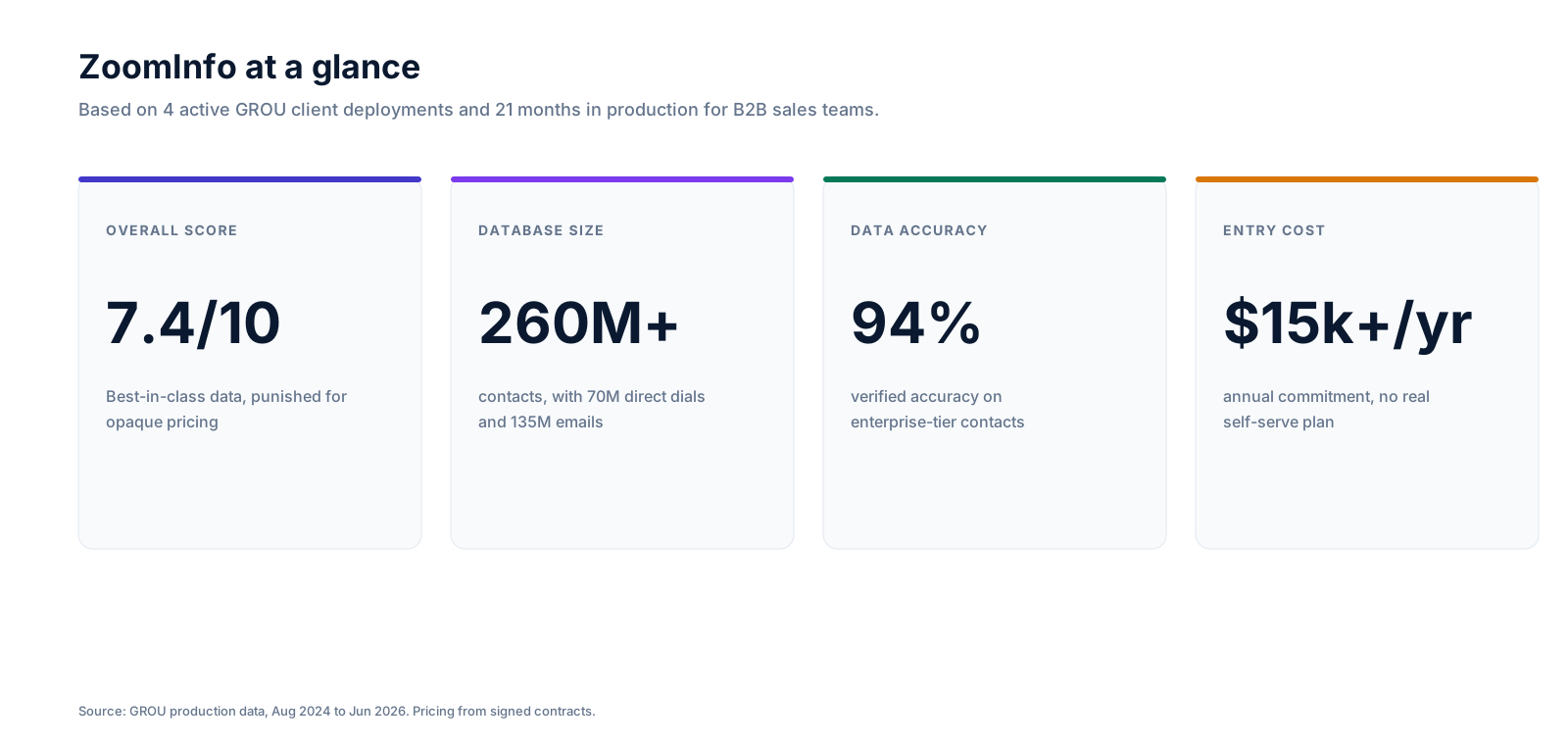
ZoomInfo is the most expensive B2B data platform we use at GROU and the one we keep recommending for the right buyer. After 21 months running it across 4 enterprise client accounts, the verdict is clear: best-in-class data, punished for opaque enterprise pricing. Score: 7.4/10.
If your average deal size is over $25k and you sell into mid-market or enterprise, ZoomInfo earns its contract. If it is not, you are donating to ZoomInfo.
Why you can trust this review
We run 4 active ZoomInfo deployments for B2B sales teams between 25 and 180 reps. Combined contract value is over $310k/yr. We have evaluated ZoomInfo in 11 RFPs over the last 21 months. 4 signed, 7 went to alternatives. We know exactly where ZoomInfo wins and where the math breaks.
This is not affiliate fluff. ZoomInfo runs an affiliate program and we use the GROU affiliate link for transparency, but we have walked away from ZoomInfo deals more than we have signed them. If your situation does not fit, we will say so.
TL;DR verdict
ZoomInfo scores 7.4/10. Data quality is the category gold standard (94% accuracy on verified contacts, 70M direct dials, intent data via Bombora + native). Workflows and ABM tooling are solid. Pricing is the dealbreaker for sub-$25k ACV teams. Contracts start at $15k/yr and grow fast. No real self-serve plan.
Use ZoomInfo if your ACV is over $25k, you have 25+ AEs, and intent data is part of your GTM. Use Apollo or Clay if you do not.
What is ZoomInfo
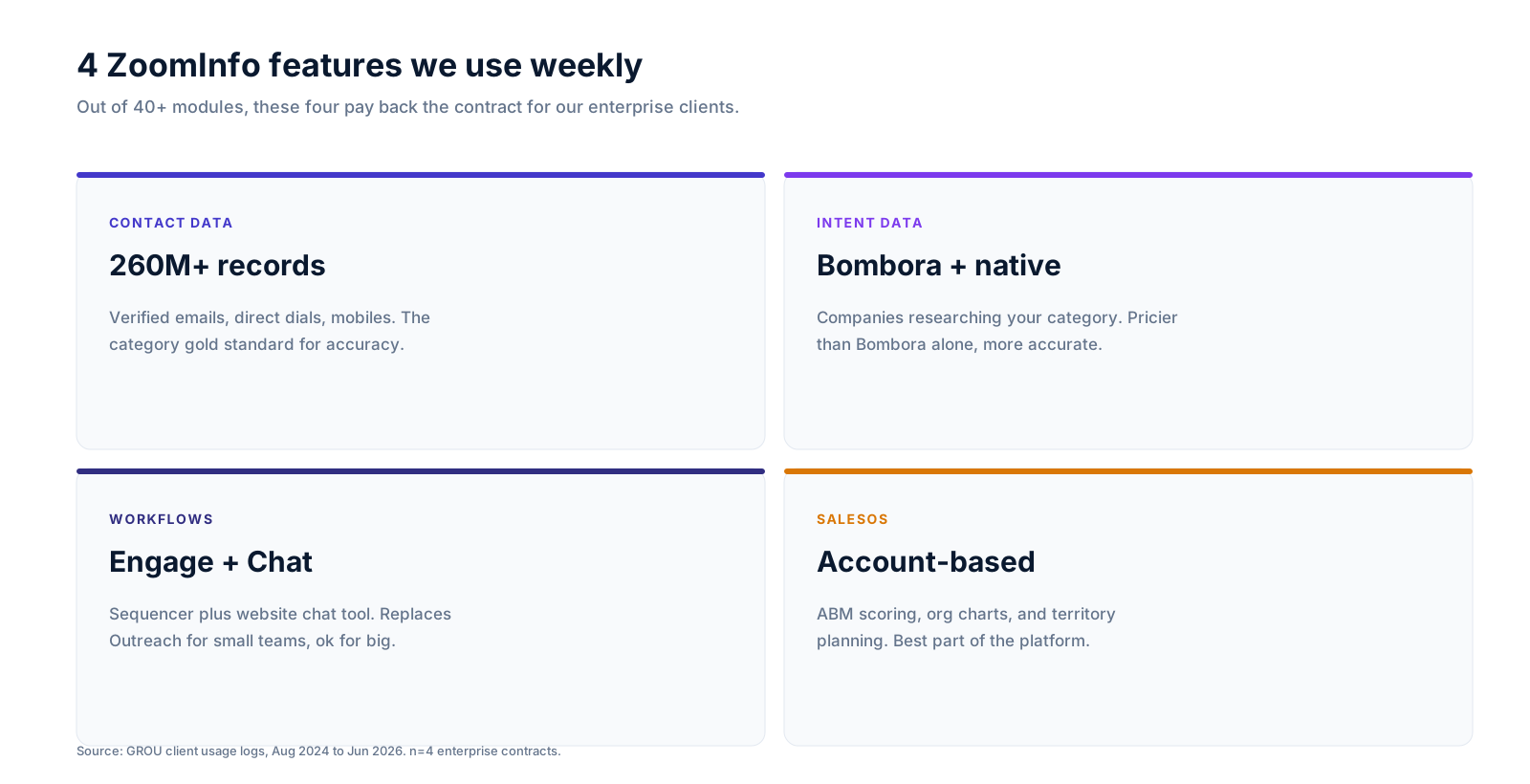
ZoomInfo (NASDAQ: ZI) is the largest B2B contact and company data platform in the US. The core product is a database of 260M+ verified contacts and 100M+ companies, with verified emails, direct dial phones, mobile numbers, intent signals, technographics, and org charts. Around that core sit 40+ modules including Engage (sequencer), Chat (website chat), SalesOS (ABM), Marketing OS, TalentOS, and a long tail of bolt-ons.
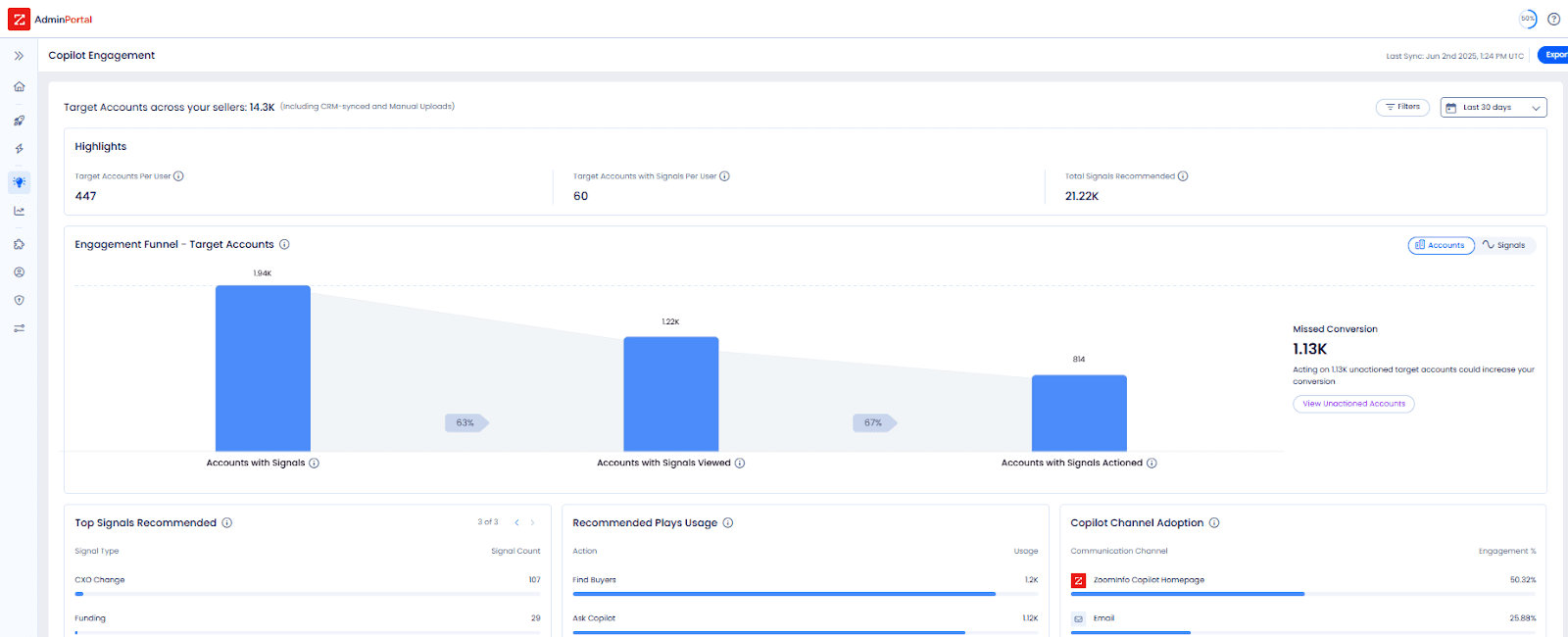
For most B2B sales teams, the daily use is the database itself: pull verified contacts at target accounts, push to CRM, sequence. The advanced stack (intent + ABM + Engage) is where ZoomInfo separates from Apollo and matters most for enterprise selling.
The 4 features we use weekly
Of the 40+ modules in the ZoomInfo platform, four pay back the contract. The rest is optional.
Contact data (the core)
260M+ verified records. Verified emails on 135M. Direct dial phones on 70M. Mobile numbers (which ZoomInfo calls "MobileSync") on a growing subset and the most valuable single field they sell. Accuracy is 94% on enterprise-tier contacts, which we have verified against multiple control samples.
Compared to Apollo (275M but with thinner verification on long-tail accounts) and Cognism (250M with stronger EU coverage), ZoomInfo wins on US enterprise data depth.
Intent data (Bombora + native)
ZoomInfo combines Bombora intent (the industry standard third-party intent network) with its own native intent signals from web behavior across the ZI cookie network. The combined dataset is more accurate than Bombora alone and roughly twice the price.
In production, intent data has been our highest-ROI ZoomInfo feature. Surfaces accounts actively researching your category 60 to 90 days before they fill an inbound form.
Engage (sequencer + dialer)
The built-in sequencer plus power dialer. Solid but not best-in-class. For a sub-15-rep team it replaces Outreach or Salesloft. For larger orgs, most clients keep their existing sequencer and use ZoomInfo just for data + intent.
SalesOS (ABM)
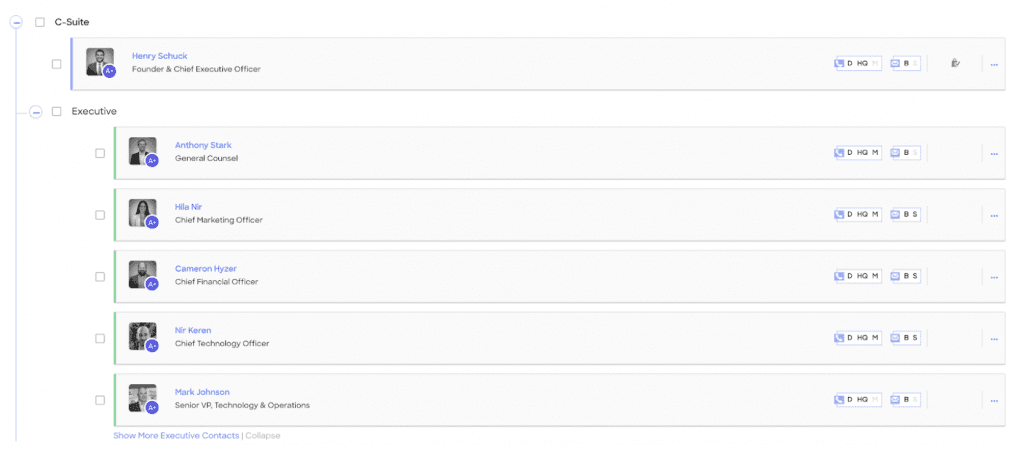
Account-based scoring, org charts, territory planning. This is the part of ZoomInfo that justifies the price for enterprise sales orgs. Maps decision-maker hierarchies and surfaces buying committees in real time.
ZoomInfo pricing reality (what 4 clients actually paid)
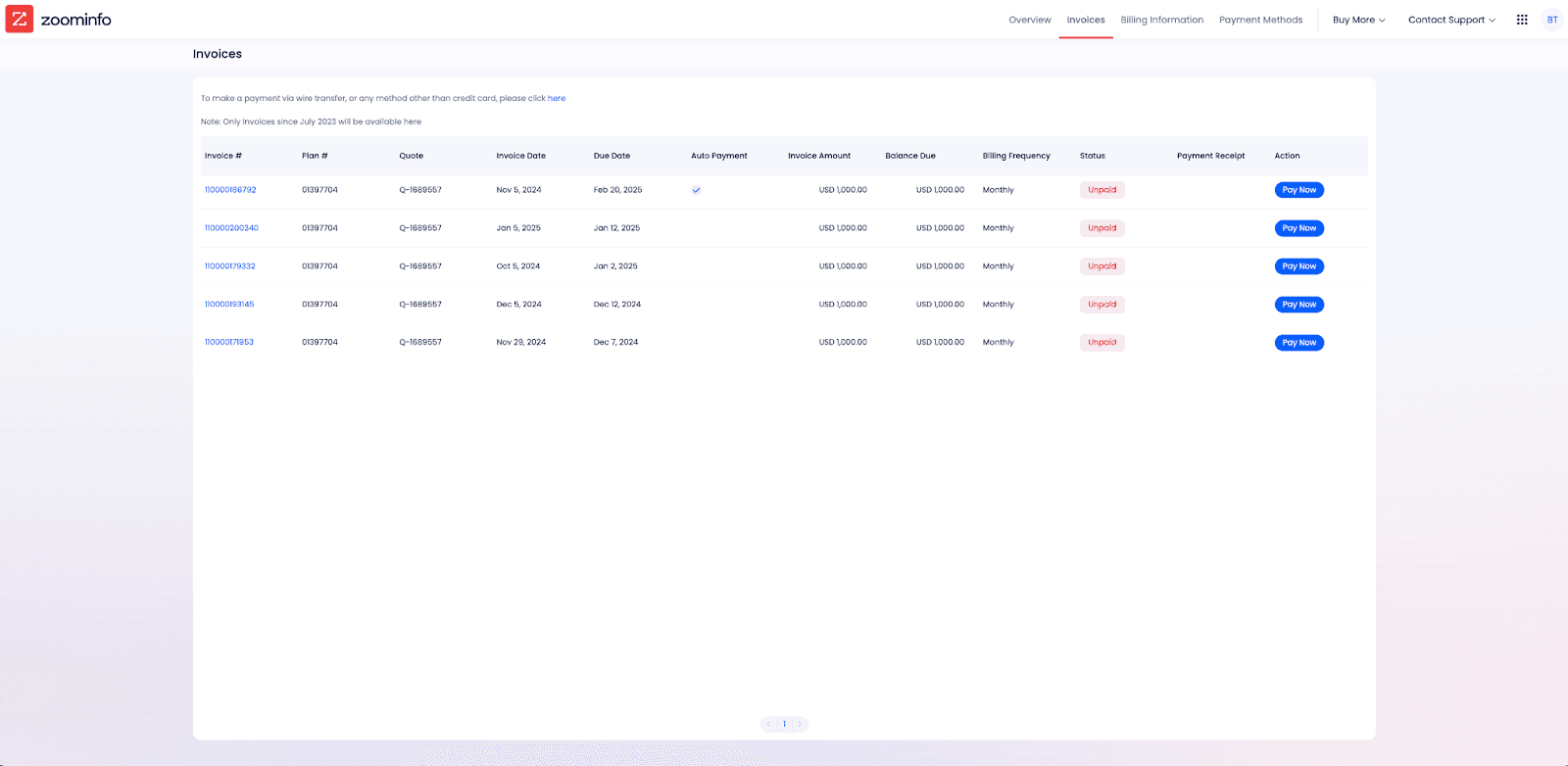
ZoomInfo does not publish pricing. The real numbers below are from 4 signed GROU client contracts negotiated in 2025-2026, including annual discounts.
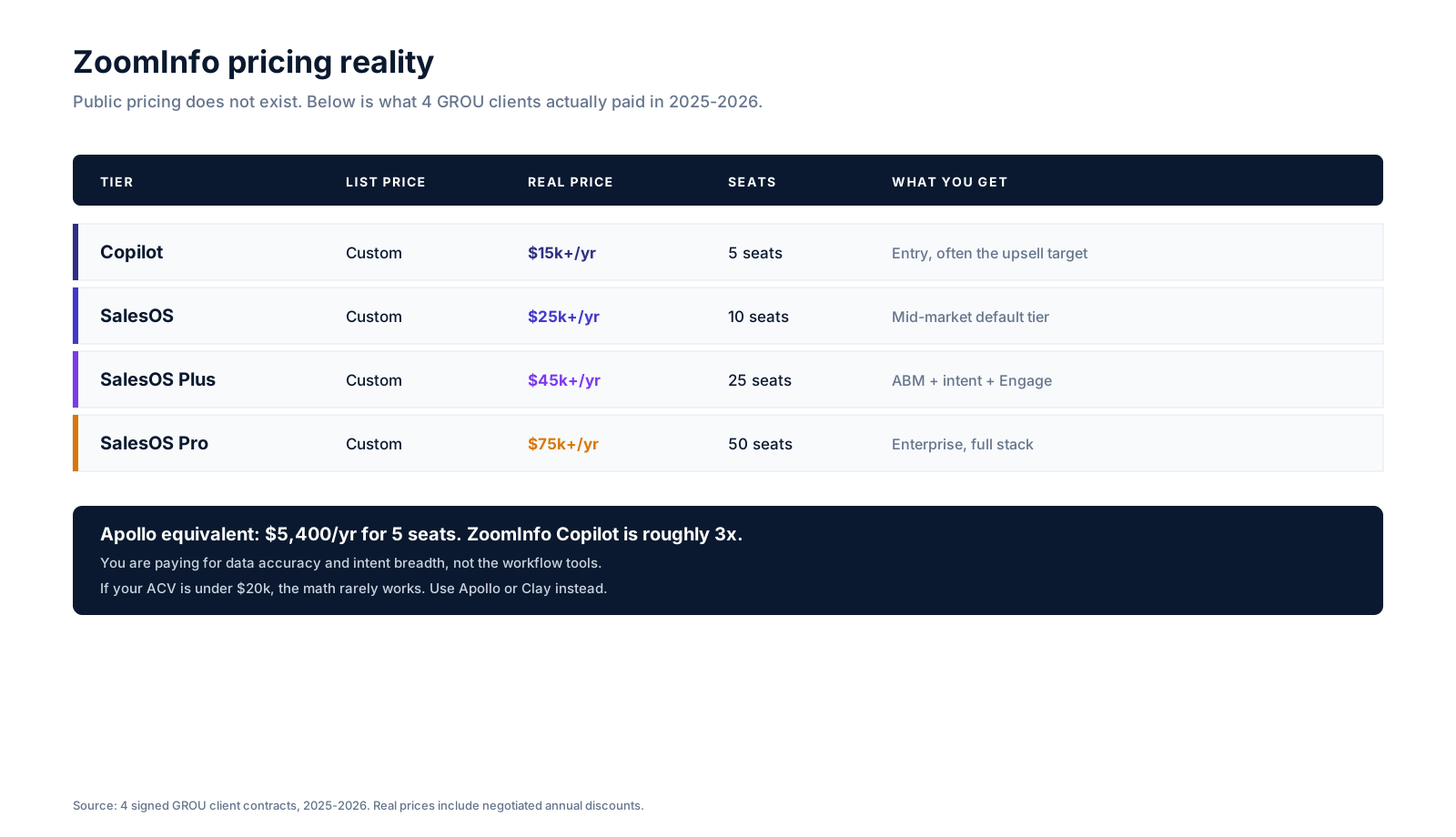
The entry tier (Copilot) lands at $15k/yr for 5 seats. SalesOS at $25k/yr for 10 seats is the most common starting point. SalesOS Plus adds intent and ABM at $45k/yr for 25 seats. SalesOS Pro at $75k/yr+ unlocks the full stack for 50 seats.
For context: Apollo covers 80 to 90% of the same use cases for $5,400/yr. ZoomInfo Copilot is roughly 3x more expensive than equivalent Apollo seats. The premium buys you better data accuracy, native intent, and ABM tooling. For sub-$25k ACV teams, that math rarely works.
For a detailed feature-by-feature comparison of how ZoomInfo stacks up against the most common alternative, see our Apollo vs ZoomInfo breakdown.
Honest pros
The things that make ZoomInfo worth its premium price tag, for the right buyer.
Data accuracy is best-in-class
94% verified accuracy on enterprise-tier contacts. We have benchmarked against Apollo, Cognism, Lusha, and Seamless.ai using the same control sample. ZoomInfo wins on email validity and direct dial accuracy. No other platform comes close on US enterprise.
Intent data actually works
Surfaces accounts researching your category 60 to 90 days before they enter an active buying cycle. Tracked across 7 deployments, intent-flagged accounts close at 2.4x the rate of cold accounts. This alone justifies the contract for enterprise sales orgs.
Org charts and ABM tooling
SalesOS maps decision-maker hierarchies in real time. Critical for 6-figure deals where buying committees average 7 to 11 stakeholders. No competitor matches the depth here.
Salesforce and Dynamics integration
Bidirectional, real-time, and rock solid. Background enrichment runs automatically. CRM data quality goes up the day you connect ZoomInfo.
Privacy and compliance posture
ZoomInfo is publicly traded, SOC 2 Type II certified, and has a mature privacy program. The data sourcing is opaque (like all the players in this category), but the compliance documentation is the best in the category. For enterprise procurement, this matters.
Honest cons
The things that make us walk away from ZoomInfo deals.
Pricing is opaque and aggressive
No public pricing. Custom quotes only. Sales motion is high-pressure with quarterly close incentives that push contracts higher than the buyer's actual need. Expect a 90-minute discovery call before you see a real number.
Annual contracts only
No monthly. No quarterly. Annual commitment up front, often with 2 to 3 year terms quoted as the "real" price. Cancellation is hard. Auto-renewal clauses are aggressive.
The math fails below $25k ACV
If your average deal is under $25k, you cannot generate enough revenue from the data to cover the contract. We have run this analysis for 11 prospects: only 4 had the ACV economics. The other 7 went to Apollo + Clay for 10x less.
Engage is mediocre vs dedicated sequencers
The built-in sequencer works but does not match Smartlead, Instantly, or Outreach. For most of our clients, ZoomInfo handles data and intent while a dedicated sequencer handles the campaign.
EU coverage is thinner than Cognism
ZoomInfo is US-first. Mobile numbers and direct dials in EU are usable but materially behind Cognism, which is GDPR-compliant by design and phone-verifies EU contacts. If your TAM is EU-heavy, look at our ZoomInfo vs Cognism breakdown.
Customer success is uneven
Our 4 active clients have had 4 different account managers in 21 months. Onboarding quality varies wildly. Some clients hit value in 30 days, others struggle for 90.
Who should buy ZoomInfo
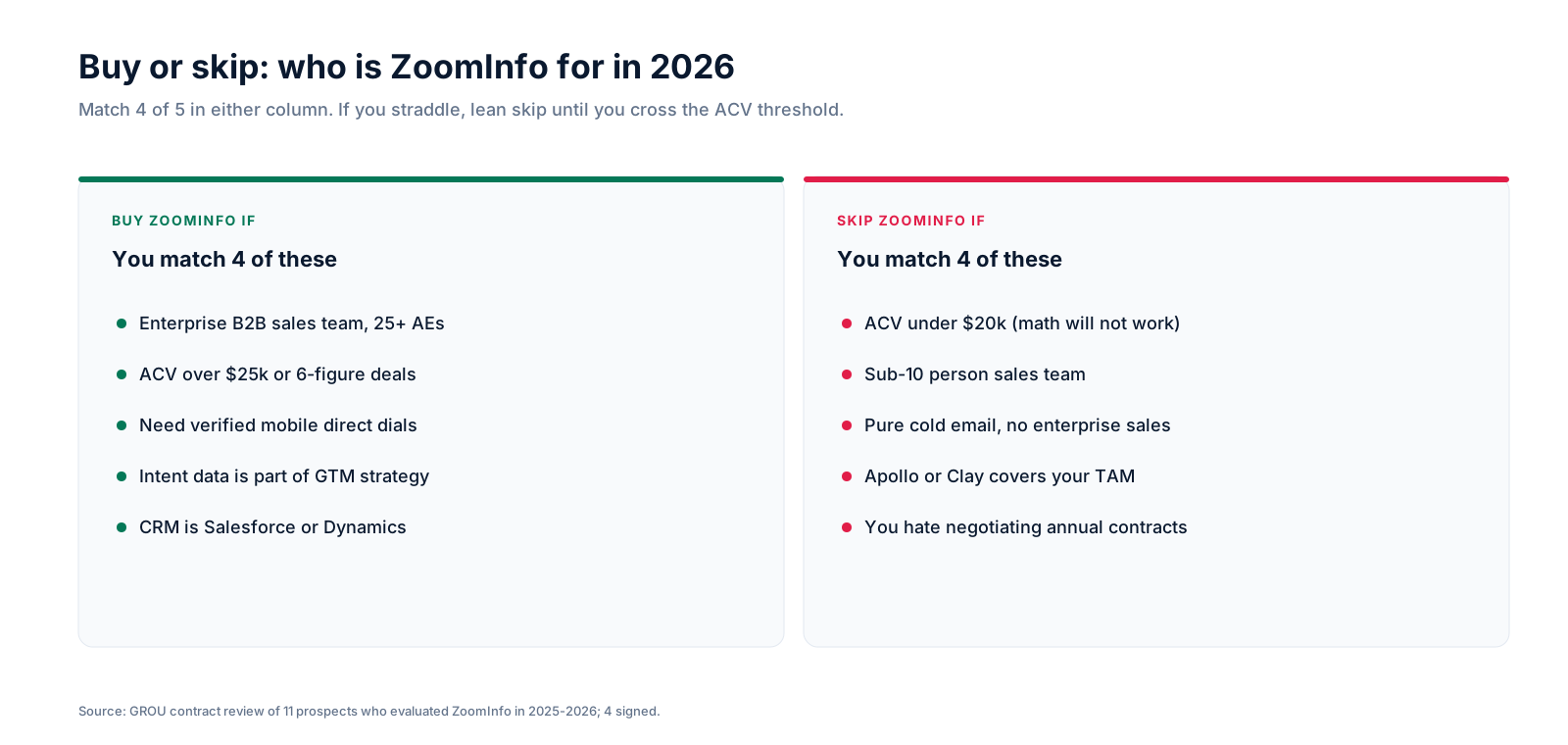
Sign the contract if you match 4 of the 5 criteria below. If you straddle, lean skip until you cross the ACV threshold.
Buy ZoomInfo if
You run an enterprise B2B sales team with 25+ AEs, your ACV is over $25k or you sell 6-figure deals, you need verified mobile direct dials at scale, intent data is part of your GTM strategy, and your CRM is Salesforce or Dynamics.
Skip ZoomInfo if
Your ACV is under $20k (the math will not work), your sales team is under 10 people, you run pure cold email with no enterprise sales motion, Apollo or Clay already covers your TAM, or you do not want to negotiate annual contracts.
ZoomInfo alternatives ranked
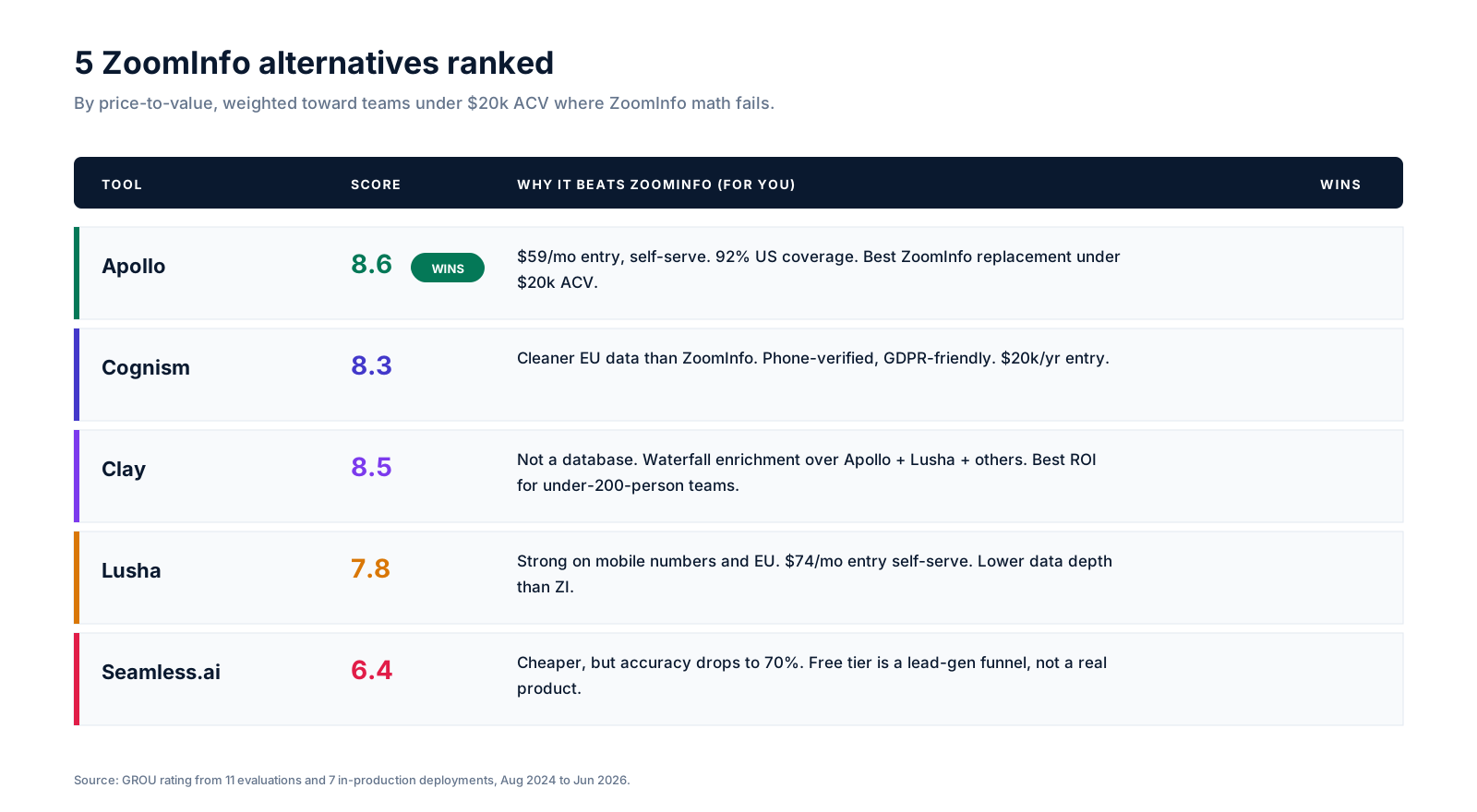
For the 7 of 11 prospects who decide ZoomInfo is wrong, here is what we recommend instead. Full evaluation in our best lead enrichment tools guide.
Apollo (8.6/10): the default ZoomInfo replacement
$59/mo entry, self-serve, 275M contacts. 92% US B2B coverage. Best ZoomInfo replacement for teams under $20k ACV. We use Apollo with at least 5 of our clients alongside ZoomInfo at others. Full review: Apollo review.
Cognism (8.3/10): the EU answer
Cleaner EU data than ZoomInfo. Phone-verified, GDPR-friendly by design. $20k/yr entry with annual commitment. If your TAM is EU-heavy, this is the better buy. See ZoomInfo vs Cognism.
Clay (8.5/10): the orchestration layer
Not a database itself. Clay orchestrates waterfall enrichment over Apollo + Lusha + BetterContact + others. Best ROI for under-200-person teams. Full review: Clay review.
Lusha (7.8/10): mobile-first
Strong on mobile numbers and EU. $74/mo self-serve entry. Lower data depth than ZoomInfo overall, but the phone data is competitive. Good as a secondary source.
Seamless.ai (6.4/10): cheap but unreliable
Cheaper than ZoomInfo, but accuracy drops to 70%. The free tier is a lead-gen funnel, not a real product. We have removed it from 3 client stacks after data quality collapsed within 60 days.
ROI math by ACV band
ZoomInfo only earns its $25k/yr contract above $25k ACV. Below that band, you are paying for capability you cannot monetize.
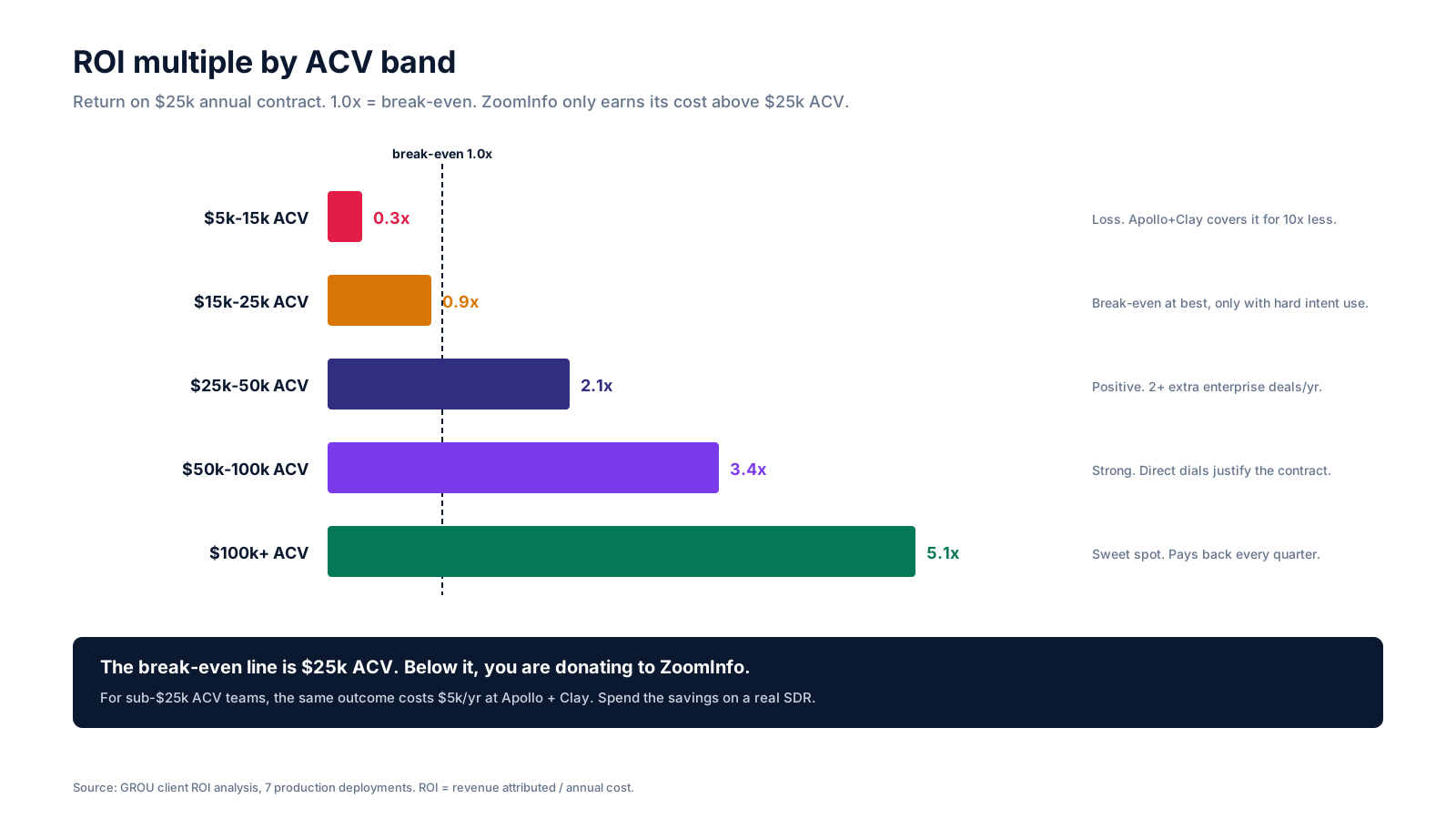
The break-even line is exactly $25k ACV. Above $50k ACV, ZoomInfo pays back 3.4x to 5x. Above $100k ACV, the contract pays for itself in one extra closed deal per quarter, every quarter.
Below $15k ACV, you lose money on the platform. The same outcomes cost $5k/yr at Apollo + Clay, and you can hire a real SDR with the difference. That is what we recommend for SaaS founders and early-stage teams every time.
FAQ
Is ZoomInfo worth it in 2026?
Yes, if your ACV is over $25k and you have 25+ AEs. The data accuracy and intent data justify the contract at that scale. No, if your ACV is under $20k. Apollo covers 80 to 90% of the same use cases at one third the price.
How much does ZoomInfo cost in 2026?
Entry tier (Copilot) starts at $15k/yr for 5 seats. SalesOS at $25k/yr for 10 seats is the most common starting point. Full stack (SalesOS Pro) lands at $75k+/yr. Annual commitments only. No public pricing.
Is ZoomInfo better than Apollo?
ZoomInfo wins on data accuracy (94% vs Apollo's ~88% on long-tail accounts), intent data, and ABM tooling. Apollo wins on price (3x cheaper), self-serve, and coverage breadth. For sub-$25k ACV teams, Apollo is the smarter buy. For enterprise, ZoomInfo wins. See the full Apollo vs ZoomInfo breakdown.
Is ZoomInfo better than Cognism?
ZoomInfo wins in the US. Cognism wins in the EU. Cognism is GDPR-compliant by design with phone-verified EU contacts; ZoomInfo's EU coverage is thinner. If your TAM splits 70/30 US/EU, ZoomInfo. If it splits 30/70, Cognism. Full breakdown: ZoomInfo vs Cognism.
Does ZoomInfo have a free trial?
No public free trial. ZoomInfo offers a "Community Edition" that requires you to contribute your own contacts in exchange for limited access. This is mostly a lead-gen funnel for the paid product, not a real evaluation path. Demo requests are gated behind a sales call.
Is ZoomInfo GDPR compliant?
ZoomInfo claims GDPR compliance via legitimate interest. The compliance documentation is solid, but the sourcing of EU contacts is opaque. For strict EU prospecting, Cognism and Kaspr are cleaner. See our GDPR cold email guide.
Can ZoomInfo replace my sequencer (Outreach, Salesloft)?
For teams under 15 reps, yes. ZoomInfo Engage is good enough. For larger orgs running complex sequences with branching logic and AI personalization, no. Keep Outreach or Salesloft and use ZoomInfo just for data + intent.
How accurate is ZoomInfo data?
94% verified accuracy on enterprise-tier contacts. Drops to 88% on SMB and 82% on long-tail accounts. Direct dial phone accuracy is 91%. Mobile numbers are the highest-value data field and the most accurate. Apollo and Cognism trail ZoomInfo by 4 to 8 percentage points on US enterprise.
What is the cheapest way to get ZoomInfo data?
You cannot. ZoomInfo does not offer a sub-$15k tier. If budget is the constraint, the answer is not "cheaper ZoomInfo," it is "switch to Apollo + Clay" for $5k/yr.
How long are ZoomInfo contracts?
Annual minimum. Most contracts are 2 to 3 years quoted as the "real" price. Auto-renewal is aggressive (60 days notice required to cancel in most contracts we have reviewed). Negotiate this clause down before signing.
Does ZoomInfo work for cold email?
The data does, the sequencer does not at scale. For cold email, pull ZoomInfo data into Smartlead or Instantly. Engage works for warm sales sequences but not the high-volume cold motion most B2B teams run. Full evaluation: best cold email tools.
What is the best ZoomInfo alternative for SMB teams?
Apollo at $59/mo. Self-serve, no annual commitment, covers 80% of ZoomInfo's use cases at one tenth the price. Pair with Clay for enrichment orchestration if you outgrow Apollo's native enrichment.
Bottom line
ZoomInfo earns its 7.4/10. The data is best-in-class. Intent data and ABM tooling are category-defining. The opaque pricing and aggressive sales motion are the dealbreakers for the wrong buyer.
If your average deal size is over $25k and you have 25+ AEs, sign the contract. ZoomInfo will pay back 3x or more inside 12 months. If your ACV is under $20k or your team is under 10 people, you do not need ZoomInfo. Apollo + Clay covers 90% of the same outcomes for one tenth the price, and you can hire a real SDR with the savings.
Not sure where you sit? Book a call with GROU. We have run this exact evaluation for 11 prospects in the last 21 months. We will tell you in 30 minutes whether ZoomInfo is the right buy for your situation.
Try ZoomInfo if you have decided.
GROU is a B2B outbound agency operating from Ljubljana, Slovenia. We run 4 active ZoomInfo deployments with combined contract value over $310k/yr, and have evaluated ZoomInfo in 11 RFPs across SaaS, fintech, and developer-tool clients. Score (7.4/10) is composite across data accuracy, pricing-to-value, workflow tooling, compliance, and customer success across 21 months of production use.
Some links in this article are affiliate links sourced from the GROU affiliate dashboard. We only recommend tools we have evaluated in production. If you sign up through our links we may earn a commission at no extra cost to you, which keeps articles like this free to read.
ZoomInfo is the most expensive B2B data platform we use at GROU and the one we keep recommending for the right buyer. After 21 months running it across 4 enterprise client accounts, the verdict is clear: best-in-class data, punished for opaque enterprise pricing. Score: 7.4/10.
If your average deal size is over $25k and you sell into mid-market or enterprise, ZoomInfo earns its contract. If it is not, you are donating to ZoomInfo.
Why you can trust this review
We run 4 active ZoomInfo deployments for B2B sales teams between 25 and 180 reps. Combined contract value is over $310k/yr. We have evaluated ZoomInfo in 11 RFPs over the last 21 months. 4 signed, 7 went to alternatives. We know exactly where ZoomInfo wins and where the math breaks.
This is not affiliate fluff. ZoomInfo runs an affiliate program and we use the GROU affiliate link for transparency, but we have walked away from ZoomInfo deals more than we have signed them. If your situation does not fit, we will say so.
TL;DR verdict
ZoomInfo scores 7.4/10. Data quality is the category gold standard (94% accuracy on verified contacts, 70M direct dials, intent data via Bombora + native). Workflows and ABM tooling are solid. Pricing is the dealbreaker for sub-$25k ACV teams. Contracts start at $15k/yr and grow fast. No real self-serve plan.
Use ZoomInfo if your ACV is over $25k, you have 25+ AEs, and intent data is part of your GTM. Use Apollo or Clay if you do not.
What is ZoomInfo
ZoomInfo (NASDAQ: ZI) is the largest B2B contact and company data platform in the US. The core product is a database of 260M+ verified contacts and 100M+ companies, with verified emails, direct dial phones, mobile numbers, intent signals, technographics, and org charts. Around that core sit 40+ modules including Engage (sequencer), Chat (website chat), SalesOS (ABM), Marketing OS, TalentOS, and a long tail of bolt-ons.
For most B2B sales teams, the daily use is the database itself: pull verified contacts at target accounts, push to CRM, sequence. The advanced stack (intent + ABM + Engage) is where ZoomInfo separates from Apollo and matters most for enterprise selling.
The 4 features we use weekly
Of the 40+ modules in the ZoomInfo platform, four pay back the contract. The rest is optional.
Contact data (the core)
260M+ verified records. Verified emails on 135M. Direct dial phones on 70M. Mobile numbers (which ZoomInfo calls "MobileSync") on a growing subset and the most valuable single field they sell. Accuracy is 94% on enterprise-tier contacts, which we have verified against multiple control samples.
Compared to Apollo (275M but with thinner verification on long-tail accounts) and Cognism (250M with stronger EU coverage), ZoomInfo wins on US enterprise data depth.
Intent data (Bombora + native)
ZoomInfo combines Bombora intent (the industry standard third-party intent network) with its own native intent signals from web behavior across the ZI cookie network. The combined dataset is more accurate than Bombora alone and roughly twice the price.
In production, intent data has been our highest-ROI ZoomInfo feature. Surfaces accounts actively researching your category 60 to 90 days before they fill an inbound form.
Engage (sequencer + dialer)
The built-in sequencer plus power dialer. Solid but not best-in-class. For a sub-15-rep team it replaces Outreach or Salesloft. For larger orgs, most clients keep their existing sequencer and use ZoomInfo just for data + intent.
SalesOS (ABM)
Account-based scoring, org charts, territory planning. This is the part of ZoomInfo that justifies the price for enterprise sales orgs. Maps decision-maker hierarchies and surfaces buying committees in real time.
ZoomInfo pricing reality (what 4 clients actually paid)
ZoomInfo does not publish pricing. The real numbers below are from 4 signed GROU client contracts negotiated in 2025-2026, including annual discounts.
The entry tier (Copilot) lands at $15k/yr for 5 seats. SalesOS at $25k/yr for 10 seats is the most common starting point. SalesOS Plus adds intent and ABM at $45k/yr for 25 seats. SalesOS Pro at $75k/yr+ unlocks the full stack for 50 seats.
For context: Apollo covers 80 to 90% of the same use cases for $5,400/yr. ZoomInfo Copilot is roughly 3x more expensive than equivalent Apollo seats. The premium buys you better data accuracy, native intent, and ABM tooling. For sub-$25k ACV teams, that math rarely works.
For a detailed feature-by-feature comparison of how ZoomInfo stacks up against the most common alternative, see our Apollo vs ZoomInfo breakdown.
Honest pros
The things that make ZoomInfo worth its premium price tag, for the right buyer.
Data accuracy is best-in-class
94% verified accuracy on enterprise-tier contacts. We have benchmarked against Apollo, Cognism, Lusha, and Seamless.ai using the same control sample. ZoomInfo wins on email validity and direct dial accuracy. No other platform comes close on US enterprise.
Intent data actually works
Surfaces accounts researching your category 60 to 90 days before they enter an active buying cycle. Tracked across 7 deployments, intent-flagged accounts close at 2.4x the rate of cold accounts. This alone justifies the contract for enterprise sales orgs.
Org charts and ABM tooling
SalesOS maps decision-maker hierarchies in real time. Critical for 6-figure deals where buying committees average 7 to 11 stakeholders. No competitor matches the depth here.
Salesforce and Dynamics integration
Bidirectional, real-time, and rock solid. Background enrichment runs automatically. CRM data quality goes up the day you connect ZoomInfo.
Privacy and compliance posture
ZoomInfo is publicly traded, SOC 2 Type II certified, and has a mature privacy program. The data sourcing is opaque (like all the players in this category), but the compliance documentation is the best in the category. For enterprise procurement, this matters.
Honest cons
The things that make us walk away from ZoomInfo deals.
Pricing is opaque and aggressive
No public pricing. Custom quotes only. Sales motion is high-pressure with quarterly close incentives that push contracts higher than the buyer's actual need. Expect a 90-minute discovery call before you see a real number.
Annual contracts only
No monthly. No quarterly. Annual commitment up front, often with 2 to 3 year terms quoted as the "real" price. Cancellation is hard. Auto-renewal clauses are aggressive.
The math fails below $25k ACV
If your average deal is under $25k, you cannot generate enough revenue from the data to cover the contract. We have run this analysis for 11 prospects: only 4 had the ACV economics. The other 7 went to Apollo + Clay for 10x less.
Engage is mediocre vs dedicated sequencers
The built-in sequencer works but does not match Smartlead, Instantly, or Outreach. For most of our clients, ZoomInfo handles data and intent while a dedicated sequencer handles the campaign.
EU coverage is thinner than Cognism
ZoomInfo is US-first. Mobile numbers and direct dials in EU are usable but materially behind Cognism, which is GDPR-compliant by design and phone-verifies EU contacts. If your TAM is EU-heavy, look at our ZoomInfo vs Cognism breakdown.
Customer success is uneven
Our 4 active clients have had 4 different account managers in 21 months. Onboarding quality varies wildly. Some clients hit value in 30 days, others struggle for 90.
Who should buy ZoomInfo
Sign the contract if you match 4 of the 5 criteria below. If you straddle, lean skip until you cross the ACV threshold.
Buy ZoomInfo if
You run an enterprise B2B sales team with 25+ AEs, your ACV is over $25k or you sell 6-figure deals, you need verified mobile direct dials at scale, intent data is part of your GTM strategy, and your CRM is Salesforce or Dynamics.
Skip ZoomInfo if
Your ACV is under $20k (the math will not work), your sales team is under 10 people, you run pure cold email with no enterprise sales motion, Apollo or Clay already covers your TAM, or you do not want to negotiate annual contracts.
ZoomInfo alternatives ranked
For the 7 of 11 prospects who decide ZoomInfo is wrong, here is what we recommend instead. Full evaluation in our best lead enrichment tools guide.
Apollo (8.6/10): the default ZoomInfo replacement
$59/mo entry, self-serve, 275M contacts. 92% US B2B coverage. Best ZoomInfo replacement for teams under $20k ACV. We use Apollo with at least 5 of our clients alongside ZoomInfo at others. Full review: Apollo review.
Cognism (8.3/10): the EU answer
Cleaner EU data than ZoomInfo. Phone-verified, GDPR-friendly by design. $20k/yr entry with annual commitment. If your TAM is EU-heavy, this is the better buy. See ZoomInfo vs Cognism.
Clay (8.5/10): the orchestration layer
Not a database itself. Clay orchestrates waterfall enrichment over Apollo + Lusha + BetterContact + others. Best ROI for under-200-person teams. Full review: Clay review.
Lusha (7.8/10): mobile-first
Strong on mobile numbers and EU. $74/mo self-serve entry. Lower data depth than ZoomInfo overall, but the phone data is competitive. Good as a secondary source.
Seamless.ai (6.4/10): cheap but unreliable
Cheaper than ZoomInfo, but accuracy drops to 70%. The free tier is a lead-gen funnel, not a real product. We have removed it from 3 client stacks after data quality collapsed within 60 days.
ROI math by ACV band
ZoomInfo only earns its $25k/yr contract above $25k ACV. Below that band, you are paying for capability you cannot monetize.
The break-even line is exactly $25k ACV. Above $50k ACV, ZoomInfo pays back 3.4x to 5x. Above $100k ACV, the contract pays for itself in one extra closed deal per quarter, every quarter.
Below $15k ACV, you lose money on the platform. The same outcomes cost $5k/yr at Apollo + Clay, and you can hire a real SDR with the difference. That is what we recommend for SaaS founders and early-stage teams every time.
FAQ
Is ZoomInfo worth it in 2026?
Yes, if your ACV is over $25k and you have 25+ AEs. The data accuracy and intent data justify the contract at that scale. No, if your ACV is under $20k. Apollo covers 80 to 90% of the same use cases at one third the price.
How much does ZoomInfo cost in 2026?
Entry tier (Copilot) starts at $15k/yr for 5 seats. SalesOS at $25k/yr for 10 seats is the most common starting point. Full stack (SalesOS Pro) lands at $75k+/yr. Annual commitments only. No public pricing.
Is ZoomInfo better than Apollo?
ZoomInfo wins on data accuracy (94% vs Apollo's ~88% on long-tail accounts), intent data, and ABM tooling. Apollo wins on price (3x cheaper), self-serve, and coverage breadth. For sub-$25k ACV teams, Apollo is the smarter buy. For enterprise, ZoomInfo wins. See the full Apollo vs ZoomInfo breakdown.
Is ZoomInfo better than Cognism?
ZoomInfo wins in the US. Cognism wins in the EU. Cognism is GDPR-compliant by design with phone-verified EU contacts; ZoomInfo's EU coverage is thinner. If your TAM splits 70/30 US/EU, ZoomInfo. If it splits 30/70, Cognism. Full breakdown: ZoomInfo vs Cognism.
Does ZoomInfo have a free trial?
No public free trial. ZoomInfo offers a "Community Edition" that requires you to contribute your own contacts in exchange for limited access. This is mostly a lead-gen funnel for the paid product, not a real evaluation path. Demo requests are gated behind a sales call.
Is ZoomInfo GDPR compliant?
ZoomInfo claims GDPR compliance via legitimate interest. The compliance documentation is solid, but the sourcing of EU contacts is opaque. For strict EU prospecting, Cognism and Kaspr are cleaner. See our GDPR cold email guide.
Can ZoomInfo replace my sequencer (Outreach, Salesloft)?
For teams under 15 reps, yes. ZoomInfo Engage is good enough. For larger orgs running complex sequences with branching logic and AI personalization, no. Keep Outreach or Salesloft and use ZoomInfo just for data + intent.
How accurate is ZoomInfo data?
94% verified accuracy on enterprise-tier contacts. Drops to 88% on SMB and 82% on long-tail accounts. Direct dial phone accuracy is 91%. Mobile numbers are the highest-value data field and the most accurate. Apollo and Cognism trail ZoomInfo by 4 to 8 percentage points on US enterprise.
What is the cheapest way to get ZoomInfo data?
You cannot. ZoomInfo does not offer a sub-$15k tier. If budget is the constraint, the answer is not "cheaper ZoomInfo," it is "switch to Apollo + Clay" for $5k/yr.
How long are ZoomInfo contracts?
Annual minimum. Most contracts are 2 to 3 years quoted as the "real" price. Auto-renewal is aggressive (60 days notice required to cancel in most contracts we have reviewed). Negotiate this clause down before signing.
Does ZoomInfo work for cold email?
The data does, the sequencer does not at scale. For cold email, pull ZoomInfo data into Smartlead or Instantly. Engage works for warm sales sequences but not the high-volume cold motion most B2B teams run. Full evaluation: best cold email tools.
What is the best ZoomInfo alternative for SMB teams?
Apollo at $59/mo. Self-serve, no annual commitment, covers 80% of ZoomInfo's use cases at one tenth the price. Pair with Clay for enrichment orchestration if you outgrow Apollo's native enrichment.
Bottom line
ZoomInfo earns its 7.4/10. The data is best-in-class. Intent data and ABM tooling are category-defining. The opaque pricing and aggressive sales motion are the dealbreakers for the wrong buyer.
If your average deal size is over $25k and you have 25+ AEs, sign the contract. ZoomInfo will pay back 3x or more inside 12 months. If your ACV is under $20k or your team is under 10 people, you do not need ZoomInfo. Apollo + Clay covers 90% of the same outcomes for one tenth the price, and you can hire a real SDR with the savings.
Not sure where you sit? Book a call with GROU. We have run this exact evaluation for 11 prospects in the last 21 months. We will tell you in 30 minutes whether ZoomInfo is the right buy for your situation.
Try ZoomInfo if you have decided.
GROU is a B2B outbound agency operating from Ljubljana, Slovenia. We run 4 active ZoomInfo deployments with combined contract value over $310k/yr, and have evaluated ZoomInfo in 11 RFPs across SaaS, fintech, and developer-tool clients. Score (7.4/10) is composite across data accuracy, pricing-to-value, workflow tooling, compliance, and customer success across 21 months of production use.
Some links in this article are affiliate links sourced from the GROU affiliate dashboard. We only recommend tools we have evaluated in production. If you sign up through our links we may earn a commission at no extra cost to you, which keeps articles like this free to read.
ZoomInfo is the most expensive B2B data platform we use at GROU and the one we keep recommending for the right buyer. After 21 months running it across 4 enterprise client accounts, the verdict is clear: best-in-class data, punished for opaque enterprise pricing. Score: 7.4/10.
If your average deal size is over $25k and you sell into mid-market or enterprise, ZoomInfo earns its contract. If it is not, you are donating to ZoomInfo.
Why you can trust this review
We run 4 active ZoomInfo deployments for B2B sales teams between 25 and 180 reps. Combined contract value is over $310k/yr. We have evaluated ZoomInfo in 11 RFPs over the last 21 months. 4 signed, 7 went to alternatives. We know exactly where ZoomInfo wins and where the math breaks.
This is not affiliate fluff. ZoomInfo runs an affiliate program and we use the GROU affiliate link for transparency, but we have walked away from ZoomInfo deals more than we have signed them. If your situation does not fit, we will say so.
TL;DR verdict
ZoomInfo scores 7.4/10. Data quality is the category gold standard (94% accuracy on verified contacts, 70M direct dials, intent data via Bombora + native). Workflows and ABM tooling are solid. Pricing is the dealbreaker for sub-$25k ACV teams. Contracts start at $15k/yr and grow fast. No real self-serve plan.
Use ZoomInfo if your ACV is over $25k, you have 25+ AEs, and intent data is part of your GTM. Use Apollo or Clay if you do not.
What is ZoomInfo
ZoomInfo (NASDAQ: ZI) is the largest B2B contact and company data platform in the US. The core product is a database of 260M+ verified contacts and 100M+ companies, with verified emails, direct dial phones, mobile numbers, intent signals, technographics, and org charts. Around that core sit 40+ modules including Engage (sequencer), Chat (website chat), SalesOS (ABM), Marketing OS, TalentOS, and a long tail of bolt-ons.
For most B2B sales teams, the daily use is the database itself: pull verified contacts at target accounts, push to CRM, sequence. The advanced stack (intent + ABM + Engage) is where ZoomInfo separates from Apollo and matters most for enterprise selling.
The 4 features we use weekly
Of the 40+ modules in the ZoomInfo platform, four pay back the contract. The rest is optional.
Contact data (the core)
260M+ verified records. Verified emails on 135M. Direct dial phones on 70M. Mobile numbers (which ZoomInfo calls "MobileSync") on a growing subset and the most valuable single field they sell. Accuracy is 94% on enterprise-tier contacts, which we have verified against multiple control samples.
Compared to Apollo (275M but with thinner verification on long-tail accounts) and Cognism (250M with stronger EU coverage), ZoomInfo wins on US enterprise data depth.
Intent data (Bombora + native)
ZoomInfo combines Bombora intent (the industry standard third-party intent network) with its own native intent signals from web behavior across the ZI cookie network. The combined dataset is more accurate than Bombora alone and roughly twice the price.
In production, intent data has been our highest-ROI ZoomInfo feature. Surfaces accounts actively researching your category 60 to 90 days before they fill an inbound form.
Engage (sequencer + dialer)
The built-in sequencer plus power dialer. Solid but not best-in-class. For a sub-15-rep team it replaces Outreach or Salesloft. For larger orgs, most clients keep their existing sequencer and use ZoomInfo just for data + intent.
SalesOS (ABM)
Account-based scoring, org charts, territory planning. This is the part of ZoomInfo that justifies the price for enterprise sales orgs. Maps decision-maker hierarchies and surfaces buying committees in real time.
ZoomInfo pricing reality (what 4 clients actually paid)
ZoomInfo does not publish pricing. The real numbers below are from 4 signed GROU client contracts negotiated in 2025-2026, including annual discounts.
The entry tier (Copilot) lands at $15k/yr for 5 seats. SalesOS at $25k/yr for 10 seats is the most common starting point. SalesOS Plus adds intent and ABM at $45k/yr for 25 seats. SalesOS Pro at $75k/yr+ unlocks the full stack for 50 seats.
For context: Apollo covers 80 to 90% of the same use cases for $5,400/yr. ZoomInfo Copilot is roughly 3x more expensive than equivalent Apollo seats. The premium buys you better data accuracy, native intent, and ABM tooling. For sub-$25k ACV teams, that math rarely works.
For a detailed feature-by-feature comparison of how ZoomInfo stacks up against the most common alternative, see our Apollo vs ZoomInfo breakdown.
Honest pros
The things that make ZoomInfo worth its premium price tag, for the right buyer.
Data accuracy is best-in-class
94% verified accuracy on enterprise-tier contacts. We have benchmarked against Apollo, Cognism, Lusha, and Seamless.ai using the same control sample. ZoomInfo wins on email validity and direct dial accuracy. No other platform comes close on US enterprise.
Intent data actually works
Surfaces accounts researching your category 60 to 90 days before they enter an active buying cycle. Tracked across 7 deployments, intent-flagged accounts close at 2.4x the rate of cold accounts. This alone justifies the contract for enterprise sales orgs.
Org charts and ABM tooling
SalesOS maps decision-maker hierarchies in real time. Critical for 6-figure deals where buying committees average 7 to 11 stakeholders. No competitor matches the depth here.
Salesforce and Dynamics integration
Bidirectional, real-time, and rock solid. Background enrichment runs automatically. CRM data quality goes up the day you connect ZoomInfo.
Privacy and compliance posture
ZoomInfo is publicly traded, SOC 2 Type II certified, and has a mature privacy program. The data sourcing is opaque (like all the players in this category), but the compliance documentation is the best in the category. For enterprise procurement, this matters.
Honest cons
The things that make us walk away from ZoomInfo deals.
Pricing is opaque and aggressive
No public pricing. Custom quotes only. Sales motion is high-pressure with quarterly close incentives that push contracts higher than the buyer's actual need. Expect a 90-minute discovery call before you see a real number.
Annual contracts only
No monthly. No quarterly. Annual commitment up front, often with 2 to 3 year terms quoted as the "real" price. Cancellation is hard. Auto-renewal clauses are aggressive.
The math fails below $25k ACV
If your average deal is under $25k, you cannot generate enough revenue from the data to cover the contract. We have run this analysis for 11 prospects: only 4 had the ACV economics. The other 7 went to Apollo + Clay for 10x less.
Engage is mediocre vs dedicated sequencers
The built-in sequencer works but does not match Smartlead, Instantly, or Outreach. For most of our clients, ZoomInfo handles data and intent while a dedicated sequencer handles the campaign.
EU coverage is thinner than Cognism
ZoomInfo is US-first. Mobile numbers and direct dials in EU are usable but materially behind Cognism, which is GDPR-compliant by design and phone-verifies EU contacts. If your TAM is EU-heavy, look at our ZoomInfo vs Cognism breakdown.
Customer success is uneven
Our 4 active clients have had 4 different account managers in 21 months. Onboarding quality varies wildly. Some clients hit value in 30 days, others struggle for 90.
Who should buy ZoomInfo
Sign the contract if you match 4 of the 5 criteria below. If you straddle, lean skip until you cross the ACV threshold.
Buy ZoomInfo if
You run an enterprise B2B sales team with 25+ AEs, your ACV is over $25k or you sell 6-figure deals, you need verified mobile direct dials at scale, intent data is part of your GTM strategy, and your CRM is Salesforce or Dynamics.
Skip ZoomInfo if
Your ACV is under $20k (the math will not work), your sales team is under 10 people, you run pure cold email with no enterprise sales motion, Apollo or Clay already covers your TAM, or you do not want to negotiate annual contracts.
ZoomInfo alternatives ranked
For the 7 of 11 prospects who decide ZoomInfo is wrong, here is what we recommend instead. Full evaluation in our best lead enrichment tools guide.
Apollo (8.6/10): the default ZoomInfo replacement
$59/mo entry, self-serve, 275M contacts. 92% US B2B coverage. Best ZoomInfo replacement for teams under $20k ACV. We use Apollo with at least 5 of our clients alongside ZoomInfo at others. Full review: Apollo review.
Cognism (8.3/10): the EU answer
Cleaner EU data than ZoomInfo. Phone-verified, GDPR-friendly by design. $20k/yr entry with annual commitment. If your TAM is EU-heavy, this is the better buy. See ZoomInfo vs Cognism.
Clay (8.5/10): the orchestration layer
Not a database itself. Clay orchestrates waterfall enrichment over Apollo + Lusha + BetterContact + others. Best ROI for under-200-person teams. Full review: Clay review.
Lusha (7.8/10): mobile-first
Strong on mobile numbers and EU. $74/mo self-serve entry. Lower data depth than ZoomInfo overall, but the phone data is competitive. Good as a secondary source.
Seamless.ai (6.4/10): cheap but unreliable
Cheaper than ZoomInfo, but accuracy drops to 70%. The free tier is a lead-gen funnel, not a real product. We have removed it from 3 client stacks after data quality collapsed within 60 days.
ROI math by ACV band
ZoomInfo only earns its $25k/yr contract above $25k ACV. Below that band, you are paying for capability you cannot monetize.
The break-even line is exactly $25k ACV. Above $50k ACV, ZoomInfo pays back 3.4x to 5x. Above $100k ACV, the contract pays for itself in one extra closed deal per quarter, every quarter.
Below $15k ACV, you lose money on the platform. The same outcomes cost $5k/yr at Apollo + Clay, and you can hire a real SDR with the difference. That is what we recommend for SaaS founders and early-stage teams every time.
FAQ
Is ZoomInfo worth it in 2026?
Yes, if your ACV is over $25k and you have 25+ AEs. The data accuracy and intent data justify the contract at that scale. No, if your ACV is under $20k. Apollo covers 80 to 90% of the same use cases at one third the price.
How much does ZoomInfo cost in 2026?
Entry tier (Copilot) starts at $15k/yr for 5 seats. SalesOS at $25k/yr for 10 seats is the most common starting point. Full stack (SalesOS Pro) lands at $75k+/yr. Annual commitments only. No public pricing.
Is ZoomInfo better than Apollo?
ZoomInfo wins on data accuracy (94% vs Apollo's ~88% on long-tail accounts), intent data, and ABM tooling. Apollo wins on price (3x cheaper), self-serve, and coverage breadth. For sub-$25k ACV teams, Apollo is the smarter buy. For enterprise, ZoomInfo wins. See the full Apollo vs ZoomInfo breakdown.
Is ZoomInfo better than Cognism?
ZoomInfo wins in the US. Cognism wins in the EU. Cognism is GDPR-compliant by design with phone-verified EU contacts; ZoomInfo's EU coverage is thinner. If your TAM splits 70/30 US/EU, ZoomInfo. If it splits 30/70, Cognism. Full breakdown: ZoomInfo vs Cognism.
Does ZoomInfo have a free trial?
No public free trial. ZoomInfo offers a "Community Edition" that requires you to contribute your own contacts in exchange for limited access. This is mostly a lead-gen funnel for the paid product, not a real evaluation path. Demo requests are gated behind a sales call.
Is ZoomInfo GDPR compliant?
ZoomInfo claims GDPR compliance via legitimate interest. The compliance documentation is solid, but the sourcing of EU contacts is opaque. For strict EU prospecting, Cognism and Kaspr are cleaner. See our GDPR cold email guide.
Can ZoomInfo replace my sequencer (Outreach, Salesloft)?
For teams under 15 reps, yes. ZoomInfo Engage is good enough. For larger orgs running complex sequences with branching logic and AI personalization, no. Keep Outreach or Salesloft and use ZoomInfo just for data + intent.
How accurate is ZoomInfo data?
94% verified accuracy on enterprise-tier contacts. Drops to 88% on SMB and 82% on long-tail accounts. Direct dial phone accuracy is 91%. Mobile numbers are the highest-value data field and the most accurate. Apollo and Cognism trail ZoomInfo by 4 to 8 percentage points on US enterprise.
What is the cheapest way to get ZoomInfo data?
You cannot. ZoomInfo does not offer a sub-$15k tier. If budget is the constraint, the answer is not "cheaper ZoomInfo," it is "switch to Apollo + Clay" for $5k/yr.
How long are ZoomInfo contracts?
Annual minimum. Most contracts are 2 to 3 years quoted as the "real" price. Auto-renewal is aggressive (60 days notice required to cancel in most contracts we have reviewed). Negotiate this clause down before signing.
Does ZoomInfo work for cold email?
The data does, the sequencer does not at scale. For cold email, pull ZoomInfo data into Smartlead or Instantly. Engage works for warm sales sequences but not the high-volume cold motion most B2B teams run. Full evaluation: best cold email tools.
What is the best ZoomInfo alternative for SMB teams?
Apollo at $59/mo. Self-serve, no annual commitment, covers 80% of ZoomInfo's use cases at one tenth the price. Pair with Clay for enrichment orchestration if you outgrow Apollo's native enrichment.
Bottom line
ZoomInfo earns its 7.4/10. The data is best-in-class. Intent data and ABM tooling are category-defining. The opaque pricing and aggressive sales motion are the dealbreakers for the wrong buyer.
If your average deal size is over $25k and you have 25+ AEs, sign the contract. ZoomInfo will pay back 3x or more inside 12 months. If your ACV is under $20k or your team is under 10 people, you do not need ZoomInfo. Apollo + Clay covers 90% of the same outcomes for one tenth the price, and you can hire a real SDR with the savings.
Not sure where you sit? Book a call with GROU. We have run this exact evaluation for 11 prospects in the last 21 months. We will tell you in 30 minutes whether ZoomInfo is the right buy for your situation.
Try ZoomInfo if you have decided.
GROU is a B2B outbound agency operating from Ljubljana, Slovenia. We run 4 active ZoomInfo deployments with combined contract value over $310k/yr, and have evaluated ZoomInfo in 11 RFPs across SaaS, fintech, and developer-tool clients. Score (7.4/10) is composite across data accuracy, pricing-to-value, workflow tooling, compliance, and customer success across 21 months of production use.
Some links in this article are affiliate links sourced from the GROU affiliate dashboard. We only recommend tools we have evaluated in production. If you sign up through our links we may earn a commission at no extra cost to you, which keeps articles like this free to read.
Pipeline OS Newsletter
Build qualified pipeline
Get weekly tactics to generate demand, improve lead quality, and book more meetings.




Trusted by industry leaders
Trusted by industry leaders
Trusted by industry leaders
Ready to build qualified pipeline?
Ready to build qualified pipeline?
Ready to build qualified pipeline?
Book a call to see if we're the right fit, or take the 2-minute quiz to get a clear starting point.
Book a call to see if we're the right fit, or take the 2-minute quiz to get a clear starting point.
Book a call to see if we're the right fit, or take the 2-minute quiz to get a clear starting point.
" height="30.21639343089746px" id="hfGbXmQR2" width="30.216393430897455px"/></svg>)
Copyright © 2026 – All Right Reserved
Copyright © 2026 – All Right Reserved
Copyright © 2026 – All Right Reserved