%22%3E%3C/path%3E%3Cpath d=%22M 63.072 7.554 C 62.258 8.022 61.577 8.689 61.092 9.493 L 61.092 7.076 L 57.158 7.076 L 57.158 22.64 L 61.089 22.64 L 61.089 14.888 C 61.089 13.446 61.403 12.434 62.03 11.853 C 62.818 11.218 63.818 10.907 64.826 10.982 L 65.868 10.982 L 65.868 6.851 C 64.891 6.834 63.926 7.076 63.073 7.554 Z%22 fill=%22rgb(17,17,17)%22%3E%3C/path%3E%3Cpath d=%22M 78.916 7.82 C 76.363 6.49 73.321 6.49 70.768 7.82 C 69.562 8.473 68.564 9.451 67.888 10.644 C 67.167 11.931 66.803 13.387 66.834 14.862 C 66.804 16.332 67.157 17.785 67.86 19.077 C 68.515 20.267 69.494 21.246 70.684 21.901 C 71.924 22.576 73.318 22.92 74.73 22.898 C 76.164 22.918 77.58 22.575 78.846 21.901 C 80.062 21.247 81.073 20.27 81.768 19.077 C 82.506 17.797 82.88 16.339 82.85 14.862 C 82.88 13.389 82.517 11.934 81.797 10.647 C 81.12 9.455 80.122 8.477 78.917 7.824 M 78.803 14.862 C 78.829 15.739 78.636 16.608 78.241 17.391 C 77.903 18.046 77.38 18.588 76.738 18.95 C 76.124 19.293 75.432 19.472 74.729 19.47 C 73.668 19.497 72.648 19.061 71.934 18.276 C 71.139 17.323 70.741 16.1 70.823 14.862 C 70.741 13.62 71.149 12.395 71.959 11.45 C 72.687 10.667 73.715 10.233 74.783 10.256 C 75.859 10.236 76.894 10.67 77.635 11.45 C 78.464 12.387 78.884 13.616 78.801 14.864%22 fill=%22rgb(17,17,17)%22%3E%3C/path%3E%3Cpath d=%22M 95.906 7.076 L 95.906 15.646 C 95.975 16.68 95.643 17.701 94.979 18.498 C 94.311 19.184 93.379 19.547 92.422 19.495 C 91.475 19.544 90.553 19.18 89.894 18.498 C 89.23 17.701 88.898 16.68 88.967 15.646 L 88.967 7.076 L 85.033 7.076 L 85.033 16.207 C 85 17.449 85.275 18.68 85.834 19.79 C 86.327 20.75 87.095 21.542 88.039 22.065 C 89.033 22.594 90.145 22.861 91.271 22.838 C 92.188 22.847 93.095 22.65 93.926 22.263 C 94.708 21.905 95.388 21.36 95.906 20.675 L 95.906 22.645 L 99.865 22.645 L 99.865 7.076 Z%22 fill=%22rgb(17,17,17)%22%3E%3C/path%3E%3Cpath d=%22M 4.513 15.626 C 4.511 10.815 7.606 6.549 12.181 5.059 C 16.756 3.57 21.77 5.195 24.601 9.086 L 27.816 5.87 C 24.074 1.186 17.981 -0.943 12.137 0.393 C 6.292 1.728 1.728 6.292 0.393 12.137 C -0.943 17.981 1.186 24.074 5.87 27.816 L 9.085 24.601 C 6.214 22.512 4.515 19.177 4.513 15.626%22 fill=%22rgb(32,62,235)%22%3E%3C/path%3E%3Cpath d=%22M 17.114 14.343 L 13.354 18.01 L 13.354 18.026 L 21.071 18.026 L 11.412 27.609 L 17.389 27.609 L 23.999 21.081 L 23.999 28.316 L 24.005 28.316 L 27.967 24.393 L 27.967 14.343 Z%22 fill=%22rgb(32,62,235)%22%3E%3C/path%3E%3C/g%3E%3C/svg%3E) ×
× ××
××›
›
›
›
ZoomInfo vs Cognism: which B2B database wins for your team?
ZoomInfo vs Cognism: which B2B database wins for your team?
ZoomInfo vs Cognism: which B2B database wins for your team?
ZoomInfo vs Cognism: which B2B database wins for your team?
ZoomInfo vs Cognism: which B2B database wins for your team?
ZoomInfo vs Cognism: which B2B database wins for your team?

Author
Aljaz Peklaj
Why trust this review
We are GROU, a B2B pipeline agency that runs lead generation, outbound, and LinkedIn content for clients across manufacturing, fintech, iGaming, software, and professional services. We have deployed both ZoomInfo and Cognism for clients in the last 24 months. We pay for one of them right now in production. The verdict below is from operators who have run both in real campaigns, not from a vendor pitch.
→ Methodology: This comparison combines our own client deployment data, both vendors' published pricing pages, third-party reviews from Salesmotion, CloudTalk, Enrich, and live G2 review data. We refresh this article quarterly.
→ Affiliate disclosure: Some links in this article are affiliate links to ZoomInfo. We earn a small commission if you sign up through them, at no extra cost to you. Cognism links are not affiliate. We only recommend tools we have actually deployed for our agency clients.
TL;DR
ZoomInfo is the deepest B2B database in the world, especially for US enterprises. If you sell into mid-market and enterprise North America and you can absorb a $30k to $60k annual contract, ZoomInfo gives you the broadest coverage, the deepest intent signals, and the most mature integration ecosystem in the category.
Cognism is the compliance-first, mobile-data-first alternative. If you sell into the EU, UK, DACH, or APAC, Cognism's GDPR posture and manually phone-verified Diamond Data give you cleaner direct dials and a much lower legal-risk profile. Pricing lands in the same $20k to $30k range for typical SMB and mid-market teams.
For most operators, the verdict is geographic. EU + UK: Cognism. US enterprise: ZoomInfo. Mid-market with mixed coverage: run a 30-day sample of both and pick by hit rate on your ICP.
Score breakdown at a glance
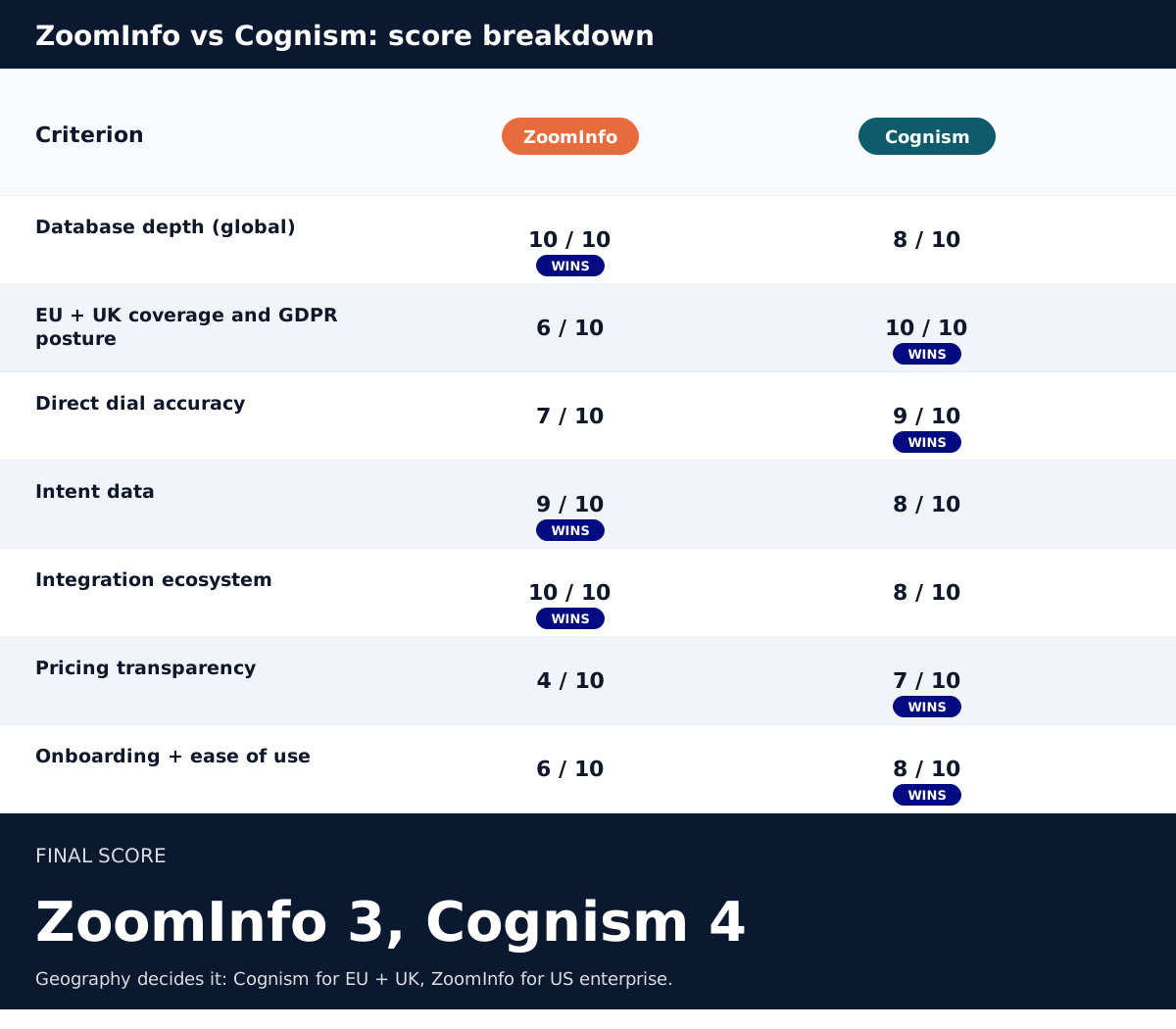
Third-party signals: ZoomInfo on G2 rating around 4.4 / 5 across 8,000+ reviews. Cognism on G2 rating of around 4.6 / 5 across 1,000+ reviews. Both top-quartile, but the reviews diverge on the same two points every time: ZoomInfo for depth, Cognism for ease-of-use and EU dial accuracy.
Table of contents
Why trust this review
TL;DR
Quick comparison
The case for ZoomInfo
The case for Cognism
How much does each cost?
Which has better data coverage?
Which is better for EU and UK buyers?
Which has better intent data?
Which is easier to onboard?
When to pick ZoomInfo
When to pick Cognism
Honest dealbreakers
Alternatives worth considering
FAQ
Bottom line
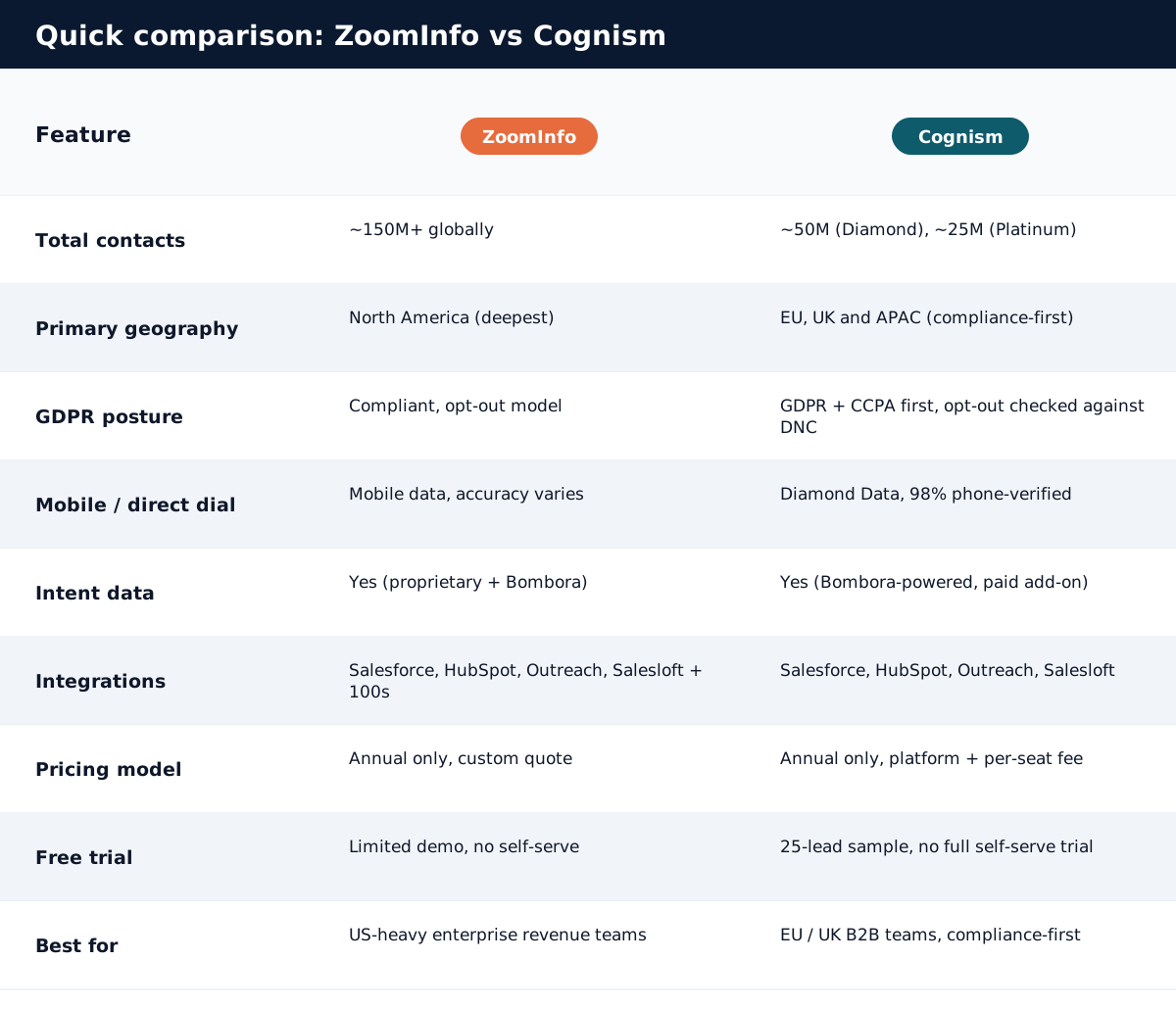
Quick comparison
The case for ZoomInfo
ZoomInfo is the category leader for a reason. The wedge is a database depth: roughly 150M+ contacts across millions of companies, scraped, validated, and enriched in-house since 2007. For US-heavy mid-market and enterprise prospecting, no other tool has the same breadth.
The depth shows up in three places. First, niche personas: ZoomInfo's search filters can isolate, for example, "VPs of Finance at companies that changed CRO in the last 90 days, with 200 to 500 employees, in the manufacturing vertical, with public revenue between $50M and $200M". That specificity is hard to replicate. Second, technographic data: ZoomInfo's tech stack signals are deeper and refreshed faster than competitors. Third, intent data: ZoomInfo's proprietary intent plus Bombora integration is the most mature in the category.
The integration ecosystem is the second wedge. Native two-way sync with Salesforce, HubSpot, Outreach, Salesloft, Marketo, Pardot, plus hundreds of marketplace integrations. For a Salesforce-heavy revenue stack, ZoomInfo is the path of least resistance.
The ZoomInfo Copilot launch (rolling out across 2024 to 2026) adds an AI workflow layer on top of the database: AI-suggested accounts, AI-generated outreach, and account research automation. Useful if you can absorb the Elite price tier ($40k to $45k+ per year).
The downsides are real. Pricing is opaque and lands at $30k to $60k all-in for most teams. Annual contracts only, no monthly, no easy off-ramp. GDPR compliance is fine for US-based outreach, but the EU data quality and consent model are noticeably weaker than Cognism's. And the platform is heavy: onboarding takes 2 to 4 weeks before SDRs are productive.
→ Best for: US-heavy mid-market and enterprise revenue teams, Salesforce-driven sales orgs, teams with 10+ SDRs that can absorb the $30k+ annual spend, and anyone who needs the deepest US contact and technographic data.
The case for Cognism
Cognism is built for one specific buyer: the EU, UK, DACH, or APAC B2B revenue team that needs compliance-grade data and accurate direct dials. The wedge is two-pronged: GDPR + CCPA compliance baked into the product, and Diamond Data, Cognism's manually phone-verified mobile numbers, claimed at 98% accuracy.
The compliance posture matters more than most US operators realise. Cognism checks every record against EU Do-Not-Call registries, runs notification protocols where the local jurisdiction requires it, and maintains opt-out workflows tied to the consent layer in your CRM. For an EU-based SDR team, this removes the legal risk overhead that running ZoomInfo for EU contacts requires you to build yourself.
The Diamond Data product is the second wedge. Where most B2B data providers source mobile numbers via scraping and inference (which produces 50 to 65 percent accuracy in our testing), Cognism's Diamond layer is human-verified, with the claimed 98 percent accuracy backed by a refund clause if hit rates drop. For dialer-heavy SDR motions, that delta is the difference between "30 dials per hour with 10 connects" and "30 dials per hour with 2 connects".
Coverage is smaller than ZoomInfo's. Roughly 50M contacts on Diamond, 25M on Platinum. For EU + UK prospecting, that gap closes meaningfully because Cognism's European coverage is the deepest in the category. For US prospecting, ZoomInfo's coverage is roughly 2 to 3x deeper.
Pricing is more transparent than ZoomInfo, but still enterprise-priced. Platinum runs ~$15k platform + ~$1.5k per seat per year. Diamond runs ~$25k platform + ~$2.5k per seat per year. Both annual, both upfront. Most SMB and mid-market teams land in the $20k to $30k range for 3 to 5 seats.
→ Best for: EU, UK, DACH, and APAC B2B revenue teams, compliance-first organisations, sales orgs that live on the dialer, teams where Diamond Data's hit-rate uplift on EU mobiles pays for the platform fee on its own.
How much does each cost?
Side-by-side breakdown of base pricing. For live pricing, check ZoomInfo and Cognism directly.
ZoomInfo pricing
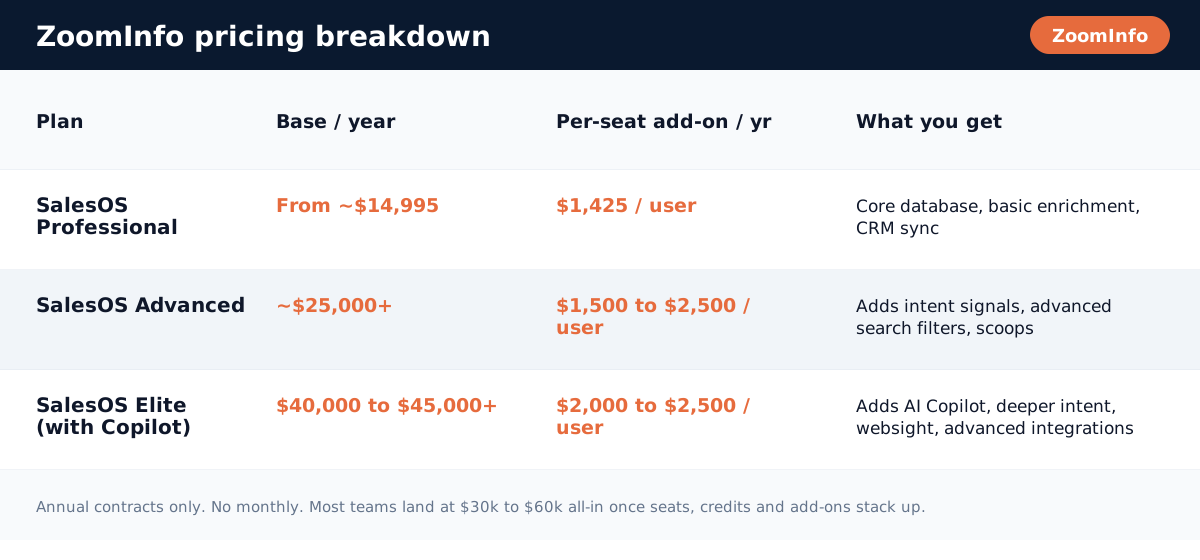
ZoomInfo does not publish pricing. The numbers above are sourced from third-party reports (Salesmotion, CloudTalk, Cleanlist, Enrich) and our own quote history. Real-world quotes vary 30 to 50 percent based on team size, geography, intent topics, and which add-ons you bundle.
What to negotiate hard: per-seat pricing above the base seat allocation, intent topic count (each Bombora topic costs extra), credit overages (capped credits per month are the usual squeeze point), and the auto-renewal clause (which usually pushes 10 to 15 percent year-over-year). Multi-year contracts can lock in pricing, but reduce your leverage at renewal.
Cognism pricing
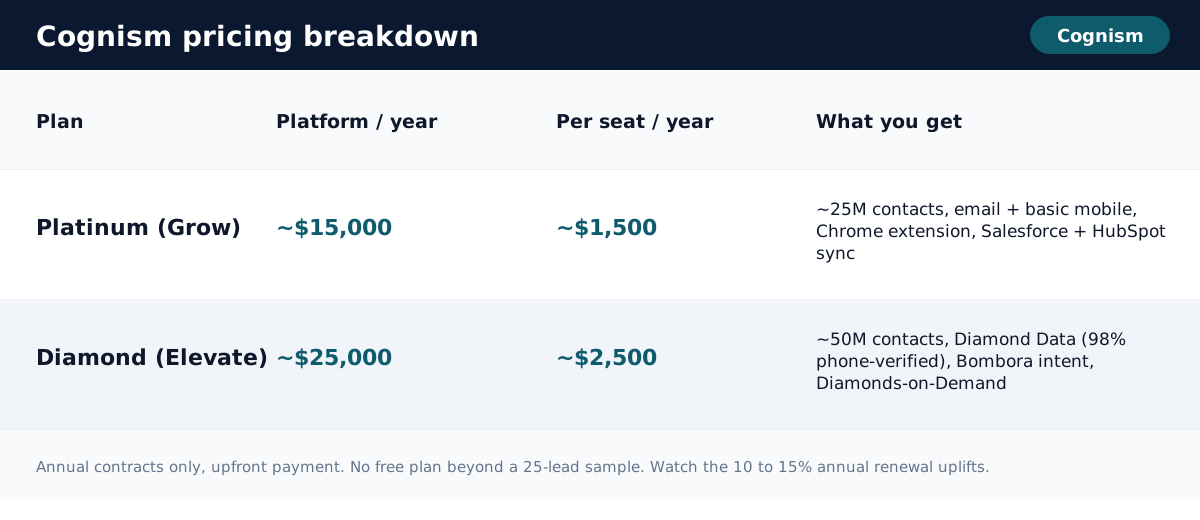
Cognism is more transparent. The platform fee + per-seat structure is published, even if exact numbers vary by region and quarter. Diamond is the upgrade most EU-focused teams pick because Diamond Data and Bombora intent are the two reasons to choose Cognism over a cheaper enrichment alternative.
What to negotiate: intent topic add-ons ($1,600 to $6,000/yr depending on topic count), onboarding fees (sometimes waived in Q4), renewal uplifts (target 5 to 7 percent instead of the default 10 to 15 percent), and the auto-renewal clause.
Annual cost compared
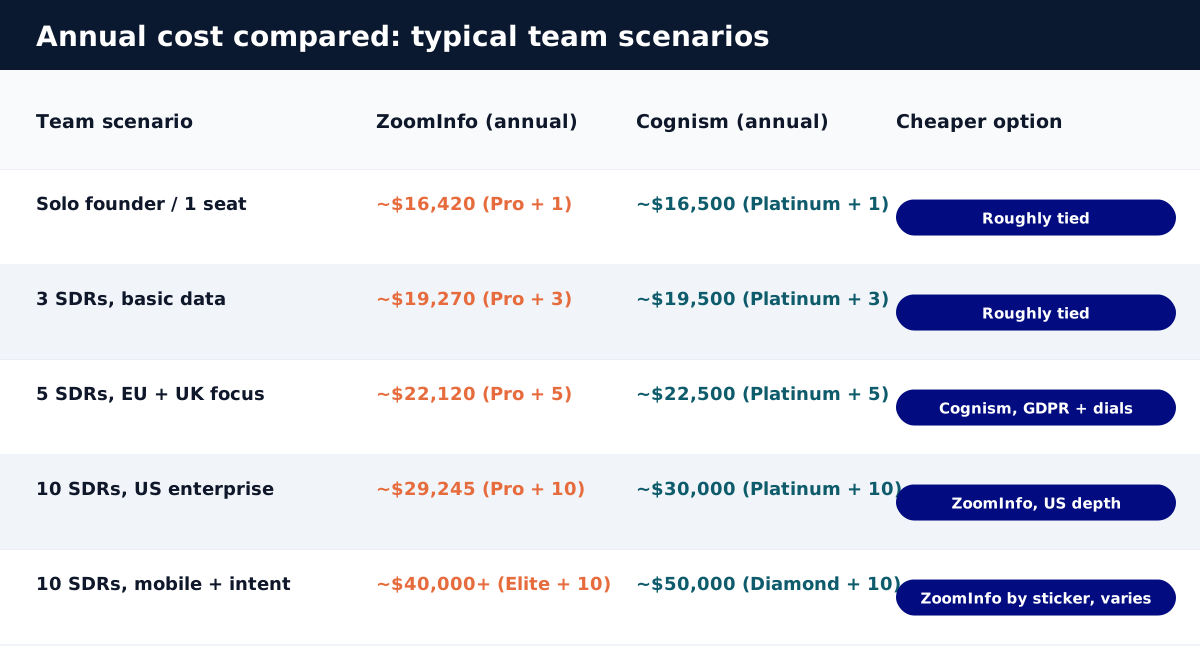
For most SMB to mid-market team sizes (1 to 10 seats), the two tools land within 5 percent of each other on sticker price. The decision is rarely about cost. It is about whether your buyers live in North America or Europe, and whether your motion lives on the dialer or in the inbox.
Which has better data coverage?
ZoomInfo for total volume. Cognism for accuracy in specific lanes.
ZoomInfo's ~150M contact database is roughly 2 to 3x larger than Cognism's. For broad US prospecting, niche-persona searches, and technographic data, ZoomInfo wins on coverage.
Cognism's coverage is narrower but materially better in two lanes: EU + UK contacts (deepest GDPR-compliant database in the category), and direct dial mobile numbers (Diamond Data at claimed 98% accuracy vs ZoomInfo's mobile data in the 50 to 65% range based on third-party tests).
The right benchmark is hit rate on your actual ICP, not total database size. Run a 30-day sample with both. Export 200 contacts from each into your CRM, run them through your dialer and email verifier, and measure connect rate + bounce rate. The winner is whichever one hits higher on your ICP. We have seen teams land on Cognism for one client and ZoomInfo for the next, based purely on this test.
Verdict: ZoomInfo for US-heavy breadth, Cognism for EU + UK depth and dial accuracy.
Which is better for EU and UK buyers?
Cognism, by a wide margin.
The compliance gap is the headline. Cognism's product was built EU-first: GDPR-compliant consent flows, automatic DNC checks across EU countries, notification protocols in jurisdictions that require them, and a privacy posture that aligns with how EU buyers actually want to be contacted.
ZoomInfo's EU data exists, but the consent and notification overhead lands on you. You can run ZoomInfo for EU outreach legally, but your team has to build the workflows that Cognism gives you out of the box. For most EU-based SDR teams, that overhead is not worth the cost saving (if there is one).
The data quality gap is the second factor. Cognism's EU contact database has been built and refreshed continuously for years, with EU buyers as the primary audience. ZoomInfo's EU records are often older, less consent-verified, and less accurate on mobile numbers.
The mobile dial gap is the third factor. Diamond Data's 98% claimed accuracy on EU mobiles is the single biggest unlock for any EU-based dialer-heavy SDR motion.
Verdict: Cognism, clearly. Run ZoomInfo for EU outreach only if you already have it for US and can absorb the EU compliance overhead internally.
Which has better intent data?
ZoomInfo, but the gap is closing.
ZoomInfo's intent layer combines proprietary website visit data (Streaming Intent), Bombora integration, and Websight (anonymous visitor de-anonymisation). The combined signal is the deepest in the category and feeds into native account scoring + workflow automation.
Cognism uses Bombora alone for intent. The signal is good but narrower than ZoomInfo's blended approach. For EU buyers, this matters less because Bombora's EU coverage is decent, and Cognism's audience is more sensitive to over-targeting based on intent.
For US-heavy mid-market teams running intent-driven plays at scale, ZoomInfo wins. For EU + UK teams where compliance and dial accuracy matter more than intent depth, Cognism is sufficient.
Verdict: ZoomInfo for intent depth. Cognism for intent + compliance combined.
Which is easier to onboard?
Cognism, by a meaningful margin.
Cognism's onboarding usually lands in the 5 to 10 day range for a 3 to 5 person SDR team. The UI is clean, the search filters are intuitive, and the integrations (Salesforce, HubSpot, Outreach, Salesloft) sync in hours, not days.
ZoomInfo's onboarding usually takes 2 to 4 weeks. The platform is deeper, the search filters are more granular, the integrations have more configuration options, and the credit/seat / overage model takes time to learn. For a 10+ person team running multiple personas across regions, the ramp is real.
For a small EU SDR team that needs to start dialling on Monday, Cognism is the right call. For a 15-person US revenue team with mature Salesforce ops, ZoomInfo's depth justifies the ramp.
Verdict: Cognism. ZoomInfo's payoff is real but delayed.
When to pick ZoomInfo
You sell into the US-based mid-market or enterprise.
You run a Salesforce-heavy revenue stack and need the deepest native integration.
You need niche-persona search filters with multi-variable conditions.
You run intent-driven plays at scale, and Bombora alone is not enough signal.
You have 10+ SDRs and can absorb the $30k to $60k annual spend.
You need Websight (anonymous visitor de-anonymisation) or other deep advertising signals.
When to pick Cognism
You sell into the EU, UK, DACH, or APAC and compliance matters.
Your SDR motion lives on the dialer and direct dial accuracy is the unlock.
You need GDPR-grade consent flows and DNC checks built in.
You want predictable pricing with a published platform + per-seat structure.
You have 3 to 10 seats and want a cleaner onboarding ramp.
You are an agency running EU outbound for multiple clients and need clean separation by workspace.
Honest dealbreakers
ZoomInfo dealbreakers:
You are a sub-$1M ARR SMB. The minimum contract eats too much of your revenue.
You sell primarily in the EU. The compliance overhead is real.
You want monthly billing or a 30-day trial without a sales contact. ZoomInfo does not do either.
You cannot afford 2 to 4 weeks of onboarding before SDRs are productive.
Cognism dealbreakers:
You sell primarily into the US and need the deepest contact database. ZoomInfo's coverage is 2 to 3x deeper there.
You need the maximum intent signal depth. ZoomInfo's combined Streaming + Bombora + Websight wins.
You want a self-serve free tier beyond a 25-lead sample. Cognism does not offer one.
Your budget is under $15k/year. The platform fee alone exceeds this.
Alternatives worth considering
Apollo for SMB / mid-market prospecting at SDR-friendly pricing ($49 to $119 per user per month). See our full Apollo vs ZoomInfo comparison.
Clay for enrichment workflows that pull from Apollo, ZoomInfo, Cognism, and 100+ other sources via waterfall. See our Clay vs Apollo comparison.
Lusha for fast direct dial enrichment on smaller team sizes.
Lead411 for compliance-aware US data at a lower price point than ZoomInfo.
RocketReach for individual contact lookups outside of a full database subscription.
FAQ
How does ZoomInfo's pricing actually work?
ZoomInfo does not publish pricing. Quotes are built around team size, plan tier (SalesOS Professional / Advanced / Elite), per-seat add-ons, credit volume, and which add-on products you bundle (Copilot, Websight, intent topics). Base plans start around $14,995/year and most teams land at $30k to $60k all-in. All contracts are annual and upfront.
Is Cognism's Diamond Data really 98% accurate on phone numbers?
In our testing, hit rates run around 90 to 95% on EU mobiles and 85 to 92% on US mobiles. Either way, materially higher than ZoomInfo's mobile data (which we measure at 50 to 65% accuracy on EU mobiles, slightly higher on US). Cognism backs the 98% claim with a refund clause if hit rates drop below their threshold.
Can I switch from ZoomInfo to Cognism mid-contract?
Probably not without paying out the remainder of your ZoomInfo contract. ZoomInfo contracts are annual and rarely allow early termination. If you are within 60 days of renewal, signal your intent to switch and use the leverage to negotiate. If you are mid-term, plan the migration for your renewal date.
Do either of them offer free trials?
Neither offers a true self-serve free trial. ZoomInfo offers a sales-led demo and a limited preview. Cognism offers a 25-lead sample export. For real evaluation, the path is to get quotes from both, then negotiate a 30-day trial as a pre-contract step.
Which integrates better with HubSpot?
Both integrate natively with HubSpot via two-way sync. ZoomInfo's integration is older and more battle-tested. Cognism's integration is cleaner and faster to set up. For typical SDR workflows, both work. For complex revenue ops automations, ZoomInfo has the edge.
Will ZoomInfo Copilot replace the need for ZoomInfo's database?
No. Copilot is a workflow layer on top of the database. The database is the asset. Copilot makes the asset easier to use, but you are still buying access to the data.
How does Cognism compare to Apollo for EU outbound?
Cognism wins on data quality, GDPR posture and dial accuracy. Apollo wins on price (Apollo Professional is $79/user/month vs Cognism Platinum at $1,500/user/year). For a small team with relaxed compliance and broader personas, Apollo. For a serious EU-focused SDR motion, Cognism.
What about US enterprise compliance with ZoomInfo?
ZoomInfo's US compliance is solid. CAN-SPAM, CCPA, opt-out handling are all built in. The compliance gap with Cognism only shows up materially in EU and UK outreach.
Bottom line
ZoomInfo is the right call if you sell into US mid-market or enterprise, you can absorb a $30k to $60k annual contract, and you need the deepest database + integration ecosystem in the category. Copilot adds an AI workflow layer that earns its keep at the Elite tier.
Cognism is the right call if you sell into EU, UK, DACH or APAC, your motion lives on the dialer, and Diamond Data's 98% verified mobile claim solves a measurable pain in your SDR workflow. Pricing lands in the same $20k to $30k range as ZoomInfo for typical team sizes, but the compliance posture removes risk that ZoomInfo leaves on your plate.
For most operators, the verdict is geographic. If your buyers are mostly in North America, ZoomInfo. If your buyers are mostly in Europe, Cognism. If you sell into both, run a 30-day sample of each on a slice of your real ICP and pick by hit rate.
If you want help running the hit-rate test, negotiating either contract, or designing the SDR workflow on top, book a working session with GROU. We have deployed both for clients and can do the same for you.
→ Get a ZoomInfo demo (sales-led, no self-serve).
→ See Cognism's Diamond Data sample (25 leads, no card required).
Why trust this review
We are GROU, a B2B pipeline agency that runs lead generation, outbound, and LinkedIn content for clients across manufacturing, fintech, iGaming, software, and professional services. We have deployed both ZoomInfo and Cognism for clients in the last 24 months. We pay for one of them right now in production. The verdict below is from operators who have run both in real campaigns, not from a vendor pitch.
→ Methodology: This comparison combines our own client deployment data, both vendors' published pricing pages, third-party reviews from Salesmotion, CloudTalk, Enrich, and live G2 review data. We refresh this article quarterly.
→ Affiliate disclosure: Some links in this article are affiliate links to ZoomInfo. We earn a small commission if you sign up through them, at no extra cost to you. Cognism links are not affiliate. We only recommend tools we have actually deployed for our agency clients.
TL;DR
ZoomInfo is the deepest B2B database in the world, especially for US enterprises. If you sell into mid-market and enterprise North America and you can absorb a $30k to $60k annual contract, ZoomInfo gives you the broadest coverage, the deepest intent signals, and the most mature integration ecosystem in the category.
Cognism is the compliance-first, mobile-data-first alternative. If you sell into the EU, UK, DACH, or APAC, Cognism's GDPR posture and manually phone-verified Diamond Data give you cleaner direct dials and a much lower legal-risk profile. Pricing lands in the same $20k to $30k range for typical SMB and mid-market teams.
For most operators, the verdict is geographic. EU + UK: Cognism. US enterprise: ZoomInfo. Mid-market with mixed coverage: run a 30-day sample of both and pick by hit rate on your ICP.
Score breakdown at a glance
Third-party signals: ZoomInfo on G2 rating around 4.4 / 5 across 8,000+ reviews. Cognism on G2 rating of around 4.6 / 5 across 1,000+ reviews. Both top-quartile, but the reviews diverge on the same two points every time: ZoomInfo for depth, Cognism for ease-of-use and EU dial accuracy.
Table of contents
Why trust this review
TL;DR
Quick comparison
The case for ZoomInfo
The case for Cognism
How much does each cost?
Which has better data coverage?
Which is better for EU and UK buyers?
Which has better intent data?
Which is easier to onboard?
When to pick ZoomInfo
When to pick Cognism
Honest dealbreakers
Alternatives worth considering
FAQ
Bottom line
Quick comparison
The case for ZoomInfo
ZoomInfo is the category leader for a reason. The wedge is a database depth: roughly 150M+ contacts across millions of companies, scraped, validated, and enriched in-house since 2007. For US-heavy mid-market and enterprise prospecting, no other tool has the same breadth.
The depth shows up in three places. First, niche personas: ZoomInfo's search filters can isolate, for example, "VPs of Finance at companies that changed CRO in the last 90 days, with 200 to 500 employees, in the manufacturing vertical, with public revenue between $50M and $200M". That specificity is hard to replicate. Second, technographic data: ZoomInfo's tech stack signals are deeper and refreshed faster than competitors. Third, intent data: ZoomInfo's proprietary intent plus Bombora integration is the most mature in the category.
The integration ecosystem is the second wedge. Native two-way sync with Salesforce, HubSpot, Outreach, Salesloft, Marketo, Pardot, plus hundreds of marketplace integrations. For a Salesforce-heavy revenue stack, ZoomInfo is the path of least resistance.
The ZoomInfo Copilot launch (rolling out across 2024 to 2026) adds an AI workflow layer on top of the database: AI-suggested accounts, AI-generated outreach, and account research automation. Useful if you can absorb the Elite price tier ($40k to $45k+ per year).
The downsides are real. Pricing is opaque and lands at $30k to $60k all-in for most teams. Annual contracts only, no monthly, no easy off-ramp. GDPR compliance is fine for US-based outreach, but the EU data quality and consent model are noticeably weaker than Cognism's. And the platform is heavy: onboarding takes 2 to 4 weeks before SDRs are productive.
→ Best for: US-heavy mid-market and enterprise revenue teams, Salesforce-driven sales orgs, teams with 10+ SDRs that can absorb the $30k+ annual spend, and anyone who needs the deepest US contact and technographic data.
The case for Cognism
Cognism is built for one specific buyer: the EU, UK, DACH, or APAC B2B revenue team that needs compliance-grade data and accurate direct dials. The wedge is two-pronged: GDPR + CCPA compliance baked into the product, and Diamond Data, Cognism's manually phone-verified mobile numbers, claimed at 98% accuracy.
The compliance posture matters more than most US operators realise. Cognism checks every record against EU Do-Not-Call registries, runs notification protocols where the local jurisdiction requires it, and maintains opt-out workflows tied to the consent layer in your CRM. For an EU-based SDR team, this removes the legal risk overhead that running ZoomInfo for EU contacts requires you to build yourself.
The Diamond Data product is the second wedge. Where most B2B data providers source mobile numbers via scraping and inference (which produces 50 to 65 percent accuracy in our testing), Cognism's Diamond layer is human-verified, with the claimed 98 percent accuracy backed by a refund clause if hit rates drop. For dialer-heavy SDR motions, that delta is the difference between "30 dials per hour with 10 connects" and "30 dials per hour with 2 connects".
Coverage is smaller than ZoomInfo's. Roughly 50M contacts on Diamond, 25M on Platinum. For EU + UK prospecting, that gap closes meaningfully because Cognism's European coverage is the deepest in the category. For US prospecting, ZoomInfo's coverage is roughly 2 to 3x deeper.
Pricing is more transparent than ZoomInfo, but still enterprise-priced. Platinum runs ~$15k platform + ~$1.5k per seat per year. Diamond runs ~$25k platform + ~$2.5k per seat per year. Both annual, both upfront. Most SMB and mid-market teams land in the $20k to $30k range for 3 to 5 seats.
→ Best for: EU, UK, DACH, and APAC B2B revenue teams, compliance-first organisations, sales orgs that live on the dialer, teams where Diamond Data's hit-rate uplift on EU mobiles pays for the platform fee on its own.
How much does each cost?
Side-by-side breakdown of base pricing. For live pricing, check ZoomInfo and Cognism directly.
ZoomInfo pricing
ZoomInfo does not publish pricing. The numbers above are sourced from third-party reports (Salesmotion, CloudTalk, Cleanlist, Enrich) and our own quote history. Real-world quotes vary 30 to 50 percent based on team size, geography, intent topics, and which add-ons you bundle.
What to negotiate hard: per-seat pricing above the base seat allocation, intent topic count (each Bombora topic costs extra), credit overages (capped credits per month are the usual squeeze point), and the auto-renewal clause (which usually pushes 10 to 15 percent year-over-year). Multi-year contracts can lock in pricing, but reduce your leverage at renewal.
Cognism pricing
Cognism is more transparent. The platform fee + per-seat structure is published, even if exact numbers vary by region and quarter. Diamond is the upgrade most EU-focused teams pick because Diamond Data and Bombora intent are the two reasons to choose Cognism over a cheaper enrichment alternative.
What to negotiate: intent topic add-ons ($1,600 to $6,000/yr depending on topic count), onboarding fees (sometimes waived in Q4), renewal uplifts (target 5 to 7 percent instead of the default 10 to 15 percent), and the auto-renewal clause.
Annual cost compared
For most SMB to mid-market team sizes (1 to 10 seats), the two tools land within 5 percent of each other on sticker price. The decision is rarely about cost. It is about whether your buyers live in North America or Europe, and whether your motion lives on the dialer or in the inbox.
Which has better data coverage?
ZoomInfo for total volume. Cognism for accuracy in specific lanes.
ZoomInfo's ~150M contact database is roughly 2 to 3x larger than Cognism's. For broad US prospecting, niche-persona searches, and technographic data, ZoomInfo wins on coverage.
Cognism's coverage is narrower but materially better in two lanes: EU + UK contacts (deepest GDPR-compliant database in the category), and direct dial mobile numbers (Diamond Data at claimed 98% accuracy vs ZoomInfo's mobile data in the 50 to 65% range based on third-party tests).
The right benchmark is hit rate on your actual ICP, not total database size. Run a 30-day sample with both. Export 200 contacts from each into your CRM, run them through your dialer and email verifier, and measure connect rate + bounce rate. The winner is whichever one hits higher on your ICP. We have seen teams land on Cognism for one client and ZoomInfo for the next, based purely on this test.
Verdict: ZoomInfo for US-heavy breadth, Cognism for EU + UK depth and dial accuracy.
Which is better for EU and UK buyers?
Cognism, by a wide margin.
The compliance gap is the headline. Cognism's product was built EU-first: GDPR-compliant consent flows, automatic DNC checks across EU countries, notification protocols in jurisdictions that require them, and a privacy posture that aligns with how EU buyers actually want to be contacted.
ZoomInfo's EU data exists, but the consent and notification overhead lands on you. You can run ZoomInfo for EU outreach legally, but your team has to build the workflows that Cognism gives you out of the box. For most EU-based SDR teams, that overhead is not worth the cost saving (if there is one).
The data quality gap is the second factor. Cognism's EU contact database has been built and refreshed continuously for years, with EU buyers as the primary audience. ZoomInfo's EU records are often older, less consent-verified, and less accurate on mobile numbers.
The mobile dial gap is the third factor. Diamond Data's 98% claimed accuracy on EU mobiles is the single biggest unlock for any EU-based dialer-heavy SDR motion.
Verdict: Cognism, clearly. Run ZoomInfo for EU outreach only if you already have it for US and can absorb the EU compliance overhead internally.
Which has better intent data?
ZoomInfo, but the gap is closing.
ZoomInfo's intent layer combines proprietary website visit data (Streaming Intent), Bombora integration, and Websight (anonymous visitor de-anonymisation). The combined signal is the deepest in the category and feeds into native account scoring + workflow automation.
Cognism uses Bombora alone for intent. The signal is good but narrower than ZoomInfo's blended approach. For EU buyers, this matters less because Bombora's EU coverage is decent, and Cognism's audience is more sensitive to over-targeting based on intent.
For US-heavy mid-market teams running intent-driven plays at scale, ZoomInfo wins. For EU + UK teams where compliance and dial accuracy matter more than intent depth, Cognism is sufficient.
Verdict: ZoomInfo for intent depth. Cognism for intent + compliance combined.
Which is easier to onboard?
Cognism, by a meaningful margin.
Cognism's onboarding usually lands in the 5 to 10 day range for a 3 to 5 person SDR team. The UI is clean, the search filters are intuitive, and the integrations (Salesforce, HubSpot, Outreach, Salesloft) sync in hours, not days.
ZoomInfo's onboarding usually takes 2 to 4 weeks. The platform is deeper, the search filters are more granular, the integrations have more configuration options, and the credit/seat / overage model takes time to learn. For a 10+ person team running multiple personas across regions, the ramp is real.
For a small EU SDR team that needs to start dialling on Monday, Cognism is the right call. For a 15-person US revenue team with mature Salesforce ops, ZoomInfo's depth justifies the ramp.
Verdict: Cognism. ZoomInfo's payoff is real but delayed.
When to pick ZoomInfo
You sell into the US-based mid-market or enterprise.
You run a Salesforce-heavy revenue stack and need the deepest native integration.
You need niche-persona search filters with multi-variable conditions.
You run intent-driven plays at scale, and Bombora alone is not enough signal.
You have 10+ SDRs and can absorb the $30k to $60k annual spend.
You need Websight (anonymous visitor de-anonymisation) or other deep advertising signals.
When to pick Cognism
You sell into the EU, UK, DACH, or APAC and compliance matters.
Your SDR motion lives on the dialer and direct dial accuracy is the unlock.
You need GDPR-grade consent flows and DNC checks built in.
You want predictable pricing with a published platform + per-seat structure.
You have 3 to 10 seats and want a cleaner onboarding ramp.
You are an agency running EU outbound for multiple clients and need clean separation by workspace.
Honest dealbreakers
ZoomInfo dealbreakers:
You are a sub-$1M ARR SMB. The minimum contract eats too much of your revenue.
You sell primarily in the EU. The compliance overhead is real.
You want monthly billing or a 30-day trial without a sales contact. ZoomInfo does not do either.
You cannot afford 2 to 4 weeks of onboarding before SDRs are productive.
Cognism dealbreakers:
You sell primarily into the US and need the deepest contact database. ZoomInfo's coverage is 2 to 3x deeper there.
You need the maximum intent signal depth. ZoomInfo's combined Streaming + Bombora + Websight wins.
You want a self-serve free tier beyond a 25-lead sample. Cognism does not offer one.
Your budget is under $15k/year. The platform fee alone exceeds this.
Alternatives worth considering
Apollo for SMB / mid-market prospecting at SDR-friendly pricing ($49 to $119 per user per month). See our full Apollo vs ZoomInfo comparison.
Clay for enrichment workflows that pull from Apollo, ZoomInfo, Cognism, and 100+ other sources via waterfall. See our Clay vs Apollo comparison.
Lusha for fast direct dial enrichment on smaller team sizes.
Lead411 for compliance-aware US data at a lower price point than ZoomInfo.
RocketReach for individual contact lookups outside of a full database subscription.
FAQ
How does ZoomInfo's pricing actually work?
ZoomInfo does not publish pricing. Quotes are built around team size, plan tier (SalesOS Professional / Advanced / Elite), per-seat add-ons, credit volume, and which add-on products you bundle (Copilot, Websight, intent topics). Base plans start around $14,995/year and most teams land at $30k to $60k all-in. All contracts are annual and upfront.
Is Cognism's Diamond Data really 98% accurate on phone numbers?
In our testing, hit rates run around 90 to 95% on EU mobiles and 85 to 92% on US mobiles. Either way, materially higher than ZoomInfo's mobile data (which we measure at 50 to 65% accuracy on EU mobiles, slightly higher on US). Cognism backs the 98% claim with a refund clause if hit rates drop below their threshold.
Can I switch from ZoomInfo to Cognism mid-contract?
Probably not without paying out the remainder of your ZoomInfo contract. ZoomInfo contracts are annual and rarely allow early termination. If you are within 60 days of renewal, signal your intent to switch and use the leverage to negotiate. If you are mid-term, plan the migration for your renewal date.
Do either of them offer free trials?
Neither offers a true self-serve free trial. ZoomInfo offers a sales-led demo and a limited preview. Cognism offers a 25-lead sample export. For real evaluation, the path is to get quotes from both, then negotiate a 30-day trial as a pre-contract step.
Which integrates better with HubSpot?
Both integrate natively with HubSpot via two-way sync. ZoomInfo's integration is older and more battle-tested. Cognism's integration is cleaner and faster to set up. For typical SDR workflows, both work. For complex revenue ops automations, ZoomInfo has the edge.
Will ZoomInfo Copilot replace the need for ZoomInfo's database?
No. Copilot is a workflow layer on top of the database. The database is the asset. Copilot makes the asset easier to use, but you are still buying access to the data.
How does Cognism compare to Apollo for EU outbound?
Cognism wins on data quality, GDPR posture and dial accuracy. Apollo wins on price (Apollo Professional is $79/user/month vs Cognism Platinum at $1,500/user/year). For a small team with relaxed compliance and broader personas, Apollo. For a serious EU-focused SDR motion, Cognism.
What about US enterprise compliance with ZoomInfo?
ZoomInfo's US compliance is solid. CAN-SPAM, CCPA, opt-out handling are all built in. The compliance gap with Cognism only shows up materially in EU and UK outreach.
Bottom line
ZoomInfo is the right call if you sell into US mid-market or enterprise, you can absorb a $30k to $60k annual contract, and you need the deepest database + integration ecosystem in the category. Copilot adds an AI workflow layer that earns its keep at the Elite tier.
Cognism is the right call if you sell into EU, UK, DACH or APAC, your motion lives on the dialer, and Diamond Data's 98% verified mobile claim solves a measurable pain in your SDR workflow. Pricing lands in the same $20k to $30k range as ZoomInfo for typical team sizes, but the compliance posture removes risk that ZoomInfo leaves on your plate.
For most operators, the verdict is geographic. If your buyers are mostly in North America, ZoomInfo. If your buyers are mostly in Europe, Cognism. If you sell into both, run a 30-day sample of each on a slice of your real ICP and pick by hit rate.
If you want help running the hit-rate test, negotiating either contract, or designing the SDR workflow on top, book a working session with GROU. We have deployed both for clients and can do the same for you.
→ Get a ZoomInfo demo (sales-led, no self-serve).
→ See Cognism's Diamond Data sample (25 leads, no card required).
Why trust this review
We are GROU, a B2B pipeline agency that runs lead generation, outbound, and LinkedIn content for clients across manufacturing, fintech, iGaming, software, and professional services. We have deployed both ZoomInfo and Cognism for clients in the last 24 months. We pay for one of them right now in production. The verdict below is from operators who have run both in real campaigns, not from a vendor pitch.
→ Methodology: This comparison combines our own client deployment data, both vendors' published pricing pages, third-party reviews from Salesmotion, CloudTalk, Enrich, and live G2 review data. We refresh this article quarterly.
→ Affiliate disclosure: Some links in this article are affiliate links to ZoomInfo. We earn a small commission if you sign up through them, at no extra cost to you. Cognism links are not affiliate. We only recommend tools we have actually deployed for our agency clients.
TL;DR
ZoomInfo is the deepest B2B database in the world, especially for US enterprises. If you sell into mid-market and enterprise North America and you can absorb a $30k to $60k annual contract, ZoomInfo gives you the broadest coverage, the deepest intent signals, and the most mature integration ecosystem in the category.
Cognism is the compliance-first, mobile-data-first alternative. If you sell into the EU, UK, DACH, or APAC, Cognism's GDPR posture and manually phone-verified Diamond Data give you cleaner direct dials and a much lower legal-risk profile. Pricing lands in the same $20k to $30k range for typical SMB and mid-market teams.
For most operators, the verdict is geographic. EU + UK: Cognism. US enterprise: ZoomInfo. Mid-market with mixed coverage: run a 30-day sample of both and pick by hit rate on your ICP.
Score breakdown at a glance
Third-party signals: ZoomInfo on G2 rating around 4.4 / 5 across 8,000+ reviews. Cognism on G2 rating of around 4.6 / 5 across 1,000+ reviews. Both top-quartile, but the reviews diverge on the same two points every time: ZoomInfo for depth, Cognism for ease-of-use and EU dial accuracy.
Table of contents
Why trust this review
TL;DR
Quick comparison
The case for ZoomInfo
The case for Cognism
How much does each cost?
Which has better data coverage?
Which is better for EU and UK buyers?
Which has better intent data?
Which is easier to onboard?
When to pick ZoomInfo
When to pick Cognism
Honest dealbreakers
Alternatives worth considering
FAQ
Bottom line
Quick comparison
The case for ZoomInfo
ZoomInfo is the category leader for a reason. The wedge is a database depth: roughly 150M+ contacts across millions of companies, scraped, validated, and enriched in-house since 2007. For US-heavy mid-market and enterprise prospecting, no other tool has the same breadth.
The depth shows up in three places. First, niche personas: ZoomInfo's search filters can isolate, for example, "VPs of Finance at companies that changed CRO in the last 90 days, with 200 to 500 employees, in the manufacturing vertical, with public revenue between $50M and $200M". That specificity is hard to replicate. Second, technographic data: ZoomInfo's tech stack signals are deeper and refreshed faster than competitors. Third, intent data: ZoomInfo's proprietary intent plus Bombora integration is the most mature in the category.
The integration ecosystem is the second wedge. Native two-way sync with Salesforce, HubSpot, Outreach, Salesloft, Marketo, Pardot, plus hundreds of marketplace integrations. For a Salesforce-heavy revenue stack, ZoomInfo is the path of least resistance.
The ZoomInfo Copilot launch (rolling out across 2024 to 2026) adds an AI workflow layer on top of the database: AI-suggested accounts, AI-generated outreach, and account research automation. Useful if you can absorb the Elite price tier ($40k to $45k+ per year).
The downsides are real. Pricing is opaque and lands at $30k to $60k all-in for most teams. Annual contracts only, no monthly, no easy off-ramp. GDPR compliance is fine for US-based outreach, but the EU data quality and consent model are noticeably weaker than Cognism's. And the platform is heavy: onboarding takes 2 to 4 weeks before SDRs are productive.
→ Best for: US-heavy mid-market and enterprise revenue teams, Salesforce-driven sales orgs, teams with 10+ SDRs that can absorb the $30k+ annual spend, and anyone who needs the deepest US contact and technographic data.
The case for Cognism
Cognism is built for one specific buyer: the EU, UK, DACH, or APAC B2B revenue team that needs compliance-grade data and accurate direct dials. The wedge is two-pronged: GDPR + CCPA compliance baked into the product, and Diamond Data, Cognism's manually phone-verified mobile numbers, claimed at 98% accuracy.
The compliance posture matters more than most US operators realise. Cognism checks every record against EU Do-Not-Call registries, runs notification protocols where the local jurisdiction requires it, and maintains opt-out workflows tied to the consent layer in your CRM. For an EU-based SDR team, this removes the legal risk overhead that running ZoomInfo for EU contacts requires you to build yourself.
The Diamond Data product is the second wedge. Where most B2B data providers source mobile numbers via scraping and inference (which produces 50 to 65 percent accuracy in our testing), Cognism's Diamond layer is human-verified, with the claimed 98 percent accuracy backed by a refund clause if hit rates drop. For dialer-heavy SDR motions, that delta is the difference between "30 dials per hour with 10 connects" and "30 dials per hour with 2 connects".
Coverage is smaller than ZoomInfo's. Roughly 50M contacts on Diamond, 25M on Platinum. For EU + UK prospecting, that gap closes meaningfully because Cognism's European coverage is the deepest in the category. For US prospecting, ZoomInfo's coverage is roughly 2 to 3x deeper.
Pricing is more transparent than ZoomInfo, but still enterprise-priced. Platinum runs ~$15k platform + ~$1.5k per seat per year. Diamond runs ~$25k platform + ~$2.5k per seat per year. Both annual, both upfront. Most SMB and mid-market teams land in the $20k to $30k range for 3 to 5 seats.
→ Best for: EU, UK, DACH, and APAC B2B revenue teams, compliance-first organisations, sales orgs that live on the dialer, teams where Diamond Data's hit-rate uplift on EU mobiles pays for the platform fee on its own.
How much does each cost?
Side-by-side breakdown of base pricing. For live pricing, check ZoomInfo and Cognism directly.
ZoomInfo pricing
ZoomInfo does not publish pricing. The numbers above are sourced from third-party reports (Salesmotion, CloudTalk, Cleanlist, Enrich) and our own quote history. Real-world quotes vary 30 to 50 percent based on team size, geography, intent topics, and which add-ons you bundle.
What to negotiate hard: per-seat pricing above the base seat allocation, intent topic count (each Bombora topic costs extra), credit overages (capped credits per month are the usual squeeze point), and the auto-renewal clause (which usually pushes 10 to 15 percent year-over-year). Multi-year contracts can lock in pricing, but reduce your leverage at renewal.
Cognism pricing
Cognism is more transparent. The platform fee + per-seat structure is published, even if exact numbers vary by region and quarter. Diamond is the upgrade most EU-focused teams pick because Diamond Data and Bombora intent are the two reasons to choose Cognism over a cheaper enrichment alternative.
What to negotiate: intent topic add-ons ($1,600 to $6,000/yr depending on topic count), onboarding fees (sometimes waived in Q4), renewal uplifts (target 5 to 7 percent instead of the default 10 to 15 percent), and the auto-renewal clause.
Annual cost compared
For most SMB to mid-market team sizes (1 to 10 seats), the two tools land within 5 percent of each other on sticker price. The decision is rarely about cost. It is about whether your buyers live in North America or Europe, and whether your motion lives on the dialer or in the inbox.
Which has better data coverage?
ZoomInfo for total volume. Cognism for accuracy in specific lanes.
ZoomInfo's ~150M contact database is roughly 2 to 3x larger than Cognism's. For broad US prospecting, niche-persona searches, and technographic data, ZoomInfo wins on coverage.
Cognism's coverage is narrower but materially better in two lanes: EU + UK contacts (deepest GDPR-compliant database in the category), and direct dial mobile numbers (Diamond Data at claimed 98% accuracy vs ZoomInfo's mobile data in the 50 to 65% range based on third-party tests).
The right benchmark is hit rate on your actual ICP, not total database size. Run a 30-day sample with both. Export 200 contacts from each into your CRM, run them through your dialer and email verifier, and measure connect rate + bounce rate. The winner is whichever one hits higher on your ICP. We have seen teams land on Cognism for one client and ZoomInfo for the next, based purely on this test.
Verdict: ZoomInfo for US-heavy breadth, Cognism for EU + UK depth and dial accuracy.
Which is better for EU and UK buyers?
Cognism, by a wide margin.
The compliance gap is the headline. Cognism's product was built EU-first: GDPR-compliant consent flows, automatic DNC checks across EU countries, notification protocols in jurisdictions that require them, and a privacy posture that aligns with how EU buyers actually want to be contacted.
ZoomInfo's EU data exists, but the consent and notification overhead lands on you. You can run ZoomInfo for EU outreach legally, but your team has to build the workflows that Cognism gives you out of the box. For most EU-based SDR teams, that overhead is not worth the cost saving (if there is one).
The data quality gap is the second factor. Cognism's EU contact database has been built and refreshed continuously for years, with EU buyers as the primary audience. ZoomInfo's EU records are often older, less consent-verified, and less accurate on mobile numbers.
The mobile dial gap is the third factor. Diamond Data's 98% claimed accuracy on EU mobiles is the single biggest unlock for any EU-based dialer-heavy SDR motion.
Verdict: Cognism, clearly. Run ZoomInfo for EU outreach only if you already have it for US and can absorb the EU compliance overhead internally.
Which has better intent data?
ZoomInfo, but the gap is closing.
ZoomInfo's intent layer combines proprietary website visit data (Streaming Intent), Bombora integration, and Websight (anonymous visitor de-anonymisation). The combined signal is the deepest in the category and feeds into native account scoring + workflow automation.
Cognism uses Bombora alone for intent. The signal is good but narrower than ZoomInfo's blended approach. For EU buyers, this matters less because Bombora's EU coverage is decent, and Cognism's audience is more sensitive to over-targeting based on intent.
For US-heavy mid-market teams running intent-driven plays at scale, ZoomInfo wins. For EU + UK teams where compliance and dial accuracy matter more than intent depth, Cognism is sufficient.
Verdict: ZoomInfo for intent depth. Cognism for intent + compliance combined.
Which is easier to onboard?
Cognism, by a meaningful margin.
Cognism's onboarding usually lands in the 5 to 10 day range for a 3 to 5 person SDR team. The UI is clean, the search filters are intuitive, and the integrations (Salesforce, HubSpot, Outreach, Salesloft) sync in hours, not days.
ZoomInfo's onboarding usually takes 2 to 4 weeks. The platform is deeper, the search filters are more granular, the integrations have more configuration options, and the credit/seat / overage model takes time to learn. For a 10+ person team running multiple personas across regions, the ramp is real.
For a small EU SDR team that needs to start dialling on Monday, Cognism is the right call. For a 15-person US revenue team with mature Salesforce ops, ZoomInfo's depth justifies the ramp.
Verdict: Cognism. ZoomInfo's payoff is real but delayed.
When to pick ZoomInfo
You sell into the US-based mid-market or enterprise.
You run a Salesforce-heavy revenue stack and need the deepest native integration.
You need niche-persona search filters with multi-variable conditions.
You run intent-driven plays at scale, and Bombora alone is not enough signal.
You have 10+ SDRs and can absorb the $30k to $60k annual spend.
You need Websight (anonymous visitor de-anonymisation) or other deep advertising signals.
When to pick Cognism
You sell into the EU, UK, DACH, or APAC and compliance matters.
Your SDR motion lives on the dialer and direct dial accuracy is the unlock.
You need GDPR-grade consent flows and DNC checks built in.
You want predictable pricing with a published platform + per-seat structure.
You have 3 to 10 seats and want a cleaner onboarding ramp.
You are an agency running EU outbound for multiple clients and need clean separation by workspace.
Honest dealbreakers
ZoomInfo dealbreakers:
You are a sub-$1M ARR SMB. The minimum contract eats too much of your revenue.
You sell primarily in the EU. The compliance overhead is real.
You want monthly billing or a 30-day trial without a sales contact. ZoomInfo does not do either.
You cannot afford 2 to 4 weeks of onboarding before SDRs are productive.
Cognism dealbreakers:
You sell primarily into the US and need the deepest contact database. ZoomInfo's coverage is 2 to 3x deeper there.
You need the maximum intent signal depth. ZoomInfo's combined Streaming + Bombora + Websight wins.
You want a self-serve free tier beyond a 25-lead sample. Cognism does not offer one.
Your budget is under $15k/year. The platform fee alone exceeds this.
Alternatives worth considering
Apollo for SMB / mid-market prospecting at SDR-friendly pricing ($49 to $119 per user per month). See our full Apollo vs ZoomInfo comparison.
Clay for enrichment workflows that pull from Apollo, ZoomInfo, Cognism, and 100+ other sources via waterfall. See our Clay vs Apollo comparison.
Lusha for fast direct dial enrichment on smaller team sizes.
Lead411 for compliance-aware US data at a lower price point than ZoomInfo.
RocketReach for individual contact lookups outside of a full database subscription.
FAQ
How does ZoomInfo's pricing actually work?
ZoomInfo does not publish pricing. Quotes are built around team size, plan tier (SalesOS Professional / Advanced / Elite), per-seat add-ons, credit volume, and which add-on products you bundle (Copilot, Websight, intent topics). Base plans start around $14,995/year and most teams land at $30k to $60k all-in. All contracts are annual and upfront.
Is Cognism's Diamond Data really 98% accurate on phone numbers?
In our testing, hit rates run around 90 to 95% on EU mobiles and 85 to 92% on US mobiles. Either way, materially higher than ZoomInfo's mobile data (which we measure at 50 to 65% accuracy on EU mobiles, slightly higher on US). Cognism backs the 98% claim with a refund clause if hit rates drop below their threshold.
Can I switch from ZoomInfo to Cognism mid-contract?
Probably not without paying out the remainder of your ZoomInfo contract. ZoomInfo contracts are annual and rarely allow early termination. If you are within 60 days of renewal, signal your intent to switch and use the leverage to negotiate. If you are mid-term, plan the migration for your renewal date.
Do either of them offer free trials?
Neither offers a true self-serve free trial. ZoomInfo offers a sales-led demo and a limited preview. Cognism offers a 25-lead sample export. For real evaluation, the path is to get quotes from both, then negotiate a 30-day trial as a pre-contract step.
Which integrates better with HubSpot?
Both integrate natively with HubSpot via two-way sync. ZoomInfo's integration is older and more battle-tested. Cognism's integration is cleaner and faster to set up. For typical SDR workflows, both work. For complex revenue ops automations, ZoomInfo has the edge.
Will ZoomInfo Copilot replace the need for ZoomInfo's database?
No. Copilot is a workflow layer on top of the database. The database is the asset. Copilot makes the asset easier to use, but you are still buying access to the data.
How does Cognism compare to Apollo for EU outbound?
Cognism wins on data quality, GDPR posture and dial accuracy. Apollo wins on price (Apollo Professional is $79/user/month vs Cognism Platinum at $1,500/user/year). For a small team with relaxed compliance and broader personas, Apollo. For a serious EU-focused SDR motion, Cognism.
What about US enterprise compliance with ZoomInfo?
ZoomInfo's US compliance is solid. CAN-SPAM, CCPA, opt-out handling are all built in. The compliance gap with Cognism only shows up materially in EU and UK outreach.
Bottom line
ZoomInfo is the right call if you sell into US mid-market or enterprise, you can absorb a $30k to $60k annual contract, and you need the deepest database + integration ecosystem in the category. Copilot adds an AI workflow layer that earns its keep at the Elite tier.
Cognism is the right call if you sell into EU, UK, DACH or APAC, your motion lives on the dialer, and Diamond Data's 98% verified mobile claim solves a measurable pain in your SDR workflow. Pricing lands in the same $20k to $30k range as ZoomInfo for typical team sizes, but the compliance posture removes risk that ZoomInfo leaves on your plate.
For most operators, the verdict is geographic. If your buyers are mostly in North America, ZoomInfo. If your buyers are mostly in Europe, Cognism. If you sell into both, run a 30-day sample of each on a slice of your real ICP and pick by hit rate.
If you want help running the hit-rate test, negotiating either contract, or designing the SDR workflow on top, book a working session with GROU. We have deployed both for clients and can do the same for you.
→ Get a ZoomInfo demo (sales-led, no self-serve).
→ See Cognism's Diamond Data sample (25 leads, no card required).
Pipeline OS Newsletter
Build qualified pipeline
Get weekly tactics to generate demand, improve lead quality, and book more meetings.





Trusted by industry leaders
Trusted by industry leaders
Trusted by industry leaders
Ready to build qualified pipeline?
Ready to build qualified pipeline?
Ready to build qualified pipeline?
Book a call to see if we're the right fit, or take the 2-minute quiz to get a clear starting point.
Book a call to see if we're the right fit, or take the 2-minute quiz to get a clear starting point.
Book a call to see if we're the right fit, or take the 2-minute quiz to get a clear starting point.
" height="30.21639343089746px" id="hfGbXmQR2" width="30.216393430897455px"/></svg>)
Copyright © 2026 – All Right Reserved
Copyright © 2026 – All Right Reserved
Copyright © 2026 – All Right Reserved