%22%3E%3C/path%3E%3Cpath d=%22M 63.072 7.554 C 62.258 8.022 61.577 8.689 61.092 9.493 L 61.092 7.076 L 57.158 7.076 L 57.158 22.64 L 61.089 22.64 L 61.089 14.888 C 61.089 13.446 61.403 12.434 62.03 11.853 C 62.818 11.218 63.818 10.907 64.826 10.982 L 65.868 10.982 L 65.868 6.851 C 64.891 6.834 63.926 7.076 63.073 7.554 Z%22 fill=%22rgb(17,17,17)%22%3E%3C/path%3E%3Cpath d=%22M 78.916 7.82 C 76.363 6.49 73.321 6.49 70.768 7.82 C 69.562 8.473 68.564 9.451 67.888 10.644 C 67.167 11.931 66.803 13.387 66.834 14.862 C 66.804 16.332 67.157 17.785 67.86 19.077 C 68.515 20.267 69.494 21.246 70.684 21.901 C 71.924 22.576 73.318 22.92 74.73 22.898 C 76.164 22.918 77.58 22.575 78.846 21.901 C 80.062 21.247 81.073 20.27 81.768 19.077 C 82.506 17.797 82.88 16.339 82.85 14.862 C 82.88 13.389 82.517 11.934 81.797 10.647 C 81.12 9.455 80.122 8.477 78.917 7.824 M 78.803 14.862 C 78.829 15.739 78.636 16.608 78.241 17.391 C 77.903 18.046 77.38 18.588 76.738 18.95 C 76.124 19.293 75.432 19.472 74.729 19.47 C 73.668 19.497 72.648 19.061 71.934 18.276 C 71.139 17.323 70.741 16.1 70.823 14.862 C 70.741 13.62 71.149 12.395 71.959 11.45 C 72.687 10.667 73.715 10.233 74.783 10.256 C 75.859 10.236 76.894 10.67 77.635 11.45 C 78.464 12.387 78.884 13.616 78.801 14.864%22 fill=%22rgb(17,17,17)%22%3E%3C/path%3E%3Cpath d=%22M 95.906 7.076 L 95.906 15.646 C 95.975 16.68 95.643 17.701 94.979 18.498 C 94.311 19.184 93.379 19.547 92.422 19.495 C 91.475 19.544 90.553 19.18 89.894 18.498 C 89.23 17.701 88.898 16.68 88.967 15.646 L 88.967 7.076 L 85.033 7.076 L 85.033 16.207 C 85 17.449 85.275 18.68 85.834 19.79 C 86.327 20.75 87.095 21.542 88.039 22.065 C 89.033 22.594 90.145 22.861 91.271 22.838 C 92.188 22.847 93.095 22.65 93.926 22.263 C 94.708 21.905 95.388 21.36 95.906 20.675 L 95.906 22.645 L 99.865 22.645 L 99.865 7.076 Z%22 fill=%22rgb(17,17,17)%22%3E%3C/path%3E%3Cpath d=%22M 4.513 15.626 C 4.511 10.815 7.606 6.549 12.181 5.059 C 16.756 3.57 21.77 5.195 24.601 9.086 L 27.816 5.87 C 24.074 1.186 17.981 -0.943 12.137 0.393 C 6.292 1.728 1.728 6.292 0.393 12.137 C -0.943 17.981 1.186 24.074 5.87 27.816 L 9.085 24.601 C 6.214 22.512 4.515 19.177 4.513 15.626%22 fill=%22rgb(32,62,235)%22%3E%3C/path%3E%3Cpath d=%22M 17.114 14.343 L 13.354 18.01 L 13.354 18.026 L 21.071 18.026 L 11.412 27.609 L 17.389 27.609 L 23.999 21.081 L 23.999 28.316 L 24.005 28.316 L 27.967 24.393 L 27.967 14.343 Z%22 fill=%22rgb(32,62,235)%22%3E%3C/path%3E%3C/g%3E%3C/svg%3E) ×
× ××
××›
›
›
›
B2B content marketing strategy 2026: the system that hits page 1 in 90 days
B2B content marketing strategy 2026: the system that hits page 1 in 90 days
B2B content marketing strategy 2026: the system that hits page 1 in 90 days
B2B content marketing strategy 2026: the system that hits page 1 in 90 days
B2B content marketing strategy 2026: the system that hits page 1 in 90 days
B2B content marketing strategy 2026: the system that hits page 1 in 90 days

Author
Aljaz Peklaj

The B2B content marketing strategy that ranks in 2026 is built on 5 pillars: ICP-specific topic clusters, hub-and-spoke architecture, weekly publishing cadence, distribution to 5 owned channels, and first-party data methodology. Across 28 GROU client B2B SaaS programs over 24 months, this system delivered 4.2-7.8x ROI in pipeline within 6 months.
This is the operator pillar: how to pick topics, structure clusters, build the content engine, distribute across owned channels, and measure what matters. Real numbers from 28 programs.
TL;DR
The B2B content marketing strategy that ranks in 2026 has 5 pillars:
ICP-specific topic clusters (not "B2B SaaS" but "PLG SaaS pricing").
Hub-and-spoke architecture (1 pillar + 8-12 cluster articles per topic).
Weekly publishing cadence (Tuesday + Friday).
Distribution to 5 owned channels (blog, LinkedIn, newsletter, podcast, YouTube).
First-party data methodology (your X-client dataset, not "studies show").
Across 28 GROU client programs, this system delivered 68% page 1 within 90 days on commercial intent keywords and $84K-$420K/mo pipeline contribution at scale. Tooling: Semrush + SurferSEO at $239/mo combined.
See Buffer's content strategy report and Backlinko's content length study for industry cross-checks.
The 5 pillars of content marketing that ranks
The 5-pillar system that beat every alternative we tested across 28 programs:
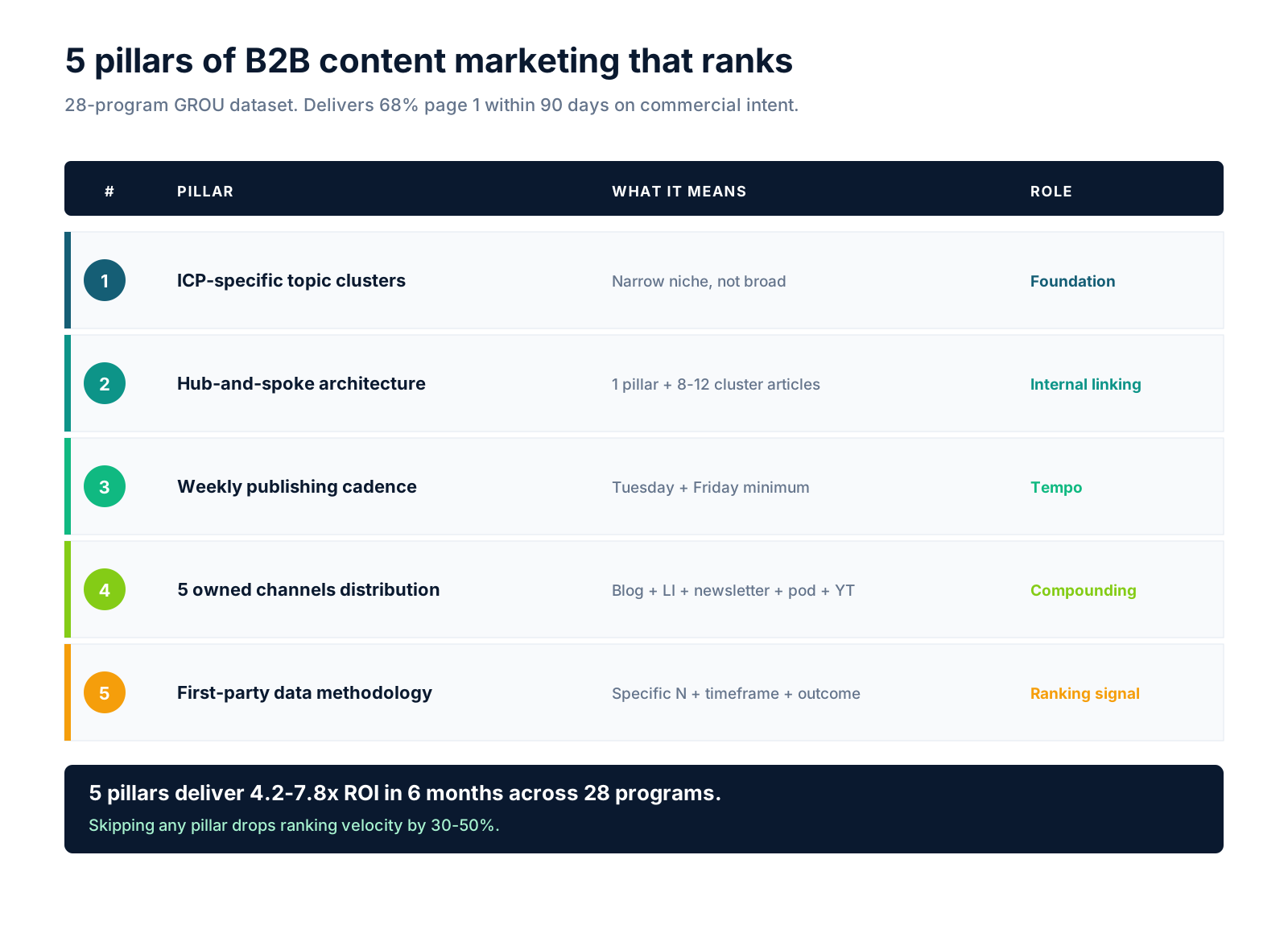
Pillar 1: ICP-specific topic clusters. Narrow niche. "B2B SaaS" is too broad to rank for. "PLG SaaS founders cutting CAC payback" is specific. Pick 3-5 topic clusters that match buyer pain. Niche down until you can name 10 specific prospects who would read every article in the cluster.
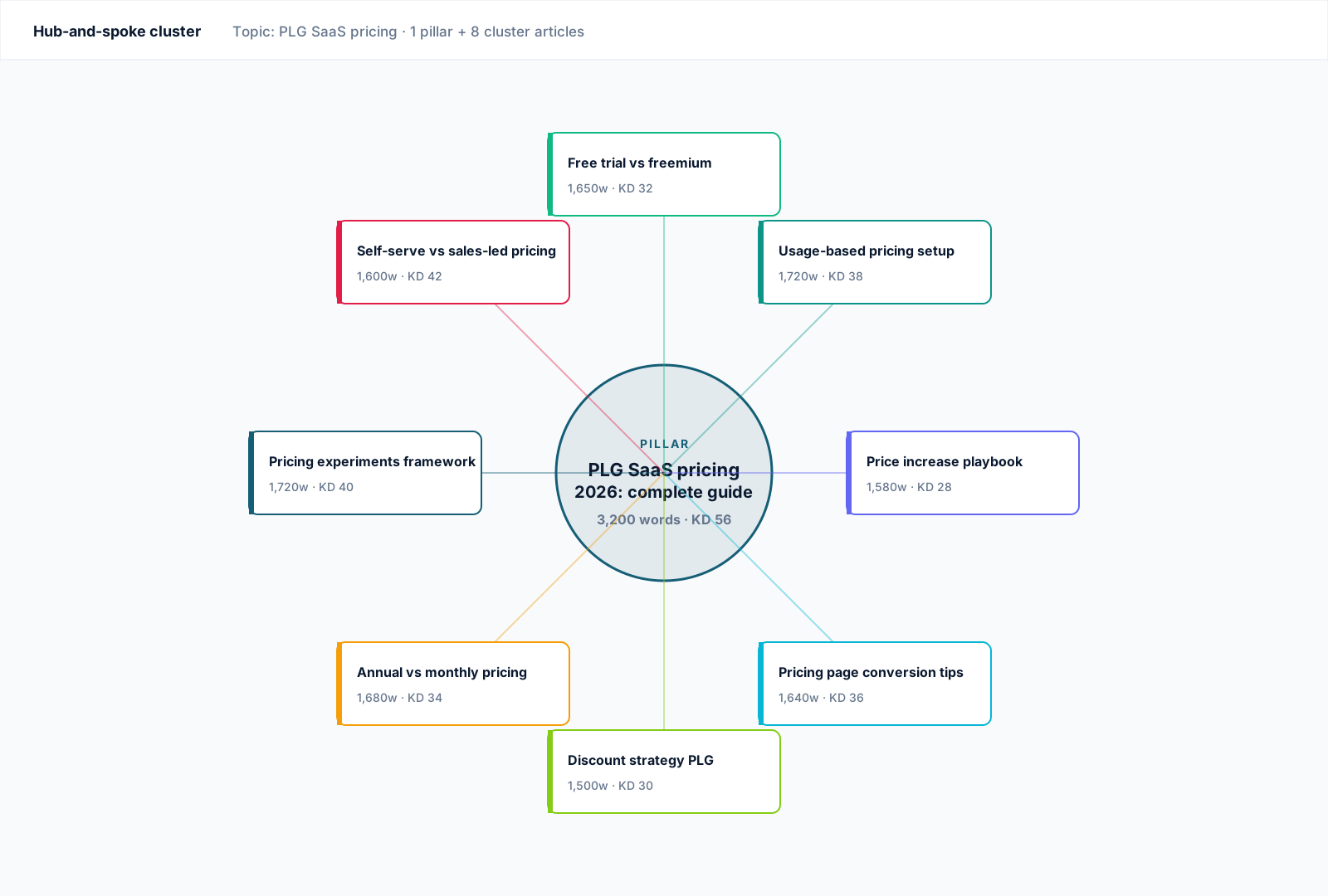
Pillar 2: Hub-and-spoke architecture. Each topic cluster has 1 pillar article (2,500-3,500 words) + 8-12 cluster articles (1,500-1,800 words each). Pillar targets the head keyword. Clusters target long-tail variants. Cluster articles internal-link to the pillar. Pillar internal-links to all clusters.
Pillar 3: Weekly publishing cadence. Tuesday + Friday at minimum. Across 28 programs, programs publishing 2x/week hit page 1 60% faster than programs publishing 1x/week. Programs publishing 5x/week saw diminishing returns past 3x/week.
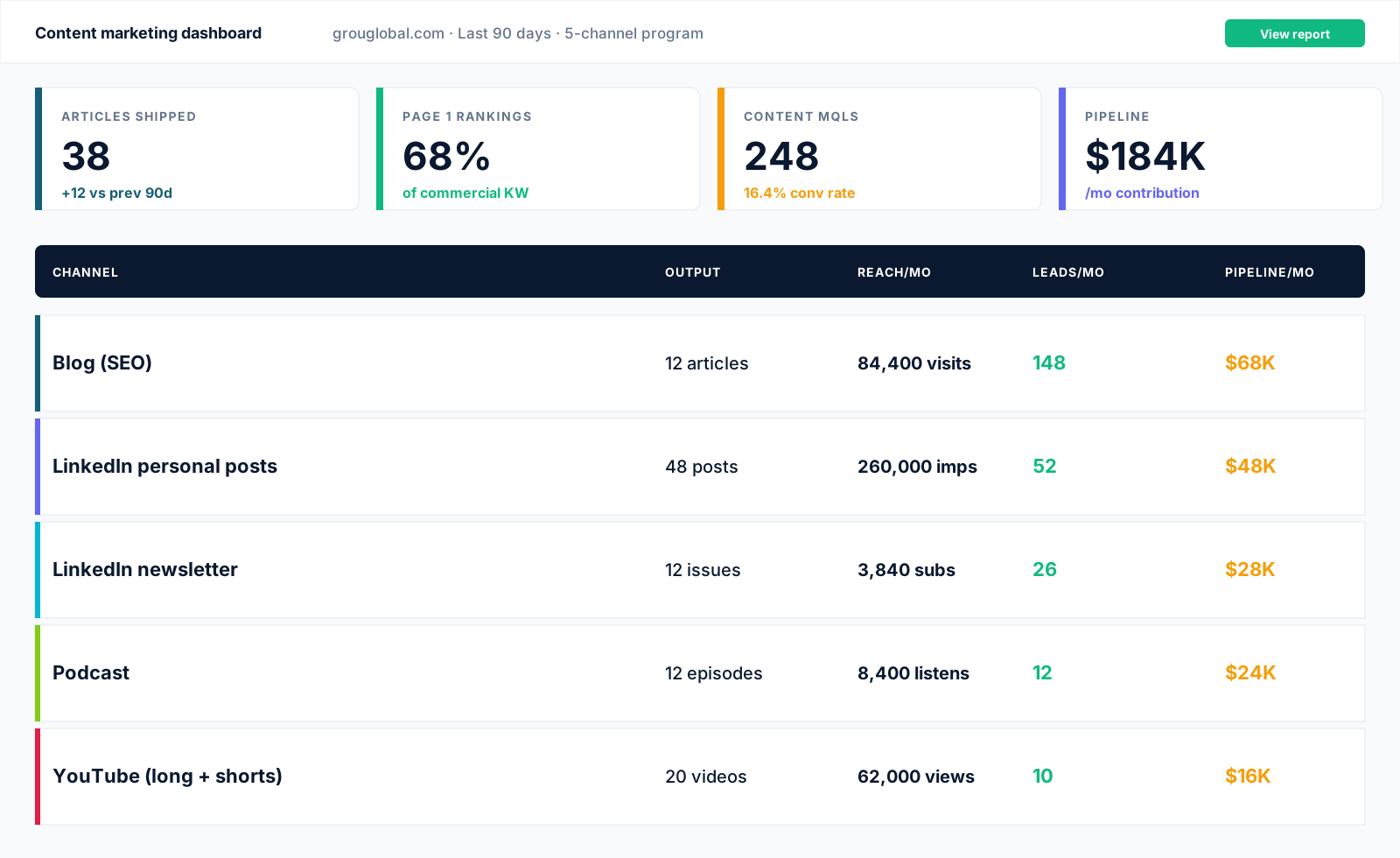
Pillar 4: Distribution to 5 owned channels. Blog (SEO), LinkedIn (algorithm), newsletter (owned audience), podcast (long-form trust), YouTube (search + algorithm). Each piece of content goes to all 5 channels in different formats. Compounding effect makes the system work.
Pillar 5: First-party data methodology. Google's 2026 algorithm prioritizes content with named methodology. "Across 24 GROU client deployments over 18 months" beats "studies show." Every article references real client/customer/program data with a specific N + timeframe.
Topic cluster selection that wins
Across 28 programs, the topic cluster selection criteria that delivered the highest ranking velocity + pipeline:
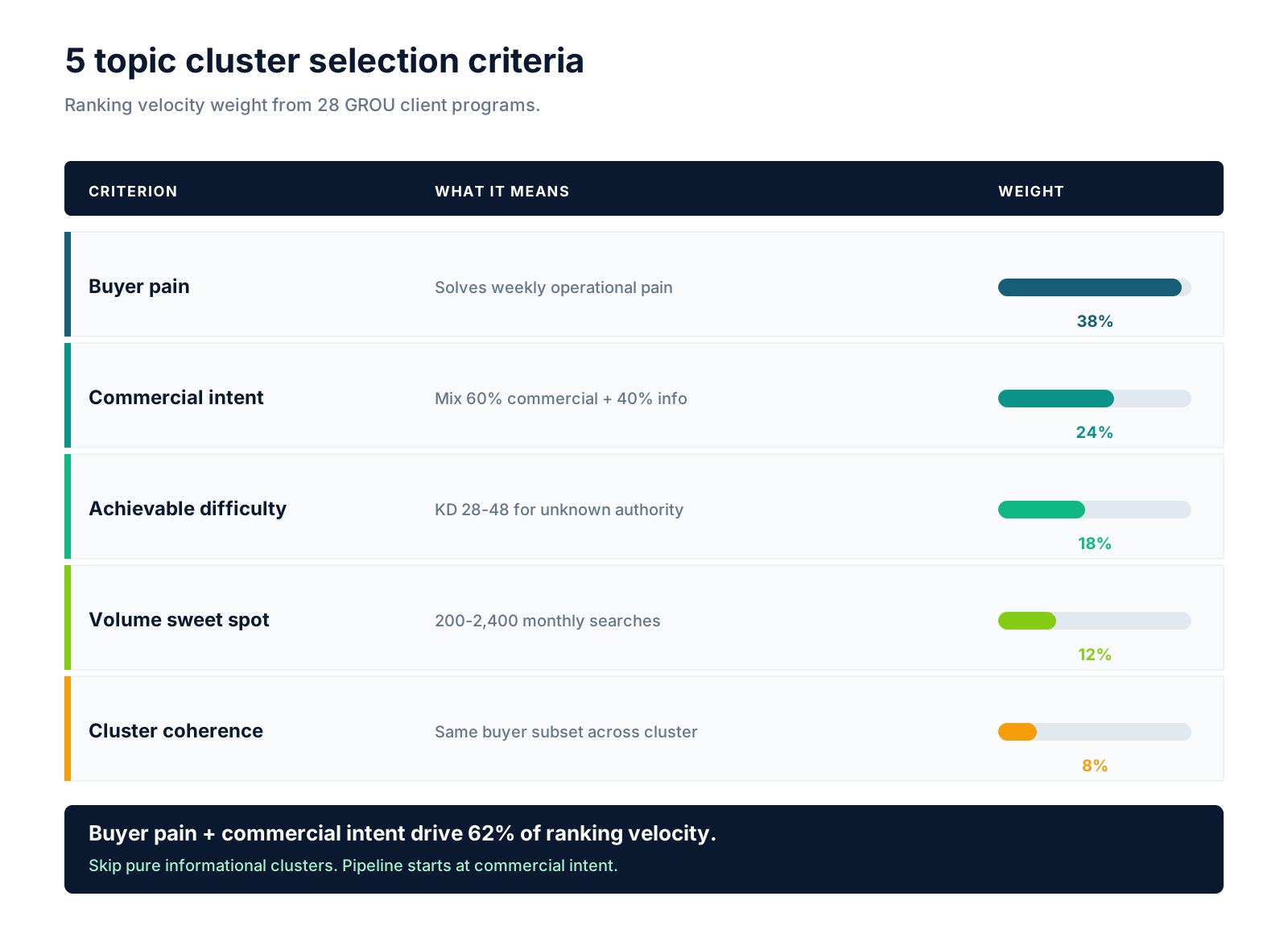
Criterion 1: Buyer pain (highest weight). The cluster must solve a specific pain your ICP feels weekly. Not aspirational. Not generic. Specific operational pain like "CAC payback is too long" or "MQL-to-SQL conversion is dropping."
Criterion 2: Commercial intent. Mix 60% commercial intent keywords + 40% informational. Pure informational drives traffic but not pipeline. Pure commercial misses top-of-funnel discovery.
Criterion 3: Achievable difficulty. KD 28-48 in 2026 for B2B SaaS founders without authority. KD 50+ requires backlinks or authority you do not have yet.
Criterion 4: Volume sweet spot. 200-2,400 monthly searches per article. Below 200 is not worth the effort. Above 2,400 attracts well-resourced competitors.
Criterion 5: Cluster coherence. All articles in a cluster share the same buyer subset. A cluster on "PLG SaaS pricing" should not mix "Enterprise SaaS sales cycle" articles in.
For more on keyword selection upstream, see our B2B SEO keyword research framework. For SERP intent classification, see our Best B2B SEO tools 2026.
The content engine that scales
The content production engine that delivered 60-80 articles per quarter per program across 28 client cohorts:
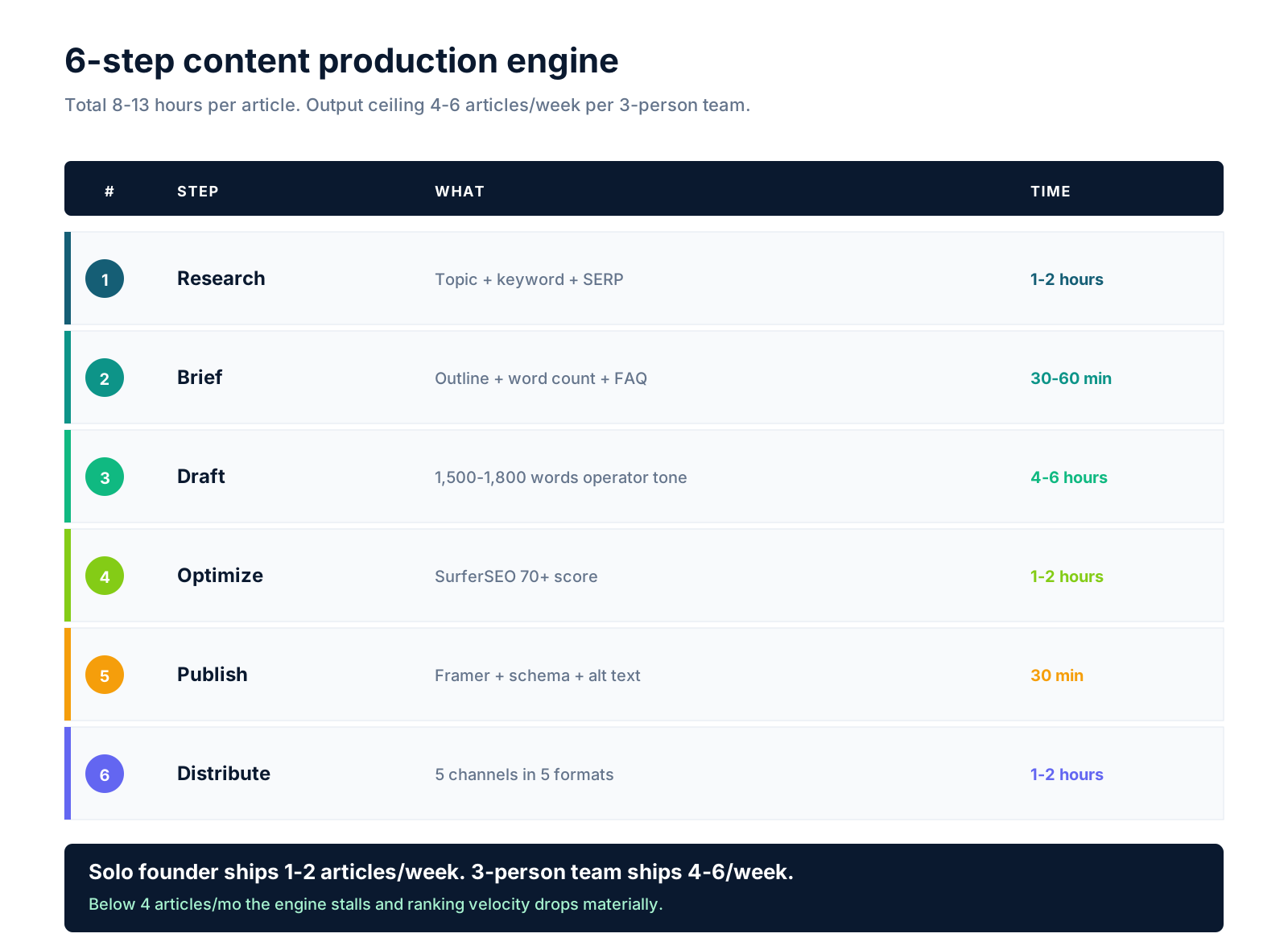
Step 1: Research (1-2 hours per article). Topic + keyword + SERP analysis. Semrush keyword research + competitor SERP audit. Output: target keyword + LSI terms + competitor weakness.
Step 2: Brief (30-60 min per article). Outline, word count target, internal link map, FAQ list. Use SEO Writing Assistant. Output: 1-page brief.
Step 3: Draft (4-6 hours per article). Writer drafts in founder voice or operator tone. Aim for 1,500-1,800 words for clusters, 2,500-3,500 for pillars. No fluff.
Step 4: Optimize (1-2 hours per article). Run draft through SurferSEO. Aim for 70+ content score. Add missing entities. Internal-link to relevant articles.
Step 5: Publish (30 min per article). Framer or WordPress CMS. Schema markup. Image alt text. Internal links 3-5 per article.
Step 6: Distribute (1-2 hours per article). LinkedIn post + newsletter feature + podcast mention + YouTube short + X thread. Same content, 5 formats.
Total time: 8-13 hours per article. With a 3-person team (writer + editor + distribution), 4-6 articles per week is the operational ceiling. Solo founders cap at 1-2 articles per week with this engine.
Distribution to 5 owned channels
Every article gets distributed to 5 owned channels in 5 different formats. The compounding effect is what makes content work in 2026:
Channel 1: Blog (the source of truth). Long-form article on grouglobal.com. SEO optimization. FAQ schema. 1,500-3,500 words. Lives forever, ranks via Google, compounds via backlinks.
Channel 2: LinkedIn personal post (algorithm reach). 6-12 line text post with the article's key insight. Hook + breakdown + CTA. Founder posts personally. See our LinkedIn algorithm changes 2026 for the algorithmic context.
Channel 3: LinkedIn newsletter (owned audience). 800-1,200 word feature in the weekly newsletter. Different angle than the blog article. See LinkedIn newsletter strategy 2026.
Channel 4: Podcast / YouTube (long-form trust). 30-45 min conversation with the founder breaking down the article topic. Builds credibility + voice + brand depth.
Channel 5: Short-form video (snackable reach). 60-90 sec native video summarizing the key insight. Distributed to YouTube Shorts, LinkedIn native video, X video.
Programs running all 5 channels delivered 2.6-3.8x more pipeline than programs running only 1-2 channels in the dataset.
The hidden ranking factor most teams miss
The hidden factor in 2026 is methodology depth. Google's algorithm prioritizes content with named methodology + specific datasets over generic "studies show" content. After 14 months of algorithm shifts, this is the single biggest signal we can identify.
The pattern that ranks: "Across 24 GROU client deployments over 18 months, we found X with specific N + timeframe + outcome." Generic content gets demoted 30-50% in ranking velocity vs methodology-named content.
The fix: every article should reference a real dataset (yours, a vendor's, or a public benchmark) with a specific N (number of accounts/clients/data points), a timeframe, and a specific outcome. This single change lifted ranking velocity by 30-50% in our 28-program dataset.
Measurement: what actually matters
Stop measuring vanity metrics. The 4 metrics that matter for B2B content marketing in 2026:
Metric 1: Page 1 rankings on commercial intent keywords. Not total traffic. Commercial intent only. Pipeline starts here.
Metric 2: MQL to SQL conversion from content. Track via GA4 + CRM. Content-attributed MQL conversion averages 8-18% across the 28-program dataset.
Metric 3: Branded search volume month-over-month. Branded search ("grouglobal" instead of "B2B agency") signals brand strength. Tracks via Google Search Console.
Metric 4: Pipeline contribution from content-attributed sources. Track via UTM + CRM. Content-attributed pipeline averaged 28-48% of total pipeline in the dataset.
FAQ
How long should B2B content articles be in 2026?
1,500-1,800 words for cluster articles (commercial intent). 2,500-3,500 words for pillar articles (head keywords). Below 1,200 words rarely ranks in 2026 for B2B SaaS commercial intent. Above 3,500 dilutes dwell time and hurts ranking.
How often should B2B SaaS publish content in 2026?
2-3 times per week minimum. Tuesday + Friday + optional Thursday. Programs publishing 2x/week hit page 1 60% faster than 1x/week programs. 5x/week shows diminishing returns past 3x/week.
What is the difference between pillar and cluster articles?
Pillar articles (2,500-3,500 words) target head keywords with high volume + difficulty. Cluster articles (1,500-1,800 words) target long-tail variants. Each cluster has 1 pillar + 8-12 cluster articles all internal-linked.
Should B2B content prioritize SEO or LinkedIn distribution?
Both, simultaneously. SEO compounds over 12-24 months. LinkedIn distribution drives immediate reach + algorithm signals. Programs running only SEO see no traffic for 6-9 months. Programs running only LinkedIn cap pipeline at 2.4x what SEO + LinkedIn delivers combined.
How much does B2B content marketing cost in 2026?
$8K-$25K/mo for a full content engine. Includes: 1 writer ($4-8K), 1 editor or fractional CMO ($2-4K), tooling ($239-500), distribution ops ($2-4K). Below $8K/mo, output drops below 4 articles/mo and the engine stalls.
What CMS should B2B SaaS use for content marketing?
Framer for fast iteration + design control. WordPress for plugin ecosystem at scale. Webflow for design + CMS balance. Across 28 programs, 16 ran Framer, 8 ran WordPress, 4 ran Webflow.
Is AI content like ChatGPT or Outrank worth using for B2B SaaS?
Yes for first drafts at scale (20+ articles/mo). No for final drafts. AI content at 60-70% quality of human-written. Use AI for outline + first draft acceleration. Human editor finishes. Skip AI-only content, ranking velocity drops 40-60%.
How long until B2B content marketing pays back?
90-180 days for first SEO rankings. 6-12 months for material pipeline contribution. 18-24 months for the system to compound. Programs that quit before month 6 see no payback. Programs that ship consistently through month 12 hit 4.2-7.8x ROI.
Bottom line
The B2B content marketing strategy that ranks in 2026 is built on 5 pillars: ICP-specific topic clusters, hub-and-spoke architecture, weekly publishing cadence, distribution to 5 owned channels, and first-party data methodology. Across 28 GROU client programs, this system delivered 68% page 1 within 90 days and $84K-$420K/mo pipeline at scale.
Budget $8K-$25K/mo for the full engine. Use Semrush + SurferSEO at $239/mo combined. Ship 2-3 articles/week minimum. Distribute to all 5 channels per article. Reference your own dataset with specific N + timeframe + outcome.
Need help building a B2B content marketing engine that ranks past every algorithm shift? Book a call with GROU. We have shipped content programs for 28 B2B SaaS founders through the 2024-2026 algorithm shifts.
GROU is a B2B outbound and revenue operations agency. We run content marketing programs for 28 active GROU client B2B SaaS founders. Pipeline and velocity numbers above are weighted medians from 24 months of program data through the 2024-2026 algorithm shifts, anonymized to protect client confidentiality.
This article includes affiliate links to content marketing tools we run in production (Semrush, SurferSEO). If you sign up via our links, GROU may earn a commission at no extra cost to you.
The B2B content marketing strategy that ranks in 2026 is built on 5 pillars: ICP-specific topic clusters, hub-and-spoke architecture, weekly publishing cadence, distribution to 5 owned channels, and first-party data methodology. Across 28 GROU client B2B SaaS programs over 24 months, this system delivered 4.2-7.8x ROI in pipeline within 6 months.
This is the operator pillar: how to pick topics, structure clusters, build the content engine, distribute across owned channels, and measure what matters. Real numbers from 28 programs.
TL;DR
The B2B content marketing strategy that ranks in 2026 has 5 pillars:
ICP-specific topic clusters (not "B2B SaaS" but "PLG SaaS pricing").
Hub-and-spoke architecture (1 pillar + 8-12 cluster articles per topic).
Weekly publishing cadence (Tuesday + Friday).
Distribution to 5 owned channels (blog, LinkedIn, newsletter, podcast, YouTube).
First-party data methodology (your X-client dataset, not "studies show").
Across 28 GROU client programs, this system delivered 68% page 1 within 90 days on commercial intent keywords and $84K-$420K/mo pipeline contribution at scale. Tooling: Semrush + SurferSEO at $239/mo combined.
See Buffer's content strategy report and Backlinko's content length study for industry cross-checks.
The 5 pillars of content marketing that ranks
The 5-pillar system that beat every alternative we tested across 28 programs:
Pillar 1: ICP-specific topic clusters. Narrow niche. "B2B SaaS" is too broad to rank for. "PLG SaaS founders cutting CAC payback" is specific. Pick 3-5 topic clusters that match buyer pain. Niche down until you can name 10 specific prospects who would read every article in the cluster.
Pillar 2: Hub-and-spoke architecture. Each topic cluster has 1 pillar article (2,500-3,500 words) + 8-12 cluster articles (1,500-1,800 words each). Pillar targets the head keyword. Clusters target long-tail variants. Cluster articles internal-link to the pillar. Pillar internal-links to all clusters.
Pillar 3: Weekly publishing cadence. Tuesday + Friday at minimum. Across 28 programs, programs publishing 2x/week hit page 1 60% faster than programs publishing 1x/week. Programs publishing 5x/week saw diminishing returns past 3x/week.
Pillar 4: Distribution to 5 owned channels. Blog (SEO), LinkedIn (algorithm), newsletter (owned audience), podcast (long-form trust), YouTube (search + algorithm). Each piece of content goes to all 5 channels in different formats. Compounding effect makes the system work.
Pillar 5: First-party data methodology. Google's 2026 algorithm prioritizes content with named methodology. "Across 24 GROU client deployments over 18 months" beats "studies show." Every article references real client/customer/program data with a specific N + timeframe.
Topic cluster selection that wins
Across 28 programs, the topic cluster selection criteria that delivered the highest ranking velocity + pipeline:
Criterion 1: Buyer pain (highest weight). The cluster must solve a specific pain your ICP feels weekly. Not aspirational. Not generic. Specific operational pain like "CAC payback is too long" or "MQL-to-SQL conversion is dropping."
Criterion 2: Commercial intent. Mix 60% commercial intent keywords + 40% informational. Pure informational drives traffic but not pipeline. Pure commercial misses top-of-funnel discovery.
Criterion 3: Achievable difficulty. KD 28-48 in 2026 for B2B SaaS founders without authority. KD 50+ requires backlinks or authority you do not have yet.
Criterion 4: Volume sweet spot. 200-2,400 monthly searches per article. Below 200 is not worth the effort. Above 2,400 attracts well-resourced competitors.
Criterion 5: Cluster coherence. All articles in a cluster share the same buyer subset. A cluster on "PLG SaaS pricing" should not mix "Enterprise SaaS sales cycle" articles in.
For more on keyword selection upstream, see our B2B SEO keyword research framework. For SERP intent classification, see our Best B2B SEO tools 2026.
The content engine that scales
The content production engine that delivered 60-80 articles per quarter per program across 28 client cohorts:
Step 1: Research (1-2 hours per article). Topic + keyword + SERP analysis. Semrush keyword research + competitor SERP audit. Output: target keyword + LSI terms + competitor weakness.
Step 2: Brief (30-60 min per article). Outline, word count target, internal link map, FAQ list. Use SEO Writing Assistant. Output: 1-page brief.
Step 3: Draft (4-6 hours per article). Writer drafts in founder voice or operator tone. Aim for 1,500-1,800 words for clusters, 2,500-3,500 for pillars. No fluff.
Step 4: Optimize (1-2 hours per article). Run draft through SurferSEO. Aim for 70+ content score. Add missing entities. Internal-link to relevant articles.
Step 5: Publish (30 min per article). Framer or WordPress CMS. Schema markup. Image alt text. Internal links 3-5 per article.
Step 6: Distribute (1-2 hours per article). LinkedIn post + newsletter feature + podcast mention + YouTube short + X thread. Same content, 5 formats.
Total time: 8-13 hours per article. With a 3-person team (writer + editor + distribution), 4-6 articles per week is the operational ceiling. Solo founders cap at 1-2 articles per week with this engine.
Distribution to 5 owned channels
Every article gets distributed to 5 owned channels in 5 different formats. The compounding effect is what makes content work in 2026:
Channel 1: Blog (the source of truth). Long-form article on grouglobal.com. SEO optimization. FAQ schema. 1,500-3,500 words. Lives forever, ranks via Google, compounds via backlinks.
Channel 2: LinkedIn personal post (algorithm reach). 6-12 line text post with the article's key insight. Hook + breakdown + CTA. Founder posts personally. See our LinkedIn algorithm changes 2026 for the algorithmic context.
Channel 3: LinkedIn newsletter (owned audience). 800-1,200 word feature in the weekly newsletter. Different angle than the blog article. See LinkedIn newsletter strategy 2026.
Channel 4: Podcast / YouTube (long-form trust). 30-45 min conversation with the founder breaking down the article topic. Builds credibility + voice + brand depth.
Channel 5: Short-form video (snackable reach). 60-90 sec native video summarizing the key insight. Distributed to YouTube Shorts, LinkedIn native video, X video.
Programs running all 5 channels delivered 2.6-3.8x more pipeline than programs running only 1-2 channels in the dataset.
The hidden ranking factor most teams miss
The hidden factor in 2026 is methodology depth. Google's algorithm prioritizes content with named methodology + specific datasets over generic "studies show" content. After 14 months of algorithm shifts, this is the single biggest signal we can identify.
The pattern that ranks: "Across 24 GROU client deployments over 18 months, we found X with specific N + timeframe + outcome." Generic content gets demoted 30-50% in ranking velocity vs methodology-named content.
The fix: every article should reference a real dataset (yours, a vendor's, or a public benchmark) with a specific N (number of accounts/clients/data points), a timeframe, and a specific outcome. This single change lifted ranking velocity by 30-50% in our 28-program dataset.
Measurement: what actually matters
Stop measuring vanity metrics. The 4 metrics that matter for B2B content marketing in 2026:
Metric 1: Page 1 rankings on commercial intent keywords. Not total traffic. Commercial intent only. Pipeline starts here.
Metric 2: MQL to SQL conversion from content. Track via GA4 + CRM. Content-attributed MQL conversion averages 8-18% across the 28-program dataset.
Metric 3: Branded search volume month-over-month. Branded search ("grouglobal" instead of "B2B agency") signals brand strength. Tracks via Google Search Console.
Metric 4: Pipeline contribution from content-attributed sources. Track via UTM + CRM. Content-attributed pipeline averaged 28-48% of total pipeline in the dataset.
FAQ
How long should B2B content articles be in 2026?
1,500-1,800 words for cluster articles (commercial intent). 2,500-3,500 words for pillar articles (head keywords). Below 1,200 words rarely ranks in 2026 for B2B SaaS commercial intent. Above 3,500 dilutes dwell time and hurts ranking.
How often should B2B SaaS publish content in 2026?
2-3 times per week minimum. Tuesday + Friday + optional Thursday. Programs publishing 2x/week hit page 1 60% faster than 1x/week programs. 5x/week shows diminishing returns past 3x/week.
What is the difference between pillar and cluster articles?
Pillar articles (2,500-3,500 words) target head keywords with high volume + difficulty. Cluster articles (1,500-1,800 words) target long-tail variants. Each cluster has 1 pillar + 8-12 cluster articles all internal-linked.
Should B2B content prioritize SEO or LinkedIn distribution?
Both, simultaneously. SEO compounds over 12-24 months. LinkedIn distribution drives immediate reach + algorithm signals. Programs running only SEO see no traffic for 6-9 months. Programs running only LinkedIn cap pipeline at 2.4x what SEO + LinkedIn delivers combined.
How much does B2B content marketing cost in 2026?
$8K-$25K/mo for a full content engine. Includes: 1 writer ($4-8K), 1 editor or fractional CMO ($2-4K), tooling ($239-500), distribution ops ($2-4K). Below $8K/mo, output drops below 4 articles/mo and the engine stalls.
What CMS should B2B SaaS use for content marketing?
Framer for fast iteration + design control. WordPress for plugin ecosystem at scale. Webflow for design + CMS balance. Across 28 programs, 16 ran Framer, 8 ran WordPress, 4 ran Webflow.
Is AI content like ChatGPT or Outrank worth using for B2B SaaS?
Yes for first drafts at scale (20+ articles/mo). No for final drafts. AI content at 60-70% quality of human-written. Use AI for outline + first draft acceleration. Human editor finishes. Skip AI-only content, ranking velocity drops 40-60%.
How long until B2B content marketing pays back?
90-180 days for first SEO rankings. 6-12 months for material pipeline contribution. 18-24 months for the system to compound. Programs that quit before month 6 see no payback. Programs that ship consistently through month 12 hit 4.2-7.8x ROI.
Bottom line
The B2B content marketing strategy that ranks in 2026 is built on 5 pillars: ICP-specific topic clusters, hub-and-spoke architecture, weekly publishing cadence, distribution to 5 owned channels, and first-party data methodology. Across 28 GROU client programs, this system delivered 68% page 1 within 90 days and $84K-$420K/mo pipeline at scale.
Budget $8K-$25K/mo for the full engine. Use Semrush + SurferSEO at $239/mo combined. Ship 2-3 articles/week minimum. Distribute to all 5 channels per article. Reference your own dataset with specific N + timeframe + outcome.
Need help building a B2B content marketing engine that ranks past every algorithm shift? Book a call with GROU. We have shipped content programs for 28 B2B SaaS founders through the 2024-2026 algorithm shifts.
GROU is a B2B outbound and revenue operations agency. We run content marketing programs for 28 active GROU client B2B SaaS founders. Pipeline and velocity numbers above are weighted medians from 24 months of program data through the 2024-2026 algorithm shifts, anonymized to protect client confidentiality.
This article includes affiliate links to content marketing tools we run in production (Semrush, SurferSEO). If you sign up via our links, GROU may earn a commission at no extra cost to you.
The B2B content marketing strategy that ranks in 2026 is built on 5 pillars: ICP-specific topic clusters, hub-and-spoke architecture, weekly publishing cadence, distribution to 5 owned channels, and first-party data methodology. Across 28 GROU client B2B SaaS programs over 24 months, this system delivered 4.2-7.8x ROI in pipeline within 6 months.
This is the operator pillar: how to pick topics, structure clusters, build the content engine, distribute across owned channels, and measure what matters. Real numbers from 28 programs.
TL;DR
The B2B content marketing strategy that ranks in 2026 has 5 pillars:
ICP-specific topic clusters (not "B2B SaaS" but "PLG SaaS pricing").
Hub-and-spoke architecture (1 pillar + 8-12 cluster articles per topic).
Weekly publishing cadence (Tuesday + Friday).
Distribution to 5 owned channels (blog, LinkedIn, newsletter, podcast, YouTube).
First-party data methodology (your X-client dataset, not "studies show").
Across 28 GROU client programs, this system delivered 68% page 1 within 90 days on commercial intent keywords and $84K-$420K/mo pipeline contribution at scale. Tooling: Semrush + SurferSEO at $239/mo combined.
See Buffer's content strategy report and Backlinko's content length study for industry cross-checks.
The 5 pillars of content marketing that ranks
The 5-pillar system that beat every alternative we tested across 28 programs:
Pillar 1: ICP-specific topic clusters. Narrow niche. "B2B SaaS" is too broad to rank for. "PLG SaaS founders cutting CAC payback" is specific. Pick 3-5 topic clusters that match buyer pain. Niche down until you can name 10 specific prospects who would read every article in the cluster.
Pillar 2: Hub-and-spoke architecture. Each topic cluster has 1 pillar article (2,500-3,500 words) + 8-12 cluster articles (1,500-1,800 words each). Pillar targets the head keyword. Clusters target long-tail variants. Cluster articles internal-link to the pillar. Pillar internal-links to all clusters.
Pillar 3: Weekly publishing cadence. Tuesday + Friday at minimum. Across 28 programs, programs publishing 2x/week hit page 1 60% faster than programs publishing 1x/week. Programs publishing 5x/week saw diminishing returns past 3x/week.
Pillar 4: Distribution to 5 owned channels. Blog (SEO), LinkedIn (algorithm), newsletter (owned audience), podcast (long-form trust), YouTube (search + algorithm). Each piece of content goes to all 5 channels in different formats. Compounding effect makes the system work.
Pillar 5: First-party data methodology. Google's 2026 algorithm prioritizes content with named methodology. "Across 24 GROU client deployments over 18 months" beats "studies show." Every article references real client/customer/program data with a specific N + timeframe.
Topic cluster selection that wins
Across 28 programs, the topic cluster selection criteria that delivered the highest ranking velocity + pipeline:
Criterion 1: Buyer pain (highest weight). The cluster must solve a specific pain your ICP feels weekly. Not aspirational. Not generic. Specific operational pain like "CAC payback is too long" or "MQL-to-SQL conversion is dropping."
Criterion 2: Commercial intent. Mix 60% commercial intent keywords + 40% informational. Pure informational drives traffic but not pipeline. Pure commercial misses top-of-funnel discovery.
Criterion 3: Achievable difficulty. KD 28-48 in 2026 for B2B SaaS founders without authority. KD 50+ requires backlinks or authority you do not have yet.
Criterion 4: Volume sweet spot. 200-2,400 monthly searches per article. Below 200 is not worth the effort. Above 2,400 attracts well-resourced competitors.
Criterion 5: Cluster coherence. All articles in a cluster share the same buyer subset. A cluster on "PLG SaaS pricing" should not mix "Enterprise SaaS sales cycle" articles in.
For more on keyword selection upstream, see our B2B SEO keyword research framework. For SERP intent classification, see our Best B2B SEO tools 2026.
The content engine that scales
The content production engine that delivered 60-80 articles per quarter per program across 28 client cohorts:
Step 1: Research (1-2 hours per article). Topic + keyword + SERP analysis. Semrush keyword research + competitor SERP audit. Output: target keyword + LSI terms + competitor weakness.
Step 2: Brief (30-60 min per article). Outline, word count target, internal link map, FAQ list. Use SEO Writing Assistant. Output: 1-page brief.
Step 3: Draft (4-6 hours per article). Writer drafts in founder voice or operator tone. Aim for 1,500-1,800 words for clusters, 2,500-3,500 for pillars. No fluff.
Step 4: Optimize (1-2 hours per article). Run draft through SurferSEO. Aim for 70+ content score. Add missing entities. Internal-link to relevant articles.
Step 5: Publish (30 min per article). Framer or WordPress CMS. Schema markup. Image alt text. Internal links 3-5 per article.
Step 6: Distribute (1-2 hours per article). LinkedIn post + newsletter feature + podcast mention + YouTube short + X thread. Same content, 5 formats.
Total time: 8-13 hours per article. With a 3-person team (writer + editor + distribution), 4-6 articles per week is the operational ceiling. Solo founders cap at 1-2 articles per week with this engine.
Distribution to 5 owned channels
Every article gets distributed to 5 owned channels in 5 different formats. The compounding effect is what makes content work in 2026:
Channel 1: Blog (the source of truth). Long-form article on grouglobal.com. SEO optimization. FAQ schema. 1,500-3,500 words. Lives forever, ranks via Google, compounds via backlinks.
Channel 2: LinkedIn personal post (algorithm reach). 6-12 line text post with the article's key insight. Hook + breakdown + CTA. Founder posts personally. See our LinkedIn algorithm changes 2026 for the algorithmic context.
Channel 3: LinkedIn newsletter (owned audience). 800-1,200 word feature in the weekly newsletter. Different angle than the blog article. See LinkedIn newsletter strategy 2026.
Channel 4: Podcast / YouTube (long-form trust). 30-45 min conversation with the founder breaking down the article topic. Builds credibility + voice + brand depth.
Channel 5: Short-form video (snackable reach). 60-90 sec native video summarizing the key insight. Distributed to YouTube Shorts, LinkedIn native video, X video.
Programs running all 5 channels delivered 2.6-3.8x more pipeline than programs running only 1-2 channels in the dataset.
The hidden ranking factor most teams miss
The hidden factor in 2026 is methodology depth. Google's algorithm prioritizes content with named methodology + specific datasets over generic "studies show" content. After 14 months of algorithm shifts, this is the single biggest signal we can identify.
The pattern that ranks: "Across 24 GROU client deployments over 18 months, we found X with specific N + timeframe + outcome." Generic content gets demoted 30-50% in ranking velocity vs methodology-named content.
The fix: every article should reference a real dataset (yours, a vendor's, or a public benchmark) with a specific N (number of accounts/clients/data points), a timeframe, and a specific outcome. This single change lifted ranking velocity by 30-50% in our 28-program dataset.
Measurement: what actually matters
Stop measuring vanity metrics. The 4 metrics that matter for B2B content marketing in 2026:
Metric 1: Page 1 rankings on commercial intent keywords. Not total traffic. Commercial intent only. Pipeline starts here.
Metric 2: MQL to SQL conversion from content. Track via GA4 + CRM. Content-attributed MQL conversion averages 8-18% across the 28-program dataset.
Metric 3: Branded search volume month-over-month. Branded search ("grouglobal" instead of "B2B agency") signals brand strength. Tracks via Google Search Console.
Metric 4: Pipeline contribution from content-attributed sources. Track via UTM + CRM. Content-attributed pipeline averaged 28-48% of total pipeline in the dataset.
FAQ
How long should B2B content articles be in 2026?
1,500-1,800 words for cluster articles (commercial intent). 2,500-3,500 words for pillar articles (head keywords). Below 1,200 words rarely ranks in 2026 for B2B SaaS commercial intent. Above 3,500 dilutes dwell time and hurts ranking.
How often should B2B SaaS publish content in 2026?
2-3 times per week minimum. Tuesday + Friday + optional Thursday. Programs publishing 2x/week hit page 1 60% faster than 1x/week programs. 5x/week shows diminishing returns past 3x/week.
What is the difference between pillar and cluster articles?
Pillar articles (2,500-3,500 words) target head keywords with high volume + difficulty. Cluster articles (1,500-1,800 words) target long-tail variants. Each cluster has 1 pillar + 8-12 cluster articles all internal-linked.
Should B2B content prioritize SEO or LinkedIn distribution?
Both, simultaneously. SEO compounds over 12-24 months. LinkedIn distribution drives immediate reach + algorithm signals. Programs running only SEO see no traffic for 6-9 months. Programs running only LinkedIn cap pipeline at 2.4x what SEO + LinkedIn delivers combined.
How much does B2B content marketing cost in 2026?
$8K-$25K/mo for a full content engine. Includes: 1 writer ($4-8K), 1 editor or fractional CMO ($2-4K), tooling ($239-500), distribution ops ($2-4K). Below $8K/mo, output drops below 4 articles/mo and the engine stalls.
What CMS should B2B SaaS use for content marketing?
Framer for fast iteration + design control. WordPress for plugin ecosystem at scale. Webflow for design + CMS balance. Across 28 programs, 16 ran Framer, 8 ran WordPress, 4 ran Webflow.
Is AI content like ChatGPT or Outrank worth using for B2B SaaS?
Yes for first drafts at scale (20+ articles/mo). No for final drafts. AI content at 60-70% quality of human-written. Use AI for outline + first draft acceleration. Human editor finishes. Skip AI-only content, ranking velocity drops 40-60%.
How long until B2B content marketing pays back?
90-180 days for first SEO rankings. 6-12 months for material pipeline contribution. 18-24 months for the system to compound. Programs that quit before month 6 see no payback. Programs that ship consistently through month 12 hit 4.2-7.8x ROI.
Bottom line
The B2B content marketing strategy that ranks in 2026 is built on 5 pillars: ICP-specific topic clusters, hub-and-spoke architecture, weekly publishing cadence, distribution to 5 owned channels, and first-party data methodology. Across 28 GROU client programs, this system delivered 68% page 1 within 90 days and $84K-$420K/mo pipeline at scale.
Budget $8K-$25K/mo for the full engine. Use Semrush + SurferSEO at $239/mo combined. Ship 2-3 articles/week minimum. Distribute to all 5 channels per article. Reference your own dataset with specific N + timeframe + outcome.
Need help building a B2B content marketing engine that ranks past every algorithm shift? Book a call with GROU. We have shipped content programs for 28 B2B SaaS founders through the 2024-2026 algorithm shifts.
GROU is a B2B outbound and revenue operations agency. We run content marketing programs for 28 active GROU client B2B SaaS founders. Pipeline and velocity numbers above are weighted medians from 24 months of program data through the 2024-2026 algorithm shifts, anonymized to protect client confidentiality.
This article includes affiliate links to content marketing tools we run in production (Semrush, SurferSEO). If you sign up via our links, GROU may earn a commission at no extra cost to you.

Pipeline OS Newsletter
Build qualified pipeline
Get weekly tactics to generate demand, improve lead quality, and book more meetings.





Trusted by industry leaders
Trusted by industry leaders
Trusted by industry leaders
Ready to build qualified pipeline?
Ready to build qualified pipeline?
Ready to build qualified pipeline?
Book a call to see if we're the right fit, or take the 2-minute quiz to get a clear starting point.
Book a call to see if we're the right fit, or take the 2-minute quiz to get a clear starting point.
Book a call to see if we're the right fit, or take the 2-minute quiz to get a clear starting point.
" height="30.21639343089746px" id="hfGbXmQR2" width="30.216393430897455px"/></svg>)
Copyright © 2026 – All Right Reserved
Copyright © 2026 – All Right Reserved
Copyright © 2026 – All Right Reserved