%22%3E%3C/path%3E%3Cpath d=%22M 63.072 7.554 C 62.258 8.022 61.577 8.689 61.092 9.493 L 61.092 7.076 L 57.158 7.076 L 57.158 22.64 L 61.089 22.64 L 61.089 14.888 C 61.089 13.446 61.403 12.434 62.03 11.853 C 62.818 11.218 63.818 10.907 64.826 10.982 L 65.868 10.982 L 65.868 6.851 C 64.891 6.834 63.926 7.076 63.073 7.554 Z%22 fill=%22rgb(17,17,17)%22%3E%3C/path%3E%3Cpath d=%22M 78.916 7.82 C 76.363 6.49 73.321 6.49 70.768 7.82 C 69.562 8.473 68.564 9.451 67.888 10.644 C 67.167 11.931 66.803 13.387 66.834 14.862 C 66.804 16.332 67.157 17.785 67.86 19.077 C 68.515 20.267 69.494 21.246 70.684 21.901 C 71.924 22.576 73.318 22.92 74.73 22.898 C 76.164 22.918 77.58 22.575 78.846 21.901 C 80.062 21.247 81.073 20.27 81.768 19.077 C 82.506 17.797 82.88 16.339 82.85 14.862 C 82.88 13.389 82.517 11.934 81.797 10.647 C 81.12 9.455 80.122 8.477 78.917 7.824 M 78.803 14.862 C 78.829 15.739 78.636 16.608 78.241 17.391 C 77.903 18.046 77.38 18.588 76.738 18.95 C 76.124 19.293 75.432 19.472 74.729 19.47 C 73.668 19.497 72.648 19.061 71.934 18.276 C 71.139 17.323 70.741 16.1 70.823 14.862 C 70.741 13.62 71.149 12.395 71.959 11.45 C 72.687 10.667 73.715 10.233 74.783 10.256 C 75.859 10.236 76.894 10.67 77.635 11.45 C 78.464 12.387 78.884 13.616 78.801 14.864%22 fill=%22rgb(17,17,17)%22%3E%3C/path%3E%3Cpath d=%22M 95.906 7.076 L 95.906 15.646 C 95.975 16.68 95.643 17.701 94.979 18.498 C 94.311 19.184 93.379 19.547 92.422 19.495 C 91.475 19.544 90.553 19.18 89.894 18.498 C 89.23 17.701 88.898 16.68 88.967 15.646 L 88.967 7.076 L 85.033 7.076 L 85.033 16.207 C 85 17.449 85.275 18.68 85.834 19.79 C 86.327 20.75 87.095 21.542 88.039 22.065 C 89.033 22.594 90.145 22.861 91.271 22.838 C 92.188 22.847 93.095 22.65 93.926 22.263 C 94.708 21.905 95.388 21.36 95.906 20.675 L 95.906 22.645 L 99.865 22.645 L 99.865 7.076 Z%22 fill=%22rgb(17,17,17)%22%3E%3C/path%3E%3Cpath d=%22M 4.513 15.626 C 4.511 10.815 7.606 6.549 12.181 5.059 C 16.756 3.57 21.77 5.195 24.601 9.086 L 27.816 5.87 C 24.074 1.186 17.981 -0.943 12.137 0.393 C 6.292 1.728 1.728 6.292 0.393 12.137 C -0.943 17.981 1.186 24.074 5.87 27.816 L 9.085 24.601 C 6.214 22.512 4.515 19.177 4.513 15.626%22 fill=%22rgb(32,62,235)%22%3E%3C/path%3E%3Cpath d=%22M 17.114 14.343 L 13.354 18.01 L 13.354 18.026 L 21.071 18.026 L 11.412 27.609 L 17.389 27.609 L 23.999 21.081 L 23.999 28.316 L 24.005 28.316 L 27.967 24.393 L 27.967 14.343 Z%22 fill=%22rgb(32,62,235)%22%3E%3C/path%3E%3C/g%3E%3C/svg%3E) ×
× ××
××›
›
›
›
Companies that outsource sales in 2026: 8 case studies with real results
Companies that outsource sales in 2026: 8 case studies with real results
Companies that outsource sales in 2026: 8 case studies with real results
Companies that outsource sales in 2026: 8 case studies with real results
Companies that outsource sales in 2026: 8 case studies with real results
Companies that outsource sales in 2026: 8 case studies with real results

Author
Aljaz Peklaj

Your internal sales team is maxed out. Signals get missed, reply handling slows down, and pipeline coverage starts looking thin two quarters before the number shows up in forecasting. Hiring your way out is slow, and for many teams, the issue isn't headcount. It's structure. HuntingAlice explains prospecting well, but the operator question is narrower: which companies that outsource sales get useful pipeline, and under what conditions?
Why they outsourced and the vendor models they chose
How targeted signals and channels delivered measurable outcomes
Common pitfalls to avoid and selection criteria to follow
Actionable pilot frameworks and metrics for your team
Table of Contents
1. Legal tech SaaS entering Western European market, LinkedIn outbound plus founder content, 6.6x direct ROI

A legal tech SaaS company with about 40 employees had the classic high-ACV constraint. The market was there, but building regional sales coverage across the UK and Western Europe would have taken too long. So they outsourced lead generation, not closing, and kept internal AEs focused on discovery, demos, and deal work through an outsourced lead generation model.
Over 6 months, with roughly €46k in spend, the program produced 78 qualified meetings, 41 qualified opportunities, and 8 closed deals worth roughly €304k ARR. Another roughly €280k in late-stage pipeline was still active at the end of the engagement. The direct ROI came in at roughly 6.6x.
Why this model worked
The targeting was signal-first. Regulatory change events, compliance hires, and public posts about regulatory positions gave the outreach team reasons to contact specific people at specific times.
The founder also stayed involved, posting 2 to 3 times weekly on LinkedIn. That mattered because buyers in legal tech don't just buy software. They buy risk reduction from vendors they believe understand the environment.
Practical rule: At higher ACVs, signal quality matters more than list size.
There was one more reason this worked. The sales team converted meetings to opportunities at 53%, which is unusually strong. When that number is healthy, outsourced top-of-funnel activity compounds instead of leaking.
What to copy and what to avoid
This model fits legal tech, pharma, and other regulated SaaS categories where message credibility changes response quality. A simple stack works well here → Apollo for account and contact research, Clay for enrichment, Sales Navigator for trigger review, HubSpot for routing, Lemlist or Smartlead for outbound orchestration.
What doesn't work is treating founder content like decoration. If the founder can't commit, the outsourced team needs a different credibility asset, usually customer proof, point-of-view content, or a sharper trigger map.
2. iGaming compliance SaaS with event anchor strategy, multi-channel outbound plus LinkedIn ads, 13.4x direct ROI
This was an iGaming compliance SaaS company with about 60 employees and an average ACV around €80k. The team didn't need generic awareness. They needed pipeline concentrated around a buying window that people in the category already cared about, so the campaign was anchored to ICE Barcelona and supported with LinkedIn outbound, email outbound, founder content, paid LinkedIn, and event amplification. Spend across 8 months was roughly €92.8k, producing 134 qualified meetings, 67 opportunities, and 15 closed-won deals worth roughly €1.24M ARR.
That translated to roughly 13.4x direct ROI, with another roughly €620k in late-stage opportunities still open at the end.
The campaign structure
The strongest version of event-led outsourced sales has three phases.
Awareness phase: Build familiarity before the event, using compliance signals such as regulatory changes, hiring, and public posts.
Event push phase: Turn the conference into a real deadline for conversation, not a vague mention in the copy.
Post-event nurture phase: Keep pressure on active buyers who engaged but didn't move during the event window.
The three-phase shape mattered more than the channel count. Too many companies that outsource sales run the event mention in every touch, then wonder why the campaign falls flat.
Don't judge event campaigns on meetings set before the event alone. The post-event follow-up is where a lot of real pipeline gets clarified.
Where teams get this wrong
The first failure mode is choosing an event your buyers don't organize around. The second is starving the post-event sequence because the team assumes the window has closed.
Paid LinkedIn supported the motion here because the event gave the ads context. If you're weighing paid support around a similar launch window, this is the sort of scenario where LinkedIn ad costs matter in the full pipeline math, not just in isolation.
3. Industrial packaging manufacturer with phone-first follow-up and direct mail, 8.4x ROI on first orders plus 15x with repeat business
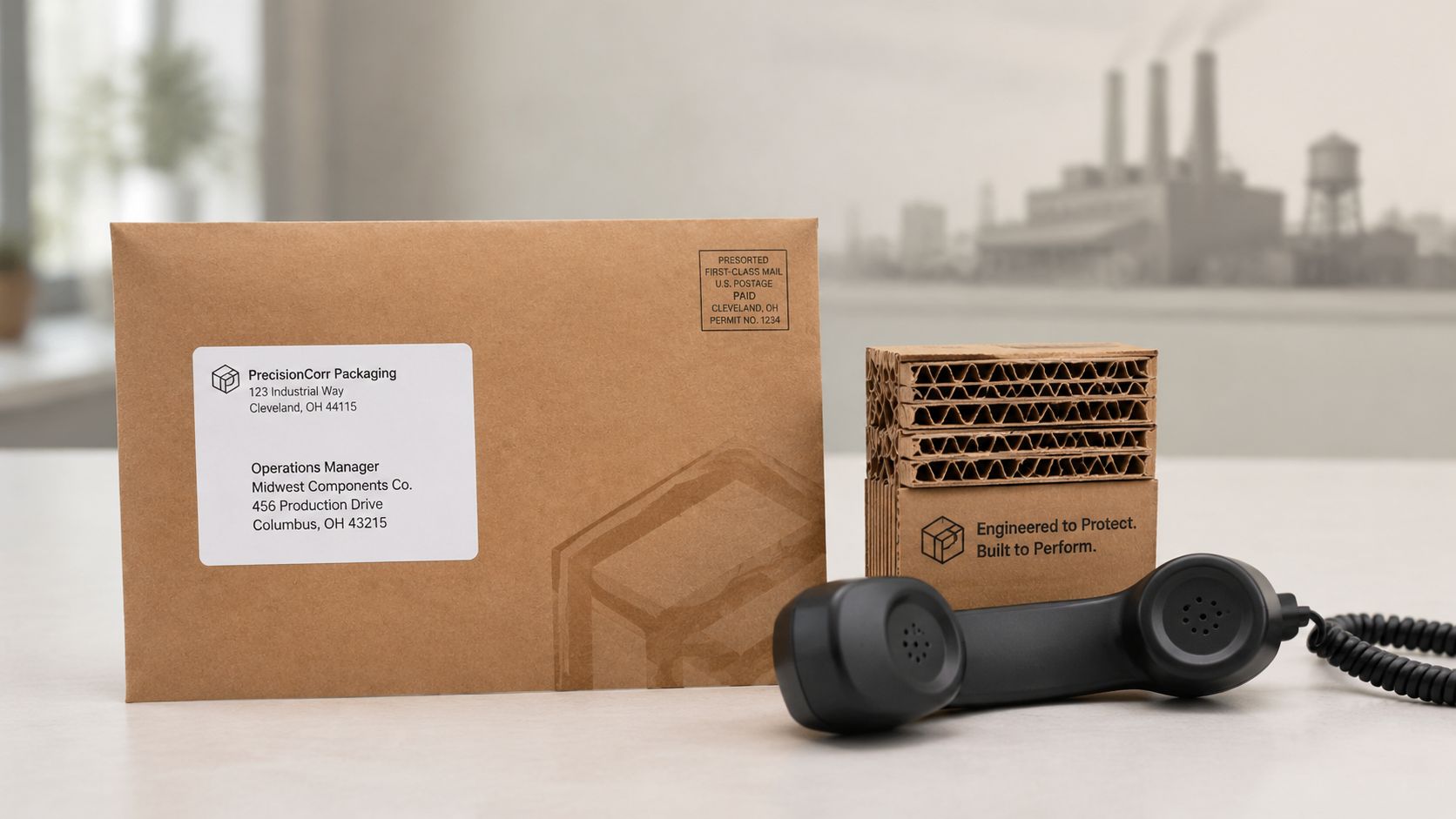
A 180-person industrial packaging manufacturer needed pipeline, but the standard SaaS outbound stack wasn't the answer. Their audience, heads of procurement and operations at Tier 2 European manufacturers, responded far better to phone-first follow-up and printed mail than to email-only sequencing.
Over 9 months, with roughly €58k in spend, the campaign generated 42 qualified meetings, 26 opportunities, and 7 closed first orders worth roughly €489k. That's roughly 8.4x direct ROI on first orders alone. The same accounts also carried an estimated additional €380k in projected repeat business over 24 months, which pushed the adjusted view to roughly 15x.
Why manufacturing needs a different motion
The signal layer looked nothing like SaaS. ERP migrations, supplier disruptions, and capacity expansion announcements were better triggers than job changes or funding news.
The channel mix changed too. Initial email contact opened the door, but phone-first follow-up moved the account. Printed mail to the top 30 accounts added another credibility layer in a market where digital fatigue is real. WaveGen.ai's explanation of multi-channel outreach is useful here, but the practical point is simpler. Channels shouldn't be added for coverage. They should be added because each one changes buyer behavior.
The operating lesson
Manufacturing buyers often move slower, but they don't necessarily convert worse. Here the median sales cycle was 75 days, longer than the SaaS examples, yet the closed business was strong because the fit was clear and the outreach respected how these buyers work.
Use phone as qualification, not just reminder: Procurement teams reveal timing and supplier pain faster in conversation than in email.
Limit direct mail to priority accounts: It works when the deal size can absorb the cost.
Review pipeline monthly, not daily: This audience buys deliberately, and the follow-up rhythm should reflect that.
4. B2B SaaS new market entry into DACH region, German-language outbound and founder content, 7.2x ROI in 6 months from zero
Market entry is where most outsourced sales decisions either look brilliant in month 4 or foolish in month 2. The difference is whether the team treats the new region as a translation job or as a fresh operating model.
In this case, a Western European SaaS company with about 80 employees expanded into DACH with no local network, no German-language outbound capability, and no reliable view of who owned budget. The outsourced team set up German-language email domains, adapted messaging to German-language conventions, and built a list of 2,400 prospects across the target market.
The first 30 days that mattered
The first qualified meeting landed on day 17. Between day 17 and day 30, the campaign booked 5 qualified meetings. Initial reply rate on DACH outbound was 12.4%, and LinkedIn connection acceptance rate was 38%.
Those early numbers weren't the main win, though. Three of the first 5 meetings showed that the assumed buyer persona was wrong for the region. In the home market, the head of sales controlled budget. In DACH, the head of marketing often did.
Early outsourced market-entry work should be judged on structural learning as much as on meetings.
What this proves about new-market outsourcing
Over 6 months, the company booked 68 qualified meetings, closed 9 deals, and generated roughly €378k ARR from a market where it had zero pipeline before. Direct ROI was roughly 7.2x.
Companies that outsource sales often make a category mistake. They expect an outsourced team to replace local presence forever. It won't. What it can do is remove the first learning curve, prove whether the market responds, and surface ICP corrections before you spend months hiring around the wrong assumptions (and yes, that's the expensive version of market research).
5. Series B revenue operations SaaS, 5-month engagement with founder sender profiles, 93 qualified meetings producing 3.5x ROI
A regulated fintech startup with about 35 employees wanted UK pipeline, but the primary constraint was qualification quality. In this category, a bad meeting is expensive. It burns rep time, creates compliance exposure on calls, and gives the team false confidence about market demand.
The outsourced partner started with email to get initial engagement, then shifted quickly to phone-based qualification. Before a meeting hit the calendar, the rep checked three things: buying authority, budget timing, and regulatory stage. Because calls sat so close to compliance-sensitive workflows, the team also had to get process discipline right early, including recording and consent rules covered in Whisper AI's guide to call recording compliance.
What made the first 30 days useful
The first month did not produce huge volume. It produced a cleaner filter.
Early calls showed that companies coming out of audits or active remediation cycles moved faster than firms that merely fit the target firmographic profile. That changed account prioritization. Instead of ranking lists by company size and sector first, the outsourced team rebuilt targeting around urgency signals such as recent compliance events, hiring patterns, and visible operational change.
That adjustment is why this case matters. The vendor was not just supplying caller hours. It was helping the startup identify which slice of the UK market could close inside a normal sales cycle.
The operating model behind the numbers
Over 4 months, with roughly €52k in spend, the program generated 48 qualified meetings and 11 closed deals worth roughly €418k ARR. That put meeting-to-deal conversion at 22%.
For a company evaluating firms that outsource sales, those numbers are only useful if the operating model is clear:
Email opened the conversation and screened for relevance.
Phone qualification tested urgency, authority, and timing before handoff.
Meeting booking was restricted to accounts that matched both compliance fit and buying momentum.
Closed-loop feedback from sales calls changed list building inside the same engagement, not at the end of the quarter.
That last point is usually where outsourced programs either get efficient or stay noisy.
What to measure instead of raw activity
Call volume was not the KPI stack here. Qualified meetings, show rate, second-meeting progression, and deal conversion mattered more because they exposed whether qualification standards were holding. Sales outsourcing KPI guidance from SalesHive's outbound KPI framework points teams toward downstream measures like these, especially when the cost of a weak meeting is high.
The practical trade-off is simple. Tighter qualification usually lowers top-of-funnel activity counts. It also protects AE time and raises win rates. In regulated fintech, that is the better bargain.
6. Regulated fintech startup scaling UK market with phone-based qualification, 48 qualified meetings in 4 months, 22% meeting-to-deal conversion
A regulated fintech startup with about 35 employees needed pipeline in the UK, but raw meeting volume would have created more risk than value. Compliance buyers don't reward noisy outreach. They reward relevant outreach, and they punish shallow qualification.
So the outsourced team used initial email contact to open the loop, then moved quickly into phone-based qualification. Decision authority, budget readiness, and regulatory stage were checked before meetings were booked.
Why qualification came before volume
Over 4 months, with roughly €52k in spend, the program generated 48 qualified meetings and 11 closed deals worth roughly €418k ARR. That's a 22% meeting-to-deal conversion rate.
The key insight was that prospects in post-audit or remediation phases moved much faster than the rest of the market. That's the sort of signal many agencies miss because they're still sorting accounts by firmographics instead of urgency.
One qualified compliance conversation beats a calendar full of polite non-buyers.
What to measure instead of activity
For outsourced sales development, the wrong KPI stack usually starts with calls made and emails sent. The right one starts further downstream. Sales outsourcing KPI guidance from SalesHive's outbound KPI framework points teams toward meetings held with ICP accounts, SAL or SQO rates, pipeline dollars created, and cost per qualified meeting.
That framing fits fintech especially well. In regulated categories, bad meetings aren't just inefficient. They distort your read on the market.
7. Professional services B2B SaaS with vertical-specific stacking, 156 meetings across 6 months, 12% deal conversion from two cohorts
One mistake shows up constantly in companies that outsource sales. They lump adjacent verticals into one campaign because the product category looks similar on a slide. That usually lowers response quality and makes conversion analysis useless.
A professional services software company with about 52 employees avoided that trap by splitting architecture and engineering into two separate motions. Same product family, different buyer behavior.
Two verticals, two systems
Across 6 months and roughly €68k in spend, the combined effort produced 156 qualified meetings, 42 opportunities, and 18 closed deals worth roughly €810k ARR. The interesting part wasn't the total. It was the symmetry inside the split. Architecture produced 78 meetings and 9 deals. Engineering produced 78 meetings and 9 deals, but through a different route.
Architecture accounts responded better to design-centric proof, visual outcomes, and portfolio-style positioning. Engineering accounts needed technical capability, ROI framing, and more credibility from technical peers. Midway through the engagement, the team found that engineering buyers responded better when emails looked like they came from technical operators rather than standard account executives.
The practical lesson
When two verticals need different evidence to trust you, they need separate sequences, separate trigger sets, and separate review loops. Tools like Apollo and Clay help with segmentation, but the essential work happens in the message map and in how your team reads replies.
If you run vertical stacking, keep the dashboards separate. Don't average out performance across segments and call it a win. The point is to learn where structure creates pipeline, not to hide variation inside blended reporting.
8. Construction software deep account targeting, 34 qualified meetings with 3 named accounts, 29% conversion rate, €1.2M first-year expansion

Not every outsourced sales program should chase volume. A construction software company with ACVs in the €400k to €800k range focused on 3 named accounts that represented more than €10M in addressable spend. The outsourced team spent 6 weeks researching each account before pushing hard on outreach.
Over 4 months, that produced 34 qualified conversations with buying committee members across the three targets. Two accounts progressed to pilot stage, and one closed an initial implementation worth €1.2M in first-year spend.
Why named-account outsourcing is different
This isn't outsourced SDR volume. It's outsourced account progression. The team mapped org charts, budget cycles, active projects, and likely decision paths before sequencing across LinkedIn, email, and phone.
That's why broad-market vendor scorecards break down here. The better evaluation criteria are depth of account research, buyer-map accuracy, and progression inside the committee. If you're looking for examples of how this looks in practice, account-based marketing examples are a better comparison point than generic appointment-setting lists.
Who should use this model
Use named-account outsourcing when your list is tiny, deal values are large, and generic outbound wastes time. Skip it if you still need broad ICP validation.
A final caution matters here. When buyers ask agencies about huge enterprise deals, most should answer carefully. Mid-market outsourced lead generation agencies usually don't create $20M+ deals, and pretending otherwise causes bad hiring decisions. The honest range is lower, and the motion is different.
8-Company Outsourced Sales Comparison
Example | Implementation complexity 🔄 | Resource requirements ⚡ | Expected outcomes 📊 | Ideal use cases 💡 | Key advantages ⭐ |
|---|---|---|---|---|---|
Legal tech SaaS, Western Europe (founder content + LinkedIn) | 🔄 Medium–High: multi-market signal monitoring + founder-led content coordination | ⚡ Moderate: €46k spend, founder time (2–3 posts/wk), LinkedIn + email sequences | 📊 78 qualified meetings, 41 opps, 8 closed, €304k ARR, 6.6x direct ROI (8.4x incl. pipeline) | 💡 High‑ACV SaaS expansion into Western Europe where founder credibility matters | ⭐ Strong meeting→opportunity (53%), signal filtering, sustainable unit economics |
iGaming compliance, event‑anchored (ICE Barcelona) | 🔄 High: 3‑phase event campaign + multi‑channel orchestration | ⚡ High: €92.8k spend, paid LinkedIn ads, 8‑month timeline | 📊 134 meetings, 67 opps, 15 closed, €1.24M ARR, 13.4x direct ROI (16.2x incl. pipeline) | 💡 Event‑driven verticals with compressed buying windows | ⭐ High volume & ROI; compressed decision cycles; clean signal targeting |
Industrial packaging, phone‑first + direct mail | 🔄 Medium: phone‑first cadence + direct‑mail integration and vertical signals | ⚡ Moderate: €58k spend, phone staffing, direct mail costs, 9‑month horizon | 📊 42 meetings, 26 opps, 7 first orders €489k + projected €380k repeat; 8.4x first‑order ROI (15x 24‑mo) | 💡 High first‑order value manufacturing where digital fatigue exists | ⭐ Higher per‑meeting close rates, strong repeat LTV, differentiated outreach |
B2B SaaS, new DACH market (German‑language) | 🔄 Medium: native language infra, German signal setup, ICP refinement | ⚡ Moderate: 6‑month engagement, native German team, domain setup | 📊 68 meetings, 9 closed, €378k ARR, 7.2x direct ROI; reply rate 12.4% | 💡 New geographic market entry requiring language & ICP adaptation | ⭐ Fast validation (first meeting day 17), early ICP insights (marketing owns budget) |
Series B RevOps SaaS, founder sender profiles | 🔄 Medium: founder/head‑of‑rev sender strategy + internal SDR integration | ⚡ Moderate‑High: ~€90k spend, coordination with internal SDRs/AEs; 5 months | 📊 93 meetings, 32 opps, 10 closed, €320k ARR, 3.5x direct ROI; 81% show rate | 💡 Venture‑backed SaaS proving outbound scale before hiring | ⭐ High meeting volume and show rates; founder sends boost response ~30% |
Regulated fintech, phone‑based qualification (UK) | 🔄 High: regulatory qualification framework and decision‑authority mapping | ⚡ Moderate: €52k spend, phone‑heavy qualification, compliance expertise | 📊 48 qualified meetings, 11 closed, €418k ARR, 8x direct ROI; 22% meeting→deal conversion | 💡 Regulated industries where first‑touch qualification and compliance matter | ⭐ Exceptional conversion per meeting; reduces AE time wasted; higher deal quality |
Professional services SaaS, vertical stacking (architecture vs engineering) | 🔄 High: parallel campaigns, distinct messaging, separate signal streams | ⚡ Moderate‑High: €68k, dual creative and monitoring, 6 months | 📊 156 meetings, 42 opps, 18 closed, €810k ARR, 11.9x direct ROI; segment conversion insights | 💡 Sellers targeting multiple distinct verticals needing side‑by‑side testing | ⭐ Volume efficiency; direct vertical performance comparison; strong ROI |
Construction software, deep named‑account targeting | 🔄 Very High: 6‑week research per account, multi‑buyer sequencing | ⚡ High: intensive research/time per account; 4‑month engagement | 📊 34 qualified conversations, 2 pilots, 1 closed account €1.2M first‑year; 29% conversion | 💡 Very high‑ACV enterprise deals where few accounts justify heavy research | ⭐ Large single‑account revenue, high buying‑committee engagement and conversion |
Your next step
A good outsourced sales decision usually goes wrong in the first week, not the sixth. The pattern is familiar. A vendor promises meetings, the team approves a pilot, and 30 days later the dashboard shows activity but no clean read on pipeline quality, qualification discipline, or handoff performance.
Start with a controlled pilot in your own CRM before you score any provider. Create an "outsourced pilot" stage. Load 50 target accounts, split them by one clear signal set, and track four checkpoints only: first touch, live conversation, meeting held, and opportunity created. That structure makes vendor comparisons much easier because it separates list quality, channel execution, qualification quality, and sales acceptance.
Use the same standard the stronger case studies in this article shared. Judge the vendor on the model they run, the signals they use, and the economics they can prove inside 30 days. For ROI math, require a view that includes agency fees, tools, ramp time, and internal support costs against meetings held, qualified pipeline, closed revenue, and average sales cycle, as outlined in Credico's outsourced sales ROI guide.
Benchmark execution with operating metrics, not just booked meetings. LinkedIn's outsourced sales metrics reference is a useful starting point for cold outbound ranges, including phone connect rate, connect-to-conversation rate, and conversation-to-booking rate. Those benchmarks are imperfect, but they expose weak list selection, poor call quality, and loose qualification fast.
The market is growing, but that fact does not help with vendor selection. What matters is fit. A phone-first team can outperform an email-heavy agency in regulated fintech. A founder-content plus outbound model can beat pure SDR outreach in legal tech or DACH expansion. A named-account program with direct mail can justify higher cost in construction or industrial categories where one account can repay the whole engagement.
Ask harder questions before signing anything. Which verticals have they produced revenue in, not just meetings? What did their last 30-day pilot look like? Where does qualification happen? Who owns no-show recovery, recycle sequences, and post-meeting feedback loops? If the answers stay at the activity level, keep looking.
GROU is a global B2B pipeline agency for teams in iGaming, SaaS, manufacturing, legal tech, pharma, and adjacent categories where attention only matters if it converts into qualified pipeline. The team works in bi-weekly sprints with shared reporting from signal to meeting to opportunity, which gives operators a cleaner view of revenue contribution.
If you need a practical first move, audit your last 10 booked meetings and tag each one by signal source, sender identity, qualification outcome, and deal stage after the call. Then compare that baseline to what an outsourced partner would own. If you need a team to build that structure, Grou is one option for outsourced lead generation and outbound.
Your internal sales team is maxed out. Signals get missed, reply handling slows down, and pipeline coverage starts looking thin two quarters before the number shows up in forecasting. Hiring your way out is slow, and for many teams, the issue isn't headcount. It's structure. HuntingAlice explains prospecting well, but the operator question is narrower: which companies that outsource sales get useful pipeline, and under what conditions?
Why they outsourced and the vendor models they chose
How targeted signals and channels delivered measurable outcomes
Common pitfalls to avoid and selection criteria to follow
Actionable pilot frameworks and metrics for your team
Table of Contents
1. Legal tech SaaS entering Western European market, LinkedIn outbound plus founder content, 6.6x direct ROI
A legal tech SaaS company with about 40 employees had the classic high-ACV constraint. The market was there, but building regional sales coverage across the UK and Western Europe would have taken too long. So they outsourced lead generation, not closing, and kept internal AEs focused on discovery, demos, and deal work through an outsourced lead generation model.
Over 6 months, with roughly €46k in spend, the program produced 78 qualified meetings, 41 qualified opportunities, and 8 closed deals worth roughly €304k ARR. Another roughly €280k in late-stage pipeline was still active at the end of the engagement. The direct ROI came in at roughly 6.6x.
Why this model worked
The targeting was signal-first. Regulatory change events, compliance hires, and public posts about regulatory positions gave the outreach team reasons to contact specific people at specific times.
The founder also stayed involved, posting 2 to 3 times weekly on LinkedIn. That mattered because buyers in legal tech don't just buy software. They buy risk reduction from vendors they believe understand the environment.
Practical rule: At higher ACVs, signal quality matters more than list size.
There was one more reason this worked. The sales team converted meetings to opportunities at 53%, which is unusually strong. When that number is healthy, outsourced top-of-funnel activity compounds instead of leaking.
What to copy and what to avoid
This model fits legal tech, pharma, and other regulated SaaS categories where message credibility changes response quality. A simple stack works well here → Apollo for account and contact research, Clay for enrichment, Sales Navigator for trigger review, HubSpot for routing, Lemlist or Smartlead for outbound orchestration.
What doesn't work is treating founder content like decoration. If the founder can't commit, the outsourced team needs a different credibility asset, usually customer proof, point-of-view content, or a sharper trigger map.
2. iGaming compliance SaaS with event anchor strategy, multi-channel outbound plus LinkedIn ads, 13.4x direct ROI
This was an iGaming compliance SaaS company with about 60 employees and an average ACV around €80k. The team didn't need generic awareness. They needed pipeline concentrated around a buying window that people in the category already cared about, so the campaign was anchored to ICE Barcelona and supported with LinkedIn outbound, email outbound, founder content, paid LinkedIn, and event amplification. Spend across 8 months was roughly €92.8k, producing 134 qualified meetings, 67 opportunities, and 15 closed-won deals worth roughly €1.24M ARR.
That translated to roughly 13.4x direct ROI, with another roughly €620k in late-stage opportunities still open at the end.
The campaign structure
The strongest version of event-led outsourced sales has three phases.
Awareness phase: Build familiarity before the event, using compliance signals such as regulatory changes, hiring, and public posts.
Event push phase: Turn the conference into a real deadline for conversation, not a vague mention in the copy.
Post-event nurture phase: Keep pressure on active buyers who engaged but didn't move during the event window.
The three-phase shape mattered more than the channel count. Too many companies that outsource sales run the event mention in every touch, then wonder why the campaign falls flat.
Don't judge event campaigns on meetings set before the event alone. The post-event follow-up is where a lot of real pipeline gets clarified.
Where teams get this wrong
The first failure mode is choosing an event your buyers don't organize around. The second is starving the post-event sequence because the team assumes the window has closed.
Paid LinkedIn supported the motion here because the event gave the ads context. If you're weighing paid support around a similar launch window, this is the sort of scenario where LinkedIn ad costs matter in the full pipeline math, not just in isolation.
3. Industrial packaging manufacturer with phone-first follow-up and direct mail, 8.4x ROI on first orders plus 15x with repeat business
A 180-person industrial packaging manufacturer needed pipeline, but the standard SaaS outbound stack wasn't the answer. Their audience, heads of procurement and operations at Tier 2 European manufacturers, responded far better to phone-first follow-up and printed mail than to email-only sequencing.
Over 9 months, with roughly €58k in spend, the campaign generated 42 qualified meetings, 26 opportunities, and 7 closed first orders worth roughly €489k. That's roughly 8.4x direct ROI on first orders alone. The same accounts also carried an estimated additional €380k in projected repeat business over 24 months, which pushed the adjusted view to roughly 15x.
Why manufacturing needs a different motion
The signal layer looked nothing like SaaS. ERP migrations, supplier disruptions, and capacity expansion announcements were better triggers than job changes or funding news.
The channel mix changed too. Initial email contact opened the door, but phone-first follow-up moved the account. Printed mail to the top 30 accounts added another credibility layer in a market where digital fatigue is real. WaveGen.ai's explanation of multi-channel outreach is useful here, but the practical point is simpler. Channels shouldn't be added for coverage. They should be added because each one changes buyer behavior.
The operating lesson
Manufacturing buyers often move slower, but they don't necessarily convert worse. Here the median sales cycle was 75 days, longer than the SaaS examples, yet the closed business was strong because the fit was clear and the outreach respected how these buyers work.
Use phone as qualification, not just reminder: Procurement teams reveal timing and supplier pain faster in conversation than in email.
Limit direct mail to priority accounts: It works when the deal size can absorb the cost.
Review pipeline monthly, not daily: This audience buys deliberately, and the follow-up rhythm should reflect that.
4. B2B SaaS new market entry into DACH region, German-language outbound and founder content, 7.2x ROI in 6 months from zero
Market entry is where most outsourced sales decisions either look brilliant in month 4 or foolish in month 2. The difference is whether the team treats the new region as a translation job or as a fresh operating model.
In this case, a Western European SaaS company with about 80 employees expanded into DACH with no local network, no German-language outbound capability, and no reliable view of who owned budget. The outsourced team set up German-language email domains, adapted messaging to German-language conventions, and built a list of 2,400 prospects across the target market.
The first 30 days that mattered
The first qualified meeting landed on day 17. Between day 17 and day 30, the campaign booked 5 qualified meetings. Initial reply rate on DACH outbound was 12.4%, and LinkedIn connection acceptance rate was 38%.
Those early numbers weren't the main win, though. Three of the first 5 meetings showed that the assumed buyer persona was wrong for the region. In the home market, the head of sales controlled budget. In DACH, the head of marketing often did.
Early outsourced market-entry work should be judged on structural learning as much as on meetings.
What this proves about new-market outsourcing
Over 6 months, the company booked 68 qualified meetings, closed 9 deals, and generated roughly €378k ARR from a market where it had zero pipeline before. Direct ROI was roughly 7.2x.
Companies that outsource sales often make a category mistake. They expect an outsourced team to replace local presence forever. It won't. What it can do is remove the first learning curve, prove whether the market responds, and surface ICP corrections before you spend months hiring around the wrong assumptions (and yes, that's the expensive version of market research).
5. Series B revenue operations SaaS, 5-month engagement with founder sender profiles, 93 qualified meetings producing 3.5x ROI
A regulated fintech startup with about 35 employees wanted UK pipeline, but the primary constraint was qualification quality. In this category, a bad meeting is expensive. It burns rep time, creates compliance exposure on calls, and gives the team false confidence about market demand.
The outsourced partner started with email to get initial engagement, then shifted quickly to phone-based qualification. Before a meeting hit the calendar, the rep checked three things: buying authority, budget timing, and regulatory stage. Because calls sat so close to compliance-sensitive workflows, the team also had to get process discipline right early, including recording and consent rules covered in Whisper AI's guide to call recording compliance.
What made the first 30 days useful
The first month did not produce huge volume. It produced a cleaner filter.
Early calls showed that companies coming out of audits or active remediation cycles moved faster than firms that merely fit the target firmographic profile. That changed account prioritization. Instead of ranking lists by company size and sector first, the outsourced team rebuilt targeting around urgency signals such as recent compliance events, hiring patterns, and visible operational change.
That adjustment is why this case matters. The vendor was not just supplying caller hours. It was helping the startup identify which slice of the UK market could close inside a normal sales cycle.
The operating model behind the numbers
Over 4 months, with roughly €52k in spend, the program generated 48 qualified meetings and 11 closed deals worth roughly €418k ARR. That put meeting-to-deal conversion at 22%.
For a company evaluating firms that outsource sales, those numbers are only useful if the operating model is clear:
Email opened the conversation and screened for relevance.
Phone qualification tested urgency, authority, and timing before handoff.
Meeting booking was restricted to accounts that matched both compliance fit and buying momentum.
Closed-loop feedback from sales calls changed list building inside the same engagement, not at the end of the quarter.
That last point is usually where outsourced programs either get efficient or stay noisy.
What to measure instead of raw activity
Call volume was not the KPI stack here. Qualified meetings, show rate, second-meeting progression, and deal conversion mattered more because they exposed whether qualification standards were holding. Sales outsourcing KPI guidance from SalesHive's outbound KPI framework points teams toward downstream measures like these, especially when the cost of a weak meeting is high.
The practical trade-off is simple. Tighter qualification usually lowers top-of-funnel activity counts. It also protects AE time and raises win rates. In regulated fintech, that is the better bargain.
6. Regulated fintech startup scaling UK market with phone-based qualification, 48 qualified meetings in 4 months, 22% meeting-to-deal conversion
A regulated fintech startup with about 35 employees needed pipeline in the UK, but raw meeting volume would have created more risk than value. Compliance buyers don't reward noisy outreach. They reward relevant outreach, and they punish shallow qualification.
So the outsourced team used initial email contact to open the loop, then moved quickly into phone-based qualification. Decision authority, budget readiness, and regulatory stage were checked before meetings were booked.
Why qualification came before volume
Over 4 months, with roughly €52k in spend, the program generated 48 qualified meetings and 11 closed deals worth roughly €418k ARR. That's a 22% meeting-to-deal conversion rate.
The key insight was that prospects in post-audit or remediation phases moved much faster than the rest of the market. That's the sort of signal many agencies miss because they're still sorting accounts by firmographics instead of urgency.
One qualified compliance conversation beats a calendar full of polite non-buyers.
What to measure instead of activity
For outsourced sales development, the wrong KPI stack usually starts with calls made and emails sent. The right one starts further downstream. Sales outsourcing KPI guidance from SalesHive's outbound KPI framework points teams toward meetings held with ICP accounts, SAL or SQO rates, pipeline dollars created, and cost per qualified meeting.
That framing fits fintech especially well. In regulated categories, bad meetings aren't just inefficient. They distort your read on the market.
7. Professional services B2B SaaS with vertical-specific stacking, 156 meetings across 6 months, 12% deal conversion from two cohorts
One mistake shows up constantly in companies that outsource sales. They lump adjacent verticals into one campaign because the product category looks similar on a slide. That usually lowers response quality and makes conversion analysis useless.
A professional services software company with about 52 employees avoided that trap by splitting architecture and engineering into two separate motions. Same product family, different buyer behavior.
Two verticals, two systems
Across 6 months and roughly €68k in spend, the combined effort produced 156 qualified meetings, 42 opportunities, and 18 closed deals worth roughly €810k ARR. The interesting part wasn't the total. It was the symmetry inside the split. Architecture produced 78 meetings and 9 deals. Engineering produced 78 meetings and 9 deals, but through a different route.
Architecture accounts responded better to design-centric proof, visual outcomes, and portfolio-style positioning. Engineering accounts needed technical capability, ROI framing, and more credibility from technical peers. Midway through the engagement, the team found that engineering buyers responded better when emails looked like they came from technical operators rather than standard account executives.
The practical lesson
When two verticals need different evidence to trust you, they need separate sequences, separate trigger sets, and separate review loops. Tools like Apollo and Clay help with segmentation, but the essential work happens in the message map and in how your team reads replies.
If you run vertical stacking, keep the dashboards separate. Don't average out performance across segments and call it a win. The point is to learn where structure creates pipeline, not to hide variation inside blended reporting.
8. Construction software deep account targeting, 34 qualified meetings with 3 named accounts, 29% conversion rate, €1.2M first-year expansion
Not every outsourced sales program should chase volume. A construction software company with ACVs in the €400k to €800k range focused on 3 named accounts that represented more than €10M in addressable spend. The outsourced team spent 6 weeks researching each account before pushing hard on outreach.
Over 4 months, that produced 34 qualified conversations with buying committee members across the three targets. Two accounts progressed to pilot stage, and one closed an initial implementation worth €1.2M in first-year spend.
Why named-account outsourcing is different
This isn't outsourced SDR volume. It's outsourced account progression. The team mapped org charts, budget cycles, active projects, and likely decision paths before sequencing across LinkedIn, email, and phone.
That's why broad-market vendor scorecards break down here. The better evaluation criteria are depth of account research, buyer-map accuracy, and progression inside the committee. If you're looking for examples of how this looks in practice, account-based marketing examples are a better comparison point than generic appointment-setting lists.
Who should use this model
Use named-account outsourcing when your list is tiny, deal values are large, and generic outbound wastes time. Skip it if you still need broad ICP validation.
A final caution matters here. When buyers ask agencies about huge enterprise deals, most should answer carefully. Mid-market outsourced lead generation agencies usually don't create $20M+ deals, and pretending otherwise causes bad hiring decisions. The honest range is lower, and the motion is different.
8-Company Outsourced Sales Comparison
Example | Implementation complexity 🔄 | Resource requirements ⚡ | Expected outcomes 📊 | Ideal use cases 💡 | Key advantages ⭐ |
|---|---|---|---|---|---|
Legal tech SaaS, Western Europe (founder content + LinkedIn) | 🔄 Medium–High: multi-market signal monitoring + founder-led content coordination | ⚡ Moderate: €46k spend, founder time (2–3 posts/wk), LinkedIn + email sequences | 📊 78 qualified meetings, 41 opps, 8 closed, €304k ARR, 6.6x direct ROI (8.4x incl. pipeline) | 💡 High‑ACV SaaS expansion into Western Europe where founder credibility matters | ⭐ Strong meeting→opportunity (53%), signal filtering, sustainable unit economics |
iGaming compliance, event‑anchored (ICE Barcelona) | 🔄 High: 3‑phase event campaign + multi‑channel orchestration | ⚡ High: €92.8k spend, paid LinkedIn ads, 8‑month timeline | 📊 134 meetings, 67 opps, 15 closed, €1.24M ARR, 13.4x direct ROI (16.2x incl. pipeline) | 💡 Event‑driven verticals with compressed buying windows | ⭐ High volume & ROI; compressed decision cycles; clean signal targeting |
Industrial packaging, phone‑first + direct mail | 🔄 Medium: phone‑first cadence + direct‑mail integration and vertical signals | ⚡ Moderate: €58k spend, phone staffing, direct mail costs, 9‑month horizon | 📊 42 meetings, 26 opps, 7 first orders €489k + projected €380k repeat; 8.4x first‑order ROI (15x 24‑mo) | 💡 High first‑order value manufacturing where digital fatigue exists | ⭐ Higher per‑meeting close rates, strong repeat LTV, differentiated outreach |
B2B SaaS, new DACH market (German‑language) | 🔄 Medium: native language infra, German signal setup, ICP refinement | ⚡ Moderate: 6‑month engagement, native German team, domain setup | 📊 68 meetings, 9 closed, €378k ARR, 7.2x direct ROI; reply rate 12.4% | 💡 New geographic market entry requiring language & ICP adaptation | ⭐ Fast validation (first meeting day 17), early ICP insights (marketing owns budget) |
Series B RevOps SaaS, founder sender profiles | 🔄 Medium: founder/head‑of‑rev sender strategy + internal SDR integration | ⚡ Moderate‑High: ~€90k spend, coordination with internal SDRs/AEs; 5 months | 📊 93 meetings, 32 opps, 10 closed, €320k ARR, 3.5x direct ROI; 81% show rate | 💡 Venture‑backed SaaS proving outbound scale before hiring | ⭐ High meeting volume and show rates; founder sends boost response ~30% |
Regulated fintech, phone‑based qualification (UK) | 🔄 High: regulatory qualification framework and decision‑authority mapping | ⚡ Moderate: €52k spend, phone‑heavy qualification, compliance expertise | 📊 48 qualified meetings, 11 closed, €418k ARR, 8x direct ROI; 22% meeting→deal conversion | 💡 Regulated industries where first‑touch qualification and compliance matter | ⭐ Exceptional conversion per meeting; reduces AE time wasted; higher deal quality |
Professional services SaaS, vertical stacking (architecture vs engineering) | 🔄 High: parallel campaigns, distinct messaging, separate signal streams | ⚡ Moderate‑High: €68k, dual creative and monitoring, 6 months | 📊 156 meetings, 42 opps, 18 closed, €810k ARR, 11.9x direct ROI; segment conversion insights | 💡 Sellers targeting multiple distinct verticals needing side‑by‑side testing | ⭐ Volume efficiency; direct vertical performance comparison; strong ROI |
Construction software, deep named‑account targeting | 🔄 Very High: 6‑week research per account, multi‑buyer sequencing | ⚡ High: intensive research/time per account; 4‑month engagement | 📊 34 qualified conversations, 2 pilots, 1 closed account €1.2M first‑year; 29% conversion | 💡 Very high‑ACV enterprise deals where few accounts justify heavy research | ⭐ Large single‑account revenue, high buying‑committee engagement and conversion |
Your next step
A good outsourced sales decision usually goes wrong in the first week, not the sixth. The pattern is familiar. A vendor promises meetings, the team approves a pilot, and 30 days later the dashboard shows activity but no clean read on pipeline quality, qualification discipline, or handoff performance.
Start with a controlled pilot in your own CRM before you score any provider. Create an "outsourced pilot" stage. Load 50 target accounts, split them by one clear signal set, and track four checkpoints only: first touch, live conversation, meeting held, and opportunity created. That structure makes vendor comparisons much easier because it separates list quality, channel execution, qualification quality, and sales acceptance.
Use the same standard the stronger case studies in this article shared. Judge the vendor on the model they run, the signals they use, and the economics they can prove inside 30 days. For ROI math, require a view that includes agency fees, tools, ramp time, and internal support costs against meetings held, qualified pipeline, closed revenue, and average sales cycle, as outlined in Credico's outsourced sales ROI guide.
Benchmark execution with operating metrics, not just booked meetings. LinkedIn's outsourced sales metrics reference is a useful starting point for cold outbound ranges, including phone connect rate, connect-to-conversation rate, and conversation-to-booking rate. Those benchmarks are imperfect, but they expose weak list selection, poor call quality, and loose qualification fast.
The market is growing, but that fact does not help with vendor selection. What matters is fit. A phone-first team can outperform an email-heavy agency in regulated fintech. A founder-content plus outbound model can beat pure SDR outreach in legal tech or DACH expansion. A named-account program with direct mail can justify higher cost in construction or industrial categories where one account can repay the whole engagement.
Ask harder questions before signing anything. Which verticals have they produced revenue in, not just meetings? What did their last 30-day pilot look like? Where does qualification happen? Who owns no-show recovery, recycle sequences, and post-meeting feedback loops? If the answers stay at the activity level, keep looking.
GROU is a global B2B pipeline agency for teams in iGaming, SaaS, manufacturing, legal tech, pharma, and adjacent categories where attention only matters if it converts into qualified pipeline. The team works in bi-weekly sprints with shared reporting from signal to meeting to opportunity, which gives operators a cleaner view of revenue contribution.
If you need a practical first move, audit your last 10 booked meetings and tag each one by signal source, sender identity, qualification outcome, and deal stage after the call. Then compare that baseline to what an outsourced partner would own. If you need a team to build that structure, Grou is one option for outsourced lead generation and outbound.
Your internal sales team is maxed out. Signals get missed, reply handling slows down, and pipeline coverage starts looking thin two quarters before the number shows up in forecasting. Hiring your way out is slow, and for many teams, the issue isn't headcount. It's structure. HuntingAlice explains prospecting well, but the operator question is narrower: which companies that outsource sales get useful pipeline, and under what conditions?
Why they outsourced and the vendor models they chose
How targeted signals and channels delivered measurable outcomes
Common pitfalls to avoid and selection criteria to follow
Actionable pilot frameworks and metrics for your team
Table of Contents
1. Legal tech SaaS entering Western European market, LinkedIn outbound plus founder content, 6.6x direct ROI
A legal tech SaaS company with about 40 employees had the classic high-ACV constraint. The market was there, but building regional sales coverage across the UK and Western Europe would have taken too long. So they outsourced lead generation, not closing, and kept internal AEs focused on discovery, demos, and deal work through an outsourced lead generation model.
Over 6 months, with roughly €46k in spend, the program produced 78 qualified meetings, 41 qualified opportunities, and 8 closed deals worth roughly €304k ARR. Another roughly €280k in late-stage pipeline was still active at the end of the engagement. The direct ROI came in at roughly 6.6x.
Why this model worked
The targeting was signal-first. Regulatory change events, compliance hires, and public posts about regulatory positions gave the outreach team reasons to contact specific people at specific times.
The founder also stayed involved, posting 2 to 3 times weekly on LinkedIn. That mattered because buyers in legal tech don't just buy software. They buy risk reduction from vendors they believe understand the environment.
Practical rule: At higher ACVs, signal quality matters more than list size.
There was one more reason this worked. The sales team converted meetings to opportunities at 53%, which is unusually strong. When that number is healthy, outsourced top-of-funnel activity compounds instead of leaking.
What to copy and what to avoid
This model fits legal tech, pharma, and other regulated SaaS categories where message credibility changes response quality. A simple stack works well here → Apollo for account and contact research, Clay for enrichment, Sales Navigator for trigger review, HubSpot for routing, Lemlist or Smartlead for outbound orchestration.
What doesn't work is treating founder content like decoration. If the founder can't commit, the outsourced team needs a different credibility asset, usually customer proof, point-of-view content, or a sharper trigger map.
2. iGaming compliance SaaS with event anchor strategy, multi-channel outbound plus LinkedIn ads, 13.4x direct ROI
This was an iGaming compliance SaaS company with about 60 employees and an average ACV around €80k. The team didn't need generic awareness. They needed pipeline concentrated around a buying window that people in the category already cared about, so the campaign was anchored to ICE Barcelona and supported with LinkedIn outbound, email outbound, founder content, paid LinkedIn, and event amplification. Spend across 8 months was roughly €92.8k, producing 134 qualified meetings, 67 opportunities, and 15 closed-won deals worth roughly €1.24M ARR.
That translated to roughly 13.4x direct ROI, with another roughly €620k in late-stage opportunities still open at the end.
The campaign structure
The strongest version of event-led outsourced sales has three phases.
Awareness phase: Build familiarity before the event, using compliance signals such as regulatory changes, hiring, and public posts.
Event push phase: Turn the conference into a real deadline for conversation, not a vague mention in the copy.
Post-event nurture phase: Keep pressure on active buyers who engaged but didn't move during the event window.
The three-phase shape mattered more than the channel count. Too many companies that outsource sales run the event mention in every touch, then wonder why the campaign falls flat.
Don't judge event campaigns on meetings set before the event alone. The post-event follow-up is where a lot of real pipeline gets clarified.
Where teams get this wrong
The first failure mode is choosing an event your buyers don't organize around. The second is starving the post-event sequence because the team assumes the window has closed.
Paid LinkedIn supported the motion here because the event gave the ads context. If you're weighing paid support around a similar launch window, this is the sort of scenario where LinkedIn ad costs matter in the full pipeline math, not just in isolation.
3. Industrial packaging manufacturer with phone-first follow-up and direct mail, 8.4x ROI on first orders plus 15x with repeat business
A 180-person industrial packaging manufacturer needed pipeline, but the standard SaaS outbound stack wasn't the answer. Their audience, heads of procurement and operations at Tier 2 European manufacturers, responded far better to phone-first follow-up and printed mail than to email-only sequencing.
Over 9 months, with roughly €58k in spend, the campaign generated 42 qualified meetings, 26 opportunities, and 7 closed first orders worth roughly €489k. That's roughly 8.4x direct ROI on first orders alone. The same accounts also carried an estimated additional €380k in projected repeat business over 24 months, which pushed the adjusted view to roughly 15x.
Why manufacturing needs a different motion
The signal layer looked nothing like SaaS. ERP migrations, supplier disruptions, and capacity expansion announcements were better triggers than job changes or funding news.
The channel mix changed too. Initial email contact opened the door, but phone-first follow-up moved the account. Printed mail to the top 30 accounts added another credibility layer in a market where digital fatigue is real. WaveGen.ai's explanation of multi-channel outreach is useful here, but the practical point is simpler. Channels shouldn't be added for coverage. They should be added because each one changes buyer behavior.
The operating lesson
Manufacturing buyers often move slower, but they don't necessarily convert worse. Here the median sales cycle was 75 days, longer than the SaaS examples, yet the closed business was strong because the fit was clear and the outreach respected how these buyers work.
Use phone as qualification, not just reminder: Procurement teams reveal timing and supplier pain faster in conversation than in email.
Limit direct mail to priority accounts: It works when the deal size can absorb the cost.
Review pipeline monthly, not daily: This audience buys deliberately, and the follow-up rhythm should reflect that.
4. B2B SaaS new market entry into DACH region, German-language outbound and founder content, 7.2x ROI in 6 months from zero
Market entry is where most outsourced sales decisions either look brilliant in month 4 or foolish in month 2. The difference is whether the team treats the new region as a translation job or as a fresh operating model.
In this case, a Western European SaaS company with about 80 employees expanded into DACH with no local network, no German-language outbound capability, and no reliable view of who owned budget. The outsourced team set up German-language email domains, adapted messaging to German-language conventions, and built a list of 2,400 prospects across the target market.
The first 30 days that mattered
The first qualified meeting landed on day 17. Between day 17 and day 30, the campaign booked 5 qualified meetings. Initial reply rate on DACH outbound was 12.4%, and LinkedIn connection acceptance rate was 38%.
Those early numbers weren't the main win, though. Three of the first 5 meetings showed that the assumed buyer persona was wrong for the region. In the home market, the head of sales controlled budget. In DACH, the head of marketing often did.
Early outsourced market-entry work should be judged on structural learning as much as on meetings.
What this proves about new-market outsourcing
Over 6 months, the company booked 68 qualified meetings, closed 9 deals, and generated roughly €378k ARR from a market where it had zero pipeline before. Direct ROI was roughly 7.2x.
Companies that outsource sales often make a category mistake. They expect an outsourced team to replace local presence forever. It won't. What it can do is remove the first learning curve, prove whether the market responds, and surface ICP corrections before you spend months hiring around the wrong assumptions (and yes, that's the expensive version of market research).
5. Series B revenue operations SaaS, 5-month engagement with founder sender profiles, 93 qualified meetings producing 3.5x ROI
A regulated fintech startup with about 35 employees wanted UK pipeline, but the primary constraint was qualification quality. In this category, a bad meeting is expensive. It burns rep time, creates compliance exposure on calls, and gives the team false confidence about market demand.
The outsourced partner started with email to get initial engagement, then shifted quickly to phone-based qualification. Before a meeting hit the calendar, the rep checked three things: buying authority, budget timing, and regulatory stage. Because calls sat so close to compliance-sensitive workflows, the team also had to get process discipline right early, including recording and consent rules covered in Whisper AI's guide to call recording compliance.
What made the first 30 days useful
The first month did not produce huge volume. It produced a cleaner filter.
Early calls showed that companies coming out of audits or active remediation cycles moved faster than firms that merely fit the target firmographic profile. That changed account prioritization. Instead of ranking lists by company size and sector first, the outsourced team rebuilt targeting around urgency signals such as recent compliance events, hiring patterns, and visible operational change.
That adjustment is why this case matters. The vendor was not just supplying caller hours. It was helping the startup identify which slice of the UK market could close inside a normal sales cycle.
The operating model behind the numbers
Over 4 months, with roughly €52k in spend, the program generated 48 qualified meetings and 11 closed deals worth roughly €418k ARR. That put meeting-to-deal conversion at 22%.
For a company evaluating firms that outsource sales, those numbers are only useful if the operating model is clear:
Email opened the conversation and screened for relevance.
Phone qualification tested urgency, authority, and timing before handoff.
Meeting booking was restricted to accounts that matched both compliance fit and buying momentum.
Closed-loop feedback from sales calls changed list building inside the same engagement, not at the end of the quarter.
That last point is usually where outsourced programs either get efficient or stay noisy.
What to measure instead of raw activity
Call volume was not the KPI stack here. Qualified meetings, show rate, second-meeting progression, and deal conversion mattered more because they exposed whether qualification standards were holding. Sales outsourcing KPI guidance from SalesHive's outbound KPI framework points teams toward downstream measures like these, especially when the cost of a weak meeting is high.
The practical trade-off is simple. Tighter qualification usually lowers top-of-funnel activity counts. It also protects AE time and raises win rates. In regulated fintech, that is the better bargain.
6. Regulated fintech startup scaling UK market with phone-based qualification, 48 qualified meetings in 4 months, 22% meeting-to-deal conversion
A regulated fintech startup with about 35 employees needed pipeline in the UK, but raw meeting volume would have created more risk than value. Compliance buyers don't reward noisy outreach. They reward relevant outreach, and they punish shallow qualification.
So the outsourced team used initial email contact to open the loop, then moved quickly into phone-based qualification. Decision authority, budget readiness, and regulatory stage were checked before meetings were booked.
Why qualification came before volume
Over 4 months, with roughly €52k in spend, the program generated 48 qualified meetings and 11 closed deals worth roughly €418k ARR. That's a 22% meeting-to-deal conversion rate.
The key insight was that prospects in post-audit or remediation phases moved much faster than the rest of the market. That's the sort of signal many agencies miss because they're still sorting accounts by firmographics instead of urgency.
One qualified compliance conversation beats a calendar full of polite non-buyers.
What to measure instead of activity
For outsourced sales development, the wrong KPI stack usually starts with calls made and emails sent. The right one starts further downstream. Sales outsourcing KPI guidance from SalesHive's outbound KPI framework points teams toward meetings held with ICP accounts, SAL or SQO rates, pipeline dollars created, and cost per qualified meeting.
That framing fits fintech especially well. In regulated categories, bad meetings aren't just inefficient. They distort your read on the market.
7. Professional services B2B SaaS with vertical-specific stacking, 156 meetings across 6 months, 12% deal conversion from two cohorts
One mistake shows up constantly in companies that outsource sales. They lump adjacent verticals into one campaign because the product category looks similar on a slide. That usually lowers response quality and makes conversion analysis useless.
A professional services software company with about 52 employees avoided that trap by splitting architecture and engineering into two separate motions. Same product family, different buyer behavior.
Two verticals, two systems
Across 6 months and roughly €68k in spend, the combined effort produced 156 qualified meetings, 42 opportunities, and 18 closed deals worth roughly €810k ARR. The interesting part wasn't the total. It was the symmetry inside the split. Architecture produced 78 meetings and 9 deals. Engineering produced 78 meetings and 9 deals, but through a different route.
Architecture accounts responded better to design-centric proof, visual outcomes, and portfolio-style positioning. Engineering accounts needed technical capability, ROI framing, and more credibility from technical peers. Midway through the engagement, the team found that engineering buyers responded better when emails looked like they came from technical operators rather than standard account executives.
The practical lesson
When two verticals need different evidence to trust you, they need separate sequences, separate trigger sets, and separate review loops. Tools like Apollo and Clay help with segmentation, but the essential work happens in the message map and in how your team reads replies.
If you run vertical stacking, keep the dashboards separate. Don't average out performance across segments and call it a win. The point is to learn where structure creates pipeline, not to hide variation inside blended reporting.
8. Construction software deep account targeting, 34 qualified meetings with 3 named accounts, 29% conversion rate, €1.2M first-year expansion
Not every outsourced sales program should chase volume. A construction software company with ACVs in the €400k to €800k range focused on 3 named accounts that represented more than €10M in addressable spend. The outsourced team spent 6 weeks researching each account before pushing hard on outreach.
Over 4 months, that produced 34 qualified conversations with buying committee members across the three targets. Two accounts progressed to pilot stage, and one closed an initial implementation worth €1.2M in first-year spend.
Why named-account outsourcing is different
This isn't outsourced SDR volume. It's outsourced account progression. The team mapped org charts, budget cycles, active projects, and likely decision paths before sequencing across LinkedIn, email, and phone.
That's why broad-market vendor scorecards break down here. The better evaluation criteria are depth of account research, buyer-map accuracy, and progression inside the committee. If you're looking for examples of how this looks in practice, account-based marketing examples are a better comparison point than generic appointment-setting lists.
Who should use this model
Use named-account outsourcing when your list is tiny, deal values are large, and generic outbound wastes time. Skip it if you still need broad ICP validation.
A final caution matters here. When buyers ask agencies about huge enterprise deals, most should answer carefully. Mid-market outsourced lead generation agencies usually don't create $20M+ deals, and pretending otherwise causes bad hiring decisions. The honest range is lower, and the motion is different.
8-Company Outsourced Sales Comparison
Example | Implementation complexity 🔄 | Resource requirements ⚡ | Expected outcomes 📊 | Ideal use cases 💡 | Key advantages ⭐ |
|---|---|---|---|---|---|
Legal tech SaaS, Western Europe (founder content + LinkedIn) | 🔄 Medium–High: multi-market signal monitoring + founder-led content coordination | ⚡ Moderate: €46k spend, founder time (2–3 posts/wk), LinkedIn + email sequences | 📊 78 qualified meetings, 41 opps, 8 closed, €304k ARR, 6.6x direct ROI (8.4x incl. pipeline) | 💡 High‑ACV SaaS expansion into Western Europe where founder credibility matters | ⭐ Strong meeting→opportunity (53%), signal filtering, sustainable unit economics |
iGaming compliance, event‑anchored (ICE Barcelona) | 🔄 High: 3‑phase event campaign + multi‑channel orchestration | ⚡ High: €92.8k spend, paid LinkedIn ads, 8‑month timeline | 📊 134 meetings, 67 opps, 15 closed, €1.24M ARR, 13.4x direct ROI (16.2x incl. pipeline) | 💡 Event‑driven verticals with compressed buying windows | ⭐ High volume & ROI; compressed decision cycles; clean signal targeting |
Industrial packaging, phone‑first + direct mail | 🔄 Medium: phone‑first cadence + direct‑mail integration and vertical signals | ⚡ Moderate: €58k spend, phone staffing, direct mail costs, 9‑month horizon | 📊 42 meetings, 26 opps, 7 first orders €489k + projected €380k repeat; 8.4x first‑order ROI (15x 24‑mo) | 💡 High first‑order value manufacturing where digital fatigue exists | ⭐ Higher per‑meeting close rates, strong repeat LTV, differentiated outreach |
B2B SaaS, new DACH market (German‑language) | 🔄 Medium: native language infra, German signal setup, ICP refinement | ⚡ Moderate: 6‑month engagement, native German team, domain setup | 📊 68 meetings, 9 closed, €378k ARR, 7.2x direct ROI; reply rate 12.4% | 💡 New geographic market entry requiring language & ICP adaptation | ⭐ Fast validation (first meeting day 17), early ICP insights (marketing owns budget) |
Series B RevOps SaaS, founder sender profiles | 🔄 Medium: founder/head‑of‑rev sender strategy + internal SDR integration | ⚡ Moderate‑High: ~€90k spend, coordination with internal SDRs/AEs; 5 months | 📊 93 meetings, 32 opps, 10 closed, €320k ARR, 3.5x direct ROI; 81% show rate | 💡 Venture‑backed SaaS proving outbound scale before hiring | ⭐ High meeting volume and show rates; founder sends boost response ~30% |
Regulated fintech, phone‑based qualification (UK) | 🔄 High: regulatory qualification framework and decision‑authority mapping | ⚡ Moderate: €52k spend, phone‑heavy qualification, compliance expertise | 📊 48 qualified meetings, 11 closed, €418k ARR, 8x direct ROI; 22% meeting→deal conversion | 💡 Regulated industries where first‑touch qualification and compliance matter | ⭐ Exceptional conversion per meeting; reduces AE time wasted; higher deal quality |
Professional services SaaS, vertical stacking (architecture vs engineering) | 🔄 High: parallel campaigns, distinct messaging, separate signal streams | ⚡ Moderate‑High: €68k, dual creative and monitoring, 6 months | 📊 156 meetings, 42 opps, 18 closed, €810k ARR, 11.9x direct ROI; segment conversion insights | 💡 Sellers targeting multiple distinct verticals needing side‑by‑side testing | ⭐ Volume efficiency; direct vertical performance comparison; strong ROI |
Construction software, deep named‑account targeting | 🔄 Very High: 6‑week research per account, multi‑buyer sequencing | ⚡ High: intensive research/time per account; 4‑month engagement | 📊 34 qualified conversations, 2 pilots, 1 closed account €1.2M first‑year; 29% conversion | 💡 Very high‑ACV enterprise deals where few accounts justify heavy research | ⭐ Large single‑account revenue, high buying‑committee engagement and conversion |
Your next step
A good outsourced sales decision usually goes wrong in the first week, not the sixth. The pattern is familiar. A vendor promises meetings, the team approves a pilot, and 30 days later the dashboard shows activity but no clean read on pipeline quality, qualification discipline, or handoff performance.
Start with a controlled pilot in your own CRM before you score any provider. Create an "outsourced pilot" stage. Load 50 target accounts, split them by one clear signal set, and track four checkpoints only: first touch, live conversation, meeting held, and opportunity created. That structure makes vendor comparisons much easier because it separates list quality, channel execution, qualification quality, and sales acceptance.
Use the same standard the stronger case studies in this article shared. Judge the vendor on the model they run, the signals they use, and the economics they can prove inside 30 days. For ROI math, require a view that includes agency fees, tools, ramp time, and internal support costs against meetings held, qualified pipeline, closed revenue, and average sales cycle, as outlined in Credico's outsourced sales ROI guide.
Benchmark execution with operating metrics, not just booked meetings. LinkedIn's outsourced sales metrics reference is a useful starting point for cold outbound ranges, including phone connect rate, connect-to-conversation rate, and conversation-to-booking rate. Those benchmarks are imperfect, but they expose weak list selection, poor call quality, and loose qualification fast.
The market is growing, but that fact does not help with vendor selection. What matters is fit. A phone-first team can outperform an email-heavy agency in regulated fintech. A founder-content plus outbound model can beat pure SDR outreach in legal tech or DACH expansion. A named-account program with direct mail can justify higher cost in construction or industrial categories where one account can repay the whole engagement.
Ask harder questions before signing anything. Which verticals have they produced revenue in, not just meetings? What did their last 30-day pilot look like? Where does qualification happen? Who owns no-show recovery, recycle sequences, and post-meeting feedback loops? If the answers stay at the activity level, keep looking.
GROU is a global B2B pipeline agency for teams in iGaming, SaaS, manufacturing, legal tech, pharma, and adjacent categories where attention only matters if it converts into qualified pipeline. The team works in bi-weekly sprints with shared reporting from signal to meeting to opportunity, which gives operators a cleaner view of revenue contribution.
If you need a practical first move, audit your last 10 booked meetings and tag each one by signal source, sender identity, qualification outcome, and deal stage after the call. Then compare that baseline to what an outsourced partner would own. If you need a team to build that structure, Grou is one option for outsourced lead generation and outbound.
Pipeline OS Newsletter
Build qualified pipeline
Get weekly tactics to generate demand, improve lead quality, and book more meetings.





Trusted by industry leaders
Trusted by industry leaders
Trusted by industry leaders
Ready to build qualified pipeline?
Ready to build qualified pipeline?
Ready to build qualified pipeline?
Book a call to see if we're the right fit, or take the 2-minute quiz to get a clear starting point.
Book a call to see if we're the right fit, or take the 2-minute quiz to get a clear starting point.
Book a call to see if we're the right fit, or take the 2-minute quiz to get a clear starting point.
" height="30.21639343089746px" id="hfGbXmQR2" width="30.216393430897455px"/></svg>)
Copyright © 2026 – All Right Reserved
Copyright © 2026 – All Right Reserved
Copyright © 2026 – All Right Reserved