%22%3E%3C/path%3E%3Cpath d=%22M 63.072 7.554 C 62.258 8.022 61.577 8.689 61.092 9.493 L 61.092 7.076 L 57.158 7.076 L 57.158 22.64 L 61.089 22.64 L 61.089 14.888 C 61.089 13.446 61.403 12.434 62.03 11.853 C 62.818 11.218 63.818 10.907 64.826 10.982 L 65.868 10.982 L 65.868 6.851 C 64.891 6.834 63.926 7.076 63.073 7.554 Z%22 fill=%22rgb(17,17,17)%22%3E%3C/path%3E%3Cpath d=%22M 78.916 7.82 C 76.363 6.49 73.321 6.49 70.768 7.82 C 69.562 8.473 68.564 9.451 67.888 10.644 C 67.167 11.931 66.803 13.387 66.834 14.862 C 66.804 16.332 67.157 17.785 67.86 19.077 C 68.515 20.267 69.494 21.246 70.684 21.901 C 71.924 22.576 73.318 22.92 74.73 22.898 C 76.164 22.918 77.58 22.575 78.846 21.901 C 80.062 21.247 81.073 20.27 81.768 19.077 C 82.506 17.797 82.88 16.339 82.85 14.862 C 82.88 13.389 82.517 11.934 81.797 10.647 C 81.12 9.455 80.122 8.477 78.917 7.824 M 78.803 14.862 C 78.829 15.739 78.636 16.608 78.241 17.391 C 77.903 18.046 77.38 18.588 76.738 18.95 C 76.124 19.293 75.432 19.472 74.729 19.47 C 73.668 19.497 72.648 19.061 71.934 18.276 C 71.139 17.323 70.741 16.1 70.823 14.862 C 70.741 13.62 71.149 12.395 71.959 11.45 C 72.687 10.667 73.715 10.233 74.783 10.256 C 75.859 10.236 76.894 10.67 77.635 11.45 C 78.464 12.387 78.884 13.616 78.801 14.864%22 fill=%22rgb(17,17,17)%22%3E%3C/path%3E%3Cpath d=%22M 95.906 7.076 L 95.906 15.646 C 95.975 16.68 95.643 17.701 94.979 18.498 C 94.311 19.184 93.379 19.547 92.422 19.495 C 91.475 19.544 90.553 19.18 89.894 18.498 C 89.23 17.701 88.898 16.68 88.967 15.646 L 88.967 7.076 L 85.033 7.076 L 85.033 16.207 C 85 17.449 85.275 18.68 85.834 19.79 C 86.327 20.75 87.095 21.542 88.039 22.065 C 89.033 22.594 90.145 22.861 91.271 22.838 C 92.188 22.847 93.095 22.65 93.926 22.263 C 94.708 21.905 95.388 21.36 95.906 20.675 L 95.906 22.645 L 99.865 22.645 L 99.865 7.076 Z%22 fill=%22rgb(17,17,17)%22%3E%3C/path%3E%3Cpath d=%22M 4.513 15.626 C 4.511 10.815 7.606 6.549 12.181 5.059 C 16.756 3.57 21.77 5.195 24.601 9.086 L 27.816 5.87 C 24.074 1.186 17.981 -0.943 12.137 0.393 C 6.292 1.728 1.728 6.292 0.393 12.137 C -0.943 17.981 1.186 24.074 5.87 27.816 L 9.085 24.601 C 6.214 22.512 4.515 19.177 4.513 15.626%22 fill=%22rgb(32,62,235)%22%3E%3C/path%3E%3Cpath d=%22M 17.114 14.343 L 13.354 18.01 L 13.354 18.026 L 21.071 18.026 L 11.412 27.609 L 17.389 27.609 L 23.999 21.081 L 23.999 28.316 L 24.005 28.316 L 27.967 24.393 L 27.967 14.343 Z%22 fill=%22rgb(32,62,235)%22%3E%3C/path%3E%3C/g%3E%3C/svg%3E) ×
 ××
›
›
›
›
Demand generation strategy: how to fill B2B pipeline
Demand generation strategy: how to fill B2B pipeline
Demand generation strategy: how to fill B2B pipeline
Demand generation strategy: how to fill B2B pipeline
Demand generation strategy: how to fill B2B pipeline
Demand generation strategy: how to fill B2B pipeline

Author
Aljaz Peklaj

Your forms are filling, replies are arriving, and calls are on the calendar, but revenue isn't following. The popular advice to publish more and add channels won't fix a demand generation strategy built around the wrong buyer.
Agree on fit first. Lock the ICP and qualification rules before choosing channels.
Share the audience. Run content and outbound against one named account list.
Report buying progress. Measure accounts and opportunities, not just MQLs.
Adjust the motion. Change the channel weight by industry, then fix reply speed before buying more media.
Table of Contents
A full calendar is not a strategy
A founder sees meetings booked and expects pipeline. The head of marketing sees downloads, while the head of sales sees prospects who can't buy. RevOps gets the job of explaining why those reports disagree.
More activity won't resolve that disagreement. A demand generation strategy starts with an agreement about who you're creating demand with, what a qualified account looks like, and which signals justify sales attention.
For revenue leaders in iGaming, SaaS, manufacturing, legal tech, or pharma, the immediate job is to locate the failure before funding another campaign.
Find where interest stops progressing
The stall usually sits in a recognizable place:
Account selection. The company matches a broad industry filter but lacks the operating conditions your offer requires.
Message relevance. Everyone receives the same pitch, regardless of their role in the decision.
Offer clarity. The prospect understands the topic but can't explain why your solution belongs on the shortlist.
Follow-up ownership. A positive reply reaches a shared inbox without an accountable person.
Buying progress. Someone likes the idea, but nobody helps the wider group evaluate it.
Separate demand creation from contact capture when diagnosing the problem. Pipecorn's guide to lead generation strategies for outbound teams is a useful reference for that distinction, particularly when sales and marketing use the same terminology for different jobs.
Practical rule: Don't approve another channel until someone can name the failure it's supposed to fix.
A campaign calendar should follow commercial decisions. It can't make them for you.
If sales rejects the accounts, repair selection. If qualified prospects disengage after checking the website, repair the evidence. If replies wait unattended, repair ownership. This is an order of decisions, not a pep talk.
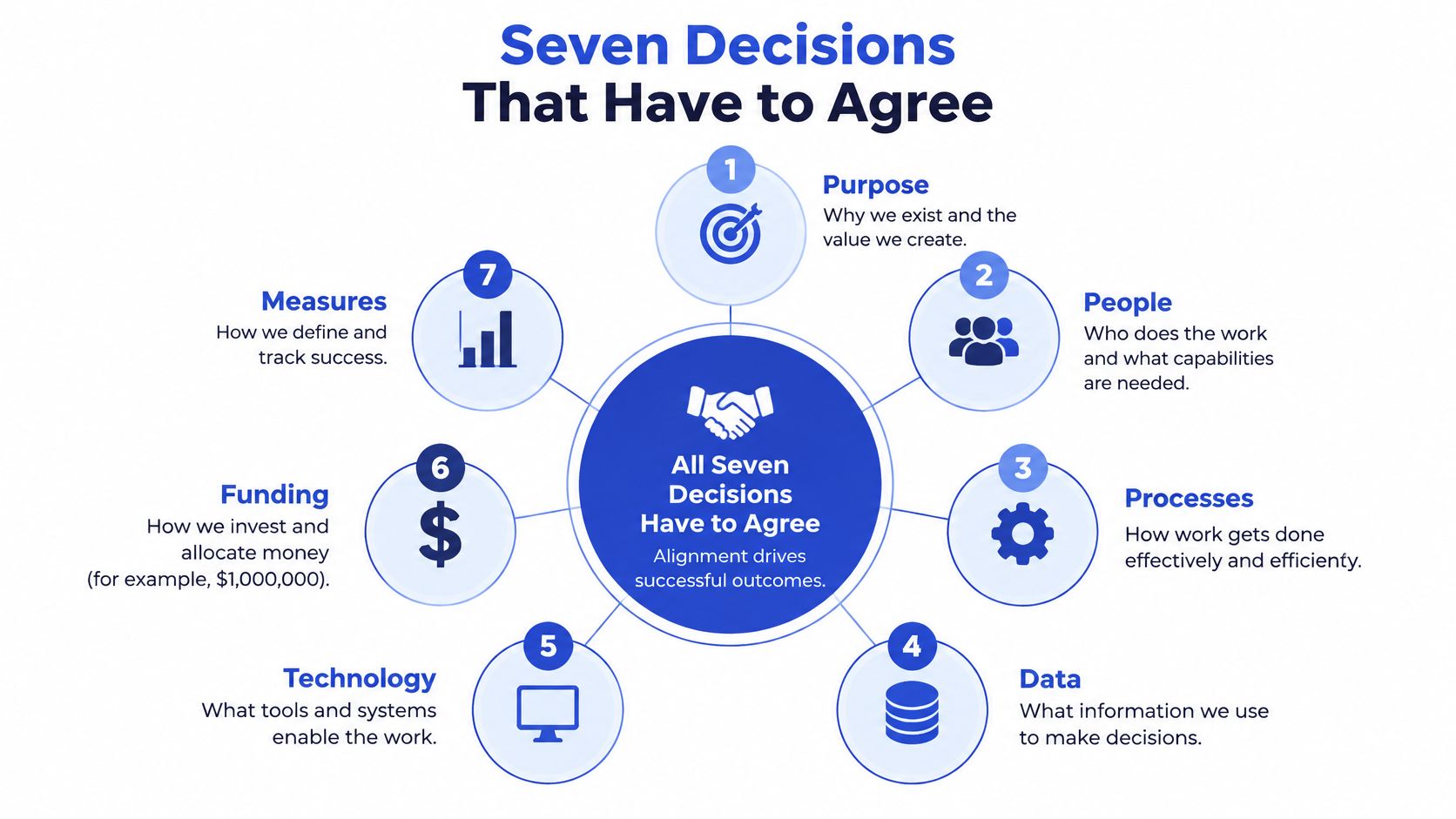
Seven decisions that have to agree
Seven decisions in one demand generation strategy
Decision | What it fixes | Where it lives | Breaks when |
|---|---|---|---|
ICP and fit rules | Who is worth creating demand with | Onboarding notes, CRM fit fields | Channels start before the buyer is agreed |
Offer and message by role | What each stakeholder must believe | Sequence and content briefs | One generic pitch hits a six-person group |
Named account list and enrichment | The only universe sales and marketing share | Apollo or Clay into HubSpot | Two teams work two lists |
Content for buyers not in market | Familiarity and proof before a trigger | LinkedIn, site, newsletter | Content is scored only on form fills |
Outbound and paid on that list | Conversations with accounts already exposed | Lemlist, Instantly, Smartlead, HeyReach, LinkedIn or Google ads | Spend chases a fresh, unfiltered audience |
Qualification and reply routing | Which signals become a meeting | SLA, owner, fit rules | Replies sit overnight or sales takes every positive reply |
One reporting line | Whether exposure became qualified pipeline | Account and opportunity dashboard | MQL volume is the success metric |
Each row must describe the same buyer. A precise ICP means little if the paid team buys a broad audience and the outbound team builds a separate list from job titles.
That inconsistency also makes diagnosis difficult. You can't compare channel performance fairly when each channel reaches a different account population with a different offer.
Give out-of-market content a commercial job
According to LinkedIn's buyer insights, 95% of B2B buyers are out of market at any time, while 81% choose brands they already know when they enter a buying process.
Treat that out-of-market audience as a memory and risk-reduction problem. Give relevant buyers a reason to remember your company, then enough evidence to feel comfortable including it in an evaluation.
That doesn't mean every post needs a sales pitch. A useful technical explanation can establish competence. A case study can show where your offer fits. A candid comparison can clarify when a prospect should choose another approach (which makes your fit claims more credible).
Use this alignment map when assigning ownership.
Keep the stack subordinate to the decisions
Apollo or Clay can hold the enriched list, with HubSpot holding lifecycle stages and opportunity records. Choose Lemlist, Instantly, or Smartlead for email execution, or HeyReach for the relevant LinkedIn motion. You don't need every sending tool.
Sales Navigator helps identify additional roles inside approved accounts. It shouldn't become a separate prospecting universe that bypasses fit checks.
For paid distribution, use account audiences where the platform supports them. Where exact account targeting isn't possible, apply explicit exclusions and review the accounts that convert. Don't mistake a targeting setting for proof that the right companies saw the message.
Our channel strategy framework follows that sequence: settle the commercial choices, then decide where to distribute.
The test is simple. If two people responsible for revenue can't name the same ICP and the same definition of qualified, there isn't a strategy yet.
Lock the ICP before any channel
Define who you're creating demand with before deciding how. Choosing LinkedIn, Google, or a sequence tool first encourages teams to fit the buyer to the channel.
At GROU, every engagement starts with an onboarding session covering the client's ICP, offer, and market. We then define segments, messaging angles, and channels before building anything, with fit rules that protect sales from spending calls on the wrong leads.
Follow the order without skipping the disagreement
Run the onboarding workshop. Write the ICP, hard fit rules, qualification requirements, and disqualifiers. Bring the objections sales already raises: unsupported geography, unsuitable infrastructure, insufficient scope, or a use case the product can't serve. Replace subjective descriptions with observable conditions.
Build the named account list from closed-won and closed-lost patterns. Review why good customers bought and why plausible opportunities failed. Use the ICP working framework to translate those patterns into CRM fields. Stop here if two leaders still disagree about qualified.
Map the buying group. A 2024 survey reported by Mi3 of more than 500 senior B2B buyers found that 81% said everyone in the buying group knew the eventual purchase on day one, compared with 4% reporting a purchase when only a few decision-makers knew it; the same findings describe groups of six to ten stakeholders. Identify the people who evaluate commercial value, daily use, and risk.
Write one core message, then attach a proof line for each role. The economic buyer needs an investment case. Users need confidence that the proposed workflow will work. The risk owner needs evidence about implementation and relevant constraints. Don't give each role a different promise.
Publish proof buyers can inspect alone. Create use-case pages and a short fit statement. If organic search is part of the motion, evaluate a specialist such as AY Rank's SaaS SEO agency against that account and use-case brief, rather than asking for traffic without commercial boundaries.
Activate outbound and paid against the approved universe. Require a reason for adding accounts. A channel owner shouldn't expand the ICP because a narrower audience is harder to reach.
Hand sales a written reply-to-meeting rule. A positive response isn't automatically qualified. Specify the account conditions and buyer context required before booking.
The visual below is a workshop aid; the execution checklist still includes activation and handoff.

Don't make one contact carry the deal
Forrester's 2021 B2B Buying Study, summarized by Empact Partners, reported that interactions per significant purchase rose from 17 in 2019 to 27 in 2021, while purchases involving four or more people increased from 47% in 2017 to 60% in 2021.
Give an engaged contact material they can share internally. Once the buyer, exclusions, and role-level evidence are settled, channel choices become much easier to defend.
Report pipeline not form fills
A full calendar can still hide weak pipeline. Keep contact activity for diagnosis, but judge commercial progress at the account and opportunity level. Agree on what counts as a qualified account and conversation before comparing channels.
Account-level metrics and when to act
Metric | Level | Question it answers | Move effort when |
|---|---|---|---|
Target-account engagement | Account | Did the right accounts see the message? | Exposure is high on non-ICP accounts |
Marketing-sourced opportunity | Opportunity | Did this motion create the deal? | Sourced pipeline is concentrated in one segment |
Marketing-influenced opportunity | Opportunity | Did content or ads touch a deal sales opened? | Influence is invisible because activity stays on the person |
Sales-accepted opportunity | Opportunity | Did sales agree the account is qualified? | Accept rate drops after a channel spike |
Pipeline value | Opportunity | Is the dollar value worth the coverage cost? | Volume rises while average deal size falls |
Win rate | Opportunity | Did early proof help the deal close? | Meetings rise while win rate stays flat |
Revenue | Closed won | Did familiar accounts actually buy? | Influence never reaches finance reporting |
MarketScale's analysis of revenue attribution describes the shift toward sourced revenue and influenced pipeline. Attribution models can produce different conclusions about channel effectiveness, so choose one based on the decision it needs to support.
Separate acquisition analysis from finance reporting
Use first-touch attribution to investigate where an account first became identifiable. Use position-based or weighted multi-touch attribution to assess budget allocation. Give finance one opportunity-source rule and apply it consistently across reporting periods.
Keep the person-level history, but connect contacts to companies and opportunities in HubSpot. A late form submission may receive credit for a deal shaped by earlier content and outreach. Last-touch reporting can hide the work that made the evaluation possible.
The dashboard should connect the stages without claiming to capture every private conversation.

Track the progression from exposure to reply quality, meeting qualification, sales acceptance, opportunity, and revenue. Define the fields with this lead generation KPI framework, then inspect where accounts stop advancing.
If outbound appears weak, check delivery before rewriting the offer. The cold email deliverability playbook can help distinguish delivery problems from poor account selection. They require different fixes.
Don't add sourced and influenced pipeline together as though they're separate pools of money.
There's no useful fixed percentage split between demand generation and outbound. A new-market entrant may need to build familiarity, while a company selling to a short account list may prioritize direct conversations. Keep both motions on one account list and one reporting line, then shift effort toward segments where engagement becomes sales-accepted pipeline, not toward the channel producing the most raw contacts.
How the system changes by industry
Demand generation weight by industry
Industry | Account reality | Content job | Outreach job | Proof point |
|---|---|---|---|---|
SaaS | Named accounts, several roles | Give each role relevant evidence before a meeting | Open conversations around account-specific problems | Precision Resource outbound engine: 6 markets, 20.2% top campaign reply rate, 79.8% top campaign open rate |
iGaming | Regional buyers, public research | Build familiarity with qualified buyers | Turn relevant interest into qualified conversations | FAZI's marketing director reported a significant boost in qualified leads from always-on campaigns and strategic outreach |
Manufacturing | Long cycle, plant and hardware buyers | Address technical questions and operating requirements | Reach a focused list of hardware buyers | Plastit: 97 leads, 7.9% reply rate |
Professional services, legal tech, pharma | Small named list, high scrutiny | Clarify fit, risk, and proof buyers can assess | Start relevant conversations with target accounts | Evidence matched to the segment, scope boundaries, and review-ready information |
The account discipline stays fixed; the work mix changes. Regional familiarity may matter more in one market, while technical detail and direct account outreach matter more in another. Treat the table as a planning aid, not a claim that every company in an industry buys the same way.

SaaS needs role-specific evidence
Build content around the questions each role must answer. Show users the workflow, give technical evaluators implementation details, and help budget owners understand the investment's scope.
Outbound can open a conversation about a specific account problem. A general product overview leaves the recipient to determine why it matters.
Precision Resource is an outbound execution example, not a SaaS category benchmark. Grou built its outbound engine across 6 markets, achieving a 20.2% top campaign reply rate and a 79.8% top campaign open rate. These are top-campaign results, not averages or revenue measures.
iGaming needs regional familiarity
In iGaming, buyers may research publicly before engaging with a vendor. Consistent content and strategic outreach can help build familiarity with the right accounts.
“With Grou's innovative approach, integrating always-on campaigns and strategic outreach, we've seen a significant boost in qualified leads.”
Ivan Savic, Marketing Director @ FAZI
The useful signal is qualified lead growth, not audience size. Keep the message and target accounts aligned across channels so interest can develop into a relevant sales conversation.
For a video companion to the industry comparison, use the embedded resource.
Manufacturing requires technical credibility
Plant and hardware buyers need enough detail to assess whether a supplier can serve their operating environment. Show relevant applications and clear limitations before asking for a meeting.
Grou built Plastit's multi-channel outbound engine to reach hardware buyers across Europe, generating 97 leads with a 7.9% reply rate. Strong manufacturing lead generation starts with identifying the actual hardware buyer, rather than defaulting to familiar marketing titles.
High-scrutiny markets need explicit boundaries
Professional services, legal tech, and pharma are distinct markets. For a small target list, direct outreach can start conversations while content addresses fit and risk before a meeting.
State what the offer includes, what requires review, and where it does not apply. Use paid support around a known trigger, not broad promotion that attracts accounts the delivery team cannot serve.
Give buyers a way to self-qualify
An independent 2025 benchmark of more than 900 senior decision-makers across manufacturing, industrial, and technology sectors found that 84% considered self-service tools critical when choosing a vendor, according to Contentful's B2B buyer benchmark; the accompanying Gartner findings report that 73% avoid suppliers sending irrelevant outreach and 61% prefer a rep-free buying experience.
Those findings argue against treating every engaged contact as a meeting opportunity. A buyer may want to evaluate the offer without accepting a sales process.
The benchmark also identifies unclear pricing, slow responses, and difficult reordering as frustrations. A personalized opening line doesn't compensate for a website that withholds the information needed to assess fit.
Build a useful self-service layer
Give prospects a short route through the evidence:
Segment use case. Describe the operating situation, the problem you address, and the conditions required for success.
Plain-language fit rules. State who the offer serves and who should look elsewhere.
Named proof. Show a comparable account, the work completed, and the outcome without implying it's guaranteed.
Decision comparison. Explain when your approach makes sense and when another option is more suitable.
Price or scope guidance. Publish a range when you can support it, or explain the variables required for a meaningful estimate.
Start with proof rather than a long company introduction. In 2025, 57% of surveyed B2B marketers selected case studies as their top demand generation content format, according to Demand Gen Report.
I'd open each segment path with a named case study. Where you lack one, don't manufacture equivalence. Show relevant capabilities and make the limits explicit.
Make the first request proportionate
For cold attention, a specific resource or fit check is often a more defensible first step than a calendar invitation. Let the prospect inspect the evidence and reject the offer privately (without having to disappoint a salesperson).
A poor request asks for a call before explaining who the offer serves. A better one points to the exact use case, identifies a relevant constraint, and makes clear what a conversation would resolve.
Buyers already ask unguarded questions on Reddit and compare vendors without a rep present. Your own pages should withstand the same scrutiny.
Keep the ad, sequence, and landing page consistent with the fit rule. If the email promises one use case and the page describes another, the buyer has to resolve your internal disagreement.
Score qualified conversations that survive independent checking. Meetings booked are useful only when the buyer still looks like a good fit after reading the evidence.
Route replies before you add spend
Fast routing matters only when the reply reaches someone who can act on it. Use the lead-response figures as a reason to set clear ownership and timing, not as a promise of a specific lift for every positive outbound reply.
Response-time SLA for routed replies
Stage | Target | Why it matters |
|---|---|---|
Acknowledge the reply | Immediately | The buyer sees the request logged, not ignored |
Named owner | Within minutes | No lead sits unassigned overnight |
Human follow-up | Within 5 minutes in coverage hours | Protects the short response window described above |
After-hours signal | Timestamped queue with next action | Work starts in the first business hour of coverage |
Benchmark response | Under 1 hour | The HBR comparison favors prompt qualification attempts |
Industry average | 42 hours | Historical HBR audit benchmark, not an acceptable target |
Assign the next action before the notification
Set up the routing workflow in HubSpot so a qualified inbound signal or positive reply creates an owner, a task, and a due time. Notify the owner, and specify who gets the task if that person is unavailable.
An automatic acknowledgment confirms receipt; it does not replace a human response. The representative still needs to answer the buyer's question and propose a useful next action.
Use the lead follow-up framework to define after-hours handling. Record the reply timestamp and next coverage window instead of relying on someone to notice the inbox.
Report median and 90th-percentile response time alongside contact rate, qualification rate, meeting rate, and opportunity conversion by source. The slower tail can reveal neglected replies that a reasonable median conceals.
Audit the account before the send
Data quality is a common demand-generation challenge. Before activating a sequence in Clay or Apollo, require four fields:
Buying-group role. Why this person belongs in the conversation.
Technology or plant footprint. The operating context relevant to the offer.
Verified trigger. A real event supporting the timing, not an invented inference.
Disqualifier status. Evidence that the account does not breach a hard exclusion.
An empty field means the account needs review, not more creative copy. Route positive replies through the agreed fit rules, then let the client's sales team take the call.
If replies are healthy but qualification drops after delayed follow-up, fix routing before spending more. More traffic into an unattended queue creates more missed opportunities.
Mark coverage on 20 open deals
By Monday, export 20 open opportunities and add a CRM column named buying-group coverage. Mark whether at least two relevant roles encountered the same core message before the first meeting. This is a diagnostic exercise, not a universal qualification threshold.
Use recorded evidence: associated contacts, email threads, meeting attendees, and identifiable content interactions. Mark unknown where you can't establish exposure. Don't convert an assumed impression into a confirmed stakeholder touch.
Read the gaps before approving experiments
Mostly single-contact rows. Pause new channel tests and repair role coverage and message consistency.
Coverage without meeting progress. Check response ownership and compliance with the five-minute routing rule before adding spend.
Unverifiable qualification fields. Read the fit rules aloud with sales that afternoon and remove requirements nobody can observe in the available data.
Leave the review with a named owner for the largest gap. A dashboard flag without responsibility won't change the next opportunity.
Audit output: Every weak row should have either a coverage action, a routing fix, or an explicit reason to disqualify it.
Don't use this sample to claim statistical certainty. Use it to find operational failures you can inspect directly, then repeat the review after the repairs.
GROU is a global B2B pipeline agency working with revenue teams across iGaming, SaaS, manufacturing, and professional services, generating and qualifying leads while the client's sales team runs calls and closes. Our methodology often starts with outbound for early pipeline, adds LinkedIn content once the engine is running, and uses the market, offer, and goals to determine the appropriate scope.
Bring your completed opportunity audit to Grou and book a call for a direct recommendation matched to your market, offer, and goals. We can work alongside your sales team to build the target list, run outreach, qualify replies, and book meetings, starting with the gap your audit identifies.
Your forms are filling, replies are arriving, and calls are on the calendar, but revenue isn't following. The popular advice to publish more and add channels won't fix a demand generation strategy built around the wrong buyer.
Agree on fit first. Lock the ICP and qualification rules before choosing channels.
Share the audience. Run content and outbound against one named account list.
Report buying progress. Measure accounts and opportunities, not just MQLs.
Adjust the motion. Change the channel weight by industry, then fix reply speed before buying more media.
Table of Contents
A full calendar is not a strategy
A founder sees meetings booked and expects pipeline. The head of marketing sees downloads, while the head of sales sees prospects who can't buy. RevOps gets the job of explaining why those reports disagree.
More activity won't resolve that disagreement. A demand generation strategy starts with an agreement about who you're creating demand with, what a qualified account looks like, and which signals justify sales attention.
For revenue leaders in iGaming, SaaS, manufacturing, legal tech, or pharma, the immediate job is to locate the failure before funding another campaign.
Find where interest stops progressing
The stall usually sits in a recognizable place:
Account selection. The company matches a broad industry filter but lacks the operating conditions your offer requires.
Message relevance. Everyone receives the same pitch, regardless of their role in the decision.
Offer clarity. The prospect understands the topic but can't explain why your solution belongs on the shortlist.
Follow-up ownership. A positive reply reaches a shared inbox without an accountable person.
Buying progress. Someone likes the idea, but nobody helps the wider group evaluate it.
Separate demand creation from contact capture when diagnosing the problem. Pipecorn's guide to lead generation strategies for outbound teams is a useful reference for that distinction, particularly when sales and marketing use the same terminology for different jobs.
Practical rule: Don't approve another channel until someone can name the failure it's supposed to fix.
A campaign calendar should follow commercial decisions. It can't make them for you.
If sales rejects the accounts, repair selection. If qualified prospects disengage after checking the website, repair the evidence. If replies wait unattended, repair ownership. This is an order of decisions, not a pep talk.
Seven decisions that have to agree
Seven decisions in one demand generation strategy
Decision | What it fixes | Where it lives | Breaks when |
|---|---|---|---|
ICP and fit rules | Who is worth creating demand with | Onboarding notes, CRM fit fields | Channels start before the buyer is agreed |
Offer and message by role | What each stakeholder must believe | Sequence and content briefs | One generic pitch hits a six-person group |
Named account list and enrichment | The only universe sales and marketing share | Apollo or Clay into HubSpot | Two teams work two lists |
Content for buyers not in market | Familiarity and proof before a trigger | LinkedIn, site, newsletter | Content is scored only on form fills |
Outbound and paid on that list | Conversations with accounts already exposed | Lemlist, Instantly, Smartlead, HeyReach, LinkedIn or Google ads | Spend chases a fresh, unfiltered audience |
Qualification and reply routing | Which signals become a meeting | SLA, owner, fit rules | Replies sit overnight or sales takes every positive reply |
One reporting line | Whether exposure became qualified pipeline | Account and opportunity dashboard | MQL volume is the success metric |
Each row must describe the same buyer. A precise ICP means little if the paid team buys a broad audience and the outbound team builds a separate list from job titles.
That inconsistency also makes diagnosis difficult. You can't compare channel performance fairly when each channel reaches a different account population with a different offer.
Give out-of-market content a commercial job
According to LinkedIn's buyer insights, 95% of B2B buyers are out of market at any time, while 81% choose brands they already know when they enter a buying process.
Treat that out-of-market audience as a memory and risk-reduction problem. Give relevant buyers a reason to remember your company, then enough evidence to feel comfortable including it in an evaluation.
That doesn't mean every post needs a sales pitch. A useful technical explanation can establish competence. A case study can show where your offer fits. A candid comparison can clarify when a prospect should choose another approach (which makes your fit claims more credible).
Use this alignment map when assigning ownership.
Keep the stack subordinate to the decisions
Apollo or Clay can hold the enriched list, with HubSpot holding lifecycle stages and opportunity records. Choose Lemlist, Instantly, or Smartlead for email execution, or HeyReach for the relevant LinkedIn motion. You don't need every sending tool.
Sales Navigator helps identify additional roles inside approved accounts. It shouldn't become a separate prospecting universe that bypasses fit checks.
For paid distribution, use account audiences where the platform supports them. Where exact account targeting isn't possible, apply explicit exclusions and review the accounts that convert. Don't mistake a targeting setting for proof that the right companies saw the message.
Our channel strategy framework follows that sequence: settle the commercial choices, then decide where to distribute.
The test is simple. If two people responsible for revenue can't name the same ICP and the same definition of qualified, there isn't a strategy yet.
Lock the ICP before any channel
Define who you're creating demand with before deciding how. Choosing LinkedIn, Google, or a sequence tool first encourages teams to fit the buyer to the channel.
At GROU, every engagement starts with an onboarding session covering the client's ICP, offer, and market. We then define segments, messaging angles, and channels before building anything, with fit rules that protect sales from spending calls on the wrong leads.
Follow the order without skipping the disagreement
Run the onboarding workshop. Write the ICP, hard fit rules, qualification requirements, and disqualifiers. Bring the objections sales already raises: unsupported geography, unsuitable infrastructure, insufficient scope, or a use case the product can't serve. Replace subjective descriptions with observable conditions.
Build the named account list from closed-won and closed-lost patterns. Review why good customers bought and why plausible opportunities failed. Use the ICP working framework to translate those patterns into CRM fields. Stop here if two leaders still disagree about qualified.
Map the buying group. A 2024 survey reported by Mi3 of more than 500 senior B2B buyers found that 81% said everyone in the buying group knew the eventual purchase on day one, compared with 4% reporting a purchase when only a few decision-makers knew it; the same findings describe groups of six to ten stakeholders. Identify the people who evaluate commercial value, daily use, and risk.
Write one core message, then attach a proof line for each role. The economic buyer needs an investment case. Users need confidence that the proposed workflow will work. The risk owner needs evidence about implementation and relevant constraints. Don't give each role a different promise.
Publish proof buyers can inspect alone. Create use-case pages and a short fit statement. If organic search is part of the motion, evaluate a specialist such as AY Rank's SaaS SEO agency against that account and use-case brief, rather than asking for traffic without commercial boundaries.
Activate outbound and paid against the approved universe. Require a reason for adding accounts. A channel owner shouldn't expand the ICP because a narrower audience is harder to reach.
Hand sales a written reply-to-meeting rule. A positive response isn't automatically qualified. Specify the account conditions and buyer context required before booking.
The visual below is a workshop aid; the execution checklist still includes activation and handoff.
Don't make one contact carry the deal
Forrester's 2021 B2B Buying Study, summarized by Empact Partners, reported that interactions per significant purchase rose from 17 in 2019 to 27 in 2021, while purchases involving four or more people increased from 47% in 2017 to 60% in 2021.
Give an engaged contact material they can share internally. Once the buyer, exclusions, and role-level evidence are settled, channel choices become much easier to defend.
Report pipeline not form fills
A full calendar can still hide weak pipeline. Keep contact activity for diagnosis, but judge commercial progress at the account and opportunity level. Agree on what counts as a qualified account and conversation before comparing channels.
Account-level metrics and when to act
Metric | Level | Question it answers | Move effort when |
|---|---|---|---|
Target-account engagement | Account | Did the right accounts see the message? | Exposure is high on non-ICP accounts |
Marketing-sourced opportunity | Opportunity | Did this motion create the deal? | Sourced pipeline is concentrated in one segment |
Marketing-influenced opportunity | Opportunity | Did content or ads touch a deal sales opened? | Influence is invisible because activity stays on the person |
Sales-accepted opportunity | Opportunity | Did sales agree the account is qualified? | Accept rate drops after a channel spike |
Pipeline value | Opportunity | Is the dollar value worth the coverage cost? | Volume rises while average deal size falls |
Win rate | Opportunity | Did early proof help the deal close? | Meetings rise while win rate stays flat |
Revenue | Closed won | Did familiar accounts actually buy? | Influence never reaches finance reporting |
MarketScale's analysis of revenue attribution describes the shift toward sourced revenue and influenced pipeline. Attribution models can produce different conclusions about channel effectiveness, so choose one based on the decision it needs to support.
Separate acquisition analysis from finance reporting
Use first-touch attribution to investigate where an account first became identifiable. Use position-based or weighted multi-touch attribution to assess budget allocation. Give finance one opportunity-source rule and apply it consistently across reporting periods.
Keep the person-level history, but connect contacts to companies and opportunities in HubSpot. A late form submission may receive credit for a deal shaped by earlier content and outreach. Last-touch reporting can hide the work that made the evaluation possible.
The dashboard should connect the stages without claiming to capture every private conversation.
Track the progression from exposure to reply quality, meeting qualification, sales acceptance, opportunity, and revenue. Define the fields with this lead generation KPI framework, then inspect where accounts stop advancing.
If outbound appears weak, check delivery before rewriting the offer. The cold email deliverability playbook can help distinguish delivery problems from poor account selection. They require different fixes.
Don't add sourced and influenced pipeline together as though they're separate pools of money.
There's no useful fixed percentage split between demand generation and outbound. A new-market entrant may need to build familiarity, while a company selling to a short account list may prioritize direct conversations. Keep both motions on one account list and one reporting line, then shift effort toward segments where engagement becomes sales-accepted pipeline, not toward the channel producing the most raw contacts.
How the system changes by industry
Demand generation weight by industry
Industry | Account reality | Content job | Outreach job | Proof point |
|---|---|---|---|---|
SaaS | Named accounts, several roles | Give each role relevant evidence before a meeting | Open conversations around account-specific problems | Precision Resource outbound engine: 6 markets, 20.2% top campaign reply rate, 79.8% top campaign open rate |
iGaming | Regional buyers, public research | Build familiarity with qualified buyers | Turn relevant interest into qualified conversations | FAZI's marketing director reported a significant boost in qualified leads from always-on campaigns and strategic outreach |
Manufacturing | Long cycle, plant and hardware buyers | Address technical questions and operating requirements | Reach a focused list of hardware buyers | Plastit: 97 leads, 7.9% reply rate |
Professional services, legal tech, pharma | Small named list, high scrutiny | Clarify fit, risk, and proof buyers can assess | Start relevant conversations with target accounts | Evidence matched to the segment, scope boundaries, and review-ready information |
The account discipline stays fixed; the work mix changes. Regional familiarity may matter more in one market, while technical detail and direct account outreach matter more in another. Treat the table as a planning aid, not a claim that every company in an industry buys the same way.
SaaS needs role-specific evidence
Build content around the questions each role must answer. Show users the workflow, give technical evaluators implementation details, and help budget owners understand the investment's scope.
Outbound can open a conversation about a specific account problem. A general product overview leaves the recipient to determine why it matters.
Precision Resource is an outbound execution example, not a SaaS category benchmark. Grou built its outbound engine across 6 markets, achieving a 20.2% top campaign reply rate and a 79.8% top campaign open rate. These are top-campaign results, not averages or revenue measures.
iGaming needs regional familiarity
In iGaming, buyers may research publicly before engaging with a vendor. Consistent content and strategic outreach can help build familiarity with the right accounts.
“With Grou's innovative approach, integrating always-on campaigns and strategic outreach, we've seen a significant boost in qualified leads.”
Ivan Savic, Marketing Director @ FAZI
The useful signal is qualified lead growth, not audience size. Keep the message and target accounts aligned across channels so interest can develop into a relevant sales conversation.
For a video companion to the industry comparison, use the embedded resource.
Manufacturing requires technical credibility
Plant and hardware buyers need enough detail to assess whether a supplier can serve their operating environment. Show relevant applications and clear limitations before asking for a meeting.
Grou built Plastit's multi-channel outbound engine to reach hardware buyers across Europe, generating 97 leads with a 7.9% reply rate. Strong manufacturing lead generation starts with identifying the actual hardware buyer, rather than defaulting to familiar marketing titles.
High-scrutiny markets need explicit boundaries
Professional services, legal tech, and pharma are distinct markets. For a small target list, direct outreach can start conversations while content addresses fit and risk before a meeting.
State what the offer includes, what requires review, and where it does not apply. Use paid support around a known trigger, not broad promotion that attracts accounts the delivery team cannot serve.
Give buyers a way to self-qualify
An independent 2025 benchmark of more than 900 senior decision-makers across manufacturing, industrial, and technology sectors found that 84% considered self-service tools critical when choosing a vendor, according to Contentful's B2B buyer benchmark; the accompanying Gartner findings report that 73% avoid suppliers sending irrelevant outreach and 61% prefer a rep-free buying experience.
Those findings argue against treating every engaged contact as a meeting opportunity. A buyer may want to evaluate the offer without accepting a sales process.
The benchmark also identifies unclear pricing, slow responses, and difficult reordering as frustrations. A personalized opening line doesn't compensate for a website that withholds the information needed to assess fit.
Build a useful self-service layer
Give prospects a short route through the evidence:
Segment use case. Describe the operating situation, the problem you address, and the conditions required for success.
Plain-language fit rules. State who the offer serves and who should look elsewhere.
Named proof. Show a comparable account, the work completed, and the outcome without implying it's guaranteed.
Decision comparison. Explain when your approach makes sense and when another option is more suitable.
Price or scope guidance. Publish a range when you can support it, or explain the variables required for a meaningful estimate.
Start with proof rather than a long company introduction. In 2025, 57% of surveyed B2B marketers selected case studies as their top demand generation content format, according to Demand Gen Report.
I'd open each segment path with a named case study. Where you lack one, don't manufacture equivalence. Show relevant capabilities and make the limits explicit.
Make the first request proportionate
For cold attention, a specific resource or fit check is often a more defensible first step than a calendar invitation. Let the prospect inspect the evidence and reject the offer privately (without having to disappoint a salesperson).
A poor request asks for a call before explaining who the offer serves. A better one points to the exact use case, identifies a relevant constraint, and makes clear what a conversation would resolve.
Buyers already ask unguarded questions on Reddit and compare vendors without a rep present. Your own pages should withstand the same scrutiny.
Keep the ad, sequence, and landing page consistent with the fit rule. If the email promises one use case and the page describes another, the buyer has to resolve your internal disagreement.
Score qualified conversations that survive independent checking. Meetings booked are useful only when the buyer still looks like a good fit after reading the evidence.
Route replies before you add spend
Fast routing matters only when the reply reaches someone who can act on it. Use the lead-response figures as a reason to set clear ownership and timing, not as a promise of a specific lift for every positive outbound reply.
Response-time SLA for routed replies
Stage | Target | Why it matters |
|---|---|---|
Acknowledge the reply | Immediately | The buyer sees the request logged, not ignored |
Named owner | Within minutes | No lead sits unassigned overnight |
Human follow-up | Within 5 minutes in coverage hours | Protects the short response window described above |
After-hours signal | Timestamped queue with next action | Work starts in the first business hour of coverage |
Benchmark response | Under 1 hour | The HBR comparison favors prompt qualification attempts |
Industry average | 42 hours | Historical HBR audit benchmark, not an acceptable target |
Assign the next action before the notification
Set up the routing workflow in HubSpot so a qualified inbound signal or positive reply creates an owner, a task, and a due time. Notify the owner, and specify who gets the task if that person is unavailable.
An automatic acknowledgment confirms receipt; it does not replace a human response. The representative still needs to answer the buyer's question and propose a useful next action.
Use the lead follow-up framework to define after-hours handling. Record the reply timestamp and next coverage window instead of relying on someone to notice the inbox.
Report median and 90th-percentile response time alongside contact rate, qualification rate, meeting rate, and opportunity conversion by source. The slower tail can reveal neglected replies that a reasonable median conceals.
Audit the account before the send
Data quality is a common demand-generation challenge. Before activating a sequence in Clay or Apollo, require four fields:
Buying-group role. Why this person belongs in the conversation.
Technology or plant footprint. The operating context relevant to the offer.
Verified trigger. A real event supporting the timing, not an invented inference.
Disqualifier status. Evidence that the account does not breach a hard exclusion.
An empty field means the account needs review, not more creative copy. Route positive replies through the agreed fit rules, then let the client's sales team take the call.
If replies are healthy but qualification drops after delayed follow-up, fix routing before spending more. More traffic into an unattended queue creates more missed opportunities.
Mark coverage on 20 open deals
By Monday, export 20 open opportunities and add a CRM column named buying-group coverage. Mark whether at least two relevant roles encountered the same core message before the first meeting. This is a diagnostic exercise, not a universal qualification threshold.
Use recorded evidence: associated contacts, email threads, meeting attendees, and identifiable content interactions. Mark unknown where you can't establish exposure. Don't convert an assumed impression into a confirmed stakeholder touch.
Read the gaps before approving experiments
Mostly single-contact rows. Pause new channel tests and repair role coverage and message consistency.
Coverage without meeting progress. Check response ownership and compliance with the five-minute routing rule before adding spend.
Unverifiable qualification fields. Read the fit rules aloud with sales that afternoon and remove requirements nobody can observe in the available data.
Leave the review with a named owner for the largest gap. A dashboard flag without responsibility won't change the next opportunity.
Audit output: Every weak row should have either a coverage action, a routing fix, or an explicit reason to disqualify it.
Don't use this sample to claim statistical certainty. Use it to find operational failures you can inspect directly, then repeat the review after the repairs.
GROU is a global B2B pipeline agency working with revenue teams across iGaming, SaaS, manufacturing, and professional services, generating and qualifying leads while the client's sales team runs calls and closes. Our methodology often starts with outbound for early pipeline, adds LinkedIn content once the engine is running, and uses the market, offer, and goals to determine the appropriate scope.
Bring your completed opportunity audit to Grou and book a call for a direct recommendation matched to your market, offer, and goals. We can work alongside your sales team to build the target list, run outreach, qualify replies, and book meetings, starting with the gap your audit identifies.
Pipeline OS Newsletter
Build qualified pipeline
Get weekly tactics to generate demand, improve lead quality, and book more meetings.





Trusted by industry leaders
Trusted by industry leaders
Trusted by industry leaders
Ready to build qualified pipeline?
Ready to build qualified pipeline?
Ready to build qualified pipeline?
Book a call to see if we're the right fit, or take the 2-minute quiz to get a clear starting point.
Book a call to see if we're the right fit, or take the 2-minute quiz to get a clear starting point.
Book a call to see if we're the right fit, or take the 2-minute quiz to get a clear starting point.
" height="30.21639343089746px" id="hfGbXmQR2" width="30.216393430897455px"/></svg>)
Copyright © 2026 – All Right Reserved
Copyright © 2026 – All Right Reserved
Copyright © 2026 – All Right Reserved