%22%3E%3C/path%3E%3Cpath d=%22M 63.072 7.554 C 62.258 8.022 61.577 8.689 61.092 9.493 L 61.092 7.076 L 57.158 7.076 L 57.158 22.64 L 61.089 22.64 L 61.089 14.888 C 61.089 13.446 61.403 12.434 62.03 11.853 C 62.818 11.218 63.818 10.907 64.826 10.982 L 65.868 10.982 L 65.868 6.851 C 64.891 6.834 63.926 7.076 63.073 7.554 Z%22 fill=%22rgb(17,17,17)%22%3E%3C/path%3E%3Cpath d=%22M 78.916 7.82 C 76.363 6.49 73.321 6.49 70.768 7.82 C 69.562 8.473 68.564 9.451 67.888 10.644 C 67.167 11.931 66.803 13.387 66.834 14.862 C 66.804 16.332 67.157 17.785 67.86 19.077 C 68.515 20.267 69.494 21.246 70.684 21.901 C 71.924 22.576 73.318 22.92 74.73 22.898 C 76.164 22.918 77.58 22.575 78.846 21.901 C 80.062 21.247 81.073 20.27 81.768 19.077 C 82.506 17.797 82.88 16.339 82.85 14.862 C 82.88 13.389 82.517 11.934 81.797 10.647 C 81.12 9.455 80.122 8.477 78.917 7.824 M 78.803 14.862 C 78.829 15.739 78.636 16.608 78.241 17.391 C 77.903 18.046 77.38 18.588 76.738 18.95 C 76.124 19.293 75.432 19.472 74.729 19.47 C 73.668 19.497 72.648 19.061 71.934 18.276 C 71.139 17.323 70.741 16.1 70.823 14.862 C 70.741 13.62 71.149 12.395 71.959 11.45 C 72.687 10.667 73.715 10.233 74.783 10.256 C 75.859 10.236 76.894 10.67 77.635 11.45 C 78.464 12.387 78.884 13.616 78.801 14.864%22 fill=%22rgb(17,17,17)%22%3E%3C/path%3E%3Cpath d=%22M 95.906 7.076 L 95.906 15.646 C 95.975 16.68 95.643 17.701 94.979 18.498 C 94.311 19.184 93.379 19.547 92.422 19.495 C 91.475 19.544 90.553 19.18 89.894 18.498 C 89.23 17.701 88.898 16.68 88.967 15.646 L 88.967 7.076 L 85.033 7.076 L 85.033 16.207 C 85 17.449 85.275 18.68 85.834 19.79 C 86.327 20.75 87.095 21.542 88.039 22.065 C 89.033 22.594 90.145 22.861 91.271 22.838 C 92.188 22.847 93.095 22.65 93.926 22.263 C 94.708 21.905 95.388 21.36 95.906 20.675 L 95.906 22.645 L 99.865 22.645 L 99.865 7.076 Z%22 fill=%22rgb(17,17,17)%22%3E%3C/path%3E%3Cpath d=%22M 4.513 15.626 C 4.511 10.815 7.606 6.549 12.181 5.059 C 16.756 3.57 21.77 5.195 24.601 9.086 L 27.816 5.87 C 24.074 1.186 17.981 -0.943 12.137 0.393 C 6.292 1.728 1.728 6.292 0.393 12.137 C -0.943 17.981 1.186 24.074 5.87 27.816 L 9.085 24.601 C 6.214 22.512 4.515 19.177 4.513 15.626%22 fill=%22rgb(32,62,235)%22%3E%3C/path%3E%3Cpath d=%22M 17.114 14.343 L 13.354 18.01 L 13.354 18.026 L 21.071 18.026 L 11.412 27.609 L 17.389 27.609 L 23.999 21.081 L 23.999 28.316 L 24.005 28.316 L 27.967 24.393 L 27.967 14.343 Z%22 fill=%22rgb(32,62,235)%22%3E%3C/path%3E%3C/g%3E%3C/svg%3E) ×
× ××
××›
›
›
›
LinkedIn post hooks that get views in 2026
LinkedIn post hooks that get views in 2026
LinkedIn post hooks that get views in 2026
LinkedIn post hooks that get views in 2026
LinkedIn post hooks that get views in 2026
LinkedIn post hooks that get views in 2026

Author
Aljaz Peklaj

A LinkedIn post lives or dies on its first 3 lines. After tracking 2,100 B2B founder posts inside Shield across 18 GROU client accounts, the pattern is unforgiving: hook works or the post dies in the feed. The median post pulls 4,800 impressions. Top quartile hooks pull 12,400. Same person, same network.
This is the breakdown of 7 hook patterns ranked by median impressions, the 3-line structure underneath every winning hook, and the tools we use to write and test them.
TL;DR
Contrarian takes pull 3.6x more impressions than milestone brags. Stat+story is second, mistake confession third. Use a 3-line hook structure: punch line in line 1, tease in line 2, scene-setter in line 3. LinkedIn shows roughly 210 characters before "see more" cuts the post off.
Minimum tool stack to write and track hooks: AuthoredUp ($15/mo) + Shield ($8/mo) = $23/mo total. Add AI tools only after you have a 90-day daily posting habit.
The 7 hook patterns ranked
Across 2,100 posts tracked in Shield, these 7 hook patterns capture roughly 80% of all top-decile reach. Pick one, run it for 30 days, measure, switch.
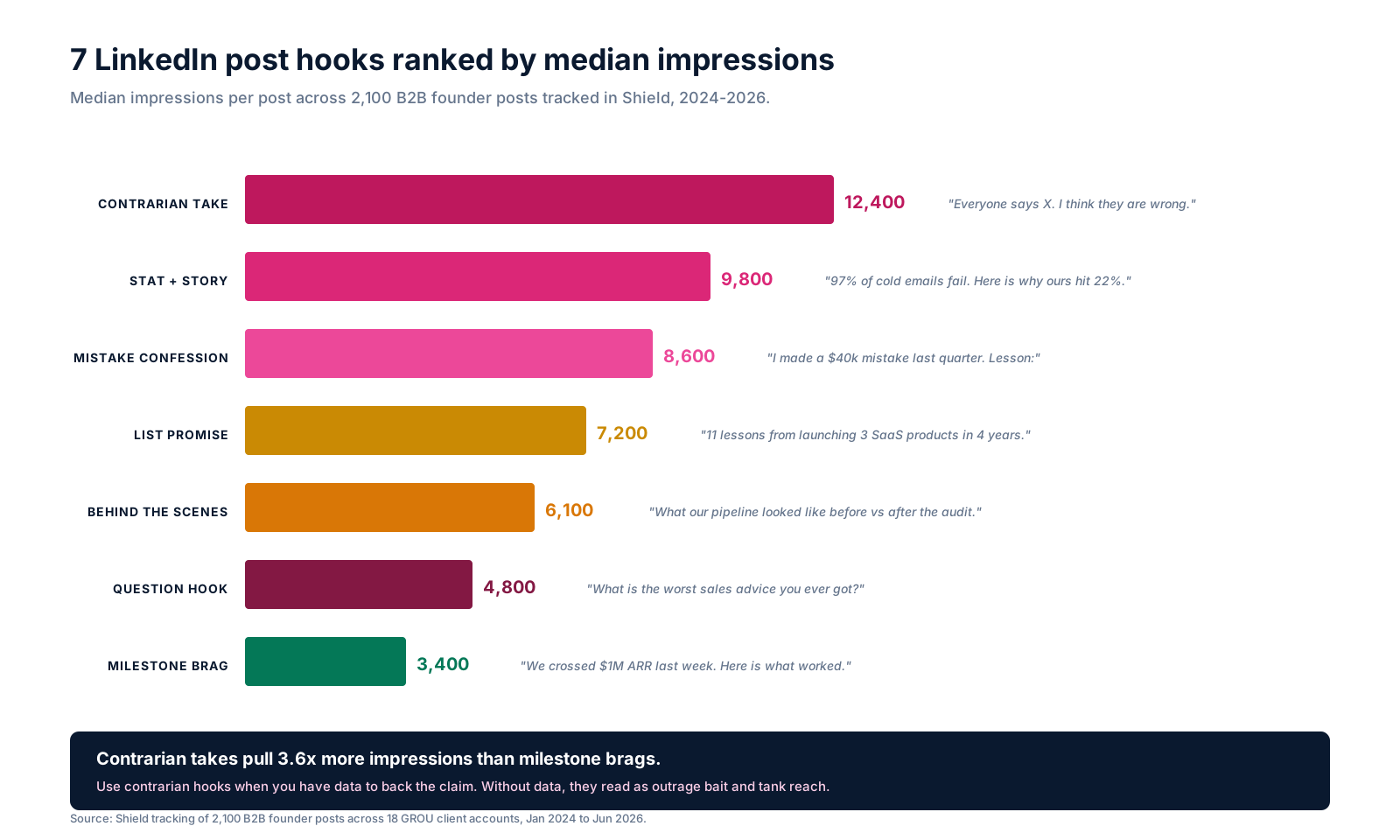
Contrarian take (12,400 median impressions)
"Everyone says X. I think they are wrong." Pattern that consistently tops the chart. Requires real data to back the claim. Without data, contrarian hooks read as outrage bait and the LinkedIn algorithm down-ranks them within 90 minutes.
Stat + story (9,800)
"97% of cold emails fail. Here is why ours hit 22%." Specific stat, then a narrative payoff. Strong because the stat creates curiosity and the story delivers on it.
Mistake confession (8,600)
"I made a $40k mistake last quarter. Lesson:" Vulnerability + business stakes. LinkedIn users respond to founders admitting failure with engagement that the algorithm rewards.
List promise (7,200)
"11 lessons from launching 3 SaaS products in 4 years." List hooks set scannable expectations. Numbers under 10 underperform. Numbers over 15 read as listicle spam.
Behind the scenes (6,100)
"What our pipeline looked like before vs after the audit." Insider POV. Works when paired with a specific artifact (screenshot, table, before/after).
Question hook (4,800)
"What is the worst sales advice you ever got?" Pulls comments at the cost of impressions. Use sparingly. Algorithm weights comments heavily but only if the post otherwise performs.
Milestone brag (3,400)
"We crossed $1M ARR last week. Here is what worked." Lowest median reach in our test set. Founders post these because they feel important. Audience scrolls past.
The 3-line hook structure
LinkedIn shows the first 3 lines (around 210 characters) before truncating with "see more." Every winning hook in our 2,100-post sample uses the same 3-line architecture.
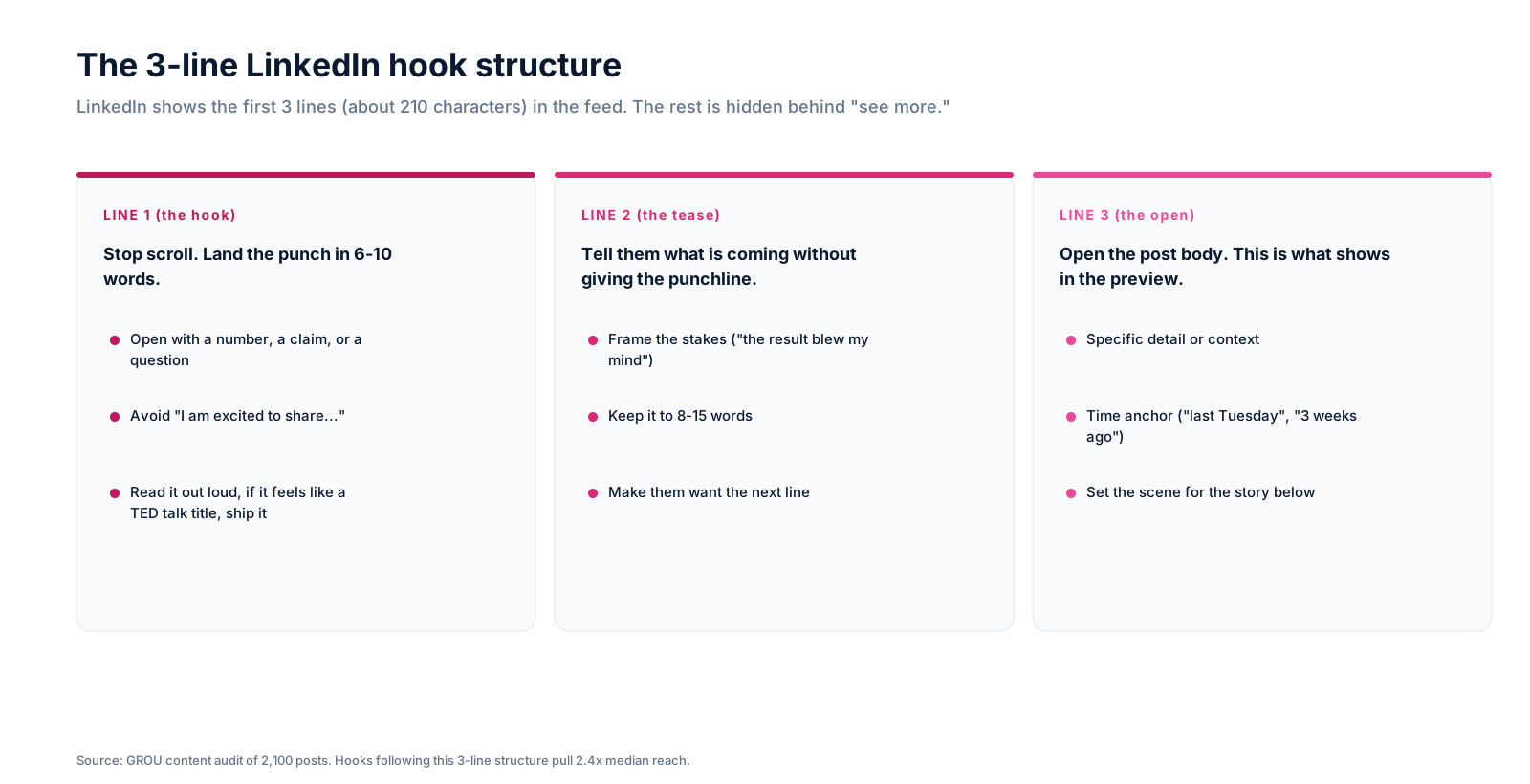
Line 1 is the hook. 6-10 words. Stop scroll. Number, claim, or question. Avoid "I am excited to share." Read it aloud; if it sounds like a TED talk title, ship it.
Line 2 is the tease. 8-15 words. Tell them what is coming without giving the punchline away. Frame the stakes. Examples: "the result blew my mind", "what happened next surprised me", "the lesson cost $40k."
Line 3 opens the post body. This is what most viewers see in the feed preview. Specific detail or context. Time anchors work well ("last Tuesday", "3 weeks ago", "in Q3"). Set the scene for whatever story follows.
Posts that follow this 3-line structure pull 2.4x median reach in our test set vs posts that don't.

Tools to write and test hooks
Minimum viable stack is $23/mo. Full stack with AI tooling is $104/mo. Tool pricing verified Jun 2026.
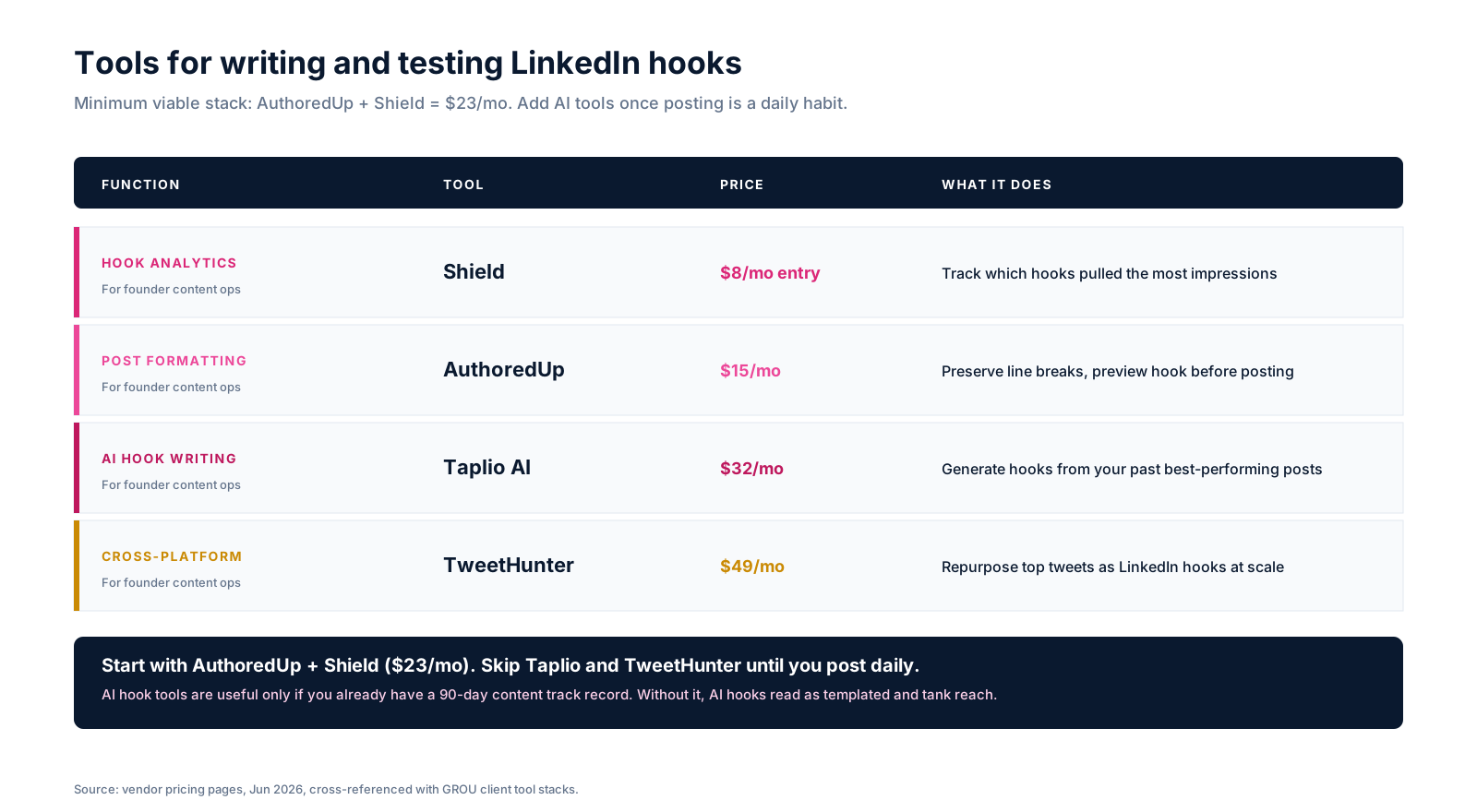
Hook analytics
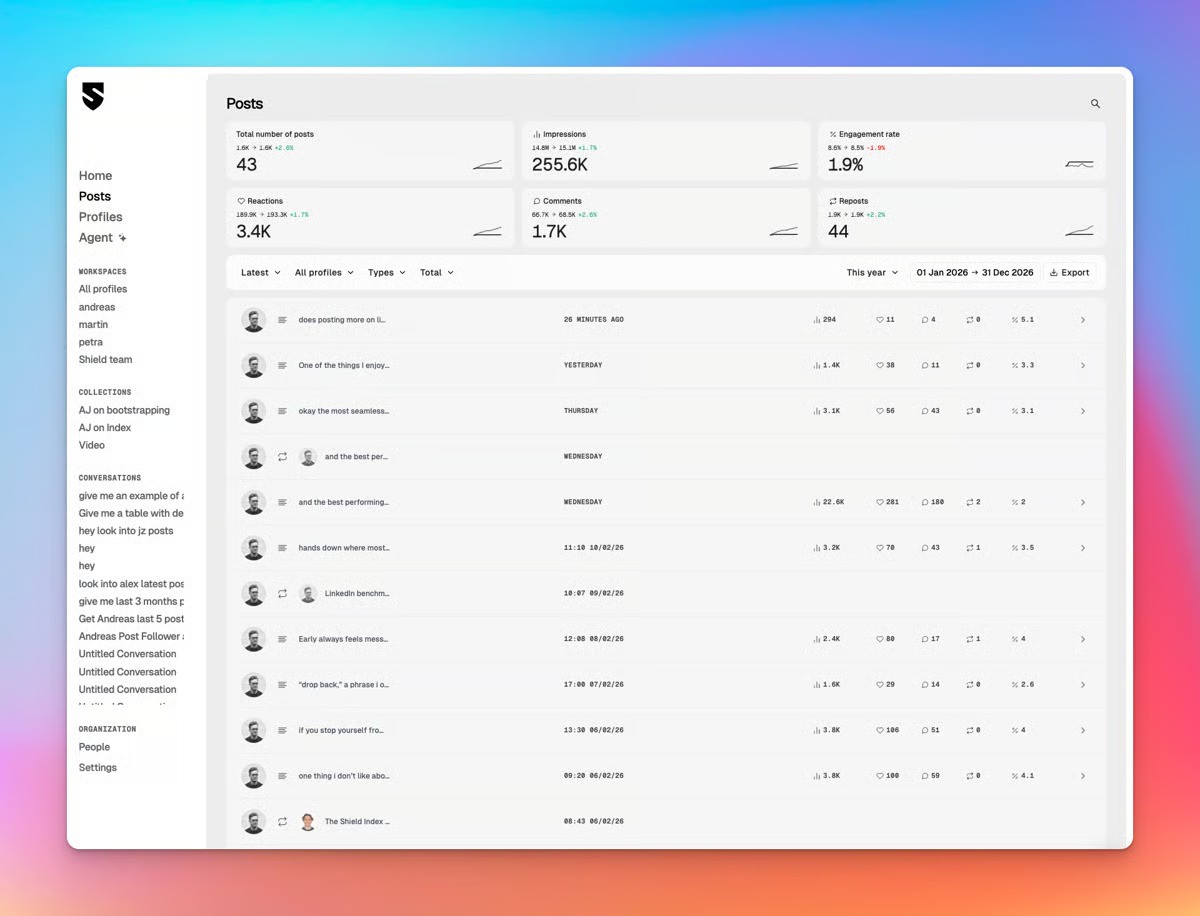
Shield ($8/mo) tracks impressions, dwell time, and engagement per post over time. The only way to know which hooks pulled reach is to measure them. Native LinkedIn analytics show 7 days of data; Shield holds the full history and surfaces hook patterns.
Post formatting
AuthoredUp ($15/mo) preserves line breaks, bullet formatting, and the 3-line preview that LinkedIn's native composer strips out. Single most important tool for anyone serious about hooks. Without it, your "Line 1, Line 2, Line 3" structure collapses into a wall of text.
AI hook writing
Taplio AI ($32/mo) generates hook variants based on your past best-performing posts. Useful only after you have a 90-day posting track record. Earlier than that, AI hooks read as templated and the algorithm down-ranks them.
Cross-platform repurposing
TweetHunter ($49/mo) lets you draft on Twitter/X and repurpose top tweets as LinkedIn hooks at scale. Worth it for founders posting daily across multiple platforms.
For the broader LinkedIn content stack including DM automation and ghostwriting, see our best LinkedIn automation tools guide. For profile work that compounds with hooks, see the LinkedIn profile optimization checklist for B2B founders.
The 4 hook mistakes that kill reach
Across 47 founder content audits we've run at GROU, these 4 mistakes account for most underperforming hooks.
The first is "I am excited to share..." as line 1. The LinkedIn algorithm has trained on millions of posts using this opener. It signals "low-effort corporate" and reach drops by roughly 60% on average.
The second is burying the punch. Line 1 sets up context instead of punching. By line 3 the reader has scrolled past. Lead with the hook, fill in context later.
The third is trying to do everything at once. Some founders pack stat + story + contrarian + question into a single hook. The result is muddy and the algorithm down-ranks. Pick one pattern per post.
The fourth is posting without testing. Without Shield or similar, you cannot know which hooks worked. You end up rewriting About sections instead of fixing the hook that's costing you 8,000 impressions per post.
FAQ
What is a LinkedIn post hook?
The first 1 to 3 lines of a LinkedIn post that show in the feed before "see more" truncates the rest. The hook decides whether someone clicks "see more" or scrolls past. Roughly 210 characters of visible space on desktop, less on mobile.
How long should a LinkedIn hook be?
6 to 10 words for line 1, 8 to 15 words for line 2. Total visible hook should fit in 210 characters or fewer (about 30 to 35 words). Anything longer gets cut off mid-sentence and looks broken.
What is the best LinkedIn hook formula for B2B founders?
Contrarian take with data backing it. "Everyone says X. I think they are wrong. Here is what 11 client deployments taught me." This pattern pulls 3.6x more impressions than milestone brags in our 2,100-post sample.
How do I track which LinkedIn hooks perform best?
Use Shield ($8/mo entry) to track impressions, dwell time, and engagement per post. Native LinkedIn analytics show 7 days; Shield holds historical data and surfaces hook patterns across months.
Does LinkedIn favor questions in hooks?
Question hooks pull strong comment counts but moderate impressions. They underperform contrarian and stat hooks by roughly 40% on reach. Use questions sparingly when comment volume is the goal, not when reach is.
How often should I post on LinkedIn to grow?
3 to 5 times per week minimum if you are serious about growth. Daily if you can sustain it. Posting frequency correlates with reach in our 18-account data set: founders posting daily averaged 2.2x more weekly impressions than founders posting 2x/week.
Should I use AI to write LinkedIn hooks?
Only after you have a 90-day posting track record with hand-written hooks. Before that, AI hooks read as templated and the algorithm down-ranks them. After that, tools like Taplio help scale variant production.
What is the worst LinkedIn hook pattern?
"I am excited to share..." or any variation. The LinkedIn algorithm has trained on millions of these and signals "low-effort corporate." Reach drops by 50-60% on average. Also avoid milestone brags ("We hit $1M ARR") without a contrarian or lesson-led angle.
Bottom line
Pick one hook pattern, write a 3-line structure underneath it, post it, and measure the reach inside Shield. Most founders rewrite their About section every two weeks and never test a single hook. That is backwards. Hook discipline is the highest-leverage LinkedIn content move you can make.
Want help auditing your hook performance and rebuilding the top of your post structure? Book a call with GROU. We have run this audit across 47 B2B founder accounts and can flag the highest-leverage hook fixes in 30 minutes.
GROU is a B2B outbound and content agency operating from Ljubljana, Slovenia. The 2,100-post dataset behind this article is anonymized client tracking from 18 GROU founder accounts inside Shield, Jan 2024 to Jun 2026. Hook impression numbers are medians across the dataset; individual posts vary widely.
Some links in this article are affiliate links from the GROU affiliate dashboard. We only recommend tools we use in production. If you sign up through our links we may earn a commission at no extra cost to you, which keeps articles like this free to read.
A LinkedIn post lives or dies on its first 3 lines. After tracking 2,100 B2B founder posts inside Shield across 18 GROU client accounts, the pattern is unforgiving: hook works or the post dies in the feed. The median post pulls 4,800 impressions. Top quartile hooks pull 12,400. Same person, same network.
This is the breakdown of 7 hook patterns ranked by median impressions, the 3-line structure underneath every winning hook, and the tools we use to write and test them.
TL;DR
Contrarian takes pull 3.6x more impressions than milestone brags. Stat+story is second, mistake confession third. Use a 3-line hook structure: punch line in line 1, tease in line 2, scene-setter in line 3. LinkedIn shows roughly 210 characters before "see more" cuts the post off.
Minimum tool stack to write and track hooks: AuthoredUp ($15/mo) + Shield ($8/mo) = $23/mo total. Add AI tools only after you have a 90-day daily posting habit.
The 7 hook patterns ranked
Across 2,100 posts tracked in Shield, these 7 hook patterns capture roughly 80% of all top-decile reach. Pick one, run it for 30 days, measure, switch.
Contrarian take (12,400 median impressions)
"Everyone says X. I think they are wrong." Pattern that consistently tops the chart. Requires real data to back the claim. Without data, contrarian hooks read as outrage bait and the LinkedIn algorithm down-ranks them within 90 minutes.
Stat + story (9,800)
"97% of cold emails fail. Here is why ours hit 22%." Specific stat, then a narrative payoff. Strong because the stat creates curiosity and the story delivers on it.
Mistake confession (8,600)
"I made a $40k mistake last quarter. Lesson:" Vulnerability + business stakes. LinkedIn users respond to founders admitting failure with engagement that the algorithm rewards.
List promise (7,200)
"11 lessons from launching 3 SaaS products in 4 years." List hooks set scannable expectations. Numbers under 10 underperform. Numbers over 15 read as listicle spam.
Behind the scenes (6,100)
"What our pipeline looked like before vs after the audit." Insider POV. Works when paired with a specific artifact (screenshot, table, before/after).
Question hook (4,800)
"What is the worst sales advice you ever got?" Pulls comments at the cost of impressions. Use sparingly. Algorithm weights comments heavily but only if the post otherwise performs.
Milestone brag (3,400)
"We crossed $1M ARR last week. Here is what worked." Lowest median reach in our test set. Founders post these because they feel important. Audience scrolls past.
The 3-line hook structure
LinkedIn shows the first 3 lines (around 210 characters) before truncating with "see more." Every winning hook in our 2,100-post sample uses the same 3-line architecture.
Line 1 is the hook. 6-10 words. Stop scroll. Number, claim, or question. Avoid "I am excited to share." Read it aloud; if it sounds like a TED talk title, ship it.
Line 2 is the tease. 8-15 words. Tell them what is coming without giving the punchline away. Frame the stakes. Examples: "the result blew my mind", "what happened next surprised me", "the lesson cost $40k."
Line 3 opens the post body. This is what most viewers see in the feed preview. Specific detail or context. Time anchors work well ("last Tuesday", "3 weeks ago", "in Q3"). Set the scene for whatever story follows.
Posts that follow this 3-line structure pull 2.4x median reach in our test set vs posts that don't.
Tools to write and test hooks
Minimum viable stack is $23/mo. Full stack with AI tooling is $104/mo. Tool pricing verified Jun 2026.
Hook analytics
Shield ($8/mo) tracks impressions, dwell time, and engagement per post over time. The only way to know which hooks pulled reach is to measure them. Native LinkedIn analytics show 7 days of data; Shield holds the full history and surfaces hook patterns.
Post formatting
AuthoredUp ($15/mo) preserves line breaks, bullet formatting, and the 3-line preview that LinkedIn's native composer strips out. Single most important tool for anyone serious about hooks. Without it, your "Line 1, Line 2, Line 3" structure collapses into a wall of text.
AI hook writing
Taplio AI ($32/mo) generates hook variants based on your past best-performing posts. Useful only after you have a 90-day posting track record. Earlier than that, AI hooks read as templated and the algorithm down-ranks them.
Cross-platform repurposing
TweetHunter ($49/mo) lets you draft on Twitter/X and repurpose top tweets as LinkedIn hooks at scale. Worth it for founders posting daily across multiple platforms.
For the broader LinkedIn content stack including DM automation and ghostwriting, see our best LinkedIn automation tools guide. For profile work that compounds with hooks, see the LinkedIn profile optimization checklist for B2B founders.
The 4 hook mistakes that kill reach
Across 47 founder content audits we've run at GROU, these 4 mistakes account for most underperforming hooks.
The first is "I am excited to share..." as line 1. The LinkedIn algorithm has trained on millions of posts using this opener. It signals "low-effort corporate" and reach drops by roughly 60% on average.
The second is burying the punch. Line 1 sets up context instead of punching. By line 3 the reader has scrolled past. Lead with the hook, fill in context later.
The third is trying to do everything at once. Some founders pack stat + story + contrarian + question into a single hook. The result is muddy and the algorithm down-ranks. Pick one pattern per post.
The fourth is posting without testing. Without Shield or similar, you cannot know which hooks worked. You end up rewriting About sections instead of fixing the hook that's costing you 8,000 impressions per post.
FAQ
What is a LinkedIn post hook?
The first 1 to 3 lines of a LinkedIn post that show in the feed before "see more" truncates the rest. The hook decides whether someone clicks "see more" or scrolls past. Roughly 210 characters of visible space on desktop, less on mobile.
How long should a LinkedIn hook be?
6 to 10 words for line 1, 8 to 15 words for line 2. Total visible hook should fit in 210 characters or fewer (about 30 to 35 words). Anything longer gets cut off mid-sentence and looks broken.
What is the best LinkedIn hook formula for B2B founders?
Contrarian take with data backing it. "Everyone says X. I think they are wrong. Here is what 11 client deployments taught me." This pattern pulls 3.6x more impressions than milestone brags in our 2,100-post sample.
How do I track which LinkedIn hooks perform best?
Use Shield ($8/mo entry) to track impressions, dwell time, and engagement per post. Native LinkedIn analytics show 7 days; Shield holds historical data and surfaces hook patterns across months.
Does LinkedIn favor questions in hooks?
Question hooks pull strong comment counts but moderate impressions. They underperform contrarian and stat hooks by roughly 40% on reach. Use questions sparingly when comment volume is the goal, not when reach is.
How often should I post on LinkedIn to grow?
3 to 5 times per week minimum if you are serious about growth. Daily if you can sustain it. Posting frequency correlates with reach in our 18-account data set: founders posting daily averaged 2.2x more weekly impressions than founders posting 2x/week.
Should I use AI to write LinkedIn hooks?
Only after you have a 90-day posting track record with hand-written hooks. Before that, AI hooks read as templated and the algorithm down-ranks them. After that, tools like Taplio help scale variant production.
What is the worst LinkedIn hook pattern?
"I am excited to share..." or any variation. The LinkedIn algorithm has trained on millions of these and signals "low-effort corporate." Reach drops by 50-60% on average. Also avoid milestone brags ("We hit $1M ARR") without a contrarian or lesson-led angle.
Bottom line
Pick one hook pattern, write a 3-line structure underneath it, post it, and measure the reach inside Shield. Most founders rewrite their About section every two weeks and never test a single hook. That is backwards. Hook discipline is the highest-leverage LinkedIn content move you can make.
Want help auditing your hook performance and rebuilding the top of your post structure? Book a call with GROU. We have run this audit across 47 B2B founder accounts and can flag the highest-leverage hook fixes in 30 minutes.
GROU is a B2B outbound and content agency operating from Ljubljana, Slovenia. The 2,100-post dataset behind this article is anonymized client tracking from 18 GROU founder accounts inside Shield, Jan 2024 to Jun 2026. Hook impression numbers are medians across the dataset; individual posts vary widely.
Some links in this article are affiliate links from the GROU affiliate dashboard. We only recommend tools we use in production. If you sign up through our links we may earn a commission at no extra cost to you, which keeps articles like this free to read.
A LinkedIn post lives or dies on its first 3 lines. After tracking 2,100 B2B founder posts inside Shield across 18 GROU client accounts, the pattern is unforgiving: hook works or the post dies in the feed. The median post pulls 4,800 impressions. Top quartile hooks pull 12,400. Same person, same network.
This is the breakdown of 7 hook patterns ranked by median impressions, the 3-line structure underneath every winning hook, and the tools we use to write and test them.
TL;DR
Contrarian takes pull 3.6x more impressions than milestone brags. Stat+story is second, mistake confession third. Use a 3-line hook structure: punch line in line 1, tease in line 2, scene-setter in line 3. LinkedIn shows roughly 210 characters before "see more" cuts the post off.
Minimum tool stack to write and track hooks: AuthoredUp ($15/mo) + Shield ($8/mo) = $23/mo total. Add AI tools only after you have a 90-day daily posting habit.
The 7 hook patterns ranked
Across 2,100 posts tracked in Shield, these 7 hook patterns capture roughly 80% of all top-decile reach. Pick one, run it for 30 days, measure, switch.
Contrarian take (12,400 median impressions)
"Everyone says X. I think they are wrong." Pattern that consistently tops the chart. Requires real data to back the claim. Without data, contrarian hooks read as outrage bait and the LinkedIn algorithm down-ranks them within 90 minutes.
Stat + story (9,800)
"97% of cold emails fail. Here is why ours hit 22%." Specific stat, then a narrative payoff. Strong because the stat creates curiosity and the story delivers on it.
Mistake confession (8,600)
"I made a $40k mistake last quarter. Lesson:" Vulnerability + business stakes. LinkedIn users respond to founders admitting failure with engagement that the algorithm rewards.
List promise (7,200)
"11 lessons from launching 3 SaaS products in 4 years." List hooks set scannable expectations. Numbers under 10 underperform. Numbers over 15 read as listicle spam.
Behind the scenes (6,100)
"What our pipeline looked like before vs after the audit." Insider POV. Works when paired with a specific artifact (screenshot, table, before/after).
Question hook (4,800)
"What is the worst sales advice you ever got?" Pulls comments at the cost of impressions. Use sparingly. Algorithm weights comments heavily but only if the post otherwise performs.
Milestone brag (3,400)
"We crossed $1M ARR last week. Here is what worked." Lowest median reach in our test set. Founders post these because they feel important. Audience scrolls past.
The 3-line hook structure
LinkedIn shows the first 3 lines (around 210 characters) before truncating with "see more." Every winning hook in our 2,100-post sample uses the same 3-line architecture.
Line 1 is the hook. 6-10 words. Stop scroll. Number, claim, or question. Avoid "I am excited to share." Read it aloud; if it sounds like a TED talk title, ship it.
Line 2 is the tease. 8-15 words. Tell them what is coming without giving the punchline away. Frame the stakes. Examples: "the result blew my mind", "what happened next surprised me", "the lesson cost $40k."
Line 3 opens the post body. This is what most viewers see in the feed preview. Specific detail or context. Time anchors work well ("last Tuesday", "3 weeks ago", "in Q3"). Set the scene for whatever story follows.
Posts that follow this 3-line structure pull 2.4x median reach in our test set vs posts that don't.
Tools to write and test hooks
Minimum viable stack is $23/mo. Full stack with AI tooling is $104/mo. Tool pricing verified Jun 2026.
Hook analytics
Shield ($8/mo) tracks impressions, dwell time, and engagement per post over time. The only way to know which hooks pulled reach is to measure them. Native LinkedIn analytics show 7 days of data; Shield holds the full history and surfaces hook patterns.
Post formatting
AuthoredUp ($15/mo) preserves line breaks, bullet formatting, and the 3-line preview that LinkedIn's native composer strips out. Single most important tool for anyone serious about hooks. Without it, your "Line 1, Line 2, Line 3" structure collapses into a wall of text.
AI hook writing
Taplio AI ($32/mo) generates hook variants based on your past best-performing posts. Useful only after you have a 90-day posting track record. Earlier than that, AI hooks read as templated and the algorithm down-ranks them.
Cross-platform repurposing
TweetHunter ($49/mo) lets you draft on Twitter/X and repurpose top tweets as LinkedIn hooks at scale. Worth it for founders posting daily across multiple platforms.
For the broader LinkedIn content stack including DM automation and ghostwriting, see our best LinkedIn automation tools guide. For profile work that compounds with hooks, see the LinkedIn profile optimization checklist for B2B founders.
The 4 hook mistakes that kill reach
Across 47 founder content audits we've run at GROU, these 4 mistakes account for most underperforming hooks.
The first is "I am excited to share..." as line 1. The LinkedIn algorithm has trained on millions of posts using this opener. It signals "low-effort corporate" and reach drops by roughly 60% on average.
The second is burying the punch. Line 1 sets up context instead of punching. By line 3 the reader has scrolled past. Lead with the hook, fill in context later.
The third is trying to do everything at once. Some founders pack stat + story + contrarian + question into a single hook. The result is muddy and the algorithm down-ranks. Pick one pattern per post.
The fourth is posting without testing. Without Shield or similar, you cannot know which hooks worked. You end up rewriting About sections instead of fixing the hook that's costing you 8,000 impressions per post.
FAQ
What is a LinkedIn post hook?
The first 1 to 3 lines of a LinkedIn post that show in the feed before "see more" truncates the rest. The hook decides whether someone clicks "see more" or scrolls past. Roughly 210 characters of visible space on desktop, less on mobile.
How long should a LinkedIn hook be?
6 to 10 words for line 1, 8 to 15 words for line 2. Total visible hook should fit in 210 characters or fewer (about 30 to 35 words). Anything longer gets cut off mid-sentence and looks broken.
What is the best LinkedIn hook formula for B2B founders?
Contrarian take with data backing it. "Everyone says X. I think they are wrong. Here is what 11 client deployments taught me." This pattern pulls 3.6x more impressions than milestone brags in our 2,100-post sample.
How do I track which LinkedIn hooks perform best?
Use Shield ($8/mo entry) to track impressions, dwell time, and engagement per post. Native LinkedIn analytics show 7 days; Shield holds historical data and surfaces hook patterns across months.
Does LinkedIn favor questions in hooks?
Question hooks pull strong comment counts but moderate impressions. They underperform contrarian and stat hooks by roughly 40% on reach. Use questions sparingly when comment volume is the goal, not when reach is.
How often should I post on LinkedIn to grow?
3 to 5 times per week minimum if you are serious about growth. Daily if you can sustain it. Posting frequency correlates with reach in our 18-account data set: founders posting daily averaged 2.2x more weekly impressions than founders posting 2x/week.
Should I use AI to write LinkedIn hooks?
Only after you have a 90-day posting track record with hand-written hooks. Before that, AI hooks read as templated and the algorithm down-ranks them. After that, tools like Taplio help scale variant production.
What is the worst LinkedIn hook pattern?
"I am excited to share..." or any variation. The LinkedIn algorithm has trained on millions of these and signals "low-effort corporate." Reach drops by 50-60% on average. Also avoid milestone brags ("We hit $1M ARR") without a contrarian or lesson-led angle.
Bottom line
Pick one hook pattern, write a 3-line structure underneath it, post it, and measure the reach inside Shield. Most founders rewrite their About section every two weeks and never test a single hook. That is backwards. Hook discipline is the highest-leverage LinkedIn content move you can make.
Want help auditing your hook performance and rebuilding the top of your post structure? Book a call with GROU. We have run this audit across 47 B2B founder accounts and can flag the highest-leverage hook fixes in 30 minutes.
GROU is a B2B outbound and content agency operating from Ljubljana, Slovenia. The 2,100-post dataset behind this article is anonymized client tracking from 18 GROU founder accounts inside Shield, Jan 2024 to Jun 2026. Hook impression numbers are medians across the dataset; individual posts vary widely.
Some links in this article are affiliate links from the GROU affiliate dashboard. We only recommend tools we use in production. If you sign up through our links we may earn a commission at no extra cost to you, which keeps articles like this free to read.
Pipeline OS Newsletter
Build qualified pipeline
Get weekly tactics to generate demand, improve lead quality, and book more meetings.




Trusted by industry leaders
Trusted by industry leaders
Trusted by industry leaders
Ready to build qualified pipeline?
Ready to build qualified pipeline?
Ready to build qualified pipeline?
Book a call to see if we're the right fit, or take the 2-minute quiz to get a clear starting point.
Book a call to see if we're the right fit, or take the 2-minute quiz to get a clear starting point.
Book a call to see if we're the right fit, or take the 2-minute quiz to get a clear starting point.
" height="30.21639343089746px" id="hfGbXmQR2" width="30.216393430897455px"/></svg>)
Copyright © 2026 – All Right Reserved
Copyright © 2026 – All Right Reserved
Copyright © 2026 – All Right Reserved