%22%3E%3C/path%3E%3Cpath d=%22M 63.072 7.554 C 62.258 8.022 61.577 8.689 61.092 9.493 L 61.092 7.076 L 57.158 7.076 L 57.158 22.64 L 61.089 22.64 L 61.089 14.888 C 61.089 13.446 61.403 12.434 62.03 11.853 C 62.818 11.218 63.818 10.907 64.826 10.982 L 65.868 10.982 L 65.868 6.851 C 64.891 6.834 63.926 7.076 63.073 7.554 Z%22 fill=%22rgb(17,17,17)%22%3E%3C/path%3E%3Cpath d=%22M 78.916 7.82 C 76.363 6.49 73.321 6.49 70.768 7.82 C 69.562 8.473 68.564 9.451 67.888 10.644 C 67.167 11.931 66.803 13.387 66.834 14.862 C 66.804 16.332 67.157 17.785 67.86 19.077 C 68.515 20.267 69.494 21.246 70.684 21.901 C 71.924 22.576 73.318 22.92 74.73 22.898 C 76.164 22.918 77.58 22.575 78.846 21.901 C 80.062 21.247 81.073 20.27 81.768 19.077 C 82.506 17.797 82.88 16.339 82.85 14.862 C 82.88 13.389 82.517 11.934 81.797 10.647 C 81.12 9.455 80.122 8.477 78.917 7.824 M 78.803 14.862 C 78.829 15.739 78.636 16.608 78.241 17.391 C 77.903 18.046 77.38 18.588 76.738 18.95 C 76.124 19.293 75.432 19.472 74.729 19.47 C 73.668 19.497 72.648 19.061 71.934 18.276 C 71.139 17.323 70.741 16.1 70.823 14.862 C 70.741 13.62 71.149 12.395 71.959 11.45 C 72.687 10.667 73.715 10.233 74.783 10.256 C 75.859 10.236 76.894 10.67 77.635 11.45 C 78.464 12.387 78.884 13.616 78.801 14.864%22 fill=%22rgb(17,17,17)%22%3E%3C/path%3E%3Cpath d=%22M 95.906 7.076 L 95.906 15.646 C 95.975 16.68 95.643 17.701 94.979 18.498 C 94.311 19.184 93.379 19.547 92.422 19.495 C 91.475 19.544 90.553 19.18 89.894 18.498 C 89.23 17.701 88.898 16.68 88.967 15.646 L 88.967 7.076 L 85.033 7.076 L 85.033 16.207 C 85 17.449 85.275 18.68 85.834 19.79 C 86.327 20.75 87.095 21.542 88.039 22.065 C 89.033 22.594 90.145 22.861 91.271 22.838 C 92.188 22.847 93.095 22.65 93.926 22.263 C 94.708 21.905 95.388 21.36 95.906 20.675 L 95.906 22.645 L 99.865 22.645 L 99.865 7.076 Z%22 fill=%22rgb(17,17,17)%22%3E%3C/path%3E%3Cpath d=%22M 4.513 15.626 C 4.511 10.815 7.606 6.549 12.181 5.059 C 16.756 3.57 21.77 5.195 24.601 9.086 L 27.816 5.87 C 24.074 1.186 17.981 -0.943 12.137 0.393 C 6.292 1.728 1.728 6.292 0.393 12.137 C -0.943 17.981 1.186 24.074 5.87 27.816 L 9.085 24.601 C 6.214 22.512 4.515 19.177 4.513 15.626%22 fill=%22rgb(32,62,235)%22%3E%3C/path%3E%3Cpath d=%22M 17.114 14.343 L 13.354 18.01 L 13.354 18.026 L 21.071 18.026 L 11.412 27.609 L 17.389 27.609 L 23.999 21.081 L 23.999 28.316 L 24.005 28.316 L 27.967 24.393 L 27.967 14.343 Z%22 fill=%22rgb(32,62,235)%22%3E%3C/path%3E%3C/g%3E%3C/svg%3E) ×
× ××
××›
›
›
›
List of conversation questions for B2B sales in 2026
List of conversation questions for B2B sales in 2026
List of conversation questions for B2B sales in 2026
List of conversation questions for B2B sales in 2026
List of conversation questions for B2B sales in 2026
List of conversation questions for B2B sales in 2026

Author
Aljaz Peklaj

Slug: list-of-conversation-questions
Meta description: Replies and booked calls don't mean much if they never become qualified pipeline. This list of conversation questions shows how to ask, route, qualify, and measure conversations so attention turns into revenue.
When conversations create activity but not pipeline, the problem usually isn't a lack of questions. It's that replies land in the wrong inbox, booked calls don't follow a qualification path, reps ask surface-level prompts, and nobody can explain why one conversation became pipeline while another became noise. Founders, sales leaders, marketing leaders, and RevOps operators across SaaS, iGaming, manufacturing, legal tech, and pharma know the pattern. Attention shows up first. Pipeline only shows up when the system behind the conversation is tight.
The strongest list of conversation questions starts with constraint, then moves through friction, qualification, stakeholder ownership, handoff, capacity, measurement, and success criteria.
For outreach, adapt each question to the channel. LinkedIn replies need low-pressure prompts, outbound calls need tighter diagnosis, and discovery calls need follow-up depth, not generic icebreakers. For a broader prompt library, see this open-ended question guide from Overvue.
Reply handling matters as much as the question. One target list, one message, and one reporting line produce clearer pipeline decisions than scattered campaigns.
Qualification should be visible in CRM fields, meeting routing, and ownership rules, not left in rep memory.
The practical next move is simple. Take your last 10 conversations and force each one into a category, then inspect what broke.
Table of Contents
1. What's the one constraint stopping you from pursuing your ideal customer right now?
2. What's broken in your current process that's costing you pipeline?
4. Who owns the decision to change how you build pipeline, and what would prove it to them?
5. When a rep does generate a qualified meeting, what actually happens to it, and how fast?
7. How are you currently measuring whether your pipeline engine is actually working?
8. How would you define success for this engagement at week 4, week 12, and in year one?
1. What's the one constraint stopping you from pursuing your ideal customer right now?
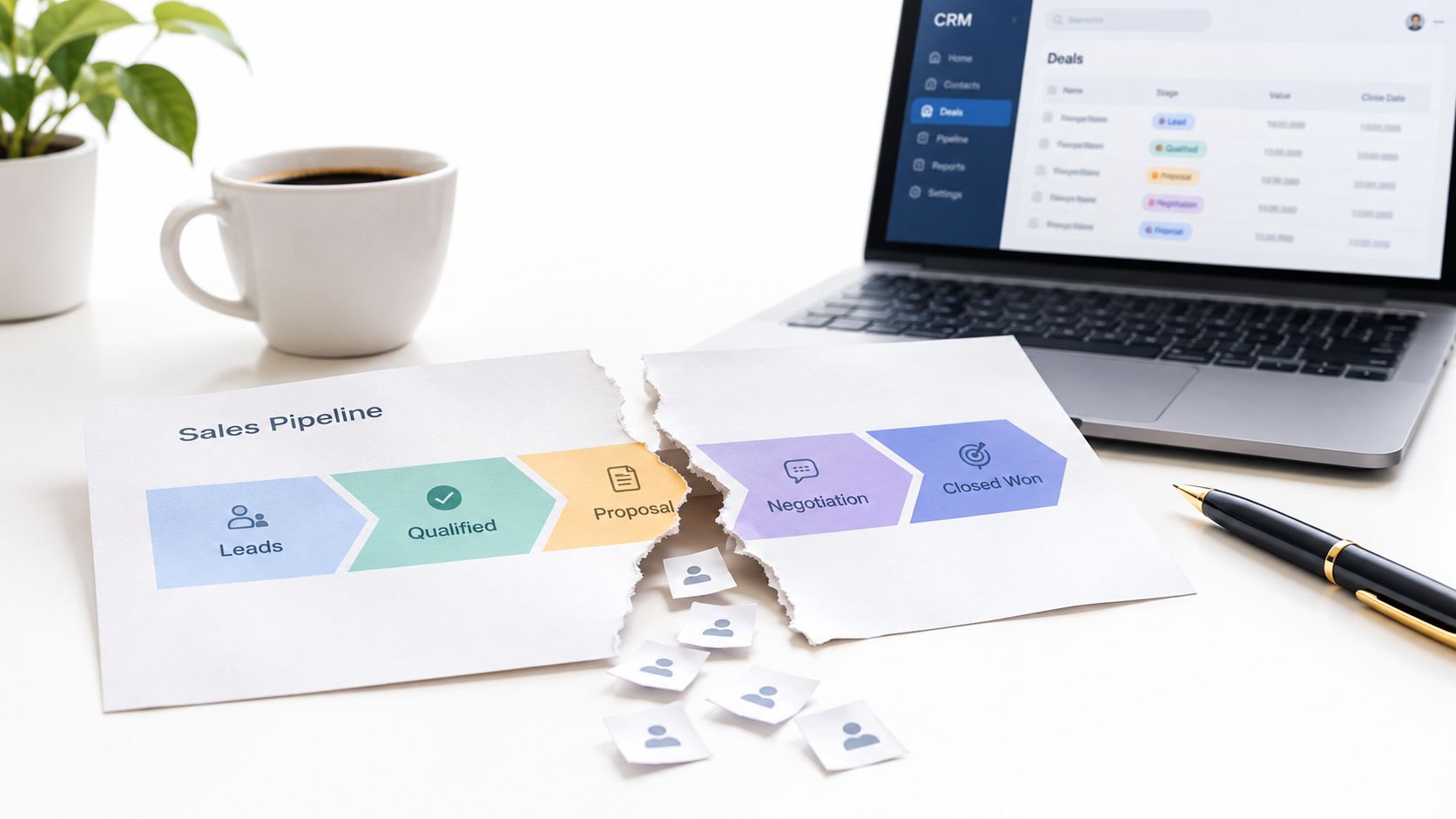
This is the first question I'd ask when a team says pipeline is soft but activity is high. It forces the buyer to choose a constraint instead of describing a blur of issues. If they can't name the bottleneck, they usually can't buy the right fix either.
In practice, the answer tends to fall into three buckets. Supply means there aren't enough target accounts in the current segment. Demand means interest exists, but it's coming from the wrong people. Execution means the team knows who to target, but the process leaks before opportunity creation.
How to hear the answer correctly
A SaaS founder might say they know the ICP, but can't reach enough of those accounts with the current team. That's an execution and capacity issue. An iGaming operator might say the ideal vertical just isn't dense enough in the current region, which points back to market selection and targeting depth.
A legal tech sales leader might say meetings happen, but partner approval drags every deal past the point where urgency survives. That's not a top-of-funnel shortage. That's a conversion constraint, and you should treat it that way from the start.
Practical rule: Ask the constraint question before you pitch channels, tools, or campaigns. Apollo won't fix a market shortage, and more LinkedIn content won't fix broken approval logic.
The follow-up path matters more than the opener. Ask what monthly volume of qualified meetings would solve the problem. Don't guess. Make them define the threshold in business terms, then tie your proposed system to that target.
Where to use it
This works well in a discovery call, but it also works as a low-pressure LinkedIn reply after a prospect engages with something relevant. If someone comments on outbound quality, attribution, or sales process, ask what single constraint is stopping them from going after their ideal accounts harder right now. That earns a better answer than, "Interested in a lead gen agency?"
If they answer with a vague market complaint, bring them back to account selection and fit. If they answer with workflow pain, inspect the process behind their ideal customer profile definition. The trade-off is simple. The earlier you narrow the constraint, the less room you have for a broad pitch. That's a good trade.
2. What's broken in your current process that's costing you pipeline?
The first question isolates the bottleneck. This one finds the operational leak. It asks the buyer to connect daily work to lost pipeline, which is where a lot of "good conversations" fall apart.
If a team says outbound isn't working, I want to know what part is broken. Is lead routing slow. Is message-market fit weak. Are replies mixed together with no priority. Are sales engineers cleaning up bad handoffs from qualification mistakes.
Start with a vertical-specific observation
In manufacturing, a common answer is hidden in handoff friction. Marketing or SDRs book meetings, then sales engineers spend time re-checking fit because the original qualification wasn't trusted. In legal tech, all inbound and outbound replies can end up in one inbox, which means the team responds in timestamp order instead of deal-quality order.
A SaaS marketing leader may realize the team tracks engagement across multiple tools with no single reporting view. That doesn't sound dramatic in conversation. In operations, it means nobody can tell which channel produced a reply worth fast follow-up.
Broken process is usually more expensive than weak tooling. Teams often buy another platform before they fix ownership, routing, or stage rules.
What to ask after they answer
Push on time. Time complaints often reveal the actual cost. If they say reps spend too long sorting replies, ask who owns fixing that and what gets delayed because of it. If they say qualification is inconsistent, ask which role feels the pain most, SDR, AE, sales engineer, or RevOps.
A useful sequence looks like this:
Name the leak: "Where does pipeline stall most often after first response?"
Trace ownership: "Who sees the problem first, and who can change it?"
Find the decision impact: "Which deals are being slowed, ignored, or worked by the wrong person?"
This question works best after you've already established context with the constraint question. If you ask it too early, you'll get complaints without prioritization. The trade-off is that you'll surface real process debt, which may shift the conversation away from campaign volume and toward operational cleanup. That's often the right move.
3. What does a qualified lead actually look like in your world, and how are you filtering for it today?

This is the most revealing question in the list because it exposes whether the team has a real qualification system or just a slide about ICP. Plenty of companies can describe the accounts they want. Fewer can explain the exact filters that decide who gets worked now, who gets nurtured, and who gets disqualified.
In B2B outreach, I like this question because it pushes teams past title-based targeting. "VP at a company in our market" isn't qualification. It's a search filter.
Ask them to define the filter live
A manufacturing CMO might say qualification means senior title and company size. Fine, but that's only a starting point. What behavior matters. What buying trigger matters. What internal problem makes the account worth rep time now.
An iGaming team might describe a tight target market, then admit they're still chasing any operator with budget. That's not qualification discipline. That's volume pressure.
The cleanest move is to have them list criteria during the call, in real time. Then compare those filters against actual lead sources and conversion results. That's where contradictions show up. If you need a reference point for building the process behind this, GROU's guide to lead qualification process design is a useful companion.
Why follow-up questions matter more than openers
A major weakness in most list of conversation questions content is that it overvalues the opener. The stronger move is teaching reps how to follow the first answer. Research discussed by Harvard's Working Knowledge team, drawing on work with 398 strangers, found that follow-up questions were the strongest marker of meaningful conversation, while mirror questions were common but less effective, which is exactly why qualification calls improve when reps stop repeating and start probing with intent in the next turn (Harvard Working Knowledge on follow-up questions).
If a prospect can't define qualification without hand-waving, don't expand top-of-funnel volume yet. Fix the filter first.
For LinkedIn, soften the framing. Ask how they're filtering good-fit conversations today, not whether they have broken qualification. The trade-off here is direct. Tighter filters reduce vanity activity, but they raise conversion quality and make pipeline reporting cleaner.
4. Who owns the decision to change how you build pipeline, and what would prove it to them?
A lot of discovery calls die because the team qualifies pain but ignores political reality. This question fixes that. It identifies who can approve the change, who can block it, and what evidence they need before they say yes.
The timing matters. Ask it after qualification has some shape. Too early, and it feels like a budget trap. Too late, and you've already built a proposal for someone who can't move it forward.

Push for names, not titles
A head of marketing may tell you the CEO decides. That's not enough. Ask what usually convinces that CEO. A RevOps lead may say sales leadership has veto power. Good. Ask whether they're already in the conversation or still outside it.
The strongest answers include a person, a proof standard, and a past buying pattern. If the CFO needs evidence tied to CAC or conversion quality, treat that as part of the sales process, not an objection to handle later.
One useful prompt is to ask what persuaded the company the last time it approved a revenue tool, agency, or outbound motion. Buyers often reveal their internal standard faster through history than through hypotheticals.
The trade-off to name out loud
Single-threading is faster at first. Multi-threading is safer. If you only work through a champion, the cycle feels lighter, but risk builds because the buyer never sees the operating logic behind the ask.
Harvard Business School research on live dyadic conversations found that people who asked more questions were better liked, with the strongest effect for follow-up questions. Across the studies, one sample averaged 6.72 questions and another showed about 9.80 questions per person, or roughly 22% of turns including a question, which is a useful reminder that question frequency can be measured and tied to outcomes, not treated as soft skill folklore (Harvard Business School question-asking research).
That doesn't mean peppering the buyer with questions. It means staying active enough to map the decision structure before you write anything formal.
5. When a rep does generate a qualified meeting, what actually happens to it, and how fast?
Pipeline fantasies usually break here. Teams celebrate booked meetings, but booked isn't the same as worked, and worked isn't the same as qualified opportunity.
Ask for a recent example, then walk the timeline from meeting booked to first response, to routing, to opportunity creation. Don't settle for process theory. Make them show a real path in HubSpot or whatever CRM they run.
Inspect the handoff, not just the meeting count
A SaaS company may admit qualified meetings sit untouched because routing is manual. A legal tech team may have no agreed owner between intake and the first real qualification step. An iGaming operator may have one overloaded vertical rep taking the meetings that matter while other reps stay underused.
Those details change scope fast. If the team can't accept meetings cleanly, more volume creates more noise.
Here's a useful reference before the CRM walkthrough:
Then get practical in HubSpot. Look at meeting creation, owner assignment, lifecycle stage movement, and task SLAs. If reply routing happens outside CRM, inspect that too. Apollo inboxes, shared mailboxes, and LinkedIn DMs often create parallel systems nobody reports on cleanly.
What good looks like
Strong handoff systems keep rep talk from dominating the interaction. Independent sales conversation benchmarks suggest aiming for rep talk time around 40 to 50 percent, customer talk time around 50 to 60 percent, longest monologue under 3 minutes, and at least 5 speaker switches per 5-minute interval, which is a useful design rule for qualification prompts that keep the buyer talking and make handoff notes richer (Demodesk sales conversation benchmarks).
A booked meeting only counts if ownership is clear, follow-up is fast, and the CRM stage change happens without debate.
If this area is messy, map your lead follow-up workflow before adding channel volume. The trade-off is obvious. More conversations feel productive. Clean handoff is what turns them into pipeline.
6. What's your rep's actual capacity for new conversations per week, and how many quality meetings would make them productive?
This question prevents the classic mistake of selling meeting volume the team can't absorb. It also protects against the opposite problem, where leadership expects pipeline growth from a meeting volume that won't feed quota.
You don't need a complex model to start. Use rep count, current held-meeting rate, opportunity conversion, and vertical ownership. Then test whether the target meeting flow fits the actual calendar and follow-up load.
Build the number from the team you already have
A five-rep SaaS team may discover only part of the group can take net-new conversations because two reps are buried in expansion or renewals. A manufacturing team may need meetings consolidated around a small set of technical sellers because not every AE can run an engineering-heavy first call.
That changes the route. Instead of sending all replies into one sequence outcome, you may need Apollo for account coverage, Clay for enrichment, HeyReach for LinkedIn touches, and HubSpot for capacity-aware owner rules. Lemlist, Instantly, and Smartlead can all produce replies. None of them solve rep overload by themselves.
Capacity isn't a staffing footnote. It's a qualification variable.
Keep the call diagnostic, not interrogative
Sales benchmark reporting indicates that high-performing discovery conversations tend to cluster around 11 to 14 questions per call, while fewer than 7 is linked to weaker outcomes and 20 or more can push the call into an interrogative tone (discovery call question benchmarks). That's a strong operating rule for this part of the conversation. Ask enough to size the capacity problem, then stop.
Use short prompts that help you calculate the load:
Current intake: "How many new conversations does each rep take in a normal week?"
Productive threshold: "How many good meetings would make that rep meaningfully more productive?"
Bottleneck check: "Which verticals or territories hit capacity first?"
Revisit the answer in week two of any engagement. Reps often discover the capacity issue only after replies increase and calendars tighten.
7. How are you currently measuring whether your pipeline engine is actually working?
Some teams have too little reporting. Others have too much. Both create the same problem. Nobody can tell which conversations are creating qualified pipeline.
Ask what report they open first on Monday and what they check last on Friday. That question gets you closer to operating truth than asking whether they "track pipeline closely." The first report shows what drives decisions. The last report shows what leadership worries about before the week closes.
Look for decision reports, not dashboard decoration
A SaaS founder may track revenue but not qualified pipeline by source. A RevOps lead may have plenty of dashboards but no single report that tells sales and marketing what to change today. An iGaming sales leader may watch total pipeline but miss slowing velocity until too many deals age at once.
What you want is one weekly view that ties source, conversation type, qualification result, owner, stage movement, and next action. If they don't have that, don't shame them. Build it.
Academic work on question behavior has treated question types as measurable units, showing that speakers used more polar questions than Wh- or alternative questions and that questions often served to seek public or social information, which is a useful reminder that not all prompts generate the same diagnostic value in business conversations (question behavior dissertation research).
Adapt it for outreach
On LinkedIn, don't ask a stranger for confidential numbers. Ask which metric they use to judge whether a channel is worth more budget or rep time. That's enough to uncover how mature the reporting system is.
A few signals matter immediately:
Source clarity: Can they separate qualified conversations by channel.
Stage discipline: Do stages reflect real buying progress or rep optimism.
Actionability: Does the report tell someone what to change this week.
If reporting is thin, add fields tied to the categories in this article and connect them to your lead generation KPI tracking. The trade-off is small. Tighter measurement reduces storytelling room, but it gives you faster correction.
8. How would you define success for this engagement at week 4, week 12, and in year one?

This is the question that saves the relationship before work starts. Most pipeline engagements fail in expectation-setting, not execution. One side expects early signal. The other expects pipeline immediately. If you don't force time horizons into the conversation, both sides hear what they want.
I prefer three checkpoints because they create operational clarity. Week 4 is about signal and traction. Week 12 is about qualified pipeline and whether the system is producing repeatable movement. Year one is about whether the motion deserves a permanent seat in the revenue engine.
Set targets that the team can absorb
If a founder wants aggressive week-4 output, test whether the list quality, messaging cycle, routing logic, and rep calendars can support it. If the ask for year one implies more rep coverage, more markets, or more vertical specialization, write that into the commercial conversation early.
Recent research on identifying small talk in natural conversations and work on meaningful conversation structure both support the idea that a good question depends on interaction stage and relationship, which is exactly why week-4 prompts should seek signal while later-stage prompts should push fit, intent, and next-step evidence (research on context-specific conversation structure).
Put the scorecard in the workflow
The answer should become a working scorecard, not a note in the proposal. Build the milestones into HubSpot properties, sprint reviews, and reply-routing rules. Sales Navigator can shape account coverage. Apollo and Clay can control who enters the system and with what data. HeyReach, Lemlist, Instantly, and Smartlead can run the outbound paths, but the scorecard needs to sit in one place where sales, marketing, and RevOps read it the same way.
Harvard later summarized its question-asking research by noting that people who asked 9 or more questions in a 15-minute conversation were more likely to be liked than those asking 4 or fewer, which is a useful threshold when reps need a concrete reminder that active questioning changes outcomes (Harvard summary on question frequency and liking).
Use the success definition to frame a lead generation pilot before you expand scope. The trade-off is worth naming. Specific milestones reduce flexibility, but they stop vague success claims from creeping into review calls.
8-Question Pipeline Conversation Comparison
Question / Item | Implementation complexity (🔄) | Resource requirements (⚡) | Expected outcomes (⭐📊) | Ideal use cases (📊) | Key advantages (💡) |
|---|---|---|---|---|---|
What's the one constraint stopping you from pursuing your ideal customer right now? | Low 🔄 | Minimal ⚡ | Identifies supply vs demand vs execution; directs next steps. ⭐⭐⭐ | Discovery call opener; LinkedIn follow-up 📊 | Rapidly surfaces primary blocker; focuses proposals. 💡 |
What's broken in your current process that's costing you pipeline? | Medium 🔄🔄 | Moderate ⚡⚡ | Quantifies operational friction and revenue impact. ⭐⭐⭐ | Follow-on after constraint question; operational diagnosis 📊 | Reveals hidden costs; anchors conversation to outcomes. 💡 |
What does a qualified lead actually look like in your world, and how are you filtering for it today? | Medium 🔄🔄 | Low–Moderate ⚡⚡ | Exposes ICP vs practice gap; improves targeting and conversion. ⭐⭐⭐ | Qualification refinement; proposal scoping; LinkedIn adaptation 📊 | Determines qualification discipline; informs outbound filters. 💡 |
Who owns the decision to change how you build pipeline, and what would prove it to them? | High 🔄🔄🔄 | Moderate ⚡⚡ | Surfaces economic buyer, objections, and required evidence to fund change. ⭐⭐⭐ | Later-stage discovery; multi-stakeholder deals 📊 | Shortens cycle by mapping decision path; prevents dead-ends. 💡 |
When a rep does generate a qualified meeting, what actually happens to it, and how fast? | Medium 🔄🔄 | Moderate ⚡⚡ | Maps post-meeting motion, handoffs, and conversion risk. ⭐⭐⭐ | CRM walkthroughs; capacity and routing assessment (e.g., HubSpot) 📊 | Identifies delays and handoff gaps; sets realistic conversion expectations. 💡 |
What's your rep's actual capacity for new conversations per week, and how many quality meetings would make them productive? | Medium 🔄🔄 | Moderate ⚡⚡ | Sets realistic qualified-meeting targets and avoids overload. ⭐⭐⭐ | Pilot sizing; SLA setting; hiring planning 📊 | Aligns delivery to bandwidth; reveals hiring needs early. 💡 |
How are you currently measuring whether your pipeline engine is actually working? | Medium 🔄🔄 | Moderate ⚡⚡ | Reveals reporting maturity and baseline metrics to prove impact. ⭐⭐⭐ | Measurement alignment; dashboard and KPI setup 📊 | Establishes baseline for attribution and stakeholder reporting. 💡 |
How would you define success for this engagement at week 4, week 12, and in year one? | Medium 🔄🔄 | Low–Moderate ⚡⚡ | Creates measurable milestones and renewal criteria across three horizons. ⭐⭐⭐⭐📊 | Pilot agreements; proposal milestones; sprint planning 📊 | Prevents scope creep; aligns expectations and reporting rhythm. 💡 |
Turn the next reply into a pipeline decision
Take your last 10 replies or booked conversations and label each one by category. Constraint. Process friction. Qualification. Decision owner. Handoff. Capacity. Measurement. Success criteria. Then add five fields to the record, stated constraint, qualification signal, owner, next step, and CRM stage.
Review the pattern with sales and marketing this Friday. Don't debate messaging first. Look for where conversations are dying. If most replies surface weak-fit accounts, the target list is off. If good-fit conversations stall after booking, the handoff system is off. If nobody can say what success looks like by stage, your reporting line is too loose.
Once the pattern is clear, turn it into a repeatable system. Use Sales Navigator to build the account universe and contact map. Use Apollo and Clay to enrich the list and separate firmographic fit from buying signals. Use HeyReach for coordinated LinkedIn touches when the channel matters to trust-building. Use Lemlist, Instantly, or Smartlead for outbound sequencing, but keep reply routing centralized so sales isn't checking five inboxes. Keep HubSpot as the operating record where qualification, owner changes, and next actions are visible.
This is also where structure beats content theater. Teams don't need more generic prompts. They need a clear order for asking them, a rule for what each answer changes, and a reporting view that shows whether the question led to movement. Listicles that bury the verdict miss the point. Good B2B guidance should state the answer early and support it, because readers and AI systems prioritize the opening lines and first paragraph when deciding what the piece is saying (guidance on opening listicles with the verdict).
Keep the working set short. List-post guidance tends to favor 5 to 7 strong items over bloated lists, with each item carrying one clear idea and a scannable structure (Neil Patel's list post guidance). I went longer here because revenue teams don't have one conversation problem. They have an operating system problem. Still, the principle holds. Each question should trigger one decision.
If you're building this for a specific buying group, write the conversation system the same way you'd write a category page or comparison page. Be explicit about audience, criteria, and recommendation. That's closer to how operator buyers read than novelty-driven "conversation starter" content (audience-specific B2B listicle guidance). And when the conversation involves choosing between alternatives, don't hide behind neutrality. B2B comparison guidance is right on this point. Lead with the verdict, then support it (B2B comparison writing guidance).
Add the five CRM fields by Monday. Then run the last 10 conversations through them with your revenue team and decide what changes first, targeting, routing, qualification, or ownership. That one review will tell you more than another month of vague activity reporting.
GROU has worked with 50+ companies across iGaming, SaaS, manufacturing, and professional services, with outcomes including 350 qualified leads in the Adriatic region, 10x LinkedIn follower growth, and enterprise deals exceeding $20M. The methodology is consistent, align one ICP-based target list, one message, reply routing, qualification rules, bi-weekly sprints, shared Slack feedback, and pipeline reporting so attention becomes qualified conversations and closed revenue.
Grou builds the system behind this list of conversation questions, from target account selection and outbound execution to reply routing, qualification, and pipeline reporting. If you want to pressure-test your current setup and see where conversations stop becoming opportunities, visit Grou.
Slug: list-of-conversation-questions
Meta description: Replies and booked calls don't mean much if they never become qualified pipeline. This list of conversation questions shows how to ask, route, qualify, and measure conversations so attention turns into revenue.
When conversations create activity but not pipeline, the problem usually isn't a lack of questions. It's that replies land in the wrong inbox, booked calls don't follow a qualification path, reps ask surface-level prompts, and nobody can explain why one conversation became pipeline while another became noise. Founders, sales leaders, marketing leaders, and RevOps operators across SaaS, iGaming, manufacturing, legal tech, and pharma know the pattern. Attention shows up first. Pipeline only shows up when the system behind the conversation is tight.
The strongest list of conversation questions starts with constraint, then moves through friction, qualification, stakeholder ownership, handoff, capacity, measurement, and success criteria.
For outreach, adapt each question to the channel. LinkedIn replies need low-pressure prompts, outbound calls need tighter diagnosis, and discovery calls need follow-up depth, not generic icebreakers. For a broader prompt library, see this open-ended question guide from Overvue.
Reply handling matters as much as the question. One target list, one message, and one reporting line produce clearer pipeline decisions than scattered campaigns.
Qualification should be visible in CRM fields, meeting routing, and ownership rules, not left in rep memory.
The practical next move is simple. Take your last 10 conversations and force each one into a category, then inspect what broke.
Table of Contents
1. What's the one constraint stopping you from pursuing your ideal customer right now?
2. What's broken in your current process that's costing you pipeline?
4. Who owns the decision to change how you build pipeline, and what would prove it to them?
5. When a rep does generate a qualified meeting, what actually happens to it, and how fast?
7. How are you currently measuring whether your pipeline engine is actually working?
8. How would you define success for this engagement at week 4, week 12, and in year one?
1. What's the one constraint stopping you from pursuing your ideal customer right now?
This is the first question I'd ask when a team says pipeline is soft but activity is high. It forces the buyer to choose a constraint instead of describing a blur of issues. If they can't name the bottleneck, they usually can't buy the right fix either.
In practice, the answer tends to fall into three buckets. Supply means there aren't enough target accounts in the current segment. Demand means interest exists, but it's coming from the wrong people. Execution means the team knows who to target, but the process leaks before opportunity creation.
How to hear the answer correctly
A SaaS founder might say they know the ICP, but can't reach enough of those accounts with the current team. That's an execution and capacity issue. An iGaming operator might say the ideal vertical just isn't dense enough in the current region, which points back to market selection and targeting depth.
A legal tech sales leader might say meetings happen, but partner approval drags every deal past the point where urgency survives. That's not a top-of-funnel shortage. That's a conversion constraint, and you should treat it that way from the start.
Practical rule: Ask the constraint question before you pitch channels, tools, or campaigns. Apollo won't fix a market shortage, and more LinkedIn content won't fix broken approval logic.
The follow-up path matters more than the opener. Ask what monthly volume of qualified meetings would solve the problem. Don't guess. Make them define the threshold in business terms, then tie your proposed system to that target.
Where to use it
This works well in a discovery call, but it also works as a low-pressure LinkedIn reply after a prospect engages with something relevant. If someone comments on outbound quality, attribution, or sales process, ask what single constraint is stopping them from going after their ideal accounts harder right now. That earns a better answer than, "Interested in a lead gen agency?"
If they answer with a vague market complaint, bring them back to account selection and fit. If they answer with workflow pain, inspect the process behind their ideal customer profile definition. The trade-off is simple. The earlier you narrow the constraint, the less room you have for a broad pitch. That's a good trade.
2. What's broken in your current process that's costing you pipeline?
The first question isolates the bottleneck. This one finds the operational leak. It asks the buyer to connect daily work to lost pipeline, which is where a lot of "good conversations" fall apart.
If a team says outbound isn't working, I want to know what part is broken. Is lead routing slow. Is message-market fit weak. Are replies mixed together with no priority. Are sales engineers cleaning up bad handoffs from qualification mistakes.
Start with a vertical-specific observation
In manufacturing, a common answer is hidden in handoff friction. Marketing or SDRs book meetings, then sales engineers spend time re-checking fit because the original qualification wasn't trusted. In legal tech, all inbound and outbound replies can end up in one inbox, which means the team responds in timestamp order instead of deal-quality order.
A SaaS marketing leader may realize the team tracks engagement across multiple tools with no single reporting view. That doesn't sound dramatic in conversation. In operations, it means nobody can tell which channel produced a reply worth fast follow-up.
Broken process is usually more expensive than weak tooling. Teams often buy another platform before they fix ownership, routing, or stage rules.
What to ask after they answer
Push on time. Time complaints often reveal the actual cost. If they say reps spend too long sorting replies, ask who owns fixing that and what gets delayed because of it. If they say qualification is inconsistent, ask which role feels the pain most, SDR, AE, sales engineer, or RevOps.
A useful sequence looks like this:
Name the leak: "Where does pipeline stall most often after first response?"
Trace ownership: "Who sees the problem first, and who can change it?"
Find the decision impact: "Which deals are being slowed, ignored, or worked by the wrong person?"
This question works best after you've already established context with the constraint question. If you ask it too early, you'll get complaints without prioritization. The trade-off is that you'll surface real process debt, which may shift the conversation away from campaign volume and toward operational cleanup. That's often the right move.
3. What does a qualified lead actually look like in your world, and how are you filtering for it today?
This is the most revealing question in the list because it exposes whether the team has a real qualification system or just a slide about ICP. Plenty of companies can describe the accounts they want. Fewer can explain the exact filters that decide who gets worked now, who gets nurtured, and who gets disqualified.
In B2B outreach, I like this question because it pushes teams past title-based targeting. "VP at a company in our market" isn't qualification. It's a search filter.
Ask them to define the filter live
A manufacturing CMO might say qualification means senior title and company size. Fine, but that's only a starting point. What behavior matters. What buying trigger matters. What internal problem makes the account worth rep time now.
An iGaming team might describe a tight target market, then admit they're still chasing any operator with budget. That's not qualification discipline. That's volume pressure.
The cleanest move is to have them list criteria during the call, in real time. Then compare those filters against actual lead sources and conversion results. That's where contradictions show up. If you need a reference point for building the process behind this, GROU's guide to lead qualification process design is a useful companion.
Why follow-up questions matter more than openers
A major weakness in most list of conversation questions content is that it overvalues the opener. The stronger move is teaching reps how to follow the first answer. Research discussed by Harvard's Working Knowledge team, drawing on work with 398 strangers, found that follow-up questions were the strongest marker of meaningful conversation, while mirror questions were common but less effective, which is exactly why qualification calls improve when reps stop repeating and start probing with intent in the next turn (Harvard Working Knowledge on follow-up questions).
If a prospect can't define qualification without hand-waving, don't expand top-of-funnel volume yet. Fix the filter first.
For LinkedIn, soften the framing. Ask how they're filtering good-fit conversations today, not whether they have broken qualification. The trade-off here is direct. Tighter filters reduce vanity activity, but they raise conversion quality and make pipeline reporting cleaner.
4. Who owns the decision to change how you build pipeline, and what would prove it to them?
A lot of discovery calls die because the team qualifies pain but ignores political reality. This question fixes that. It identifies who can approve the change, who can block it, and what evidence they need before they say yes.
The timing matters. Ask it after qualification has some shape. Too early, and it feels like a budget trap. Too late, and you've already built a proposal for someone who can't move it forward.
Push for names, not titles
A head of marketing may tell you the CEO decides. That's not enough. Ask what usually convinces that CEO. A RevOps lead may say sales leadership has veto power. Good. Ask whether they're already in the conversation or still outside it.
The strongest answers include a person, a proof standard, and a past buying pattern. If the CFO needs evidence tied to CAC or conversion quality, treat that as part of the sales process, not an objection to handle later.
One useful prompt is to ask what persuaded the company the last time it approved a revenue tool, agency, or outbound motion. Buyers often reveal their internal standard faster through history than through hypotheticals.
The trade-off to name out loud
Single-threading is faster at first. Multi-threading is safer. If you only work through a champion, the cycle feels lighter, but risk builds because the buyer never sees the operating logic behind the ask.
Harvard Business School research on live dyadic conversations found that people who asked more questions were better liked, with the strongest effect for follow-up questions. Across the studies, one sample averaged 6.72 questions and another showed about 9.80 questions per person, or roughly 22% of turns including a question, which is a useful reminder that question frequency can be measured and tied to outcomes, not treated as soft skill folklore (Harvard Business School question-asking research).
That doesn't mean peppering the buyer with questions. It means staying active enough to map the decision structure before you write anything formal.
5. When a rep does generate a qualified meeting, what actually happens to it, and how fast?
Pipeline fantasies usually break here. Teams celebrate booked meetings, but booked isn't the same as worked, and worked isn't the same as qualified opportunity.
Ask for a recent example, then walk the timeline from meeting booked to first response, to routing, to opportunity creation. Don't settle for process theory. Make them show a real path in HubSpot or whatever CRM they run.
Inspect the handoff, not just the meeting count
A SaaS company may admit qualified meetings sit untouched because routing is manual. A legal tech team may have no agreed owner between intake and the first real qualification step. An iGaming operator may have one overloaded vertical rep taking the meetings that matter while other reps stay underused.
Those details change scope fast. If the team can't accept meetings cleanly, more volume creates more noise.
Here's a useful reference before the CRM walkthrough:
Then get practical in HubSpot. Look at meeting creation, owner assignment, lifecycle stage movement, and task SLAs. If reply routing happens outside CRM, inspect that too. Apollo inboxes, shared mailboxes, and LinkedIn DMs often create parallel systems nobody reports on cleanly.
What good looks like
Strong handoff systems keep rep talk from dominating the interaction. Independent sales conversation benchmarks suggest aiming for rep talk time around 40 to 50 percent, customer talk time around 50 to 60 percent, longest monologue under 3 minutes, and at least 5 speaker switches per 5-minute interval, which is a useful design rule for qualification prompts that keep the buyer talking and make handoff notes richer (Demodesk sales conversation benchmarks).
A booked meeting only counts if ownership is clear, follow-up is fast, and the CRM stage change happens without debate.
If this area is messy, map your lead follow-up workflow before adding channel volume. The trade-off is obvious. More conversations feel productive. Clean handoff is what turns them into pipeline.
6. What's your rep's actual capacity for new conversations per week, and how many quality meetings would make them productive?
This question prevents the classic mistake of selling meeting volume the team can't absorb. It also protects against the opposite problem, where leadership expects pipeline growth from a meeting volume that won't feed quota.
You don't need a complex model to start. Use rep count, current held-meeting rate, opportunity conversion, and vertical ownership. Then test whether the target meeting flow fits the actual calendar and follow-up load.
Build the number from the team you already have
A five-rep SaaS team may discover only part of the group can take net-new conversations because two reps are buried in expansion or renewals. A manufacturing team may need meetings consolidated around a small set of technical sellers because not every AE can run an engineering-heavy first call.
That changes the route. Instead of sending all replies into one sequence outcome, you may need Apollo for account coverage, Clay for enrichment, HeyReach for LinkedIn touches, and HubSpot for capacity-aware owner rules. Lemlist, Instantly, and Smartlead can all produce replies. None of them solve rep overload by themselves.
Capacity isn't a staffing footnote. It's a qualification variable.
Keep the call diagnostic, not interrogative
Sales benchmark reporting indicates that high-performing discovery conversations tend to cluster around 11 to 14 questions per call, while fewer than 7 is linked to weaker outcomes and 20 or more can push the call into an interrogative tone (discovery call question benchmarks). That's a strong operating rule for this part of the conversation. Ask enough to size the capacity problem, then stop.
Use short prompts that help you calculate the load:
Current intake: "How many new conversations does each rep take in a normal week?"
Productive threshold: "How many good meetings would make that rep meaningfully more productive?"
Bottleneck check: "Which verticals or territories hit capacity first?"
Revisit the answer in week two of any engagement. Reps often discover the capacity issue only after replies increase and calendars tighten.
7. How are you currently measuring whether your pipeline engine is actually working?
Some teams have too little reporting. Others have too much. Both create the same problem. Nobody can tell which conversations are creating qualified pipeline.
Ask what report they open first on Monday and what they check last on Friday. That question gets you closer to operating truth than asking whether they "track pipeline closely." The first report shows what drives decisions. The last report shows what leadership worries about before the week closes.
Look for decision reports, not dashboard decoration
A SaaS founder may track revenue but not qualified pipeline by source. A RevOps lead may have plenty of dashboards but no single report that tells sales and marketing what to change today. An iGaming sales leader may watch total pipeline but miss slowing velocity until too many deals age at once.
What you want is one weekly view that ties source, conversation type, qualification result, owner, stage movement, and next action. If they don't have that, don't shame them. Build it.
Academic work on question behavior has treated question types as measurable units, showing that speakers used more polar questions than Wh- or alternative questions and that questions often served to seek public or social information, which is a useful reminder that not all prompts generate the same diagnostic value in business conversations (question behavior dissertation research).
Adapt it for outreach
On LinkedIn, don't ask a stranger for confidential numbers. Ask which metric they use to judge whether a channel is worth more budget or rep time. That's enough to uncover how mature the reporting system is.
A few signals matter immediately:
Source clarity: Can they separate qualified conversations by channel.
Stage discipline: Do stages reflect real buying progress or rep optimism.
Actionability: Does the report tell someone what to change this week.
If reporting is thin, add fields tied to the categories in this article and connect them to your lead generation KPI tracking. The trade-off is small. Tighter measurement reduces storytelling room, but it gives you faster correction.
8. How would you define success for this engagement at week 4, week 12, and in year one?
This is the question that saves the relationship before work starts. Most pipeline engagements fail in expectation-setting, not execution. One side expects early signal. The other expects pipeline immediately. If you don't force time horizons into the conversation, both sides hear what they want.
I prefer three checkpoints because they create operational clarity. Week 4 is about signal and traction. Week 12 is about qualified pipeline and whether the system is producing repeatable movement. Year one is about whether the motion deserves a permanent seat in the revenue engine.
Set targets that the team can absorb
If a founder wants aggressive week-4 output, test whether the list quality, messaging cycle, routing logic, and rep calendars can support it. If the ask for year one implies more rep coverage, more markets, or more vertical specialization, write that into the commercial conversation early.
Recent research on identifying small talk in natural conversations and work on meaningful conversation structure both support the idea that a good question depends on interaction stage and relationship, which is exactly why week-4 prompts should seek signal while later-stage prompts should push fit, intent, and next-step evidence (research on context-specific conversation structure).
Put the scorecard in the workflow
The answer should become a working scorecard, not a note in the proposal. Build the milestones into HubSpot properties, sprint reviews, and reply-routing rules. Sales Navigator can shape account coverage. Apollo and Clay can control who enters the system and with what data. HeyReach, Lemlist, Instantly, and Smartlead can run the outbound paths, but the scorecard needs to sit in one place where sales, marketing, and RevOps read it the same way.
Harvard later summarized its question-asking research by noting that people who asked 9 or more questions in a 15-minute conversation were more likely to be liked than those asking 4 or fewer, which is a useful threshold when reps need a concrete reminder that active questioning changes outcomes (Harvard summary on question frequency and liking).
Use the success definition to frame a lead generation pilot before you expand scope. The trade-off is worth naming. Specific milestones reduce flexibility, but they stop vague success claims from creeping into review calls.
8-Question Pipeline Conversation Comparison
Question / Item | Implementation complexity (🔄) | Resource requirements (⚡) | Expected outcomes (⭐📊) | Ideal use cases (📊) | Key advantages (💡) |
|---|---|---|---|---|---|
What's the one constraint stopping you from pursuing your ideal customer right now? | Low 🔄 | Minimal ⚡ | Identifies supply vs demand vs execution; directs next steps. ⭐⭐⭐ | Discovery call opener; LinkedIn follow-up 📊 | Rapidly surfaces primary blocker; focuses proposals. 💡 |
What's broken in your current process that's costing you pipeline? | Medium 🔄🔄 | Moderate ⚡⚡ | Quantifies operational friction and revenue impact. ⭐⭐⭐ | Follow-on after constraint question; operational diagnosis 📊 | Reveals hidden costs; anchors conversation to outcomes. 💡 |
What does a qualified lead actually look like in your world, and how are you filtering for it today? | Medium 🔄🔄 | Low–Moderate ⚡⚡ | Exposes ICP vs practice gap; improves targeting and conversion. ⭐⭐⭐ | Qualification refinement; proposal scoping; LinkedIn adaptation 📊 | Determines qualification discipline; informs outbound filters. 💡 |
Who owns the decision to change how you build pipeline, and what would prove it to them? | High 🔄🔄🔄 | Moderate ⚡⚡ | Surfaces economic buyer, objections, and required evidence to fund change. ⭐⭐⭐ | Later-stage discovery; multi-stakeholder deals 📊 | Shortens cycle by mapping decision path; prevents dead-ends. 💡 |
When a rep does generate a qualified meeting, what actually happens to it, and how fast? | Medium 🔄🔄 | Moderate ⚡⚡ | Maps post-meeting motion, handoffs, and conversion risk. ⭐⭐⭐ | CRM walkthroughs; capacity and routing assessment (e.g., HubSpot) 📊 | Identifies delays and handoff gaps; sets realistic conversion expectations. 💡 |
What's your rep's actual capacity for new conversations per week, and how many quality meetings would make them productive? | Medium 🔄🔄 | Moderate ⚡⚡ | Sets realistic qualified-meeting targets and avoids overload. ⭐⭐⭐ | Pilot sizing; SLA setting; hiring planning 📊 | Aligns delivery to bandwidth; reveals hiring needs early. 💡 |
How are you currently measuring whether your pipeline engine is actually working? | Medium 🔄🔄 | Moderate ⚡⚡ | Reveals reporting maturity and baseline metrics to prove impact. ⭐⭐⭐ | Measurement alignment; dashboard and KPI setup 📊 | Establishes baseline for attribution and stakeholder reporting. 💡 |
How would you define success for this engagement at week 4, week 12, and in year one? | Medium 🔄🔄 | Low–Moderate ⚡⚡ | Creates measurable milestones and renewal criteria across three horizons. ⭐⭐⭐⭐📊 | Pilot agreements; proposal milestones; sprint planning 📊 | Prevents scope creep; aligns expectations and reporting rhythm. 💡 |
Turn the next reply into a pipeline decision
Take your last 10 replies or booked conversations and label each one by category. Constraint. Process friction. Qualification. Decision owner. Handoff. Capacity. Measurement. Success criteria. Then add five fields to the record, stated constraint, qualification signal, owner, next step, and CRM stage.
Review the pattern with sales and marketing this Friday. Don't debate messaging first. Look for where conversations are dying. If most replies surface weak-fit accounts, the target list is off. If good-fit conversations stall after booking, the handoff system is off. If nobody can say what success looks like by stage, your reporting line is too loose.
Once the pattern is clear, turn it into a repeatable system. Use Sales Navigator to build the account universe and contact map. Use Apollo and Clay to enrich the list and separate firmographic fit from buying signals. Use HeyReach for coordinated LinkedIn touches when the channel matters to trust-building. Use Lemlist, Instantly, or Smartlead for outbound sequencing, but keep reply routing centralized so sales isn't checking five inboxes. Keep HubSpot as the operating record where qualification, owner changes, and next actions are visible.
This is also where structure beats content theater. Teams don't need more generic prompts. They need a clear order for asking them, a rule for what each answer changes, and a reporting view that shows whether the question led to movement. Listicles that bury the verdict miss the point. Good B2B guidance should state the answer early and support it, because readers and AI systems prioritize the opening lines and first paragraph when deciding what the piece is saying (guidance on opening listicles with the verdict).
Keep the working set short. List-post guidance tends to favor 5 to 7 strong items over bloated lists, with each item carrying one clear idea and a scannable structure (Neil Patel's list post guidance). I went longer here because revenue teams don't have one conversation problem. They have an operating system problem. Still, the principle holds. Each question should trigger one decision.
If you're building this for a specific buying group, write the conversation system the same way you'd write a category page or comparison page. Be explicit about audience, criteria, and recommendation. That's closer to how operator buyers read than novelty-driven "conversation starter" content (audience-specific B2B listicle guidance). And when the conversation involves choosing between alternatives, don't hide behind neutrality. B2B comparison guidance is right on this point. Lead with the verdict, then support it (B2B comparison writing guidance).
Add the five CRM fields by Monday. Then run the last 10 conversations through them with your revenue team and decide what changes first, targeting, routing, qualification, or ownership. That one review will tell you more than another month of vague activity reporting.
GROU has worked with 50+ companies across iGaming, SaaS, manufacturing, and professional services, with outcomes including 350 qualified leads in the Adriatic region, 10x LinkedIn follower growth, and enterprise deals exceeding $20M. The methodology is consistent, align one ICP-based target list, one message, reply routing, qualification rules, bi-weekly sprints, shared Slack feedback, and pipeline reporting so attention becomes qualified conversations and closed revenue.
Grou builds the system behind this list of conversation questions, from target account selection and outbound execution to reply routing, qualification, and pipeline reporting. If you want to pressure-test your current setup and see where conversations stop becoming opportunities, visit Grou.
Slug: list-of-conversation-questions
Meta description: Replies and booked calls don't mean much if they never become qualified pipeline. This list of conversation questions shows how to ask, route, qualify, and measure conversations so attention turns into revenue.
When conversations create activity but not pipeline, the problem usually isn't a lack of questions. It's that replies land in the wrong inbox, booked calls don't follow a qualification path, reps ask surface-level prompts, and nobody can explain why one conversation became pipeline while another became noise. Founders, sales leaders, marketing leaders, and RevOps operators across SaaS, iGaming, manufacturing, legal tech, and pharma know the pattern. Attention shows up first. Pipeline only shows up when the system behind the conversation is tight.
The strongest list of conversation questions starts with constraint, then moves through friction, qualification, stakeholder ownership, handoff, capacity, measurement, and success criteria.
For outreach, adapt each question to the channel. LinkedIn replies need low-pressure prompts, outbound calls need tighter diagnosis, and discovery calls need follow-up depth, not generic icebreakers. For a broader prompt library, see this open-ended question guide from Overvue.
Reply handling matters as much as the question. One target list, one message, and one reporting line produce clearer pipeline decisions than scattered campaigns.
Qualification should be visible in CRM fields, meeting routing, and ownership rules, not left in rep memory.
The practical next move is simple. Take your last 10 conversations and force each one into a category, then inspect what broke.
Table of Contents
1. What's the one constraint stopping you from pursuing your ideal customer right now?
2. What's broken in your current process that's costing you pipeline?
4. Who owns the decision to change how you build pipeline, and what would prove it to them?
5. When a rep does generate a qualified meeting, what actually happens to it, and how fast?
7. How are you currently measuring whether your pipeline engine is actually working?
8. How would you define success for this engagement at week 4, week 12, and in year one?
1. What's the one constraint stopping you from pursuing your ideal customer right now?
This is the first question I'd ask when a team says pipeline is soft but activity is high. It forces the buyer to choose a constraint instead of describing a blur of issues. If they can't name the bottleneck, they usually can't buy the right fix either.
In practice, the answer tends to fall into three buckets. Supply means there aren't enough target accounts in the current segment. Demand means interest exists, but it's coming from the wrong people. Execution means the team knows who to target, but the process leaks before opportunity creation.
How to hear the answer correctly
A SaaS founder might say they know the ICP, but can't reach enough of those accounts with the current team. That's an execution and capacity issue. An iGaming operator might say the ideal vertical just isn't dense enough in the current region, which points back to market selection and targeting depth.
A legal tech sales leader might say meetings happen, but partner approval drags every deal past the point where urgency survives. That's not a top-of-funnel shortage. That's a conversion constraint, and you should treat it that way from the start.
Practical rule: Ask the constraint question before you pitch channels, tools, or campaigns. Apollo won't fix a market shortage, and more LinkedIn content won't fix broken approval logic.
The follow-up path matters more than the opener. Ask what monthly volume of qualified meetings would solve the problem. Don't guess. Make them define the threshold in business terms, then tie your proposed system to that target.
Where to use it
This works well in a discovery call, but it also works as a low-pressure LinkedIn reply after a prospect engages with something relevant. If someone comments on outbound quality, attribution, or sales process, ask what single constraint is stopping them from going after their ideal accounts harder right now. That earns a better answer than, "Interested in a lead gen agency?"
If they answer with a vague market complaint, bring them back to account selection and fit. If they answer with workflow pain, inspect the process behind their ideal customer profile definition. The trade-off is simple. The earlier you narrow the constraint, the less room you have for a broad pitch. That's a good trade.
2. What's broken in your current process that's costing you pipeline?
The first question isolates the bottleneck. This one finds the operational leak. It asks the buyer to connect daily work to lost pipeline, which is where a lot of "good conversations" fall apart.
If a team says outbound isn't working, I want to know what part is broken. Is lead routing slow. Is message-market fit weak. Are replies mixed together with no priority. Are sales engineers cleaning up bad handoffs from qualification mistakes.
Start with a vertical-specific observation
In manufacturing, a common answer is hidden in handoff friction. Marketing or SDRs book meetings, then sales engineers spend time re-checking fit because the original qualification wasn't trusted. In legal tech, all inbound and outbound replies can end up in one inbox, which means the team responds in timestamp order instead of deal-quality order.
A SaaS marketing leader may realize the team tracks engagement across multiple tools with no single reporting view. That doesn't sound dramatic in conversation. In operations, it means nobody can tell which channel produced a reply worth fast follow-up.
Broken process is usually more expensive than weak tooling. Teams often buy another platform before they fix ownership, routing, or stage rules.
What to ask after they answer
Push on time. Time complaints often reveal the actual cost. If they say reps spend too long sorting replies, ask who owns fixing that and what gets delayed because of it. If they say qualification is inconsistent, ask which role feels the pain most, SDR, AE, sales engineer, or RevOps.
A useful sequence looks like this:
Name the leak: "Where does pipeline stall most often after first response?"
Trace ownership: "Who sees the problem first, and who can change it?"
Find the decision impact: "Which deals are being slowed, ignored, or worked by the wrong person?"
This question works best after you've already established context with the constraint question. If you ask it too early, you'll get complaints without prioritization. The trade-off is that you'll surface real process debt, which may shift the conversation away from campaign volume and toward operational cleanup. That's often the right move.
3. What does a qualified lead actually look like in your world, and how are you filtering for it today?
This is the most revealing question in the list because it exposes whether the team has a real qualification system or just a slide about ICP. Plenty of companies can describe the accounts they want. Fewer can explain the exact filters that decide who gets worked now, who gets nurtured, and who gets disqualified.
In B2B outreach, I like this question because it pushes teams past title-based targeting. "VP at a company in our market" isn't qualification. It's a search filter.
Ask them to define the filter live
A manufacturing CMO might say qualification means senior title and company size. Fine, but that's only a starting point. What behavior matters. What buying trigger matters. What internal problem makes the account worth rep time now.
An iGaming team might describe a tight target market, then admit they're still chasing any operator with budget. That's not qualification discipline. That's volume pressure.
The cleanest move is to have them list criteria during the call, in real time. Then compare those filters against actual lead sources and conversion results. That's where contradictions show up. If you need a reference point for building the process behind this, GROU's guide to lead qualification process design is a useful companion.
Why follow-up questions matter more than openers
A major weakness in most list of conversation questions content is that it overvalues the opener. The stronger move is teaching reps how to follow the first answer. Research discussed by Harvard's Working Knowledge team, drawing on work with 398 strangers, found that follow-up questions were the strongest marker of meaningful conversation, while mirror questions were common but less effective, which is exactly why qualification calls improve when reps stop repeating and start probing with intent in the next turn (Harvard Working Knowledge on follow-up questions).
If a prospect can't define qualification without hand-waving, don't expand top-of-funnel volume yet. Fix the filter first.
For LinkedIn, soften the framing. Ask how they're filtering good-fit conversations today, not whether they have broken qualification. The trade-off here is direct. Tighter filters reduce vanity activity, but they raise conversion quality and make pipeline reporting cleaner.
4. Who owns the decision to change how you build pipeline, and what would prove it to them?
A lot of discovery calls die because the team qualifies pain but ignores political reality. This question fixes that. It identifies who can approve the change, who can block it, and what evidence they need before they say yes.
The timing matters. Ask it after qualification has some shape. Too early, and it feels like a budget trap. Too late, and you've already built a proposal for someone who can't move it forward.
Push for names, not titles
A head of marketing may tell you the CEO decides. That's not enough. Ask what usually convinces that CEO. A RevOps lead may say sales leadership has veto power. Good. Ask whether they're already in the conversation or still outside it.
The strongest answers include a person, a proof standard, and a past buying pattern. If the CFO needs evidence tied to CAC or conversion quality, treat that as part of the sales process, not an objection to handle later.
One useful prompt is to ask what persuaded the company the last time it approved a revenue tool, agency, or outbound motion. Buyers often reveal their internal standard faster through history than through hypotheticals.
The trade-off to name out loud
Single-threading is faster at first. Multi-threading is safer. If you only work through a champion, the cycle feels lighter, but risk builds because the buyer never sees the operating logic behind the ask.
Harvard Business School research on live dyadic conversations found that people who asked more questions were better liked, with the strongest effect for follow-up questions. Across the studies, one sample averaged 6.72 questions and another showed about 9.80 questions per person, or roughly 22% of turns including a question, which is a useful reminder that question frequency can be measured and tied to outcomes, not treated as soft skill folklore (Harvard Business School question-asking research).
That doesn't mean peppering the buyer with questions. It means staying active enough to map the decision structure before you write anything formal.
5. When a rep does generate a qualified meeting, what actually happens to it, and how fast?
Pipeline fantasies usually break here. Teams celebrate booked meetings, but booked isn't the same as worked, and worked isn't the same as qualified opportunity.
Ask for a recent example, then walk the timeline from meeting booked to first response, to routing, to opportunity creation. Don't settle for process theory. Make them show a real path in HubSpot or whatever CRM they run.
Inspect the handoff, not just the meeting count
A SaaS company may admit qualified meetings sit untouched because routing is manual. A legal tech team may have no agreed owner between intake and the first real qualification step. An iGaming operator may have one overloaded vertical rep taking the meetings that matter while other reps stay underused.
Those details change scope fast. If the team can't accept meetings cleanly, more volume creates more noise.
Here's a useful reference before the CRM walkthrough:
Then get practical in HubSpot. Look at meeting creation, owner assignment, lifecycle stage movement, and task SLAs. If reply routing happens outside CRM, inspect that too. Apollo inboxes, shared mailboxes, and LinkedIn DMs often create parallel systems nobody reports on cleanly.
What good looks like
Strong handoff systems keep rep talk from dominating the interaction. Independent sales conversation benchmarks suggest aiming for rep talk time around 40 to 50 percent, customer talk time around 50 to 60 percent, longest monologue under 3 minutes, and at least 5 speaker switches per 5-minute interval, which is a useful design rule for qualification prompts that keep the buyer talking and make handoff notes richer (Demodesk sales conversation benchmarks).
A booked meeting only counts if ownership is clear, follow-up is fast, and the CRM stage change happens without debate.
If this area is messy, map your lead follow-up workflow before adding channel volume. The trade-off is obvious. More conversations feel productive. Clean handoff is what turns them into pipeline.
6. What's your rep's actual capacity for new conversations per week, and how many quality meetings would make them productive?
This question prevents the classic mistake of selling meeting volume the team can't absorb. It also protects against the opposite problem, where leadership expects pipeline growth from a meeting volume that won't feed quota.
You don't need a complex model to start. Use rep count, current held-meeting rate, opportunity conversion, and vertical ownership. Then test whether the target meeting flow fits the actual calendar and follow-up load.
Build the number from the team you already have
A five-rep SaaS team may discover only part of the group can take net-new conversations because two reps are buried in expansion or renewals. A manufacturing team may need meetings consolidated around a small set of technical sellers because not every AE can run an engineering-heavy first call.
That changes the route. Instead of sending all replies into one sequence outcome, you may need Apollo for account coverage, Clay for enrichment, HeyReach for LinkedIn touches, and HubSpot for capacity-aware owner rules. Lemlist, Instantly, and Smartlead can all produce replies. None of them solve rep overload by themselves.
Capacity isn't a staffing footnote. It's a qualification variable.
Keep the call diagnostic, not interrogative
Sales benchmark reporting indicates that high-performing discovery conversations tend to cluster around 11 to 14 questions per call, while fewer than 7 is linked to weaker outcomes and 20 or more can push the call into an interrogative tone (discovery call question benchmarks). That's a strong operating rule for this part of the conversation. Ask enough to size the capacity problem, then stop.
Use short prompts that help you calculate the load:
Current intake: "How many new conversations does each rep take in a normal week?"
Productive threshold: "How many good meetings would make that rep meaningfully more productive?"
Bottleneck check: "Which verticals or territories hit capacity first?"
Revisit the answer in week two of any engagement. Reps often discover the capacity issue only after replies increase and calendars tighten.
7. How are you currently measuring whether your pipeline engine is actually working?
Some teams have too little reporting. Others have too much. Both create the same problem. Nobody can tell which conversations are creating qualified pipeline.
Ask what report they open first on Monday and what they check last on Friday. That question gets you closer to operating truth than asking whether they "track pipeline closely." The first report shows what drives decisions. The last report shows what leadership worries about before the week closes.
Look for decision reports, not dashboard decoration
A SaaS founder may track revenue but not qualified pipeline by source. A RevOps lead may have plenty of dashboards but no single report that tells sales and marketing what to change today. An iGaming sales leader may watch total pipeline but miss slowing velocity until too many deals age at once.
What you want is one weekly view that ties source, conversation type, qualification result, owner, stage movement, and next action. If they don't have that, don't shame them. Build it.
Academic work on question behavior has treated question types as measurable units, showing that speakers used more polar questions than Wh- or alternative questions and that questions often served to seek public or social information, which is a useful reminder that not all prompts generate the same diagnostic value in business conversations (question behavior dissertation research).
Adapt it for outreach
On LinkedIn, don't ask a stranger for confidential numbers. Ask which metric they use to judge whether a channel is worth more budget or rep time. That's enough to uncover how mature the reporting system is.
A few signals matter immediately:
Source clarity: Can they separate qualified conversations by channel.
Stage discipline: Do stages reflect real buying progress or rep optimism.
Actionability: Does the report tell someone what to change this week.
If reporting is thin, add fields tied to the categories in this article and connect them to your lead generation KPI tracking. The trade-off is small. Tighter measurement reduces storytelling room, but it gives you faster correction.
8. How would you define success for this engagement at week 4, week 12, and in year one?
This is the question that saves the relationship before work starts. Most pipeline engagements fail in expectation-setting, not execution. One side expects early signal. The other expects pipeline immediately. If you don't force time horizons into the conversation, both sides hear what they want.
I prefer three checkpoints because they create operational clarity. Week 4 is about signal and traction. Week 12 is about qualified pipeline and whether the system is producing repeatable movement. Year one is about whether the motion deserves a permanent seat in the revenue engine.
Set targets that the team can absorb
If a founder wants aggressive week-4 output, test whether the list quality, messaging cycle, routing logic, and rep calendars can support it. If the ask for year one implies more rep coverage, more markets, or more vertical specialization, write that into the commercial conversation early.
Recent research on identifying small talk in natural conversations and work on meaningful conversation structure both support the idea that a good question depends on interaction stage and relationship, which is exactly why week-4 prompts should seek signal while later-stage prompts should push fit, intent, and next-step evidence (research on context-specific conversation structure).
Put the scorecard in the workflow
The answer should become a working scorecard, not a note in the proposal. Build the milestones into HubSpot properties, sprint reviews, and reply-routing rules. Sales Navigator can shape account coverage. Apollo and Clay can control who enters the system and with what data. HeyReach, Lemlist, Instantly, and Smartlead can run the outbound paths, but the scorecard needs to sit in one place where sales, marketing, and RevOps read it the same way.
Harvard later summarized its question-asking research by noting that people who asked 9 or more questions in a 15-minute conversation were more likely to be liked than those asking 4 or fewer, which is a useful threshold when reps need a concrete reminder that active questioning changes outcomes (Harvard summary on question frequency and liking).
Use the success definition to frame a lead generation pilot before you expand scope. The trade-off is worth naming. Specific milestones reduce flexibility, but they stop vague success claims from creeping into review calls.
8-Question Pipeline Conversation Comparison
Question / Item | Implementation complexity (🔄) | Resource requirements (⚡) | Expected outcomes (⭐📊) | Ideal use cases (📊) | Key advantages (💡) |
|---|---|---|---|---|---|
What's the one constraint stopping you from pursuing your ideal customer right now? | Low 🔄 | Minimal ⚡ | Identifies supply vs demand vs execution; directs next steps. ⭐⭐⭐ | Discovery call opener; LinkedIn follow-up 📊 | Rapidly surfaces primary blocker; focuses proposals. 💡 |
What's broken in your current process that's costing you pipeline? | Medium 🔄🔄 | Moderate ⚡⚡ | Quantifies operational friction and revenue impact. ⭐⭐⭐ | Follow-on after constraint question; operational diagnosis 📊 | Reveals hidden costs; anchors conversation to outcomes. 💡 |
What does a qualified lead actually look like in your world, and how are you filtering for it today? | Medium 🔄🔄 | Low–Moderate ⚡⚡ | Exposes ICP vs practice gap; improves targeting and conversion. ⭐⭐⭐ | Qualification refinement; proposal scoping; LinkedIn adaptation 📊 | Determines qualification discipline; informs outbound filters. 💡 |
Who owns the decision to change how you build pipeline, and what would prove it to them? | High 🔄🔄🔄 | Moderate ⚡⚡ | Surfaces economic buyer, objections, and required evidence to fund change. ⭐⭐⭐ | Later-stage discovery; multi-stakeholder deals 📊 | Shortens cycle by mapping decision path; prevents dead-ends. 💡 |
When a rep does generate a qualified meeting, what actually happens to it, and how fast? | Medium 🔄🔄 | Moderate ⚡⚡ | Maps post-meeting motion, handoffs, and conversion risk. ⭐⭐⭐ | CRM walkthroughs; capacity and routing assessment (e.g., HubSpot) 📊 | Identifies delays and handoff gaps; sets realistic conversion expectations. 💡 |
What's your rep's actual capacity for new conversations per week, and how many quality meetings would make them productive? | Medium 🔄🔄 | Moderate ⚡⚡ | Sets realistic qualified-meeting targets and avoids overload. ⭐⭐⭐ | Pilot sizing; SLA setting; hiring planning 📊 | Aligns delivery to bandwidth; reveals hiring needs early. 💡 |
How are you currently measuring whether your pipeline engine is actually working? | Medium 🔄🔄 | Moderate ⚡⚡ | Reveals reporting maturity and baseline metrics to prove impact. ⭐⭐⭐ | Measurement alignment; dashboard and KPI setup 📊 | Establishes baseline for attribution and stakeholder reporting. 💡 |
How would you define success for this engagement at week 4, week 12, and in year one? | Medium 🔄🔄 | Low–Moderate ⚡⚡ | Creates measurable milestones and renewal criteria across three horizons. ⭐⭐⭐⭐📊 | Pilot agreements; proposal milestones; sprint planning 📊 | Prevents scope creep; aligns expectations and reporting rhythm. 💡 |
Turn the next reply into a pipeline decision
Take your last 10 replies or booked conversations and label each one by category. Constraint. Process friction. Qualification. Decision owner. Handoff. Capacity. Measurement. Success criteria. Then add five fields to the record, stated constraint, qualification signal, owner, next step, and CRM stage.
Review the pattern with sales and marketing this Friday. Don't debate messaging first. Look for where conversations are dying. If most replies surface weak-fit accounts, the target list is off. If good-fit conversations stall after booking, the handoff system is off. If nobody can say what success looks like by stage, your reporting line is too loose.
Once the pattern is clear, turn it into a repeatable system. Use Sales Navigator to build the account universe and contact map. Use Apollo and Clay to enrich the list and separate firmographic fit from buying signals. Use HeyReach for coordinated LinkedIn touches when the channel matters to trust-building. Use Lemlist, Instantly, or Smartlead for outbound sequencing, but keep reply routing centralized so sales isn't checking five inboxes. Keep HubSpot as the operating record where qualification, owner changes, and next actions are visible.
This is also where structure beats content theater. Teams don't need more generic prompts. They need a clear order for asking them, a rule for what each answer changes, and a reporting view that shows whether the question led to movement. Listicles that bury the verdict miss the point. Good B2B guidance should state the answer early and support it, because readers and AI systems prioritize the opening lines and first paragraph when deciding what the piece is saying (guidance on opening listicles with the verdict).
Keep the working set short. List-post guidance tends to favor 5 to 7 strong items over bloated lists, with each item carrying one clear idea and a scannable structure (Neil Patel's list post guidance). I went longer here because revenue teams don't have one conversation problem. They have an operating system problem. Still, the principle holds. Each question should trigger one decision.
If you're building this for a specific buying group, write the conversation system the same way you'd write a category page or comparison page. Be explicit about audience, criteria, and recommendation. That's closer to how operator buyers read than novelty-driven "conversation starter" content (audience-specific B2B listicle guidance). And when the conversation involves choosing between alternatives, don't hide behind neutrality. B2B comparison guidance is right on this point. Lead with the verdict, then support it (B2B comparison writing guidance).
Add the five CRM fields by Monday. Then run the last 10 conversations through them with your revenue team and decide what changes first, targeting, routing, qualification, or ownership. That one review will tell you more than another month of vague activity reporting.
GROU has worked with 50+ companies across iGaming, SaaS, manufacturing, and professional services, with outcomes including 350 qualified leads in the Adriatic region, 10x LinkedIn follower growth, and enterprise deals exceeding $20M. The methodology is consistent, align one ICP-based target list, one message, reply routing, qualification rules, bi-weekly sprints, shared Slack feedback, and pipeline reporting so attention becomes qualified conversations and closed revenue.
Grou builds the system behind this list of conversation questions, from target account selection and outbound execution to reply routing, qualification, and pipeline reporting. If you want to pressure-test your current setup and see where conversations stop becoming opportunities, visit Grou.
Pipeline OS Newsletter
Build qualified pipeline
Get weekly tactics to generate demand, improve lead quality, and book more meetings.





Trusted by industry leaders
Trusted by industry leaders
Trusted by industry leaders
Ready to build qualified pipeline?
Ready to build qualified pipeline?
Ready to build qualified pipeline?
Book a call to see if we're the right fit, or take the 2-minute quiz to get a clear starting point.
Book a call to see if we're the right fit, or take the 2-minute quiz to get a clear starting point.
Book a call to see if we're the right fit, or take the 2-minute quiz to get a clear starting point.
" height="30.21639343089746px" id="hfGbXmQR2" width="30.216393430897455px"/></svg>)
Copyright © 2026 – All Right Reserved
Copyright © 2026 – All Right Reserved
Copyright © 2026 – All Right Reserved