%22%3E%3C/path%3E%3Cpath d=%22M 63.072 7.554 C 62.258 8.022 61.577 8.689 61.092 9.493 L 61.092 7.076 L 57.158 7.076 L 57.158 22.64 L 61.089 22.64 L 61.089 14.888 C 61.089 13.446 61.403 12.434 62.03 11.853 C 62.818 11.218 63.818 10.907 64.826 10.982 L 65.868 10.982 L 65.868 6.851 C 64.891 6.834 63.926 7.076 63.073 7.554 Z%22 fill=%22rgb(17,17,17)%22%3E%3C/path%3E%3Cpath d=%22M 78.916 7.82 C 76.363 6.49 73.321 6.49 70.768 7.82 C 69.562 8.473 68.564 9.451 67.888 10.644 C 67.167 11.931 66.803 13.387 66.834 14.862 C 66.804 16.332 67.157 17.785 67.86 19.077 C 68.515 20.267 69.494 21.246 70.684 21.901 C 71.924 22.576 73.318 22.92 74.73 22.898 C 76.164 22.918 77.58 22.575 78.846 21.901 C 80.062 21.247 81.073 20.27 81.768 19.077 C 82.506 17.797 82.88 16.339 82.85 14.862 C 82.88 13.389 82.517 11.934 81.797 10.647 C 81.12 9.455 80.122 8.477 78.917 7.824 M 78.803 14.862 C 78.829 15.739 78.636 16.608 78.241 17.391 C 77.903 18.046 77.38 18.588 76.738 18.95 C 76.124 19.293 75.432 19.472 74.729 19.47 C 73.668 19.497 72.648 19.061 71.934 18.276 C 71.139 17.323 70.741 16.1 70.823 14.862 C 70.741 13.62 71.149 12.395 71.959 11.45 C 72.687 10.667 73.715 10.233 74.783 10.256 C 75.859 10.236 76.894 10.67 77.635 11.45 C 78.464 12.387 78.884 13.616 78.801 14.864%22 fill=%22rgb(17,17,17)%22%3E%3C/path%3E%3Cpath d=%22M 95.906 7.076 L 95.906 15.646 C 95.975 16.68 95.643 17.701 94.979 18.498 C 94.311 19.184 93.379 19.547 92.422 19.495 C 91.475 19.544 90.553 19.18 89.894 18.498 C 89.23 17.701 88.898 16.68 88.967 15.646 L 88.967 7.076 L 85.033 7.076 L 85.033 16.207 C 85 17.449 85.275 18.68 85.834 19.79 C 86.327 20.75 87.095 21.542 88.039 22.065 C 89.033 22.594 90.145 22.861 91.271 22.838 C 92.188 22.847 93.095 22.65 93.926 22.263 C 94.708 21.905 95.388 21.36 95.906 20.675 L 95.906 22.645 L 99.865 22.645 L 99.865 7.076 Z%22 fill=%22rgb(17,17,17)%22%3E%3C/path%3E%3Cpath d=%22M 4.513 15.626 C 4.511 10.815 7.606 6.549 12.181 5.059 C 16.756 3.57 21.77 5.195 24.601 9.086 L 27.816 5.87 C 24.074 1.186 17.981 -0.943 12.137 0.393 C 6.292 1.728 1.728 6.292 0.393 12.137 C -0.943 17.981 1.186 24.074 5.87 27.816 L 9.085 24.601 C 6.214 22.512 4.515 19.177 4.513 15.626%22 fill=%22rgb(32,62,235)%22%3E%3C/path%3E%3Cpath d=%22M 17.114 14.343 L 13.354 18.01 L 13.354 18.026 L 21.071 18.026 L 11.412 27.609 L 17.389 27.609 L 23.999 21.081 L 23.999 28.316 L 24.005 28.316 L 27.967 24.393 L 27.967 14.343 Z%22 fill=%22rgb(32,62,235)%22%3E%3C/path%3E%3C/g%3E%3C/svg%3E) ×
× ××
××›
›
›
›
B2B Lead Gen Agency: A Modern Pipeline Guide for 2026
B2B Lead Gen Agency: A Modern Pipeline Guide for 2026
B2B Lead Gen Agency: A Modern Pipeline Guide for 2026
B2B Lead Gen Agency: A Modern Pipeline Guide for 2026
B2B Lead Gen Agency: A Modern Pipeline Guide for 2026
B2B Lead Gen Agency: A Modern Pipeline Guide for 2026

Author
Aljaz Peklaj

Most advice about hiring a B2B lead gen agency is still stuck in channel thinking. One shop handles outbound, another handles LinkedIn content, another runs paid, and you get three reports that never explain why pipeline is flat.
That setup fails for a simple reason. Buyers don't experience your company in channels. They experience one brand, one message, and one level of credibility. If those pieces aren't coordinated, attention never compounds into pipeline.
The shift in the market makes that problem harder to ignore. 91% of marketers ranked lead generation as their top priority, while 58% of B2B marketers said generating high-quality leads was their biggest challenge according to Reach Marketing's 2025 lead generation statistics. Volume isn't the bottleneck anymore. System design is.
Table of Contents
What a modern B2B lead gen agency is (and is not)
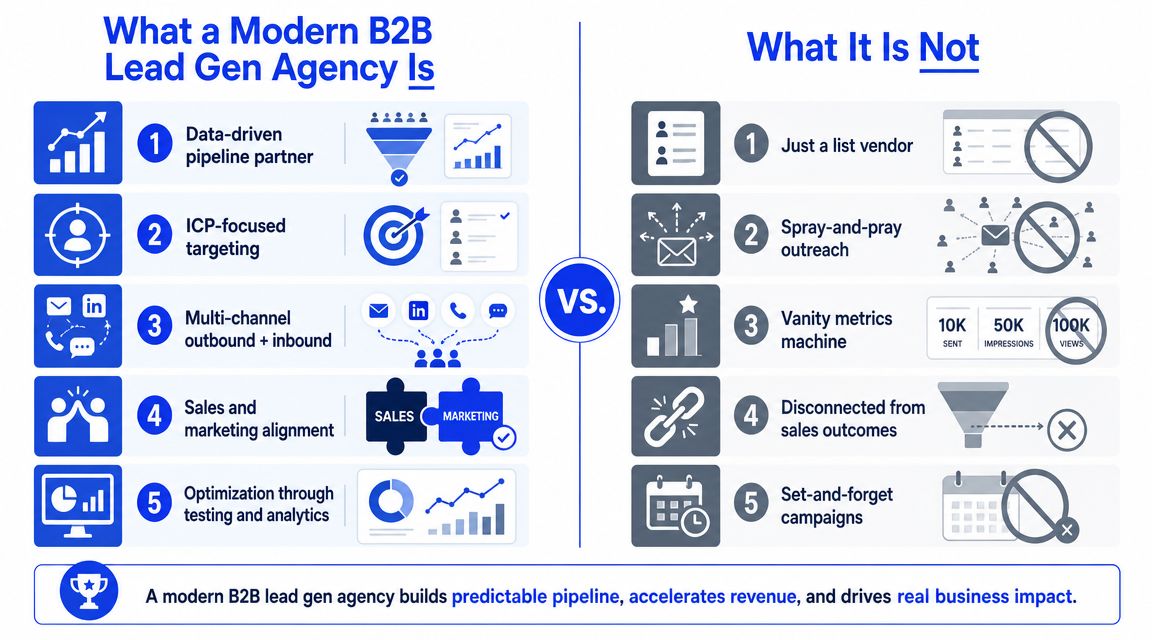
A modern B2B lead gen agency is not an appointment-setting vendor with better branding. It isn't a list shop, a cold email shop, or a LinkedIn content team selling impressions and calling it pipeline.
It is a shared operating system for message, targeting, outreach, and qualification. The useful unit isn't the channel. It's the account journey from first impression to accepted meeting.
The old model breaks at the handoff
The old model looks efficient on paper. One vendor writes thought leadership, one vendor sends outbound, one vendor runs paid. In practice, each team optimizes for its own output.
That creates predictable failure points:
Different messages: LinkedIn talks about one pain point, outbound pushes another, and paid offers a third.
Broken prioritization: People engaging with content never reach the SDR queue fast enough to matter.
Messy qualification: Marketing celebrates leads, sales rejects them, RevOps cleans up the damage later.
No single owner: When results slip, every vendor points to a metric they hit.
Buyers don't care which vendor produced the touchpoint. They judge whether your company seems relevant, credible, and worth replying to.
Industry guidance already points in this direction. The objective is not to maximize MQL counts but to generate ICP-aligned qualification that Sales sees as commercially relevant, as outlined in Headley Media's guidance on technology lead generation.
The modern model is one operating system
The better model treats content, outbound, and data as one motion. The same pain points and proof points should drive the post your founder publishes, the opener in your email, the first LinkedIn DM, and the talk track on the discovery call.
That's why a modern agency should look closer to a RevOps-backed commercial team than a channel specialist. If the partner can't explain how Sales accepts, works, and closes the opportunities they generate, they are not really operating pipeline.
A useful way to pressure-test this is to compare the agency's process with a broader data-driven digital marketing agency model. If their reporting ends at opens, clicks, or booked meetings, they are still selling activity.
The three components of an integrated pipeline system
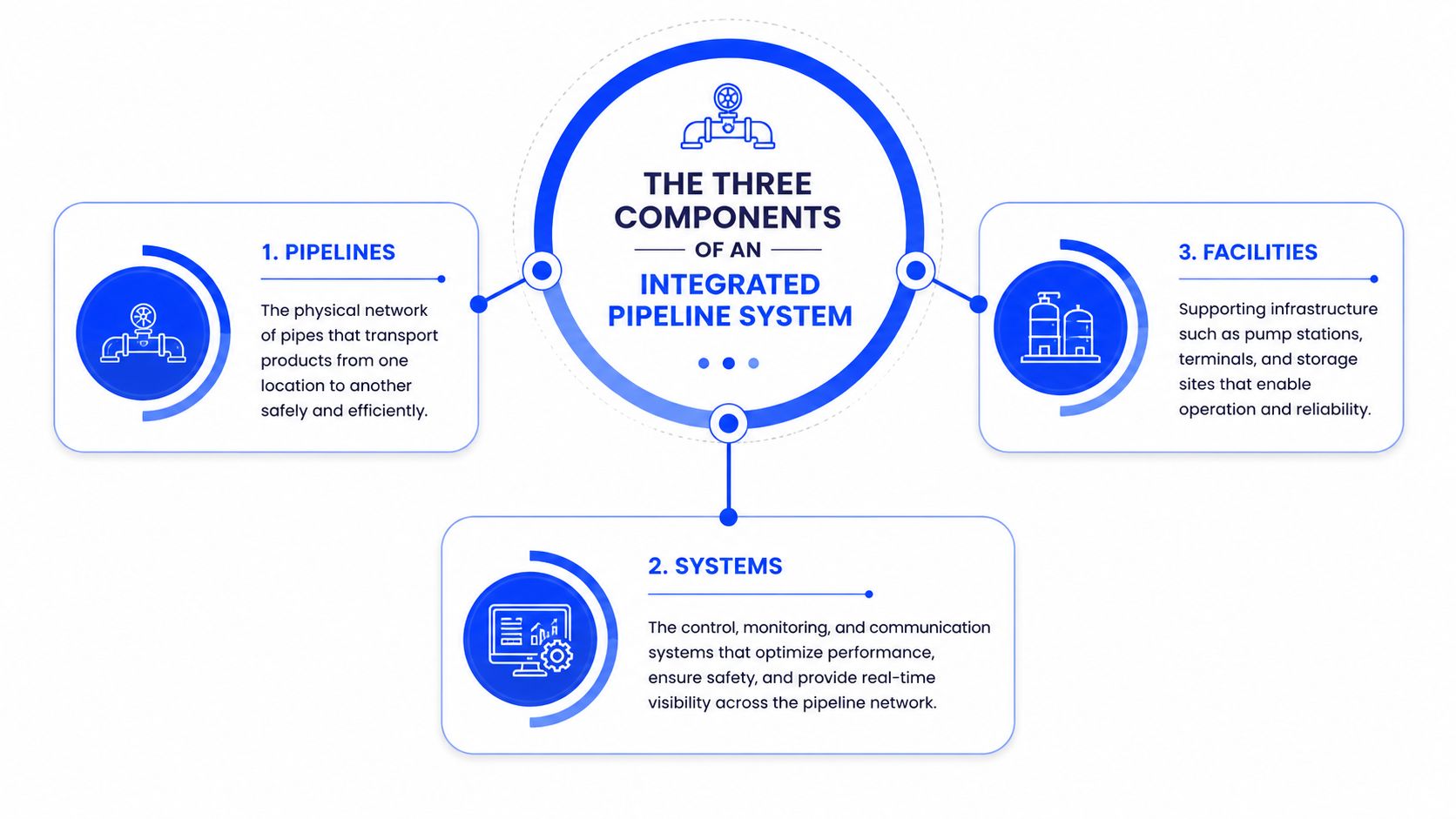
A real integrated system has three connected parts. Remove one, and performance drops back into channel silos.
24% faster three-year revenue growth shows up when sales and marketing are closely coordinated, according to Dux-Soup's 2025 B2B lead generation report. That number matters because integrated pipeline work is coordination made operational.
Content as credibility and signal capture
Most B2B teams still use LinkedIn content as a visibility play. That's too shallow. The better use is credibility plus signal detection.
The content layer should do three jobs at once:
Clarify positioning: show the market what problem you solve and for whom
Provide proof: show specific outcomes, objections handled, and buyer language
Generate engagement signals: identify who from the ICP is reading, liking, commenting, or visiting
Founders waste time when they post disconnected opinions. A post only matters if it feeds the same commercial narrative used elsewhere.
If you're already thinking about building sales pipeline, content should support that work directly, not run in a parallel lane.
Outbound built on one message map
Outbound should not invent its own story. The campaign needs one message map with a small number of pain points, proof points, and trigger events.
A working multichannel outbound motion usually includes tools like Apollo for sourcing, Clay for enrichment, Sales Navigator for account research, Lemlist or Instantly for email sequencing, and HeyReach for LinkedIn workflow support. The tools matter less than the order of operations.
A basic structure looks like this:
Define one ICP and one offer.
Build one message map.
Warm the account through LinkedIn where relevant.
Send email and LinkedIn touches from the same narrative.
Route replies and sales-ready accounts into CRM fast.
Practical rule: If your content team and outbound team use different proof points, you're paying twice to confuse the buyer.
The data layer that connects the system
This is the part most agencies skip, and it's the part that makes the system compound. The data layer handles list quality, enrichment, de-duplication, trigger detection, routing, and reporting.
The important mechanic is the reverse signal loop. When someone from the ICP engages with content, visits key pages, or shows another useful buying signal, they move into the outbound priority queue quickly. Content stops being a broadcast channel and becomes a lead-detection layer.
That loop is also why KPI design matters. If you need a cleaner view of what to monitor, this breakdown of lead generation KPIs is a better benchmark than dashboards built around vanity activity.
The engagement process from kickoff to qualified meeting
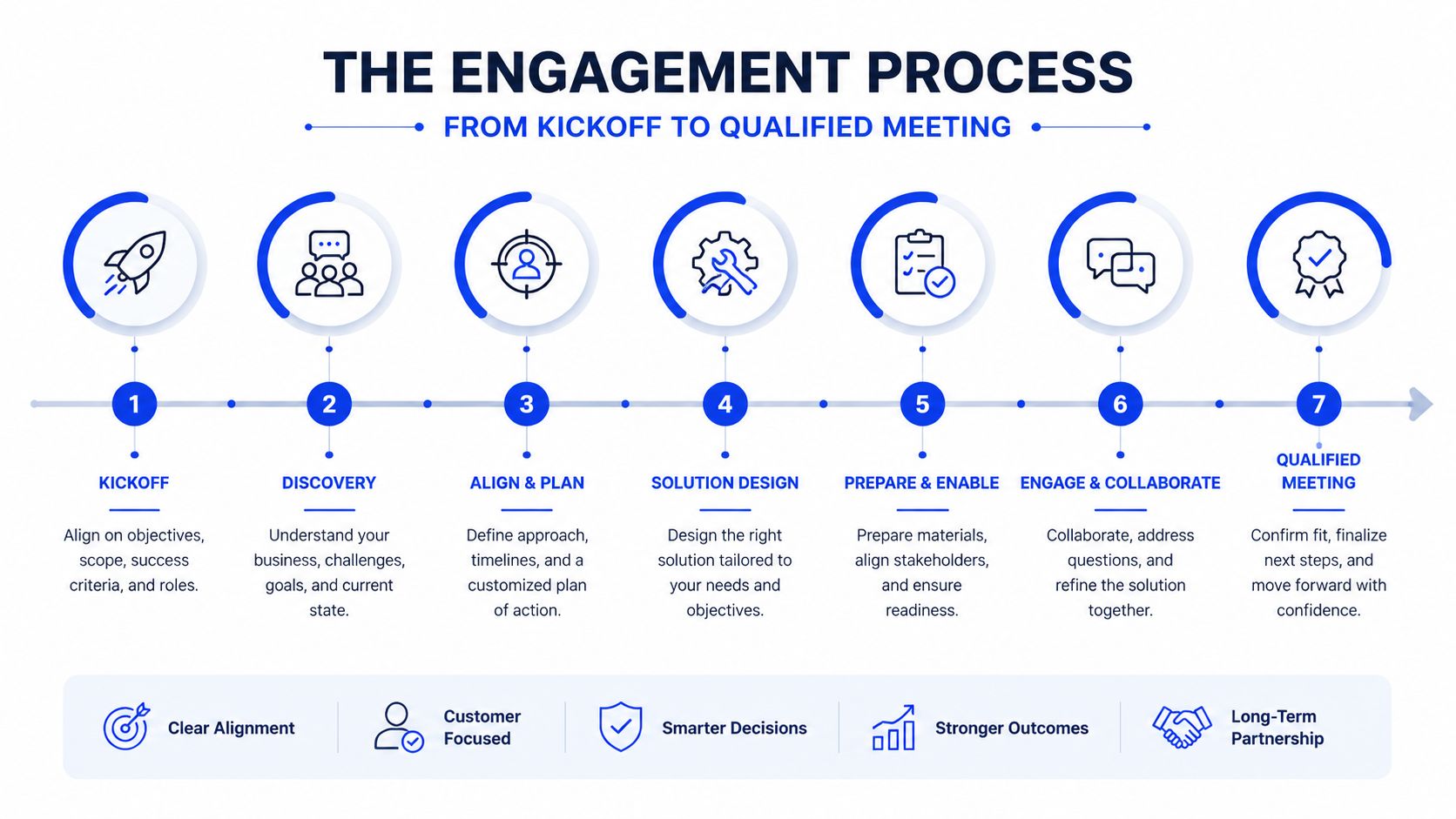
Most slow campaigns are not slow because the market is hard. They're slow because the agency sequences work that should run in parallel.
A high-performing agency operates as a multichannel system that combines list generation, data cleansing, and verified prospect enrichment to reduce bad-data waste and improve conversion, as described by TSL Marketing's lead generation service model. That has a direct impact on how quickly qualified meetings appear.
What the first seven days should look like
The kickoff shouldn't be a polite intro call. It should lock enough commercial clarity that execution can start the same day.
The fastest pipeline motion we've seen came from parallel execution. After contract signature, kickoff happened within 48 hours. In one session, ICP, offer, and message map were locked, then three tracks started immediately: list build in Clay, copy development across email and LinkedIn, and sending infrastructure setup.
That campaign produced a first qualified meeting on day 11. In that same launch window, the team built 850 contacts, soft-launched to 75 contacts, and created early pipeline of €180k within 30 days. The key change was not better copy. It was removing artificial sequencing.
A five-step launch framework
Use this to evaluate any B2B lead gen agency before you sign.
Run a real kickoff
The session needs to decide ICP, offer, exclusions, qualification rules, and message angles. If those are still vague after the call, launch will drift.Split work into parallel tracks
One person handles list and enrichment. Another writes copy. Another prepares sending and CRM routing. Sequential handoffs waste days.Soft-launch before scale
Start with a small batch. Review reply quality, not just deliverability. Keep the domain healthy and sharpen the message before volume rises.Route replies fast
Sales should see context, source, objections, and next step in the CRM immediately. That's where a defined lead qualification process matters more than meeting count.Use time-to-first-qualified-meeting as a health signal
Not every campaign should move at the same speed, but the first two weeks tell you whether the system is operational or just being assembled slowly.
Fast launch doesn't mean sloppy launch. It means the team knows how to make good decisions early enough to start work in parallel.
How to select an agency and read the contract
A good agency call should feel operational very quickly. If you spend most of the conversation hearing about reach, awareness, and channel capabilities, you're still too far from the actual buying decision.
The most important question is simple. Are you buying booked meetings, or are you buying a system that can be measured against revenue? Public agency explainers often blur that line, which is why buyers should ask whether the program is optimized for meetings or revenue attribution, with qualification rules tied to pipeline value rather than raw lead volume, as noted by Smart Finds Marketing's overview of lead generation companies.
What to look for before you sign
Use these filters hard:
Single team ownership: The people handling content, outbound logic, and routing should work from one commercial brief.
Clear qualification rules: The agency should define what gets accepted by sales and what gets recycled.
Tool transparency: They should be comfortable naming the stack, whether that's Apollo, Clay, Lemlist, Instantly, HubSpot, or Sales Navigator.
Reporting tied to pipeline: Activity metrics are diagnostics. They are not the success definition.
Real process detail: Ask what happens from signed contract to first live touch. Vague answers usually hide weak ops.
If you want a market map before shortlisting partners, this roundup of lead generation companies is a better starting point than generic agency directories.
What the contract should make obvious
The contract should answer four things without interpretation:
Contract item | What good looks like | Red flag |
|---|---|---|
Scope | One ICP, clear channels, clear deliverables | "Full service" with no operational detail |
Setup | Covers infrastructure, targeting, message map, tracking | Setup fee with no list of outputs |
Exit terms | Reasonable notice and clean offboarding | Long lock-in with unclear handover |
Success definition | Qualified pipeline, sales acceptance, attribution logic | Lead count or meeting count only |
Retainers are usually the cleaner model for integrated work because the value is in system ownership, not isolated tasks. Performance-only pricing often pushes agencies toward low-threshold meetings that sales doesn't want.
Case studies of integrated pipeline generation
Case studies get distorted when teams credit a channel instead of the system behind it. A campaign rarely works because email was strong or LinkedIn copy improved. It works because targeting, messaging, timing, and follow-up all run from the same operating logic.
SaaS after three siloed vendors
A B2B SaaS company came in after eight months with three separate vendors. One ran LinkedIn, one ran outbound, one ran paid. Spend was spread across disconnected reporting, disconnected targeting, and different definitions of what counted as a good lead.
The turnaround came from operational control. We consolidated the target account list, rebuilt the message map around one commercial story, and fed engagement data back into outbound prioritization instead of leaving it inside channel-specific dashboards. Content engagement informed who got worked next. Outbound replies shaped which objections sales enablement addressed. Paid traffic stopped acting like a parallel program and started supporting account progression.
After 90 days, qualified meetings increased from 6 per month to 19 per month. After 6 months, that reached 27 per month.
Same market. Same broad channel mix. Better system.
That is the point revenue teams miss. Channel additions rarely fix poor pipeline performance. Shared data, shared message ownership, and one feedback loop usually do.
Manufacturing with a different playbook
Manufacturing required a different operating model because buyer behavior was different. In Central and Eastern Europe, LinkedIn response was weaker, trust took longer to build, and cold email by itself created more resistance than momentum.
So the team changed the sequence without breaking integration. Research still sat in one workflow. Messaging still came from one core narrative. Sales feedback still updated targeting and follow-up rules. But contact strategy shifted to fit the buying motion.
Phone first: direct dial research and call-first outreach opened the conversation
Email second: follow-up emails referenced the attempted call instead of introducing the company from zero
Physical mail for top accounts: printed reports helped create credibility with high-value prospects
Longer measurement window: performance was judged against the actual sales cycle, not a short campaign window
That campaign generated 12 qualified meetings in the first 90 days, and pipeline-to-close conversion at 12 months hit 33%.
The useful lesson is operational, not vertical-specific. Integrated pipeline generation does not mean every company should run the same channels in the same order. It means content, outbound, and now AI-assisted research and prioritization should work inside one system, with one view of account status and one standard for sales-worthy demand.
For more examples of that model in practice, see these integrated pipeline generation case studies.
A practical checklist for revenue leaders
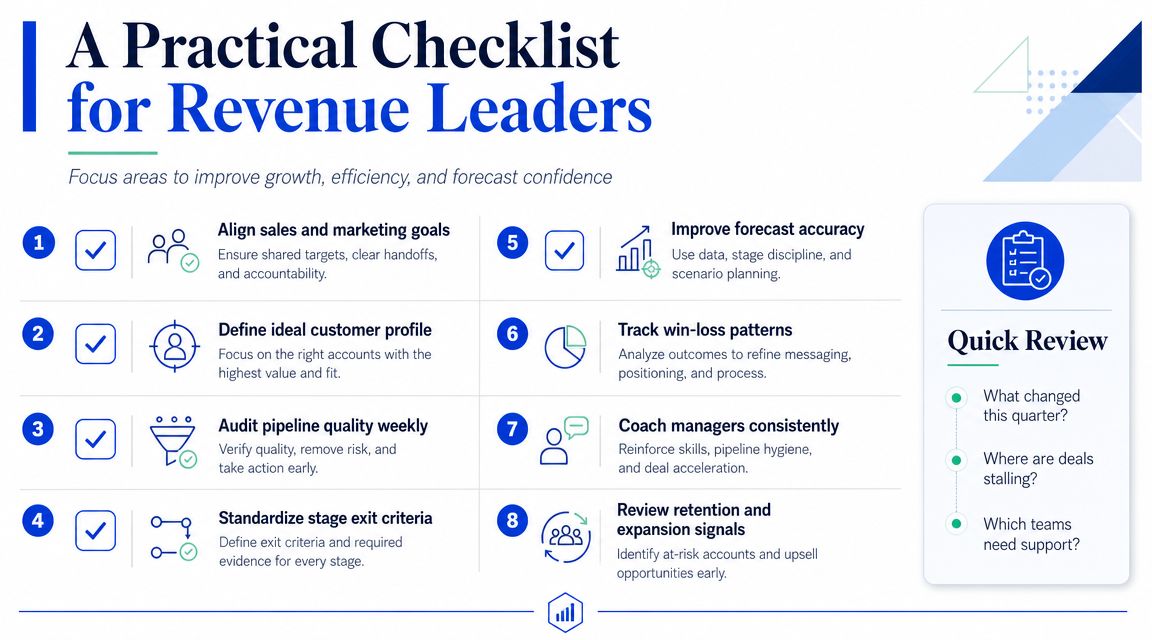
Revenue leaders usually start with the wrong question. They ask which agency can book meetings fastest. The better question is whether your team can support one integrated pipeline system once those meetings start coming in.
An agency cannot fix a broken handoff, a vague offer, or a CRM that treats every reply the same. If content sits with marketing, outbound sits with SDRs, and AI research sits with whoever bought Clay last quarter, you do not have a pipeline engine. You have three partial workflows producing noise.
Use this checklist before you sign anything.
Internal prep
Define one ICP first: pick the segment your sales team can close now, not a blended list of adjacent markets with different pain points and buying triggers.
State the offer in plain language: the agency should be able to explain the problem, the outcome, and the reason to respond without rewriting your positioning from scratch.
Set qualification rules: document what counts as a sales-ready meeting, who can disqualify it, and how that gets marked in the CRM.
Check CRM hygiene: lifecycle stages, lead sources, owner assignment, and reply routing need to be configured before launch.
Assign one internal operator: someone has to own feedback across content, outbound, and sales. Without that role, issues get spotted late and fixed even later.
Vetting questions
Ask these on the first call, and press for specifics:
How do you use content engagement signals to change outbound priority?
Who owns the message map across email, LinkedIn, calls, and follow-up content?
What gets built in the first week, and what is already templated versus custom?
How do you track sales acceptance, pipeline creation, and disqualification reasons?
Which tools run sourcing, enrichment, sequencing, CRM sync, and AI-assisted research?
What breaks most often in your workflow, and how do you catch it?
A good agency answers in sequence. Team, tools, handoffs, QA, reporting. A weak one stays high level because the operating model is inconsistent.
First 30 days expectations
The first month should produce operating visibility, not just activity. Revenue leaders should expect to see the ICP locked, exclusions documented, message themes approved, data cleaned, and test batches running in controlled volumes.
The reporting should also show how the system connects. Which accounts engaged with content. Which contacts were prioritized for outbound. Which replies turned into real conversations. Which meetings sales accepted or rejected, and why. If those signals live in separate dashboards, optimization slows down because nobody can see cause and effect.
A factual example of this model is Grou. It combines LinkedIn content, outbound execution, and AI-assisted list building inside one coordinated workflow, as noted earlier.
Frequently asked questions
When does an outsourced agency beat software or in-house
When speed and coordination matter more than ownership on paper. The practical choice depends on specialization, budget, and internal capacity, but the core issue is whether your team can unify data, messaging, and follow-up across channels, as explained in Lean Labs' comparison of B2B lead generation companies.
If you already have a strong operator who can manage Apollo, Clay, HubSpot, Sales Navigator, and sequencing tools well, software plus in-house execution can work. If nobody owns the full motion, another tool will just add another dashboard.
How should an agency adapt by industry
By changing the playbook, not by forcing the same one everywhere. SaaS can often support a content-led warm-up and outbound sequence. Manufacturing may need call-first motion. Legal tech and pharma often need tighter qualification and more careful proof handling.
The common thread is still integration. The order of channels changes. The need for one message map does not.
What AI actually changes in lead generation
Mostly research speed, drafting speed, and admin load. AI is useful in the top of funnel when it helps compress list research in Clay, draft personalized openers for review, or push structured call notes into HubSpot.
It is less useful when people expect it to replace judgment. Senior-buyer messaging, qualification calls, and deal strategy still need humans. The teams getting real value from AI use it to remove friction so reps spend more time selling.
What should you do next
Audit your current motion against one question. Do content, outbound, and sales handoff operate as one system, or are they separate vendors and separate dashboards pretending to be a pipeline engine?
If the answer is the second one, fix the operating model before you add budget.
If you want to pressure-test your current setup, Grou is one option for teams that need LinkedIn content, outbound, and lead generation run as a single pipeline system. The useful next step is simple: map your current buyer journey from first touch to qualified meeting, identify where ownership breaks, and compare that against an integrated model before renewing another siloed retainer.
Most advice about hiring a B2B lead gen agency is still stuck in channel thinking. One shop handles outbound, another handles LinkedIn content, another runs paid, and you get three reports that never explain why pipeline is flat.
That setup fails for a simple reason. Buyers don't experience your company in channels. They experience one brand, one message, and one level of credibility. If those pieces aren't coordinated, attention never compounds into pipeline.
The shift in the market makes that problem harder to ignore. 91% of marketers ranked lead generation as their top priority, while 58% of B2B marketers said generating high-quality leads was their biggest challenge according to Reach Marketing's 2025 lead generation statistics. Volume isn't the bottleneck anymore. System design is.
Table of Contents
What a modern B2B lead gen agency is (and is not)
A modern B2B lead gen agency is not an appointment-setting vendor with better branding. It isn't a list shop, a cold email shop, or a LinkedIn content team selling impressions and calling it pipeline.
It is a shared operating system for message, targeting, outreach, and qualification. The useful unit isn't the channel. It's the account journey from first impression to accepted meeting.
The old model breaks at the handoff
The old model looks efficient on paper. One vendor writes thought leadership, one vendor sends outbound, one vendor runs paid. In practice, each team optimizes for its own output.
That creates predictable failure points:
Different messages: LinkedIn talks about one pain point, outbound pushes another, and paid offers a third.
Broken prioritization: People engaging with content never reach the SDR queue fast enough to matter.
Messy qualification: Marketing celebrates leads, sales rejects them, RevOps cleans up the damage later.
No single owner: When results slip, every vendor points to a metric they hit.
Buyers don't care which vendor produced the touchpoint. They judge whether your company seems relevant, credible, and worth replying to.
Industry guidance already points in this direction. The objective is not to maximize MQL counts but to generate ICP-aligned qualification that Sales sees as commercially relevant, as outlined in Headley Media's guidance on technology lead generation.
The modern model is one operating system
The better model treats content, outbound, and data as one motion. The same pain points and proof points should drive the post your founder publishes, the opener in your email, the first LinkedIn DM, and the talk track on the discovery call.
That's why a modern agency should look closer to a RevOps-backed commercial team than a channel specialist. If the partner can't explain how Sales accepts, works, and closes the opportunities they generate, they are not really operating pipeline.
A useful way to pressure-test this is to compare the agency's process with a broader data-driven digital marketing agency model. If their reporting ends at opens, clicks, or booked meetings, they are still selling activity.
The three components of an integrated pipeline system
A real integrated system has three connected parts. Remove one, and performance drops back into channel silos.
24% faster three-year revenue growth shows up when sales and marketing are closely coordinated, according to Dux-Soup's 2025 B2B lead generation report. That number matters because integrated pipeline work is coordination made operational.
Content as credibility and signal capture
Most B2B teams still use LinkedIn content as a visibility play. That's too shallow. The better use is credibility plus signal detection.
The content layer should do three jobs at once:
Clarify positioning: show the market what problem you solve and for whom
Provide proof: show specific outcomes, objections handled, and buyer language
Generate engagement signals: identify who from the ICP is reading, liking, commenting, or visiting
Founders waste time when they post disconnected opinions. A post only matters if it feeds the same commercial narrative used elsewhere.
If you're already thinking about building sales pipeline, content should support that work directly, not run in a parallel lane.
Outbound built on one message map
Outbound should not invent its own story. The campaign needs one message map with a small number of pain points, proof points, and trigger events.
A working multichannel outbound motion usually includes tools like Apollo for sourcing, Clay for enrichment, Sales Navigator for account research, Lemlist or Instantly for email sequencing, and HeyReach for LinkedIn workflow support. The tools matter less than the order of operations.
A basic structure looks like this:
Define one ICP and one offer.
Build one message map.
Warm the account through LinkedIn where relevant.
Send email and LinkedIn touches from the same narrative.
Route replies and sales-ready accounts into CRM fast.
Practical rule: If your content team and outbound team use different proof points, you're paying twice to confuse the buyer.
The data layer that connects the system
This is the part most agencies skip, and it's the part that makes the system compound. The data layer handles list quality, enrichment, de-duplication, trigger detection, routing, and reporting.
The important mechanic is the reverse signal loop. When someone from the ICP engages with content, visits key pages, or shows another useful buying signal, they move into the outbound priority queue quickly. Content stops being a broadcast channel and becomes a lead-detection layer.
That loop is also why KPI design matters. If you need a cleaner view of what to monitor, this breakdown of lead generation KPIs is a better benchmark than dashboards built around vanity activity.
The engagement process from kickoff to qualified meeting
Most slow campaigns are not slow because the market is hard. They're slow because the agency sequences work that should run in parallel.
A high-performing agency operates as a multichannel system that combines list generation, data cleansing, and verified prospect enrichment to reduce bad-data waste and improve conversion, as described by TSL Marketing's lead generation service model. That has a direct impact on how quickly qualified meetings appear.
What the first seven days should look like
The kickoff shouldn't be a polite intro call. It should lock enough commercial clarity that execution can start the same day.
The fastest pipeline motion we've seen came from parallel execution. After contract signature, kickoff happened within 48 hours. In one session, ICP, offer, and message map were locked, then three tracks started immediately: list build in Clay, copy development across email and LinkedIn, and sending infrastructure setup.
That campaign produced a first qualified meeting on day 11. In that same launch window, the team built 850 contacts, soft-launched to 75 contacts, and created early pipeline of €180k within 30 days. The key change was not better copy. It was removing artificial sequencing.
A five-step launch framework
Use this to evaluate any B2B lead gen agency before you sign.
Run a real kickoff
The session needs to decide ICP, offer, exclusions, qualification rules, and message angles. If those are still vague after the call, launch will drift.Split work into parallel tracks
One person handles list and enrichment. Another writes copy. Another prepares sending and CRM routing. Sequential handoffs waste days.Soft-launch before scale
Start with a small batch. Review reply quality, not just deliverability. Keep the domain healthy and sharpen the message before volume rises.Route replies fast
Sales should see context, source, objections, and next step in the CRM immediately. That's where a defined lead qualification process matters more than meeting count.Use time-to-first-qualified-meeting as a health signal
Not every campaign should move at the same speed, but the first two weeks tell you whether the system is operational or just being assembled slowly.
Fast launch doesn't mean sloppy launch. It means the team knows how to make good decisions early enough to start work in parallel.
How to select an agency and read the contract
A good agency call should feel operational very quickly. If you spend most of the conversation hearing about reach, awareness, and channel capabilities, you're still too far from the actual buying decision.
The most important question is simple. Are you buying booked meetings, or are you buying a system that can be measured against revenue? Public agency explainers often blur that line, which is why buyers should ask whether the program is optimized for meetings or revenue attribution, with qualification rules tied to pipeline value rather than raw lead volume, as noted by Smart Finds Marketing's overview of lead generation companies.
What to look for before you sign
Use these filters hard:
Single team ownership: The people handling content, outbound logic, and routing should work from one commercial brief.
Clear qualification rules: The agency should define what gets accepted by sales and what gets recycled.
Tool transparency: They should be comfortable naming the stack, whether that's Apollo, Clay, Lemlist, Instantly, HubSpot, or Sales Navigator.
Reporting tied to pipeline: Activity metrics are diagnostics. They are not the success definition.
Real process detail: Ask what happens from signed contract to first live touch. Vague answers usually hide weak ops.
If you want a market map before shortlisting partners, this roundup of lead generation companies is a better starting point than generic agency directories.
What the contract should make obvious
The contract should answer four things without interpretation:
Contract item | What good looks like | Red flag |
|---|---|---|
Scope | One ICP, clear channels, clear deliverables | "Full service" with no operational detail |
Setup | Covers infrastructure, targeting, message map, tracking | Setup fee with no list of outputs |
Exit terms | Reasonable notice and clean offboarding | Long lock-in with unclear handover |
Success definition | Qualified pipeline, sales acceptance, attribution logic | Lead count or meeting count only |
Retainers are usually the cleaner model for integrated work because the value is in system ownership, not isolated tasks. Performance-only pricing often pushes agencies toward low-threshold meetings that sales doesn't want.
Case studies of integrated pipeline generation
Case studies get distorted when teams credit a channel instead of the system behind it. A campaign rarely works because email was strong or LinkedIn copy improved. It works because targeting, messaging, timing, and follow-up all run from the same operating logic.
SaaS after three siloed vendors
A B2B SaaS company came in after eight months with three separate vendors. One ran LinkedIn, one ran outbound, one ran paid. Spend was spread across disconnected reporting, disconnected targeting, and different definitions of what counted as a good lead.
The turnaround came from operational control. We consolidated the target account list, rebuilt the message map around one commercial story, and fed engagement data back into outbound prioritization instead of leaving it inside channel-specific dashboards. Content engagement informed who got worked next. Outbound replies shaped which objections sales enablement addressed. Paid traffic stopped acting like a parallel program and started supporting account progression.
After 90 days, qualified meetings increased from 6 per month to 19 per month. After 6 months, that reached 27 per month.
Same market. Same broad channel mix. Better system.
That is the point revenue teams miss. Channel additions rarely fix poor pipeline performance. Shared data, shared message ownership, and one feedback loop usually do.
Manufacturing with a different playbook
Manufacturing required a different operating model because buyer behavior was different. In Central and Eastern Europe, LinkedIn response was weaker, trust took longer to build, and cold email by itself created more resistance than momentum.
So the team changed the sequence without breaking integration. Research still sat in one workflow. Messaging still came from one core narrative. Sales feedback still updated targeting and follow-up rules. But contact strategy shifted to fit the buying motion.
Phone first: direct dial research and call-first outreach opened the conversation
Email second: follow-up emails referenced the attempted call instead of introducing the company from zero
Physical mail for top accounts: printed reports helped create credibility with high-value prospects
Longer measurement window: performance was judged against the actual sales cycle, not a short campaign window
That campaign generated 12 qualified meetings in the first 90 days, and pipeline-to-close conversion at 12 months hit 33%.
The useful lesson is operational, not vertical-specific. Integrated pipeline generation does not mean every company should run the same channels in the same order. It means content, outbound, and now AI-assisted research and prioritization should work inside one system, with one view of account status and one standard for sales-worthy demand.
For more examples of that model in practice, see these integrated pipeline generation case studies.
A practical checklist for revenue leaders
Revenue leaders usually start with the wrong question. They ask which agency can book meetings fastest. The better question is whether your team can support one integrated pipeline system once those meetings start coming in.
An agency cannot fix a broken handoff, a vague offer, or a CRM that treats every reply the same. If content sits with marketing, outbound sits with SDRs, and AI research sits with whoever bought Clay last quarter, you do not have a pipeline engine. You have three partial workflows producing noise.
Use this checklist before you sign anything.
Internal prep
Define one ICP first: pick the segment your sales team can close now, not a blended list of adjacent markets with different pain points and buying triggers.
State the offer in plain language: the agency should be able to explain the problem, the outcome, and the reason to respond without rewriting your positioning from scratch.
Set qualification rules: document what counts as a sales-ready meeting, who can disqualify it, and how that gets marked in the CRM.
Check CRM hygiene: lifecycle stages, lead sources, owner assignment, and reply routing need to be configured before launch.
Assign one internal operator: someone has to own feedback across content, outbound, and sales. Without that role, issues get spotted late and fixed even later.
Vetting questions
Ask these on the first call, and press for specifics:
How do you use content engagement signals to change outbound priority?
Who owns the message map across email, LinkedIn, calls, and follow-up content?
What gets built in the first week, and what is already templated versus custom?
How do you track sales acceptance, pipeline creation, and disqualification reasons?
Which tools run sourcing, enrichment, sequencing, CRM sync, and AI-assisted research?
What breaks most often in your workflow, and how do you catch it?
A good agency answers in sequence. Team, tools, handoffs, QA, reporting. A weak one stays high level because the operating model is inconsistent.
First 30 days expectations
The first month should produce operating visibility, not just activity. Revenue leaders should expect to see the ICP locked, exclusions documented, message themes approved, data cleaned, and test batches running in controlled volumes.
The reporting should also show how the system connects. Which accounts engaged with content. Which contacts were prioritized for outbound. Which replies turned into real conversations. Which meetings sales accepted or rejected, and why. If those signals live in separate dashboards, optimization slows down because nobody can see cause and effect.
A factual example of this model is Grou. It combines LinkedIn content, outbound execution, and AI-assisted list building inside one coordinated workflow, as noted earlier.
Frequently asked questions
When does an outsourced agency beat software or in-house
When speed and coordination matter more than ownership on paper. The practical choice depends on specialization, budget, and internal capacity, but the core issue is whether your team can unify data, messaging, and follow-up across channels, as explained in Lean Labs' comparison of B2B lead generation companies.
If you already have a strong operator who can manage Apollo, Clay, HubSpot, Sales Navigator, and sequencing tools well, software plus in-house execution can work. If nobody owns the full motion, another tool will just add another dashboard.
How should an agency adapt by industry
By changing the playbook, not by forcing the same one everywhere. SaaS can often support a content-led warm-up and outbound sequence. Manufacturing may need call-first motion. Legal tech and pharma often need tighter qualification and more careful proof handling.
The common thread is still integration. The order of channels changes. The need for one message map does not.
What AI actually changes in lead generation
Mostly research speed, drafting speed, and admin load. AI is useful in the top of funnel when it helps compress list research in Clay, draft personalized openers for review, or push structured call notes into HubSpot.
It is less useful when people expect it to replace judgment. Senior-buyer messaging, qualification calls, and deal strategy still need humans. The teams getting real value from AI use it to remove friction so reps spend more time selling.
What should you do next
Audit your current motion against one question. Do content, outbound, and sales handoff operate as one system, or are they separate vendors and separate dashboards pretending to be a pipeline engine?
If the answer is the second one, fix the operating model before you add budget.
If you want to pressure-test your current setup, Grou is one option for teams that need LinkedIn content, outbound, and lead generation run as a single pipeline system. The useful next step is simple: map your current buyer journey from first touch to qualified meeting, identify where ownership breaks, and compare that against an integrated model before renewing another siloed retainer.
Most advice about hiring a B2B lead gen agency is still stuck in channel thinking. One shop handles outbound, another handles LinkedIn content, another runs paid, and you get three reports that never explain why pipeline is flat.
That setup fails for a simple reason. Buyers don't experience your company in channels. They experience one brand, one message, and one level of credibility. If those pieces aren't coordinated, attention never compounds into pipeline.
The shift in the market makes that problem harder to ignore. 91% of marketers ranked lead generation as their top priority, while 58% of B2B marketers said generating high-quality leads was their biggest challenge according to Reach Marketing's 2025 lead generation statistics. Volume isn't the bottleneck anymore. System design is.
Table of Contents
What a modern B2B lead gen agency is (and is not)
A modern B2B lead gen agency is not an appointment-setting vendor with better branding. It isn't a list shop, a cold email shop, or a LinkedIn content team selling impressions and calling it pipeline.
It is a shared operating system for message, targeting, outreach, and qualification. The useful unit isn't the channel. It's the account journey from first impression to accepted meeting.
The old model breaks at the handoff
The old model looks efficient on paper. One vendor writes thought leadership, one vendor sends outbound, one vendor runs paid. In practice, each team optimizes for its own output.
That creates predictable failure points:
Different messages: LinkedIn talks about one pain point, outbound pushes another, and paid offers a third.
Broken prioritization: People engaging with content never reach the SDR queue fast enough to matter.
Messy qualification: Marketing celebrates leads, sales rejects them, RevOps cleans up the damage later.
No single owner: When results slip, every vendor points to a metric they hit.
Buyers don't care which vendor produced the touchpoint. They judge whether your company seems relevant, credible, and worth replying to.
Industry guidance already points in this direction. The objective is not to maximize MQL counts but to generate ICP-aligned qualification that Sales sees as commercially relevant, as outlined in Headley Media's guidance on technology lead generation.
The modern model is one operating system
The better model treats content, outbound, and data as one motion. The same pain points and proof points should drive the post your founder publishes, the opener in your email, the first LinkedIn DM, and the talk track on the discovery call.
That's why a modern agency should look closer to a RevOps-backed commercial team than a channel specialist. If the partner can't explain how Sales accepts, works, and closes the opportunities they generate, they are not really operating pipeline.
A useful way to pressure-test this is to compare the agency's process with a broader data-driven digital marketing agency model. If their reporting ends at opens, clicks, or booked meetings, they are still selling activity.
The three components of an integrated pipeline system
A real integrated system has three connected parts. Remove one, and performance drops back into channel silos.
24% faster three-year revenue growth shows up when sales and marketing are closely coordinated, according to Dux-Soup's 2025 B2B lead generation report. That number matters because integrated pipeline work is coordination made operational.
Content as credibility and signal capture
Most B2B teams still use LinkedIn content as a visibility play. That's too shallow. The better use is credibility plus signal detection.
The content layer should do three jobs at once:
Clarify positioning: show the market what problem you solve and for whom
Provide proof: show specific outcomes, objections handled, and buyer language
Generate engagement signals: identify who from the ICP is reading, liking, commenting, or visiting
Founders waste time when they post disconnected opinions. A post only matters if it feeds the same commercial narrative used elsewhere.
If you're already thinking about building sales pipeline, content should support that work directly, not run in a parallel lane.
Outbound built on one message map
Outbound should not invent its own story. The campaign needs one message map with a small number of pain points, proof points, and trigger events.
A working multichannel outbound motion usually includes tools like Apollo for sourcing, Clay for enrichment, Sales Navigator for account research, Lemlist or Instantly for email sequencing, and HeyReach for LinkedIn workflow support. The tools matter less than the order of operations.
A basic structure looks like this:
Define one ICP and one offer.
Build one message map.
Warm the account through LinkedIn where relevant.
Send email and LinkedIn touches from the same narrative.
Route replies and sales-ready accounts into CRM fast.
Practical rule: If your content team and outbound team use different proof points, you're paying twice to confuse the buyer.
The data layer that connects the system
This is the part most agencies skip, and it's the part that makes the system compound. The data layer handles list quality, enrichment, de-duplication, trigger detection, routing, and reporting.
The important mechanic is the reverse signal loop. When someone from the ICP engages with content, visits key pages, or shows another useful buying signal, they move into the outbound priority queue quickly. Content stops being a broadcast channel and becomes a lead-detection layer.
That loop is also why KPI design matters. If you need a cleaner view of what to monitor, this breakdown of lead generation KPIs is a better benchmark than dashboards built around vanity activity.
The engagement process from kickoff to qualified meeting
Most slow campaigns are not slow because the market is hard. They're slow because the agency sequences work that should run in parallel.
A high-performing agency operates as a multichannel system that combines list generation, data cleansing, and verified prospect enrichment to reduce bad-data waste and improve conversion, as described by TSL Marketing's lead generation service model. That has a direct impact on how quickly qualified meetings appear.
What the first seven days should look like
The kickoff shouldn't be a polite intro call. It should lock enough commercial clarity that execution can start the same day.
The fastest pipeline motion we've seen came from parallel execution. After contract signature, kickoff happened within 48 hours. In one session, ICP, offer, and message map were locked, then three tracks started immediately: list build in Clay, copy development across email and LinkedIn, and sending infrastructure setup.
That campaign produced a first qualified meeting on day 11. In that same launch window, the team built 850 contacts, soft-launched to 75 contacts, and created early pipeline of €180k within 30 days. The key change was not better copy. It was removing artificial sequencing.
A five-step launch framework
Use this to evaluate any B2B lead gen agency before you sign.
Run a real kickoff
The session needs to decide ICP, offer, exclusions, qualification rules, and message angles. If those are still vague after the call, launch will drift.Split work into parallel tracks
One person handles list and enrichment. Another writes copy. Another prepares sending and CRM routing. Sequential handoffs waste days.Soft-launch before scale
Start with a small batch. Review reply quality, not just deliverability. Keep the domain healthy and sharpen the message before volume rises.Route replies fast
Sales should see context, source, objections, and next step in the CRM immediately. That's where a defined lead qualification process matters more than meeting count.Use time-to-first-qualified-meeting as a health signal
Not every campaign should move at the same speed, but the first two weeks tell you whether the system is operational or just being assembled slowly.
Fast launch doesn't mean sloppy launch. It means the team knows how to make good decisions early enough to start work in parallel.
How to select an agency and read the contract
A good agency call should feel operational very quickly. If you spend most of the conversation hearing about reach, awareness, and channel capabilities, you're still too far from the actual buying decision.
The most important question is simple. Are you buying booked meetings, or are you buying a system that can be measured against revenue? Public agency explainers often blur that line, which is why buyers should ask whether the program is optimized for meetings or revenue attribution, with qualification rules tied to pipeline value rather than raw lead volume, as noted by Smart Finds Marketing's overview of lead generation companies.
What to look for before you sign
Use these filters hard:
Single team ownership: The people handling content, outbound logic, and routing should work from one commercial brief.
Clear qualification rules: The agency should define what gets accepted by sales and what gets recycled.
Tool transparency: They should be comfortable naming the stack, whether that's Apollo, Clay, Lemlist, Instantly, HubSpot, or Sales Navigator.
Reporting tied to pipeline: Activity metrics are diagnostics. They are not the success definition.
Real process detail: Ask what happens from signed contract to first live touch. Vague answers usually hide weak ops.
If you want a market map before shortlisting partners, this roundup of lead generation companies is a better starting point than generic agency directories.
What the contract should make obvious
The contract should answer four things without interpretation:
Contract item | What good looks like | Red flag |
|---|---|---|
Scope | One ICP, clear channels, clear deliverables | "Full service" with no operational detail |
Setup | Covers infrastructure, targeting, message map, tracking | Setup fee with no list of outputs |
Exit terms | Reasonable notice and clean offboarding | Long lock-in with unclear handover |
Success definition | Qualified pipeline, sales acceptance, attribution logic | Lead count or meeting count only |
Retainers are usually the cleaner model for integrated work because the value is in system ownership, not isolated tasks. Performance-only pricing often pushes agencies toward low-threshold meetings that sales doesn't want.
Case studies of integrated pipeline generation
Case studies get distorted when teams credit a channel instead of the system behind it. A campaign rarely works because email was strong or LinkedIn copy improved. It works because targeting, messaging, timing, and follow-up all run from the same operating logic.
SaaS after three siloed vendors
A B2B SaaS company came in after eight months with three separate vendors. One ran LinkedIn, one ran outbound, one ran paid. Spend was spread across disconnected reporting, disconnected targeting, and different definitions of what counted as a good lead.
The turnaround came from operational control. We consolidated the target account list, rebuilt the message map around one commercial story, and fed engagement data back into outbound prioritization instead of leaving it inside channel-specific dashboards. Content engagement informed who got worked next. Outbound replies shaped which objections sales enablement addressed. Paid traffic stopped acting like a parallel program and started supporting account progression.
After 90 days, qualified meetings increased from 6 per month to 19 per month. After 6 months, that reached 27 per month.
Same market. Same broad channel mix. Better system.
That is the point revenue teams miss. Channel additions rarely fix poor pipeline performance. Shared data, shared message ownership, and one feedback loop usually do.
Manufacturing with a different playbook
Manufacturing required a different operating model because buyer behavior was different. In Central and Eastern Europe, LinkedIn response was weaker, trust took longer to build, and cold email by itself created more resistance than momentum.
So the team changed the sequence without breaking integration. Research still sat in one workflow. Messaging still came from one core narrative. Sales feedback still updated targeting and follow-up rules. But contact strategy shifted to fit the buying motion.
Phone first: direct dial research and call-first outreach opened the conversation
Email second: follow-up emails referenced the attempted call instead of introducing the company from zero
Physical mail for top accounts: printed reports helped create credibility with high-value prospects
Longer measurement window: performance was judged against the actual sales cycle, not a short campaign window
That campaign generated 12 qualified meetings in the first 90 days, and pipeline-to-close conversion at 12 months hit 33%.
The useful lesson is operational, not vertical-specific. Integrated pipeline generation does not mean every company should run the same channels in the same order. It means content, outbound, and now AI-assisted research and prioritization should work inside one system, with one view of account status and one standard for sales-worthy demand.
For more examples of that model in practice, see these integrated pipeline generation case studies.
A practical checklist for revenue leaders
Revenue leaders usually start with the wrong question. They ask which agency can book meetings fastest. The better question is whether your team can support one integrated pipeline system once those meetings start coming in.
An agency cannot fix a broken handoff, a vague offer, or a CRM that treats every reply the same. If content sits with marketing, outbound sits with SDRs, and AI research sits with whoever bought Clay last quarter, you do not have a pipeline engine. You have three partial workflows producing noise.
Use this checklist before you sign anything.
Internal prep
Define one ICP first: pick the segment your sales team can close now, not a blended list of adjacent markets with different pain points and buying triggers.
State the offer in plain language: the agency should be able to explain the problem, the outcome, and the reason to respond without rewriting your positioning from scratch.
Set qualification rules: document what counts as a sales-ready meeting, who can disqualify it, and how that gets marked in the CRM.
Check CRM hygiene: lifecycle stages, lead sources, owner assignment, and reply routing need to be configured before launch.
Assign one internal operator: someone has to own feedback across content, outbound, and sales. Without that role, issues get spotted late and fixed even later.
Vetting questions
Ask these on the first call, and press for specifics:
How do you use content engagement signals to change outbound priority?
Who owns the message map across email, LinkedIn, calls, and follow-up content?
What gets built in the first week, and what is already templated versus custom?
How do you track sales acceptance, pipeline creation, and disqualification reasons?
Which tools run sourcing, enrichment, sequencing, CRM sync, and AI-assisted research?
What breaks most often in your workflow, and how do you catch it?
A good agency answers in sequence. Team, tools, handoffs, QA, reporting. A weak one stays high level because the operating model is inconsistent.
First 30 days expectations
The first month should produce operating visibility, not just activity. Revenue leaders should expect to see the ICP locked, exclusions documented, message themes approved, data cleaned, and test batches running in controlled volumes.
The reporting should also show how the system connects. Which accounts engaged with content. Which contacts were prioritized for outbound. Which replies turned into real conversations. Which meetings sales accepted or rejected, and why. If those signals live in separate dashboards, optimization slows down because nobody can see cause and effect.
A factual example of this model is Grou. It combines LinkedIn content, outbound execution, and AI-assisted list building inside one coordinated workflow, as noted earlier.
Frequently asked questions
When does an outsourced agency beat software or in-house
When speed and coordination matter more than ownership on paper. The practical choice depends on specialization, budget, and internal capacity, but the core issue is whether your team can unify data, messaging, and follow-up across channels, as explained in Lean Labs' comparison of B2B lead generation companies.
If you already have a strong operator who can manage Apollo, Clay, HubSpot, Sales Navigator, and sequencing tools well, software plus in-house execution can work. If nobody owns the full motion, another tool will just add another dashboard.
How should an agency adapt by industry
By changing the playbook, not by forcing the same one everywhere. SaaS can often support a content-led warm-up and outbound sequence. Manufacturing may need call-first motion. Legal tech and pharma often need tighter qualification and more careful proof handling.
The common thread is still integration. The order of channels changes. The need for one message map does not.
What AI actually changes in lead generation
Mostly research speed, drafting speed, and admin load. AI is useful in the top of funnel when it helps compress list research in Clay, draft personalized openers for review, or push structured call notes into HubSpot.
It is less useful when people expect it to replace judgment. Senior-buyer messaging, qualification calls, and deal strategy still need humans. The teams getting real value from AI use it to remove friction so reps spend more time selling.
What should you do next
Audit your current motion against one question. Do content, outbound, and sales handoff operate as one system, or are they separate vendors and separate dashboards pretending to be a pipeline engine?
If the answer is the second one, fix the operating model before you add budget.
If you want to pressure-test your current setup, Grou is one option for teams that need LinkedIn content, outbound, and lead generation run as a single pipeline system. The useful next step is simple: map your current buyer journey from first touch to qualified meeting, identify where ownership breaks, and compare that against an integrated model before renewing another siloed retainer.
Pipeline OS Newsletter
Build qualified pipeline
Get weekly tactics to generate demand, improve lead quality, and book more meetings.





Trusted by industry leaders
Trusted by industry leaders
Trusted by industry leaders
Ready to build qualified pipeline?
Ready to build qualified pipeline?
Ready to build qualified pipeline?
Book a call to see if we're the right fit, or take the 2-minute quiz to get a clear starting point.
Book a call to see if we're the right fit, or take the 2-minute quiz to get a clear starting point.
Book a call to see if we're the right fit, or take the 2-minute quiz to get a clear starting point.
" height="30.21639343089746px" id="hfGbXmQR2" width="30.216393430897455px"/></svg>)
Copyright © 2026 – All Right Reserved
Copyright © 2026 – All Right Reserved
Copyright © 2026 – All Right Reserved