%22%3E%3C/path%3E%3Cpath d=%22M 63.072 7.554 C 62.258 8.022 61.577 8.689 61.092 9.493 L 61.092 7.076 L 57.158 7.076 L 57.158 22.64 L 61.089 22.64 L 61.089 14.888 C 61.089 13.446 61.403 12.434 62.03 11.853 C 62.818 11.218 63.818 10.907 64.826 10.982 L 65.868 10.982 L 65.868 6.851 C 64.891 6.834 63.926 7.076 63.073 7.554 Z%22 fill=%22rgb(17,17,17)%22%3E%3C/path%3E%3Cpath d=%22M 78.916 7.82 C 76.363 6.49 73.321 6.49 70.768 7.82 C 69.562 8.473 68.564 9.451 67.888 10.644 C 67.167 11.931 66.803 13.387 66.834 14.862 C 66.804 16.332 67.157 17.785 67.86 19.077 C 68.515 20.267 69.494 21.246 70.684 21.901 C 71.924 22.576 73.318 22.92 74.73 22.898 C 76.164 22.918 77.58 22.575 78.846 21.901 C 80.062 21.247 81.073 20.27 81.768 19.077 C 82.506 17.797 82.88 16.339 82.85 14.862 C 82.88 13.389 82.517 11.934 81.797 10.647 C 81.12 9.455 80.122 8.477 78.917 7.824 M 78.803 14.862 C 78.829 15.739 78.636 16.608 78.241 17.391 C 77.903 18.046 77.38 18.588 76.738 18.95 C 76.124 19.293 75.432 19.472 74.729 19.47 C 73.668 19.497 72.648 19.061 71.934 18.276 C 71.139 17.323 70.741 16.1 70.823 14.862 C 70.741 13.62 71.149 12.395 71.959 11.45 C 72.687 10.667 73.715 10.233 74.783 10.256 C 75.859 10.236 76.894 10.67 77.635 11.45 C 78.464 12.387 78.884 13.616 78.801 14.864%22 fill=%22rgb(17,17,17)%22%3E%3C/path%3E%3Cpath d=%22M 95.906 7.076 L 95.906 15.646 C 95.975 16.68 95.643 17.701 94.979 18.498 C 94.311 19.184 93.379 19.547 92.422 19.495 C 91.475 19.544 90.553 19.18 89.894 18.498 C 89.23 17.701 88.898 16.68 88.967 15.646 L 88.967 7.076 L 85.033 7.076 L 85.033 16.207 C 85 17.449 85.275 18.68 85.834 19.79 C 86.327 20.75 87.095 21.542 88.039 22.065 C 89.033 22.594 90.145 22.861 91.271 22.838 C 92.188 22.847 93.095 22.65 93.926 22.263 C 94.708 21.905 95.388 21.36 95.906 20.675 L 95.906 22.645 L 99.865 22.645 L 99.865 7.076 Z%22 fill=%22rgb(17,17,17)%22%3E%3C/path%3E%3Cpath d=%22M 4.513 15.626 C 4.511 10.815 7.606 6.549 12.181 5.059 C 16.756 3.57 21.77 5.195 24.601 9.086 L 27.816 5.87 C 24.074 1.186 17.981 -0.943 12.137 0.393 C 6.292 1.728 1.728 6.292 0.393 12.137 C -0.943 17.981 1.186 24.074 5.87 27.816 L 9.085 24.601 C 6.214 22.512 4.515 19.177 4.513 15.626%22 fill=%22rgb(32,62,235)%22%3E%3C/path%3E%3Cpath d=%22M 17.114 14.343 L 13.354 18.01 L 13.354 18.026 L 21.071 18.026 L 11.412 27.609 L 17.389 27.609 L 23.999 21.081 L 23.999 28.316 L 24.005 28.316 L 27.967 24.393 L 27.967 14.343 Z%22 fill=%22rgb(32,62,235)%22%3E%3C/path%3E%3C/g%3E%3C/svg%3E) ×
× ××
××›
›
›
›
Lead generation for professional services firms
Lead generation for professional services firms
Lead generation for professional services firms
Lead generation for professional services firms
Lead generation for professional services firms
Lead generation for professional services firms

Author
Aljaz Peklaj

Professional services firms have a lead generation problem that product companies do not. What you sell is a person's judgement, the buyer is buying trust before they buy scope, and the people best placed to sell it are the same people who have to deliver it. Every generic playbook assumes away all three.
This is what actually works for law firms, accountancies, consultancies, engineering practices and agencies, based on outreach campaigns we have run for professional services clients between 2024 and 2026.
TL;DR
Referrals are the best lead source professional services firms have and the reason most of them stall, because referral volume is capped by your existing network and nothing you do on Monday changes it by Friday. The motion that consistently outperforms in our own campaign data is event-anchored outreach: across our professional services deployments, campaigns anchored to a specific live event returned roughly three times the reply rate of always-on regional outreach. The reason is not the event, it is that an invitation is a legitimate reason to contact a stranger and a request for a meeting is not. Everything else follows from the same principle: lead with a reason the recipient can verify, keep the partner's name on the outreach because the buyer is buying the person, and segment tightly enough that the message can name the reader's actual situation. Firms that get stuck are almost always running one broad campaign to a wide list under a company brand nobody recognises. The capacity constraint is real and worth planning around: you cannot generate demand you have no one to deliver, so the aim is a predictable trickle you can turn up, not a spike you have to apologise for.
Why professional services is a different problem
Three things make this harder than product lead generation, and all three are structural rather than tactical.
The buyer is buying a person, not a licence. A software prospect can evaluate the product. Your prospect is evaluating whether a named partner will understand their situation. That is why outreach sent from the firm's brand account underperforms outreach sent from the partner who would actually run the work, and it is why anonymous nurture sequences do so little.
Delivery capacity caps demand. A SaaS company can sell ahead of build. You cannot sell ahead of the senior people's calendars without damaging the thing you sell. This changes the goal: the aim is a predictable flow you can dial up and down, not a burst.
Your best salespeople bill by the hour. Every hour a partner spends prospecting has a visible opportunity cost, which is why prospecting is always the thing that gets dropped in a busy month. Any system that depends on partners doing daily outreach will fail. Systems that depend on partners for thirty minutes of review and a signature survive.
What the campaign data actually shows
![HART 1, lead-generation-professional-services-chart-1-reply.svg] Alt: Reply rates by campaign anchor across anonymized GROU professional services outreach deployments, 2024 to 2026.](https://framerusercontent.com/images/6QuWutMBIHZbfQ5LepyZfIJUzo.svg)
The pattern across our professional services campaigns is consistent enough to plan against.
Event-anchored outreach is the standout. Campaigns built around an invitation to a specific live event returned a 24.5% reply rate, against 8.0% for always-on regional outreach running to a broad senior audience. That is roughly three times the response for the same channel and comparable seniority of recipient.
The mechanism is the ask, not the event. An invitation gives the recipient something to accept or decline. A meeting request asks them to grant you time on the basis of nothing. One of those is a normal thing to receive from a stranger and the other is not, and the reply rates reflect it.
Tight segments beat broad ones inside the same campaign. In a cyber security services programme averaging 11.8% replies, the best-performing segment reached 19.2%. Same firm, same sender, same offer. The difference was that the message could name the recipient's specific situation instead of gesturing at a category.
Volume without an anchor still works, it just works slowly. The 8.0% campaign generated 350 qualified leads, but it needed 2,245 conversations and 24 separate campaigns to get there. That is a real result and it is also a real cost. If you have one person coordinating outreach, you do not have the capacity to run that shape.
The motion that fits your firm
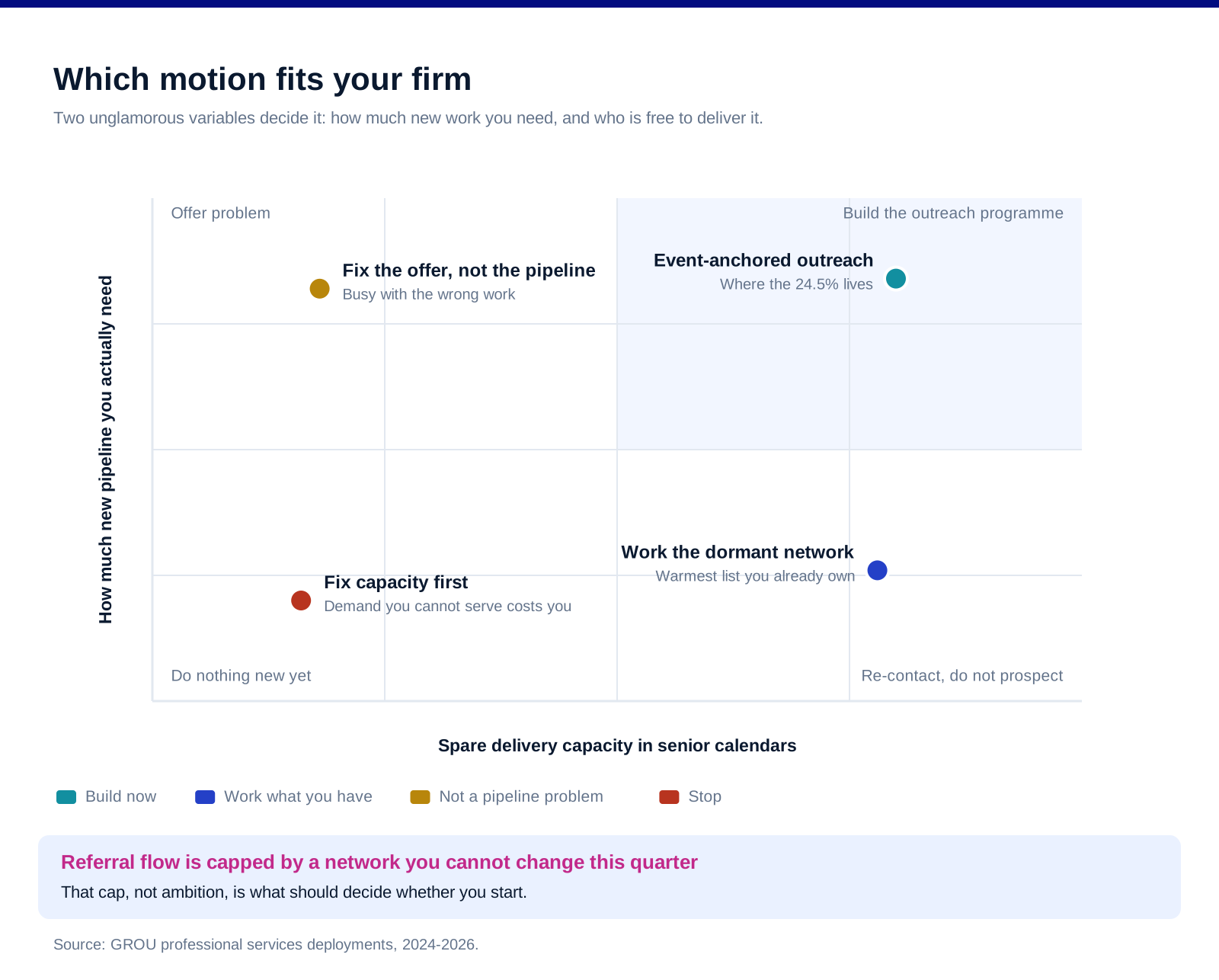
There is no single right answer here, and the two variables that decide it are unglamorous.
High referral flow, no spare capacity: do nothing new. If referrals already fill the calendar, adding lead generation creates a queue you cannot serve and a reputation you did not want. Fix capacity first, then generate demand. This is the situation more firms are in than admit it.
High referral flow, spare capacity: work the network you already have. Your fastest route is not cold outreach, it is systematic re-contact of dormant clients and referrers. The list is small, the acceptance rate is high, and the ask is warm. Most firms have never once run this deliberately.
Low referral flow, spare capacity: run event-anchored outreach. This is where the 24.5% number lives. Host or attend something, build the list around it, and let the invitation carry the message. Four events a year is a programme.
Low referral flow, no spare capacity: fix the offer, not the pipeline. If nobody refers you and you are still busy, you are probably busy with work you would not choose. Lead generation will scale whatever you point it at, including the wrong thing.
The sequence that actually gets run
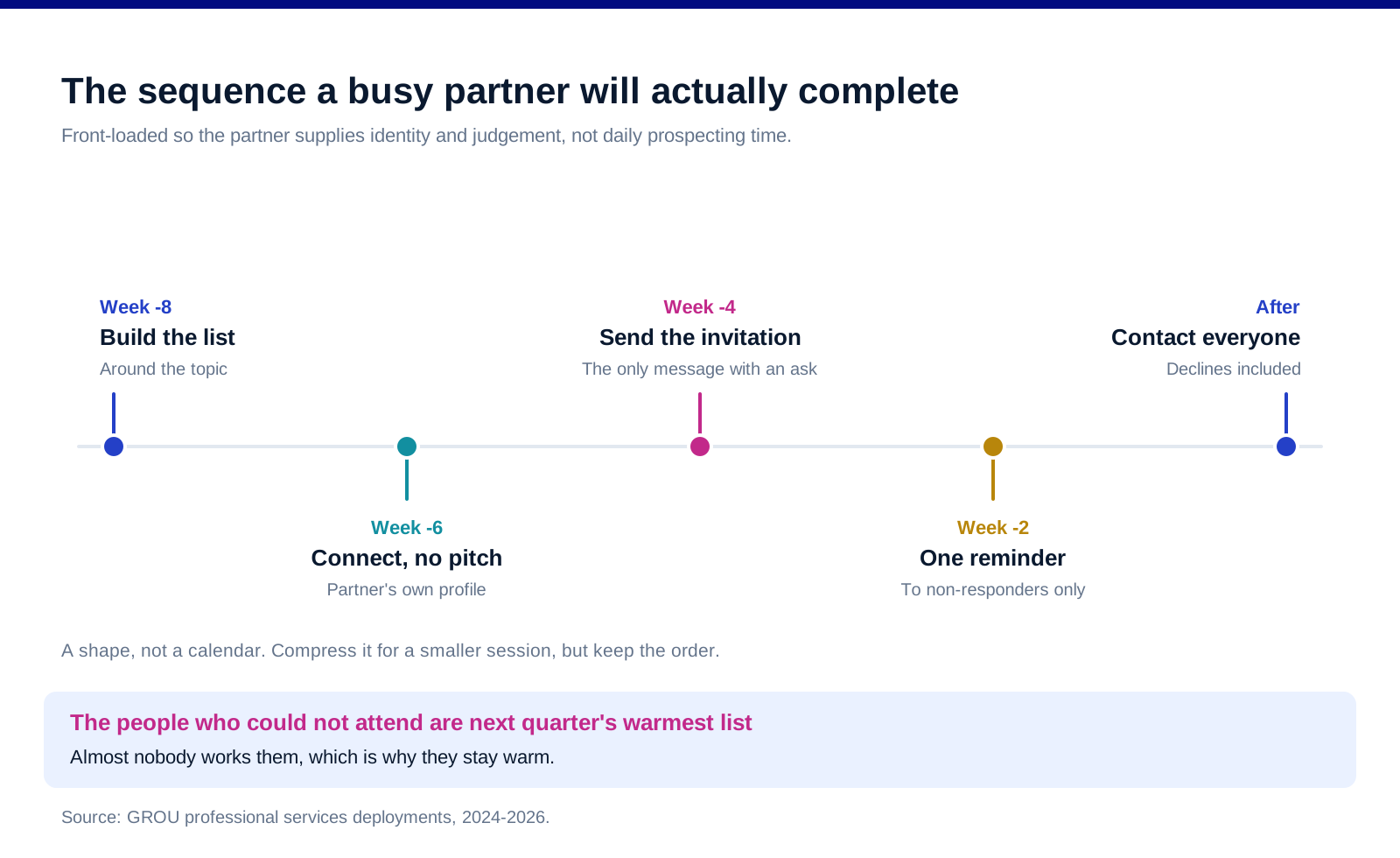
This is the shape that survives contact with a busy partner's calendar, because it front-loads the work that someone else can do.
Eight weeks out, build the list around the event, not the firm. Who would find this specific topic relevant enough to give up a morning? That question produces a better list than any ICP document, because it forces specificity. Our best-performing professional services campaigns worked lists in the low thousands, not the tens of thousands.
Six weeks out, warm the connection. LinkedIn connection requests from the partner's own profile, no pitch attached. Acceptance rates in the low sixties are achievable when the request comes from a real person with a real title in a relevant field. That acceptance is the asset; the invitation lands in an established connection rather than a cold inbox.
Four weeks out, send the invitation. From the partner, in the recipient's language, naming the specific problem the session covers. This is the message that earns the reply, and it should be the only message with an ask in it.
Two weeks out, follow up once. A single reminder to non-responders. Not three.
After the event, contact everyone. Attendees, registrants who did not come, and the people who declined politely. The people who could not attend are a warmer list than any cold segment you will build this year, and almost nobody works them. If you are hosting the session online rather than in a room, our webinar lead generation guide covers the attendance arithmetic that decides how many invitations you need to send.
Where firms go wrong
Outreach from the firm brand instead of the partner. The buyer is evaluating a person. A message from "the team at" a firm they have not heard of removes the only thing that would make them read it.
One broad campaign instead of four narrow ones. The 19.2% versus 11.8% gap is what segmentation is worth inside a single programme. Broad campaigns are cheaper to set up and consistently worse.
Treating the website as the pipeline. Content and SEO matter for professional services, but they compound over quarters. If the partners need meetings this quarter, outreach is the lever and content is the investment.
Generating demand you cannot deliver. The fastest way to damage a professional services reputation is to win work you then staff badly. Plan the volume against the calendar, not against ambition. If your addressable market is small and each engagement is large, you are closer to an account-based motion than a demand-generation one, and our ABM versus demand generation piece has the arithmetic that decides which.
Assuming the IT services playbook transfers. Adjacent, but not the same buying motion: technical services buyers evaluate against a requirement, advisory buyers evaluate against a person. We cover the former separately in lead generation for IT services companies.
Handing prospecting to the partners. It will be dropped in the first busy week and every week after. Give them the review and the signature, and let someone else own the list, the sequencing and the follow-up.
FAQ
What is the best lead generation channel for professional services firms?
LinkedIn and email outreach sent from a named partner's identity, anchored to a specific reason for contact. In our professional services campaigns the highest reply rates came from event invitations rather than meeting requests, by a factor of roughly three. Paid channels and content work but on a slower clock, so they are the investment rather than the lever when the calendar needs filling this quarter.
How do you generate leads for a law firm or accountancy without damaging the brand?
Send from a real partner rather than a firm-wide account, contact people about something specific and verifiable such as a regulatory change or an event you are hosting, and keep the volume low enough that every reply gets a considered response. Damage comes from mass generic contact, not from outreach as such.
How many leads should a professional services firm generate?
Fewer than you think, and matched to delivery capacity. The useful number is how many new engagements your senior people can absorb in a quarter without degrading the work, multiplied by your conversion rate from qualified conversation to engagement. Generating more than that creates a queue, and queues in professional services turn into lost prospects rather than backlog.
Do events still work for professional services lead generation?
They work better than almost anything else, and not primarily because of what happens at the event. The invitation is a legitimate reason to contact someone who does not know you, which is the hardest problem in professional services outreach. Even people who decline become a warm list. Four events a year is enough to run a programme around.
Should partners do their own outreach?
They should own the identity and the reply, not the process. Outreach that depends on partners doing daily prospecting stops in the first busy week. Outreach where someone else builds the list, drafts the sequence and manages the follow-up, and the partner spends thirty minutes reviewing and then handles the responses personally, survives.
How long before professional services lead generation produces meetings?
Allow a full quarter before judging it. The first campaign teaches you which segment responds, and segment quality moves reply rates by more than message quality does. Firms that stop after four weeks stop before the thing that makes it work has had a chance to show up.
Bottom line
Sell the partner, not the firm. Find a reason to make contact that the recipient can verify, which in practice usually means an event or a specific change in their world rather than a request for thirty minutes. Segment tightly enough that the message names their actual situation, because that gap is worth more than any amount of copywriting. Keep the process off the partners' calendars and their identity on it. And size the whole thing against delivery capacity, because in professional services the pipeline you cannot serve is worse than the one you do not have.
Want this built and run rather than described? Book a call with GROU. We run lead generation and outbound for professional services firms, and the case studies show the campaign shapes behind the numbers above.
We are GROU, a B2B pipeline agency that runs lead generation, outbound, and LinkedIn content for clients across manufacturing, fintech, iGaming, software, and professional services. Every figure in this article comes from our own professional services campaigns between 2024 and 2026, anonymized to protect client confidentiality.
Professional services firms have a lead generation problem that product companies do not. What you sell is a person's judgement, the buyer is buying trust before they buy scope, and the people best placed to sell it are the same people who have to deliver it. Every generic playbook assumes away all three.
This is what actually works for law firms, accountancies, consultancies, engineering practices and agencies, based on outreach campaigns we have run for professional services clients between 2024 and 2026.
TL;DR
Referrals are the best lead source professional services firms have and the reason most of them stall, because referral volume is capped by your existing network and nothing you do on Monday changes it by Friday. The motion that consistently outperforms in our own campaign data is event-anchored outreach: across our professional services deployments, campaigns anchored to a specific live event returned roughly three times the reply rate of always-on regional outreach. The reason is not the event, it is that an invitation is a legitimate reason to contact a stranger and a request for a meeting is not. Everything else follows from the same principle: lead with a reason the recipient can verify, keep the partner's name on the outreach because the buyer is buying the person, and segment tightly enough that the message can name the reader's actual situation. Firms that get stuck are almost always running one broad campaign to a wide list under a company brand nobody recognises. The capacity constraint is real and worth planning around: you cannot generate demand you have no one to deliver, so the aim is a predictable trickle you can turn up, not a spike you have to apologise for.
Why professional services is a different problem
Three things make this harder than product lead generation, and all three are structural rather than tactical.
The buyer is buying a person, not a licence. A software prospect can evaluate the product. Your prospect is evaluating whether a named partner will understand their situation. That is why outreach sent from the firm's brand account underperforms outreach sent from the partner who would actually run the work, and it is why anonymous nurture sequences do so little.
Delivery capacity caps demand. A SaaS company can sell ahead of build. You cannot sell ahead of the senior people's calendars without damaging the thing you sell. This changes the goal: the aim is a predictable flow you can dial up and down, not a burst.
Your best salespeople bill by the hour. Every hour a partner spends prospecting has a visible opportunity cost, which is why prospecting is always the thing that gets dropped in a busy month. Any system that depends on partners doing daily outreach will fail. Systems that depend on partners for thirty minutes of review and a signature survive.
What the campaign data actually shows
The pattern across our professional services campaigns is consistent enough to plan against.
Event-anchored outreach is the standout. Campaigns built around an invitation to a specific live event returned a 24.5% reply rate, against 8.0% for always-on regional outreach running to a broad senior audience. That is roughly three times the response for the same channel and comparable seniority of recipient.
The mechanism is the ask, not the event. An invitation gives the recipient something to accept or decline. A meeting request asks them to grant you time on the basis of nothing. One of those is a normal thing to receive from a stranger and the other is not, and the reply rates reflect it.
Tight segments beat broad ones inside the same campaign. In a cyber security services programme averaging 11.8% replies, the best-performing segment reached 19.2%. Same firm, same sender, same offer. The difference was that the message could name the recipient's specific situation instead of gesturing at a category.
Volume without an anchor still works, it just works slowly. The 8.0% campaign generated 350 qualified leads, but it needed 2,245 conversations and 24 separate campaigns to get there. That is a real result and it is also a real cost. If you have one person coordinating outreach, you do not have the capacity to run that shape.
The motion that fits your firm
There is no single right answer here, and the two variables that decide it are unglamorous.
High referral flow, no spare capacity: do nothing new. If referrals already fill the calendar, adding lead generation creates a queue you cannot serve and a reputation you did not want. Fix capacity first, then generate demand. This is the situation more firms are in than admit it.
High referral flow, spare capacity: work the network you already have. Your fastest route is not cold outreach, it is systematic re-contact of dormant clients and referrers. The list is small, the acceptance rate is high, and the ask is warm. Most firms have never once run this deliberately.
Low referral flow, spare capacity: run event-anchored outreach. This is where the 24.5% number lives. Host or attend something, build the list around it, and let the invitation carry the message. Four events a year is a programme.
Low referral flow, no spare capacity: fix the offer, not the pipeline. If nobody refers you and you are still busy, you are probably busy with work you would not choose. Lead generation will scale whatever you point it at, including the wrong thing.
The sequence that actually gets run
This is the shape that survives contact with a busy partner's calendar, because it front-loads the work that someone else can do.
Eight weeks out, build the list around the event, not the firm. Who would find this specific topic relevant enough to give up a morning? That question produces a better list than any ICP document, because it forces specificity. Our best-performing professional services campaigns worked lists in the low thousands, not the tens of thousands.
Six weeks out, warm the connection. LinkedIn connection requests from the partner's own profile, no pitch attached. Acceptance rates in the low sixties are achievable when the request comes from a real person with a real title in a relevant field. That acceptance is the asset; the invitation lands in an established connection rather than a cold inbox.
Four weeks out, send the invitation. From the partner, in the recipient's language, naming the specific problem the session covers. This is the message that earns the reply, and it should be the only message with an ask in it.
Two weeks out, follow up once. A single reminder to non-responders. Not three.
After the event, contact everyone. Attendees, registrants who did not come, and the people who declined politely. The people who could not attend are a warmer list than any cold segment you will build this year, and almost nobody works them. If you are hosting the session online rather than in a room, our webinar lead generation guide covers the attendance arithmetic that decides how many invitations you need to send.
Where firms go wrong
Outreach from the firm brand instead of the partner. The buyer is evaluating a person. A message from "the team at" a firm they have not heard of removes the only thing that would make them read it.
One broad campaign instead of four narrow ones. The 19.2% versus 11.8% gap is what segmentation is worth inside a single programme. Broad campaigns are cheaper to set up and consistently worse.
Treating the website as the pipeline. Content and SEO matter for professional services, but they compound over quarters. If the partners need meetings this quarter, outreach is the lever and content is the investment.
Generating demand you cannot deliver. The fastest way to damage a professional services reputation is to win work you then staff badly. Plan the volume against the calendar, not against ambition. If your addressable market is small and each engagement is large, you are closer to an account-based motion than a demand-generation one, and our ABM versus demand generation piece has the arithmetic that decides which.
Assuming the IT services playbook transfers. Adjacent, but not the same buying motion: technical services buyers evaluate against a requirement, advisory buyers evaluate against a person. We cover the former separately in lead generation for IT services companies.
Handing prospecting to the partners. It will be dropped in the first busy week and every week after. Give them the review and the signature, and let someone else own the list, the sequencing and the follow-up.
FAQ
What is the best lead generation channel for professional services firms?
LinkedIn and email outreach sent from a named partner's identity, anchored to a specific reason for contact. In our professional services campaigns the highest reply rates came from event invitations rather than meeting requests, by a factor of roughly three. Paid channels and content work but on a slower clock, so they are the investment rather than the lever when the calendar needs filling this quarter.
How do you generate leads for a law firm or accountancy without damaging the brand?
Send from a real partner rather than a firm-wide account, contact people about something specific and verifiable such as a regulatory change or an event you are hosting, and keep the volume low enough that every reply gets a considered response. Damage comes from mass generic contact, not from outreach as such.
How many leads should a professional services firm generate?
Fewer than you think, and matched to delivery capacity. The useful number is how many new engagements your senior people can absorb in a quarter without degrading the work, multiplied by your conversion rate from qualified conversation to engagement. Generating more than that creates a queue, and queues in professional services turn into lost prospects rather than backlog.
Do events still work for professional services lead generation?
They work better than almost anything else, and not primarily because of what happens at the event. The invitation is a legitimate reason to contact someone who does not know you, which is the hardest problem in professional services outreach. Even people who decline become a warm list. Four events a year is enough to run a programme around.
Should partners do their own outreach?
They should own the identity and the reply, not the process. Outreach that depends on partners doing daily prospecting stops in the first busy week. Outreach where someone else builds the list, drafts the sequence and manages the follow-up, and the partner spends thirty minutes reviewing and then handles the responses personally, survives.
How long before professional services lead generation produces meetings?
Allow a full quarter before judging it. The first campaign teaches you which segment responds, and segment quality moves reply rates by more than message quality does. Firms that stop after four weeks stop before the thing that makes it work has had a chance to show up.
Bottom line
Sell the partner, not the firm. Find a reason to make contact that the recipient can verify, which in practice usually means an event or a specific change in their world rather than a request for thirty minutes. Segment tightly enough that the message names their actual situation, because that gap is worth more than any amount of copywriting. Keep the process off the partners' calendars and their identity on it. And size the whole thing against delivery capacity, because in professional services the pipeline you cannot serve is worse than the one you do not have.
Want this built and run rather than described? Book a call with GROU. We run lead generation and outbound for professional services firms, and the case studies show the campaign shapes behind the numbers above.
We are GROU, a B2B pipeline agency that runs lead generation, outbound, and LinkedIn content for clients across manufacturing, fintech, iGaming, software, and professional services. Every figure in this article comes from our own professional services campaigns between 2024 and 2026, anonymized to protect client confidentiality.
Professional services firms have a lead generation problem that product companies do not. What you sell is a person's judgement, the buyer is buying trust before they buy scope, and the people best placed to sell it are the same people who have to deliver it. Every generic playbook assumes away all three.
This is what actually works for law firms, accountancies, consultancies, engineering practices and agencies, based on outreach campaigns we have run for professional services clients between 2024 and 2026.
TL;DR
Referrals are the best lead source professional services firms have and the reason most of them stall, because referral volume is capped by your existing network and nothing you do on Monday changes it by Friday. The motion that consistently outperforms in our own campaign data is event-anchored outreach: across our professional services deployments, campaigns anchored to a specific live event returned roughly three times the reply rate of always-on regional outreach. The reason is not the event, it is that an invitation is a legitimate reason to contact a stranger and a request for a meeting is not. Everything else follows from the same principle: lead with a reason the recipient can verify, keep the partner's name on the outreach because the buyer is buying the person, and segment tightly enough that the message can name the reader's actual situation. Firms that get stuck are almost always running one broad campaign to a wide list under a company brand nobody recognises. The capacity constraint is real and worth planning around: you cannot generate demand you have no one to deliver, so the aim is a predictable trickle you can turn up, not a spike you have to apologise for.
Why professional services is a different problem
Three things make this harder than product lead generation, and all three are structural rather than tactical.
The buyer is buying a person, not a licence. A software prospect can evaluate the product. Your prospect is evaluating whether a named partner will understand their situation. That is why outreach sent from the firm's brand account underperforms outreach sent from the partner who would actually run the work, and it is why anonymous nurture sequences do so little.
Delivery capacity caps demand. A SaaS company can sell ahead of build. You cannot sell ahead of the senior people's calendars without damaging the thing you sell. This changes the goal: the aim is a predictable flow you can dial up and down, not a burst.
Your best salespeople bill by the hour. Every hour a partner spends prospecting has a visible opportunity cost, which is why prospecting is always the thing that gets dropped in a busy month. Any system that depends on partners doing daily outreach will fail. Systems that depend on partners for thirty minutes of review and a signature survive.
What the campaign data actually shows
The pattern across our professional services campaigns is consistent enough to plan against.
Event-anchored outreach is the standout. Campaigns built around an invitation to a specific live event returned a 24.5% reply rate, against 8.0% for always-on regional outreach running to a broad senior audience. That is roughly three times the response for the same channel and comparable seniority of recipient.
The mechanism is the ask, not the event. An invitation gives the recipient something to accept or decline. A meeting request asks them to grant you time on the basis of nothing. One of those is a normal thing to receive from a stranger and the other is not, and the reply rates reflect it.
Tight segments beat broad ones inside the same campaign. In a cyber security services programme averaging 11.8% replies, the best-performing segment reached 19.2%. Same firm, same sender, same offer. The difference was that the message could name the recipient's specific situation instead of gesturing at a category.
Volume without an anchor still works, it just works slowly. The 8.0% campaign generated 350 qualified leads, but it needed 2,245 conversations and 24 separate campaigns to get there. That is a real result and it is also a real cost. If you have one person coordinating outreach, you do not have the capacity to run that shape.
The motion that fits your firm
There is no single right answer here, and the two variables that decide it are unglamorous.
High referral flow, no spare capacity: do nothing new. If referrals already fill the calendar, adding lead generation creates a queue you cannot serve and a reputation you did not want. Fix capacity first, then generate demand. This is the situation more firms are in than admit it.
High referral flow, spare capacity: work the network you already have. Your fastest route is not cold outreach, it is systematic re-contact of dormant clients and referrers. The list is small, the acceptance rate is high, and the ask is warm. Most firms have never once run this deliberately.
Low referral flow, spare capacity: run event-anchored outreach. This is where the 24.5% number lives. Host or attend something, build the list around it, and let the invitation carry the message. Four events a year is a programme.
Low referral flow, no spare capacity: fix the offer, not the pipeline. If nobody refers you and you are still busy, you are probably busy with work you would not choose. Lead generation will scale whatever you point it at, including the wrong thing.
The sequence that actually gets run
This is the shape that survives contact with a busy partner's calendar, because it front-loads the work that someone else can do.
Eight weeks out, build the list around the event, not the firm. Who would find this specific topic relevant enough to give up a morning? That question produces a better list than any ICP document, because it forces specificity. Our best-performing professional services campaigns worked lists in the low thousands, not the tens of thousands.
Six weeks out, warm the connection. LinkedIn connection requests from the partner's own profile, no pitch attached. Acceptance rates in the low sixties are achievable when the request comes from a real person with a real title in a relevant field. That acceptance is the asset; the invitation lands in an established connection rather than a cold inbox.
Four weeks out, send the invitation. From the partner, in the recipient's language, naming the specific problem the session covers. This is the message that earns the reply, and it should be the only message with an ask in it.
Two weeks out, follow up once. A single reminder to non-responders. Not three.
After the event, contact everyone. Attendees, registrants who did not come, and the people who declined politely. The people who could not attend are a warmer list than any cold segment you will build this year, and almost nobody works them. If you are hosting the session online rather than in a room, our webinar lead generation guide covers the attendance arithmetic that decides how many invitations you need to send.
Where firms go wrong
Outreach from the firm brand instead of the partner. The buyer is evaluating a person. A message from "the team at" a firm they have not heard of removes the only thing that would make them read it.
One broad campaign instead of four narrow ones. The 19.2% versus 11.8% gap is what segmentation is worth inside a single programme. Broad campaigns are cheaper to set up and consistently worse.
Treating the website as the pipeline. Content and SEO matter for professional services, but they compound over quarters. If the partners need meetings this quarter, outreach is the lever and content is the investment.
Generating demand you cannot deliver. The fastest way to damage a professional services reputation is to win work you then staff badly. Plan the volume against the calendar, not against ambition. If your addressable market is small and each engagement is large, you are closer to an account-based motion than a demand-generation one, and our ABM versus demand generation piece has the arithmetic that decides which.
Assuming the IT services playbook transfers. Adjacent, but not the same buying motion: technical services buyers evaluate against a requirement, advisory buyers evaluate against a person. We cover the former separately in lead generation for IT services companies.
Handing prospecting to the partners. It will be dropped in the first busy week and every week after. Give them the review and the signature, and let someone else own the list, the sequencing and the follow-up.
FAQ
What is the best lead generation channel for professional services firms?
LinkedIn and email outreach sent from a named partner's identity, anchored to a specific reason for contact. In our professional services campaigns the highest reply rates came from event invitations rather than meeting requests, by a factor of roughly three. Paid channels and content work but on a slower clock, so they are the investment rather than the lever when the calendar needs filling this quarter.
How do you generate leads for a law firm or accountancy without damaging the brand?
Send from a real partner rather than a firm-wide account, contact people about something specific and verifiable such as a regulatory change or an event you are hosting, and keep the volume low enough that every reply gets a considered response. Damage comes from mass generic contact, not from outreach as such.
How many leads should a professional services firm generate?
Fewer than you think, and matched to delivery capacity. The useful number is how many new engagements your senior people can absorb in a quarter without degrading the work, multiplied by your conversion rate from qualified conversation to engagement. Generating more than that creates a queue, and queues in professional services turn into lost prospects rather than backlog.
Do events still work for professional services lead generation?
They work better than almost anything else, and not primarily because of what happens at the event. The invitation is a legitimate reason to contact someone who does not know you, which is the hardest problem in professional services outreach. Even people who decline become a warm list. Four events a year is enough to run a programme around.
Should partners do their own outreach?
They should own the identity and the reply, not the process. Outreach that depends on partners doing daily prospecting stops in the first busy week. Outreach where someone else builds the list, drafts the sequence and manages the follow-up, and the partner spends thirty minutes reviewing and then handles the responses personally, survives.
How long before professional services lead generation produces meetings?
Allow a full quarter before judging it. The first campaign teaches you which segment responds, and segment quality moves reply rates by more than message quality does. Firms that stop after four weeks stop before the thing that makes it work has had a chance to show up.
Bottom line
Sell the partner, not the firm. Find a reason to make contact that the recipient can verify, which in practice usually means an event or a specific change in their world rather than a request for thirty minutes. Segment tightly enough that the message names their actual situation, because that gap is worth more than any amount of copywriting. Keep the process off the partners' calendars and their identity on it. And size the whole thing against delivery capacity, because in professional services the pipeline you cannot serve is worse than the one you do not have.
Want this built and run rather than described? Book a call with GROU. We run lead generation and outbound for professional services firms, and the case studies show the campaign shapes behind the numbers above.
We are GROU, a B2B pipeline agency that runs lead generation, outbound, and LinkedIn content for clients across manufacturing, fintech, iGaming, software, and professional services. Every figure in this article comes from our own professional services campaigns between 2024 and 2026, anonymized to protect client confidentiality.
Pipeline OS Newsletter
Build qualified pipeline
Get weekly tactics to generate demand, improve lead quality, and book more meetings.





Trusted by industry leaders
Trusted by industry leaders
Trusted by industry leaders
Ready to build qualified pipeline?
Ready to build qualified pipeline?
Ready to build qualified pipeline?
Book a call to see if we're the right fit, or take the 2-minute quiz to get a clear starting point.
Book a call to see if we're the right fit, or take the 2-minute quiz to get a clear starting point.
Book a call to see if we're the right fit, or take the 2-minute quiz to get a clear starting point.
" height="30.21639343089746px" id="hfGbXmQR2" width="30.216393430897455px"/></svg>)
Copyright © 2026 – All Right Reserved
Copyright © 2026 – All Right Reserved
Copyright © 2026 – All Right Reserved